SYDNEY — Australia’s export economy in 2026 remains heavily reliant on its vast natural resources, with iron ore, energy commodities and gold dominating the country’s trade ledger as global demand from Asia continues to drive billions in revenue despite fluctuating prices and geopolitical uncertainties.
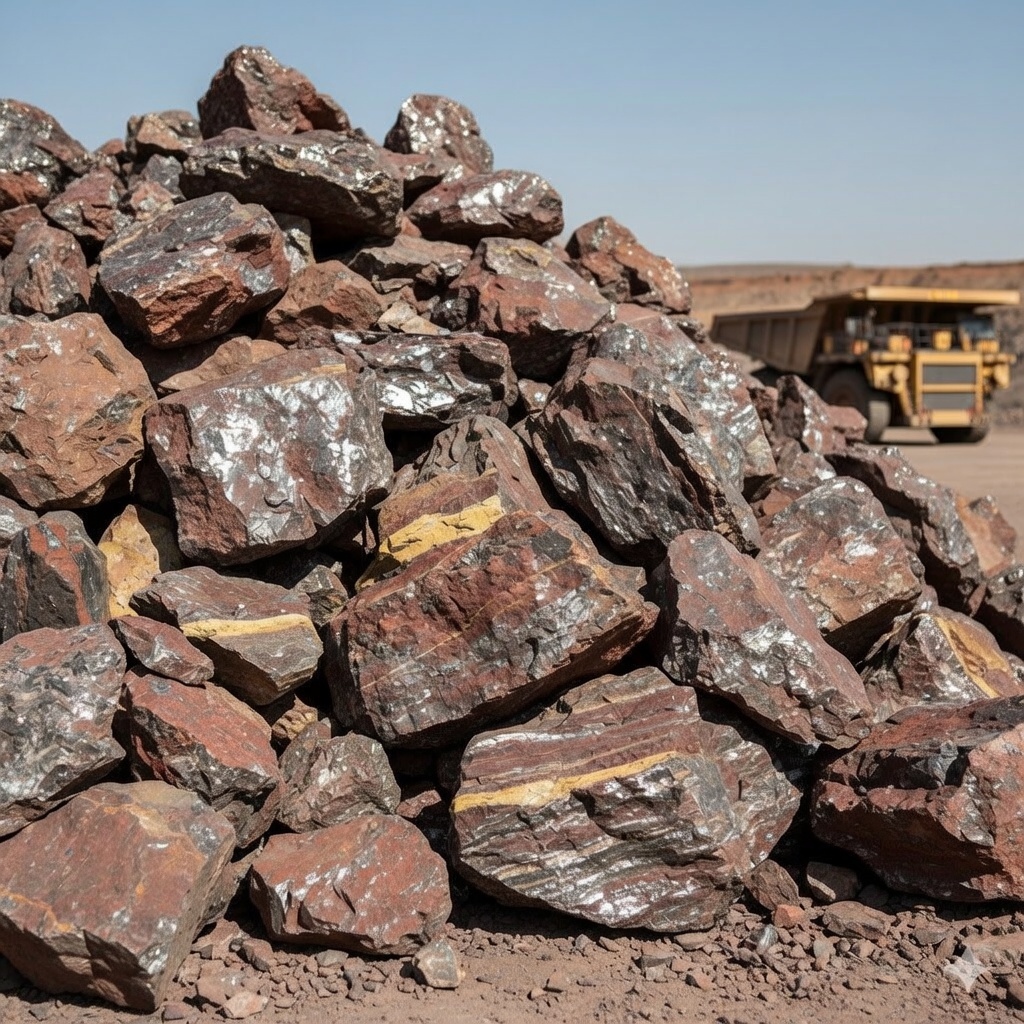
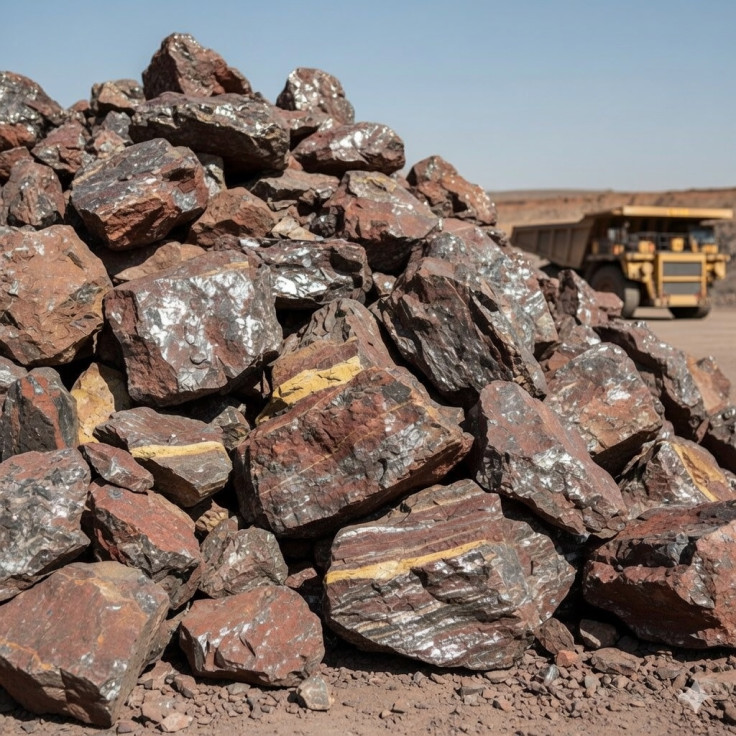
Iron ore mining stands as Australia’s largest exporting industry, generating an estimated $116.8 billion in 2026, according to industry analysis. The nation supplies more than half of the world’s seaborne iron ore trade, primarily feeding steel production in China, its largest customer. Volumes have remained robust even as prices moderated from previous peaks, supported by strong infrastructure spending in key Asian markets.
Coal, including both thermal and metallurgical varieties, ranks among the top exports with combined earnings around $63–71 billion. Australia is the world’s leading exporter of metallurgical coal used in steelmaking and a major supplier of thermal coal for power generation. While demand faces long-term pressure from the global energy transition, short-term needs in Asia have kept shipments steady in early 2026.
Liquefied natural gas (LNG) production contributes approximately $72.6 billion, positioning Australia as one of the top three global exporters and supplying roughly 30% of Asia’s LNG market. Japan, South Korea and China remain key buyers. Recent price volatility tied to international events has influenced earnings, but established long-term contracts provide stability for major projects in Western Australia and the Northern Territory.
Advertisement
Gold has surged in prominence, with export values reaching or exceeding $60–69 billion in projections for the 2025–26 financial year, potentially overtaking LNG as the second-most valuable resource export after iron ore. Higher production volumes and elevated gold prices driven by safe-haven demand amid geopolitical tensions have fueled the boom. Australia ranks as the world’s second-largest gold producer.
Crude petroleum and broader oil and gas extraction add another $82.5 billion, encompassing both raw and processed energy products. These commodities benefit from Australia’s strategic location and established export infrastructure, though they face competition from other global suppliers.
Agricultural products form a significant but smaller portion of the export mix. Beef and other meat products generate around $17–21 billion annually, with the United States and Asian markets as primary destinations. Grains, including wheat, contribute roughly $9–15 billion, while emerging categories such as tree nuts show strong growth potential.
Critical minerals, particularly lithium used in batteries for electric vehicles, represent a fast-growing segment. Lithium and other non-metallic mineral mining are among the industries with the highest export growth rates in 2026, aligning with global demand for clean energy technologies.
Advertisement
Other notable exports include copper ores and concentrates, aluminium, and wool, though they rank lower in total value compared to the dominant resource categories. Services exports, such as education and tourism, add substantial value but fall outside merchandise trade rankings.
China accounts for roughly 30% of Australia’s total exports, making it by far the largest trading partner. Japan, South Korea, India and the United States follow, highlighting the heavy Asia-Pacific orientation of Australian trade. In January 2026 alone, exports to China reached $14.2 billion, underscoring continued reliance on the Chinese market for iron ore, coal and LNG.
The overall merchandise export total for recent periods hovers around $330–360 billion annually, with resources and energy comprising the vast majority. Government forecasts for resources and energy exports in the year through June 2026 were revised upward to A$383 billion, reflecting stronger gold and certain commodity outlooks.
Economists note that while resource dependence brings prosperity, it also exposes the economy to commodity price cycles and external shocks. Efforts to diversify include boosting critical minerals processing, expanding agricultural value-added exports and growing services trade. However, mining and energy still dominate the top 10 list.
Advertisement
Here is a consensus ranking of Australia’s top 10 exporting products in 2026 based on available industry reports, government data and trade analyses (values are approximate annual figures in USD or equivalent and subject to monthly fluctuations):
Iron Ore
1. Iron Ore — Approximately $87–117 billion. Australia remains the undisputed leader in global iron ore exports, with massive shipments from the Pilbara region in Western Australia.
2. Liquefied Natural Gas (LNG) / Petroleum Gas — Around $49–73 billion. Long-term contracts with Asian buyers sustain this key energy export.
3. Coal (Thermal and Metallurgical) — Roughly $61–71 billion. Essential for steel and power in importing nations.
4. Gold — $31–69 billion. Surging prices and production have elevated its ranking significantly.
Advertisement
5. Crude Petroleum / Oil and Gas Extraction — Contributing to the broader $82 billion energy category.
6. Meat and Edible Meat Offal (primarily beef) — About $17–21 billion. High-quality Australian beef enjoys strong demand in premium markets.
7. Cereals / Grains — Around $9–15 billion. Wheat and other grains support food security in import-dependent regions.
8. Copper Ores and Concentrates — Several billion, part of broader base metals exports.
Advertisement
9. Aluminium and Aluminium Ores — Steady contributor from Australia’s smelting capacity.
10. Lithium and Critical Minerals — Rapidly rising, though still smaller in absolute value than traditional leaders; positioned for future growth.
Monthly data from the Australian Bureau of Statistics for early 2026 showed mixed movements. Iron ore fines and lump experienced some volume and price adjustments, while certain coal categories and LNG recorded modest gains or stability. Gold shipments have been particularly strong.
Trade experts highlight opportunities and risks. Rising demand for critical minerals linked to the energy transition could elevate lithium and rare earths in future rankings. Conversely, global decarbonization policies may eventually curb coal and traditional gas demand, prompting investment in new export streams.
Advertisement
Australia’s trade surplus has benefited from high commodity prices in recent years, supporting government revenues and the national economy. However, currency fluctuations, particularly the Australian dollar, influence competitiveness.
As of March 2026, the export landscape reflects both continuity in resource strength and gradual shifts toward higher-value and future-oriented commodities. Diversification efforts continue through trade agreements and investment in processing capabilities to capture more value domestically before export.
For businesses and policymakers, monitoring commodity prices, Chinese economic conditions and global energy dynamics remains crucial. Australia’s export success in 2026 underscores its role as a reliable supplier of essential raw materials to the world economy, while highlighting the need for ongoing adaptation to changing international demands.
The composition of Australia’s top exports underscores the nation’s comparative advantages in mining and agriculture. Sustained investment in infrastructure, technology and sustainable practices
‘Fox Across America’ radio host Jimmy Failla says there’s not enough ‘shame’ depending on cell phones on ‘Kennedy.’
A Chick-fil-A restaurant is offering families free ice cream if they put away their phones for their entire meal.
Complex, an account on X covering culture, posted a photo Sunday showing a sign advertising that the Chick-fil-A Towson Place location has an incentive for families to be phone-free during meals.
Advertisement
“Introducing our Chick-fil-A® Cell Phone Coop Challenge,” the sign read.
Teens using their phones. (Matt Cardy / Getty Images)
“Ask a Team Member for a coop, place all phones in the coop, and enjoy your meal together,” the message continued. “After you finished let a Team Member know and everyone at the table will receive a Icedream® Cone as a reward.”
“Grab a coop and take the challenge,” it read.
Advertisement
The Chick-fil-A restaurant in Towson Place, Maryland, also advertised the challenge in a recent Facebook post, writing, “Take the Dine-in Cell Phone Coop Challenge at Chick-fil-A Towson Place. Ask a Team Member for a coop, place all phones in the coop, and enjoy your meal together without distractions. When your table finishes, let a Team Member know and everyone will receive an Icedream Cone as a reward. Are you up for the challenge?”
If families stay off their phones during their meal, they will receive an Icedream® Cone as a reward. ( Felix Hörhager/picture alliance via Getty Images)
A 2023 study found that 68% of households have a person using their phone during a meal with others. It also found that 65% of respondents do not like it, and 42% feel using phones during meals is rude.
Chick-fil-A did not immediately respond to a request for comment from Fox News Digital.
For more than a decade, Japanese home builders have been tiptoeing into the U.S. housing market with small, discreet acquisitions of private American construction companies. Their quiet era is over.
Japanese builders have announced or closed acquisitions of 23 U.S. single-family home builders since 2020, more than double the number from 2013 to 2019. That doesn’t include the multifamily developers and construction-supply companies they have also bought. By some estimates, Japanese builders are now set to own about 6% of the U.S. home-construction market.
The Trump administration proposed a regulation on Monday that is intended to open 401(k)s and similar retirement plans to private equity and private credit.
It is a victory for the Wall Street firms that have lobbied to get these higher-cost alternative investments into the $14.2 trillion 401(k) market. But it comes at an inopportune time for the industry, as investors pull money from some private-credit funds.
Payments firm to reorganise into four business units
Alistair Houghton Editor, Business Live and Anna Wise Press Association Business Reporter
15:52, 30 Mar 2026Updated 15:54, 30 Mar 2026
The PayPoint sign can be found across the UK(Image: Newcastle Chronicle)
Payment solutions provider PayPoint has revealed a restructuring plan aimed at cutting costs and attracting more customers to use its services in shops.
It will result in the company being restructured into four divisions, encompassing its network services, merchant services, digital payments and open banking, and its Love2shop brand.
Advertisement
PayPoint operates a retail network of over 30,000 convenience stores, offering community services such as cash withdrawals and deposits, ATMs, cash bill payments, energy top-ups and vouchers. It also runs Collect+ and Royal Mail Shops, enabling parcels to be collected and returned at thousands of local outlets.
The company has not disclosed cost-cutting targets or specified whether there will be any impact on its workforce, which numbered around 940 employees this time last year. However, it said the reorganisation will create cost savings and could potentially result in increased dividends for shareholders.
As part of the changes, PayPoint stated it is concentrating on boosting consumer footfall and enhancing sales from its services across retail partners. The overhaul will also entail a significant “reset” of the structure of its merchant services division, which collaborates with over 30,000 UK SMEs (small and medium-sized enterprises) to provide payment services in their shops.
Meanwhile, PayPoint plans to expand the Love2shop brand, which provides digital and physical gift cards. That division, based in Liverpool’s landmark 20 Chapel Street building, is set to bring in £53.2m in revenue this financial year.
Advertisement
The group said: “The reorganisation will enable an improved focus on new business growth and on maximising opportunities across Love2shop’s distribution channels. Continued investment in our technology platform, ongoing product enhancement and leveraging AI to improve marketing insight will strengthen our go-to-market strategy and support accelerated new business growth across Love2shop Business, the expansion of our prepaid savings proposition and growth of our consumer channels, including through our Incomm Payments partnership. There also remain significant opportunities to integrate Love2shop more efficiently across the wider PayPoint Group and client base.”
PayPoint acquired Love2Shop when it took over Merseyside Christmas vouchers firm Appreciate Group in an £83m deal in 2023. That business, formerly known as Park Group, was founded by former Everton FC and Tranmere Rovers owner Peter Johnson and was originally best known for its Christmas hamper savings scheme.
London-listed PayPoint anticipates reporting a record financial performance for the year ending in March, with results due to be published in June. It also forecasts returning over £90 million to shareholders through buybacks and dividends during the financial year.
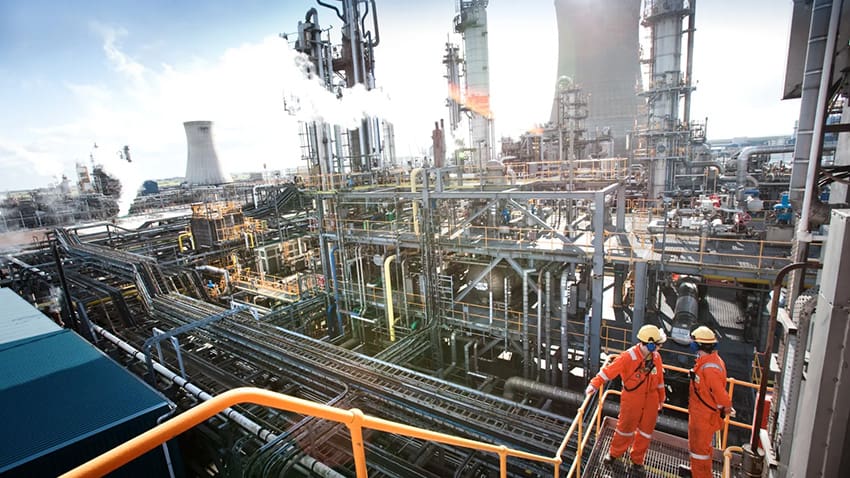
Ineos has reported a sharp widening in losses to $593 million, as rising energy costs, supply chain disruption and geopolitical tensions weigh heavily on Sir Jim Ratcliffe’s petrochemicals empire.
The group, controlled by Jim Ratcliffe alongside co-owners Andy Currie and John Reece, has also suspended its dividend for a second consecutive year, underscoring the financial pressure facing the business.
Losses before tax increased significantly from $71.1 million the previous year, while revenues declined to €14.3 billion from €16.2 billion. The downturn reflects a challenging operating environment for the European chemicals sector, where demand has weakened and costs have risen sharply.
Ineos pointed directly to the escalation of tensions in the Middle East as a key risk factor, warning that disruption to global energy markets is already impacting operations.
The group highlighted Iran’s strategic position near the Strait of Hormuz, a critical shipping route for oil and liquefied natural gas, noting that any prolonged conflict could further destabilise supply chains and drive up commodity prices.
Advertisement
“Any escalation or expansion of hostilities could adversely affect global supply chains, commodity prices and macroeconomic conditions,” the company said in its annual report.
The surge in oil and gas prices has increased input costs across the petrochemicals industry, while also raising shipping expenses as companies adjust logistics routes to avoid high-risk areas.
The impact has been particularly acute in Europe, where Ineos has long warned of structural challenges including high energy prices, carbon taxes and competitive pressures from overseas producers.
Earnings before exceptional items in the region almost halved to €252.3 million in 2025, down from €470.2 million the previous year. Revenues in the European business fell by 9.2 per cent, reflecting weaker demand and margin compression.
Advertisement
Ratcliffe has previously described the European chemicals industry as facing “challenging market conditions”, with rising regulatory costs and energy prices eroding competitiveness.
The group has also been hit by logistical challenges linked to global shipping disruptions. In previous years, Ineos was forced to reroute shipments for its major Project One chemicals plant in Belgium around the Cape of Good Hope, adding more than €30 million in costs.
The company warned that similar disruptions could occur again if tensions escalate, potentially delaying the completion of key projects and further increasing expenses.
It also flagged risks to the delivery timeline of a new plant in the Netherlands, citing ongoing volatility in energy markets.
Advertisement
Ineos ended the year with net debt of €11.7 billion, highlighting the scale of its financial commitments at a time of declining profitability.
The decision to halt dividend payments reflects a focus on preserving cash and maintaining financial flexibility as the company navigates an uncertain outlook.
The results underline the pressures facing energy-intensive industries in Europe, where companies are grappling with a combination of high input costs, regulatory burdens and geopolitical instability.
For petrochemical producers, the reliance on oil and gas as both feedstock and energy source makes them particularly sensitive to price fluctuations.
Advertisement
Looking ahead, Ineos warned that continued volatility in energy markets could have a “significant” impact on its operations and financial performance.
The trajectory of the Middle East conflict will be a key factor, with prolonged disruption likely to exacerbate cost pressures and delay investment projects.
For Ratcliffe’s group, the challenge will be balancing investment in long-term growth with the need to manage short-term financial strain — a task made more complex by the increasingly uncertain global economic environment.
Amy Ingham
Amy is a newly qualified journalist specialising in business journalism at Business Matters with responsibility for news content for what is now the UK’s largest print and online source of current business news.
Stone Fox Capital is an RIA from Oklahoma. Mark Holder is a CPA with degrees in Accounting and Finance. He is also Series 65 licensed and has 30 years of investing experience, including 15 years as a portfolio manager. Mark leads the investing group Out Fox The Street where he shares stock picks and deep research to help readers uncover potential multibaggers while managing portfolio risk via diversification. Features include various model portfolios, stock picks with identifiable catalysts, daily updates, real-time alerts, and access to community chat and direct chat with Mark for questions. Learn more.
Analyst’s Disclosure: I/we have no stock, option or similar derivative position in any of the companies mentioned, but may initiate a beneficial Long position through a purchase of the stock, or the purchase of call options or similar derivatives in UPST over the next 72 hours. I wrote this article myself, and it expresses my own opinions. I am not receiving compensation for it (other than from Seeking Alpha). I have no business relationship with any company whose stock is mentioned in this article.
The information contained herein is for informational purposes only. Nothing in this article should be taken as a solicitation to purchase or sell securities. Before buying or selling any stock, you should do your own research and reach your own conclusion or consult a financial advisor. Investing includes risks, including loss of principal.
Advertisement
Seeking Alpha’s Disclosure: Past performance is no guarantee of future results. No recommendation or advice is being given as to whether any investment is suitable for a particular investor. Any views or opinions expressed above may not reflect those of Seeking Alpha as a whole. Seeking Alpha is not a licensed securities dealer, broker or US investment adviser or investment bank. Our analysts are third party authors that include both professional investors and individual investors who may not be licensed or certified by any institute or regulatory body.
























































You must be logged in to post a comment Login