
Business
Is Abu Dhabi Airport Open? Airport Partially Operational Amid Regional Tensions, Limited Flights Resume

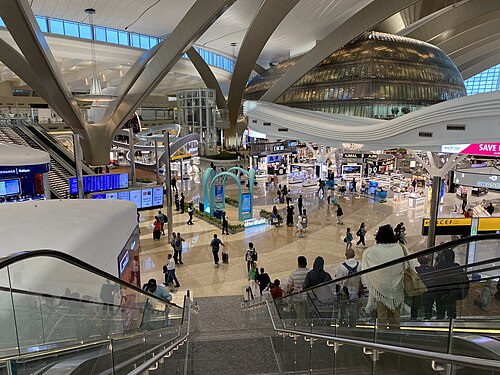
ABU DHABI, United Arab Emirates — Zayed International Airport, the primary gateway to the United Arab Emirates capital, remains partially open and operational as of March 7, 2026, following a period of significant disruptions triggered by escalating Middle East geopolitical conflicts, including U.S.-Israel military actions against Iran and related airspace restrictions.
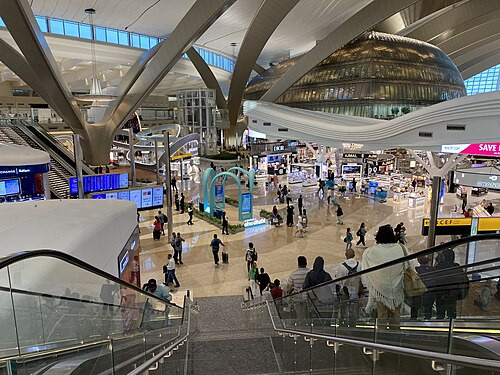
The airport, also known as Abu Dhabi International Airport (AUH), resumed limited flight operations starting March 2, 2026, in close coordination with the General Civil Aviation Authority (GCAA), the Emergencies, Crises and Disasters Management Center – Abu Dhabi (ADCMC), and airline partners. Officials emphasized that full commercial schedules have not yet returned, with operations restricted to select flights amid ongoing regional security concerns.
Major carrier Etihad Airways, headquartered in Abu Dhabi, announced the resumption of a limited commercial flight schedule effective March 6, 2026, running through March 19. The airline is operating services to and from approximately 25 key international destinations, including Ahmedabad, Bangkok, Bengaluru, Cairo, Colombo, Delhi, Frankfurt, Hanoi, Hyderabad, Jeddah, Kuala Lumpur, London Heathrow, Madrid, Malé, Milan Malpensa, Moscow Sheremetyevo, Mumbai, New York JFK, Paris, Phuket, Riyadh, Rome, Seoul Incheon, Toronto, and Zurich.
Etihad stressed that passengers with prior bookings would be accommodated on these flights as soon as possible, while new tickets are available for purchase on its website. The airline urged travelers to check flight status directly and avoid heading to the airport without confirmed arrangements. Access remains restricted to ticketed passengers only, with security measures prioritizing safety for all.
The partial reopening follows widespread airspace closures across parts of the Middle East, beginning late February 2026 after reported strikes and retaliatory actions involving Iran. These events led to temporary suspensions of most commercial operations at Zayed International Airport from February 28 onward, stranding thousands of passengers and prompting repatriation efforts by various governments.
Abu Dhabi Airports, the operator of Zayed International, confirmed that limited services restarted as a demonstration of resilience within the emirate’s aviation ecosystem. Support networks assisted over 7,000 affected passengers during the disruption period, providing accommodations, rebooking options, and essential aid. Authorities continue monitoring the situation closely, with decisions guided by real-time security assessments.
Flight tracking platforms like Flightradar24 and FlightAware show active but reduced activity at AUH as of March 7. Live data indicates departures and arrivals to select cities, including Mumbai, London Heathrow, and Coimbatore, though many flights face delays or cancellations. Departure delay indices remain elevated, reflecting the constrained environment.
The U.S. Embassy in Abu Dhabi issued updated security alerts on March 6 and March 7, advising American citizens that limited commercial flights operate from UAE international airports, including AUH. Travelers are strongly encouraged to depart on available services if deemed safe, while avoiding the airport without confirmed bookings. The embassy noted restricted access and urged stockpiling essentials amid potential further instability.
Similar advisories from other nations highlighted land border options with Oman and Saudi Arabia, though congestion reports persist. The UAE Ministry of Interior and related agencies maintain vigilance, with air corridors designated as safe for limited use by national carriers like Etihad.
Broader regional impacts include suspensions by other airlines, though Etihad’s phased restart marks a step toward normalization. Emirates, primarily operating from Dubai, has faced its own disruptions but coordinates closely with UAE authorities. Qatar Airways and others in the Gulf region also navigated airspace challenges, with some resuming select routes.
Zayed International Airport’s official website advises passengers not to travel unless holding confirmed tickets and explicitly advised by their airline. It highlights the facility as one of the Middle East’s fastest-growing hubs, underscoring long-term ambitions despite current limitations. Features like free high-speed Wi-Fi, meet-and-assist services, and airport express shuttles to Dubai remain available for operational flights.
The airport’s infrastructure, including its modern Terminal A and advanced facilities, supports efficient handling even under constraints. Recent expansions position AUH to accommodate growing demand once full operations resume.
Analysts view the limited resumption as a positive signal of stabilization efforts by UAE authorities. However, volatility persists due to fluid geopolitical developments. Travelers worldwide, including those in Asia and Europe, monitor updates closely, with many rerouting via alternative hubs.
For real-time information, passengers should consult airline websites, flight trackers, or the official Zayed International Airport portal. The GCAA and ADCMC continue prioritizing public safety, with any further changes announced promptly.
As of late March 7 in Abu Dhabi (local time), the airport operates in a controlled, partial capacity. While not fully open to pre-disruption levels, it functions sufficiently to support essential travel and gradual recovery of connectivity.
The situation underscores aviation’s vulnerability to regional conflicts, yet also highlights coordinated responses enabling partial continuity. Stakeholders remain hopeful for broader normalization in coming weeks, contingent on de-escalation.

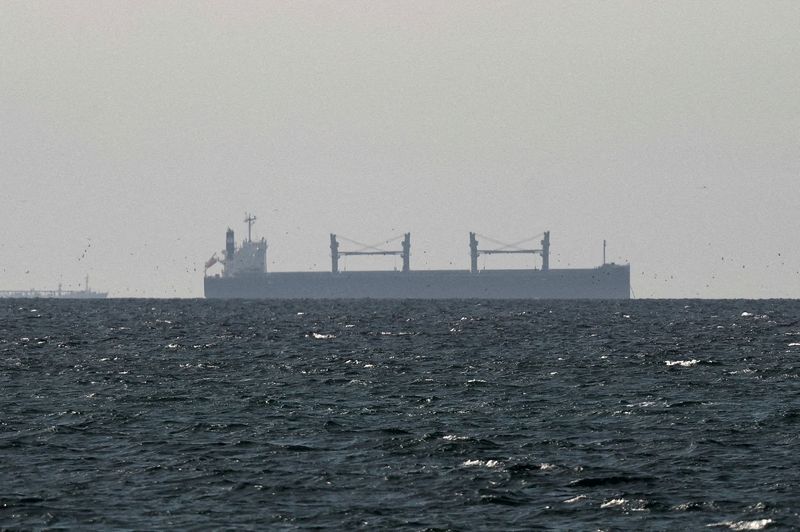

Oil prices open higher as US-Israeli war with Iran continues to disrupt supply


How a perilous US rescue mission in Iran nearly went off course
Forbes Media chairman Steve Forbes gives his take on the growing support for tax cuts in the U.K. and New Jersey’s tightening gubernatorial race on ‘Kudlow.’
In the 1800s, the United Kingdom was clearly the richest country in the world, with consistent, solid economic growth, a focus on science and engineering, plus all the benefits of trade across the oceans. But now the country seems to have lost its mojo. The country’s living standards have fallen far behind those of other developed economies.
Contrary to popular perception, Britain’s GDP per capita (the income generated by the average person) has lagged behind that of the vast majority of the 50 United States plus Washington D.C., last year, according to forecasts in the third quarter of 2025 by the U.S. government, plus recent International Monetary Fund data. Projections are needed as the final annual GDP figures were not published at the time of writing.
When those states (plus Washington D.C.) compared their GDP per capita, the U.K. would have ranked 50th, behind Alabama, which is forecast to have a nominal per capita GDP of $60,265 in 2025. Britain was slightly worse off, at $60,010, according to the latest data from the U.S. government and the International Monetary Fund. Topping the list was Washington DC with $113,369. Analysts note that the figures don’t include the cost of living; however, even with that accounted for, the U.K. still lags significantly behind the U.S. national average.
“If you leave aside Britain’s capital, London, their GDP per capita is much lower,” Marc Chandler, chief market strategist at Bannockburn Global Forex in New York City, told FOX Business. London has a huge financial center which distorts some of the data. One of the major problems has been the lack of productivity growth, which measures the increase in output per average employee, Chandler, “U.S. productivity increases have been stronger.”
MAJORITY OF UK ENTREPRENEURS SAY BRITISH GOVERNMENT IS ‘ANTI-BUSINESS,’ NEW SURVEY SHOWS
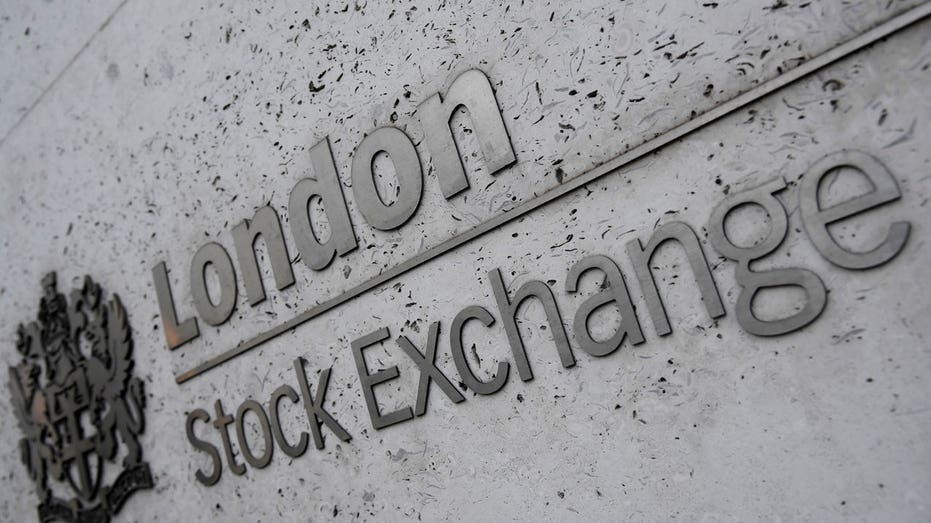
A sign showing the London Stock Exchange. (Toby Melville/Reuters / Reuters)
On average, the U.S. GDP per capita is projected to be $89,599 in 2025, considerably higher than in Britain. The UK also lags Ireland, Switzerland, Singapore, Norway and Germany, to name a few countries, according to forecasts by the International Monetary Fund. “That’s what happens when you destroy innovation, taxes are too high, and regulations are too numerous,” Robert E. Wright, an economic policy historian at the University of Austin, Texas, told FOX Business.
Wright notes there’s also a British cultural tendency toward risk aversion for many reasons. Even if a project or new business succeeds in the U.K., the company will be heavily taxed and then hampered by newly created regulations. “Not only are these barriers not helpful, but they’re also shooting themselves in the foot,” he says. “And they aren’t at the technological frontier.” American businesspeople tend to embrace risk.
UNCLE SAM TO THE RESCUE. TRUMP HELPS OUT THE UK WITH A $350 BILLION TECH DEAL
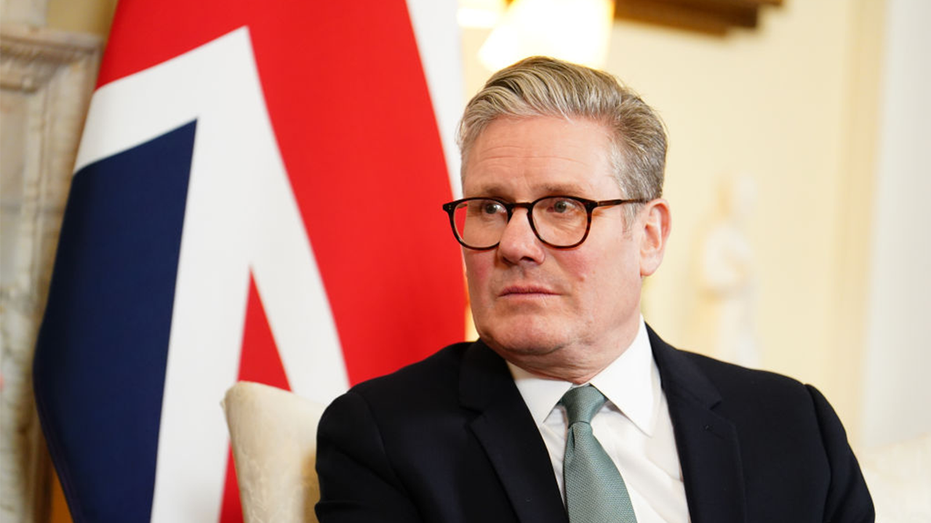
UK Prime Minister Keir Starmer. (Getty Images / Getty Images)
According to surveys, the immediate future looks bleak, suggesting Britain’s economy will not suddenly power back, according to a research report from the analysis firm Oxford Economics. “The U.K. lacks a sustainable growth driver,” the briefing states. That’s because what’s keeping the economy growing, albeit at an extra slow pace, is U.K. government spending, rather than organic growth and innovation from private-sector businesses.
Government spending has resulted in job creation and that has helped mute the headcount job losses in the private sector, according to the Oxford Economics report. “But the boost from the public sector will likely start to fade,” it states. “Given weak private sector demand, we expect the jobless rate will rise further.”
The Oxford report also shows that since the second half of 2023, government jobs have been stubbornly better paid, on average, than those in the private sector. That’s likely to get in the way of encouraging creative entrepreneurs from innovating, experts say.
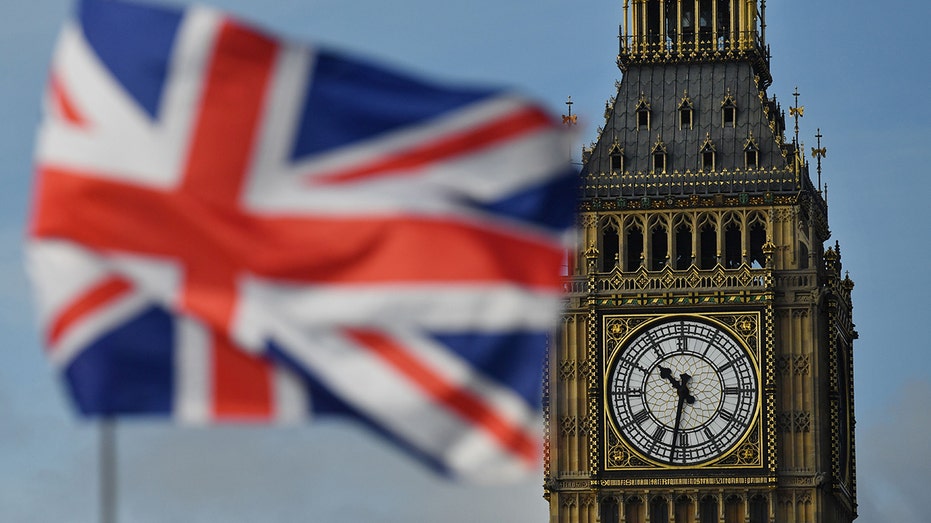
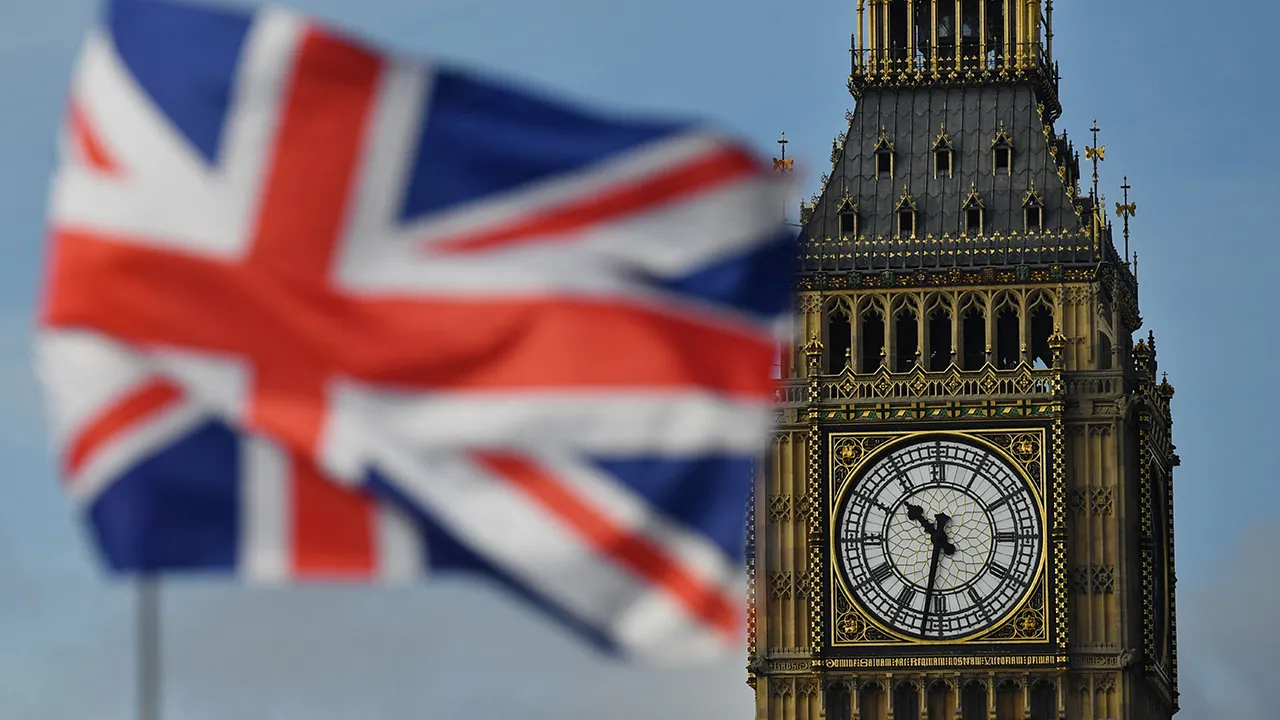
A Union flag flies near the Elizabeth Tower, better known as “Big Ben”, and the Houses of Parliament in central London on March 6, 2017 (Ben Stansall/AFP Getty Images / Getty Images)
Oxford Economics forecasts a small 1% growth for 2026. But that was forecast before the U.S.-Israel war with Iran, which could lead to likely weaker growth for the U.K. analyst warned.
GET FOX BUSINESS ON THE GO BY CLICKING HERE
Robert Jenrick, the shadow chancellor of the UK Reform Party, slammed the Labour government’s handling of the economy. “We are losing our steel, our car manufacturing, our glass, our ceramics, our chemical industries,” he told the U.K.’s Daily Express. “There are millions of good jobs that rely on these industries, and they simply will not survive if we continue to have energy prices that are five or six times higher than in the United States.”

S&P 500: Prepare For Change (Technical Analysis)
‘The Big Money Show’ panel breaks down surging markets, rising energy costs and mounting pressure on President Donald Trump as investors bet the Iran conflict may be nearing a turning point ahead of his highly anticipated address.
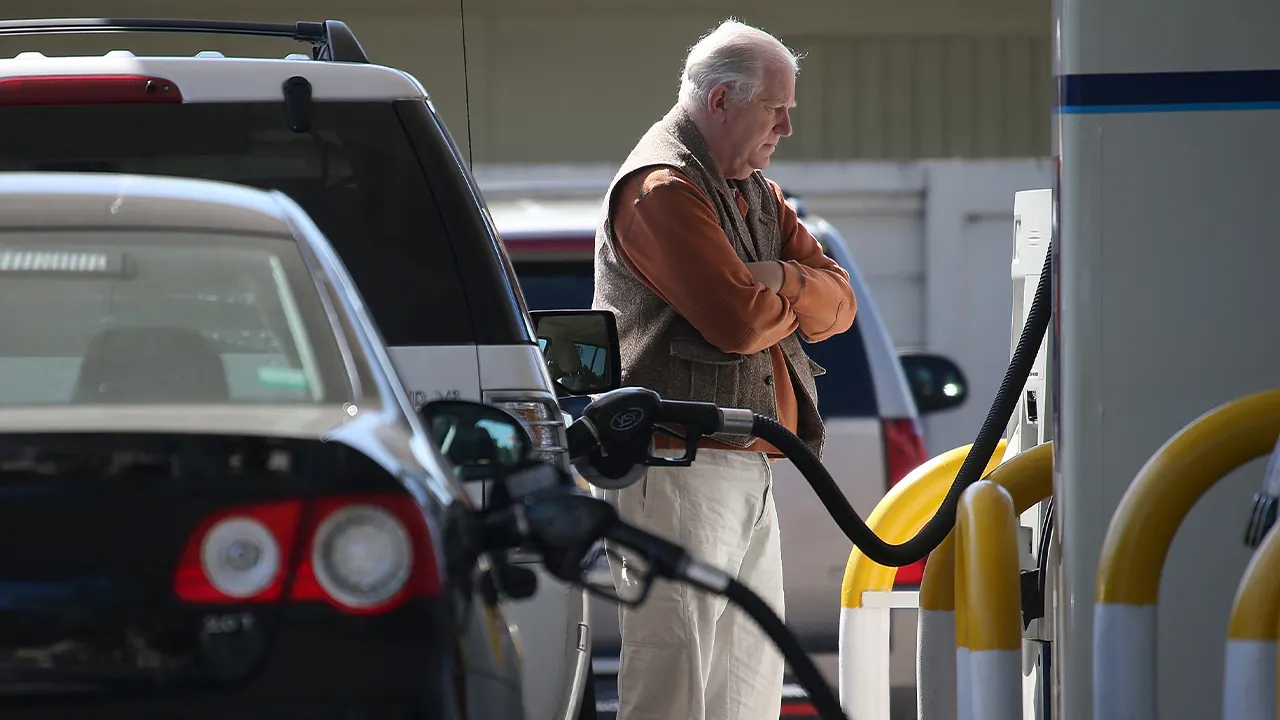
Gas prices are continuing to climb as the ongoing conflict with Iran drives up crude oil costs, pushing prices higher at the pump nationwide.
The national average now stands at $4.11 per gallon, up about 86 cents from a month ago, according to AAA. Costs are climbing across nearly every region, with some states already well above the U.S. average.
On the West Coast, drivers are seeing the highest costs, with prices reaching $5.92 per gallon in California and $5.37 in Washington. Meanwhile, on the East Coast, gas prices have surpassed $4 in several areas, including $4.27 in Washington, D.C., and $4.06 in New York.
JET FUEL SPIKES AS AIRLINES WARN SUPPLIES COULD RUN DRY WITHIN WEEKS
In the Midwest, Illinois stands out at $4.29 per gallon, while much of the region remains in the mid-$3 range. Southern states remain comparatively cheaper, though prices are rising there as well. Texas and South Carolina are both averaging about $3.82, while Florida is higher at $4.20.
Diesel has climbed to $5.61, up about $1.45 over the past month. As a key fuel for freight, shipping, and public transportation, it is particularly sensitive to refining capacity constraints and global supply disruptions.
SAN FRANCISCO BECOMES FIRST US CITY WHERE DIESEL PRICES TOP $8 A GALLON
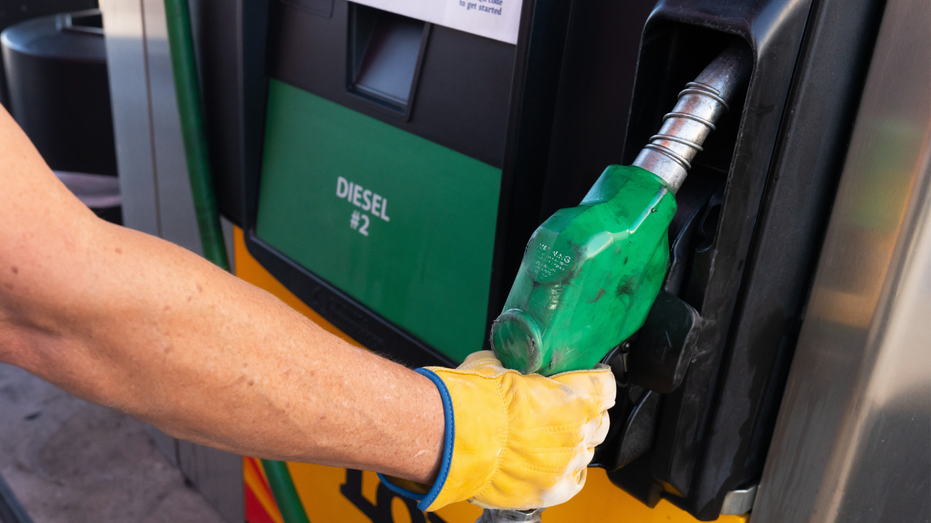
A person grabs the nozzle for diesel fuel at a gas station. (Rebecca Noble/Bloomberg/Getty Images)
In San Francisco, prices have surged even higher. For the first time on record, average diesel costs have surpassed $8 per gallon, according to new data from GasBuddy — marking an unprecedented milestone for any U.S. city.
The climbing fuel costs come as President Donald Trump issued a profanity-laced warning to Iran, giving the regime until Tuesday to allow vessels through the key waterway — or face strikes on its critical infrastructure.
GET FOX BUSINESS ON THE GO BY CLICKING HERE
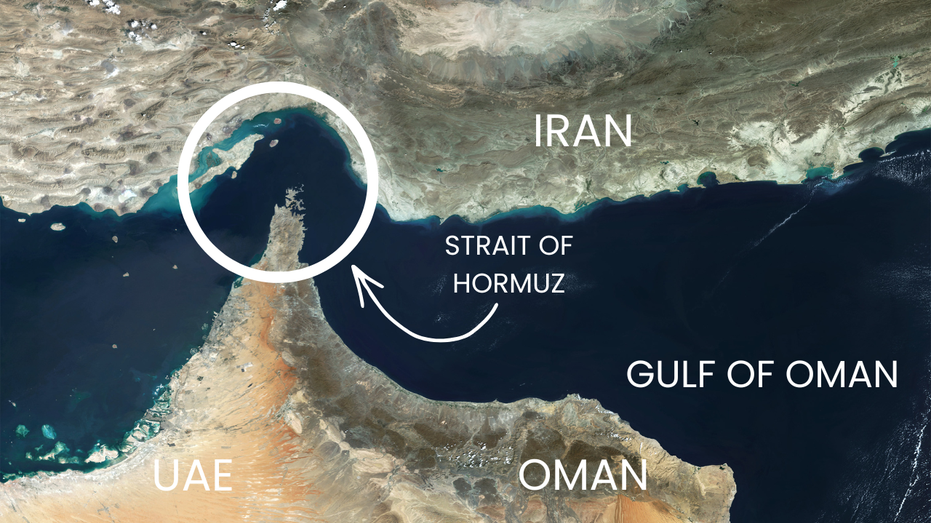
A satellite image shows the Strait of Hormuz, a key maritime passage connecting the Persian Gulf to the Gulf of Oman, vital for global energy supply. (Amanda Macias/Fox News Digital)
The Strait of Hormuz, a waterway between Iran, the United Arab Emirates and Oman, is a critical energy choke point.
“Open the F—– Strait, you crazy b——-, or you’ll be living in Hell – JUST WATCH!” Trump wrote in a Truth Social post to Iranian leaders.
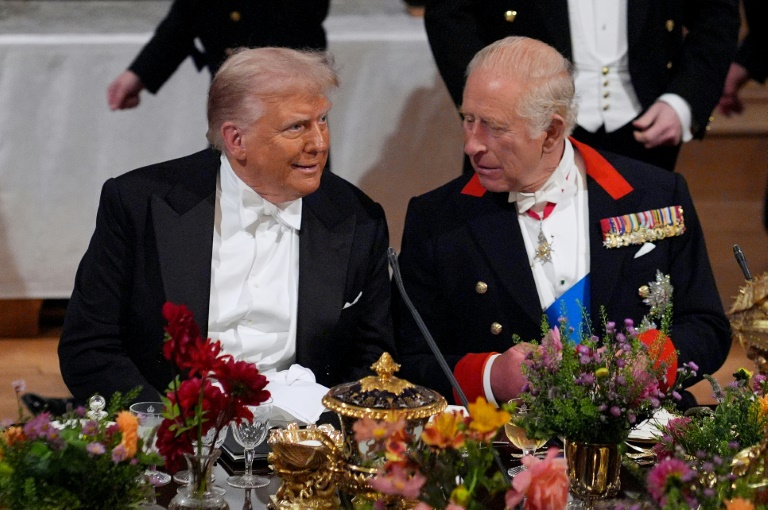
LONDON — King Charles III marked a quiet Easter Sunday on April 5, 2026, attending the traditional Matins service at St. George’s Chapel in Windsor with Queen Camilla and senior royals, but Buckingham Palace confirmed he will not deliver a formal Easter message this year, drawing some criticism after recent Ramadan greetings.
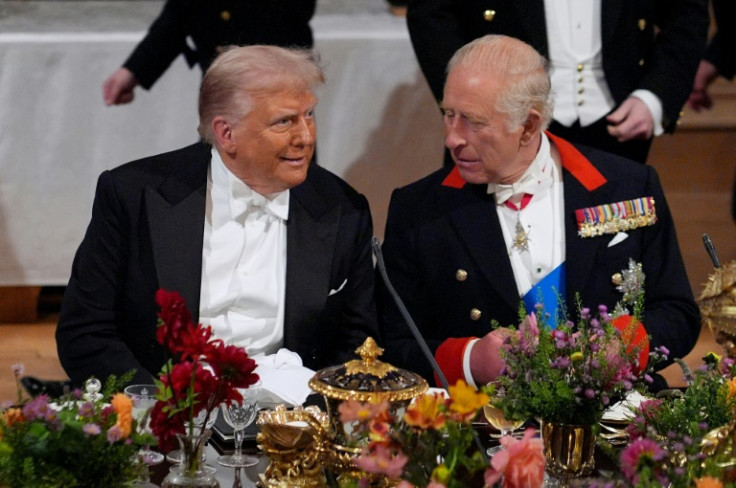
The decision not to issue an Easter address comes despite the monarch’s role as Supreme Governor of the Church of England. While Easter messages are not an annual tradition — the late Queen Elizabeth II issued one only during the COVID-19 pandemic — King Charles did release a faith-focused message on Holy Thursday in 2025. Palace officials stated the omission aligns with long-standing practice for non-Christmas occasions, though it sparked online debate and commentary from figures questioning the balance of interfaith outreach.
On Maundy Thursday, April 2, the King and Queen Camilla traveled to St. Asaph Cathedral in North Wales for the Royal Maundy service, an ancient Christian tradition. The King presented specially minted Maundy money to 77 men and 77 women in recognition of their service, with the number matching his age of 77. The event marked only the second time the service has been held in Wales. Despite a minor anti-monarchy protest visible outside the cathedral, the King appeared in good spirits, displaying confident demeanor praised by observers.
Health updates for the 77-year-old monarch remain positive. Diagnosed with an undisclosed form of cancer in early 2024, King Charles shared encouraging news in a December 2025 video message, revealing that thanks to early detection and effective treatment, his cancer treatment schedule would be significantly reduced in 2026. He described it as “a personal blessing” and urged others to prioritize screening, emphasizing that early intervention can be life-saving. Palace sources indicate his condition has responded exceptionally well, moving into a precautionary phase with ongoing monitoring but no major disruptions to his duties. He continues light public engagements while balancing recovery.
The King’s schedule shows steady activity. He recently delivered the King’s Speech outlining the government’s legislative agenda and maintains a full calendar of constitutional responsibilities. No absences due to health have been reported in recent months, and he appears engaged in both official and private family moments.
Looking ahead, Buckingham Palace announced a major international trip: a state visit to the United States in late April 2026, from April 27 to 30, marking the first such visit by Charles as monarch. The itinerary includes meetings with President Donald Trump, a state banquet at the White House on April 28, and an address to a joint session of Congress — the first by a British monarch in more than three decades. The visit celebrates the 250th anniversary of American independence and aims to strengthen UK-US ties amid geopolitical tensions, including differences over recent conflicts.
On the return journey, the King and Queen Camilla will stop in Bermuda. Congressional leaders from both parties extended the invitation for the historic address, highlighting shared heritage and enduring friendship between the nations. The trip places Charles in a delicate diplomatic role, navigating relations with the Trump administration while representing the United Kingdom on the global stage.
Family matters remain in the spotlight. Reports suggest ongoing estrangement with his younger son, Prince Harry, who resides in the United States. Despite an reported olive branch from the Duke of Sussex, no meeting is expected during the King’s US visit, according to palace insiders and BBC reporting. The King has not publicly commented on the matter, maintaining focus on official duties.
Public and media reaction to recent royal developments has been mixed. Some praised the King’s interfaith gestures, including Ramadan messages, while others expressed disappointment over the lack of an Easter address, viewing it through the lens of his Christian leadership role. Social media commentary ranged from support for his health progress and diplomatic efforts to criticism of perceived priorities.
King Charles continues to champion causes close to his heart, including environmental conservation, interfaith dialogue and support for cancer research and patient care. His reduced treatment schedule allows greater flexibility for public engagements, though the palace emphasizes that his health remains the priority with regular medical reviews.
As Easter celebrations unfolded across the Commonwealth with themes of hope and renewal, the royal family gathered privately at Windsor for the Matins service followed by a family lunch. The Prince and Princess of Wales, their children, and other senior royals were expected to join, continuing long-standing traditions.
The upcoming US state visit represents a significant milestone in Charles’s reign, testing his ability to bridge political divides through soft power and ceremony. With Trump describing the visit as “terrific” and expressing respect for the King, the trip carries symbolic weight at a time of global uncertainty.
Buckingham Palace has provided no further details on the exact program beyond the confirmed dates and congressional address. Preparations are underway, with security and diplomatic teams coordinating closely with US counterparts.
On the health front, the King’s openness about his cancer journey — including the December 2025 message — has been credited with raising awareness. He has spoken movingly about the “community of care” surrounding patients and thanked healthcare workers and supporters.
As April 2026 progresses, King Charles balances recovery, family, faith observances and high-level diplomacy. His reduced treatment offers optimism, while the US visit underscores his role as a unifying figure on the world stage.
No major changes to his immediate schedule have been announced beyond the transatlantic trip. The King is expected to resume normal public duties following Easter, with the King’s Speech already delivered in May preparations noted earlier.
For the latest official updates, the public is directed to Buckingham Palace announcements and verified royal channels. As the monarch navigates personal health milestones and international responsibilities, attention remains on his steady leadership amid a changing global landscape.
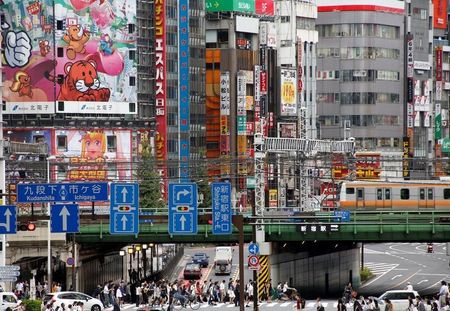
4 reasons why you should own Japan equities
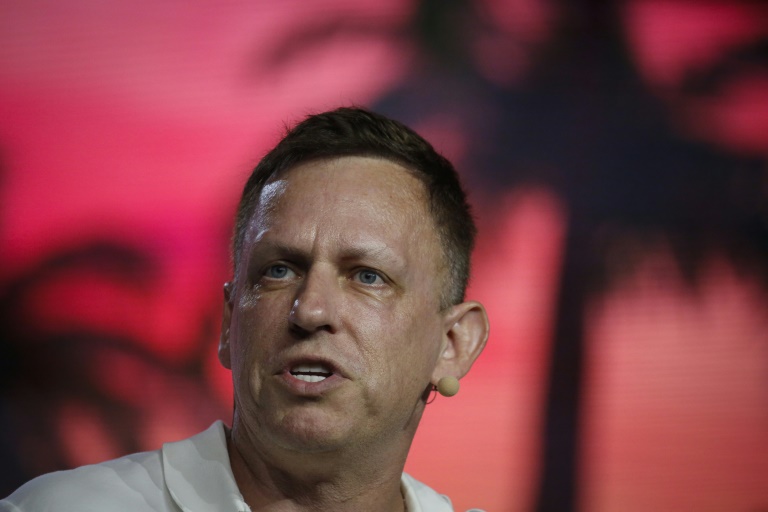
SAN FRANCISCO — Peter Thiel, the billionaire co-founder of PayPal and Palantir Technologies and an early investor in Facebook, remains one of Silicon Valley’s most provocative thinkers. Known for his contrarian views on innovation, competition and the future of humanity, Thiel’s ideas continue to shape startup culture and public discourse even as he delves into topics like artificial intelligence, longevity and biblical prophecy in 2026.
His seminal book “Zero to One: Notes on Startups, or How to Build the Future,” co-authored with Blake Masters, distills lessons from his Stanford lectures and remains a must-read for entrepreneurs. While Thiel has made headlines recently for private lectures on the “Antichrist” and warnings about technological stagnation, his core quotes on business, courage and originality endure as guides for founders navigating uncertain times.
Here are 10 of Thiel’s most powerful and frequently cited quotes, drawn from his writings, interviews and lectures, along with context on why they resonate today.
1. “The most contrarian thing of all is not to oppose the crowd but to think for yourself.”
Thiel emphasizes independent thought over mere rebellion. In a world of groupthink and viral trends, successful innovators identify truths others overlook by returning to first principles. This idea underpins much of his critique of “indefinite optimism” — the vague hope that progress will happen without deliberate planning.
2. “Brilliant thinking is rare, but courage is in even shorter supply than genius.”
Repeated across multiple sources, this line highlights that execution requires bravery more than raw intellect. Thiel, who backed bold bets like SpaceX and Palantir, argues that many smart people fail because they lack the willingness to defy conventional wisdom. A January 2026 wealth column revisited this quote to underscore Thiel’s philosophy that monopoly-building demands fortitude.
3. “Every moment in business happens only once. The next Bill Gates will not build an operating system. The next Larry Page or Sergey Brin won’t make a search engine. And the next Mark Zuckerberg won’t create a social network. If you are copying these guys, you aren’t learning from them.”
From the opening of “Zero to One,” this warns against imitation. True progress comes from creating new categories — going from zero to one — rather than incremental improvements or globalization-fueled competition. In 2026, with AI reshaping industries, Thiel’s call for originality feels especially urgent amid waves of copycat startups.
4. “The best entrepreneurs know this: every great business is built around a secret that’s hidden from the outside. A great company is a conspiracy to change the world; when you share your secret, the recipient becomes a fellow conspirator.”
Thiel portrays successful ventures as quests to uncover and protect unique insights. This “secret” mindset fosters mission-driven teams. He contrasts it with competitive markets where secrets are absent and profits erode.
5. “Monopoly is the condition of every successful business.”
Far from viewing monopolies as evil, Thiel sees them as proof of creating real value through innovation. Competitive markets, he argues, drive businesses to mediocrity. “All happy companies are different: each one earns a monopoly by solving a unique problem. All failed companies are the same: they failed to escape competition,” he writes. This framework influences how venture capitalists evaluate defensibility in 2026’s crowded tech landscape.
6. “Competition can make people hallucinate opportunities where none exist.”
Thiel cautions that intense rivalry distorts reality, leading founders to chase crowded spaces. Instead, he advocates starting in small, overlooked markets and scaling from there. This ties into his broader stagnation thesis, recently reaffirmed in 2025 interviews where he noted slowed progress since the 1970s despite technological advances.
7. “Your mind is software. Program it. Your body is a shell. Change it. Death is a disease. Cure it. Extinction is approaching. Fight it.”
This radical transhumanist declaration reflects Thiel’s long-standing interest in longevity and defying natural limits. He has funded life-extension research and views death as solvable through technology. In recent years, he has connected such ideas to Christian theology and warnings about apocalyptic risks from unchecked globalism or regulation.
8. “Education is a bubble in a classic sense. To call something a bubble, it must be overpriced, and there must be an intense belief in it.”
Thiel famously critiques higher education as an inflated credentialing system that burdens graduates with debt while delivering diminishing returns. He dropped out of Stanford Law School and has promoted alternatives like the Thiel Fellowship, which pays young people to skip college and build companies. This view gained traction amid ongoing debates over student debt and workforce readiness.
9. “What’s preventing you from achieving your ten-year goals inside of six months?”
A provocative challenge to founders, this quote urges aggressive timelines and questions self-imposed limits. Thiel often contrasts “definite optimism” — planning a specific future — with indefinite attitudes that delay progress. It encourages ruthless prioritization in resource-scarce startup environments.
10. “The most valuable businesses of coming decades will be built by entrepreneurs who seek to empower people rather than try to make them obsolete.”
In an era of rapid AI adoption, Thiel stresses technology that augments human capability. He has expressed concerns about stagnation and the need for breakthroughs in energy, transportation and biotechnology. His 2025-2026 lectures on biblical end-times themes and technology regulation tie into broader fears that centralized control could stifle innovation.
Thiel’s influence extends beyond quotes. As a co-founder of Founders Fund, he has backed companies pushing boundaries in defense, data analytics and space. His political involvement, including support for Donald Trump, and recent real estate warnings about a potential “catastrophe” for young Americans reflect a worldview skeptical of mainstream consensus.
Critics accuse Thiel of elitism or overly pessimistic takes on democracy and globalization, citing his statement that “I no longer believe that freedom and democracy are compatible.” Yet supporters praise his willingness to question sacred cows, from university prestige to indefinite progress narratives.
In 2026, with AI accelerating and geopolitical tensions rising, Thiel’s emphasis on secrets, monopolies and courage offers a counterpoint to hype cycles. His recent Rome lectures on the Antichrist — interpreting fears of technology regulation as apocalyptic forces — sparked debate among theologians but underscored his fusion of tech, philosophy and faith.
Entrepreneurs often return to these ideas when facing doubt. Thiel’s PayPal experience taught him that naivety about difficulty can fuel breakthroughs: “If I had known how hard it would be to do something new… I would never have started PayPal.”
His philosophy promotes definite plans over vague hopes. “Indefinite fears about the far future shouldn’t stop us from making definite plans today,” he advises.
As startups grapple with economic pressures and regulatory scrutiny, Thiel’s quotes serve as both inspiration and warning. Building from zero to one requires rejecting imitation, embracing secrets and mustering courage where genius alone falls short.
Thiel continues to invest and speak out, reminding technologists that progress is not inevitable but earned through bold, original action. Whether one agrees with his politics or theology, his core business insights retain power for anyone seeking to create lasting value.
In an age of fast-follower apps and AI wrappers, Thiel’s call to uncover hidden truths and build monopolies on genuine innovation stands as a timeless provocation.


US rescues airman, vows ’hell’ for Iran if Strait stays shut

Iran sets new condition for Hormuz reopening, warns on Red Sea route

Invisible Commerce: Why AI Agents Are Killing the Traditional Checkout for Good

Jessi And Marciano Have Fans Talking: ‘Messi’

Moicano WANTS MONEY #ufcvegas115


-

 NewsBeat3 days ago
Steven Gerrard disagrees with Gary Neville over ‘shock’ Chelsea and Arsenal claim | Football
-

 Business3 days ago
No Jackpot Winner and $194 Million Prize Rolls Over
-

 Fashion2 days ago
Weekend Open Thread: Spanx – Corporette.com
-
Entertainment6 days ago
Fans slam 'heartbreaking' Barbie Dream Fest convention debacle with 'cardboard cutout' experience
-

 Crypto World4 days ago
Gold Price Prediction: Worst Month in 17 Years fo Save Haven Rock
-

 Tech7 days ago
The Pixel 10a doesn’t have a camera bump, and it’s great
-

 Tech7 days ago
Avatar Legends: The Fighting Game comes out in July and it looks pretty slick
-
Crypto World5 days ago
Dems press CFTC, ethics board on prediction-market insider trades
-

 Sports1 day ago
India men’s 4x400m and mixed 4x100m relay teams register big progress | Other Sports News
-

 Business4 days ago
Login and Checkout Issues Spark Merchant Frustration
-

 Tech6 days ago
Apple will hide your email address from apps and websites, but not cops
-

 Tech6 days ago
EE TV is using AI to help you find something to watch
-

 Sports5 days ago
Tallest college basketball player ever, standing at 7-foot-9, entering transfer portal
-

 Politics6 days ago
Should Trump Be Scared Strait?
-

 Tech6 days ago
Flipsnack and the shift toward motion-first business content with living visuals
-
Tech6 days ago
Daily Deal: StackSkills Premium Annual Pass
-

 Fashion6 days ago
The Best Spring Trends of 2026
-

 Sports6 days ago
Women’s hockey camp eyes fitness boost, tactics ahead of WC 2026 campaign | Other Sports News
-

 Crypto World6 days ago
U.S. rule change may open trillions in 401(k) funds to crypto
-

 Tech6 days ago
How to back up your iPhone & iPad to your Mac before something goes wrong
You must be logged in to post a comment Login