
Business
Is Cairo International Airport Open? Airport Fully Operational with Hundreds of Flights


CAIRO — Cairo International Airport (CAI), Egypt’s busiest aviation hub and a key gateway between Africa, Europe, the Middle East and Asia, remains fully open and handling regular commercial passenger traffic on March 21, 2026, despite widespread disruptions across the broader Middle East due to the ongoing U.S.-Israeli conflict with Iran.

Live flight tracking data from the official Cairo Airport website (cairo-airport.com), FlightStats, Flightradar24 and Trip.com confirm active arrivals and departures throughout the day. As of mid-morning local time (UTC+2), the arrivals board lists numerous flights marked as “Landed,” including services from Athens (A3934), Sharm El Sheikh (SM07), Abu Dhabi (MS1915) and others into Terminals 1, 2 and 3. Departures show scheduled operations to destinations such as Luxor, Sharm el Sheikh, Jeddah, Riyadh and international points, with low reported disruption rates — around 2% impact noted on some trackers like Wego.
The airport’s flight information page displays hundreds of movements, with EgyptAir, Air Cairo and other carriers maintaining core domestic routes to Hurghada, Aswan and Luxor alongside international services. EgyptAir’s flight status tool and third-party platforms report on-time performance in the 74% range for recent days, with minimal cancellations tied to the regional crisis. No blanket suspension or closure notices appear on official channels, and the airport continues to promote services like Ahlan passenger assistance and terminal updates.
Egypt’s airspace has stayed open throughout the conflict, positioning Cairo as a vital rerouting and diversion hub. As neighboring countries — including Iran, Iraq, Kuwait, Bahrain, Qatar and parts of the Gulf — imposed full or severe airspace restrictions following missile exchanges and strikes starting late February 2026, airlines diverted long-haul flights over Egyptian territory. Cairo absorbed overflow from closed hubs like Dubai, Doha and Abu Dhabi, with reports of increased traffic from Europe-to-Asia routings avoiding higher-risk corridors.
Early in the escalation, EgyptAir temporarily suspended flights to 13 regional cities including Dubai, Doha, Beirut, Amman and Baghdad due to direct threats and airspace issues in those areas. However, by mid-March, many carriers gradually resumed or maintained services via safer paths, and Cairo’s operations normalized for unaffected routes. Domestic tourism corridors along the Nile (Cairo-Luxor-Aswan) and Red Sea resorts (Hurghada, Sharm el Sheikh) face no major interruptions.
Authorities placed airports on high alert from the conflict’s outset, coordinating with military and civil aviation bodies to ensure safety amid potential spillover risks. No direct strikes or significant damage have been reported at CAI, unlike incidents affecting facilities in Kuwait and other Gulf states. Egyptian officials emphasized readiness to handle diversions, with contingency measures including enhanced security and radar monitoring.
The U.S. State Department and other governments issued broad advisories urging caution in the Middle East, including Egypt, but stopped short of prohibiting travel or mandating evacuations specific to Cairo. Tourism stakeholders highlighted Egypt’s relative stability, with record visitor numbers projected for 2026 despite regional volatility.
Travelers should verify individual flight status directly with airlines, as dynamic changes can occur due to overflight permissions, fuel considerations or last-minute adjustments. EgyptAir, the primary operator at CAI, urges passengers to check its app or website before heading to the airport. Third-party trackers like FlightAware and Skyscanner provide real-time updates, showing consistent activity even during peak hours.
Cairo’s resilience underscores its strategic role in global aviation networks. With Terminals 1, 2 and 3 operational and ongoing infrastructure projects (including Terminal 4 expansions) progressing, the airport serves as a stable anchor while much of the Gulf aviation sector grapples with prolonged closures.
Passengers planning travel to or through Cairo today or in coming days should monitor official sources: the Cairo Airport website, airline notifications and live trackers. As the conflict remains fluid, situational awareness is key, but current data confirms normal commercial operations at one of Africa’s largest hubs.


Operator
Greetings, and welcome to the Civeo Corporation First Quarter 2026 Earnings Call. [Operator Instructions]As a reminder, this conference is being recorded. It is now my pleasure to introduce Regan Nielsen, Vice President, Corporate Development and Investor Relations. Please go ahead.
Regan Nielsen
Senior Director of Corporate Development & Investor Relations
Thank you, and welcome to Civeo’s First Quarter 2026 Earnings Conference Call. Today, our call will be led by Bradley Dodson, Civeo’s President and Chief Executive Officer; and Collin Gerry, Civeo’s Chief Financial Officer and Treasurer.
Before we begin, we would like to caution listeners regarding forward-looking statements. To the extent that our remarks today contain anything other than historical information, please note that we’re relying on the safe harbor protections afforded by federal law. These forward-looking statements speak only as of the date of our earnings release and this conference call.
We undertake no obligation to update or revise these statements, except as required by law. Any such remarks should be read in the context of the many factors that affect our business, including risks and uncertainties disclosed in our Forms 10-K, 10-Q and other SEC filings.
I’ll now turn the call over to Bradley.
Bradley Dodson
CEO, President & Director
Thank you, Regan, and thank you all for joining us today on our first quarter 2026 earnings call. I’ll start with some key takeaways for the quarter and summarize our consolidated and regional performance, after that, Collin will provide

Sony’s PlayStation 6 remains on the horizon, with industry insiders pointing to a potential late 2027 or 2028 launch following the successful lifecycle of the PlayStation 5 and its Pro variant. While official details are scarce, leaks, analyst reports and hardware trends paint an exciting picture of what gamers can expect. As anticipation builds, here are 10 compelling reasons why the PS6 could prove irresistible upon release, blending technological leaps with enhanced experiences that build on PlayStation’s legacy.

First, raw performance gains promise a generational leap. Rumors suggest an AMD Zen 6 CPU paired with RDNA 5 graphics architecture, potentially delivering 4K at 120 frames per second or higher with advanced ray tracing. This addresses current-gen bottlenecks, enabling more immersive worlds, detailed environments and smoother gameplay in demanding titles. Developers could push boundaries in open-world adventures or fast-paced multiplayer without compromises, making the PS6 a powerhouse for next-generation visuals.
Second, expanded memory and storage will eliminate loading screens and limitations. Leaks mention up to 32GB of GDDR7 RAM and larger SSDs, possibly starting at 2TB. Faster data throughput supports seamless streaming of assets, massive textures and complex simulations. Gamers tired of managing storage or waiting for installs will appreciate the freedom to download expansive libraries without hesitation.
Third, backward compatibility stands as a major draw. Sony has prioritized preserving libraries across generations, and the PS6 is expected to support PS5, PS4 and potentially earlier titles through enhanced emulation. Players could revisit thousands of games with improved performance, higher resolutions and faster load times — a value proposition that extends the life of existing collections while easing the transition.
Fourth, AI integration could revolutionize gameplay and visuals. Features like advanced upscaling — building on PlayStation Spectral Super Resolution — might use neural processing for real-time enhancements, delivering sharper images even on 8K displays or when targeting high frame rates. AI-driven NPCs, dynamic difficulty and procedural content generation could create more responsive, personalized experiences that evolve with player behavior.
Fifth, a potential hybrid or modular design appeals to diverse users. Reports hint at multiple SKUs, including a standard model, a more affordable “S” or Lite version, and possibly a dedicated handheld companion. This flexibility caters to budget-conscious gamers, portability seekers and enthusiasts wanting premium power, broadening accessibility without sacrificing core capabilities.
Sixth, energy efficiency and sustainability improvements align with modern expectations. Next-gen hardware is likely to deliver higher performance per watt, reducing electricity costs and heat output. Sony’s focus on eco-friendly materials and recyclable components could attract environmentally conscious consumers while supporting longer play sessions without excessive power draw.
Seventh, enhanced controller technology will elevate immersion. Building on DualSense haptic feedback and adaptive triggers, the PS6 controller may introduce finer tactile responses, longer battery life, improved ergonomics and new sensors. These advancements make every gunshot, footstep or environmental interaction feel more realistic, deepening emotional connections to games.
Eighth, seamless cloud and streaming features promise flexibility. Deeper integration with cloud gaming services allows playing high-fidelity titles on various devices, from handhelds to smart TVs. Remote play enhancements and cross-platform progression ensure gamers never miss a moment, whether at home or on the go.
Ninth, a robust exclusive lineup is anticipated at launch. Sony’s first-party studios, including those behind “God of War,” “Horizon,” “Spider-Man” and “The Last of Us,” are poised to deliver flagship titles optimized for new hardware. These blockbuster experiences, combined with third-party support, provide immediate reasons to upgrade rather than waiting for price drops.
Tenth, long-term value through ecosystem continuity. PlayStation Network, trophies, friends lists and digital libraries carry forward, creating a seamless upgrade path. Subscription services like PlayStation Plus could expand with PS6-specific perks, such as enhanced cloud saves or early access trials, ensuring ongoing engagement and community connection.
Pricing speculation centers around $500 for the standard model, with variations for different configurations. While memory shortages have fueled delay rumors — potentially pushing launch to 2028 or 2029 — Sony’s track record suggests a polished product that justifies the wait. Analysts note the PS5’s extended lifecycle provides breathing room for mature development tools and mature game designs.
Industry watchers highlight the PS6’s potential to address current-gen pain points while introducing innovations. Faster SSDs, superior ray tracing and AI assistance could make games feel truly next-generation. For families, the console’s multimedia capabilities — 8K video playback, advanced audio and entertainment apps — position it as a complete home hub.
Critics caution that success depends on execution. Supply chain stability, competitive pricing against rivals and a strong software slate will determine adoption. Yet enthusiasm remains high, with online discussions focusing on desired features like improved voice chat, customizable UI and deeper social integration.
As development continues behind closed doors, leaks from reliable sources fuel speculation. AMD partnerships suggest custom silicon tailored for gaming demands, balancing power with efficiency. Handheld rumors add excitement for portable PlayStation experiences that sync with the home console.
Gamers weighing an upgrade from PS5 or earlier systems will find compelling incentives in the PS6’s capabilities. Whether chasing graphical fidelity, narrative depth or multiplayer thrills, the console promises to elevate the hobby. Early adopters often enjoy premium features and community prestige before broader availability.
Sony’s history of innovation — from DualShock to DualSense — suggests the PS6 will introduce meaningful advancements rather than incremental updates. The combination of hardware muscle, software excellence and ecosystem strength positions it as a worthwhile investment for dedicated players.
In summary, the PlayStation 6 represents more than a hardware refresh. It embodies the future of interactive entertainment, with performance, accessibility and creativity at its core. As launch approaches, these 10 reasons underscore why many will line up to experience the next chapter in PlayStation’s storied history.
Business
Colgate-Palmolive Company 2026 Q1 – Results – Earnings Call Presentation (NYSE:CL) 2026-05-01

Seeking Alpha’s transcripts team is responsible for the development of all of our transcript-related projects. We currently publish thousands of quarterly earnings calls per quarter on our site and are continuing to grow and expand our coverage. The purpose of this profile is to allow us to share with our readers new transcript-related developments. Thanks, SA Transcripts Team
Zelle, the popular peer-to-peer payment network used by millions of Americans through their banks and credit unions, has seen scattered user reports of issues on Friday, though major monitoring sites indicate no widespread outage affecting the service as of early May 2026. Customers attempting transfers have posted complaints about delayed processing, app errors and failed transactions, prompting many to ask: Is Zelle down today?
Downdetector and similar platforms show elevated but not critical reports in the past 24 hours, with most complaints centered on funds transfers, the mobile app and general payments. Spikes appeared around mid-morning Eastern Time, yet Zelle’s core network and partner banks report normal operations for the vast majority of users. Isolated problems often stem from individual bank integrations, network congestion or user-side issues rather than a full system failure.
Zelle operates as a digital payments rail connecting over 2,000 financial institutions. Users send money instantly using email or phone numbers when both parties are enrolled. The service’s convenience has made it a staple for splitting bills, repaying friends and handling small business transactions. However, its decentralized nature — relying on participating banks — means disruptions at one institution can affect subsets of users without bringing down the entire network.
On Friday, affected customers described symptoms including error messages during send attempts, pending transfers that fail to complete and app crashes. Some reported receiving funds on one end but not seeing updates on the other. Others noted delays beyond the typical near-instant processing. These issues align with past minor glitches rather than the major outages that occasionally halt service nationwide.
To check Zelle’s status, users should first visit Downdetector.com or StatusGator for real-time graphs and user reports. Official bank apps or websites often provide their own service alerts. Zelle’s help center encourages contacting your financial institution directly, as problems frequently trace to bank-specific servers or maintenance windows. Clearing the app cache, updating software or trying a different device can resolve many temporary glitches.
Industry experts note that digital payment platforms like Zelle experience occasional hiccups due to high transaction volumes, cybersecurity protocols or routine updates. Friday’s reports do not appear coordinated with any announced maintenance, suggesting localized or user-specific causes. No official Zelle statement confirmed a broad outage, and service health indicators remained green on major trackers.
For those impacted, patience often proves key. Most transfers eventually process once temporary issues clear. In rare cases of prolonged delays exceeding three days, Zelle recommends verifying enrollment details and reaching out to bank support. Users should avoid resending funds immediately to prevent duplicates, and always confirm recipient information before initiating payments.
Zelle’s popularity surged post-pandemic as contactless payments became preferred. The network handles billions in transfers annually with strong security features, including encryption and fraud monitoring. Banks integrate Zelle directly into their mobile apps, eliminating the need for a standalone service in many cases after the dedicated Zelle app was phased out.
Common troubleshooting steps include:
- Restarting the phone or app.
- Checking internet connection stability.
- Verifying sufficient account balances and daily limits.
- Updating the banking app to the latest version.
- Trying the web version of the bank’s online banking if the mobile app fails.
If problems persist, contacting customer service during business hours yields faster resolutions. Some banks offer 24/7 support for payment issues.
Broader context reveals digital payments face growing scrutiny over reliability during peak times. Competitors like Venmo, Cash App and bank-owned services provide alternatives when Zelle falters. Users often maintain multiple options to avoid disruption in urgent transfers for rent, bills or emergencies.
Security remains paramount. Zelle users should enable two-factor authentication, monitor accounts regularly and report suspicious activity immediately. The service’s design — sending money directly between bank accounts — reduces some risks associated with third-party apps but requires vigilance against scams where fraudsters impersonate friends or vendors.
Financial experts advise treating Zelle like cash: only send to trusted parties. Irreversible transfers mean disputes rely on bank policies rather than built-in buyer protection. This Friday’s minor issues highlight the importance of having backup payment methods, especially for time-sensitive needs.
As the day progresses, monitoring sites will update with fresh data. Most users encountering problems Friday afternoon reported gradual resolution, suggesting transient network strain or regional bank maintenance rather than systemic failure. Zelle typically resolves such spikes quickly through partner coordination.
For businesses using Zelle for customer payments or vendor disbursements, diversification mitigates risks. Larger enterprises often prefer ACH, wire transfers or invoicing platforms with stronger reconciliation tools. Individuals planning major transfers might schedule outside peak hours or confirm receipt before relying on immediate availability.
Zelle continues evolving with features like request money options, group payments and improved fraud detection. Future enhancements could include broader international support or integration with emerging payment technologies, strengthening its position in the U.S. digital wallet landscape.
In the meantime, customers facing issues today should document attempts with screenshots and timestamps for potential bank follow-up. Most banks investigate delayed or failed Zelle transfers promptly upon request. Staying informed through official channels prevents unnecessary worry during minor service fluctuations.
Overall, while some users experienced hiccups with Zelle on Friday, the service appears largely operational. Routine checks and basic troubleshooting resolve the majority of reports. As digital finance grows, platforms like Zelle balance convenience with reliability challenges inherent to real-time networks. Users can expect continued improvements as technology and infrastructure advance.

On Semiconductor stock reaches 52-week high at 103.03 USD

MoneyShow — an industry pioneer in investor education since 1981 — is a global, financial media company, operating the world’s leading investment and trading conferences. Each show brings together thousands of investors to attend workshops, presentations and seminars given by the nation’s top financial experts. The company also offers exclusive seminars-at-sea, with the investment industry’s leading partners. In addition, MoneyShow operates the award-winning, multimedia online community, Moneyshow.com and publishes free Investing and Trading newsletters, which provide individual investors with exclusive ongoing access to the latest investment and trading ideas from the nation’s most respected and trusted financial newsletter advisors.

The state government has promised to allocate more than $200 million in the upcoming budget to boost TAFE and training initiatives.

MINNEAPOLIS — Minnesota Timberwolves star Anthony Edwards is navigating a left knee hyperextension and bone bruise that has sidelined him for key playoff games, with the team listing him as week-to-week as of late April 2026. The injury, sustained in Game 4 against the Denver Nuggets, has raised questions about his return timeline and the protocol he is following during recovery.
Edwards went down awkwardly while contesting a shot in the first half of Minnesota’s victory, buckling his left knee backward in a non-contact play that immediately drew concern from medical staff and teammates. Initial imaging ruled out ligament damage — a significant relief — but confirmed the bone bruise and hyperextension that typically require careful management to avoid long-term complications.
The Timberwolves have placed Edwards on a structured return-to-play protocol common for such injuries. This involves rest, inflammation control through ice and compression, followed by progressive physical therapy focusing on range of motion, strength building and sport-specific movements. Bone bruises heal gradually as the bone marrow swelling subsides, often taking two to four weeks depending on severity. Edwards is reportedly ahead of conservative timelines in some aspects, but the team remains cautious given the high-stakes playoff environment.
Team officials described the protocol as individualized, incorporating daily monitoring, imaging follow-ups and functional testing before clearing Edwards for on-court activities. Coach Chris Finch noted optimism, stating that extending the series could align with Edwards’ recovery curve, potentially allowing a return in later rounds if Minnesota advances. However, the immediate focus remains on Game 5 and beyond without their leading scorer.
The injury adds to a challenging postseason for the Timberwolves, who also lost guard Donte DiVincenzo to a season-ending Achilles tear in the same game. Edwards, averaging around 28 points per game in the regular season, has been central to Minnesota’s offensive identity with his explosive scoring, playmaking and defensive energy. His absence forces adjustments, with players like Julius Randle, Anthony Edwards’ teammates stepping into larger roles.
Medical experts explain that knee hyperextensions stress the posterior structures while bone bruises — essentially microfractures or bleeding in the bone — cause pain and limited mobility. Recovery protocols typically progress through phases: acute protection, subacute strengthening, and functional return. Edwards likely works with trainers on quadriceps activation, hamstring balance and proprioception drills to stabilize the joint. Anti-inflammatory measures and possibly regenerative treatments accelerate healing without risking re-injury.
Timberwolves fans and analysts express mixed emotions. While Edwards’ toughness suggests he may push for an earlier return, medical best practices prioritize long-term health over short-term heroics. A premature comeback could exacerbate the bruise, leading to extended time lost or compensatory injuries elsewhere. The organization has emphasized patience, aligning with NBA trends toward conservative management of star players.
This marks another chapter in Edwards’ injury history, following earlier knee soreness that sidelined him for games in March. At 24 years old, the dynamic guard’s durability will be scrutinized as he enters his prime. His explosiveness — a hallmark of his game — relies on healthy knees, making proper rehabilitation essential for sustained superstar performance.
Playoff implications are significant. Minnesota led the Nuggets series 3-1 before Edwards’ injury, but without him, advancing becomes a steeper climb. Edwards’ gravity as a scorer opens driving lanes and shooting opportunities for teammates. His defensive versatility helps contain stars like Nikola Jokic. Replacement production has been solid but inconsistent, highlighting the challenge of replacing an All-Star’s output.
Broader NBA context shows similar injuries sidelining players for varying durations. Bone bruises in high-profile athletes often resolve within two to six weeks with modern protocols, including blood flow restriction training, platelet-rich plasma injections or hyperbaric therapy in some cases. Edwards’ youth and conditioning provide advantages, potentially shortening his timeline compared to older players.
Fan discussions on social media reflect concern mixed with hope. Many reference Edwards’ history of bouncing back quickly, citing his work ethic and competitive drive. Others urge caution, pointing to examples where stars rushed returns only to face setbacks. The Timberwolves’ medical staff, known for thoroughness, will guide decisions based on objective measures like swelling reduction, strength symmetry and pain-free movement.
Looking ahead, Edwards’ return could energize a deep playoff run if Minnesota survives the first round. The Western Conference remains competitive, with strong teams awaiting. A healthy Edwards elevates the Timberwolves’ ceiling as contenders, blending athleticism with growing leadership. Offseason training focused on knee resilience may become a priority regardless of this series outcome.
In the interim, the Timberwolves lean on depth and defensive intensity. Finch has praised the group’s resilience, but acknowledges Edwards’ unique impact. Updates will continue as testing and practice participation provide clearer pictures. For now, the protocol emphasizes healing over haste, a prudent approach for a franchise building around its young star.
Edwards himself has remained positive in public statements, focusing on supporting teammates from the sideline while preparing for his comeback. His presence in the locker room and on the bench provides intangible value during this challenging stretch. As the NBA postseason unfolds, all eyes remain on his recovery progress and potential return date.
The sports medicine community continues advancing treatments for knee injuries, offering hope for faster, stronger returns. Edwards benefits from top-tier care, positioning him well for full recovery and future dominance. For Timberwolves fans, the wait tests patience but promises a more explosive Ant-Man upon return.

FORT LAUDERDALE, Fla. — Spirit Airlines is preparing for a potential shutdown or liquidation as the ultra-low-cost carrier grapples with mounting financial pressures, including surging fuel costs and unresolved bankruptcy challenges, according to multiple reports and industry sources. The airline, which filed for Chapter 11 protection twice in recent years, faces an uncertain future that could reshape the U.S. aviation landscape and affect millions of budget travelers.

Spirit has not officially confirmed plans to cease operations, but sources indicate the carrier could halt flights as early as this week or by the end of May if restructuring efforts fail. The airline reached out to the Trump administration seeking emergency assistance, including potential loans or bailouts, as fuel prices spiked following geopolitical tensions. A third bankruptcy filing or outright liquidation appears increasingly likely without intervention.
The discount carrier’s troubles stem from a combination of factors. Spirit filed for bankruptcy in November 2024 and again in August 2025 after a blocked merger with JetBlue left it financially strained. A restructuring agreement announced earlier in 2026 aimed for emergence by early summer, with fleet reductions and focus on profitable routes. However, rising jet fuel costs — exacerbated by global events — have upended those plans, adding hundreds of millions in unexpected expenses against a precarious cash position.
Analysts project Spirit could face an additional $360 million in costs this year, threatening its roughly $337 million cash balance at the end of 2025. The airline has already shrunk dramatically, selling aircraft, exiting airports and cutting summer schedules by nearly 40 percent. These moves aimed to preserve liquidity but signal deeper operational distress.
For passengers, a Spirit shutdown would disrupt travel plans nationwide. The carrier serves dozens of cities with ultra-low fares that force competitors to match prices, benefiting consumers even if they choose other airlines. Industry experts warn of short-term capacity reductions, higher fares on affected routes and potential stranding of ticket holders if flights cancel abruptly. Travelers with upcoming Spirit bookings should monitor communications and consider alternatives or travel insurance.
The broader airline industry could feel ripple effects. Spirit’s ultra-low-cost model pioneered unbundled fares and ancillary revenue streams now standard across carriers. Its potential exit might ease some competitive pressure on legacy airlines but could prompt consolidation or new entrants in the budget segment. Rivals like Frontier Airlines might absorb routes or aircraft, while major carriers could see temporary demand spikes.
Labor unions representing Spirit pilots, flight attendants and ground crew express deep concern. Thousands of jobs hang in the balance, with seniority lists, benefits and pensions at risk in liquidation. Union leaders urge government support to preserve employment while criticizing past management decisions that led to repeated bankruptcies. Spirit executives have emphasized employee support in restructuring communications, but details remain sparse.
Regulatory and political dimensions add complexity. The Biden administration’s earlier block of the JetBlue merger drew criticism for eliminating a path to stability. Now, with a new administration in place, Spirit’s bailout request tests policy approaches to distressed carriers. Supporters argue preserving competition benefits consumers; opponents question using public funds for a repeatedly troubled operator.
Spirit’s history reflects the brutal economics of ultra-low-cost flying. Founded in 1990, it grew aggressively by charging for nearly everything beyond a seat, pioneering a model copied widely. High fuel prices, maintenance costs for an aging Airbus fleet and post-pandemic demand shifts strained finances even before merger attempts. Two Chapter 11 filings in under a year underscore structural vulnerabilities in a capital-intensive industry.
Financial metrics paint a grim picture. Debt obligations loom large while revenue generation struggles amid capacity cuts and competitive pricing. Analysts from JPMorgan and others have lowered expectations, with some predicting liquidation absent external aid. Spirit’s market capitalization has plummeted, reflecting investor skepticism about long-term viability.
Customers holding Spirit tickets or gift cards face uncertainty. Bankruptcy protections typically prioritize refunds or rebooking, but liquidation could complicate claims. The Department of Transportation requires airlines to honor commitments, yet enforcement during rapid shutdowns proves challenging. Passengers should document bookings and contact banks or credit cards for chargeback options if services cancel.
Industry watchers draw parallels to past failures like Virgin America or AirTran, where acquisitions absorbed assets. Spirit’s Airbus fleet and slots hold value, potentially attracting buyers if liquidation proceeds. However, current market conditions — elevated fuel, interest rates and labor costs — deter quick rescues compared to previous cycles.
Spirit executives maintain optimism in public statements, focusing on restructuring progress and core market strength. Insiders, however, describe frantic behind-the-scenes efforts for financing or sale. A government-backed loan or equity stake could provide runway, but terms would likely include significant concessions on operations and governance.
The situation highlights vulnerabilities in the U.S. airline sector. Low-cost carriers drive competition and affordability yet operate with thin margins susceptible to external shocks. Policymakers face dilemmas balancing free markets with consumer protection and employment preservation. A Spirit failure could accelerate industry concentration, reducing choices for leisure travelers who rely on budget options.
As developments unfold, all eyes remain on Washington and Spirit’s headquarters. A shutdown would mark the end of an era for one of America’s most disruptive airlines, reshaping routes, fares and competition nationwide. For now, passengers and employees await clarity amid mounting speculation of Spirit’s potential demise.
‘Varney & Co.’ host Stuart Varney comments on King Charles’ visit to the U.S. and the growing split between the U.S. and Europe during his ‘My Take.’
President Donald Trump announced Friday he was raising tariffs on European cars to 25%, citing the European Union’s noncompliance with the U.S.-EU trade deal.
“I am pleased to announce that, based on the fact the European Union is not complying with our fully agreed to Trade Deal, next week I will be increasing Tariffs charged to the European Union for Cars and Trucks coming into the United States. The Tariff will be increased to 25%,” Trump wrote in a Friday morning Truth Social post.
He did, however, indicate that he would drop the tariffs if European companies agreed to manufacture their cars in the U.S.
“It is fully understood and agreed that, if they produce Cars and Trucks in U.S.A. Plants, there will be NO TARIFF,” Trump also wrote.
FEDEX, UPS PLEDGE TO REFUND CUSTOMERS AFTER SUPREME COURT TARIFF DECISION

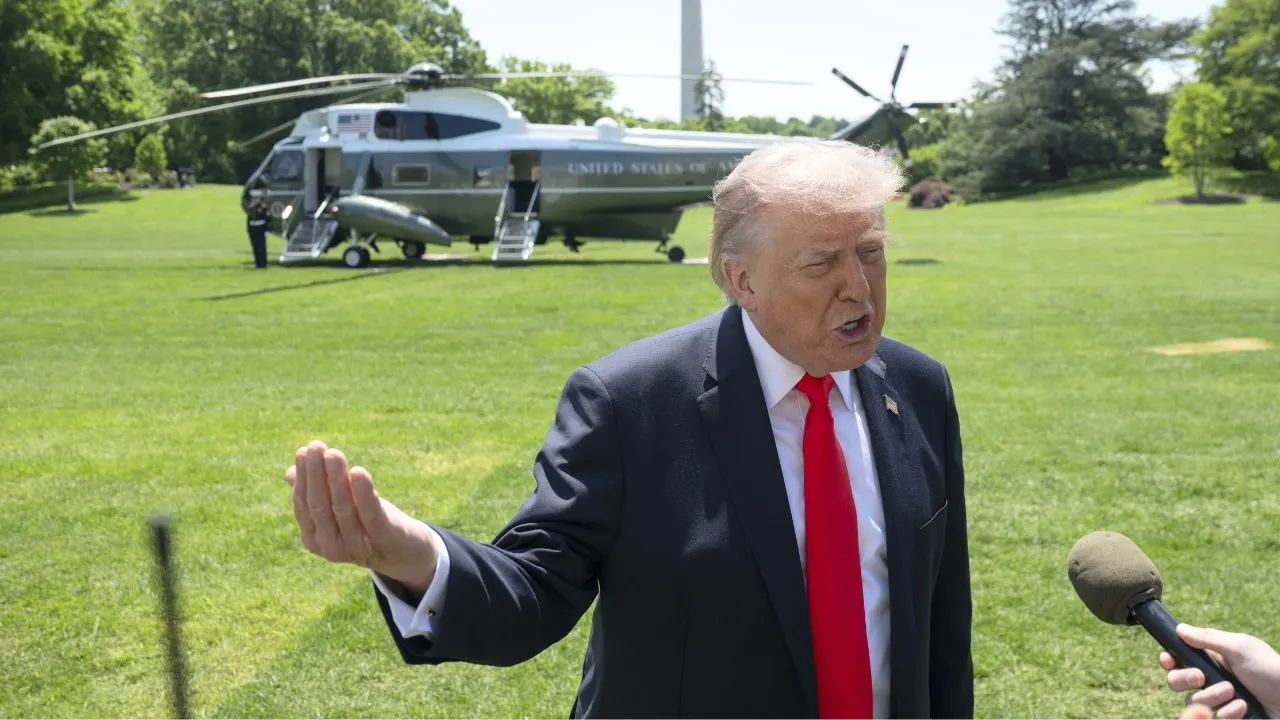
President Donald Trump speaks to the press before departing the White House for Florida on May 1, 2026, in Washington, D.C. (Celal Gunes/Anadolu via Getty Images / Getty Images)
He reiterated the point while speaking to reporters at the White House on Friday.
STICKER SHOCK: WHY US CARS ARE FROZEN OUT OF THE EUROPEAN MARKET
“We raised the tariffs on cars coming in from the European Union because the European Union was not adhering to the trade deal we have. So based on that now, when they build their plants on which they’re spending over $100 billion for countries, not just the Union, but when those plants open, there won’t be any tariffs,” Trump told reporters.

Cars are loaded onto the car carrier ship Polaris Liberty at the automotive terminal on Aug. 11, 2025, in Bremerhaven, Germany. The U.S. will apply a 25 percent tariff to all European vehicles, U.S. President Donald Trump announced May 1, 2026. (Focke Strangmann/Getty Images / Getty Images)
He also touted ongoing U.S. manufacturing of car plants.
“We have right now in the United States over $100 billion of car plants being built. That’s a record. We’ve never had anything like it, from all countries, Japan, South Korea, every, by the way, Canada, Mexico, they’re all building plants in the United States. But the European Union was not adhering to the deal that we made,” Trump said.

President Donald Trump walks with Executive chair of Ford Motor Company Bill Ford Jr. and CEO of Ford Motor Company Jim Farley as they tour the Ford River Rouge Complex on Jan. 13, 2026, in Dearborn, Michigan. (Getty Images / Getty Images)
GET FOX BUSINESS ON THE GO BY CLICKING HERE
The U.S. and EU reached a landmark trade deal in July that saw the President agree to lower tariff rates on EU cars and trucks from its previous 27.5% to 15%.

Row over Scarborough’s ‘new town centre’ retail park proposal

Civeo Corporation (CVEO) Q1 2026 Earnings Call Transcript
XRP’s Sentiment Turns Bullish, But What Is Stopping a Price Breakout?

Manchester United reach agreement with Casemiro over contract clause amid transfer speculation

US brings back mandatory military draft registration

Steven Gerrard disagrees with Gary Neville over ‘shock’ Chelsea and Arsenal claim | Football

CMA Inter Financial Accounting Marathon Part 2 by CA CMA Santosh Kumar | June & Dec 2026 Attempt

“I Just Lost Everything” – WTF Happened To Bitcoin?!

Former CFTC Chair SLIPS UP About Ripple/XRP… They’ve Planned This For Years! It’s Finally Go Time!
-

 Tech4 days ago
Register Renaming | Hackaday
-
 Crypto World6 days ago
Hyperliquid $HYPE Rally Builds Momentum as AI Sector Enters Prove-It Phase
-

 Politics4 days ago
Drax board avoid their own AGM, accused of greenwashing & environmental racism
-

 Tech4 days ago
Images of Samsung’s rumored smart glasses have leaked
-

 Tech4 days ago
Why Blue Badges Disappeared From Toyota Hybrids
-
 Sports5 days ago
IPL 2026: Ruturaj Gaikwad registers slowest fifty of the season, enters all-time unwanted list | Cricket News
-

 NewsBeat5 days ago
LK Bennett closes all stores after entering administration
-

 Fashion3 days ago
Kylie Jenner’s KHY Enters a New Era with ‘Born in LA’
-
 Entertainment6 days ago
Mariah Carey Slams Deposition Claims In Brother’s Lawsuit
-

 Business3 days ago
Most Commercial Energy Audits Miss the Real Losses
-
 Tech2 hours ago
Trump’s 25% EU auto tariff breaches Turnberry Agreement that also covers semiconductors and digital trade
-

 Business4 days ago
(VIDEO) Charlize Theron Climbs Times Square Billboard to Promote New Netflix Thriller ‘Apex’
-

 Crypto World3 days ago
CFTC’s AI will review U.S. crypto registration applications, chairman tells CoinDesk
-

 Business2 days ago
Barclay Brothers Avoid Bankruptcy: HSBC Drops High Court Petitions After IVA Deal
-
 Crypto World7 days ago
Nvidia (NVDA) Stock Jumps 5% as Intel Earnings Ignite Semiconductor Rally
-

 Tech6 days ago
Microsoft to roll out Entra passkeys on Windows in late April
-

 Tech6 days ago
OpenAI’s Sam Altman apologizes for not reporting ChatGPT account of Tumbler Ridge suspect to police
-
 Sports1 hour ago
Paul Scholes issues Marcus Rashford reality check as agreement emerges over Man United star
-
 Tech6 days ago
OpenAI CEO apologizes to Tumbler Ridge community
-
 Business2 days ago
Tesla Officially Registers Elon Musk’s Stock: What Investors Need to Know
You must be logged in to post a comment Login