
Business
Is Claude Still Down? Anthropic’s Claude AI Chatbot Hit by Widespread Outage Amid Surge in Demand

Anthropic’s popular Claude AI chatbot experienced a global outage on March 2, 2026, leaving thousands of users unable to access the service for several hours as the company attributed the disruption to unprecedented demand following recent explosive growth in usage.
The incident, which began early Monday morning U.S. time, affected consumer-facing platforms including claude.ai, the Claude mobile apps, Claude Code (the AI-powered coding assistant) and Claude Opus 4.6, the company’s latest flagship large language model. Business integrations via the Claude API remained operational throughout, allowing enterprises to continue using the technology without interruption.
Anthropic first acknowledged the problem on its official status page at 11:49 UTC (6:49 a.m. ET), posting that it was “currently investigating” elevated errors across multiple services. Subsequent updates detailed issues tied to login and logout pathways on claude.ai, with some API methods failing and users encountering HTTP 500 internal server errors, 529 service unavailable codes, timeouts and messages such as “Claude will return soon” or “That’s not working right now. You can try again later.”
Service-monitoring platform Downdetector recorded a sharp spike in reports, peaking at nearly 2,000 user complaints around 6:40 a.m. ET. Complaints originated from regions worldwide, including the United States, Europe, India and Africa, indicating a broad rather than localized failure.
In statements provided to media outlets including Mashable, Bloomberg and The Hill, Anthropic emphasized that the outage stemmed from “unprecedented demand” observed over the preceding week. The company had seen Claude climb to the top of app store rankings in multiple categories shortly before the incident, reflecting rapid adoption amid growing interest in its safety-focused AI capabilities.
“We’re grateful to our users while the team works to match the incredible demand we’ve seen for Claude in recent days,” Anthropic said in a direct statement shared with reporters around 11 a.m. ET. The company confirmed resolution shortly thereafter, declaring all consumer-facing services “back up and running” by late morning Pacific time after deploying fixes and monitoring recovery.
The disruption lasted approximately two to three hours for most users, though intermittent issues persisted in some cases as systems stabilized. Anthropic’s status page transitioned from “Investigating” to “Identified” and “Fix Implemented” phases before marking the primary incident resolved, with follow-up monitoring for related components.
Industry observers noted the outage highlights the challenges facing fast-growing AI providers. Claude’s rise has positioned it as a strong competitor to models from OpenAI and Google, particularly among users valuing its constitutional AI approach that prioritizes helpfulness without excessive caution or bias. Recent benchmarks showed Claude Opus 4.6 outperforming rivals in certain reasoning and coding tasks, fueling the surge that strained infrastructure.
“This is the classic ‘success tax’ in AI services,” said one analyst familiar with cloud scaling for large language models. “When a model suddenly tops charts and sees viral adoption, even robust systems can buckle under traffic spikes that exceed provisioning forecasts.”
Unlike previous outages at rival platforms, Anthropic’s consumer services bore the brunt while the enterprise API stayed online — a deliberate architectural choice that shielded paying business customers from impact. Developers integrating Claude into workflows reported no downtime on that front, underscoring the company’s focus on reliability for high-stakes applications.
User reactions on social media and forums like Reddit ranged from frustration to understanding, with many expressing sympathy for the team handling the influx. Some speculated the timing coincided with backlash against competitors, including OpenAI’s reported partnerships, prompting a temporary shift of users to Claude.
Anthropic has not disclosed specific technical root causes beyond authentication and API method failures, nor provided details on capacity expansions underway. The company has invested heavily in infrastructure since its founding, partnering with major cloud providers and securing billions in funding to scale compute resources.
As of March 4, 2026, Anthropic’s status page showed no active major incidents related to the March 2 event, though a separate unresolved issue with usage reporting lingered under monitoring following a fix deployment. Downdetector indicated normal activity levels, with no elevated reports in the preceding 24 hours.
The episode serves as a reminder of the fragility in the booming generative AI sector, where demand can outpace even the most prepared operators. For Anthropic, the outage arrived at a pivotal moment of market momentum, testing its ability to convert viral interest into sustained reliability.
Users affected by the brief downtime were advised to refresh sessions or check status.claude.com for real-time updates in future incidents. Anthropic pledged continued improvements to handle growing traffic, signaling confidence that such disruptions would remain rare as scaling efforts advance.
With Claude now restored and demand showing no signs of abating, the company appears poised to capitalize on its position while addressing the infrastructure lessons from this high-visibility hiccup.


ServiceTitan falls 40% after InvestingPro overvaluation warning

RBC Capital reiterates BioCryst stock rating on takeout potential

The head of the world’s largest asset manager has warned that a sustained surge in oil prices to $150 a barrel could push the global economy into a sharp recession, as geopolitical tensions continue to destabilise energy markets.
Larry Fink, chief executive of BlackRock, said the trajectory of the Middle East conflict, particularly the role of Iran, will determine whether the world faces a temporary disruption or a prolonged economic shock.
“If oil prices stay elevated and Iran remains a threat, that will have profound implications,” he said, warning that a scenario of sustained high prices could lead to “a probably stark and steep recession”.
Fink outlined two contrasting outcomes for global markets.
In a more optimistic scenario, a resolution to the conflict and a stabilisation of relations could see oil prices fall back below pre-war levels, easing inflationary pressures and supporting growth.
However, in the more pessimistic case, prolonged instability could drive oil prices above $100, and potentially towards $150, for several years. That would significantly increase costs for businesses and consumers, acting as a drag on economic activity worldwide.
Energy prices have already surged in recent weeks, with Brent crude climbing sharply amid disruptions to supply routes and heightened uncertainty over future production.
Fink emphasised that rising energy prices disproportionately affect lower-income households, describing them as a “very regressive tax”.
“Higher energy costs hit the poorest the hardest,” he said, noting that sustained increases would not only dampen consumer spending but also exacerbate inequality.
The warning comes as governments, including the UK, face growing pressure to shield households and businesses from rising costs, even as public finances remain stretched.
The BlackRock chief urged policymakers to adopt a pragmatic approach to energy policy, combining existing fossil fuel resources with accelerated investment in renewables.
“Use what you have, unquestionably, but also aggressively move towards alternative sources,” he said.
He argued that high oil prices could ultimately accelerate the global transition to cleaner energy, as countries seek to reduce dependence on volatile fossil fuel markets. Solar and wind power, in particular, could see rapid expansion if energy costs remain elevated.
However, he warned that progress has been uneven. While China is investing heavily in solar and nuclear capacity, Europe risks falling behind due to slow implementation and regulatory inertia.
Despite market volatility, Fink dismissed comparisons with the 2007–08 financial crisis, insisting that today’s financial system is far more resilient.
“I don’t see any similarities at all, zero,” he said, arguing that while some stress is emerging in areas such as private credit funds, it represents a small portion of the overall market.
Fink also addressed concerns about a potential bubble in artificial intelligence, rejecting the idea that investment in the sector is overinflated.
“I do not believe we have a bubble at all,” he said, although he acknowledged that some companies may fail as the technology evolves.
He argued that AI is part of a broader race for technological dominance, particularly between the US and China, and that continued investment is essential to remain competitive.
At the same time, he highlighted the transformative impact AI is likely to have on the labour market. While some traditional office roles may decline, he expects significant job creation in skilled trades.
“There will be enormous demand for electricians, welders and plumbers,” he said, suggesting that societies will need to rethink their approach to education and career pathways.
With BlackRock overseeing around $14 trillion in assets, Fink’s outlook carries significant weight among policymakers and investors.
His warning underscores the fragile state of the global economy, where energy markets, geopolitical tensions and technological change are converging to reshape growth prospects.
For now, the key variable remains oil. If prices continue to climb towards the $150 threshold, the risk of recession will rise sharply, forcing governments and central banks to navigate an increasingly complex and volatile economic environment.

Jamie Young
Jamie is Senior Reporter at Business Matters, bringing over a decade of experience in UK SME business reporting.
Jamie holds a degree in Business Administration and regularly participates in industry conferences and workshops.
When not reporting on the latest business developments, Jamie is passionate about mentoring up-and-coming journalists and entrepreneurs to inspire the next generation of business leaders.
SYDNEY — ChatGPT continues to tower over rivals as the most popular artificial intelligence chatbot among Australians in 2026, commanding the lion’s share of usage even as Google’s Gemini makes significant inroads and newer entrants like Grok and Claude carve out niches in a rapidly evolving market.
National surveys and traffic data show roughly 45% to 49% of Australians have used a generative AI tool in the past year, with ChatGPT consistently named as the most recognized and frequently used platform. Australia’s AI adoption rate sits slightly above global averages, driven by high digital literacy, strong smartphone penetration and widespread professional interest in productivity tools.
OpenAI’s flagship chatbot benefits from first-mover advantage, an intuitive interface and broad integration across apps and devices. Australian users turn to it for everything from drafting emails and coding assistance to creative brainstorming and research. Independent analyses place ChatGPT’s global market share between 60% and 80% in early 2026, with similar patterns holding in Australia where it accounts for the majority of consumer-facing AI interactions.
Google Gemini has emerged as the clearest challenger, surging in popularity thanks to seamless integration with Google Search, Gmail and other everyday services widely used by Australians. Market share estimates for Gemini have climbed from single digits in 2025 to around 15-21% globally, with Australian traffic reflecting that momentum. Many users appreciate Gemini’s real-time web access and multimodal capabilities for analyzing images or generating content tied to local news and events.
Analysts credit Gemini’s growth to Google’s massive distribution network. When Australians search for information, AI Overviews powered by Gemini often appear first, exposing millions to the tool without requiring a separate visit to gemini.google.com. PCMag’s 2026 review of best AI chatbots named Gemini the overall winner for its strong performance across prompts and value.
Grok, developed by xAI and integrated with the X social media platform, appeals to a specific segment of Australian users who value real-time information from social feeds and a more irreverent, less censored tone. While Grok’s overall market share remains smaller — around 1-3% globally — its user base has grown rapidly among younger demographics and those active on X. Monthly active users for Grok reached approximately 78 million worldwide, with noticeable traction in English-speaking markets including Australia.
Claude from Anthropic positions itself as the thoughtful, safety-focused alternative, attracting professionals and enterprises concerned with accuracy, ethics and detailed reasoning. Claude’s market share hovers near 2% globally but punches above its weight in business and creative writing contexts. Australian users in fields like law, education and consulting often praise its careful handling of complex tasks and lower tendency to hallucinate compared with some rivals.
Microsoft Copilot, powered by OpenAI technology and deeply embedded in Windows, Office 365 and Bing, serves as another major player, especially in workplaces. Many Australian businesses already rely on Microsoft’s ecosystem, making Copilot a natural extension rather than a separate tool. Its market share sits in the low single digits to mid-teens depending on the metric, bolstered by enterprise adoption.
Local surveys underscore ChatGPT’s lead. When Australians are asked which generative AI tool they have used, ChatGPT tops the list by a wide margin. Younger adults aged 18-34 show the highest engagement, often using multiple platforms depending on the task — ChatGPT for general queries, Gemini for search-enhanced answers and specialized tools like Grok or Claude for niche needs.
Adoption patterns reveal a two-speed dynamic. Consumer use remains dominated by free or low-cost tiers of ChatGPT and Gemini, while businesses experiment with paid enterprise versions for data security and customization. Deloitte’s 2026 State of AI in the Enterprise report found Australian organizations lag slightly behind global peers in scaling AI from pilots to production, yet productivity gains are evident where tools are properly implemented.
Traffic data from Similarweb and Statcounter reinforce the hierarchy. ChatGPT.com and its mobile apps draw hundreds of millions of visits monthly worldwide, dwarfing competitors. In Australia, Google’s dominance in search gives Gemini an edge in discoverability, while X’s algorithm helps Grok surface in trending conversations.
Experts note several factors shaping the Australian landscape. High internet speeds and smartphone usage facilitate easy access. Government initiatives through the National AI Centre encourage responsible adoption, with emphasis on skills development and ethical guidelines. Concerns around data privacy, copyright and job displacement also influence choices, giving Claude an advantage among cautious users.
Pricing plays a role. Free tiers of ChatGPT and Gemini satisfy casual needs, while paid subscriptions — ChatGPT Plus, Gemini Advanced, Claude Pro and Grok’s premium tiers — unlock higher limits and advanced features. Australian users appear price-sensitive but willing to pay for noticeable improvements in speed or capability.
Usage extends beyond personal productivity. Australian educators incorporate AI for lesson planning and student support, albeit with guidelines to prevent over-reliance. In creative industries, writers and designers blend multiple tools — using ChatGPT for brainstorming, Claude for polished drafts and Gemini for visual generation. Tech professionals debate benchmarks where Grok and Claude often excel in coding tasks, while Gemini leads in multimodal reasoning.
Challenges persist. Reports from Australia’s eSafety Commissioner highlight risks with AI companions, particularly for younger users, prompting calls for better safeguards across platforms. Broader societal debates around AI regulation continue, with Australia balancing innovation against potential harms.
Looking ahead, the market remains fluid. Gemini’s integration advantages could narrow the gap further if Google continues aggressive rollout. Grok may gain ground through X’s expanding Australian user base and real-time capabilities. Claude’s enterprise focus positions it well for business growth, while ChatGPT’s ecosystem of plugins and custom GPTs keeps it sticky for loyal users.
Industry observers expect continued consolidation around the top four or five players. New features — longer context windows, improved agentic capabilities and better multimodal support — will drive shifts in preference. Australian businesses, facing skills shortages in some sectors, increasingly view AI as a productivity booster rather than a replacement.
For now, ChatGPT retains its crown as Australia’s go-to AI chatbot, but the days of unchallenged dominance have ended. Consumers mix and match tools based on strengths: ChatGPT for versatility, Gemini for search depth, Grok for timeliness and edge, and Claude for thoughtful precision.
As AI becomes embedded in daily life — from smartphone assistants to workplace software — Australians are learning to navigate an expanding ecosystem. The most popular choice today may not hold that title tomorrow, but ChatGPT’s head start and brand recognition ensure it remains the benchmark against which all others are measured.


Delta Air Lines’ refinery bet looks more valuable in jet fuel squeeze
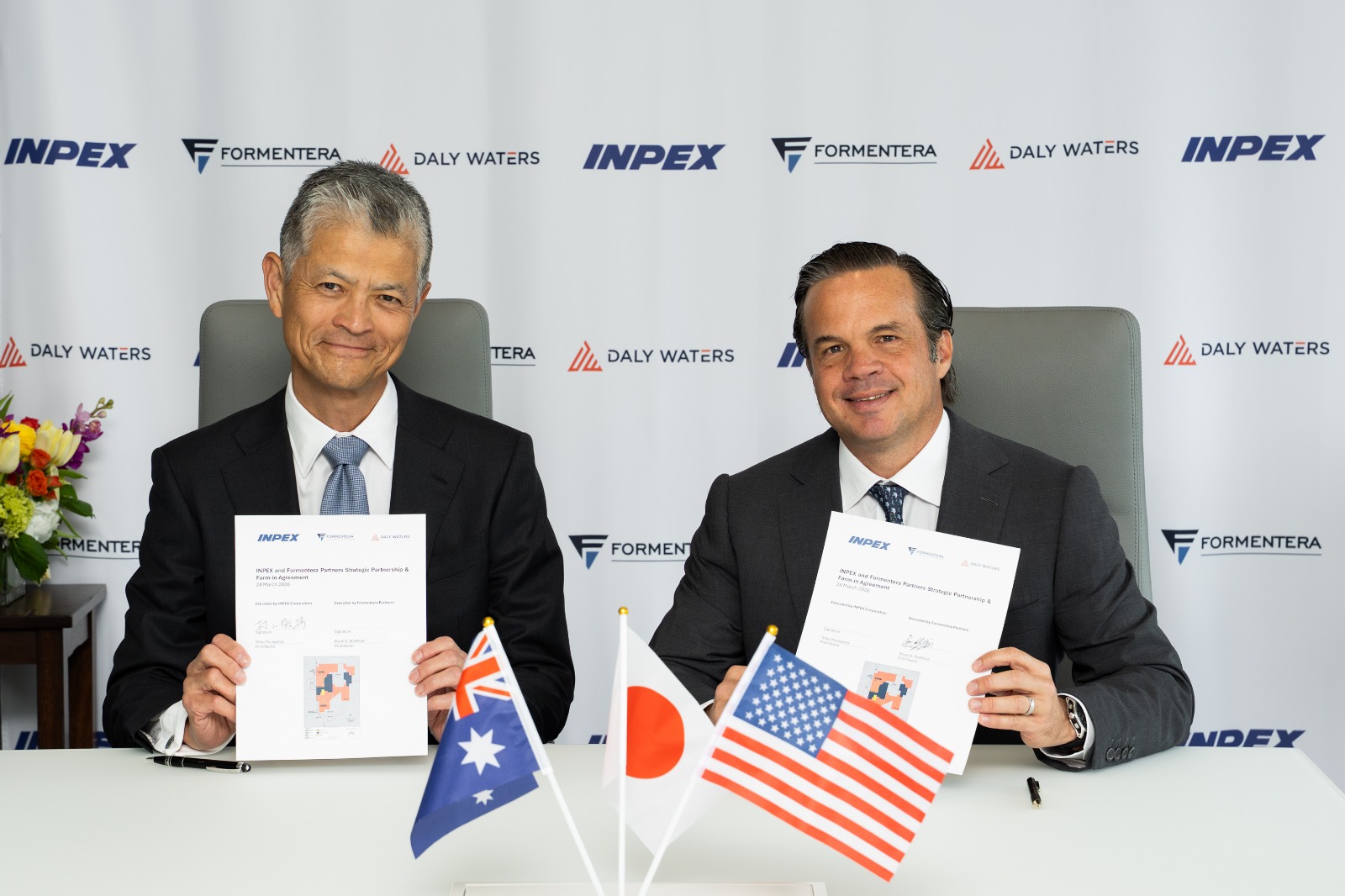
The operator of Darwin’s $40 billion Ichthys LNG plant wants to secure long-term gas supply amid the Gulf crisis.

The excise duty has been dropped by 20 cent on a litre of diesel and by 15 cent for petrol until the end of May.

UK inflation remained unchanged at 3% in the year to February, offering a brief period of stability before economists expect a renewed surge in price pressures driven by the Middle East conflict.
Figures from the Office for National Statistics (ONS) show that annual inflation held steady following months of gradual decline, with rising clothing prices offset by lower fuel and alcohol costs.
However, the data was collected before the escalation of the US-Israel conflict with Iran, an event that has already triggered sharp increases in global energy prices and is widely expected to feed through into higher inflation in the months ahead.
The main upward pressure on inflation in February came from clothing and footwear, where prices rose by 0.9% over the year. This marked a reversal from the previous month, when clothing prices had shown no increase.
ONS chief economist Grant Fitzner said the rise reflected typical seasonal pricing dynamics, but also highlighted the underlying volatility within the inflation basket.
“At the same time, falling petrol costs and discounted alcohol helped offset some of these increases,” he added, noting that alcohol and tobacco inflation reached its lowest level since early 2022.
While fuel costs helped keep inflation in check in February, that trend has already begun to reverse.
The ONS reported that petrol prices were at their lowest level since June 2021 during the data collection period, with average prices around 131.6p per litre. Since then, wholesale oil prices have surged, pushing pump prices significantly higher.
The price of crude oil has risen sharply following disruptions to global supply chains and shipping routes, particularly through the Strait of Hormuz — a key artery for global energy markets.
This shift is expected to have a cascading effect across the economy, increasing costs not only for transport but also for manufacturing, food production and leisure services as businesses pass on higher input costs.
For many companies, the impact is already being felt.
James Palmer, who runs a bus company in Essex, said fuel costs have risen dramatically in recent weeks, creating uncertainty and forcing difficult decisions.
“Three weeks ago we were paying around £1.21 per litre, now it’s closer to £1.86,” he said, highlighting the speed of the increase. Combined with rising wage costs, he warned that price rises for customers are becoming unavoidable.
“It’s the unpredictability that’s worrying,” he added. “We don’t want to let people down, but we may have no choice.”
Economists expect inflation to rise significantly over the course of 2026, with some forecasts suggesting it could peak at around 4.6% if energy prices remain elevated.
This would mark a reversal from the recent trend of easing inflation and could complicate monetary policy decisions for the Bank of England, which had previously been expected to begin cutting interest rates.
Instead, markets are now pricing in the possibility of further rate increases to contain inflation, a move that would place additional pressure on households and businesses.
The inflation data also comes as wage growth shows signs of slowing. Earnings excluding bonuses rose by 3.8% annually, still ahead of inflation for now, but vulnerable to being overtaken if price growth accelerates.
A renewed squeeze on real incomes could weigh heavily on consumer spending, further slowing economic growth.
Chancellor Rachel Reeves said the government is taking steps to ease the cost of living, including measures to stabilise food prices and improve long-term energy security.
However, economists warn that global factors, particularly energy markets, may limit the effectiveness of domestic policy interventions.
The February inflation figure represents a moment of calm before what could be another period of turbulence.
With energy prices rising, supply chains under strain and interest rate expectations shifting, the UK economy faces a delicate balancing act, one where inflation, growth and living standards are all tightly interconnected.
For now, inflation may be stable. But the forces shaping its next move are already in motion.
Jamie Young
Jamie is Senior Reporter at Business Matters, bringing over a decade of experience in UK SME business reporting.
Jamie holds a degree in Business Administration and regularly participates in industry conferences and workshops.
When not reporting on the latest business developments, Jamie is passionate about mentoring up-and-coming journalists and entrepreneurs to inspire the next generation of business leaders.

Aeluma: Unlocking Scalable Photonic Manufacturing

LONDON — The FTSE 100 climbed more than 1% in early trading Wednesday as investors weighed signs of potential de-escalation in the Middle East conflict against lingering geopolitical risks and steady UK inflation data. The blue-chip index rose as high as 10,077.21 points before pulling back slightly, trading around 10,069.49, up 104.33 points or 1.05% from Tuesday’s close of 9,965.16.

The benchmark opened near 9,965 and quickly gained momentum on hopes that diplomatic efforts could ease tensions following recent U.S. and Israeli actions in the region. Brent crude prices remained elevated near $100 a barrel but showed some moderation, providing mixed signals for energy-heavy constituents. The pound sterling traded modestly lower against the dollar, offering slight support to multinational exporters in the index.
Wednesday’s rebound followed a volatile period for UK equities. The FTSE 100 closed Tuesday at 9,965.16, up 0.72% on the day but still reflecting broader caution after a sharp 2.35% drop on March 20 triggered by escalating conflict fears. The index has shed about 7.78% over the past month yet remains up roughly 15% from a year earlier, with a 52-week range stretching from 7,679.48 to 10,934.94.
Analysts attributed the early lift to bargain hunting after recent sell-offs and anticipation of corporate earnings. Several FTSE 100 companies issued updates Wednesday, including notices of annual general meetings, financial presentations and subsidiary divestitures. Diageo’s announcement of a U.S. subsidiary divestiture in its Ready-to-Drink business and other routine filings added to the flow of company news without major surprises.
Energy stocks, which have been sensitive to oil price swings, showed mixed performance in early deals. Shell and BP, significant index weights, faced pressure in recent sessions from fluctuating crude values but offered some support on any signs of supply disruption risks persisting. Mining names and financials also contributed to the positive tone, with HSBC and other banks benefiting from a broader risk-on sentiment.
Broader European markets pointed to similar gains, with futures suggesting a positive open across the continent. U.S. stock futures were little changed overnight, while Asian markets closed mixed after weighing the same geopolitical developments.
UK inflation held steady at 3% in the latest reading, coming in as expected and providing some comfort to the Bank of England ahead of its next policy decision. Markets continue to price in the possibility of rate cuts later in the year, though sticky services inflation and energy costs tied to global events could delay easing.
The FTSE 100’s composition — heavy in financials, energy, consumer staples and healthcare — leaves it particularly exposed to global commodity cycles and international trade dynamics. Recent quarterly index review changes took effect earlier in March, with IG Group Holdings and Lion Finance Group joining the blue-chip benchmark while Easyjet and Hikma Pharmaceuticals exited.
Volume on Tuesday reached about 1.19 billion shares as the index recovered from intraday lows near 9,839.20. Wednesday’s early session saw continued healthy turnover as traders repositioned portfolios.
Among individual movers, housebuilders and retailers have been volatile in recent weeks amid domestic economic concerns, while defense stocks like BAE Systems and Rolls-Royce experienced swings tied to geopolitical headlines. Consumer goods giants such as Unilever and Reckitt Benckiser often provide defensive ballast during uncertain times.
Longer-term, the FTSE 100 has delivered solid returns for income-focused investors, boasting a dividend yield around 2.81%. Its net market capitalization stands at approximately £2.63 trillion, underscoring its role as a bellwether for UK plc despite ongoing debates about its international bias versus domestic growth exposure.
Economists note that prolonged Middle East instability could stoke inflation through higher energy prices, potentially complicating the Bank of England’s path to lower rates. Conversely, any meaningful de-escalation would likely boost risk assets and support the index’s multinational heavyweights.
Looking ahead, investors will monitor upcoming earnings from major constituents, fresh inflation and employment data, and any developments from Washington, Tehran and Jerusalem. The next Bank of England meeting and U.S. Federal Reserve signals will also influence sentiment.
The FTSE 250, more domestically oriented, often moves independently of its larger sibling. Recent sessions have seen the mid-cap index display similar caution amid housing and consumer spending worries.
For retail investors, the current environment highlights the importance of diversification. Many use FTSE 100 trackers or income ETFs to gain broad exposure while collecting dividends that have historically helped weather volatility.
Market participants remain divided on near-term direction. Some strategists see value emerging after the recent pullback, citing attractive valuations in sectors like banking and mining. Others warn that unresolved geopolitical risks could trigger further downside, particularly if oil prices spike toward $110 or higher.
As trading progressed past the 9 a.m. GMT open, the index held most of its gains, trading comfortably above the 10,000 psychological level. Technical analysts noted potential resistance near recent highs around 10,100-10,200, with support clustered around 9,800-9,900.
The London Stock Exchange continues to operate smoothly despite global uncertainties, with regulatory filings flowing as normal. Wednesday’s corporate announcements included routine items such as transaction in own shares and directorate changes across several listed firms.
In summary, the FTSE 100’s early advance on Wednesday reflected tentative optimism that the worst of the Middle East escalation may be contained, even as caution prevailed. With oil prices elevated and inflation steady, the index’s performance will hinge on how quickly global tensions ease and whether corporate Britain can deliver resilient earnings.
The benchmark’s resilience in the face of external shocks underscores its diversified nature, though volatility is likely to persist until clearer signals emerge from both the geopolitical arena and domestic economic indicators.
ServiceTitan falls 40% after InvestingPro overvaluation warning

Bhutan moves more Bitcoin as state wallet outflows rise in March
Amazon's Big Spring Sale has stacks of Lego deals from $8, including Easter gifts and display-worthy builds


-
 Crypto World4 days ago
NIO (NIO) Stock Plunges 6.5% as Shelf Registration Sparks Dilution Worries
-

 Fashion5 days ago
Weekend Open Thread: Adidas – Corporette.com
-

 Politics5 days ago
Jenni Murray, Long-Serving Woman’s Hour Presenter, Dies Aged 75
-

 Crypto World4 days ago
Best Crypto to Buy Now: Strategy Just Spent $1.57 Billion on Bitcoin During Fear While Early Investors Quietly Enter Pepeto for 150x Potential
-

 News Videos7 days ago
RBA board divided on rate cut, unusually buoyant share market | Finance Report | ABC NEWS
-

 Crypto World4 days ago
Bitcoin Price News: Bhutan Sells $72 Million in BTC Under Fiscal Pressure, but the Smart Money Entering Pepeto Sees What the Market Does Not
-

 Tech5 days ago
inKONBINI Lets You Spend Summer Days Behind the Register
-

 Crypto World7 days ago
Canada’s FINTRAC revokes registrations of 23 crypto MSBs in AML crackdown
-

 Sports2 days ago
Remo Stars and Kano Pillars Strengthen Survival Hopes in NPFL
-
 NewsBeat7 days ago
Residents in North Lanarkshire reminded to register to vote in Scottish Parliament Election
-
 NewsBeat1 hour ago
Manchester United reach agreement with Casemiro over contract clause amid transfer speculation
-

 News Videos7 days ago
PARLIAMENT OF MALAWI – PAC MEETING WITH REGISTRAR OF FINANCIAL ON AMARYLLIS HOTEL – INQUIRY LIVE
-

 Politics6 days ago
Gender equality discussions at UN face pushbacks and US resistance
-

 Business3 days ago
No Winner in March 21 Drawing as Prize Rolls to $133 Million for Next
-

 Business7 days ago
Who Was Alex Pretti? 5 Key Facts About the ICU Nurse Killed by Federal Agents in Minneapolis
-

 Sports2 days ago
Gary Kirsten Accuses Pakistan Cricket Board Of ‘Interference’, Mohsin Naqvi Responds
-

 Tech3 days ago
Give Your Phone a Huge (and Free) Upgrade by Switching to Another Keyboard
-

 Tech7 days ago
Inventec’s bizarre VeilBook laptop hides its touchpad under a sliding keyboard just to give cooling fans a little breathing room
-

 Sports5 days ago
2026 Kentucky Derby horses, odds, futures, preview, date: Expert who nailed 12 Derby-Oaks Doubles enters picks
-
Sports6 days ago
Vikings Free Agency Enters Phase 2 with Key Questions
You must be logged in to post a comment Login