Anthropic’s popular AI chatbot Claude faced widespread disruptions Monday, March 2, 2026, with thousands of users reporting inability to access the service, login failures and error messages across platforms including claude.ai, the console and Claude Code.
The outage began surfacing around 11:49 UTC (6:49 a.m. ET), when Anthropic posted on its official status page (status.claude.com) that it was “currently investigating” elevated errors. Follow-up updates confirmed the team had identified issues tied specifically to consumer-facing surfaces — particularly the Claude.ai website, login/logout paths and related tools — while the core Claude API remained operational as intended.
By early afternoon UTC, Anthropic reported it had pinpointed the root cause and was actively implementing a fix, though no estimated time for full resolution was provided. Status updates through the day included notes that investigation continued, with some API methods initially affected before clarification that backend models and API endpoints were largely unaffected.
Downdetector, a service tracking user-reported issues, showed a sharp spike in complaints peaking around 6:40 a.m. ET, with nearly 2,000 reports at the height of the disruption. Complaints tapered to about one-third that level by mid-morning but remained elevated compared to normal. Users most frequently cited problems with the chat interface (around 39%), the mobile app (35%) and the website (15-20%), including HTTP 500 and 529 errors, timeouts, “connection terminated” messages and generic “This isn’t working right now” prompts.
Anthropic described the incident as a “partial outage” in some communications, emphasizing it primarily impacted web-based access and authentication rather than the underlying AI models like Claude Opus 4.6 or enterprise integrations. Businesses using Claude via API or embedded systems appeared largely unaffected, allowing continued operations in those environments.
Advertisement
The precise technical trigger remained unclear in public updates, with Anthropic avoiding speculation on causes like server overload, configuration errors or external factors. Some reports suggested strain from “unprecedented demand” in recent weeks, as Claude gained traction amid competition with ChatGPT and rose in app store rankings thanks to features like advanced coding tools and improved reliability perception.
Social media platforms, including X (formerly Twitter), lit up with user frustration and memes, with developers joking about the irony of relying on Claude Code to potentially troubleshoot Claude outages. Others noted the timing amid broader AI reliability discussions.
The disruption came against a backdrop of heightened scrutiny for Anthropic. Recent news highlighted tensions with U.S. government contracts, including a reported Department of Defense termination over “safety alignment conflicts” and Claude’s restrictions on certain military applications. Speculative posts linked the outage to unrelated geopolitical events, such as alleged strikes on AWS infrastructure in the Middle East — Anthropic’s primary cloud provider — though no official sources connected the dots, and Anthropic attributed issues to internal web/login paths rather than cloud-wide failures.
Anthropic has not issued a broader statement beyond status page updates and brief confirmations to media. The company, known for its focus on AI safety and constitutional alignment principles, has seen rapid growth but faces ongoing challenges scaling infrastructure to match surging usage.
Advertisement
As of late March 2, 2026 (evening KST), partial recovery appeared underway for some users, though intermittent issues persisted in login flows and web access. Anthropic encouraged affected users to monitor the status page for real-time updates and advised trying again later or using API routes where applicable.
The incident underscores persistent challenges in AI infrastructure: even as models advance, front-end reliability, authentication systems and traffic handling remain critical pain points during peak adoption phases. Similar outages have hit competitors like OpenAI in the past, often tied to login surges or scaling hiccups.
Users worldwide expressed frustration over workflow interruptions, particularly those depending on Claude for coding, research or daily productivity. With no confirmed ETA, many shifted to alternatives like Grok, ChatGPT or local tools while awaiting restoration.
Anthropic’s team continued working on resolution into the evening, with hopes the fix would fully restore service soon. The company has maintained high uptime historically, making Monday’s event notable in its scope and visibility.
Concurrent Technologies Plc (COTGF) Discusses Full Year Results and Leadership Transition with Strategic Business Updates April 17, 2026 6:30 AM EDT
Company Participants
Miles Adcock – CEO & Executive Director Kim Maria Garrod – CFO & Executive Director
Presentation
Advertisement
Operator
Good morning, and welcome to the Concurrent Technologies Plc Final Results Investor Presentation. [Operator Instructions]
Before we begin, I would like to submit the following poll. And I would now like to hand you over to CEO, Miles Adcock. Good morning to you.
Advertisement
Miles Adcock CEO & Executive Director
Good morning, and welcome to our full year results for 2025.
Next slide, please. So my name is Miles. I’m the CEO. This is my fourth set of annual results, and I’m joined by Kim, our CFO. And I should note that at the same time as we issued our full year results, we also announced that Kim has decided to retire at the end of this year. My good friend and colleague, Kim, do you want to say a few words?
Advertisement
Kim Maria Garrod CFO & Executive Director
Yes. So I achieved a milestone birthday this year, and that made me rethink what I was going to do. So I have decided to retire, but I’m in the business until the end of the year. I’m very excited about the business, and I will be watching it very closely after I’ve gone, and I’ll be regularly calling Miles for updates. But I’m fully committed to the business. And as I say, I’ll be taking out for most of this financial year.
Miles Adcock CEO & Executive Director
Advertisement
Thank you, Kim. And just to note, Kim has generously given us until the end of the year to seek a replacement, and I’ve engaged Korn Ferry this week, and we’re working hard at finding a worthy successor.
Business groups have urged the government to cut a raft of regulations ahead of the federal budget, but the finance minister says changes have to make sense.
Mumbai: A clutch of large IPOs is expected to prop up India’s primary market in 2026 even as market uncertainty slows down broader activity compared to the previous two robust years, said Ranvir Davda, co-head of investment banking at HSBC India.
“The number of deals may come down, but the size and aggregate value may still be similar (to the previous years),” said Davda in an interview.
Reliance Industries’ telecom arm Jio Platforms, National Stock Exchange, Zepto, PhonePe, Manipal Hospitals and and SBI Funds Management are among the large issuances expected to hit the market in 2026. Together, these issues could raise ₹1 lakh crore (about $10.8-10.9 billion).
So far this year, 20 companies have raised $2.5 billion, according to Prime Database and ETIG Database. That comes after two record years that saw 94 and 115 mainboard IPOs in 2024 and 2025, raising nearly $21-23 billion.
Advertisement
This year’s IPO fundraise could be between $21 billion and $25 billion.
Live Events
“This year, a larger percentage of companies are mid to large-sized,” said Davda. “Many of these are backed by large groups or private equity investors and, therefore, have the flexibility to wait, ride volatility, and avoid pressing forward if valuations are not aligned.” The early part of this year has been slower for the IPO market, with the West Asia conflict weighing on secondary markets, IPO subscriptions and listing gains, prompting several companies to defer offerings. “This year will be volatile. Windows to complete trades will be shorter, so readiness is critical,” Davda said.
At the same time, companies that need capital are showing more willingness to negotiate.
Issuers are increasingly tapping AIFs, family offices and special situations funds alongside traditional investors, while using pre-IPO placements as a bridge to raise capital with visibility to a listing over the next 6-18 months, he said. According to Davda, technology faces sharper scrutiny amid AI disruption, global uncertainty and profitability concerns, though large consumer-tech and fintech offerings are still likely to proceed as “must-own” India exposures.
I focus on long-term investments while incorporating short-term shorts to uncover alpha opportunities. My investment approach revolves around bottom-up analysis, delving into the fundamental strengths and weaknesses of individual companies. My investment duration is the medium to long-term. Ultimately, I aim to identify companies with solid fundamentals, sustainable competitive advantages, and growth potential.
Analyst’s Disclosure: I/we have no stock, option or similar derivative position in any of the companies mentioned, and no plans to initiate any such positions within the next 72 hours. I wrote this article myself, and it expresses my own opinions. I am not receiving compensation for it (other than from Seeking Alpha). I have no business relationship with any company whose stock is mentioned in this article.
Seeking Alpha’s Disclosure: Past performance is no guarantee of future results. No recommendation or advice is being given as to whether any investment is suitable for a particular investor. Any views or opinions expressed above may not reflect those of Seeking Alpha as a whole. Seeking Alpha is not a licensed securities dealer, broker or US investment adviser or investment bank. Our analysts are third party authors that include both professional investors and individual investors who may not be licensed or certified by any institute or regulatory body.
ET Intelligence Group: The FMCG sector is expected to post a steady March-quarter performance, supported by stable rural demand, gradual urban recovery and volume growth even as pricing remains subdued in several segments. While steady raw material costs during most of the quarter are margin supportive, the recent rise in costs of crude-linked inputs such as packaging materials could weigh on margins. Companies with stronger execution, premium portfolios and better distribution reach are expected to outperform, while category-specific challenges and international headwinds may keep performance uneven across the pack.
Hindustan Unilever is expected to report mid-single digit revenue growth led by 4-5% volume growth. Growth is expected to be broad-based, with beauty and wellbeing growing in double-digits, while home care, personal care and foods & beverages are likely to grow in mid-single digits. The demerger of low-margin ice cream business may support operating margin before depreciation and amortisation (Ebitda margin).
ITC may show pressure in the cigarettes segment amid flat volume and higher taxes while displaying resilience in non-cigarette segments. The FMCG and agriculture related business is expected to remain robust, while paperboards business may grow in single digit. The margin for the cigarettes business is likely to contract amid rising leaf tobacco costs and limited pricing hikes.
Agencies
Books & MARKS HUL, Nestlé and Britannia set for volume-led growth; high tax on cigarettes may weigh on ITC; Dabur may report modest int’l revenue
Nestle India’s consolidated revenue growth is expected to be in double-digits, led largely by volumes in the domestic market while exports may show recovery on a weak base. Normalisation is expected after GST-related disruptions in the previous quarter. However, margin is likely to contract on account of high inflation in the coffee segment. Asian Paints is likely to report better volume growth for the domestic decorative paints segment on a weak base. Upcoming price increase may boost channel restocking thereby aiding primary sales. International business may be subdued due to the Middle East disruption. Margins are likely to improve on stable raw material prices during the quarter, with the impact of recent crude inflation expected to be limited for the March quarter.
Advertisement
Live Events
Varun Beverages is expected to report high-single digit revenue growth in the March quarter, with international markets likely to drive momentum through high double-digit volume growth. Ebitda margin is likely to contract, partly due to upsizing in India and ramp-up of snacks in Africa. Britannia Industries may report double-digit revenue growth led by high-single digit volume expansion due to higher grammage in low-unit packs, which account for about two-third portion of sales. Margins are likely to improve supported by stable raw materials prices, especially in January and February. Dabur India is expected to post modest revenue growth, driven by mid-single digit volume growth in the domestic business. However, its international operations, particularly the Middle East and North Africa (MENA) region, which contributes around 8% of revenue may remain weak amid geopolitical tensions. Within domestic categories, home and personal care is expected to deliver double-digit growth, while healthcare and foods may see low single-digit expansion.
Colgate-Palmolive India is expected to report low single-digit volume growth on a weak base, after three consecutive quarters of declines. The margin could contract due to higher promotions and advertisement spends.
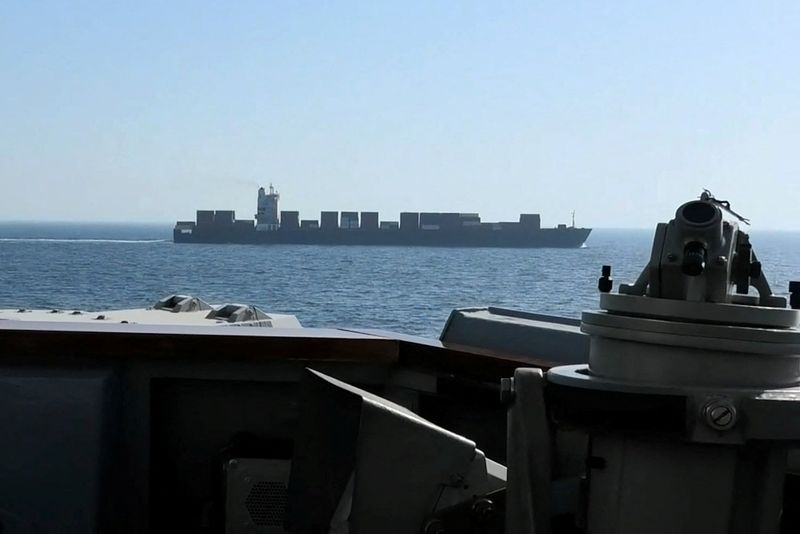
SINGAPORE: Oil prices rebounded more than 6% on Monday after tumbling more than 9% on Friday on news the Strait of Hormuz is closed again after both the U.S. and Iran said the other party had violated their ceasefire deal by attacking ships over the weekend.
The U.S. military had seized an Iranian cargo ship that tried to run its blockade, U.S. President Donald Trump said on Sunday, while Iran said it would not participate in a second round of peace talks despite Trump’s threat of renewed airstrikes.
The United States has maintained a blockade of Iranian ports, while Iran has lifted and then reimposed its own blockade of the Strait, which handled roughly one-fifth of the world’s oil supply before the war began almost two months ago.
Advertisement
“Oil markets continue to gyrate in response to oscillating social media posts by the U.S. and Iran, rather than the realities on the ground which remain challenging for oil flows to resume in a rapid fashion,” Saul Kavonic, MST Marquee’s head of research, said.
Live Events
Both contracts posted on Friday their largest daily declines since April 18 after Iran said passage for all commercial vessels through the Strait of Hormuz was open for the remaining ceasefire period and Trump said Iran had agreed to never close the strait again. “The announcement of the Strait opening proved premature,” Kavonic said. “Ship owners will be twice shy about heading towards the Strait again without receiving much more confidence that any announced passage is real.”
More than 20 ships passed the strait on Saturday carrying oil, liquefied petroleum gas, metals and fertilizers, Kpler data showed, the highest number of vessels crossing the waterway since March 1.
SINGAPORE: Oil prices jumped, the U.S. dollar lifted from lows and stock markets wobbled on Monday as rising tension in the Middle East kept shipping in and out of the Gulf to a bare minimum, though traders were holding out hope for a resolution.
The ceasefire in the Iran war, due to run until Tuesday, was in doubt after the U.S. seized an Iranian cargo ship and Tehran’s top military command vowed to retaliate.
Iran has re-imposed its de facto closure of the Strait of Hormuz, though Kpler data showed that more than 20 vessels carrying oil products, metals, gas and fertiliser passed through it on Saturday, the busiest day for the chokepoint since March 1.
Brent crude futures jumped about 6% to $96 a barrel in early Asia trade. The dollar, which sold off sharply on Friday when the strait briefly opened, rose slightly.
Advertisement
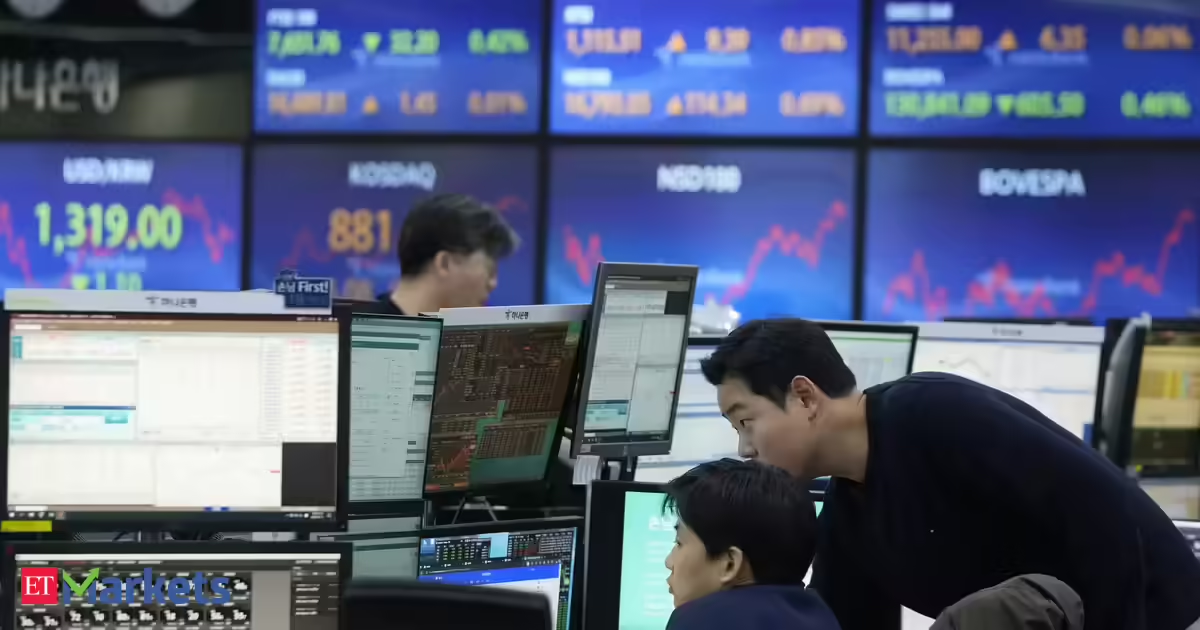
S&P 500 futures fell around 0.7%, a modest move considering the index notched a record closing high on Friday. Asia-Pacific markets were mixed, with Australia’s S&P/ASX 200 down 0.5% and Japan’s benchmark Nikkei up 0.7%.
Live Events
Bond markets, which rallied on Friday, retreated. “The headlines look bad; it looks like there’s disagreement … which has led to a little bit of re-escalation,” said Damien Boey, portfolio strategist at Wilson Asset Management in Sydney. “But I think, ultimately, both sides want to be able to do a deal – that’s part of the reason why the market’s optimistic and not selling off too much.”
Iran rejected new peace talks with the U.S., its state news agency reported on Sunday, hours after U.S. President Donald Trump said he was sending envoys for talks in Pakistan and would launch new strikes on Iran unless it accepts his terms.
FOCUS ON HORMUZ In forex news, the euro was down 0.1% at $1.1735 and the yen eased around 0.3% to 159 per dollar, while the Australian and New Zealand dollars fell slightly.
Bonds likewise partially retraced Friday moves, with benchmark 10-year U.S. Treasury yields, which had fallen 6.5 basis points on Friday, rising by 3.2 bps to 4.276%.
Advertisement
Investors sold fixed income assets through March in anticipation of higher oil prices driving inflation – something they have tempered a little in recent weeks.
“Our base case (AKA guess) is still resolution to the war. Trump is still focused on November midterm elections,” said Paul Chew, head of research at Singapore’s Phillip Securities in a note to clients.
Wall Street indexes touched record highs on Friday, supported by expectations of robust first-quarter earnings, the bulk of which come this week. China is expected to hold benchmark lending rates steady on Monday.
British inflation data, U.S. retail sales and European purchasing managers’ index figures are due later in the week, though much of markets’ focus will be on Gulf shipping.
Advertisement
“The critical barometer of geopolitical risk has been distilled into one data point: The number of ships transiting the Strait of Hormuz,” said Bob Savage, head of markets macro strategy at BNY.
“Peace talks matter, but the immediate focus is on oil and other supply shortages driving inflation.”






















































You must be logged in to post a comment Login