
Business
Is HubSpot Down Today? Brief North America Outage Hits Activity and Events Features on April 9


HubSpot users in North America experienced temporary disruptions to activity tracking and event processing Wednesday morning, prompting a wave of complaints on social media and outage trackers, though the company’s official status page reported the issue as resolved by midday with all core systems now operational.

The glitch, which began around 9:00 a.m. EDT on April 9, affected features including Activity and Event tools for some customers hosted in North America. HubSpot acknowledged the problem on its status page, stating it stemmed from a temporary impairment that caused processing delays. By approximately 12:20 p.m. EDT, the company posted an update confirming the issue had been addressed and systems were recovering normally.
As of early Thursday, April 10, HubSpot’s status page showed all major components — including CRM, Marketing Tools, Website, Sales Tools, Service Tools, Chat & Automation, Reports, APIs and Integrations — marked as fully operational. No new incidents were listed for April 10, and the platform appeared stable for most users checking real-time monitors.
The brief outage nonetheless sparked frustration among marketers, sales teams and customer service professionals who rely on HubSpot’s all-in-one CRM platform for daily operations. Some reported delays in workflow enrollment, email events and timeline loading, while others noted minor slowdowns in reporting dashboards. Third-party trackers like Downdetector and StatusGator recorded scattered user reports of problems with the website, CRM and reports over the past 24-48 hours, though the volume remained far below major historical outages.
HubSpot, a publicly traded software company serving more than 200,000 customers worldwide, has built its reputation on reliable inbound marketing, sales and service tools enhanced by artificial intelligence features. The platform integrates email marketing, content management, CRM, chatbots and analytics into a single dashboard, making even short disruptions noticeable for businesses that depend on real-time data.
Company officials have not issued a public statement beyond the status page updates. In past incidents, HubSpot has attributed similar problems to database impairments or server-side issues affecting specific regions. Wednesday’s event was limited primarily to North America and lasted roughly three hours before full resolution.
Outage monitoring sites provided mixed signals in the immediate aftermath. While HubSpot’s official page declared systems operational, some aggregators noted lingering user-submitted reports of slow performance or partial issues with CRM and reports. IsItDownRightNow and similar tools indicated the main website remained reachable with normal response times, ruling out a complete blackout.
The episode comes amid growing reliance on HubSpot as businesses scale digital operations. Many small and mid-sized companies use the platform as their primary customer relationship management system, especially those focused on inbound strategies. Delays in event processing can cascade into missed follow-ups, inaccurate reporting and disrupted automation sequences, potentially costing teams valuable time and leads.
Industry analysts noted that while Wednesday’s disruption was relatively minor compared with broader outages seen in 2025, it highlights the increasing complexity of maintaining uptime for cloud-based SaaS platforms handling massive data volumes. HubSpot has invested heavily in infrastructure and reliability measures, including redundant systems and proactive monitoring, yet occasional regional glitches remain a reality in the sector.
Users took to social media and Reddit’s r/hubspot community to share experiences. Some expressed mild annoyance at delayed sequences or failed-to-load timelines, while others praised the quick resolution. One marketer posted that workflows continued firing despite the activity feed lag, suggesting the impact was contained.
HubSpot’s support team operates 24/7, offering assistance through chat, phone and community forums. The company encourages affected users to check the status page first and submit tickets for persistent issues. Enterprise customers with dedicated account managers often receive proactive notifications during incidents.
Looking ahead, no scheduled maintenance windows were listed on the status page for the coming days. HubSpot has a history of transparent communication during outages, posting detailed root cause analyses after major events. Wednesday’s incident followed a similar but shorter event processing delay reported late on April 8.
For businesses, the episode serves as a reminder to maintain backup processes and diversify tools where mission-critical. Many HubSpot users already integrate the platform with Zapier, Slack or custom APIs to add redundancy. Others rely on exported data and offline alternatives during brief downtimes.
HubSpot shares (NYSE: HUBS) traded lower earlier in the week but showed no direct correlation to the minor outage. The stock has faced broader market pressures and valuation debates common among high-growth SaaS firms, though fundamentals remain strong with continued customer growth and AI feature rollouts.
As of Thursday morning, the vast majority of users reported normal performance. Real-time checks on multiple monitoring services confirmed response times in the normal range, and no widespread complaints surfaced on major outage trackers for April 10.
Experts recommend that organizations using HubSpot enable notifications from the official status page and test critical workflows regularly. For those still encountering issues, clearing browser cache, trying incognito mode or switching networks can sometimes resolve localized problems unrelated to HubSpot’s servers.
The brief April 9 disruption underscores both the platform’s importance to modern marketing teams and the challenges of delivering seamless cloud services at scale. HubSpot continues to expand its AI capabilities, including smarter automation and predictive analytics, which require robust backend infrastructure.
While Wednesday’s event caused temporary headaches for some, the quick recovery helped limit business impact. As companies increasingly bet on integrated platforms like HubSpot for growth, expectations for near-perfect uptime will only rise.
Customers are advised to bookmark https://status.hubspot.com for future reference and to follow HubSpot’s community forums for user tips during rare incidents. With all systems now showing green, most users have returned to normal operations, though the episode may prompt some to review their contingency plans.
In an era when even minutes of downtime can disrupt campaigns and pipelines, HubSpot’s handling of the short-lived issue demonstrated reasonable transparency. The company’s focus on reliability remains a key selling point as it competes in the crowded CRM and marketing automation space.
For now, the answer to “Is HubSpot down today?” on April 10 appears to be no. Core services are operational, and teams can resume full use of the platform with confidence. Still, the incident serves as a timely nudge for users to stay vigilant and prepared in an increasingly connected digital workspace.


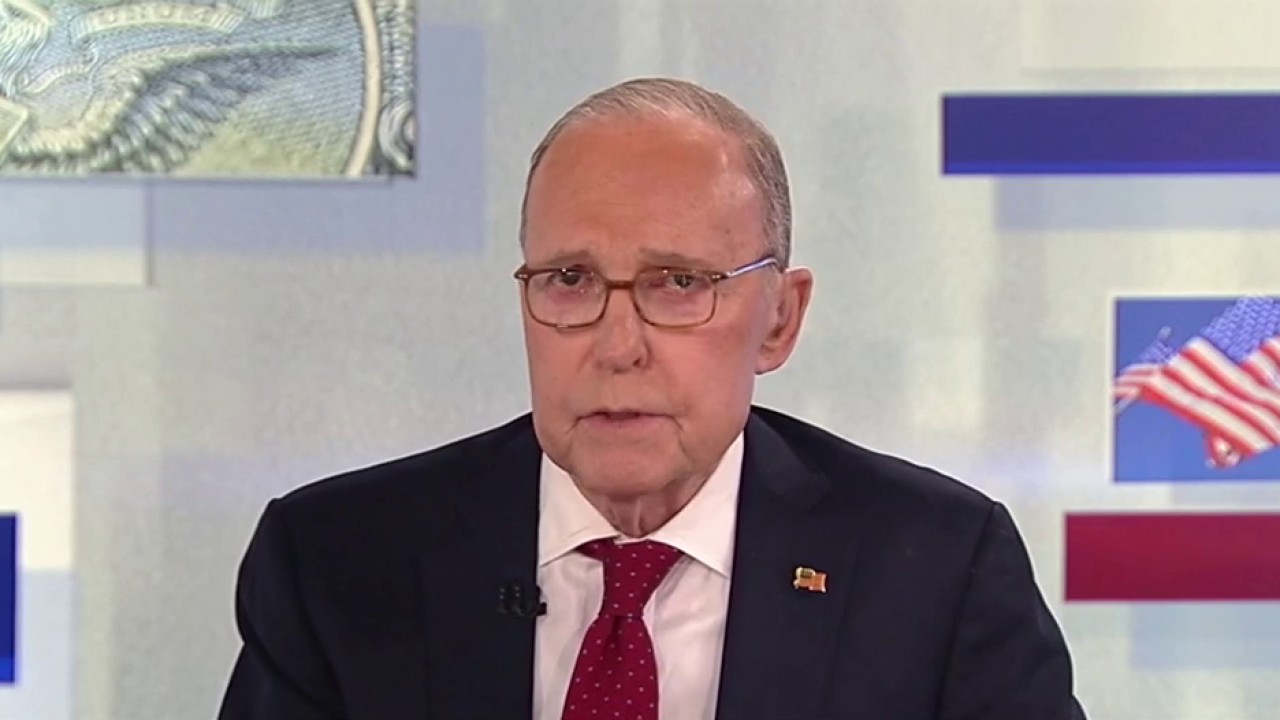
FOX Business host Larry Kudlow discusses the state of the American economy under the Trump administration on ‘Kudlow.’
Let’s take a break from the war and follow up on an important economic story, and that is the continued mobility of the great American middle class. There’s a lot more prosperity here than left-wing populist tax-and-spend Democrats would have anyone believe.
Scott Winship of the American Enterprise Institute has a new study showing how the core middle class and lower incomes have been shrinking, because of a boom in the upper middle class. Dual income households have nearly tripled since 1979 to 31 percent from 10 percent, reaching $326,000 a year. The so-called core middle class at just over $100,000 has basically dropped only slightly to 31 percent from 35 percent. In the lower middle class, and poorer incomes, have fallen a bit. I’m going to label this and simplify this near 50-year middle class prosperity period as the relatively low tax rate supply side era. Bookended by President Reagan and President Trump.
Family incomes have been rising across the entire spectrum, especially among women. And other studies show that individual mobility going to the top fifth of earners from people in the bottom fifth has also increased by roughly 50 percent. In other words, a rising tide lifts all boats..
National Economic Council director Kevin Hassett lauds President Donald Trump’s State of the Union address on ‘Kudlow.’
Democrats love to bash supply-side economics as trickle-down. Or hollowing out the middle class, but the data show it’s not true. What’s more, as my pal Steve Moore writes, Trump tax cuts 2.0 are uniquely designed to help the middle class through tax-free tips, overtime, and Social Security. Add to that the Trump accounts which help newborns own a piece of the rock and accumulate wealth no matter who they are or where they’re from, or what color their skin.
Trump tax cuts 1.0 during his first term disproportionately benefited middle-class blue-collar type wage earners because of the positive impact of lower business taxes. The same is true for Trump 2.0, with its 100 percent immediate cost expensing, and reciprocal fair trade that is channeling a factory building boom, that will be an enormous booster shock to working folks.
Meanwhile, the top 1 percent of income earners pay more than 40 percent of the tax burden, and if you add in state and local taxes from the big blue states like New York, California, and lately Washington State, the most successful earners will be paying half or more of the tax burden. Americans know they are overtaxed. And they also know that more and more of that money is being spent fraudulently in those very same big blue states that overtax in the first place. The GOP can beat history and win the midterms, if they just go out and make the sale.


I’m a passionate investor with a strong foundation in fundamental analysis and a keen eye for identifying undervalued companies with long-term growth potential. My investment approach is a blend of value investing principles and a focus on long-term growth. I believe in buying quality companies at a discount to their intrinsic value and holding them for the long haul, allowing them to compound their earnings and shareholder returns.
Analyst’s Disclosure: I/we have no stock, option or similar derivative position in any of the companies mentioned, and no plans to initiate any such positions within the next 72 hours. I wrote this article myself, and it expresses my own opinions. I am not receiving compensation for it (other than from Seeking Alpha). I have no business relationship with any company whose stock is mentioned in this article.
Seeking Alpha’s Disclosure: Past performance is no guarantee of future results. No recommendation or advice is being given as to whether any investment is suitable for a particular investor. Any views or opinions expressed above may not reflect those of Seeking Alpha as a whole. Seeking Alpha is not a licensed securities dealer, broker or US investment adviser or investment bank. Our analysts are third party authors that include both professional investors and individual investors who may not be licensed or certified by any institute or regulatory body.


Trapping Value is a team of analysts with over 40 years of combined experience generating options income while also focusing on capital preservation. They run the investing group Conservative Income Portfolio in partnership with Preferred Stock Trader. The investing group features two income-generating portfolios and a bond ladder.
Trapping Value provides Covered Calls, and Preferred Stock Trader covers Fixed Income. The Covered Calls Portfolio is designed to provide lower volatility income investing with a focus on capital preservation. The fixed income portfolio focuses on buying securities with high income potential and heavy undervaluation relative to comparatives. Learn more.
Analyst’s Disclosure: I/we have no stock, option or similar derivative position in any of the companies mentioned, and no plans to initiate any such positions within the next 72 hours. I wrote this article myself, and it expresses my own opinions. I am not receiving compensation for it (other than from Seeking Alpha). I have no business relationship with any company whose stock is mentioned in this article.
We long positions in TIPS and real return bonds via different Canadian instruments.
Seeking Alpha’s Disclosure: Past performance is no guarantee of future results. No recommendation or advice is being given as to whether any investment is suitable for a particular investor. Any views or opinions expressed above may not reflect those of Seeking Alpha as a whole. Seeking Alpha is not a licensed securities dealer, broker or US investment adviser or investment bank. Our analysts are third party authors that include both professional investors and individual investors who may not be licensed or certified by any institute or regulatory body.

Raymond James initiates Milestone Pharmaceuticals stock coverage with Strong Buy

AMRO’s flagship AREO 2026 report projects steady regional growth for ASEAN+3 while warning that the Middle East conflict has significantly increased downside risks through energy supply disruptions.
Key Details:
- Regional growth is forecast at 4.0% in both 2026 and 2027, following stronger-than-expected expansion of 4.3% in 2025.
- The Middle East conflict has raised energy prices, pushing headline inflation from 0.9% in 2025 to a projected 1.4–1.5% in 2026–2027.
- The region is considered better positioned than in previous energy shocks due to improved energy efficiency, lower oil dependency, and available policy space.
- A prolonged conflict could spread disruptions beyond energy markets to industrial inputs, logistics, food prices, tourism, and remittances.
- Structurally, ASEAN+3 has shifted toward intraregional demand — now accounting for 28% of global final demand — with US-bound value-added exports falling from ~one-third to 20%.
- Policymakers are urged to maintain financial stability, act decisively against sustained inflation, and provide targeted fiscal support without fuelling inflation.
Why It Matters:
ASEAN+3’s growing regional integration and economic resilience provide a strong foundation, but sustained policy vigilance and deeper regional cooperation will be critical to navigating ongoing global shocks.
Chapter 1: Macroeconomic Prospects and Challenges
ASEAN+3 delivered a stronger-than-expected performance in 2025 despite the most significant shift in global trade policy in decades. Economic activity remained well-supported by firm domestic demand, robust export performance, continued investment, and strengthening intraregional linkages.
Near-term risks (Chapter 1):
- Ongoing conflict in the Middle East and energy supply disruptions (especially via the Strait of Hormuz).
- Shifting U.S. trade policies and volatile technology demand.
- Financial market volatility adding downside pressure.
- Policymakers’ central challenge: preserving policy flexibility.
Looking ahead, the balance of risks is tilted to the downside, with uncertainty remaining elevated. Trade policy shifts and technology demand have each become sources of two-sided risk. The conflict in the Middle East and the disruption to energy supply through the Strait of Hormuz pose a significant near-term risk to both growth and inflation, while financial market volatility adds further downside pressure.
The region nonetheless enters 2026 from a position of relative strength. Growth outperformed expectations in 2025, inflation remained low, and most economies retain meaningful fiscal and monetary space. Preserving policy flexibility remains the central near-term challenge for policymakers across the region.
Source : ASEAN+3 Regional Economic Outlook 2026 – ASEAN+3 Macroeconomic Research Office – AMRO ASIA
Other People are Reading
Continue Reading
Business
$67 billion! Dalal Street braces for 81 IPO lock-in expiries in next 3 months. Check details

The value refers to the total shares becoming eligible for trading as lock-up periods end. However, not all of these shares are expected to be sold in the secondary market, as a substantial portion remains held by promoter groups who typically continue to retain their stakes.
Among the notable names in April, Bharat Coking Coal will see its three-month lock-in end on April 15, with 59 million shares or 1% of equity becoming eligible for trading. Amagi Media Labs follows on April 20, with 11 million shares or 5%, while Shadowfax Technologies will have 35 million shares or 6% unlocked on April 23.
In May, Fractal Analytics and Aye Finance will see lock-in expiries on May 13, involving 7 million shares (4%) and 18 million shares (7%), respectively. Later in the month, Gaudium IVF and Women Health will unlock 3 million shares or 4% on May 26, followed by Clean Max Enviro Energy Solutions on May 27 with 4 million shares or 4%. PNGS Reva Diamond Jewellery will also see 2 million shares or 7% becoming tradable on May 29.
In June, Omnitech Engineering will have 4 million shares or 3% unlocked on June 1, while SEDEMAC Mechatronics will see 1 million shares or 3% become eligible for trading on June 8.

A host of stocks will also witness six-month shareholder lock-in periods expiries over the coming weeks. Starting April 13, Tata Capital will see a significant 2,858 million shares, or 67% of equity, become eligible for trading. On the same day, WeWork India will have 60 million shares, representing 45%, unlocked.
On April 15, LG Electronics India will see 441 million shares or 65% of equity become tradable. This will be followed by Canara Robeco AMC on April 17, with 110 million shares or 55% unlocking, and Canara HSBC Life Insurance on April 20, where 522 million shares or 55% will
be released.
Later in April, Midwest will see 6 million shares or 17% unlocked on April 24, followed by Capillary Technologies on April 28 with 0.5 million shares or 0.7%. Tenneco Clean Air India will also see 3 million shares or 0.8% become tradable on April 30.
In May, Lenskart Solutions will have 1,047 million shares or 60% unlocked on May 8, alongside Emmvee Photovoltaic Power with 5 million shares or 0.7%. This will be followed by Aequs on May 11 with 1 million shares or 0.2%.
Finally, Billionbrains Garage Ventures will see a large expiry on May 12, with 4,182 million shares, or 68% of equity, becoming eligible for trading.
While lock-in expiries are a routine part of the IPO cycle, clustered unlocks of this scale tend to attract attention and can weigh on stock prices in the short term. Nuvama noted that despite the headline figure of $67 billion, the actual market impact will depend on how much of the eligible stock is eventually offered for sale.
The upcoming lock-in expiries come at a time of heightened geopolitical uncertainty, with tensions in the Middle East still elevated and rising crude prices fuelling concerns over potential rate hikes. Although a two-week ceasefire is currently in place, its durability remains uncertain, leaving markets vulnerable to volatility if tensions escalate further.
(Disclaimer: Recommendations, suggestions, views and opinions given by the experts are their own. These do not represent the views of The Economic Times)


I aim to provide alpha-generating investment ideas. I am an independent investor managing my family’s portfolio, primarily via a Self Managed Super Fund. My articles deliver 5-Minute Pitches focused on the core fundamental and technical drivers of the security.I have a generalist approach as I explore, analyze and invest in any sector so long there is perceived alpha potential vs the S&P500. The typical holding period ranges between a few months to multiple years.I am very much focused on adding value via alpha generation. I always start with a Performance Assessment section for each follow-up article. I publish unusually detailed analytics on my long-only, zero-leverage global equity portfolio performance on my Hunting Alphas website every month.A bit about how I approach research and coverage of a stock:I build and maintain spreadsheets showing historical data on the financials, key metric disclosures, data on the guidance and surprise trends vs consensus estimates, time-series values of the valuations vs peers, data on key coincident or leading indicators of performance and other monitorables. In addition to the company’s filings, I also keep tabs on relevant industry news and reports plus other people’s coverage of the stock. In some cases, such as during times of a CEO change, I will do a deep dive on a key leader’s background and his/her past performance record.I very rarely build DCFs and project financials many years out into the future as I don’t think it adds much value. Instead, I find it more useful to assess how a company has delivered and the broad outlook on the 5 key drivers of a DCF valuation: revenues, costs and margins, cash flow conversion, capex and investments and the interest rates (which affect the discount rate/opportunity cost of capital). In some cases, especially for companies trading at very high multiples on a TTM or 1-yr fwd basis, I do a reverse DCF to make sense of the implied growth CAGR implications.Note: Hunting Alphas is related to VishValue Research on Seeking Alpha.
Analyst’s Disclosure: I/we have a beneficial long position in the shares of CLS either through stock ownership, options, or other derivatives. I wrote this article myself, and it expresses my own opinions. I am not receiving compensation for it (other than from Seeking Alpha). I have no business relationship with any company whose stock is mentioned in this article.
Seeking Alpha’s Disclosure: Past performance is no guarantee of future results. No recommendation or advice is being given as to whether any investment is suitable for a particular investor. Any views or opinions expressed above may not reflect those of Seeking Alpha as a whole. Seeking Alpha is not a licensed securities dealer, broker or US investment adviser or investment bank. Our analysts are third party authors that include both professional investors and individual investors who may not be licensed or certified by any institute or regulatory body.


Agwa is using artificial intelligence to create a contained environment for produce to grow.
Business
Why FPI interest in India ‘has pretty much died out’: Nithin Kamath points to valuations, taxes and global alternatives

According to Kamath, India is currently viewed as geopolitically vulnerable—particularly to potential oil shocks—while the absence of compelling artificial intelligence-led investment opportunities has further dampened its appeal. Elevated valuations and concerns around the rupee have also added to investor hesitation.
He noted that many foreign investors who were sitting on gains have already booked profits and are reallocating capital to other markets such as Japan, Taiwan, South Korea, and parts of Europe, where relative valuations and growth narratives appear more attractive.
Policy-related factors are also playing a role. Kamath highlighted that India’s capital gains tax framework—especially the structure of long-term and short-term capital gains (LTCG/STCG)—along with the recent increase in Securities Transaction Tax (STT), has made the market less competitive versus global peers that are currently attracting stronger inflows.
With foreign portfolio investment (FPI) flows turning volatile, Kamath suggested that rationalising these tax structures could be a “low-hanging fruit” to improve India’s attractiveness and bring global investors back into the fold.
“Asked someone from the industry whether foreign investors are still interested in allocating to India. The TLDR: Interest has pretty much died out. India is seen as geopolitically exposed, especially to an oil shock. There are no real AI plays. Valuations are rich. And the rupee situation doesn’t help. On top of that, investors who were sitting on gains have taken money off the table and are now looking at markets like Japan, Taiwan, Korea, Europe etc instead,” the tweet said.
“He also pointed out that our LTCG/STCG structure and the increase in STT have made India less attractive compared to other markets that are seeing inflows. If we need to attract FPIs back, and we do, fixing this feels like pretty low-hanging fruit,” Kamath added.Nifty is down 9% this year, as FIIs continue to leave India. They have offloaded equities worth Rs 1,77,271 crore so far this year. In just six sessions this month, they have sold Rs 46,149 crore worth of stocks.
Domestic markets ended with cuts today, ending their five-session gaining streak. They fell amid significant selling pressure in financial stocks along with auto and FMCG counters. Nifty plunged 222.25 points or 0.93% to finish at 23,775.10. Meanwhile, Sensex declined 947.22 points or 1.22% to settle at 76,615.68.
(Disclaimer: The recommendations, suggestions, views, and opinions given by the experts are their own. These do not represent the views of The Economic Times.)

FBCG: Bluechip Growth Investing Can Help Earn Market-Beating Returns

New Animal Farm Movie Confirmed Anti-Capitalist Instead Of Anti-Communist

The Apprentice confirms finalists after ‘brutal’ grilling but fans are divided

Nakamoto (NAKA), Sharplink Gaming (SBET), and Stive (ASST) viewed positively at Cowen


-

 Business7 days ago
No Jackpot Winner and $194 Million Prize Rolls Over
-

 Fashion6 days ago
Weekend Open Thread: Spanx – Corporette.com
-

 Business4 days ago
Three Gulf funds agree to back Paramount’s $81 billion takeover of Warner, WSJ reports
-

 Business6 days ago
Expert Picks for Every Need
-

 Sports5 days ago
India men’s 4x400m and mixed 4x100m relay teams register big progress | Other Sports News
-

 Tech2 days ago
How Long Can You Drive With Expired Registration? What Florida Law Says
-
Business4 days ago
No Jackpot Winner, Prize to Climb to $231 Million
-

 Fashion3 days ago
Massimo Dutti Offers Inspiration for Your Summer Mood Board
-
Politics6 days ago
Wings Over Scotland | The quality of mercy
-

 Fashion2 days ago
Let’s Discuss: DEI in 2026
-

 Business5 days ago
Akebia Therapeutics, Inc. (AKBA) Discusses Pipeline Progress and Strategic Focus on Kidney Disease Treatments at R&D Day – Slideshow
-

 Fashion7 days ago
Statement Sunglasses: The Accessory Shaping Modern Fashion
-

 Crypto World1 day ago
Bitcoin recovers as US and Iran Agree a Ceasefire Deal
-

 Politics7 days ago
East Jerusalem Palestinian families eviction orders
-

 Politics7 days ago
Why so many children are now classified as ‘disabled’
-

 Fashion7 days ago
For Love & Lemons’ Spring 2026 Line is for the Romantics
-

 Politics7 days ago
Nuclear rockets, moon bases and NASA’s Mars plan
-
 Tech7 days ago
The Threadless Ball Screw Never Took Off, But Don’t Write It Off
-
 Business7 days ago
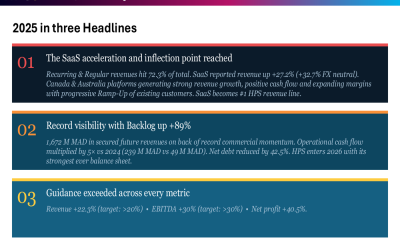
HPS FY 2025 slides: SaaS inflection drives 22% revenue growth
-

 Fashion6 days ago
Tory Burch’s Spring 2026 Campaign Goes on a Getaway
You must be logged in to post a comment Login