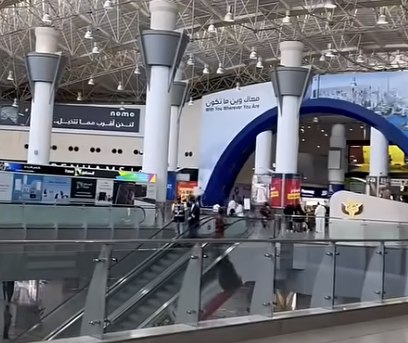
KUWAIT CITY — Kuwait International Airport did not open or resume normal operations on Monday as regional conflict continued to disrupt aviation in the Gulf nation, with repeated Iranian-linked drone strikes damaging critical infrastructure including radar systems and fuel facilities.
Kuwait International Airport
As of March 30, 2026, the airport stayed closed to regular commercial passenger and most cargo flights, according to official statements and flight tracking data. No new inauguration or reopening occurred despite earlier speculation and social media rumors about possible partial operations or a new terminal launch. Kuwait’s Directorate General of Civil Aviation has maintained the suspension that began in late February following the escalation of the 2026 Iran-related regional war.
Multiple drone attacks have targeted the airport since early March. Strikes on March 12 and 14 damaged the radar installation, while a later assault hit a fuel tank, sparking a fire with limited material damage and no reported casualties. An earlier incident on Feb. 28 also affected Terminal 1. Officials attributed the attacks to Iran or its proxies, prompting heightened security measures and contingency planning across Gulf aviation hubs.
The closure has stranded thousands of travelers and forced airlines, including national carrier Kuwait Airways and low-cost Jazeera Airways, to suspend or reroute services. Some operations have shifted to alternative airports, such as Qaisumah International Airport in Saudi Arabia, located about 2.5 hours by road from Kuwait. Passengers holding confirmed bookings with Kuwait Airways have been advised to register for repatriation flights followed by land transport, with a previous registration deadline of March 6 for certain groups.
Authorities have urged the public not to travel to the airport and to contact airlines directly for the latest updates. Flight status pages showed no scheduled commercial arrivals or departures as of Monday, with messages indicating suspended services. Emergency protocols and backup systems have allowed limited continuity in some cases, but full commercial operations remain grounded pending safety assessments and repairs.
Advertisement
The disruptions come as Kuwait pushes forward with a massive $5.8 billion modernization program centered on a new Terminal 2. Designed by Foster + Partners and constructed by Turkey’s Limak İnşaat, the futuristic 700,000-square-meter facility aims to boost annual capacity to 25 million passengers and position Kuwait as a regional aviation hub. Construction stood at around 81% complete by late 2025, with civil works targeted for completion by Nov. 30, 2026, followed by testing and trial operations before full passenger services in the final quarter of the year.
No soft opening, trial runs or partial inauguration took place in March despite unverified online claims. Officials have repeatedly clarified that Terminal 2 remains on schedule for late 2026, with focus currently on interior fit-outs, baggage systems, security infrastructure and sustainability features targeting high environmental standards. The project includes advanced design elements such as a tri-wing concrete-shell roof, natural daylight optimization and explosion-resistant facades suited to the region’s conditions.
Existing facilities continue to handle minimal non-commercial activity where possible, but the primary Terminal 1 — originally designed by architect Kenzo Tange and opened in 1979 — along with dedicated terminals for Kuwait Airways and Jazeera Airways, have been impacted by the security situation. A new runway and air traffic control tower opened in 2025 as part of earlier expansion phases, providing some operational resilience.
The broader regional conflict, which intensified with strikes involving Israel, the United States and Iran starting in late February, has ripple effects across Gulf aviation. Neighboring countries have reported heightened alerts, with some airports implementing additional security or temporary adjustments. Kuwait’s Civil Aviation Authority has coordinated with international partners to evaluate damage and restore functionality, though no firm reopening timeline has been announced as of Monday evening.
Advertisement
Travelers affected by cancellations have faced challenges finding alternatives, with road and limited air connections via Saudi Arabia serving as primary options for stranded passengers. Airlines have extended waiver policies for changes and refunds in many cases, while governments have activated repatriation plans for citizens abroad.
Longer-term, the new Terminal 2 project represents Kuwait’s vision for post-conflict aviation growth. Once operational, it is expected to feature state-of-the-art passenger amenities, including spacious lounges, efficient processing systems and capacity for large aircraft such as the Airbus A380. The terminal’s design emphasizes cultural hospitality elements, such as a waterfall feature in the baggage claim area, alongside energy-efficient technologies.
Experts note that successful recovery will depend on stabilizing the security environment, completing infrastructure repairs and rebuilding passenger confidence. The airport’s role as a connector between Europe, Asia and Africa makes its full resumption strategically important for Kuwait’s economy, tourism and business links.
In the meantime, the Public Authority for Civil Aviation continues to monitor the situation closely. Passengers planning travel are encouraged to check official airline websites, the Kuwait Civil Aviation Authority channels and global flight trackers for real-time information. Those with existing bookings should avoid heading to the airport until services resume.
Advertisement
The incident highlights vulnerabilities in regional aviation infrastructure during periods of geopolitical tension. Similar challenges have affected other Gulf airports in recent weeks, prompting calls for enhanced air defense coordination and diversified routing options.
Kuwait International Airport, prior to the current suspension, served as the country’s main gateway with growing international connections. Its modernization drive, including the Terminal 2 expansion, was intended to handle rising passenger volumes and compete with larger hubs in Dubai, Doha and Abu Dhabi.
As repairs and security evaluations proceed, aviation officials emphasize that safety remains the top priority. Contingency measures, including backup radar capabilities where available, help mitigate immediate risks, but full commercial reopening requires comprehensive verification.
For the thousands impacted, the wait continues amid efforts to facilitate safe returns and alternative travel arrangements. Updates from Kuwaiti authorities and airlines will be critical in the coming days as the situation on the ground evolves.
Advertisement
The story remains fluid, with potential developments tied to broader diplomatic and security developments in the Middle East. Travelers and stakeholders are advised to stay informed through verified official sources.
For more than a decade, Japanese home builders have been tiptoeing into the U.S. housing market with small, discreet acquisitions of private American construction companies. Their quiet era is over.
Japanese builders have announced or closed acquisitions of 23 U.S. single-family home builders since 2020, more than double the number from 2013 to 2019. That doesn’t include the multifamily developers and construction-supply companies they have also bought. By some estimates, Japanese builders are now set to own about 6% of the U.S. home-construction market.
The Trump administration proposed a regulation on Monday that is intended to open 401(k)s and similar retirement plans to private equity and private credit.
It is a victory for the Wall Street firms that have lobbied to get these higher-cost alternative investments into the $14.2 trillion 401(k) market. But it comes at an inopportune time for the industry, as investors pull money from some private-credit funds.
Payments firm to reorganise into four business units
Alistair Houghton Editor, Business Live and Anna Wise Press Association Business Reporter
15:52, 30 Mar 2026Updated 15:54, 30 Mar 2026
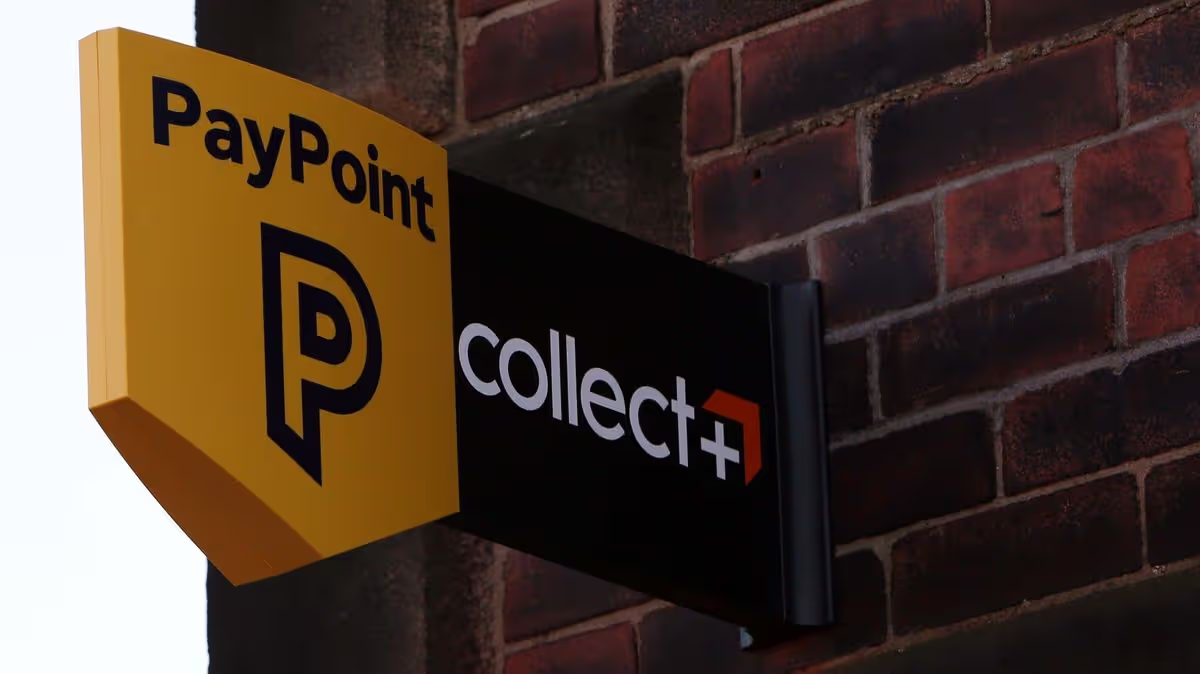
The PayPoint sign can be found across the UK(Image: Newcastle Chronicle)
Payment solutions provider PayPoint has revealed a restructuring plan aimed at cutting costs and attracting more customers to use its services in shops.
It will result in the company being restructured into four divisions, encompassing its network services, merchant services, digital payments and open banking, and its Love2shop brand.
Advertisement
PayPoint operates a retail network of over 30,000 convenience stores, offering community services such as cash withdrawals and deposits, ATMs, cash bill payments, energy top-ups and vouchers. It also runs Collect+ and Royal Mail Shops, enabling parcels to be collected and returned at thousands of local outlets.
The company has not disclosed cost-cutting targets or specified whether there will be any impact on its workforce, which numbered around 940 employees this time last year. However, it said the reorganisation will create cost savings and could potentially result in increased dividends for shareholders.
As part of the changes, PayPoint stated it is concentrating on boosting consumer footfall and enhancing sales from its services across retail partners. The overhaul will also entail a significant “reset” of the structure of its merchant services division, which collaborates with over 30,000 UK SMEs (small and medium-sized enterprises) to provide payment services in their shops.
Meanwhile, PayPoint plans to expand the Love2shop brand, which provides digital and physical gift cards. That division, based in Liverpool’s landmark 20 Chapel Street building, is set to bring in £53.2m in revenue this financial year.
Advertisement
The group said: “The reorganisation will enable an improved focus on new business growth and on maximising opportunities across Love2shop’s distribution channels. Continued investment in our technology platform, ongoing product enhancement and leveraging AI to improve marketing insight will strengthen our go-to-market strategy and support accelerated new business growth across Love2shop Business, the expansion of our prepaid savings proposition and growth of our consumer channels, including through our Incomm Payments partnership. There also remain significant opportunities to integrate Love2shop more efficiently across the wider PayPoint Group and client base.”
PayPoint acquired Love2Shop when it took over Merseyside Christmas vouchers firm Appreciate Group in an £83m deal in 2023. That business, formerly known as Park Group, was founded by former Everton FC and Tranmere Rovers owner Peter Johnson and was originally best known for its Christmas hamper savings scheme.
London-listed PayPoint anticipates reporting a record financial performance for the year ending in March, with results due to be published in June. It also forecasts returning over £90 million to shareholders through buybacks and dividends during the financial year.
Ineos has reported a sharp widening in losses to $593 million, as rising energy costs, supply chain disruption and geopolitical tensions weigh heavily on Sir Jim Ratcliffe’s petrochemicals empire.
The group, controlled by Jim Ratcliffe alongside co-owners Andy Currie and John Reece, has also suspended its dividend for a second consecutive year, underscoring the financial pressure facing the business.
Losses before tax increased significantly from $71.1 million the previous year, while revenues declined to €14.3 billion from €16.2 billion. The downturn reflects a challenging operating environment for the European chemicals sector, where demand has weakened and costs have risen sharply.
Ineos pointed directly to the escalation of tensions in the Middle East as a key risk factor, warning that disruption to global energy markets is already impacting operations.
The group highlighted Iran’s strategic position near the Strait of Hormuz, a critical shipping route for oil and liquefied natural gas, noting that any prolonged conflict could further destabilise supply chains and drive up commodity prices.
Advertisement
“Any escalation or expansion of hostilities could adversely affect global supply chains, commodity prices and macroeconomic conditions,” the company said in its annual report.
The surge in oil and gas prices has increased input costs across the petrochemicals industry, while also raising shipping expenses as companies adjust logistics routes to avoid high-risk areas.
The impact has been particularly acute in Europe, where Ineos has long warned of structural challenges including high energy prices, carbon taxes and competitive pressures from overseas producers.
Earnings before exceptional items in the region almost halved to €252.3 million in 2025, down from €470.2 million the previous year. Revenues in the European business fell by 9.2 per cent, reflecting weaker demand and margin compression.
Advertisement
Ratcliffe has previously described the European chemicals industry as facing “challenging market conditions”, with rising regulatory costs and energy prices eroding competitiveness.
The group has also been hit by logistical challenges linked to global shipping disruptions. In previous years, Ineos was forced to reroute shipments for its major Project One chemicals plant in Belgium around the Cape of Good Hope, adding more than €30 million in costs.
The company warned that similar disruptions could occur again if tensions escalate, potentially delaying the completion of key projects and further increasing expenses.
It also flagged risks to the delivery timeline of a new plant in the Netherlands, citing ongoing volatility in energy markets.
Advertisement
Ineos ended the year with net debt of €11.7 billion, highlighting the scale of its financial commitments at a time of declining profitability.
The decision to halt dividend payments reflects a focus on preserving cash and maintaining financial flexibility as the company navigates an uncertain outlook.
The results underline the pressures facing energy-intensive industries in Europe, where companies are grappling with a combination of high input costs, regulatory burdens and geopolitical instability.
For petrochemical producers, the reliance on oil and gas as both feedstock and energy source makes them particularly sensitive to price fluctuations.
Advertisement
Looking ahead, Ineos warned that continued volatility in energy markets could have a “significant” impact on its operations and financial performance.
The trajectory of the Middle East conflict will be a key factor, with prolonged disruption likely to exacerbate cost pressures and delay investment projects.
For Ratcliffe’s group, the challenge will be balancing investment in long-term growth with the need to manage short-term financial strain — a task made more complex by the increasingly uncertain global economic environment.
Amy Ingham
Amy is a newly qualified journalist specialising in business journalism at Business Matters with responsibility for news content for what is now the UK’s largest print and online source of current business news.
Stone Fox Capital is an RIA from Oklahoma. Mark Holder is a CPA with degrees in Accounting and Finance. He is also Series 65 licensed and has 30 years of investing experience, including 15 years as a portfolio manager. Mark leads the investing group Out Fox The Street where he shares stock picks and deep research to help readers uncover potential multibaggers while managing portfolio risk via diversification. Features include various model portfolios, stock picks with identifiable catalysts, daily updates, real-time alerts, and access to community chat and direct chat with Mark for questions. Learn more.
Analyst’s Disclosure: I/we have no stock, option or similar derivative position in any of the companies mentioned, but may initiate a beneficial Long position through a purchase of the stock, or the purchase of call options or similar derivatives in UPST over the next 72 hours. I wrote this article myself, and it expresses my own opinions. I am not receiving compensation for it (other than from Seeking Alpha). I have no business relationship with any company whose stock is mentioned in this article.
The information contained herein is for informational purposes only. Nothing in this article should be taken as a solicitation to purchase or sell securities. Before buying or selling any stock, you should do your own research and reach your own conclusion or consult a financial advisor. Investing includes risks, including loss of principal.
Advertisement
Seeking Alpha’s Disclosure: Past performance is no guarantee of future results. No recommendation or advice is being given as to whether any investment is suitable for a particular investor. Any views or opinions expressed above may not reflect those of Seeking Alpha as a whole. Seeking Alpha is not a licensed securities dealer, broker or US investment adviser or investment bank. Our analysts are third party authors that include both professional investors and individual investors who may not be licensed or certified by any institute or regulatory body.
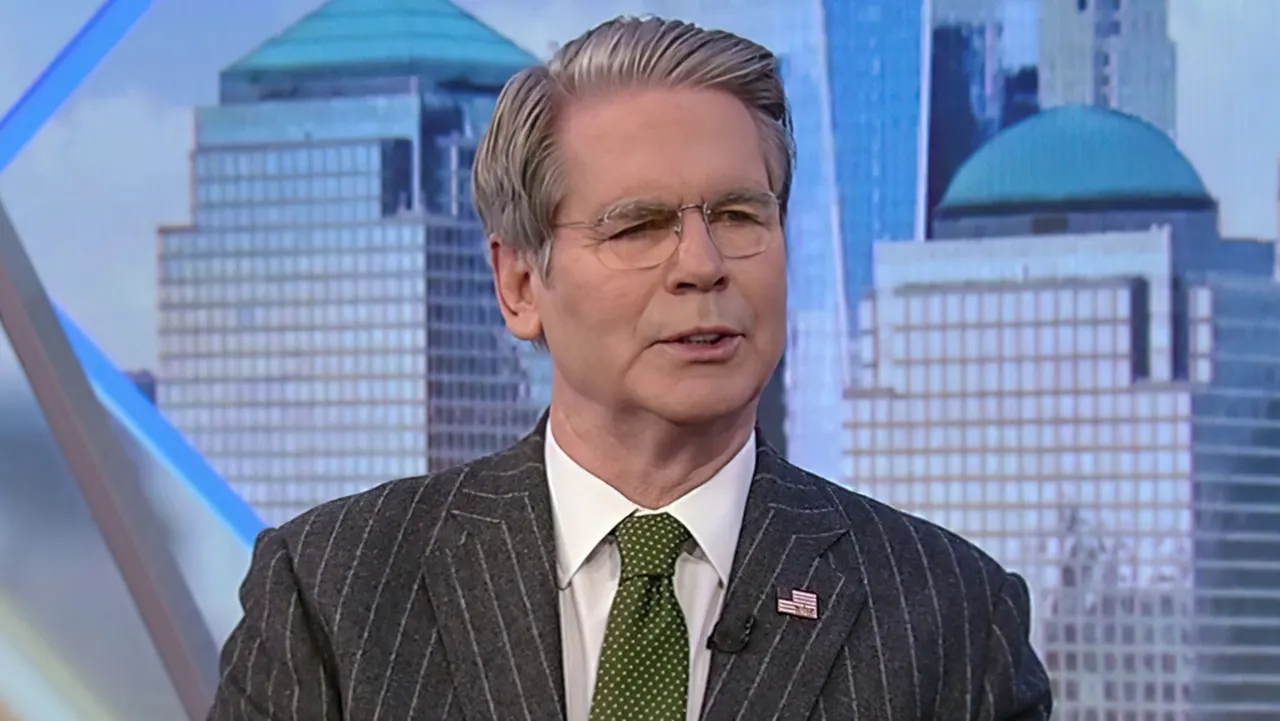
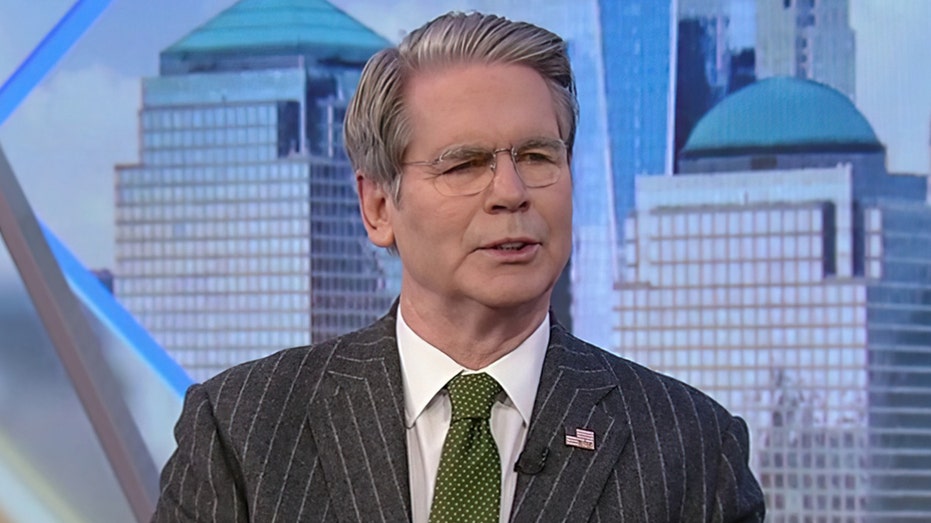
Treasury Secretary Scott Bessent joins ‘Fox & Friends’ to discuss the gradual reopening of the Strait of Hormuz and unveils a new fraud crackdown program to expose scams in healthcare and other industries.
Treasury Secretary Scott Bessent is offering what could be big money for potentially “hundreds of billions” recouped from fraudsters emboldened during a Biden administration that unwound guardrails under the guise of COVID relief urgency, he told Fox News on Monday.
“We can pay up to a 30% reward for the recovered funds,” Bessent told “Fox & Friends.”
Advertisement
Bessent said fraudsters were let loose as a result of former President Joe Biden’s administration reducing fraud controls to expedite hundreds of billions in pandemic-related funds out to Americans who needed it, and now the buck stops with President Donald Trump and Vice President JD Vance as fraud czar.
“We are all hands on deck because this is money that is not going to where it’s supposed to go, but more importantly, it’s being stolen from the American taxpayer,” Bessent said. “We need to be a high-trust society. We need to understand where the money is going.”
Treasury Secretary Scott Bessent is offering up to 30% of “hundreds of billions” potentially recouped from Biden-era emboldened fraudsters. (FOX Business)
“This could be hundreds of billions of dollars in recouped money,” he noted.
Advertisement
Bessent’s Treasury Department is now offering whistleblowers a major financial incentive to help expose fraud, directing would-be tipsters to the Treasury.gov website and saying the administration has already received more than 700 leads. Treasury’s whistleblower page says eligible tipsters can receive between 10% and 30% of monetary sanctions collected in successful actions.
Bessent also blamed weaknesses in anti-fraud enforcement on the Biden administration’s handling of pandemic aid.
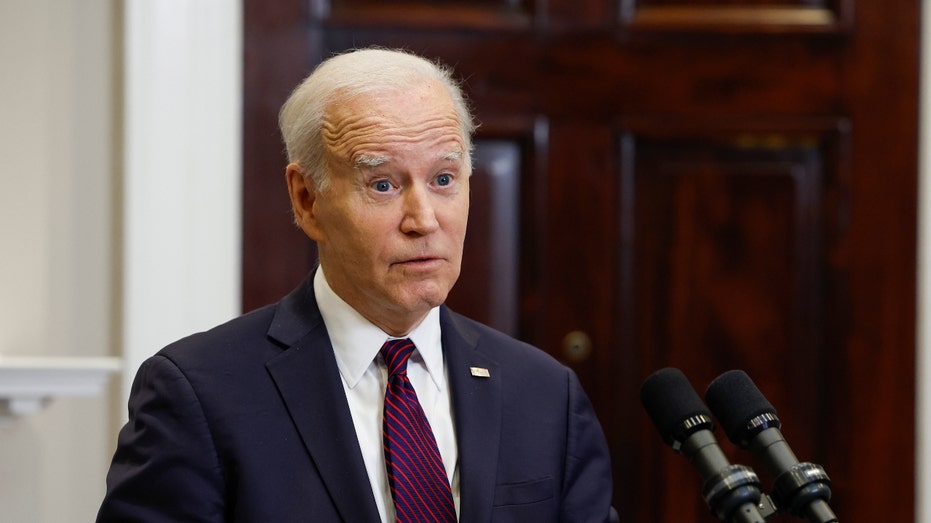
Former President Joe Biden’s administration has been rebuked for unwinding fraud and oversight controls of hundreds of billions of COVID relief funds. (Anna Moneymaker/Getty Images)
“A lot of this is a result of during COVID,” Bessent said. “Many of the agencies under the Biden administration gutted their fraud departments, their fraud detection, or took down the fraud detection to get the money out quickly for COVID relief. But they never brought back the guardians of our money. So, we have to have integrity in these programs.”
Advertisement
He argued stronger oversight and public visibility are needed to restore integrity to government programs, claiming that blue states like California and New York are covering for fraudsters against government oversight and investigations.
Unleash Prosperity co-founder Stephen Moore and Heritage Foundation senior economist Peter St. Onge discuss the Trump administration’s push to crack down on fraud on ‘The Bottom Line.’
While Minnesota fraud among the state’s Somali community has made headlines thus far thanks to independent journalist Nick Shirley’s reporting, Bessent actually praised that state for having some level of transparency that is not permitted in California or New York.
Advertisement
“That’s why that young man, Nick Shirley, was able to go to see the scams, because it was: This is the name of the facility; this is the address; this is how much money they got,” Bessent said. “Oh look, it’s an empty storefront. There’s no one here. New York, California are hiding it.”
Independent journalist Nick Shirley breaks down his alleged fraud findings in Minnesota and California on ‘FOX Business In Depth.’
“We’re all in favor of states’ rights and states doing more, but the money goes into a lot of these blue states, and some of the red states could be more transparent,” he said.


















































You must be logged in to post a comment Login