
Business
Is TTF gas fairly priced as Hormuz, winter risks keep prices elevated?




Spyder Moving and Storage, based in Oxford, Mississippi, has built its name on the operational side of the removals trade: the scheduling, the crew training, and the standards that decide whether a move goes smoothly or badly.
Vladyslav Ladygin founded the company and remains its owner, having settled in the state after graduating from William Carey University in Hattiesburg.
Ladygin’s route into moving did not come through a business degree track alone. Before Spyder existed, his background was in competitive tennis, played at a professional level in Ukraine and in tournaments across Europe and Africa. That grounding in an individual sport, where preparation and repetition decide outcomes, shows up in how he talks about running a moving company: a business built on process rather than improvisation.
Spyder Moving and Storage now serves customers with residential and commercial moving and storage work, and Ladygin has kept the company’s focus on the parts of the industry that are hardest to see from outside: how a crew is trained, how equipment is maintained, and how a claim gets handled when something goes wrong. He has pursued membership in industry bodies including the American Trucking Association’s Moving and Storage Conference and is working toward membership in the International Association of Movers, both routes to the kind of standards conversation that shapes an operator, not a customer-facing pitch.
Outside the business, Ladygin reads widely on management and discipline, citing Grant Cardone’s writing and Damon West’s The Coffee Bean among his influences, alongside Warren Buffett’s letters and principles. He now lives in Denver, Colorado, and stays active across a wide range of sports: tennis still, along with golf, boxing, hockey, and motor racing, plus regular time in the gym.
This feature looks at how Spyder Moving and Storage approaches the operational side of the business, from crew training to industry membership, and what Ladygin has learned about running a moving company since founding it.
Interview with Vladyslav Ladygin
Let’s start from the beginning. Why moving, out of everything you could have built a company around?
Moving is a business where the gap between good and bad is obvious immediately. A customer knows within the first hour of moving day whether the crew showed up prepared. There’s no ambiguity to hide behind. I found that appealing. I’d rather compete in a business where the standard is visible than one where it’s easy to talk your way past a bad result.
You came from competitive tennis before this. Does that background actually carry over to running a company?
More than people expect. Tennis at that level is repetitive. You’re not inventing something new every match, you’re executing the same fundamentals under pressure, over and over, and the small errors are what separate you from everyone else. Moving crews work the same way. The job is rarely complicated. It’s wrapping furniture correctly, loading a truck in the right order, communicating with the customer before problems start rather than after. None of that is difficult to explain. It’s difficult to do consistently, every day, with every crew. That’s the part tennis prepared me for.
What does a typical day look like for you as owner?
It shifts depending on the season. Some days I’m in dispatch, some days I’m reviewing training with newer crew members, some days I’m working through paperwork tied to industry membership. I try to keep mornings for the operational side of the business and save reading and planning for later in the day. Coffee, a walk if I can manage it, then into scheduling.
You’ve mentioned working toward membership with the International Association of Movers. Why does that matter to a company your size?
Because the standards conversation in this industry doesn’t happen at the local level. It happens at the association level, in the rooms where operators compare notes on training, safety, and claims handling. Being part of the American Trucking Association’s Moving and Storage Conference has already given us access to that. Working toward IAM membership is the same idea, extended further. It’s not about a badge on a website. It’s about staying current with how the better operators in this business are actually running their crews.
What’s the hardest part of the job that customers never see?
Crew consistency. Anyone can hire people to lift boxes. Building a crew that handles a piano the same way in July as it does in January, that treats a customer’s belongings the same regardless of how tired they are at the end of a long day, that takes real training and real oversight. It’s the least visible part of the business and the part that determines whether we get repeat customers and referrals.
How do your interests outside the business, sports especially, factor into how you run things?
I think competing across different sports keeps me honest about what discipline actually looks like. Golf and boxing are nothing alike, but both punish sloppiness in ways you can’t argue with. I bring that expectation back to the business. If a process is sloppy, it will show up in a customer’s move, the same way a sloppy backswing shows up on a scorecard.
What’s changed most about how you run Spyder since you started it?
Early on I was closer to every move personally. Now the job is building systems that don’t depend on me being in the room. That’s a slower shift than people expect, and it’s ongoing. Reading people like Buffett has helped with that, less for specific business advice and more for the patience around building something that compounds rather than something that needs constant intervention.
Where do you want the company to be in five years?
Still doing the fundamentals well, with a crew and a set of standards that don’t slip as we take on more work. Growth that outruns training is how good moving companies become bad ones. I’d rather grow slower and keep the standard than the reverse.

Meanwhile the budget goes into the interior for better chairs, a smarter reception desk, a coffee machine that finally works. That balance is starting to look outdated. Here’s why it’s worth revisiting.
1. People spend far less time outside than you’d expect
Most UK office workers get remarkably little fresh air during the working day. Research covered by Workplace Insight found that almost 40% of UK office workers spend a maximum of 15 minutes outside on a typical day, excluding the commute, putting a large chunk of the workforce below the outdoor time UN guidelines recommend for prisoners.
That’s an odd place for a country to have ended up, and it points to an opportunity. Businesses that give staff somewhere genuinely pleasant to step outside tend to see that space used.
2. A decent space gets used, a token one doesn’t
A separate 2025 report from Loughborough University, cited by workplace design specialists BSFG, found the average UK adult spends just 7% of their time, around 86 minutes, outdoors across the working week.
Give people a proper terrace, some shade, somewhere to sit that isn’t a fire exit, and you’ll usually find they use it for lunch, for phone calls, for the ten minutes that stops the afternoon slump turning into an afternoon of scrolling.
3. For hospitality and leisure businesses, it’s a revenue line
If you run a pub, holiday park, farm shop or visitor attraction, the calculation gets more direct. Families often choose a venue partly on whether there’s somewhere for children to burn off energy while the adults finish a meal. A decent play area extends the average visit, and a longer visit usually means more spent at the venue or in the shop.
Chester-based Creative Play, for example, designs, manufactures and installs playground equipment specifically for pubs, holiday parks and visitor attractions, which is a useful reminder that outdoor investment doesn’t have to mean generic landscaping. It can mean a specific feature that gives a particular type of customer a concrete reason to pick your venue over the one down the road.
4. It rarely needs to be a full rebuild
None of this requires ripping up the car park. A few well-placed benches, proper shade, planting that doesn’t demand constant upkeep, and lighting that makes an area usable after 4pm in winter will shift how a space gets used almost immediately.
Small, cheap changes often move the needle more than one expensive redesign does.
5. Staff notice it too
Recruitment and retention decisions increasingly weigh up the environment alongside salary, particularly among younger staff and anyone who’s worked hybrid for a while and has a comparison point.
A well-kept outdoor break area costs a fraction of an indoor breakout room refurbishment and tends to get heavier use, especially from people who’d rather eat lunch away from a screen than in front of one.
Have you invested in the outdoor space of your commercial premises? Share your tips in the comments below!


With over a decade of institutional investment experience, I specialize in identifying growth opportunities at the intersection of technological disruption and macro-thematic energy shifts. I’ve spent the majority of that time at a hedge fund here in Rotterdam, working my way up as an analyst. My work reflects rigorous standards as I myself have a very high standard as to what I invest my money in. My primary coverage spans the technology sector—with a focus on SaaS and cloud infrastructure—and the energy and minerals markets. I tend to be very data and trend driven in my work, analyzing unit economics and supply chain gaps among a number of other often overlooked areas in business and industries.I find these offer incredible growth opportunities and are also very fun to research and follow. It’s a very active space with plenty of news coming out each week. Work is my own thoughts and research is done only by myself.
Analyst’s Disclosure: I/we have a beneficial long position in the shares of NWN either through stock ownership, options, or other derivatives. I wrote this article myself, and it expresses my own opinions. I am not receiving compensation for it (other than from Seeking Alpha). I have no business relationship with any company whose stock is mentioned in this article.
Seeking Alpha’s Disclosure: Past performance is no guarantee of future results. No recommendation or advice is being given as to whether any investment is suitable for a particular investor. Any views or opinions expressed above may not reflect those of Seeking Alpha as a whole. Seeking Alpha is not a licensed securities dealer, broker or US investment adviser or investment bank. Our analysts are third party authors that include both professional investors and individual investors who may not be licensed or certified by any institute or regulatory body.

Buy 2 Enhanced Yield Hedges And Sleep Like A Baby
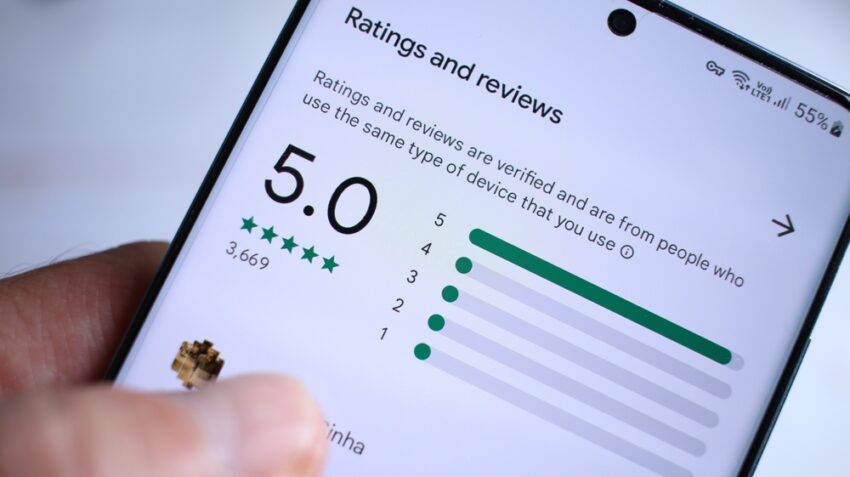
Companies that work in competitive markets in the UK can be affected by their online reputation, as it can determine the way prospective customers will view a company prior to reaching out.
Searching for a local business allows them to easily compare ratings, read customer reviews, see pictures, check business hours, and gauge business responsiveness to reviews.
Google reviews are a crucial component of today’s customer journey. It could be difficult for new businesses to build up a significant history of reviews, and for established businesses to build a big base of reviews in competitive local markets. These obstacles are just some of the reasons that you continue to see people searching to buy reviews and other reputation-management services. But, companies ought to seek more than just the quantity of reviews.
To build a sustainable internet reputation it is essential to deliver real customer experiences, accurate information, effective communication and quality service.
What Customers Look for in a Review Profile
It’s possible that a high star rating will catch their eye, but customers might dig deeper before making a decision about a business. They’ll evaluate if the reviews are fresh, if the users give them valuable data; if the company reacts to positive and negative reviews; and if the content they see on the profile is accurate.
For instance, if they’re searching for a tradesman in their local area they might want to find out if past customers were satisfied with the service and whether their service was reliable and professional. Food quality, service, cleanliness, food atmosphere and value are factors that may be of interest to a restaurant’s customer. The information provides the utility of reviews. Businesses must, therefore, consider their review profile as a part of the whole customer experience and not just a marketing statistic.
How UK Businesses Can Encourage Genuine Reviews
Making it easier for REAL customers to give feedback is one of the most sustainable ways. After a completed transaction or service, businesses can ask customers to be honest and provide feedback. They can offer a handy link to review or offer guidance on where customers can locate the relevant Google Business Profile. The request must not be directed in any way.
Businesses should avoid asking a consumer to rate the business or give a selection of words that indicates a rating. It is the customer’s right to tell how they really feel. This way, you’ll get a better review profile, and you’ll be able to learn from your positive and negative reviews.
Review Management Should Lead to Business Improvement
The best reputation strategies are customer feedback-based reputation systems that enhance the business. Management can track customer reviews to see common themes, and patterns in customer experiences. If, for instance, the complaints also pertain to the delays in responding, then there is a possible need to improve the process in customer support.
Regularly saying nice things about your knowledgeable employees might show an effective training or recruiting practice. This forms a kind of a circle:
Customer experience → Review and Insight → Improvement → Better customer experience.
This cycle can help foster a more robust customer satisfaction and reputation over time.
The Importance of UK Consumer Protection
The rise in popularity of search results for buy google reviews UK is indicative of the significance of online credibility in business. But a number of reviews isn’t enough for them to be trusted. Customers have a variety of ways to evaluate a business, from text, to photos, to business information, to public comments. The ultimate solution for businesses in the UK is to use great customer experience and real feedback, appropriate Google Business Profile details, and effective communication, along with ongoing enhancements. It’s also important for those interested in any review related service to review carefully the policies of Google and consumer protection requirements in the UK.
Finally, the intention should not be to make an impression of customer satisfaction. It should be to gain a business that is constant and generates it. A reputation that’s based from an authentic platform on real experiences will help customers, be useful for management, and will be more lasting for the growth of the business.
Frequently Asked Questions
Why do businesses search for Buy Google Reviews UK?
Businesses may be looking for ways to strengthen their online reputation, compete in local markets, and increase customer confidence. However, sustainable reputation growth depends on genuine customer experiences.
Is buying Google reviews safe for UK businesses?
Businesses should carefully evaluate any service offering paid or artificial reviews because Google prohibits fake engagement, while UK consumer-protection rules address fake and misleading reviews.
How can a business get genuine Google reviews?
Businesses can provide excellent service and politely invite genuine customers to share honest feedback after completing a transaction or service.
Should businesses respond to negative reviews?
Yes. Professional responses demonstrate that a company listens to customers and is willing to address legitimate concerns.
What should a business look for in a reputation-management provider?
Businesses should consider transparency, service scope, customer support, reporting, realistic expectations, and compliance with Google policies and applicable UK requirements.
Are reviews the only part of online reputation?
No. Reputation also includes customer experience, business information, website quality, communication, photographs, customer service, and how the company handles feedback.
What is the best long-term approach to Google reviews?
The strongest approach combines reliable customer service, genuine feedback, accurate profile information, professional review responses, and continuous improvement based on customer insights.

UBS: Commodities can add diversification as inflation, geopolitical risks rise

Putin tells US envoys Witkoff, Kushner that situation in Ukraine is ’difficult’

Interactive Brokers: Buy On Weakness, Not At The Highs

The branded giveaway feels like a modern invention, a product of trade shows, conference bags and marketing budgets.
In fact it is well over a century old, and its origin story involves a newspaperman, a batch of shoes and a stroke of accidental genius. The promotional product has a longer and stranger history than most of the brands that hand them out.
The father of the freebie
The tale that explains why promotional notebooks still work so well usually begins with Jasper Meek, a printer from Coshocton, Ohio, in the late nineteenth century, who hit upon the idea of printing a local shoe shop’s name onto burlap book bags.
It was a simple insight with enormous consequences. Instead of paying for a one-off advertisement, a business could put its name on a useful object and let everyday life do the advertising, repeatedly and for free. That basic logic has powered the industry ever since.
From calendars to conference swag
Through the twentieth century, the promotional product multiplied. Calendars, pens, matchbooks and rulers carried brand names into homes and offices. As trade shows grew, so did the giveaway, and the word ‘swag’, sometimes explained as ‘stuff we all get’, entered the marketing vocabulary. The principle never changed: usefulness plus a logo equals lasting exposure.
“What’s remarkable is how little the core idea has changed in a hundred and thirty years,” observes Jessica Bane, Director of Business Operations at GoPromotional. “Meek understood that a practical object people actually use will out-advertise almost anything. That’s still exactly why branded notebooks work. It’s the same insight, just with better paper and a sharper logo.”
The survival of the useful
Not every promotional product has aged well. The novelty gadget that amuses for a day and then clutters a drawer has fallen out of favour, both because it wastes money and because it increasingly troubles the environmental conscience. The items that have endured are the genuinely useful ones: the bag, the bottle, the pen and, reliably, the notebook.
The notebook has proved especially durable because it satisfies both halves of Meek’s original equation better than almost anything else. It is useful for a long time, and it is seen by many people whenever it is opened. More than a century after burlap bags in Ohio, it remains one of the purest expressions of the idea he stumbled upon.
The freebie grows up
Today’s promotional industry is a far cry from a printer hand-lettering shoe bags, with global research bodies measuring impressions and return on investment. Yet the smartest modern choices are the ones closest to Meek’s instinct: pick something people want to keep and use, which is why the notebook still features so heavily in considered merchandise campaigns.
What the impressions research revealed
Meek’s instinct, that a useful object beats a fleeting advertisement, has since been measured rigorously. Studies by bodies such as the Advertising Specialty Institute have found that a single promotional product can generate thousands of impressions over its lifetime, and that the majority of recipients can name the advertiser on an item they have kept. These are the kinds of numbers a one-off advertisement rarely achieves for a comparable outlay.
What the research really confirmed is that the value was never in the moment of handover but in the long life that follows. The burlap bag worked because children carried it for months; the modern notebook works because professionals carry it for years. The medium changed; the underlying logic did not.
Why usefulness became the deciding factor
As the industry matured and budgets came under closer scrutiny, usefulness moved from being a nice quality to being the decisive one. A product nobody wants is money spent on litter, however clever the branding. The items that survived this scrutiny were, almost without exception, the ones people would have found useful even without a logo on them.
The notebook sits comfortably in that category. It is something a great many people genuinely want and use, which means the brand is not imposing itself but hitching a ride on a welcome object. More than a century on, that is still the surest test of a good promotional product, and still the one the notebook passes most easily.
An old idea, still working
The corporate freebie has survived depressions, digital revolutions and changing tastes because its founding logic is close to unbeatable. Give people something worth keeping and your brand travels with it. Jasper Meek proved it with burlap. The modern notebook proves it still.

Macy's: The Tariff Refund Nobody Has Modeled

Florida Announces Ban On Flock Cameras On State Highways

BREAKING NEWS!!!! BLACKROCK XRP ETF!!!! ($2500 INSTANT?!?!)

TV presenter, 39, sentenced to death over major drug trafficking operation | News World





-

 Crypto World1 day ago
Bitcoin price stalls near $82K as key resistance holds
-

 Politics1 day ago
Best Gaming Laptops, CPUs, TVs, And Keyboards To Upgrade Your Set Up For GTA VI
-

 Tech1 day ago
The Birds Outside, Drawn For You Automatically
-

 Crypto World2 days ago
IMF Says El Salvador’s Post-Review Bitcoin Purchases Used No Public Funds
-

 Fashion1 day ago
Weekend Open Thread: Beyond Yoga
-

 Crypto World1 day ago
U.S. added stronger than expected 162,000 jobs in August as labor market bounced back
-

 Sports2 days ago
Alexandre Pato consortium’s Northampton Town investment approved
-

 Sports1 day ago
Golden Eaglets Drawn in Group B for 2026 WAFU B U17 Championship
-

 Sports2 days ago
Commanders’ Chig Okonkwo is a top breakout fantasy football candidate
-

 Crypto World1 day ago
XRP price breaks falling channel as bulls target $1.53
-

 Politics2 days ago
A new European chapter for Gibraltar
-

 Politics1 day ago
How To Avoid Winter Colds: 4 Everyday Habits That Spread Germs, Says Pharmacist
-

 Politics1 day ago
The House | Bin the lectures, bring gossip and be ready to banter: how the new PM should prepare for his Trump encounter
-

 Crypto World1 day ago
From warning to listing: UK’s largest retail investment platform opens access to crypto ETNs
-

 Tech1 day ago
A Worthy Android Ereader, With Some Tradeoffs
-

 Crypto World1 day ago
FinCEN flags $12.7B tied to Southeast Asia crypto investment scams
-

 Crypto World1 day ago
Trezor Data Breach Impacts 67,000 More US Customers
-

 Politics2 days ago
33 Cosy Autumn Home Decor Ideas: Blankets, Pumpkin Decorations, And Candles
-

 Sports2 days ago
Seven wickets in 21 balls: Sri Lanka’s Chamari Athapaththu scripts history with record-breaking spell
-

 Tech1 day ago
How To Edit Claude’s Memory
You must be logged in to post a comment Login