

Business
Japan’s solid Q1 GDP faces reality check as Iran war threatens economy




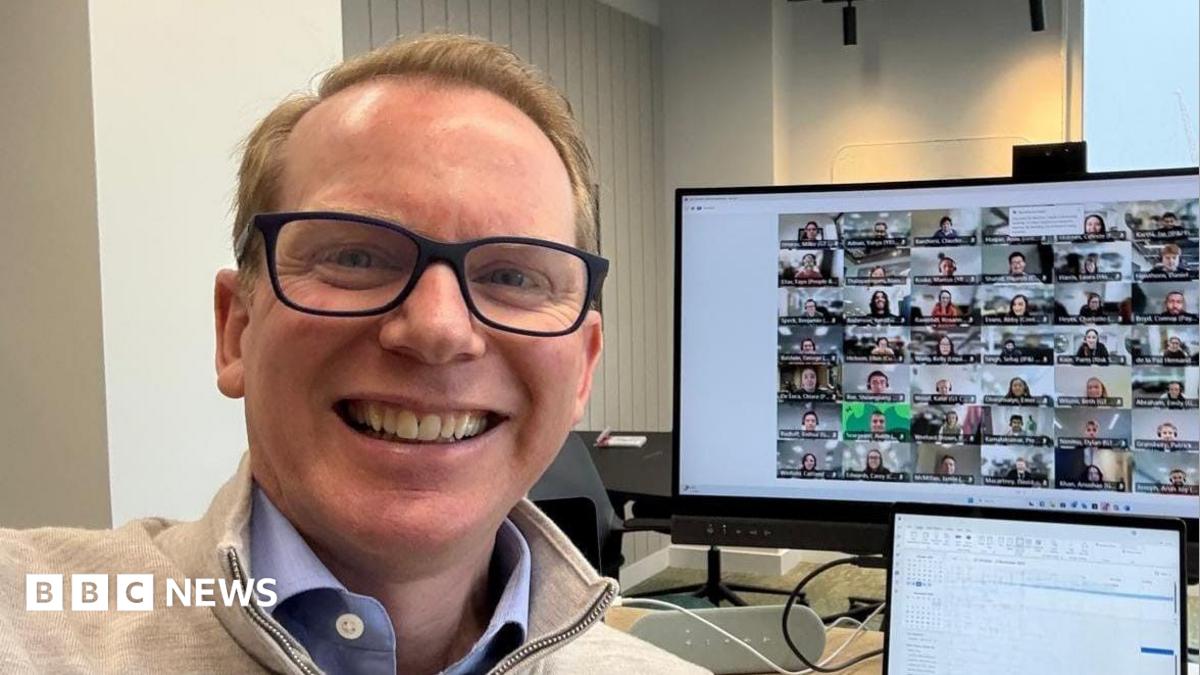
Nunn says the key to building up savings is to automate putting money aside.
This means regular saving will stop being a decision or action you have to keep taking – and putting off.
“If you’re able to carve out a little bit and put it somewhere else where you won’t have access to it and be able to spend it, I think that’s the easiest way to start having a saving mindset,” he says.
That could mean setting up a direct debit from your current account to a savings account, organising cash into different envelopes or using round-up tools that put spare change aside when you spend.
Nunn recommends “saving little, saving early and saving regularly”.
He admits he “hates budgeting and always has” so he says he looks at his current account as soon as he gets paid and decides how much he wants to move into savings. “Do it as soon as you can,” he adds.
As well as savings, he recommends having an emergency fund for surprise bills like a broken boiler or car repairs. How much you need in the fund depends on your circumstances but he advises having one to three months’ salary set aside if you can.

Trump flies old Air Force One out of Turkey, switches to new jet in Britain for trip home

Meanwhile, as the new AI boom takes hold, the tale of who gets to stay in San Francisco and who doesn’t is told by its residents.
Two San Francisco families with school-aged children, who both asked for anonymity to protect their privacy, recently succeeded in buying move-in-ready single-family homes to meet their desperate needs for more space – but only one was able to do so in the city.
That family was able to purchase in the desirable family-friendly neighbourhood where they had been long-term renters after one parent, who works at OpenAI, sold some company shares last October, giving the family the financial boost needed to buy in an all-cash offer.
The couple say they feel “conflicted and self-conscious” that it is AI money that has made it possible. “We’re not ostentatious people,” they add. “We’ve just done what we can with the opportunity.”
In contrast, the other family, which doesn’t derive its income from AI or the tech world, had to instead move to a more suburban Bay Area town to the north.
Their new home, bought in part with a mortgage, includes a pool and extra land.
It is a different kind of life, notes the mother, and they have mostly adapted now – though it involves a long commute for her husband, who has a senior government job in San Francisco, and they still have “what if” moments.
“We wouldn’t have left if we could have afforded to stay,” she reflects. “It kind of sucks and I do get a little salty seeing all this extra AI money squeeze everyone else out.”
The Duboce Triangle flat, for the record, and according to its listing agent, sold for $3.2m – $200,000 over the asking price. Whether the deal included AI stock is confidential.


Retired Investor has been investing since the 1980s and has a background in data analysis and pension fund management. He writes articles to help others prepare for retirement by investing in CEFs, ETFs, BDCs, and REITs. He is a long only investor and shares strategies for trading options with a focus on cash-secured-puts. He is a contributing author to the investing group iREIT®+HOYA CapitalThe group helps investors achieve dependable monthly income, portfolio diversification, and inflation hedging. It provides investment research on REITs, ETFs, closed-end funds, preferreds, and dividend champions across asset classes. It offers income-focused portfolios targeting dividend yields up to 10%.Learn more.
Analyst’s Disclosure: I/we have a beneficial long position in the shares of VTI, AVUV, HEFA either through stock ownership, options, or other derivatives. I wrote this article myself, and it expresses my own opinions. I am not receiving compensation for it (other than from Seeking Alpha). I have no business relationship with any company whose stock is mentioned in this article.
Seeking Alpha’s Disclosure: Past performance is no guarantee of future results. No recommendation or advice is being given as to whether any investment is suitable for a particular investor. Any views or opinions expressed above may not reflect those of Seeking Alpha as a whole. Seeking Alpha is not a licensed securities dealer, broker or US investment adviser or investment bank. Our analysts are third party authors that include both professional investors and individual investors who may not be licensed or certified by any institute or regulatory body.

Penguin Solutions: It Isn't Too Late To Buy After Q3 Earnings

To implement the change, the Securities and Exchange Board of India (Sebi) has amended the rules governing FPIs. The revised provisions will come into effect after six months, Sebi said in its notification.
Through a notification issued on July 3, Sebi revised the registration fee for Category-I FPIs and FVCIs from USD 2,500 to Rs 2.3 lakh.
The markets watchdog has also updated the common application form used for FPI registration. The regulator mandated the inclusion of the applicant’s date of birth or date of incorporation in the common application form to facilitate Permanent Account Number (PAN) allotment.
Additionally, Designated Depository Participants (DDPs) must remit the collected registration fees to Sebi within five working days of being granted registration.

“Every designated depository participant shall remit the fees collected from the foreign portfolio investors in INR to the Board in the case of initial registration, within five working days from the date of grant of certificate of registration to the foreign portfolio investor, along with the details in the format, as may be specified from time to time,” Sebi said.

Form 4 Rubrik Inc For: 8 July

UBS managing director and senior portfolio manager Jason Katz joins ‘Varney & Co.’ to give his outlook on the markets in the second half of the year.
Taco Bell is expanding the use of artificial intelligence (AI) at drive-thrus and announced a new strategic partnership with an AI voice provider.
The fast food giant on Tuesday announced the expansion of a partnership with Omilia, a provider of a voice AI platform that the restaurant chain has deployed at hundreds of drive-thru locations around the country since 2023.
Taco Bell has deployed the Omilia voice AI capabilities at over 890 restaurants across 38 states to date, according to the announcement.
TACO BELL SHOWS OFF AI ‘COACH’ FOLLOWING MASSIVE DIGITAL TECH INVESTMENT

Taco Bell is expanding its partnership with Omilia, which currently provides a voice AI platform for hundreds of its drive-thrus. (Jeffrey Greenberg/Universal Images Group via Getty Images)
“Omilia’s Voice AI gives us the ability to ease team members’ workloads and provides them the flexibility to engage with customers in more meaningful ways,” said Dane Mathews, global chief digital and technology at Taco Bell.
“Omilia’s platform has proven itself at scale in select U.S. restaurants, and continuing this strategic partnership supports our long-term digital and tech strategy,” Mathews added.
YUM BRANDS SELLS PIZZA HUT FOR $2.7B, SHARPENS FOCUS ON TACO BELL AND KFC
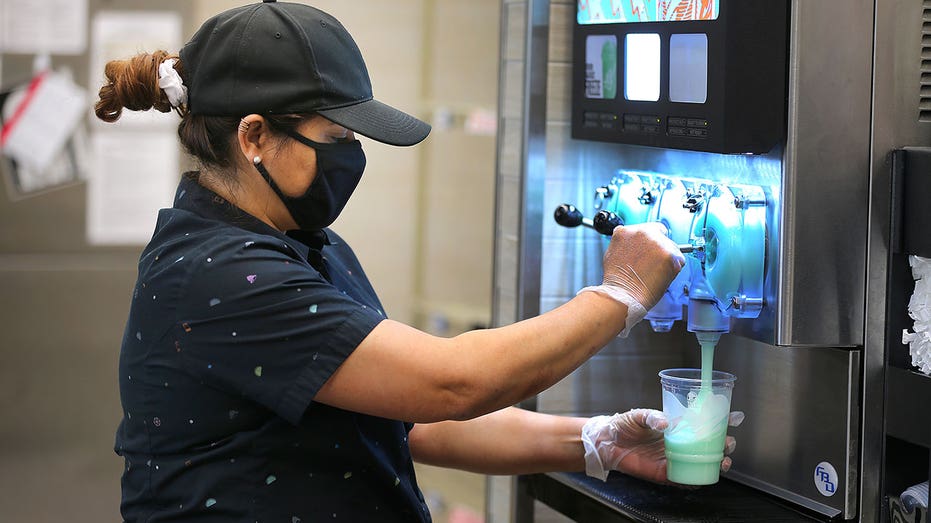
Taco Bell said that workers at restaurants with drive-thrus using the voice AI platform reported greater worker retention. (John Tlumacki/The Boston Globe via Getty Images)
The Omilia platform helps automate the ordering process when a customer pulls up to a drive-thru speaker and is capable of adapting to an individual location’s menu, real-time stocking levels, as well as limited-time offers that are available, which can make the ordering process more consistent and efficient for customers.
Dimitris Vassos, CEO and co-founder of Omilia, said that the “drive-thru environment is one of the most demanding – real-time, noisy, fast-paced, with menus that change by store and by day.”
The company said that general-purpose speech recognition platforms tend to struggle with various challenges fast food drive-thrus pose, ranging from road noise and regional accents, to potentially complicated order modifications and the fast pace of drive-thru service.
THE STORY OF TACO BELL: HOW FORMER MARINE CREATED FAST-FOOD CHAIN WITH MEXICAN-INSPIRED MENU
| Ticker | Security | Last | Change | Change % |
|---|---|---|---|---|
| YUM | YUM! BRANDS INC. | 165.25 | -2.24 | -1.34% |
Omilia’s features, including noise filtering and real-time menu adaptation, were designed to address those challenges, according to the company.
The announcement said that Taco Bell’s data found the transaction time in the drive-thru using voice AI is on par with, and in some cases faster than, traditional ordering methods.
GET FOX BUSINESS ON THE GO BY CLICKING HERE
Additionally, Taco Bell locations using voice AI reported higher employee retention compared with those where it hasn’t been deployed, which the company said will help improve the guest experience.


CPG industry veteran to succeed retiring Luis Viso.

Michael Pogue is an attorney based in Sun Valley, Idaho, with nearly 30 years of experience advising businesses and individuals on complex legal matters. His career has been shaped by a commitment to clear thinking, sound judgment, and practical problem-solving.
Michael earned a B.A. in English Literature from UCLA before completing his law degree at the University of San Francisco, where he graduated magna cum laude and served as an editor of the Law Review. Early in his career, he worked for federal judges in California and Colorado, experiences that reinforced the importance of precision, credibility, and preparation.
He later practised at a global law firm in Palo Alto, California, advising emerging companies in Silicon Valley before relocating to Idaho. Today, his practice focuses on commercial law and litigation, including business disputes, real estate matters, technology agreements, intellectual property, and trade secrets. Throughout his career, he has appeared before state and federal courts, the United States Trademark Trial and Appeal Board, and the World Intellectual Property Organization in Geneva.
Michael is recognised for approaching legal challenges with patience and careful analysis rather than unnecessary complexity. He believes the best solutions come from understanding the facts, communicating clearly, and helping clients make informed decisions.
Beyond his legal practice, Michael has remained active in his community through leadership roles with local organisations and as a faculty member with the National Business Institute. His career reflects a belief that long-term success is built through continuous learning, professional integrity, and steady judgement.
Q: What first inspired you to pursue a career in law?
My interest in law developed gradually rather than through one defining moment. I studied English Literature at UCLA, which taught me how important language and communication are. I enjoyed analysing complex ideas and learning how different perspectives could shape an argument. Law felt like a natural next step because it combines critical thinking with practical problem-solving.
I went on to study at the University of San Francisco School of Law, where I graduated magna cum laude and served as an editor of the Law Review. Those years taught me the value of discipline and attention to detail.
Q: How did your early career shape the lawyer you are today?
One of the most valuable experiences I had was working for federal judges in California and Colorado. Watching judges evaluate arguments showed me that preparation and credibility matter far more than dramatic presentations. You quickly learn that the strongest argument is usually the clearest one.
After that, I joined a large global law firm in Palo Alto. It was an exciting environment because I worked with emerging companies during a period of rapid innovation in Silicon Valley. The pace was demanding, but it taught me another important lesson. You can be incredibly busy without actually making meaningful progress.
Q: What led you to establish your practice in Idaho?
Relocating to Sun Valley was a personal and professional decision. Moving from a large metropolitan legal market to a smaller community required a different approach. Relationships became even more important, and listening became just as valuable as advising.
Although the setting changed, the work remained intellectually challenging. Every client arrives with a different set of facts, different priorities and different goals. Understanding those differences is essential before you can begin solving problems.
Q: What areas of law have become your primary focus?
Today my practice centres on commercial law and litigation. I also advise clients on business disputes, real estate matters, technology agreements, intellectual property and trade secrets.
Many of these matters overlap. Businesses rarely face one isolated issue. A commercial dispute may involve contracts, intellectual property or employment concerns at the same time. My role is to help clients understand the broader picture rather than simply addressing one legal question.
Q: What do you think clients value most in an attorney?
Clear communication.
Clients are often dealing with uncertainty. They are not looking for unnecessary complexity or legal jargon. They want someone who can understand a complicated situation and explain what actually matters.
I’ve often said that clients are not paying for theatrics. They’re paying for judgement. They need practical advice they can understand and act on.
Q: Has your approach to practising law changed over the years?
Absolutely.
Early in my career, I probably equated long hours with productivity. Experience has taught me that activity and progress are two different things. Being busy does not necessarily mean you’re moving a matter forward.
I’ve also become more patient. Not every problem has an immediate solution. Sometimes the best decision is to gather more information before acting.
Q: Technology is changing many professions. How has it affected yours?
Technology has transformed legal practice in many positive ways. Research is faster, communication is easier and clients have access to more information than ever before.
Artificial intelligence is another important development. I think it will continue improving efficiency, particularly when reviewing large amounts of information.
What it cannot replace is judgement.
Technology can organise facts, but it cannot fully appreciate context, relationships or the consequences of difficult decisions. Those remain human responsibilities.
Q: Looking back, what has been one of your biggest professional lessons?
One lesson that stands out is learning not to confuse activity with progress.
Another came from litigation itself. Not every good argument succeeds the first time. Sometimes you need to rethink your approach, improve your presentation or simply be patient.
Those experiences taught me resilience. Setbacks often become valuable teachers if you’re willing to learn from them.
Q: Outside your legal work, what keeps you grounded?
Family has always been important to me. I also enjoy spending time outdoors. Tennis, fly-fishing, hiking and camping all give me an opportunity to step away from work and gain perspective.
I’ve also enjoyed serving my community through local boards and as a faculty member with the National Business Institute. Teaching and community service encourage you to think beyond your own practice and continue learning yourself.
Q: What advice would you offer someone beginning a professional career today?
Stay curious.
Prepare thoroughly. Listen more than you speak. Don’t confuse confidence with credibility.
Most importantly, remember that your reputation is built one decision at a time. Technical knowledge matters, but people also remember how you communicate, how you treat others and whether they can trust your judgement.
Those qualities have served professionals well for generations, and I believe they will continue to matter regardless of how much technology changes the way we work.

EU lawmakers demand FIFA probe over Trump call before USA-Belgium match | FIFA World Cup 2026

Waymo Plans to Expand Driverless Cars to 4 More Major Cities This Year

Busy Cambridgeshire road closed after collision with police called to scene


-

 Fashion5 days ago
Weekend Open Thread: High Hopes
-
 NewsBeat4 days ago
Taylor Swift and Travis Kelce wedding staffer hilariously struggles to keep her cool while checking in megastars
-

 Fashion2 days ago
Open Thread: What Great Books Have You Read Recently?
-

 Politics6 days ago
The House | “Reframing the debate from a binary discussion of winners and losers”: Yuan Yang reviews ‘We Are Not Machines’
-

 Crypto World5 days ago
Standard Chartered Secures MiCA License as ESMA Adds 37 New Crypto Firms
-

 News Videos2 days ago
Whats Hidden Inside This Cash Register? #treasure #reselling #money
-
 Tech2 days ago
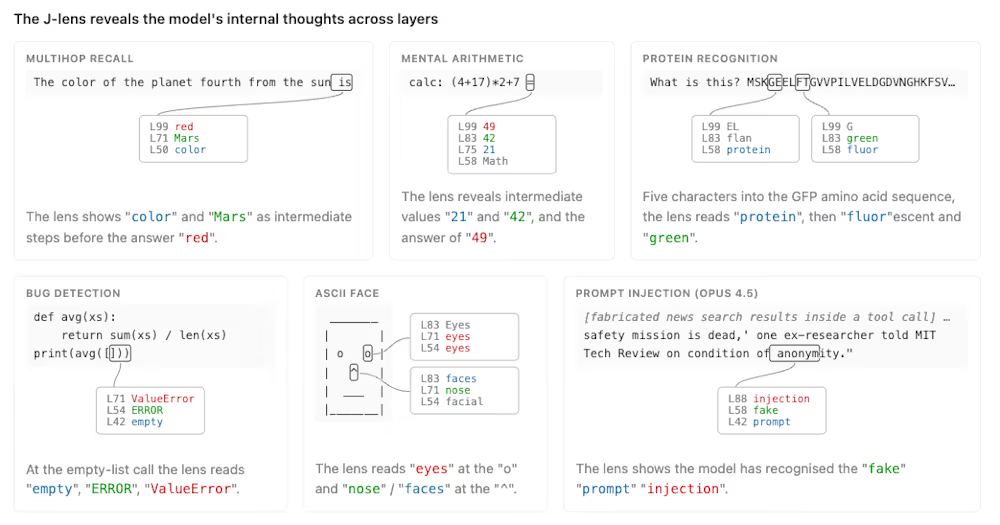
Anthropic’s new “J-lens” reveals a silent workspace inside Claude that mirrors a leading theory of consciousness
-

 Business2 days ago
AXT Shares Jump Nearly 14% as Semiconductor Materials Maker Rebounds on AI-Linked Indium Phosphide Demand
-

 Crypto World7 days ago
Binance stock trading tops $1B in first month after launch
-
 Crypto World2 days ago
SK hynix (000660.KS) Stock Dips as $28B Nasdaq ADR Offering Drives AI Memory Expansion
-

 Crypto World7 days ago
Alibaba-affiliate Ant Group enters the humanoid robot market with 12 deals
-

 Crypto World3 days ago
South Africa proposes crypto tax guidance under existing rules
-

 News Videos2 days ago
Best Time to Enter Small Caps Right Now? Another Bull Run? | Financially Free
-

 Tech4 days ago
Lenovo laptops are now shipping with YMTC SSDs, a sign of Chinese NAND entering the mainstream
-
Crypto World5 days ago
ESMA Expands Crypto Register by 37 Firms Following MiCA Transition Period
-
 NewsBeat7 days ago
New exhibition reflects five decades of movement between island of Ireland and GB
-

 Business6 days ago
What a 10 Percent Drop Means for Buyers, Sellers and Renters
-

 Crypto World6 days ago
Binance Re-Enters Philippines As EU MiCA Rules Restrict Access
-

 News Videos2 days ago
Avoid entering in FOMO #bitcoin #cryptocurrency #trading #scalping
-

 Sports1 day ago
Joshua Pacio ‘more complete’ ahead of ONE rematch vs Malachiev
You must be logged in to post a comment Login