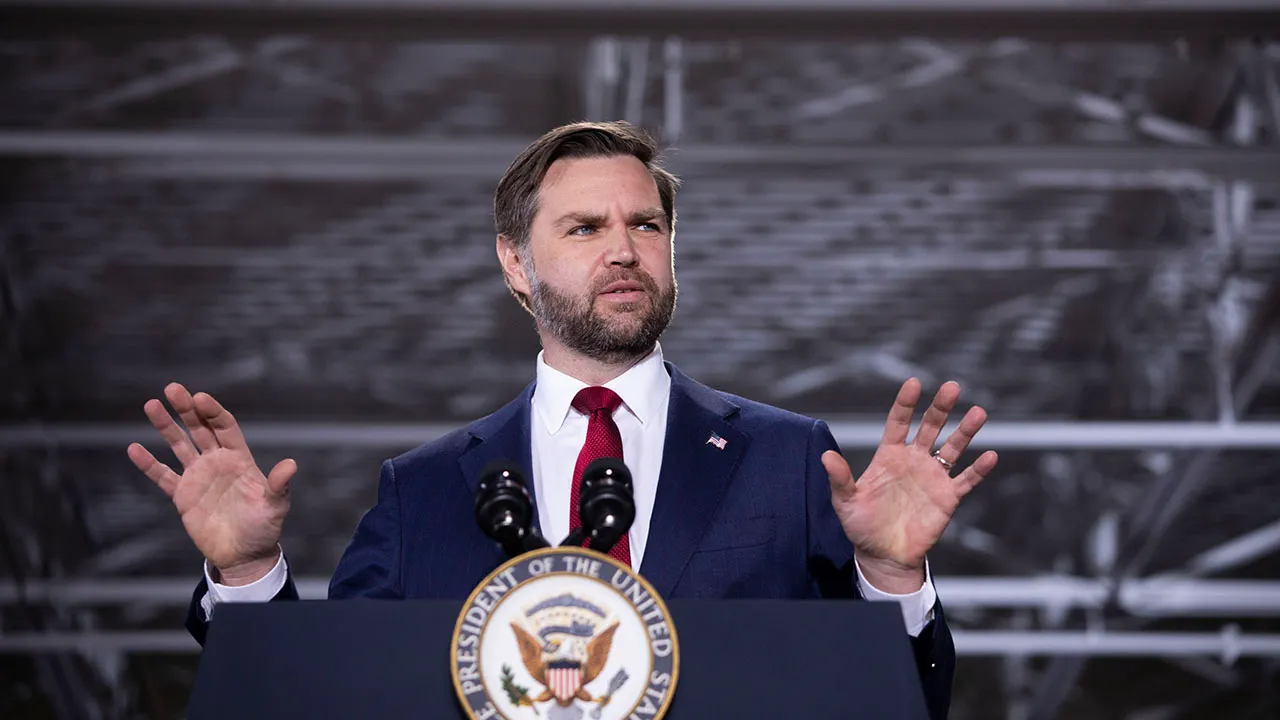
Vice President JD Vance takes questions from reporters during an event at a Michigan manufacturing plant.
The Trump administration is working to lower gas prices as motorists continue to pay more at the pump since the outbreak of the Iran war, Vice President JD Vance said Wednesday, noting that the increase is temporary.
Vance was at the Engineering Design Services, Inc. manufacturing plant in Auburn Hills, Michigan, where he was asked about rising gas prices.
Advertisement
“Gas prices are up, and we know they’re up,” Vance said. “We know that people are hurting because of it, and we’re doing everything that we can to ensure that they stay lower.”
Vance said prices will eventually start to decline.
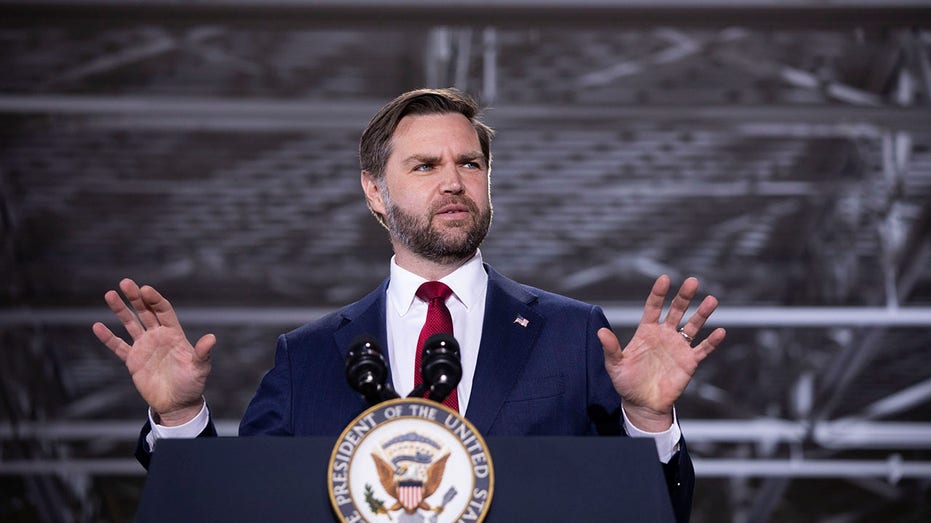
Vice President JD Vance speaks onstage at Engineering Design Services, Inc. on Wednesday in Auburn Hills, Michigan. (Bill Pugliano/Getty Images / Getty Images)
“The president said this, and I certainly agree with it. This is a temporary blow,” he said. “What happened under the Biden administration is that gas prices were high for four years. Gas prices are higher right now, and frankly, they’re not even as high as they were during certain parts of the Biden administration.”
Advertisement
Prices have steadily risen following U.S. and Israeli attacks against Iran in recent weeks.
As of Wednesday, the average price for a regular gallon of gas was $3.84, up from $2.92 a month ago, according to AAA.
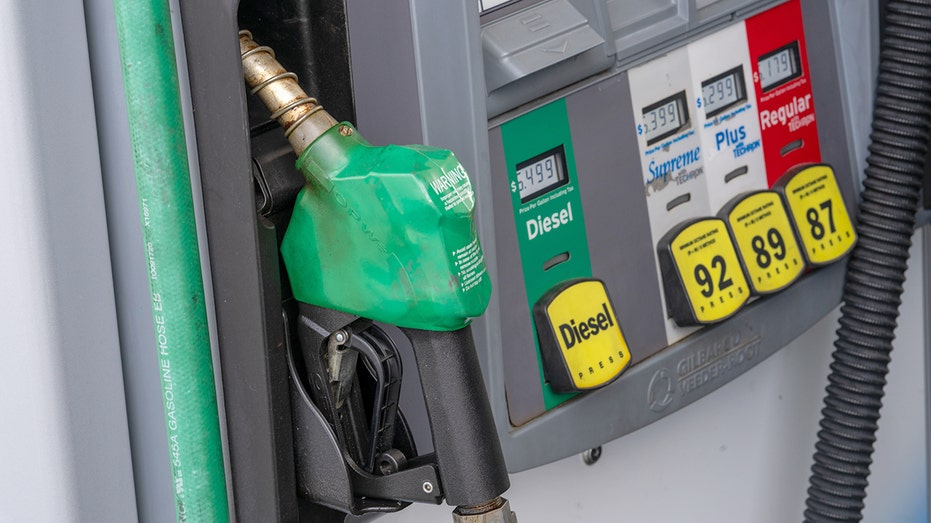
A diesel fuel pump at a Chevron gas station in Seattle, Washington, US, on Monday, March 9, 2026. (M. Scott Brauer/Bloomberg via Getty Images / Getty Images)
In recent weeks, the administration has worked with its allies to release hundreds of millions of barrels of oil from petroleum reserves in an effort to put downward pressure on prices, Vance said.
Advertisement
Many U.S. allies are “suffering” much more than many Americans, Vance said.
“So as much as we’ve got to focus on getting these gas prices down, the reality is, overseas they’re feeling it far worse than we did because we’ve taken the steps to protect our energy economy.”
Once military operations against Iran conclude, prices should decrease to previous levels, said Vance.
‘The Big Money Show’ panelist discusses Vice President JD Vance’s remarks on the economy and the Trump administration’s economic messaging ahead of the midterms.
“We promise that when this conflict draws to a close, when this operation draws to close, we’re going to see those energy prices come back down to reality, because that’s what the president promised to do,” he said. “He delivered an energy-dominant agenda. It’s made us much more secure in the face of these things. But yeah, we’ve got a rough road ahead of us for the next few weeks, but it’s temporary.”
The U.S. produces more oil than any other country, according to the Energy Information Administration (EIA). As of 2023, the latest data available, the U.S. produces 1roughly3 millions barrels per day, followed by Russia and Saudi Arabia.
Australia’s share market is trading at its highest level since early March after the US and Iran struck a two-week ceasefire, easing soaring oil prices and boosting investor confidence.
The Gloucestershire-headquartered company has added to its leadership team
Renishaw New Mills headquarters (Image: Renishaw )
Gloucestershire engineering firm Renishaw has refreshed its board with three appointments, including a renowned British academic as its new chair. The news of the appointments come just months after the precision manufacturer confirmed it had made ownership changes to the business as part of a succession plan.
On Wednesday (April 8) Renishaw told investors it had appointed Sir David Grant as its permanent chair with immediate effect for a period of up to two years. Sir David was previously a company non-executive director and also chair of the nomination committee – a role he will retain.
The Wotton-under-Edge-based business also announced the appointment of former Smiths Group finance boss John Shipsey as chief financial officer and executive director. Mr Shipsey, who worked for Dyson for 12 years and has held strategy roles at alcoholic drink brand giant Diageo, will join the board on April 13.
Sir David said: “I would like to warmly welcome John to Renishaw and its board. John brings a deep understanding of the industrials sector and its associated performance drivers. He has a strong track record of leading high-performing finance functions, and we look forward to him strengthening both the board and executive leadership team.”
Advertisement
Renishaw also confirmed that Juliette Stacey had been appointed to the role of senior independent director with immediate effect. Ms Stacey took up the role of independent non-executive director of the FTSE-250 company in January 2022 and has been chair of the audit committee and served as a member of the nomination and remuneration committees since her appointment.
In the statement to the stock market, Renishaw said it would continue the search process for the company’s next chair, with the aim of making an appointment by 2028. The company is also continuing its search for an additional independent non-executive director.
Renishaw was established by the late Sir David McMurtry and John Deer in 1973 and floated on the stock market a decade later. The firm’s first product, the touch-trigger probe, was invented by Sir David to solve a specific inspection requirement for the Olympus engines used in Concorde.
Seeking Alpha’s transcripts team is responsible for the development of all of our transcript-related projects. We currently publish thousands of quarterly earnings calls per quarter on our site and are continuing to grow and expand our coverage. The purpose of this profile is to allow us to share with our readers new transcript-related developments. Thanks, SA Transcripts Team
Changes to the off-payroll working rules coming into force this month will relieve scaling businesses of costly compliance obligations. Yet contractors who fail to adjust their rates risk being caught out, writes Business Matters.
From this month, a raft of amendments to the UK’s IR35 tax legislation will redraw the lines of responsibility between businesses and the freelancers they engage. For thousands of companies that have until now shouldered the burden of determining whether their contractors fall inside or outside the off-payroll working rules, the changes promise welcome relief. For freelancers, however, the picture is rather more complicated.
IR35, in essence, is the government’s mechanism for ensuring that individuals who work through intermediaries such as personal service companies, but whose engagements resemble those of employees, pay a broadly equivalent amount of income tax and National Insurance. According to HMRC, the framework has already shifted more than 130,000 workers into deemed employment tax status since 2021 – a figure that underscores both its reach and its continuing impact on the UK’s contracting workforce.
Under the current regime, responsibility for determining a contractor’s IR35 status rests largely with the hiring organisation – provided that organisation qualifies as medium or large under company law. Smaller companies have been exempt, with the onus falling instead on the contractor’s own personal service company. The April 2026 changes significantly raise the bar for what constitutes a “small” company, meaning many more businesses will now fall beneath that threshold and be freed from compliance duties.
A wider net for the small company exemption
Previously, a company qualified as small if it met at least two of three criteria: annual turnover of no more than £10.2 million, a balance sheet total of no more than £5.1 million, and no more than 50 employees. From April 2026, the turnover ceiling rises to £15 million and the balance sheet limit to £7.5 million, whilst the headcount threshold remains unchanged at 50 staff. The consequence is that a significant number of businesses that were previously classified as medium-sized will now be treated as small, and the obligation to issue a Status Determination Statement – the legal document setting out whether a contractor sits inside or outside IR35 – will pass back to the contractor.
Advertisement
Vincent Huguet, chief executive and co-founder of Malt, the European freelance talent platform, welcomes the reforms but sounds a note of caution. The shift in thresholds, he says, helps to move responsibility away from hiring managers, allowing them to concentrate on when and what they need rather than worrying about the tax implications of every engagement. Yet he warns that neither companies nor freelancers should become complacent.
The end of double taxation?
Alongside the threshold changes, the government is introducing a PAYE set-off mechanism designed to address one of the more contentious aspects of the existing rules. Until now, where a client failed to apply IR35 correctly, HMRC could pursue the full PAYE and National Insurance bill from the deemed employer without accounting for tax already paid at the contractor’s end through their personal service company. The new mechanism allows HMRC to offset those prior payments when calculating any outstanding liability.
Huguet describes this as an important step towards eliminating double taxation, noting that it removes the risk of a freelancer ending up paying more than their fair share and properly accounts for historic tax records.
Pricing: the freelancer’s blind spot
For contractors, however, the real sting may lie in the detail of their own rate cards. With a greater share of compliance responsibility now resting with them, freelancers must ensure their pricing properly reflects the full cost of engagement. Last year’s increase in employer National Insurance Contributions from 13.8 per cent to 15 per cent, coupled with the reduction in the payment threshold from £9,100 to £5,000 annually, has already made hiring more expensive. Because employer NIC is deducted from the assignment rate before a contractor’s pay is calculated, those costs feed directly into negotiations – whether the contractor is deemed inside or outside IR35.
Advertisement
Huguet’s message to freelancers is blunt: get your pricing right. Those who fail to factor in these shifting obligations risk undervaluing their services at precisely the moment when the regulatory landscape demands they take greater ownership of their tax affairs. For businesses, particularly those that find themselves newly reclassified as small, the changes offer a chance to engage freelance talent with less red tape – but only if both sides of the arrangement understand what is now expected of them.
Amy Ingham
Amy is a newly qualified journalist specialising in business journalism at Business Matters with responsibility for news content for what is now the UK’s largest print and online source of current business news.
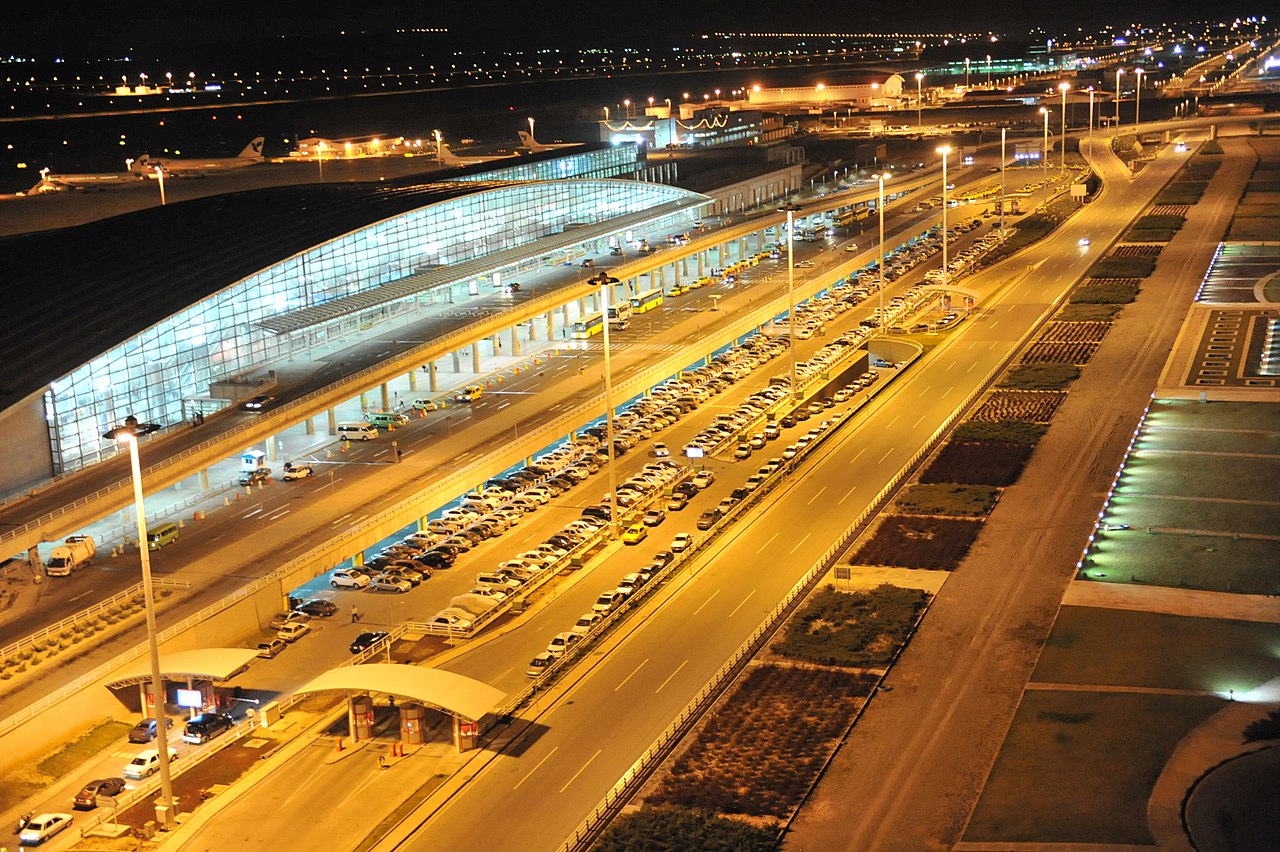
TEHRAN, Iran — Imam Khomeini International Airport (IKA), Iran’s primary gateway for international travel, stayed mostly shuttered for routine commercial flights on Wednesday, with only a handful of pre-authorized or military-linked operations reported as the country navigated the fragile two-week ceasefire framework announced by President Donald Trump and Iranian officials.
Tehran Imam Khomeini International Airport
Flight tracking sites and aviation authorities showed near-zero commercial activity at the airport south of Tehran on April 8. Major trackers including FlightStats and Flightradar24 listed no departing or arriving commercial flights during much of the day, while scattered reports of Mahan Air cargo or limited long-haul movements to destinations such as Beijing and Shanghai appeared tied to special permissions rather than normal schedules.
The airport has operated under severe restrictions since late February when the U.S.-Israeli military campaign against Iranian targets escalated, triggering retaliatory actions and widespread airspace closures across the region. Iranian NOTAMs (Notices to Airmen) have repeatedly extended prohibitions on civilian aviation in the Tehran Flight Information Region, citing security concerns and active air defense measures. Even after the ceasefire announcement late Tuesday, no immediate full reopening was declared.
The Civil Aviation Organization of Iran and airport management have not issued a clear timeline for restoring normal operations. Officials urged passengers to avoid traveling to the facility unless they hold confirmed tickets on the extremely limited wartime schedule or are collecting arriving passengers on approved flights. Foreign carriers, including Turkish Airlines, Emirates and others, have suspended service to Tehran for weeks, with many extensions running into late April or beyond.
A small number of flights, primarily operated by Iranian carriers such as Mahan Air or Iran Air, continued on a case-by-case basis with prior military clearance. These included occasional cargo or repatriation movements, but passenger capacity remained heavily restricted and subject to last-minute cancellation. International airlines continued to reroute around Iranian airspace, adding hours and costs to long-haul routes between Europe, Asia and the Middle East.
Advertisement
The situation mirrors challenges seen at other regional hubs during the conflict. Like Ben Gurion Airport in Israel, IKA has balanced limited civilian needs with heavy military use of facilities and surrounding airspace. Damage reports from earlier strikes near radar installations and infrastructure added caution to any resumption plans. Airport terminals appeared quiet, with reduced staff handling essential services for the few movements that occurred.
Travelers face significant hardship. Thousands of Iranians and foreign nationals remain stranded abroad or inside Iran, with many seeking overland routes through neighboring countries or waiting for rare approved flights. Families separated by the conflict have shared stories of canceled weddings, medical treatments and business trips. Ticket sales for departures from IKA stayed largely suspended, and refund processes proved slow and complicated.
The two-week ceasefire, which hinges on safe reopening of the Strait of Hormuz and de-escalation steps, has raised cautious hopes for gradual normalization of aviation. Iranian officials indicated that once the Home Front Command and military authorities declare conditions safe, civilian flights could resume incrementally. However, as of Wednesday morning, no such declaration had come, and NOTAMs restricting Tehran FIR remained in effect or recently extended.
Aviation experts noted the unprecedented strain on Iran’s air transport sector. IKA normally handles millions of passengers annually, serving as the main hub for long-haul connections to Europe, Asia and the Persian Gulf. The prolonged closure has hurt tourism, trade and the national carrier Iran Air, while boosting demand for alternative routes via Turkey, Armenia or indirect connections through the Gulf. Cargo operations have also suffered, affecting supply chains for essential goods.
Advertisement
Inside the airport, security remained heightened. Passengers on the few permitted flights underwent enhanced screening, and terminal areas outside active gates stayed mostly empty. Maintenance crews continued routine work in preparation for eventual full reopening, but daily activity stayed far below normal levels. The public was generally advised to stay away to reduce congestion and security risks.
Broader economic impacts ripple far beyond aviation. Exporters relying on air freight, businesses with international ties and the tourism sector — already strained before the conflict — face extended recovery timelines. Iranian authorities have coordinated with neighboring countries for limited land border crossings, though those options carry their own logistical and security challenges.
The ceasefire framework announced by Trump, involving a temporary suspension of attacks in exchange for Iranian commitments on maritime safety, offers a potential off-ramp. Yet analysts warn that any violation or breakdown could quickly reimpose full closures. Markets reacted positively to the news with falling oil prices and rising equities, but aviation insiders remain focused on ground-level implementation rather than headlines.
For now, IKA stands as a symbol of how conflict can ground even vital infrastructure. Its modern terminals, expanded in recent years to accommodate growing traffic, now echo with far fewer footsteps. Ground handlers and airline staff manage skeletal operations while awaiting clearer guidance from Tehran and military command.
Advertisement
Travelers with urgent needs continue monitoring official channels, airline apps and sites such as Flightradar24 for any updates. The Iranian Civil Aviation Organization’s website and airport social channels provide the most authoritative notices, though information sometimes lags behind fast-moving events. Those already holding tickets on limited flights should confirm status directly with carriers and arrive with extra time for security protocols.
As April 8 progressed with no major new announcements, many Iranians checked news sites and flight trackers hoping for signs of normalization. The two-week window provides breathing room for diplomacy, but full restoration of IKA’s busy schedule could take additional days or weeks even after a sustained truce.
The airport’s resilience has been tested before during periods of regional tension, with operations typically rebounding quickly once threats subside. Yet the scale and duration of the current disruptions — involving direct strikes and prolonged airspace closures — mark this as one of the most challenging episodes in its history.
For the global community with ties to Iran, the status of Imam Khomeini Airport carries both practical and symbolic weight. Safe and open skies represent a return to normalcy; their restriction underscores the human and economic costs of prolonged instability.
Advertisement
As the day continued without a breakthrough reopening, passengers and airlines alike prepared for more uncertainty. The coming hours and days will determine whether the ceasefire translates into tangible relief for travelers or remains a fragile pause in a volatile chapter.
Authorities continue to emphasize that safety remains the top priority. Any resumption will follow careful assessment by Iranian military and civilian officials. In the meantime, IKA operates in survival mode — open in name but far from business as usual.

















![*SOLO* GTA ONLINE CAR DUPE MONEY GLITCH! [XBOX/PS/PC]](https://wordupnews.com/wp-content/uploads/2026/04/1775646733_hqdefault-80x80.jpg)



































You must be logged in to post a comment Login