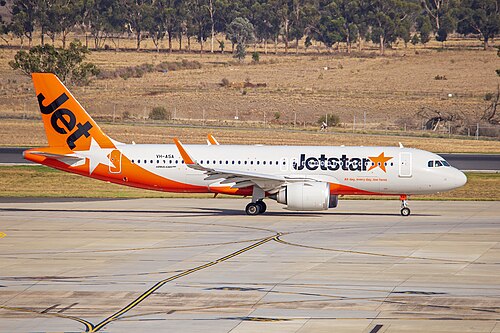







SYDNEY — Jetstar has temporarily cut more than 10% of its scheduled flights between Australia and New Zealand as soaring jet fuel prices triggered by the Middle East conflict bite into demand and raise operating costs for the Qantas-owned low-cost carrier.
Jetstar
A Jetstar New Zealand spokesperson confirmed Wednesday that approximately 12% of services — including popular routes such as Auckland-Sydney and Auckland-Brisbane — have been affected, along with some domestic New Zealand flights like Auckland-Christchurch and Auckland-Wellington. More than 55 flights are expected to be removed from the schedule in May alone, according to aviation analytics firm Cirium.
“We have made some temporary changes to our schedule, including due to a rise in jet fuel prices as a result of the conflict in the Middle East and other rising costs,” the spokesperson said. “All impacted passengers have been contacted directly and most have been offered same-day travel. We are sorry for the inconvenience and thank our customers for their understanding.”
The cuts come as Brent crude and jet fuel prices have surged following U.S. and Israeli strikes on Iran in late February, disrupting supplies through the Strait of Hormuz and pushing aviation fuel costs sharply higher. Jet fuel prices, which hovered around $85-$90 per barrel before the escalation, have climbed dramatically, forcing airlines across the region to reassess schedules and fares.
Jetstar’s move mirrors broader industry pain. Air New Zealand earlier announced cuts to about 1,100 flights — roughly 5% of its schedule — through early May, affecting around 44,000 passengers. Other carriers, including Qantas on its international routes, have raised fares in response to the volatility.
Advertisement
Trans-Tasman travel has long been one of Jetstar’s strongest routes, with the airline positioning itself as an affordable option for holidaymakers, families and business travelers between major Australian cities and New Zealand destinations like Auckland, Christchurch and Queenstown. The reductions are expected to run through at least early May, with potential for further adjustments if fuel prices remain elevated.
Industry analysts said the decision reflects a combination of higher input costs and softening demand as higher airfares deter some leisure travelers. Jetstar has not disclosed exact passenger numbers affected but emphasized that most rebookings were on the same day.
The timing adds pressure to Australia’s broader fuel crisis, where hundreds of service stations have run dry or limited grades amid panic buying and supply disruptions from Asian refineries. The government has released strategic reserves and relaxed diesel quality standards, but aviation fuel faces its own constraints.
Qantas Group, which owns Jetstar, has already hiked international fares and is monitoring domestic and low-cost operations closely. Chief executives across the sector have described the fuel spike as “unprecedented” in recent years, with some comparing it to historical shocks in the 1970s.
Advertisement
For passengers, the cuts mean potential disruptions to holiday plans, especially with Easter and autumn school breaks approaching in both countries. Jetstar urged travelers to check their bookings via the airline’s app or website and contact customer service if needed. Those on affected flights have generally been offered alternatives or refunds where rebooking is not possible.
New Zealand tourism operators expressed concern. The trans-Tasman corridor is a vital lifeline for the country’s visitor economy, with Australians making up a large share of short-haul visitors to destinations like Queenstown for skiing or Auckland for city breaks. Reduced capacity could dampen bookings at a time when the sector is still recovering from earlier pandemic effects and recent global uncertainty.
Australian travelers heading to New Zealand for rugby, concerts or family visits may face fewer options and potentially higher fares on remaining services. Competition on the route includes Air New Zealand and full-service Qantas flights, which may see some spillover demand.
Jetstar operates a fleet primarily of Airbus A320-family aircraft on these routes. While no safety issues were cited, the airline has faced separate challenges with aircraft availability in recent months, though the current cuts are explicitly tied to fuel economics.
Advertisement
The Qantas Group has not suspended its overall financial guidance but has flagged increased costs flowing through the low-cost subsidiary. Jetstar’s New Zealand operations have grown significantly in recent years as the carrier expanded domestic and trans-Tasman services to challenge Air New Zealand’s dominance.
Economists warned that sustained high fuel prices could ripple through the wider economy. Higher airfares and reduced connectivity may dampen tourism spending, while freight and logistics costs could rise for businesses reliant on quick trans-Tasman movement of goods and people.
The International Energy Agency has described the current global supply disruption as potentially severe if the Middle East conflict persists, with Asian refineries — key suppliers to both Australia and New Zealand — facing feedstock shortages.
For now, Jetstar described the schedule changes as temporary and said it would continue to monitor the situation. Passengers with upcoming travel are advised to allow extra time for any rebookings and to consider travel insurance that covers flight disruptions.
Advertisement
The development highlights the vulnerability of low-cost carriers, which typically operate on thin margins and have less flexibility to absorb sudden cost increases compared with full-service airlines. Jetstar’s business model relies on high load factors and efficient operations, making fuel a critical variable.
As the situation evolves, both Australian and New Zealand governments are monitoring aviation fuel supplies closely. No formal fuel emergency has been declared, but contingency planning is underway in case disruptions worsen.
Travelers affected by the cuts can visit Jetstar’s website or app for the latest information on their specific flights. The airline has pledged to minimize inconvenience by prioritizing same-day alternatives where possible.
With oil markets remaining volatile and no immediate resolution in sight for the Middle East tensions, further adjustments across the aviation sector cannot be ruled out. For Jetstar passengers planning trips across the Tasman, flexibility and early checks on bookings will be essential in the coming weeks.
Rep. Lisa McClain, R-Mich., joins ‘Mornings with Maria’ to discuss President Donald Trump’s Iran talks, the Strait of Hormuz deadline and GOP support for a $200 billion Pentagon funding push.
JPMorgan Chase CEO Jamie Dimon said on Tuesday that the U.S. is becoming more like Europe in terms of defense procurement, and it’s holding the country back.
Dimon spoke at the Hill & Valley Forum, which is an annual meeting that brings together policymakers, defense leaders, tech builders and investors to discuss national security, emerging technology and U.S. competitiveness.
Advertisement
He said he was “deeply frustrated” by what he sees as excessive bureaucracy in the defense procurement process at the Department of War that inhibits its ability to respond quickly and adapt during a conflict.
“We’ve become like Europe, we’re unable to move and change – change budgeting, change procurement. You know, let people do what they need to do,” Dimon said.
JPMorgan Chase CEO Jamie Dimon expressed frustration with what he sees as a lack of adaptability in the defense procurement process. (Alexander Tamargo/Getty Images for America Business Forum)
Dimon added that the bureaucracy’s rules and compliance processes as well as Congress’ involvement create barriers to the ability of defense contractors to deliver on time and on budget.
Advertisement
He added that the defense industrial base and policymakers need to be more adaptable as he sees a need to increase defense spending given threats around the world.
“Of course, you also know that there’s going to be a lot more spent on the military, which we really need to do,” he said. “We just want to be part of helping their supply chain.”
Dimon said the U.S. will likely need to spend more on defense in the years ahead given geopolitical threats. (U.S. Air Force/Senior Airman Trevor Gordnier/51st Fighter Wing/DVIDS)
Dimon added that he thinks the involvement of more private companies in the defense industrial base could foster more rapid development and deployment of new technologies. Some private companies like Anduril and SpaceX are emerging as significant defense contractors in their areas of expertise.
Advertisement
As the competition between the U.S. and China intensifies and the threat of conflict over Taiwan grows, Dimon said that the dependencies that the U.S. government and American corporations developed for components from China were harmful over the long-term.
Dimon said the U.S. defense industrial base has been too slow to adapt to changes and is becoming like Europe’s. (Christopher Furlong/Getty Images)
However, that experience could be informative for the U.S. if a conflict with China ever arises, as it could attempt to emulate aspects of what China has done in terms of critical industries.
“We should acknowledge [China has] done some things magnificently well,” Dimon said, noting the country’s manufacturing of cars, drones, ships and batteries. “We should look at our own shortcomings and then be prepared, if they ever become an adversary, to face off against them.”
President Donald Trump said he’s considering sending the National Guard to U.S. airports, two days after the administration sent Immigration and Customs Enforcement agents to several major U.S. airports following hourslong waits for travelers because of the partial government shutdown.
In a Truth Social post on Wednesday, Trump blamed Democrats for the shutdown, which began Feb. 14.
“Thank you to our great ICE Patriots for helping. It makes a big difference,” he wrote in his post. “I may call up the National Guard for more help.”
Travelers wait in line at a Transportation Security Administration (TSA) checkpoint at Hartsfield-Jackson Atlanta International Airport (ATL) in Atlanta, Georgia, US, on Monday, March 23, 2026.
Advertisement
Elijah Nouvelage | Bloomberg | Getty Images
More than 11% of TSA officers called out on Wednesday and more than 450 have quit since the shutdown started, the Department of Homeland Security said.
Elevated absences of Transportation Security Administration officers, who are required to work though they’re not getting paid during the shutdown, have contributed to long lines at major U.S. airports, including in Atlanta, Houston and New York.
Read more about the impact on air travel
DHS, which oversees both ICE and and TSA, said the ICE agents will “support airports facing the greatest strain” but the department didn’t respond to requests for comment on what the ICE agents’ duties are. ICE agents are getting paid in the shutdown.
Advertisement
Airlines have been warning customers about potentially long security lines, while executives grow increasingly frustrated with lawmakers about the impasse. On Tuesday, Delta Air Lines said it suspended its airport escorts and other special services for members of Congress and their staff because of the ongoing partial shutdown of the DHS.
The shutdown comes as Democrats in Congress have demanded changes to how federal immigration enforcement operates in exchange for releasing DHS funding after two U.S. citizens were shot and killed by ICE officers in Minneapolis.
A Los Angeles jury on Wednesday found Meta and Google liable in a closely watched trial accusing social media platforms of designing their products to get young users addicted, awarding the plaintiff $3 million in damages.
The verdict came after nine days, roughly 43 hours of deliberations.
Advertisement
The case centered on a now 20-year-old California woman identified as K.G.M., who said social media platforms encouraged addictive use when she was a minor and contributed to depression and suicidal thoughts.
Her lawsuit alleged that companies behind several major platforms designed their products in ways that encouraged compulsive use among young people.
Supporters of “K.G.M.” pose with signs outside the Los Angeles Superior Court during a social media trial over whether platforms were deliberately designed to be addictive to children in Los Angeles, Feb. 25, 2026. (Frederic J. Brown/AFP Via Getty Images / Getty Images)
TikTok and Snap, the parent company of Snapchat, were originally named as defendants but settled ahead of trial, leaving Meta and Google-owned YouTube as the remaining companies in the case.
The trial had been closely watched as one of the first to test in front of a jury whether social media companies can be held legally responsible for alleged harms tied to youth use of their platforms.
Jurors were asked to determine whether Meta or YouTube should have known their platforms posed a danger to children, whether the companies were negligent in designing their products, and if so, whether their services were a “substantial factor” in causing the plaintiff’s mental health issues.
On Monday, jurors told the judge that they were having difficulty coming to a verdict with one of the two defendants and asked how to move forward. They were given their previous instructions, with the judge suggesting they read the details out loud before they were sent back for more deliberations.
Meta Platforms CEO Mark Zuckerberg departs the court after taking the stand at a trial in a key test case accusing Meta and Google’s YouTube of harming kids’ mental health through addictive platforms, in Los Angeles, Feb. 18, 2026. (REUTERS/Mike Blake / Reuters Photos)
The verdict came a day after a jury in New Mexico ordered Meta to pay $375 million after finding the company misled users about the safety of its platforms and allegedly enabled child sexual exploitation.
Advertisement
This is a breaking news story; check back for updates.
FOX Business’ Kelly Saberi contributed to this report.
Seeking Alpha’s transcripts team is responsible for the development of all of our transcript-related projects. We currently publish thousands of quarterly earnings calls per quarter on our site and are continuing to grow and expand our coverage. The purpose of this profile is to allow us to share with our readers new transcript-related developments. Thanks, SA Transcripts Team
Strauss Group Ltd. (SGLJF) Q4 2025 Earnings Call March 25, 2026 9:30 AM EDT
Company Participants
Avshalom Shimi Shai Babad – CEO & President Tobi Fischbein – Chief Financial Officer
Presentation
Advertisement
Avshalom Shimi
[Audio Gap]
differ materially from those projected, including as a result of changing industry and market trends, reduced demand for our products, the timely development of our new products and their adoption by the market, increased competition in the industry and price reduction as well as due to risks identified in the documents filed by the company with the Israeli Securities Authority.
Online with me today are Mr. Shai Babad, Strauss Group’s President and CEO; and Mr. Tobi Fischbein, Group CFO; and myself, Avshalom Shimi, Head of Investor Relations. We will begin with a review of the annual results by CEO, Shai Babad, and then move on to the financial highlights of the quarter and 2025 presented by CFO, Tobi Fischbein. We will then move to the Q&A session.
Advertisement
Shai, the floor is yours.
Shai Babad CEO & President
Thank you very much, Avshalom. Again, we apologize deeply for the delay. The computer fell in the last moment after everything was ready. [ Murphy ] is slow, and we had to upload everything on a new computer. But let’s start, and I’ll try to be brief and to the point.
Advertisement
Next. Next. The highlights of 2025. We have a very strong double-digit growth in 2025 and also a very strong double-digit growth in the last quarter of Q4 of 2025. In the year of 2025, we also managed to regain back our margins and improve the profit — operational profit and the operational profitability, with margins reaching 9.6% without our kitchen activity, which is very, very close to the strategic guidelines that we gave. In net profit in the last quarter, we managed to improve the results by 100%, getting to ILS
A Homes England sign for a proposed housing development on land off Kellet Road, Carnforth(Image: LDRS)
A plan for 250 homes in Carnforth has been refused by Lancaster councillors, after fears that it threatened a football club’s activity and wider community needs.
Advertisement
There were also concerns the plan failed to consider reopening a nearby Lancaster Canal marina, and that residents’ cars from the new homes would add to local congestion.
Carnforth Rangers FC was among a number of objectors to the plan by government agency Homes England, for up to 250 houses at the Lundsfield Quarries site, off Kellet Road.
Now, Lancaster City Council’s planning committee (on Monday, March 23) has refused the application, against planning officers’ advice.
Homes England wanted outline planning permission for 250 homes and bought the land after developer Redrow Homes failed to deliver an earlier scheme some years ago, council planning papers said.
Advertisement
The 29-acre site covers the former Lodge Quarry Works bordering the canal south of Carnforth town centre. The football club’s location, Quarry Park, is on the northern edge of the application site.
Neil Wakeman, representing Carnforth Rangers FC trustees, wrote an objection letter to the council, included in planning papers.
He said: “We have real concerns for the incompatibility of football activities with this proposed housing development. This would threaten the viability of improved football facilities in the area.
“A significant shortfall of playing pitches in the Carnforth area has already been identified in Lancaster City Council local plans. Rather than building housing around the existing football ground, we believe all proposals should be considered holistically – together with the community’s sport and footballing needs. Plans for the district should facilitate the expansion of football facilities.”
Advertisement
Carnforth Town Council had also objected. It claimed there has been poor consultation with the community, had worries about traffic congestion and feared the football club would face complaints about disturbance from future residents living in the new homes.
Elsewhere, Lancaster Canal Trust had raised concerns, but not objections. It said the potential loss of canal boat moorings would not encourage a focus for leisure activity in Carnforth. It and the Canal and Rivers Trust also made suggestions to protect the canal infrastructure and its enhance its surrounds.
The Homes England plan included demolition of some existing buildings to build new homes, access and infrastructure. It also proposed a car and coach park for Carnforth Rangers.
Lancaster City Council planning officers had advised councillors to approve the plan with conditions and a legal agreement. Officers said news homes were needed and the canal could be protected.
Advertisement
Their recommendations include having a football club car park with at least 58 spaces and two coach spaces, with long-term security of tenure for the club. Also a contribution by the developers for other sports amenities elsewhere.
Also recommended were affordable homes, new traffic signals on Kellet Road and the developer making a bus service contribution of £500,000. New public space at the housing estate and a management company to maintain open space, roads, landscaping and drainage were also recommended by officers.
But city councillors on the planning committee refused the application.
To find all the planning applications, traffic diversions, road layout changes, alcohol licence applications and more in your community, visit the Public Notices Portal.

Wharton School finance professor emeritus Jeremy Siegel discusses worry surrounding artificial intelligence, value stocks and more on ‘Barron’s Roundtable.’
The Federal Communications Commission (FCC) said on Monday it was banning the import of all new foreign-made consumer routers, a move that comes as the latest crackdown on Chinese-made electronic gear over security concerns.
China is estimated to control at least 60% of the U.S. market for home routers – which are the boxes that connect computers, phones and smart devices to the internet.
Advertisement
The FCC order does not impact the import or use of existing models, but will ban new ones.
The agency said a White House-convened review deemed imported routers pose “a severe cybersecurity risk that could be leveraged to immediately and severely disrupt U.S. critical infrastructure.”
The FCC said that malicious actors had exploited security gaps in foreign-made routers “to attack households, disrupt networks, enable espionage, and facilitate intellectual property theft,” citing their role in major hacks like Volt and Salt Typhoon.
Advertisement
Hackers can exploit consumers’ home internet routers that aren’t properly secured. (Getty Images)
The determination includes an exemption for routers the Pentagon deems do not pose unacceptable risks.
Lawmakers have previously raised security concerns about Chinese-made routers and Michigan Rep. John Moolenaar, the Republican chair of the House select committee on China, praised the FCC order.
“Today’s tremendous decision by the FCC and the Trump administration protects our country against China’s relentless cyberattacks and makes it clear that these devices should be excluded from our critical infrastructure,” Moolenaar said. “Routers are key to keeping us all connected, and we cannot allow Chinese technology to be at the center of that.”
Advertisement
The Chinese Embassy in Washington did not immediately comment.
The Federal Communications Commission (FCC) announced a ban on imported internet routers after finding security vulnerabilities. (Andrew Harrer/Bloomberg via Getty Images)
Last month, Texas Attorney General Ken Paxton sued TP-Link Systems, a California-based router manufacturer spun off from a Chinese firm, for allegedly marketing its networking devices deceptively and allowing Beijing to access American consumers’ devices.
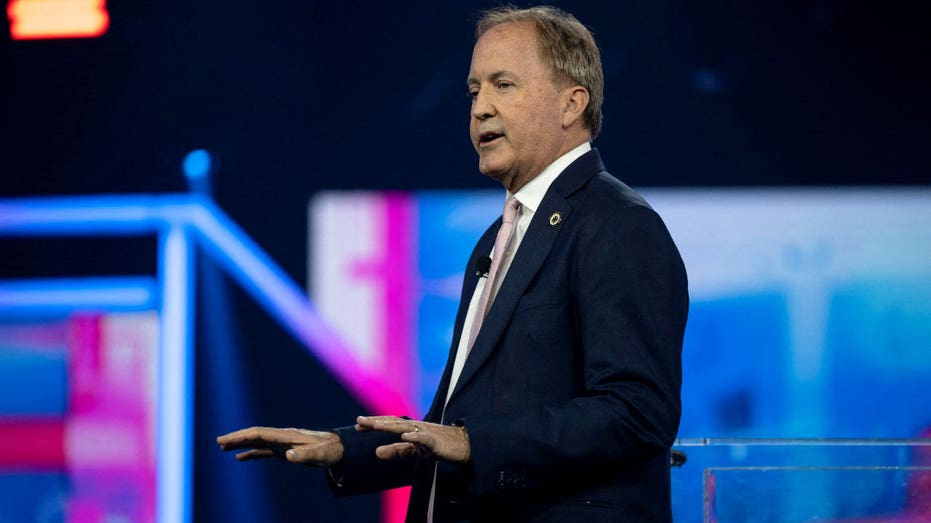
Texas Attorney General Ken Paxton speaks during the AmericaFest 2024 conference sponsored by Turning Point in Phoenix, Arizona, on Dec. 21, 2024. (Cheney Orr/Reuters)
TP-Link Systems said it would “vigorously defend” its reputation, adding that the Chinese government had no form of ownership or control over the company, its products or user data.
Advertisement
Reuters reported last month the Trump administration had put on hold a proposed ban on domestic sales of routers made by TP-Link.
TVS Holdings, the promoter entity of TVS Motor Company, announced an interim dividend of Rs 86 per equity share on Wednesday. This implies a whopping 1,720% dividend payout on the smallcap company’s 2.02 crore shares.
In an exchange filing, TVS Holdings said that its board of directors, during its meeting today, has declared the interim dividend of Rs 86 per share with a face value of Rs 5 each for the ongoing financial year 2026, with the total dividend payout standing at Rs 174 crore.
Record date for TVS Holdings dividend
The record date to determine the eligibility of the shareholders set to receive the dividend has been set on April 2. This means that only those shareholders who have the shares of the company on their demat accounts on April 2 will be eligible for the dividend. The dividend will be paid within 30 days from the declaration of the interim dividend, the company announced.
Advertisement
This comes after the company paid an interim dividend of Rs 93 to its shareholders in March last year, and Rs 94 in April 2024.
Additionally, the company also announced that it has raised Rs 650 crore by issuing non-convertible debentures (NCDs) at an 8.10% coupon rate with a 39-month term.
Live Events
TVS Holdings share price
The shares of the company sharply surged nearly 3% to trade at Rs 14,125 apiece on NSE on Wednesday. The stock has gained more than 57% in the past one year, and over 265% over the past three years. The Chennai-headquartered company has undergone key transformations in recent years, including its rebranding from Sundaram-Clayton to TVS Holdings. The company acts as the holding arm of the larger TVS Group, which has been expanding its footprint across mobility solutions, electric vehicles, and global operations.Through its subsidiaries and associates, TVS Holdings has interests in two-wheeler manufacturing, electric vehicle initiatives and global operations. Earlier in January this year, TVS Holdings reported a 28% year-on-year rise in consolidated net profit to Rs 493 crore for the October-December quarter of the ongoing financial year 2026. The firm’s revenue from operations grew 34% YoY to Rs 15,276 crore during the same period.
(Disclaimer: Recommendations, suggestions, views and opinions given by the experts are their own. These do not represent the views of The Economic Times)
The Supreme Court unanimously ruled Wednesday that internet providers are not liable for copyright infringement by their users, delivering an opinion in Cox v. Sony and tossing a $1 billion verdict.
“Under our precedents, a company is not liable as a copyright infringer for merely providing a service to the public with knowledge that it will be used by some to infringe copyrights,” Justice Clarence Thomas wrote in the opinion. “Accordingly, we reverse.”
Advertisement
The ruling marks a significant win for broadband providers facing pressure from copyright owners to police subscriber activity.
Cox Communications now cannot be held liable for piracy by its internet service subscribers of songs owned by Sony Music, Warner Music Group, Universal Music Group and other labels, ending their billion-dollar-plus music copyright lawsuit.
The 9-0 ruling overturned a lower court’s decision to order a new trial to determine how much the internet service provider owed the record labels for a form of liability called contributory copyright infringement. Cox had said a retrial could have produced a verdict against the Atlanta-based ISP of as much as $1.5 billion.
Advertisement
“The judgment of the Court of Appeals for the Fourth Circuit is reversed, and the case is remanded for further proceedings consistent with this opinion,” the ruling concluded.
Justice Sonia Sotomayor, joined by Justice Ketanji Brown Jackson, agreed Cox should prevail in this case but rejected the majority’s broader reasoning.
In her separate opinion, Sotomayor wrote that “the majority, without any meaningful explanation, unnecessarily limits secondary liability” and warned that the decision “also upends the statutory incentive structure that Congress created.”
All nine members of the Supreme Court agreed that an internet provider cannot be held liable for the copyright infringement of their subscribers. (Getty Images / Getty Images)
“The facts of this case do not establish the requisite intent needed to hold Cox liable for infringement that occurred on its network,” she concluded.
“Because the majority needlessly curtails secondary liability in a manner inconsistent with both precedent and statute, I concur only in the judgment.”
More than 50 labels joined together to sue Cox in 2018. Internet service providers like Cox are generally not considered liable under U.S. law for infringement by their users if they take reasonable measures to address it. But the labels accused Cox, the largest unit of privately owned Cox Enterprises, of failing to respond to thousands of infringement notices, cut off internet access for repeat infringers or take other piracy-deterrence steps.
A jury in Alexandria, Virginia, in 2019 found Cox owed the labels $1 billion for user infringement of more than 10,000 copyrights. The jury found Cox liable both for contributory infringement and vicarious infringement, two forms of secondary copyright infringement liability.
The Richmond, Virginia-based 4th U.S. Circuit Court of Appeals threw out the damages award in 2024. The 4th Circuit ordered a retrial on the award’s size after affirming the jury’s finding of contributory infringement but reversing its finding of vicarious liability.
People look at the U.S. Supreme Court building in Washington, D.C., March 14, 2026. (REUTERS/Will Dunham / Reuters Photos)
Contributory infringement involves holding parties liable for someone else’s infringement because they knew about it and contributed to it. Vicarious infringement involves holding parties liable for someone else’s infringement because they had the ability to control the infringement and benefited financially from it.
Cox argued that the position taken by the labels in the case would expand the concept of contributory infringement too broadly. Cox said this stance would threaten to cut off access for thousands of innocent internet users including “entire households, coffee shops, hospitals, universities” and others “merely because some unidentified person was previously alleged to have used the connection to infringe.”
Cox utility trucks are parked at the Cox Communications Springfield Warehouse on May 16, 2025, in Springfield, Virginia. (Kevin Dietsch/Getty Images / Getty Images)
The Supreme Court heard arguments in the case in December. A lawyer for President Donald Trump‘s administration argued in support of Cox. Alphabet, Amazon, Microsoft and other internet-focused tech companies supported Cox in the case, too. Music, film and book industry trade groups backed the labels.
You must be logged in to post a comment Login