
Business
John Fetterman calls Republican SAVE America Act ‘needlessly complicated’


Sen. John Fetterman, D-Pa., joins ‘Mornings with Maria’ to discuss U.S. strikes on Iran, the ongoing DHS shutdown and the debate over the SAVE Act.
Sen. John Fetterman, D-Pa., detailed his rationale for refusing to support the SAVE Act in its current form despite acknowledging that voter ID requirements are not “unreasonable.”
“It’s needlessly complicated,” Fetterman said Monday on “Mornings with Maria.”
The Pennsylvania Democrat stressed that while he supports requiring identification to vote, he believes the House-passed bill goes further than necessary and fails to account for the security of existing voting systems, particularly mail-in ballots.
“I have said it’s not Jim Crow, and it’s not extreme things, but mail-in voting is absolutely secure,” Fetterman said. “Some of the best examples in the country are red states like Florida and Ohio.”
TRUMP VOWS BLOCK ON SIGNING NEW LAWS UNTIL SAVE AMERICA ACT PASSES SENATE

Sen. John Fetterman speaks to reporters outside U.S. Steel’s Clairton Coke Works following an explosion at the plant in Clairton, Pa., on Aug. 11, 2025. (Rebecca Droke/AFP via Getty Images / Getty Images)
Fetterman pointed to Florida as a model, noting the state passed legislation similar in spirit to the SAVE Act while also affirming the integrity of mail-in voting.
“I would remind people watching [that] Florida just passed the essential version of the SAVE America Act, but they also said mail-in voting is absolutely secure, and that’s going to be part of us going forward,” he said.
Host Maria Bartiromo pressed Fetterman on the issue during the interview, noting that he had previously expressed openness to voter ID requirements and asking what would be needed to secure his support for the bill.
CORNYN REVERSES ON FILIBUSTER STANCE TO PUSH TRUMP’S SAVE ACT IN SENATE
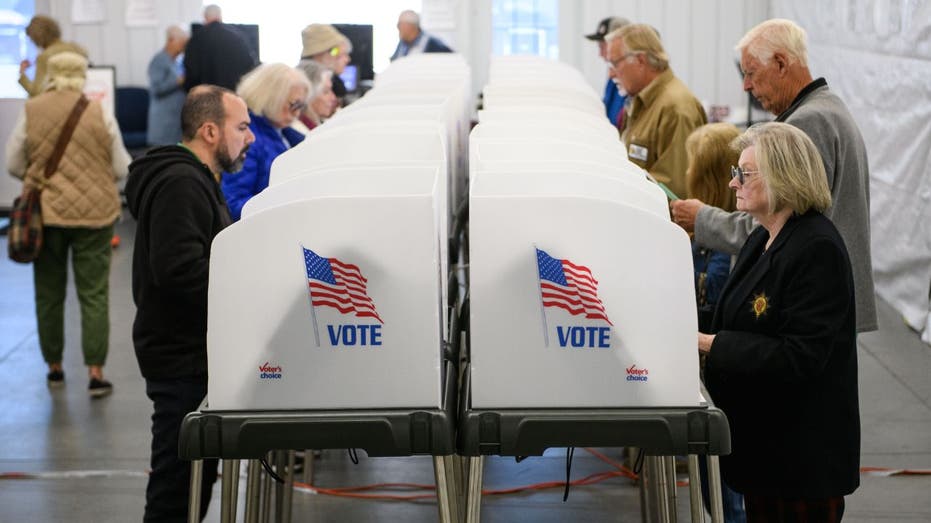
Voters make selections at an early voting site on Oct. 17, 2024, in Hendersonville, N.C. (Melissa Sue Gerrits/Getty Images / Getty Images)
“No one reached out to have more of a conversation… it is turning into more like [a] theatrical kind of thing,” he said.
“If [Republicans] want to have a real honest conversation, sure, absolutely, but overall, I refuse to engage in the extreme kind of rhetoric on either side…”
Fetterman also reminded viewers that requiring voter identification itself is not controversial among most Americans but argued the current legislation goes beyond that principle.
GET FOX BUSINESS ON THE GO BY CLICKING HERE
Sen. John Fetterman, D-Pa., joins ‘Mornings with Maria’ to discuss the DHS shutdown standoff and his break with Democrats over voter ID.
“It’s not a radical idea for Americans to provide ID, but that’s not what Save America is right now,” he said.
“And they’re attaching all of these other things that is a distraction to the core.”

Devon Energy: Merger Deal, Iran War, Price Tailwinds

Dollar steady as traders fret about escalating Iran war
Asia markets brace for Trump’s promised assault on Iranian infrastructure
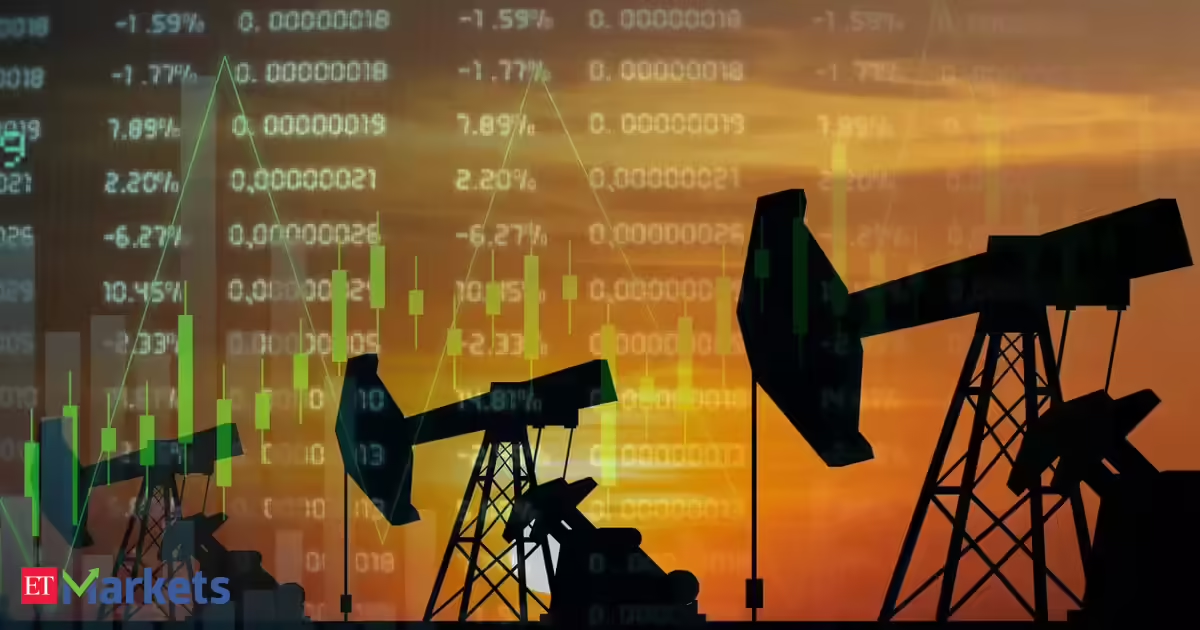
Brent crude futures rose $1.71, or 1.6%, to $110.74 a barrel by 0057 GMT. U.S. West Texas Intermediate crude futures gained $0.71, or 0.6%, to trade at $112.25 per barrel.
On Thursday, the last trading day before the Good Friday holiday break, WTI settled up more than 11% and Brent soared nearly 8% in volatile trading, recording their biggest absolute price increase since 2020, as U.S. President Donald Trump promised to continue attacks on Iran.
The Strait of Hormuz, which carries oil and petroleum products from Iraq, Saudi Arabia, Qatar, Kuwait and the United Arab Emirates, remains largely closed by Iranian attacks on shipping after the war began on February 28.
Because of the Middle East supply disruptions, refiners are seeking alternative sources for crude, particularly for physical cargoes in the U.S. and the UK North Sea.

“Global buyers are bidding aggressively for (U.S.) Gulf Coast barrels and Brent is rallying even faster,” the Schork Group said in a client note on Monday.
On Sunday, Trump ratcheted up pressure on Tehran, threatening in an expletive-laden Easter Sunday social media post to target Iran’s power plants and bridges on Tuesday if the strategic Strait of Hormuz is not reopened. Still, some vessels, including an Omani-operated tanker, a French-owned container ship and a Japanese-owned gas carrier, crossed the Strait of Hormuz since Thursday, shipping data showed, reflecting Iran’s policy to allow passage for vessels from countries it deems friendly.
The war threatens to linger on as Iran has officially told mediators it is not prepared to meet with U.S. officials in the Pakistani capital Islamabad in coming days and efforts to produce a ceasefire have reached a dead end, the Wall Street Journal reported on Friday.
On Sunday, OPEC+, consisting of some members of the Organization of the Petroleum Exporting Countries and allies such as Russia, agreed to a modest rise of 206,000 barrels per day for May.
However, that decision will largely exist on paper as several of the group’s key producers are unable to raise output due to the war.
Russian supply has been disrupted recently by Ukrainian drone attacks on its Baltic Sea export terminal. Media reports on Sunday said its Ust-Luga terminal resumed loadings on Saturday after days of disruptions.

How one factory in China learned to live with Trump, tariffs and turmoil

The AI agent sparked a frenzy of “raising lobsters” in March, with users training the tool to suit their needs.

Trump’s trade war with China in focus ahead of May summit
Trump wrote: “Tuesday will be Power Plant Day, and Bridge Day, all wrapped up in one, in Iran. There will be nothing like it!!! Open the Fuckin’ Strait, you crazy bastards, or you’ll be living in Hell – JUST WATCH! Praise be to Allah. President DONALD J. TRUMP”.
The Reserve Bank of India’s defense of a record-low rupee has constrained its ability to inject liquidity, tightening financial conditions that are likely to weigh on banks over the coming quarters. A prolonged conflict in the Middle East also risks derailing India’s nascent credit recovery, threatening loan growth as the broader economy cools.
Global investors withdrew a record 327 billion rupees ($3.5 billion) from shares of financial services companies in the first fortnight of March, according to National Securities Depository Ltd. data. The Nifty Bank Index has lost $95 billion in market value since the start of March, narrowly avoiding a bear market — defined as a 20% drop from a recent high.
“There could be further pressure on these stocks in the short-to-medium term as monetary policy can remain tight,” Kranthi Bathini, an equity strategist at WealthMills Securities, said, adding that valuations are becoming attractive after the correction.
 Agencies
At stake is the outlook for India’s $4.5 trillion stock market, given banks account for nearly a third of the benchmark index. A sustained weakness in shares of lenders could undermine a broader market that is already among the worst performers in the region, down 13% for the year.
Bulls point to improving valuation multiples for bank stocks and India’s long-term economic growth, which remains among the fastest globally. The Nifty Bank Index trades at 1.5 times one-year forward price-to-book, its cheapest level since 2020, signaling an attractive risk-reward profile.
Citibank Inc. is already prioritizing private-sector banks over state-run lenders, betting that the former can better absorb the macroeconomic stress that is now the prime concern for investors.Still, Jefferies estimates banks could face as much as 50 billion rupees from unwinding their currency trades due to diktats of the central bank. Fitch Ratings sees net interest margins of lenders shrinking 20-30 basis points in the year ending March 2027 — potentially undershooting the credit rating agency’s 3.1% forecast — as tighter financial conditions weigh.
“Banks will definitely take some hit on their investment book,” said Rajat Agarwal, an Asia strategist at Societe Generale SA. “We recently saw a pickup in credit growth — what remains to be seen is how much of that gets pushed back” by the war, he said.

Among the top gainers were electric bikes maker Ather Energy (139% return), auto ancillary manufacturer Belrise Industries (98%), and Aditya Infotech (78%), which provides video surveillance solutions.
Instead of listing price, if offer price is considered, then the proportion of companies improves – 37 IPOs generated returns while 31 yielded double-digit returns. The same three companies made it to the top three slots. Aditya Infotech took the lead with 168% return over the offer price while Ather Energy and Belrise gained 143% and 116%.
AgenciesIn a volatile market, just 16 IPOs yielded double-digit returns over listing price
It was also the year when majority of the large IPOs based on the issue size or money raised failed to generate returns. Only a quarter of the top 12 IPOs – four to be precise – earned returns. These include Lenskart and Groww generating 26% return each, followed by 11% return by ICICI Prudential AMC and 8% by Tenneco Clean Air India.
Among the worst performing IPOs of FY26 were steel products maker VMS TMT, which fell 62% from the listing price followed by construction company Highway Infrastructure and renewable energy equipment provider Solarworld Energy Solutions which lost 60% each.

Trump declares victory after pilot rescue, but threats to US aircraft and personnel remain in Iran

Devon Energy: Merger Deal, Iran War, Price Tailwinds
Trump’s Hormuz Ultimatum Sends Oil Past $110, Highest Since March


-

 NewsBeat3 days ago
Steven Gerrard disagrees with Gary Neville over ‘shock’ Chelsea and Arsenal claim | Football
-

 Business3 days ago
No Jackpot Winner and $194 Million Prize Rolls Over
-

 Fashion2 days ago
Weekend Open Thread: Spanx – Corporette.com
-
Entertainment6 days ago
Fans slam 'heartbreaking' Barbie Dream Fest convention debacle with 'cardboard cutout' experience
-

 Crypto World4 days ago
Gold Price Prediction: Worst Month in 17 Years fo Save Haven Rock
-

 Tech7 days ago
The Pixel 10a doesn’t have a camera bump, and it’s great
-

 Business2 hours ago
Three Gulf funds agree to back Paramount’s $81 billion takeover of Warner, WSJ reports
-

 Tech7 days ago
Avatar Legends: The Fighting Game comes out in July and it looks pretty slick
-
Crypto World6 days ago
Dems press CFTC, ethics board on prediction-market insider trades
-

 Sports1 day ago
India men’s 4x400m and mixed 4x100m relay teams register big progress | Other Sports News
-

 Business4 days ago
Login and Checkout Issues Spark Merchant Frustration
-

 Tech6 days ago
Apple will hide your email address from apps and websites, but not cops
-

 Tech6 days ago
EE TV is using AI to help you find something to watch
-

 Sports5 days ago
Tallest college basketball player ever, standing at 7-foot-9, entering transfer portal
-

 Politics6 days ago
Should Trump Be Scared Strait?
-

 Tech6 days ago
Flipsnack and the shift toward motion-first business content with living visuals
-
Tech6 days ago
Daily Deal: StackSkills Premium Annual Pass
-

 Fashion7 days ago
The Best Spring Trends of 2026
-

 Crypto World6 days ago
U.S. rule change may open trillions in 401(k) funds to crypto
-

 Sports6 days ago
Women’s hockey camp eyes fitness boost, tactics ahead of WC 2026 campaign | Other Sports News
You must be logged in to post a comment Login