
Business
Johnson & Johnson Stock Hits Near 52-Week High Amid Strong Performance and Defensive Appeal in Volatile Market

Johnson & Johnson shares advanced to near their 52-week peak in recent trading, outperforming a broader market pullback driven by escalating Middle East tensions and oil price surges, as investors sought refuge in the healthcare giant’s stable earnings, robust dividend and diversified portfolio.
The company’s stock (NYSE: JNJ) closed at $248.43 on Feb. 27, 2026, up $4.96 or 2.04% from the previous session, on elevated volume of over 16.4 million shares — about 70% above average. In early March 3 trading, shares hovered around $249.24, up modestly in a session where futures indicated pressure from geopolitical risks. The rally pushed JNJ within striking distance of its intraday high of $248.94 from late February, marking a 52-week range from $141.50 to nearly $252. Year-to-date gains exceed 10%, with the stock up about 38% over the past six months despite ongoing talc litigation headwinds.
Johnson & Johnson’s resilience stems from its January 2026 earnings report for the fourth quarter and full year 2025. The company posted strong results, with full-year sales growth supporting an upbeat 2026 outlook. Q4 revenue reached approximately $24.28 billion, while adjusted EPS came in at levels that beat some expectations despite a slight miss in certain views ($2.46 vs. consensus near $2.47). Innovative Medicine (pharmaceuticals) and MedTech segments drove performance, with key products like Darzalex and Tremfya showing robust sales.
For 2026, J&J guided reported sales to $99.5 billion to $100.5 billion (midpoint $100.5 billion, up about 6.7%), and adjusted EPS of $11.43 to $11.63 (midpoint $11.53, up 6.9%). The forecast exceeded Wall Street estimates even after factoring in impacts from drug pricing agreements with the Trump administration and potential tariffs on medical devices, estimated at hundreds of millions. Analysts praised the guidance as conservative yet achievable, highlighting oncology pipeline strength and biosimilar competition offsets.
The company maintains a market capitalization approaching $600 billion, with a forward P/E ratio around 22-23 — viewed as attractive for a blue-chip healthcare name. The quarterly dividend of $1.30 per share (annualized $5.20, yield about 2.09%) remains a draw for income investors. The ex-dividend date was Feb. 24, 2026, with payment on March 10.
Recent pipeline advancements bolster confidence. In late February, J&J reported promising early Phase 1b results for pasritamig (a bispecific T-cell engager) combined with docetaxel in advanced prostate cancer, showing deep PSA reductions and manageable safety. On Feb. 24, the company submitted a supplemental Biologics License Application to the FDA for IMAAVY (nipocalimab) as the first treatment for warm autoimmune hemolytic anemia (wAIHA). Upcoming presentations include the Barclays Global Healthcare Conference on March 10 and TD Cowen on March 3.
Talc litigation continues to cast a shadow, though the stock’s performance suggests investors are pricing in manageable risk. As of early 2026, the multidistrict litigation includes over 67,000 plaintiffs alleging ovarian cancer or mesothelioma from talc products. Recent verdicts include a $250,000 award in a Philadelphia case in February for a deceased user’s family, and larger prior awards like $1.5 billion in a 2025 mesothelioma trial (under appeal). J&J insists its products are safe and asbestos-free, pursuing appeals and settlement discussions. No global resolution has emerged post-bankruptcy attempts.
Analysts maintain a consensus “Moderate Buy” rating, with average price targets around $233 (some as high as $262), implying modest upside or stability from current levels. Firms like Morgan Stanley upgraded to Buy with a $262 target in January, citing improving 2026 prospects.
In a market facing geopolitical uncertainty — with oil surging on Iran-related developments — JNJ’s defensive characteristics shine. Healthcare stocks often hold up during risk-off periods, and J&J’s low beta, consistent cash flow and innovation in high-growth areas like oncology position it well.
The company continues executing its post-Kenvue separation strategy, focusing on Innovative Medicine and MedTech for sustained growth. With next earnings expected around April 14, 2026, investors will watch for updates on pipeline momentum, litigation developments and macro impacts.
Johnson & Johnson’s blend of stability, yield and growth potential keeps it a core holding for many portfolios amid broader volatility.


MPLX: A Sound Growth Story Irrespective Of Iran Headlines

Business groups have urged the government to cut a raft of regulations ahead of the federal budget, but the finance minister says changes have to make sense.

China leaves lending benchmarks unchanged for 11th month in April

“The number of deals may come down, but the size and aggregate value may still be similar (to the previous years),” said Davda in an interview.
Reliance Industries’ telecom arm Jio Platforms, National Stock Exchange, Zepto, PhonePe, Manipal Hospitals and and SBI Funds Management are among the large issuances expected to hit the market in 2026. Together, these issues could raise ₹1 lakh crore (about $10.8-10.9 billion).
So far this year, 20 companies have raised $2.5 billion, according to Prime Database and ETIG Database. That comes after two record years that saw 94 and 115 mainboard IPOs in 2024 and 2025, raising nearly $21-23 billion.
This year’s IPO fundraise could be between $21 billion and $25 billion.

“This year, a larger percentage of companies are mid to large-sized,” said Davda. “Many of these are backed by large groups or private equity investors and, therefore, have the flexibility to wait, ride volatility, and avoid pressing forward if valuations are not aligned.”
The early part of this year has been slower for the IPO market, with the West Asia conflict weighing on secondary markets, IPO subscriptions and listing gains, prompting several companies to defer offerings. “This year will be volatile. Windows to complete trades will be shorter, so readiness is critical,” Davda said.
At the same time, companies that need capital are showing more willingness to negotiate.
Issuers are increasingly tapping AIFs, family offices and special situations funds alongside traditional investors, while using pre-IPO placements as a bridge to raise capital with visibility to a listing over the next 6-18 months, he said. According to Davda, technology faces sharper scrutiny amid AI disruption, global uncertainty and profitability concerns, though large consumer-tech and fintech offerings are still likely to proceed as “must-own” India exposures.


I focus on long-term investments while incorporating short-term shorts to uncover alpha opportunities. My investment approach revolves around bottom-up analysis, delving into the fundamental strengths and weaknesses of individual companies. My investment duration is the medium to long-term. Ultimately, I aim to identify companies with solid fundamentals, sustainable competitive advantages, and growth potential.
Analyst’s Disclosure: I/we have no stock, option or similar derivative position in any of the companies mentioned, and no plans to initiate any such positions within the next 72 hours. I wrote this article myself, and it expresses my own opinions. I am not receiving compensation for it (other than from Seeking Alpha). I have no business relationship with any company whose stock is mentioned in this article.
Seeking Alpha’s Disclosure: Past performance is no guarantee of future results. No recommendation or advice is being given as to whether any investment is suitable for a particular investor. Any views or opinions expressed above may not reflect those of Seeking Alpha as a whole. Seeking Alpha is not a licensed securities dealer, broker or US investment adviser or investment bank. Our analysts are third party authors that include both professional investors and individual investors who may not be licensed or certified by any institute or regulatory body.

Hindustan Unilever is expected to report mid-single digit revenue growth led by 4-5% volume growth. Growth is expected to be broad-based, with beauty and wellbeing growing in double-digits, while home care, personal care and foods & beverages are likely to grow in mid-single digits. The demerger of low-margin ice cream business may support operating margin before depreciation and amortisation (Ebitda margin).
ITC may show pressure in the cigarettes segment amid flat volume and higher taxes while displaying resilience in non-cigarette segments. The FMCG and agriculture related business is expected to remain robust, while paperboards business may grow in single digit. The margin for the cigarettes business is likely to contract amid rising leaf tobacco costs and limited pricing hikes.
 Agencies
Books & MARKS HUL, Nestlé and Britannia set for volume-led growth; high tax on cigarettes may weigh on ITC; Dabur may report modest int’l revenue
Nestle India’s consolidated revenue growth is expected to be in double-digits, led largely by volumes in the domestic market while exports may show recovery on a weak base. Normalisation is expected after GST-related disruptions in the previous quarter. However, margin is likely to contract on account of high inflation in the coffee segment.
Asian Paints is likely to report better volume growth for the domestic decorative paints segment on a weak base. Upcoming price increase may boost channel restocking thereby aiding primary sales. International business may be subdued due to the Middle East disruption. Margins are likely to improve on stable raw material prices during the quarter, with the impact of recent crude inflation expected to be limited for the March quarter.
Varun Beverages is expected to report high-single digit revenue growth in the March quarter, with international markets likely to drive momentum through high double-digit volume growth. Ebitda margin is likely to contract, partly due to upsizing in India and ramp-up of snacks in Africa.
Britannia Industries may report double-digit revenue growth led by high-single digit volume expansion due to higher grammage in low-unit packs, which account for about two-third portion of sales. Margins are likely to improve supported by stable raw materials prices, especially in January and February. Dabur India is expected to post modest revenue growth, driven by mid-single digit volume growth in the domestic business. However, its international operations, particularly the Middle East and North Africa (MENA) region, which contributes around 8% of revenue may remain weak amid geopolitical tensions. Within domestic categories, home and personal care is expected to deliver double-digit growth, while healthcare and foods may see low single-digit expansion.
Colgate-Palmolive India is expected to report low single-digit volume growth on a weak base, after three consecutive quarters of declines. The margin could contract due to higher promotions and advertisement spends.

Brent crude futures jumped $6.11, or 6.76%, to $96.49 a barrel by 2327 GMT and U.S. West Texas Intermediate was at $90.38 a barrel, up $6.53, or 7.79%.
The U.S. military had seized an Iranian cargo ship that tried to run its blockade, U.S. President Donald Trump said on Sunday, while Iran said it would not participate in a second round of peace talks despite Trump’s threat of renewed airstrikes.
The United States has maintained a blockade of Iranian ports, while Iran has lifted and then reimposed its own blockade of the Strait, which handled roughly one-fifth of the world’s oil supply before the war began almost two months ago.
“Oil markets continue to gyrate in response to oscillating social media posts by the U.S. and Iran, rather than the realities on the ground which remain challenging for oil flows to resume in a rapid fashion,” Saul Kavonic, MST Marquee’s head of research, said.
Both contracts posted on Friday their largest daily declines since April 18 after Iran said passage for all commercial vessels through the Strait of Hormuz was open for the remaining ceasefire period and Trump said Iran had agreed to never close the strait again.
“The announcement of the Strait opening proved premature,” Kavonic said. “Ship owners will be twice shy about heading towards the Strait again without receiving much more confidence that any announced passage is real.”
More than 20 ships passed the strait on Saturday carrying oil, liquefied petroleum gas, metals and fertilizers, Kpler data showed, the highest number of vessels crossing the waterway since March 1.
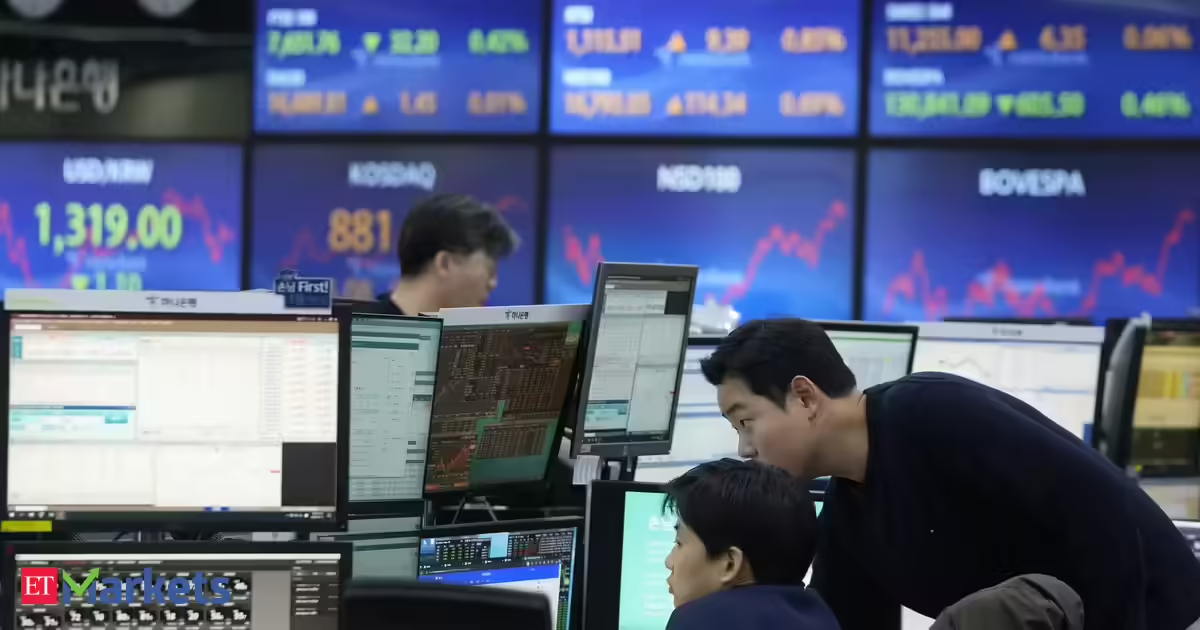
The ceasefire in the Iran war, due to run until Tuesday, was in doubt after the U.S. seized an Iranian cargo ship and Tehran’s top military command vowed to retaliate.
Iran has re-imposed its de facto closure of the Strait of Hormuz, though Kpler data showed that more than 20 vessels carrying oil products, metals, gas and fertiliser passed through it on Saturday, the busiest day for the chokepoint since March 1.
Brent crude futures jumped about 6% to $96 a barrel in early Asia trade. The dollar, which sold off sharply on Friday when the strait briefly opened, rose slightly.
S&P 500 futures fell around 0.7%, a modest move considering the index notched a record closing high on Friday. Asia-Pacific markets were mixed, with Australia’s S&P/ASX 200 down 0.5% and Japan’s benchmark Nikkei up 0.7%.
Bond markets, which rallied on Friday, retreated.
“The headlines look bad; it looks like there’s disagreement … which has led to a little bit of re-escalation,” said Damien Boey, portfolio strategist at Wilson Asset Management in Sydney. “But I think, ultimately, both sides want to be able to do a deal – that’s part of the reason why the market’s optimistic and not selling off too much.”
Iran rejected new peace talks with the U.S., its state news agency reported on Sunday, hours after U.S. President Donald Trump said he was sending envoys for talks in Pakistan and would launch new strikes on Iran unless it accepts his terms.
FOCUS ON HORMUZ
In forex news, the euro was down 0.1% at $1.1735 and the yen eased around 0.3% to 159 per dollar, while the Australian and New Zealand dollars fell slightly.
Bonds likewise partially retraced Friday moves, with benchmark 10-year U.S. Treasury yields, which had fallen 6.5 basis points on Friday, rising by 3.2 bps to 4.276%.
Investors sold fixed income assets through March in anticipation of higher oil prices driving inflation – something they have tempered a little in recent weeks.
“Our base case (AKA guess) is still resolution to the war. Trump is still focused on November midterm elections,” said Paul Chew, head of research at Singapore’s Phillip Securities in a note to clients.
Wall Street indexes touched record highs on Friday, supported by expectations of robust first-quarter earnings, the bulk of which come this week. China is expected to hold benchmark lending rates steady on Monday.
British inflation data, U.S. retail sales and European purchasing managers’ index figures are due later in the week, though much of markets’ focus will be on Gulf shipping.
“The critical barometer of geopolitical risk has been distilled into one data point: The number of ships transiting the Strait of Hormuz,” said Bob Savage, head of markets macro strategy at BNY.
“Peace talks matter, but the immediate focus is on oil and other supply shortages driving inflation.”
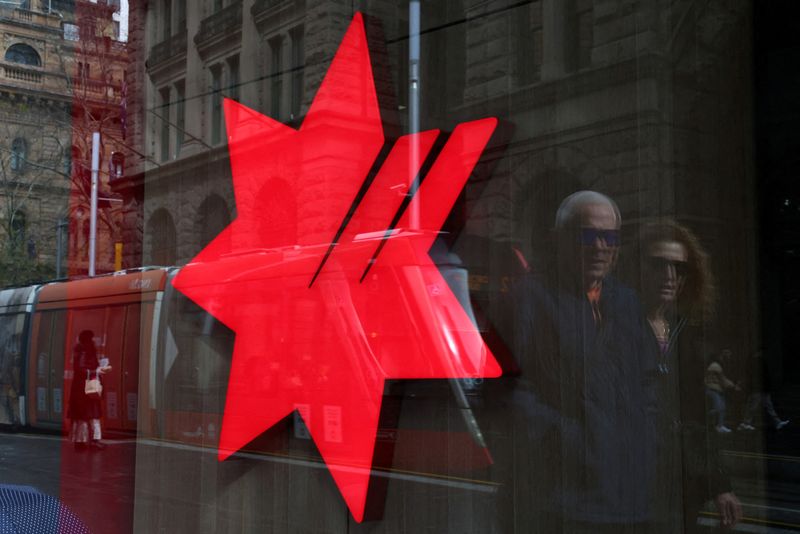

National Australia Bank flags $503 million impairment hit on Mideast volatility

The all-cash deal, valued at about ₹1,200 crore, involves a transfer of stressed debt between asset reconstruction platforms and investors. It was closed in March. The exposure dates back to 2018, when Edelweiss ARC, in partnership with Oaktree and other investors, had acquired nearly 90% of GTL Infra’s loans, then valued at around ₹4,000 crore.
The telecom tower company had defaulted on debt exceeding ₹11,000 crore, triggering multiple restructuring efforts over the years.
People familiar with the latest transaction said Edelweiss had put the exposure on the block as its fund lifecycle neared maturity, prompting a takeout by Omkara.
“This is a 100% cash deal between ARCs. Edelweiss exited and we acquired the exposure,” an executive at one of the firms said on condition of anonymity.
Investors are betting on improved recovery prospects this time. “The underlying business is more or less stable now. The towers are operational, and that improves the chances of recovery,” the person said.
Omkara is understood to be targeting an exit over the next two years, either through asset sales or a negotiated settlement. “The idea is to close the account in about two years-through sale of assets or other recovery mechanisms,” the person added. Omkara and Edelweiss ARC spokespersons did not respond to requests for comment until press time Sunday.
In 2018, after a steep revenue and Ebitda decline following the exit of key clients including Aircel, RCom and Tata Teleservices, GTL Infrastructure sought to deleverage, with lenders assigning 79.34% of its ₹3,226-crore debt to Edelweiss ARC. The firm submitted multiple restructuring proposals from April 2018 onward, expecting a swift resolution, but lenders did not act on these plans and some retained their exposure.
In November 2022, the National Company Law Tribunal (NCLT) rejected a plea by Canara Bank to initiate insolvency proceedings, ruling that the company remained a viable going concern and did not meet the threshold for admission under the bankruptcy code.

Rodri injury hands Man City huge concern ahead of Premier League run-in

Hisense U7SG TV Review (2026): Better Design, Great Value

Crypto Gold Live Trading 14 APRIL – stock_learners


-

 Crypto World6 days ago
The SEC Conditionalises DeFi Platforms to Be Avoided for Broker Registration
-

 Fashion2 days ago
Weekend Open Thread: Theodora Dress
-

 NewsBeat6 days ago
Trump and Pope Leo: Behind their disagreement over Iran war
-

 Crypto World6 days ago
SEC Signals Exemption for Crypto Interfaces From Broker Registration
-

 News Videos5 days ago
Secure crypto trading starts with an FIU-registered
-

 Sports3 days ago
NWFL Suspends Two Players Over Post-Match Clash in Ado-Ekiti
-

 Crypto World6 days ago
SEC Proposes Certain Crypto Interfaces Don’t Need to Register as Brokers
-

 Business11 hours ago
Powerball Result April 18, 2026: No Jackpot Winner in Powerball Draw: $75 Million Rolls Over
-

 Politics2 days ago
Palestine barred from entering Canada for FIFA Congress
-

 Crypto World2 days ago
Russia Pushes Bill to Criminalize Unregistered Crypto Services
-

 Sports7 days ago
NWFL opens Pathway for new Clubs ahead of 2026 Season
-
 Business3 days ago
Creo Medical agree sale of its manufacturing operation
-
 Entertainment6 days ago
Brand New Day’ Footage Reveals the Devastating Impact of ‘Now Way Home’
-

 Politics16 hours ago
Zack Polanski demands ‘council homes not luxury flats for foreign investors’
-

 Crypto World7 days ago
Trump whales load up ahead of Mar-a-Lago luncheon.
-
Business7 days ago
Kering slides after Morgan Stanley downgrade, Gucci woes loom
-

 Tech7 days ago
Google adds E2E encryption to Gmail for iOS and Android enterprise users
-

 Tech7 days ago
Apple glasses won’t go brand shopping like Meta did with Ray-Ban and Oakley
-
Entertainment7 days ago
How Euphoria Season 3 Premiere Paid Tribute to Eric Dane After Death
-

 Sports6 days ago
Aaron Judge says Yankees need to ‘simplify’ approach amid offensive slump
You must be logged in to post a comment Login