
Business
JQC Offers Double-Digit Yield And Discount Alpha (NYSE:JQC)



George Spritzer, CFA is a registered investment advisor who specializes in managing closed-end funds for individuals. George also shares his understanding of how to profit from investing with special situations as a catalyst. George is a contributor to the investing group Yield Hunting: Alt Inc Opps, a premium service dedicated to income investors who are searching for yield without the high risk of the equity market. The group manages four portfolios with a range of yield targets, a monthly newsletter, weekly commentary, rankings of CEFs based on yield, trade alerts, and access to chat for questions. Learn more.
Analyst’s Disclosure: I/we have a beneficial long position in the shares of JQC,BKLN either through stock ownership, options, or other derivatives. I wrote this article myself, and it expresses my own opinions. I am not receiving compensation for it (other than from Seeking Alpha). I have no business relationship with any company whose stock is mentioned in this article.
Seeking Alpha’s Disclosure: Past performance is no guarantee of future results. No recommendation or advice is being given as to whether any investment is suitable for a particular investor. Any views or opinions expressed above may not reflect those of Seeking Alpha as a whole. Seeking Alpha is not a licensed securities dealer, broker or US investment adviser or investment bank. Our analysts are third party authors that include both professional investors and individual investors who may not be licensed or certified by any institute or regulatory body.


SYDNEY — Shares in Beach Energy Ltd climbed Tuesday, tracking a broader rally across ASX-listed oil and gas producers as global crude prices extended their advance amid continued uncertainty over shipping traffic through the Strait of Hormuz, a critical Middle East oil transit corridor.
The stock closed up 5.46% at 87 cents, after trading between 85 cents and 88 cents during the session, on volume of more than 16.4 million shares, giving the company a market capitalization of approximately $2 billion.
Tuesday’s gain came as global oil benchmarks continued climbing on concerns that a resolution to the standoff around the Strait of Hormuz remained elusive. Brent crude futures rose more than 1% on the news that a deal to reopen the strait to normal shipping traffic could still be some time away, extending a rally that has pushed prices well above levels seen just weeks earlier. The strait, through which roughly a quarter of the world’s seaborne crude oil and nearly a fifth of global liquefied natural gas shipments typically pass, has remained a focal point for energy markets since tensions between the United States and Iran escalated earlier this year.
The renewed uncertainty follows months of volatility in global oil markets tied to the broader conflict. Reports of fresh attacks on tankers and a disputed Iranian claim to control passage through the strait have kept traders on edge, with shipping data showing daily vessel movements through the corridor running at a small fraction of pre-conflict levels. That persistent disruption has kept a so-called war premium embedded in oil prices for much of the year, benefiting oil and gas producers with exposure to global benchmark pricing, including Beach Energy.
Beach Energy’s share price gain Tuesday came despite a more mixed recent run for the company following its full-year results, released last week. The Adelaide-based oil and gas producer reported sales revenue of 1.8 billion Australian dollars for the 2026 financial year, down 10% from a year earlier, alongside underlying EBITDA of 1 billion Australian dollars and underlying net profit after tax of 355 million Australian dollars. The company said the results reflected resilient operational performance despite flood-related disruptions in the Cooper Basin and severe rainfall earlier in the year that affected production. Total production for the year reached 19.4 million barrels of oil equivalent, down 2% from the prior year.
Despite the revenue decline, Beach Energy highlighted improved margins and strong cash generation for the year, with underlying EBITDA margin improving to 57% and operating cash flow reaching 890 million Australian dollars, aided by six cargoes shipped from its Waitsia liquefied natural gas project in Western Australia and stronger realized gas pricing. The company ended the year with net gearing of 10.6%, below its internal target of 15%, and closing cash reserves of 213 million Australian dollars.
Beach Energy shares had initially slipped following the results release, as investors focused on the year-over-year revenue decline despite the underlying operational improvements, but Tuesday’s session saw the stock recover ground alongside the broader sector-wide lift from rising oil prices.
The company’s Waitsia project, developed in partnership with Mitsui, has been a key focus for investors this year as it progresses toward full production, with LNG cargoes from the project already contributing meaningfully to cash flow. Beach Energy has also continued to emphasize cost discipline across its operated assets, alongside completion of a major offshore decommissioning campaign, known as the Equinox campaign, during the financial year.
Tuesday’s advance for Beach Energy formed part of a broader rally across the ASX energy sector, which has drawn sustained investor attention throughout 2026 given the sector’s direct sensitivity to swings in global oil and gas prices tied to the ongoing Middle East conflict. Other Australian energy names, including larger rival Santos, also posted gains during Tuesday’s session as crude prices continued climbing.
Looking ahead, analysts have said Beach Energy’s near-term share price performance is likely to remain closely tied to both the trajectory of global oil prices and the company’s ability to sustain the operational improvements highlighted in its recent results, particularly as the Waitsia project continues ramping toward full contribution. With the situation in the Strait of Hormuz still unresolved, market watchers say continued volatility in oil markets is likely to keep energy stocks like Beach Energy sensitive to fast-moving geopolitical headlines in the weeks ahead.
Business
Info Edge shares jump 4% after strong Q1 show. What Nomura, Nuvama and other brokerages expect next

Info Edge shares gained over 4% to trade at Rs 1,337 apiece on the NSE on Tuesday morning after the release of the Q1 earnings. The company reported a 43% year-on-year rise in consolidated net profit to Rs 490 crore in the June quarter, aided by an exceptional gain from transferring Info Edge’s holding in Shopkirana to Udaan parent Trustroot, partly offset by an impairment charge.
The company’s standalone billings rose 14.4%, while operating profit before tax climbed 33.4% as overall costs grew less than 1%. Recruitment, which includes Naukri and accounts for most of Info Edge’s revenue, recorded a 17.5% rise in billings to Rs 553 crore. Revenues increased 13% to Rs 612 crore, while operating profit grew 25% to Rs 356 crore, taking the margin to 58.3%.
Also read | Info Edge Q1 profit rises 43% to Rs 490 crore as Naukri, 99acres gather pace
Nomura on Info Edge share price
Nomura noted that recruitment billings grew 17.5%, above its estimates, aided by better enterprise renewals, stable hiring, mostly replacement, with some incremental hiring, and continued strength in the premium segment. Roughly one-third of the growth came from volume, one-third from pricing and one-third from newer monetisation levers, the international brokerage noted.

It raised its earnings estimates following the Q1 results. Nomura maintained its ‘Buy’ call on Info Edge, but raised its target price to Rs 1,480 apiece, implying more than 15% upside potential.
Nuvama on Info Edge share price
Nuvama Institutional Equities maintained its ‘Buy’ rating on Info Edge with a target price of Rs 1,520 apiece, implying around 19% upside potential. The brokerage said the company delivered a decent Q1 performance.“Management indicated both Naukri and 99acres are reporting a pickup in billings growth, with revenue to follow a similar trajectory with a lag. We stay positive on the Info Edge story, with its long growth runway and pricing power, coupled with commercial adoption and monetisation of its new AI initiatives to support the next leg of growth,” it added.
Motilal Oswal on Info Edge share price
Motilal Oswal Financial Services maintained its Neutral call on Info Edge, but raised its target price to Rs 1,250 apiece, implying 2.5% downside potential. The domestic brokerage noted that the company delivered a better-than-expected Q1 performance and raised its earnings estimates.
“Margin visibility has improved, led by lower costs and better operating leverage, with 99acres also benefiting from lower competitive intensity. However, with recruitment growth still moderate and newer offerings yet to establish sustained monetisation, we see limited scope for a meaningful earnings upgrade from here. Current valuations also appear to capture much of the near-term improvement,” it added.
Info Edge share price
Info Edge shares gained around 6% in a week and 11% in a month, but remain marginally lower in 2026 so far. Over the longer term, the shares have delivered returns of more than 49% over three years and nearly 24% over five years.
(Disclaimer: Recommendations, suggestions, views and opinions given by the experts are their own. These do not represent the views of The Economic Times)

Benchmark reaffirms Shopify stock rating citing international growth

Baby products company Frida is expanding into a line of personal care products for kids ages 6 to 11 that will be sold in Walmart and on Amazon, the company told CNBC exclusively.
CEO Chelsea Hirschhorn said the launch marks the next natural step for the company, which has seen its first customers age into new categories, and offers an opportunity to secure shelf space in a category that’s largely untapped and unexplored.
“It really wasn’t necessarily only that there was this opportunity created in the retail environment or in culture, but it was really the dearth of genuine, thoughtful innovation for this stage of parenthood that felt like a rinse and repeat of our playbook in mother care and baby care,” Hirschhorn told CNBC.
Hirschhorn, who created the company when her first child was a baby, said the gap in the market is one she’s seen firsthand as a mother of four children. As her eldest child has grown, she said there were plenty of options in the baby aisle and teen aisle, but nothing in between to address the needs of young kids’ personal care.
While the new category marks a significant step for the company, she said it’s ensuring it’s not alienating core customers looking for baby products.
Since its launch, Frida has generated more than $2 billion in retail sales and grown roughly 30% annually over the past five years, the company told CNBC exclusively. Though it began as a baby products company, it’s now branched out into products for pregnancy, postpartum and now kids.
According to a report from Kings Research, the kids’ personal care market was valued at roughly $82 billion in 2022 and was expected to reach $137 billion by 2030 at a compound annual growth rate of nearly 7%.
Hirschhorn said Walmart has been curating and launching a new aisle dedicated to kids’ care, where parents can find products in between baby and adult options. That dedicated shelf space, along with Walmart’s reach across the country and emphasis on value, made it an ideal destination for Frida for Kids, she added.
“Walmart came to the table in a really exciting way and said, ‘We see an opportunity in a dedicated spot for everything from tween deodorant to shampoo, nail care and oral care because this parent deserves convenience above all else,’” she said.
The new products span categories including body wash, deodorant, electric flossers and more, in the price range of $6.99 to $19.99. Hirschhorn said each of the products was designed specifically for kids in this age cohort without relying on certain ingredients that might not be appropriate for their age.
“It’s a glaring gap,” she said. “When I’m done with tear-free baby shampoo, strolling the aisles of the personal care section, the only thing that jumps out is … the section for men.”
Retail innovation in the tween space has been expanding over the past few years. Companies like Sephora have seen explosive growth in kids’ interest in beauty, while apparel retailers have created more dedicated sizing for tweens.
It coincides with Generation Alpha reshaping some of the retail landscape, as the digitally native and online-savvy cohort becomes increasingly important for brands to capture and build loyalty with. Alpha roughly starts with babies born in 2010 and goes through babies born in 2025, according to Merriam-Webster, but those start and end dates are debated.
Hirschhorn said Frida is taking notice of that trend.
“This is otherwise a pretty fragmented shopping experience for parents who are ready to graduate the diaper aisle,” she said. “There’s no holistic experience for all of the personal care products for kids with that age, and so that was a really important part for us, just as it was in mother care.”

Investment in rare disease biotechs has increased since the US Food and Drug Administration’s Rare Pediatric Disease Priority Review Voucher (PRV) programme was signed back into law in February, according to SynaptixBio, the only company licensed to commercialise a treatment for the rare, deadly disease H-ABC, though the United States remains dominant.
The programme, which grants tradable vouchers to developers of rare paediatric disease treatments, will remain in place until it is reviewed again in September 2029. Vouchers have recently been sold for between $150 million and $200 million, and because a sale does not require the seller to issue new equity, PRVs are considered a prime source of non-dilutive capital.
VC firm V-Bio said: “Reauthorization of the FDA’s Rare Pediatric Disease Priority Review Voucher (PRV) scheme has restored financial certainty and sparked intense interest from large pharma.”
Dan Williams PhD, chief executive of SynaptixBio, said: “The US dominates because the PRV program creates a highly valuable and, more importantly, tradable asset.
“VCs and private equity firms are far more willing to invest in rare disease biotechs simply because they provide a financial return on investment.”
He added: “While the UK is known for high-quality science and innovation, it has seen a sharp contraction in biotech fundraising. Without an equivalent to the FDA PRV program, UK rare disease biotechs rely heavily on public markets, private investment, or acquisition by larger global pharma to secure capital.”
The Association of the British Pharmaceutical Industry warned last September that the UK was slipping in the global race for life sciences investment, with foreign direct investment 58 per cent below 2017 levels.
There are signs of recovery at home. Figures from data platform Tracxn show UK life sciences funding rose 228 per cent to $3.2 billion in the first half of 2026, although the money went to fewer companies.
Market analysis published by Schroders in April said: “With public markets grappling with valuation volatility, the UK’s ‘golden triangle’ of innovation – spanning London, Oxford, and Cambridge – continues to produce the next generation of biotech champions.
“Historically, the UK’s Achilles’ heel has been the ‘Valley of Death’ – the gap between brilliant seed-stage science and the massive capital required for clinical trials. Too often, UK companies were forced to list in New York just to access the depth of capital needed to scale.”
Sergey Jakimov, founding partner at biotech VC firm LongeVC, told Cure: “Orphan therapies are already projected to be roughly a fifth of global prescription revenue. Pharma needs de-risked, clinically validated assets, and rare disease programs tend to show up better in diligence.”
The US has historically set the pace in rare disease drug development. The Orphan Drug Act of 1983 established incentives including market exclusivity, tax credits and support with getting into the clinic.
In the UK, the Medicines and Healthcare products Regulatory Agency published a draft rare disease therapies regulatory framework in May, designed to bring rare disease drugs to market more quickly. The consultation closed on 30 July.
Williams said: “It would be ideal if the UK could introduce a scheme similar to the PRV. With the proposed new framework we have everything in place to better manage the clinical trial and marketing authorisation process for rare disease therapies, but it stops there.
“Reducing regulatory and approvals timescales and costs can only be good for rare disease patients and their families, but adding this stronger incentive could transform the industry, making the UK a leading player in research and development in this key area.
“We still aim to conduct clinical trials in the UK, using the results to inform further trials in the US, but this all depends on raising further investment.”
SynaptixBio last year selected its lead candidate drug, an antisense oligonucleotide, for clinical trials. The technology silences mutated genes to stop them forming toxic proteins without altering the gene itself.
Around 1 in 17 people will be affected by a rare disease during their lifetime, more than 3.5 million people in the UK, but only around 5 per cent of the c10,000 known rare diseases have an approved treatment. Around 80 per cent are caused by a mutation in a single gene, making them more suitable for targeted treatments such as gene silencing.

Amy Ingham
Amy Ingham is a reporter at Business Matters, covering UK business news with a focus on breaking news, business policy, late payments and insolvency. She joined the magazine in 2026 after completing the NCTJ Diploma in Journalism at Harlow College’s journalism school. Her recent reporting includes British Steel’s nationalisation and its impact on SME suppliers, the decline in late payments by large firms, and Insolvency Service director disqualifications. Reach her at aingham@cbmeg.co.uk.

NatWest is making loan repayment holidays, interest rate reductions and temporary emergency lending with no arrangement fees available to farming customers, as drought conditions across large parts of the UK cut crop yields and put pressure on farm cashflow.
The bank said its specialist agriculture team is proactively contacting customers. Further support for eligible farming businesses includes overdraft help, working capital facilities and funding for resilience investments such as water storage and reservoir projects that capture water during wetter months for use in dry periods.
The move follows official drought declarations covering much of the country. The Environment Agency said on 10 August that 71.3 per cent of England is now in drought after the driest July in 190 years, with farmers reporting their earliest harvests in 20 years and reduced yields, and livestock farmers beginning to use winter forage stocks early because of poor grass growth.
NatWest said it is not currently seeing a significant increase in demand for support, but expects enquiries to rise later in the season as farming businesses assess the financial and operational effects of the prolonged dry weather.
According to the bank, arable farmers are facing lower yields and earlier harvesting, while livestock businesses are contending with reduced grass growth and increased feed costs. Water availability and irrigation restrictions are affecting some operations, and warmer conditions are increasing the risk of disease outbreaks that can affect livestock productivity and farm incomes.
Farmers had warned as early as the spring that dry conditions were already hitting UK crop production, with the National Farmers’ Union reporting that some growers had started irrigating weeks earlier than usual.
Ian Burrow, head of agriculture at NatWest Group, said: “British farmers are increasingly being forced to manage the consequences of weather extremes, from flooding one season to drought the next. The challenge for many businesses is no longer simply recovering from a single event but building resilience for a future where these conditions are becoming more frequent.
“While we are not yet seeing a material increase in demand for support, we expect pressures on some farming businesses to build over the coming weeks and months. With harvests progressing earlier than usual in some areas and livestock farmers already relying on winter feed stocks due to poor grass growth, cashflow and feed availability could become increasingly challenging. Through our network of named specialist agriculture Relationship Managers, we’re ready to provide tailored support and guidance to customers as those pressures emerge.”
The bank said its network of named agriculture relationship managers gives farming customers a dedicated point of contact with sector expertise.
Farming minister Stephen Morgan said: “I know how difficult these dry conditions have been for farmers, and it’s good to see NatWest stepping up support for their agricultural customers at this critical time. Through the National Drought Group, we are working hand-in-hand with industry, the Environment Agency and the water sector to help farm businesses manage today’s pressures and build long-term resilience. I’d encourage any farmer struggling with the impact of drought to speak to their bank and explore what support is available to them.”
The dry summer adds to pressure on a sector still recovering from 2024, when the second-worst wheat harvest on record left farmers facing an estimated £600 million hit, according to the Energy and Climate Intelligence Unit.
NatWest is encouraging agricultural customers experiencing financial pressure because of the drought to contact their relationship manager as early as possible.

Jamie Young
Jamie Young is Senior Reporter at Business Matters, covering SME finance, employment law and Westminster policy since 2016. He has reported on every Budget and Autumn Statement since 2018, helped make sense of the ‘covid era’ and the bounce-back loan scheme from launch through the fraud investigations, and broke the magazine’s coverage of the 2024 late-payment reforms. He joined Business Matters straight from completing his BA in Administration from Exeter University and is NCTJ-qualified. Reach him at jyoung@cbmeg.co.uk

Defence technology company Cambridge Aerospace has raised $300 million at a valuation of $3.4 billion, two years after it was founded, in a series C funding round led by the San Francisco-based investor DFJ Growth.
The round takes the company’s total funding to $636 million since it was set up in 2024. The money will be used to expand development of its missile and drone interceptor systems and its manufacturing capabilities.
The company is developing Skyhammer, a low-cost anti-drone interceptor that is in production, and Starhammer, a rocket-powered interceptor missile built for higher-speed targets such as cruise missiles, which is due to come to market next year.
The Ministry of Defence announced in April that it was purchasing Skyhammer air defence systems, with deliveries starting from May. Skyhammer, which began development in January 2025, has a range of more than 18 miles and a top speed of 430mph, enabling it to intercept drones and low-speed missiles.
The latest raise follows a $200 million round in April at a $1.3 billion valuation, which took the company into the ranks of the UK’s billion-dollar start-ups. That round was co-led by the entrepreneur and investor Elad Gil and the venture capital firm Spark Capital. Gil also invested in the new round, alongside Lux, Accel and Lakestar among others.
Steven Barrett, chief executive, said the company had a “singular mission to protect Allied skies” and that the funds “will allow us to continue to scale our manufacturing and our delivery to meet the pace of threats”. The company is in talks with the US government.
Barrett relocated to Cambridge in 2024 to become regius professor of engineering at the university, having previously been head of aeronautics and astronautics at the Massachusetts Institute of Technology. He decided to launch the company after assessing “where I wanted to contribute in aerospace engineering”.
“Ukraine feels very close when you move back to the UK after a period thousands of miles away,” he said. “And it seems really obvious that we had a desperate need for cost-effective air defence. You can see that every day in the news and that was obvious even a couple of years ago.”
He has said the company is able to produce its interceptors at a lower cost and greater volume using technology, such as artificial intelligence, and its “highly driven, ambitious talent”.
Cambridge Aerospace employs about 250 people, mostly in the UK. Chris Sylvan, its chief commercial officer, is a former Royal Marine.
Sir Grant Shapps stepped down as the company’s chairman in April after the former Conservative defence secretary was found to have breached the rules on ex-ministers’ business appointments. Shapps, who lost his seat at the 2024 general election, was defence secretary from August 2023 to July 2024.
In March, Cambridge Aerospace was among 13 UK-based defence firms that met Gulf ambassadors at an MoD-convened meeting to discuss equipment and technology that could support regional allies in countering Iranian drone and missile attacks. In June, it signed a deal with Kawasaki Heavy Industries to build a manufacturing facility in Japan, part of a broader technology partnership between the UK and Japan.
Randy Glein, managing partner at DFJ Growth, said Cambridge Aerospace had developed “an affordable and accurate counter-UAS [unmanned aircraft system] for eliminating the inbound threats and battlefield chaos caused by low-cost aerial attack drones”.
He added: “We surveyed the global landscape and identified Cambridge as having the best team and technology to build the most advanced and modern air defence infrastructure for Europe and its allies.”
The government is working to focus more state procurement on UK start-up and scale-up companies to accelerate their growth.
Wes Streeting, the defence secretary, said: “It is exactly what our unicorn scheme is designed to create: British start-ups scaling into billion-pound companies, creating skilled jobs, cementing the UK’s position at the forefront of defence innovation.”
Amy Ingham
Amy Ingham is a reporter at Business Matters, covering UK business news with a focus on breaking news, business policy, late payments and insolvency. She joined the magazine in 2026 after completing the NCTJ Diploma in Journalism at Harlow College’s journalism school. Her recent reporting includes British Steel’s nationalisation and its impact on SME suppliers, the decline in late payments by large firms, and Insolvency Service director disqualifications. Reach her at aingham@cbmeg.co.uk.

Baxter International interim CFO Anita Zielinski to resign in September

UBS cuts M&G as rally leaves limited valuation upside; stock down 3%

The Air Force changed the math of military-to-civilian hiring this spring. On March 31, 2026, the Department of the Air Force began capping how long airmen and guardians can spend in the Defense Department’s SkillBridge program before they leave the service, tying the maximum to rank.
Junior enlisted members and officers through the rank of O-3 can train for up to 120 days; more senior personnel are held to 90. The earlier policy let nearly everyone use the full 180-day window. For a contractor that recruits through SkillBridge, the change shortens the runway for turning a transitioning service member into a hire.
Margarita Howard, founder and chief executive of HX5, has spent five years running a veteran pipeline built to work inside that kind of limit.
HX5 is a defense and aerospace services contractor that Howard started in 2004. It employs close to 1,000 people, working primarily with the Department of Defense and NASA. Veterans account for more than 30% of that workforce. Howard, an Air Force veteran, tends to describe that share as a point of pride but, also as a fix for a recruiting problem her corner of the industry has struggled to solve any other way.
How a SkillBridge Placement Becomes a Cleared Role at HX5
HX5 entered the SkillBridge network in 2021 through the Hiring Our Heroes Corporate Fellowship Program, a twelve-week track that places a service member with an employer four days a week and reserves the fifth for professional development.
Through that program, the Defense Department keeps paying the fellow’s military salary and benefits until the end of active duty, so the host company carries no direct labor cost. But the fellow steps into an actual assignment rather than a shadowing arrangement, and is measured against the same standards as the permanent staff working beside them.
Howard hires two Hiring Our Heroes Corporate Fellowship Program fellows a year rather than running a large intake. Each placement is matched to a specific contract and a specific clearance requirement, so the twelve weeks function as a working tryout in both directions. The company learns whether a fellow’s background maps onto the program they would actually staff, while the fellow learns whether the role and the site are what they want. When the fit holds, the fellowship can convert into a permanent, cleared position, and the candidate starts that job already knowing the team and the contract.
Government Experience Shortens the Onboarding Curve
The reason the model pays off is what a candidate brings on the first day. A fellow transitioning out of uniform usually arrives with an active security clearance and, more important, with firsthand knowledge of how a government program actually runs: how a contracting officer evaluates performance, what a compliance deadline means when an agency mission depends on it, how a secured environment differs from a commercial office. Those are the parts of the job that take a strong commercial hire months to absorb, and that a service member has already lived. At the site level, that experience compresses onboarding from a long ramp into a short one.
It is also why Howard guards hiring so closely. She has said the hardest responsibility for her to delegate as the company grew was personnel, because “much of our success has been because of the people that we’ve hired.” What she eventually handed off was the volume, not the standard. The job, as she came to see it, was “less about being involved in every single hire and more about creating a culture, finding people that would share our vision, support our mission.” A veteran who has spent a career inside the mission tends to clear that bar before the interview starts.
Once a fellow converts, HX5 leans on the same internal machinery it uses to hold knowledge in a workforce where many employees stay a decade or more.
“We also have our mentorship programs where senior employees mentor newer hires, ensuring that knowledge transfers happen quickly and consistently from within,” Howard said.
Margarita Howard’s Practical Case for Veteran Hiring
The market explains the urgency. Cleared, technically credentialed talent has been the binding constraint across aerospace and defense for years, and the candidates HX5 needs sit at the narrow intersection of clearance, technical skill, and direct agency experience. SkillBridge delivers people who already hold the clearance and the experience, which is why Howard treats veteran hiring as workforce strategy rather than goodwill.
The approach has a federal scorecard behind it. In 2025 the Department of Labor awarded HX5 its HIRE Vets Gold Medallion, the government’s only veteran-employment recognition tied to measured hiring and retention rather than intent. The 30% veteran share and a high fellowship-to-hire conversion rate are the kind of numbers that distinction rewards.
But those results now have to be produced in a tighter environment. The Defense Department has tightened the criteria partner organizations must meet and pushed them toward structured enrollment and real hiring commitments, and the Air Force’s new rank-based caps shorten the time a fellow has to begin with. A program built around bulk intake and open-ended auditions has less room than it did a year ago. A program built the way Howard built hers, small, matched to specific roles, and aimed at conversion from the outset, is largely already operating to the standard the rules now require.

New workshop and storage building approved in Hindley Green

Beach Energy Shares Rise As Oil Prices Surge Amid Ongoing Strait Of Hormuz Supply Fears
TRON Moved $2.1 Trillion in USDT Last Quarter, Yet TRX Didn’t Budge

Renter of Home in Anne Heche Crash Denies Settlement With Son

No Jackpot Winner as $257 Million Prize Rolls Over to $269 Million Monday Draw

Weekend Open Thread: Staud – Corporette.com

Banking Financial Awareness Terms 2026 | Important Banking Terms for IBPS PO, SBI PO & Clerk

Whether you’re completely new to crypto, Subscribe and let’s make crypto simple.

6 Habits That Can Attract Wealth and Financial Success #youtubeshorts #trending #facts
-

 Fashion4 days ago
Weekend Open Thread: Mattifying Sunscreen
-

 Fashion4 days ago
Frugal Friday’s Workwear Report: Cap-Sleeve Pointelle Crewneck Sweater
-

 Sports5 days ago
Jordan Coyle & Cordiamo take Laya Arena Stakes at RDS
-

 News Videos3 days ago
Can Astrology Help Find Gold and Silver Trends? A Financial Astrology Guide
-
 Business6 days ago
US stocks: Dow closes at record on Mideast optimism; SpaceX, AMD drag Nasdaq
-

 Politics5 days ago
Reform UK And Greens Sink To Lowest Favourability Ratings To Date
-

 Business7 days ago
Nvidia Stock Climbs 2.5% as Chip Sector Rally Builds Ahead of AMD Earnings, Nvidia’s Own Report Looms
-

 Tech6 days ago
OpenAI, Anthropic AI agents targeted real people and systems in cyber tests
-

 Crypto World7 days ago
Polymarket targets $20 billion valuation as competition heats up in prediction market sector
-

 Business6 days ago
Supply chain issues impact Ingredion
-

 Tech4 days ago
Rinn Pharma & Biopharma to join NordicPharmaTrain network
-

 Business2 days ago
How to Start a Cleaning Business: A Step-by-Step Guide
-
 Crypto World6 days ago
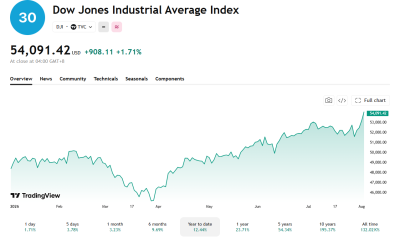
Dow and S&P 500 Hit Records on AI Earnings: When Will the Bubble Burst?
-

 Business2 days ago
Datadog: Best Of Breed For Multiple Reasons
-

 Business2 days ago
BDC Weekly Review: Private BDC Q2 Numbers Are Strong
-
 Crypto World7 days ago
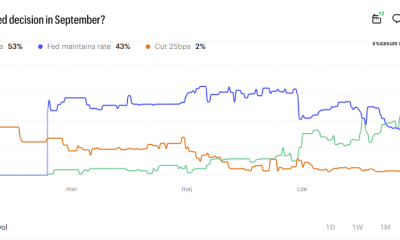
Dollar Index Trapped at 100 as Hawkish Fed Meets Official Selling
-

 Business6 days ago
McDonald’s (MCD) Q2 2026 earnings
-

 Fashion6 days ago
The Bright Side of Black and White
-

 Fashion6 days ago
Suit of the Week: Me + Em
-

 Business7 days ago
Apple UK encryption challenge filed against Home Office
You must be logged in to post a comment Login