President Donald Trump announces Kevin Warsh as his pick for new Federal Reserve chairman in a Truth Social post.
President Donald Trump said on Friday that he is nominating Kevin Warsh to lead the Federal Reserve, succeeding Jerome Powell when his term expires in May.
The move comes at a turbulent moment for the Federal Reserve, as the Justice Department conducts a criminal probe into Powell, the Supreme Court weighs limits on the Fed’s independence and the cost of living tests Trump’s economic agenda.
Advertisement
“I have known Kevin for a long period of time, and have no doubt that he will go down as one of the GREAT Fed Chairmen, maybe the best,” Trump wrote on Truth Social. “On top of everything else, he is ‘central casting,’ and he will never let you down. Congratulations Kevin!”
If confirmed by the Senate, Warsh would assume one of the most powerful positions in U.S. economic policymaking, with direct influence over interest rate decisions and the central bank’s battle against inflation.
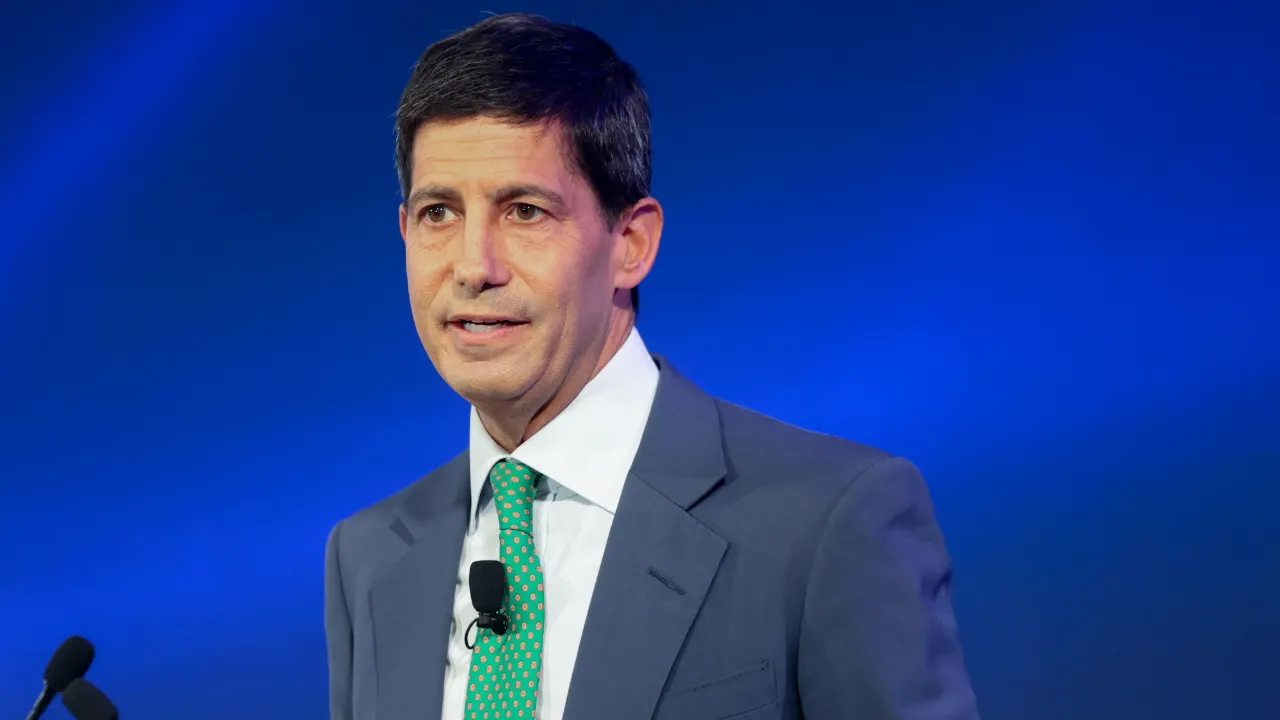
Kevin Warsh, former governor of the Federal Reserve, will return to lead the central bank. (David Paul Morris/Bloomberg via Getty Images)
The Federal Reserve, which sets borrowing costs and shapes inflation, wields enormous influence over Americans’ day-to-day affordability.
Advertisement
Warsh’s potential ascension to the top spot at the Fed comes as Trump has often made Powell a lightning rod for economic criticism, with tensions between the two deteriorating over interest rate decisions and broader monetary policy.
Trump has called on the Fed to cut rates, which he says could save the nation “hundreds of billions of dollars.”
Powell held the benchmark rate at 4.25% to 4.5% as the Fed took a wait-and-see approach to assess the impact of the president’s sweeping tariffs. While the central bank has since lowered rates, Trump’s attacks on Powell, whom he nominated in 2017, have increasingly taken on a personal tone, including the use of mocking nicknames.
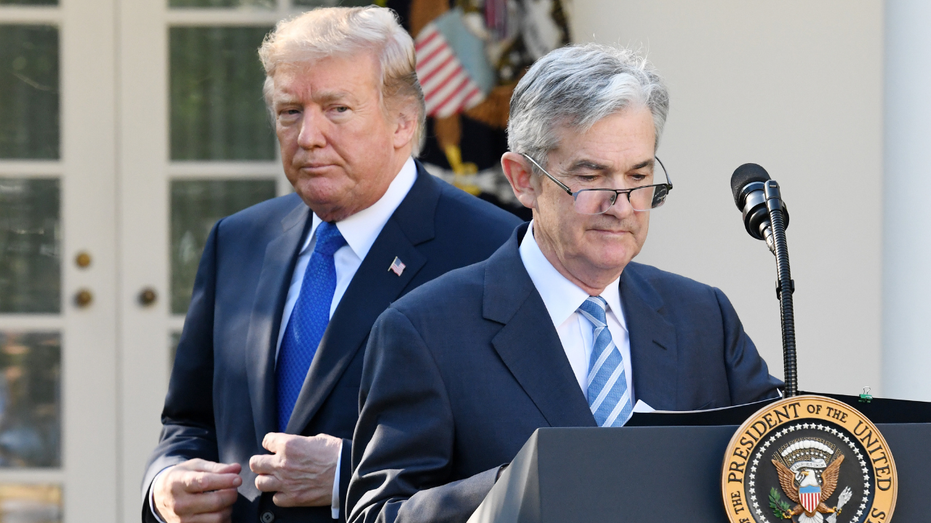
President Donald Trump walks behind Jerome Powell of the Federal Reserve during an announcement in the Rose Garden of the White House in Washington, D.C. on Nov. 2, 2017. (Olivier Douliery/Bloomberg/Getty Images)
Powell, widely viewed as one of the most crisis-tested Federal Reserve chairs in modern U.S. history, built his career as a lawyer and investment banker in New York before entering public service in the administration of President George H.W. Bush. He joined the Federal Reserve’s Board of Governors in 2012 and was tapped to lead the central bank in 2017.
Like Powell, Warsh is not an economist by training. Instead, he brings a background in law and finance that has shaped his views on the Federal Reserve.
Advertisement
He earned a bachelor’s degree in public policy from Stanford University in 1992 and a law degree from Harvard in 1995. He built his career at Morgan Stanley and, at 35, became the youngest person to serve on the Fed’s board in 2006.
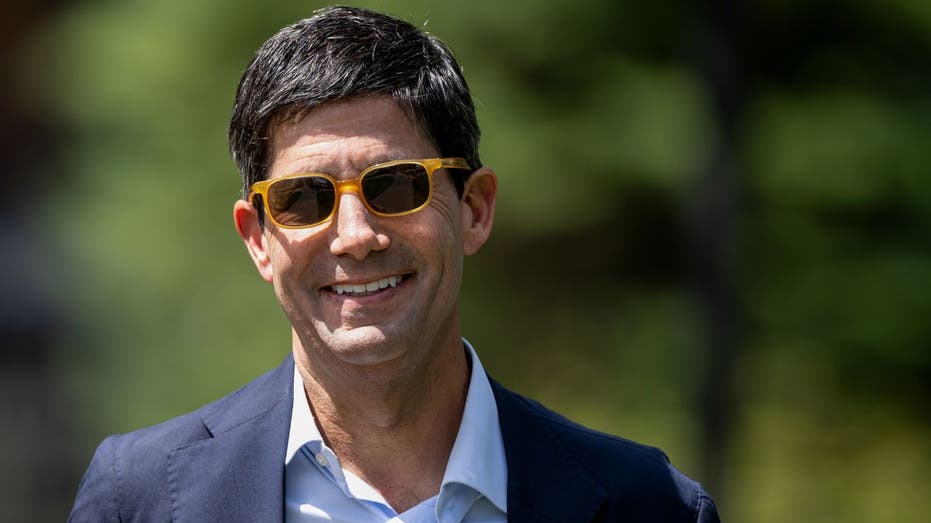
Kevin Warsh, former governor of the Federal Reserve, during the International Monetary Fund and World Bank Spring meetings in Washington, D.C., on April 25, 2025. (Tierney Cross/Bloomberg via Getty Images)
Though he stepped down in 2011, he was widely recognized as the Fed’s key liaison to Wall Street during the 2008 financial crisis. He previously worked in the Bush administration as a special assistant to the president for economic policy and executive secretary at the National Economic Council.
Some business leaders have framed Warsh’s nomination as a pivotal moment for U.S. economic and energy policy. Chevron CEO Mike Wirth said the country faces an “inflection point,” pointing to rising power demand from artificial intelligence, energy security concerns and shifting global geopolitics.
“Having known Kevin Warsh for decades, he’s uniquely prepared — in judgment, experience and temperament — to serve our country at this critical time,” Wirth said.
Warsh was among Trump’s leading candidates to replace Federal Reserve Chair Janet Yellen in 2017. However, Trump ultimately appointed Powell to the role.
More recently, Warsh was considered a contender for treasury secretary in the second Trump administration before the president chose former hedge fund chief Scott Bessent.
Before landing on Warsh, Trump was also considering National Economic Council Director Kevin Hassett, Federal Reserve Governor Christopher Waller and BlackRock Global Fixed Income Chief Investment Officer Rick Rieder. Trump, in a Truth Social post, said all would have been “outstanding” choices for Fed chair.
Protean Small Cap declined by -0.9% in March. The benchmark index declined -3.1%. Since launching in June 2023, the fund has gained 55.6%. The Carnegie Nordic Small Cap Index is up 22.1% in the same period.
The hedge fund Protean Select returned 0.5% in March.
Protean Aktiesparfond Norden returned -2.8%. The benchmark was down by -2.6%. Since inception, twelve months ago, the fund is up 18.3%, and in the same period the VINX Nordic Cap index is up 12.8%. The fund now manages 1.7bn SEK.
All figures are net of fees.
Advertisement
This month’s letter elaborates on Aktiesparfonden’s encouraging first year, the Fog of War that plagued markets in March, why we remain cautious but not as cautious as mid-March and why we were unusually active. Plus, as always, commentary on the month’s various winners and losers.
Thank you for being an investor!
// Team Protean
Nowhere to hide
March 2026 • Written by Pontus Dackmo
Advertisement
Wouldn’t it have been convenient to write this month’s missive about something completely different? A company deep-dive, a reflection on Nordic small cap valuations, perhaps an observation about the underappreciated capital cycle in some obscure industrial niche. We’d have preferred that. You’d probably have preferred that too.
The instinct, as a Nordic-focused fund manager, is to treat geopolitical events as background noise. We don’t trade oil futures, we don’t run a macro fund, and we certainly don’t have an edge on the intentions of the Iranian Revolutionary Guard or US Commander in Chief. It would be comfortable to dismiss the Middle East crisis as someone else’s problem and retreat to the familiar terrain of Nordic company fundamentals.
The problem is: there is no such retreat. An inconvenient fact about the Nordic equity markets is that most of our listed companies have international operations and are deeply embedded in global supply chains. A Swedish industrial company might report in kronor, hold its AGM in Stockholm, and have a thoroughly Nordic board – but its input costs are denominated in dollars, its customers are in Germany and China, and its order book is a function of global capex cycles. An energy shock in the Strait of Hormuz doesn’t stop at the Persian Gulf. It travels through Brent crude, through European gas prices, through the front end of rate curves, through the krona, through sentiment, and eventually lands on the desk of a CFO in a mid-sized Swedish town, wondering whether to revise guidance.
There is nowhere to hide from a physical supply shock. Not in Scandinavia, not in small caps, not in “quality compounders”.
Advertisement
The fog
General Carl von Clausewitz coined the term “fog of war” almost two centuries ago. In the chaos of conflict, the information available to decision-makers is incomplete, contradictory, and often deliberately
misleading. The rational response, he argued, is not to seek certainty, but to make decisions robust enough to survive being wrong.
March offered a masterclass in modern fog of war, except now the fog is generated not by cannon smoke but by tweets and nonsense.
We have no edge in forecasting the outcome of the Middle East conflict. None. We do not know whether the Strait of Hormuz will reopen next week or remain contested for months. We do not know if escalation leads to a ground operation or if a face-saving deal materializes over Easter. And critically, we don’t think anyone else knows either – regardless of how confidently they narrate it. What we can control is how we position for the range of outcomes.
Advertisement
Active Portfolio Management
March was, in all likelihood, the most active month we have had in a long while. Possibly ever.
That warrants some explanation. We do not celebrate turnover. Trading is, at its core, a necessary evil since every ticket is connected to a commission cost borne by the fund, every spread has two sides. We are fully aware that activity for activity’s sake is a reliable way to erode returns whilst just producing a feeling of being busy.
What happened in March is that prices moved, on a daily basis, in ways that had very little to do with company fundamentals. Tariff announcements, reversals, threats, walk-backs – the signal-to-noise ratio collapsed. When the market reprices a business by 10% because a politician said something on a Sunday, and then reprices it back 8% two days later, the question we ask ourselves is not “should we trade?” but “can we afford not to?” The disconnect between price and value was, on certain days, wide enough to drive a truck through.
So we traded. We trimmed things that moved too far. We added to things that got dragged down indiscriminately.
Advertisement
We do not fetishize this. The goal is never to be active. It is to own businesses at prices that make sense. Some months that means sitting on our hands. March was not that month. When the market hands you volatility as a gift, and the underlying thesis hasn’t changed, the correct response is to use it.
The honest addendum: a fair few trades in March were wrong. Some we were too early on; some we shouldn’t have touched at all. Elevated activity is a double-edged sword: more opportunities to profit, but also more chances being wrong.
What we’re watching
The honest answer is: we’re watching the same thing as everyone else. The Middle East. The Strait of Hormuz. The oil price. But we’re also watching for the second-order effects that tend to arrive with a lag and matter more than the headlines.
More speculatively: we are watching for the moment when the market shifts from treating this as a binary event (resolved / not resolved) to treating it as a new baseline. That shift, when it happens, tends to be where opportunity is greatest. Because once the question changes from “will things go back to normal?” to “what does the new normal look like?”, the answer requires fundamental analysis rather than geopolitical punditry.
Advertisement
But you don’t always need to wait for the fog to lift. Some conclusions are robust regardless of how the binary question resolves. Here’s an example from our own process.
In the middle of March, we bought a meaningful amount of Nibe (NDYLF) (NDYLF). The thesis is not that the war ends tomorrow, nor that it drags on for months. The thesis is that regardless of outcome, this crisis will put energy efficiency and reduced oil dependence back on the political agenda across Europe – forcefully, and probably durably. It happened after the 2022 Ukraine shock, when heat pump sales exploded and energy renovation became a political priority. That impulse then faded as gas prices normalised and populist backlash pushed governments to soften their climate ambitions. Well, here we are again. Except this time, the lesson should be harder to forget: Europe’s energy dependence is not a theoretical risk discussed at think tanks. It’s a physical vulnerability that disrupts economies when things go wrong in places we can’t control.
Nibe is the dominant European manufacturer of heat pumps. The stock has been in the penalty box for two years – inventory destocking, normalising demand, increasing competition, a weak Swedish housing market. It’s down 70% from its peak. We think the market is pricing a permanently impaired business, while the structural case for energy-efficient heating has just been handed another powerful catalyst.
This is the kind of analysis we prefer: not “will there be a ceasefire by April 6th?” but “what is likely true about the world on the other side of this, no matter what?” The best investments tend to come from conclusions that don’t depend on the impossible task of predicting the unpredictable.
Advertisement
Aktiesparfond Norden – One Year In
March 31st marked one year since launch. The fund has returned +18.3% against the VBCSKN index’s +12.8%. That is an outperformance of 5.5%.
Twelve months is not a track record. It’s a start. A better start than a bad start, which is all we’ll claim.
The more instructive number is the 1.7bn SEK in assets attracted. To understand why that matters, you need to remember the problem we set out to solve.
The active fund management industry has a well-documented flaw: virtually all serious research shows that actively managed funds underperform their benchmarks after fees. Not because the underlying stock-picking is necessarily bad, but because fees are too high, portfolios too bloated, and the incentive structure backwards. Fund companies optimize for asset gathering. Banks optimize for captive distribution. Neither optimizes for the person actually trying to compound their savings.
Advertisement
The obvious counter is the index fund. Cheap, transparent, honest. Except it owns everything indiscriminately – the frauds, the fads, the structurally declining businesses – with no judgment or overlay.
Our argument has always been that there is a gap between these two options. A white space that nobody has an incentive to fill: a low-fee, genuinely active, long-term oriented fund owning decent Nordic businesses. Just a manager with skin in the game, focused on long-term cash flow generation, making decisions without anyone else’s approval required.
The Aktiesparfond was built on the premise that a long-term Nordic saver deserves access to that kind of independent, genuinely active management. At 0.5% per year, with daily liquidity, alongside every expensive active fund and index fund in existence.
That 1.7bn SEK after one year suggests the gap was real. Whether the performance holds is a separate question, the last one year tells us almost nothing with statistical significance. But the structure is working, the thesis is intact, and the alignment of interests remains the foundation.
Advertisement
A Punch In The Mouth
The Prussian military strategist Helmuth von Moltke was a contemporary of Clausewitz. He is remembered for the observation that no plan survives first contact with the enemy (a version of which Mike Tyson famously converted to “Everyone has a plan until they get punched in the mouth.”). The investment equivalent is that no portfolio survives first contact with a real-world shock.
We came into 2026 positioned for a world of monetary tailwinds, deregulation, and an improving European outlook. That world has been interrupted – perhaps temporarily, perhaps not.
Months like March are uncomfortable. They are supposed to be. Comfort is rarely where returns are found. We remind ourselves – and you – that our process is designed to compound over years, not months. The key is to stay in the game, avoid big draw-downs, suffer intelligently when suffering is unavoidable, and be ready to act when the fog lifts.
Thank you for being an investor.
Advertisement
// Team Protean
Protean Select
March 2026 • Written by Pontus Dackmo
Protean Select returned +0.5% in March. After two softer months to start the year, this is a welcome result, and more importantly, it is the kind of month that gives the strategy its reason for existing.
Nordic indices were down between 5 and 10% this month, depending on which one you pick. We ran an average net exposure of around 20%. The fund made a small positive return. That is roughly what we designed this thing to do.
Advertisement
We are not a market-neutral fund. Or a short-biased fund. We are a fund that believes, with some conviction, that things generally want to work out in the end, and that the majority of long-term returns are made by owning businesses, not by being overly clever about when to be short them. That belief is why we almost always keep a positive net exposure, even in difficult conditions. The shorts are there not just to make money in isolation, but to act as an airbag: you don’t drive with an airbag hoping it deploys, but you’re grateful it’s there when it does. Like this month.
Biggest contributors were the OMX future short position (plus put-spread), Rusta long, NIBE long and Electrolux (ELUXY) short, in that order.
Biggest detractors were Devyser, Lundin Mining (LUNMF) (although offset by a short in Boliden (BDNNY) (BDNNY)), Volvo (VLVLY) and Getinge (GNGBY) long positions.
We enter April at 19% net exposure. Gross is now at 117%, having nudged it upward from more cautious levels, moving gradually back toward our historical average of around 135%. This is a deliberate, incremental decision, not a conviction call. The market feels non-linear right now. If conditions continue to feel constructive enough to justify additional risk, we will add. If not, we won’t.
Advertisement
We said going into the year that we wanted to earn the right to take more risk. March was a small step in that direction. Let’s see what April has to say about it.
Lowering the capacity limit
We announced during the month that we are lowering the capacity limit for Protean Select from SEK 2 billion to SEK 1 billion. The fund currently manages approximately SEK 970 million. We are, in other words, very close.
Some context. When we originally set the cap at SEK 2 billion, we assessed capacity based on the fund in isolation. That was reasonable at the time. But circumstances have changed. We now manage institutional mandates alongside the fund, applying a similar investment strategy in the same universe of Nordic small- and midcap companies. Running larger aggregate capital through the same opportunity set degrades the things that matter most: execution quality, the ability to take meaningful positions in less liquid names, and the speed of decision-making that comes with being small. We’d rather close too early than too late.
Here is how it will work. Once we pass SEK 1 billion, we will communicate that the fund is closing. There will then be a final subscription window of approximately one month. After that, the fund is closed to new capital. Withdrawals are always possible – this only affects new deposits.
Advertisement
Readers of these letters will recognise the philosophy.
We have said since day one that we optimise for performance, not for convenience, size, or marketing. We have written at length – perhaps at tedious length – about the perverse incentives in fund management, how AUM-maximising behaviour dilutes returns, and how size is one of the primary ways performance dies. We have said we would cap the fund early. We have said we would sacrifice revenue for return quality. And now, approaching the moment where those words become action, it feels worth pausing to acknowledge what this means.
On a personal level, the prospect of actually closing the fund is a source of pride. Not because turning away capital is clever business – it obviously isn’t. But because it means we are doing what we said we would do. When we started Protean, the motivation was to invest our own savings in an institutional setting, not to build an asset gathering machine. Every structural choice we’ve made has pointed in this direction: the quarterly redemptions that scare off allocators, the size cap that limits our fee income, the high hurdle rates that make performance fees genuinely hard to earn. None of this is “How to Build a Big Profitable Fund Management Business”. If there were a textbook on the subject, we’d feature as a cautionary tale.
But here’s the thing. Almost four years in, the fund has delivered competitive risk-adjusted returns. We even won an actual prize for it. Assets have grown to the cap not through marketing campaigns, but through performance and word of mouth. Our investors include some of the most sophisticated allocators we know, alongside friends, family, and our own savings. That this motley crew has collectively brought us to the point of closure feels like vindication of a philosophy.
Advertisement
We recognise this limits flexibility for both existing and prospective investors. That trade-off is deliberate. Protecting the conditions for good long-term returns is, in our view, the most important thing we can do for the people who have already entrusted us with their capital.
Protean Small Cap
March 2026 • Written by Carl Gustafsson
Protean Small Cap returned -0.9% in March. Our benchmark CSRXN (SEK) was down -3.1% during the month. Hence, the fund outperformed the index by 2.3%. Since inception in June 2023, the fund has outperformed the index by 33.5%. Total performance since inception is 55.6% net of fees.
The fund now manages c. SEK 990m following a continued inflow of funds, thank you for believing in us.
Advertisement
March recap
Top contributors were Cint, Rusta, BTS, Smartoptics and Nibe. Notable detractors were Devyser, Balder (BALDY) (BALDY), Arctic Falls, Nyfosa and ITAB.
Cint reported a considerable sequential improvement in sales during the fourth quarter and we increased our stake in the company on the day of the report in February. Since then, the share has continued to climb and it became our biggest contributor in March. It’s not a stock for widows and orphans but we believe the market is underestimating the growth opportunity within the business area Media Measurement. We acknowledge a string of operational issues, as well as about the impact of AI on the market research sector, but Q3 was likely the trough in terms of pain. The valuation is very appealing.
Rusta reported a very strong quarter, where the benefits of the stronger SEK started to have an impact. Healthy LFL, as well as a firmer outlook for store openings, lead to share to gain in an otherwise gloomy March for consumer exposure.
On the detractor side, Devyser continued its slump, with the share down by a third year to date. As we write this, the share now trades below its IPO price from 2021, despite clearly approaching cash-flow break-even and strong growth prospects in several areas. Devyser is active within genetic testing where DNA is used to assess disease risk as well as detecting them. Introducing new testing protocols takes time, but they are very sticky once established. The market might have overestimated the speed at which Devyser can establish itself, but we believe it underestimates the duration of the opportunity.
Advertisement
Balder and Nyfosa suffered from concerns over long-term rates.
While March was less busy in terms of portfolio activity, we take the opportunity to catch-up on some of the changes we have made so far this year.
We have added Vimian as a mid-sized position. This is a Swedish animal health company, focusing mainly on pets. It has a relatively broad product offering partly due to an opportunistic acquisition strategy. As for many others, a string of acquisitions during the pandemic led to some issues, financially as well as operationally. The financial issues were resolved through a rights issue, while the operational issues have been gradually, but not fully, addressed through restructuring and cost savings.
Where does the attraction lie? Q4 was strong with improved earnings quality, as well as stronger cash flow. This positive step has been disregarded in the overall market turmoil, and the share is trading at the low-end of its post-pandemic range, and considerably below levels where the main owner Fidelio (the PE sponsor that owns 60% of the stock) has added shares as recently as this autumn. The valuation does not fully capture the thematic exposure, we believe. With continued margin improvement, a return to more M&A and upside towards sector valuation, we see good risk/reward.
Advertisement
We have also added smaller stakes in a few interesting growth stories where shares can typically be hard to come by. These include Vertiseit , which describes itself as a supplier of “in-store Experience Management (IXM) platforms”. This can be translated into ‘software that runs all the screens you see in stores’ to simplify. The appeal of the business lies in the execution, we believe. The company is led by owner-operators who have ten-folded annual recurring revenue over the last decade. This is partly due to organic growth but also complemented by successful acquisitions where there are considerable synergies that can be extracted. We visited Grassfish, one of Vertiseit’s subsidiaries, in Vienna earlier this month, and were enthused by the growth opportunities that remain.
We have exited our positions in Hexpol and Sinch (as the buyback programme we alluded to last month led to some outperformance and provided a window of exit).
Our top ten positions as we enter April are as follows:
Advertisement
Rank
Holding
% of portfolio
Rank
Holding
% of portfolio
1
Acast
4.5%
6
ITAB
3.3%
2
Storytel
4.1%
7
Storskogen
3.2%
3
Sdiptech
4.0%
8
Vimian
3.2%
4
BTS
3.7%
9
Devyser
3.1%
5
Cint
3.5%
10
Vitec
3.0%
Protean Aktiesparfond Norden
MARCH 2026 • WRITTEN BY RICHARD BRÅSE
Aktiesparfonden is a Nordic long-only fund aiming to generate above-market returns over the long term by active investing in value-creating companies and charging a low fee. A fee that is reduced further as the fund grows, sharing the scale advantages with investors.
Aktiesparfonden has, since inception one year ago, delivered a 18.3% return, in the same period the VINX Nordic Cap index is up 12.8% . The fund now manages 1.7bn SEK.
Our communication for Aktiesparfonden is currently only in Swedish, and updates can be found at www.aktiesparfonden.se by clicking the headline “Anslagstavla”.
Advertisement
Thank you for your long-term perspective and trust in our process.
Thank you for being an investor.
Pontus Dackmo CEO & Investment Manager Protean Funds Scandinavia AB
The monthly reminder
We optimize for performance, not for convenience, size, or marketing. You can withdraw money only quarterly in Select (monthly in Small Cap). We will tell you very little about our holdings. Our strategy is tricky to describe as we aim to be versatile. A hedge fund can lose money even if markets are up. We charge a performance fee if we do well. You do not get a discount if you have a larger sum to invest. We only have a medium-sized track record.
Advertisement
Aktiesparfonden’s reminder
We aim to generate above index returns over 3-5 years, but there are no guarantees. The fund is traded daily, but that doesn’t mean you should. To beat the index, you need to deviate from the index. This means taking uncomfortable positions. Be aware that the fund can underperform the index during periods. Sometimes, long periods. We lower the fee as the fund grows. The first 10 basis point cut comes at 10bn SEK in AUM.
Buy-side hedge professionals conducting fundamental, income oriented, long term analysis across sectors globally in developed markets. Please shoot us a message or leave a comment to discuss ideas.DISCLOSURE: All of our articles are a matter of opinion, informed as they might be, and must be treated as such. We take no responsibility for your investments but wish you best of luck.
Analyst’s Disclosure: I/we have no stock, option or similar derivative position in any of the companies mentioned, and no plans to initiate any such positions within the next 72 hours. I wrote this article myself, and it expresses my own opinions. I am not receiving compensation for it (other than from Seeking Alpha). I have no business relationship with any company whose stock is mentioned in this article.
Seeking Alpha’s Disclosure: Past performance is no guarantee of future results. No recommendation or advice is being given as to whether any investment is suitable for a particular investor. Any views or opinions expressed above may not reflect those of Seeking Alpha as a whole. Seeking Alpha is not a licensed securities dealer, broker or US investment adviser or investment bank. Our analysts are third party authors that include both professional investors and individual investors who may not be licensed or certified by any institute or regulatory body.
Good morning, everyone, and welcome to today’s PVH Fourth Quarter 2025 and Full Year Earnings Conference Call. [Operator Instructions] Please note this call may be recorded [Operator Instructions] — it is now my pleasure to turn today’s program over to Sheryl Freeman, Senior Vice President of Investor Relations.
Sheryl Freeman Vice President of Investor Relations
Advertisement
Thank you, operator. Good morning, everyone, and welcome to the PVH Corp. Fourth Quarter and Full Year 2025 Earnings Conference Call. Leading the call today will be Stefan Larsson, Chief Executive Officer; and Melissa Stone, Interim Chief Financial Officer and Executive Vice President, Global Financial Planning and Analysis. This webcast and conference call is being recorded on behalf of PVH and consists of copyrighted material.
It may not be recorded, rebroadcast or otherwise transmitted without PVH’s written permission. Your participation constitutes your consent to having anything you say appear on any transcript or replay of this call. The information to be discussed includes forward-looking statements that reflect PVH’s view as of March 31, 2026, of future events and financial performance. These statements are subject to risks and uncertainties indicated in the company’s SEC filings and the safe harbor statement included in the press release that is the subject of this call.
India’s banking sector is showing signs of resilience, even amid market volatility. Updates from private lenders, especially HDFC Bank, indicate steady growth, though some concerns remain.
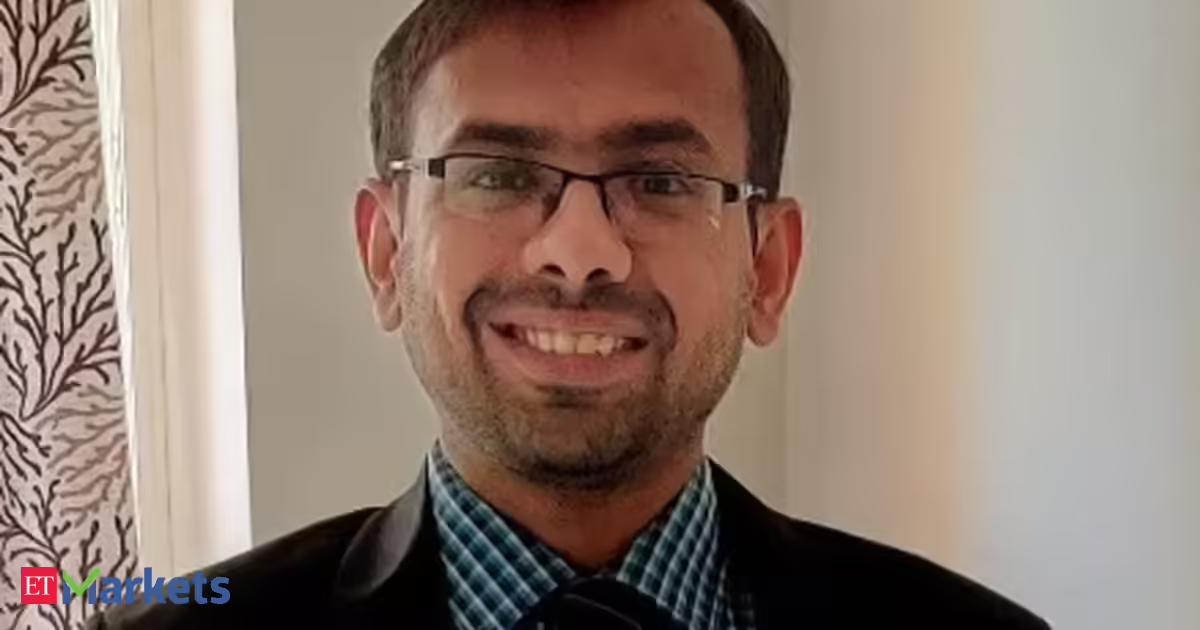
Aditya Shah, Founder, Hercules Advisors told ET Now, “Systemic loan growth is about 10%–15%, deposits about 10%. HDFC Bank has grown loans at 12%–13% and deposits at 14%—exactly as management planned. Stock reaction may be muted due to AT1 bond and chairman issues, but business numbers are strong.”
On deposit trends, Shah added, “Deposit growth has been strong since the merger. Even if markets stay tough, some money may return to deposits. The main concern is loans and NIM, which take time to recover.”
Smaller lenders and microfinance are also showing signs of recovery. Shah noted, “The micro-lending cycle has bottomed out. Banks like RBL, Suryoday, and Ujjivan are reporting good loan growth. The war may slow lending briefly, but the cycle had turned before that.”
Advertisement
Public sector banks continue to perform steadily. Shah said, “PSU banks will do well for the next one or two years. SBI is best placed. HDFC Bank offers potential if it resolves internal issues and improves NIM.”
Live Events
IDFC First Bank showed mixed results. “Growth may moderate short-term due to a fraud booking, but long-term the franchise is well placed,” Shah explained. On NBFCs, he highlighted, “Bajaj Finance saw deposits decline this quarter, though 20% loan growth is fine. We’ll monitor management’s response.” For investment picks, Shah advised, “Top PSU pick: SBI. Contrarian pick: HDFC Bank—valuations are low, and growth potential remains. ICICI Bank is also on a growth cycle for the next three to five years.”
Bottom Line India’s banks are at an inflection point—growth is returning, and asset quality is stabilizing. However, margins, deposits, and global risks remain challenges. Investors should balance opportunity with caution.
Since 2018 the high street lender has shut more than 800 branches in the UK
Stanley Murphy-Johns, Press Association
07:50, 06 Apr 2026
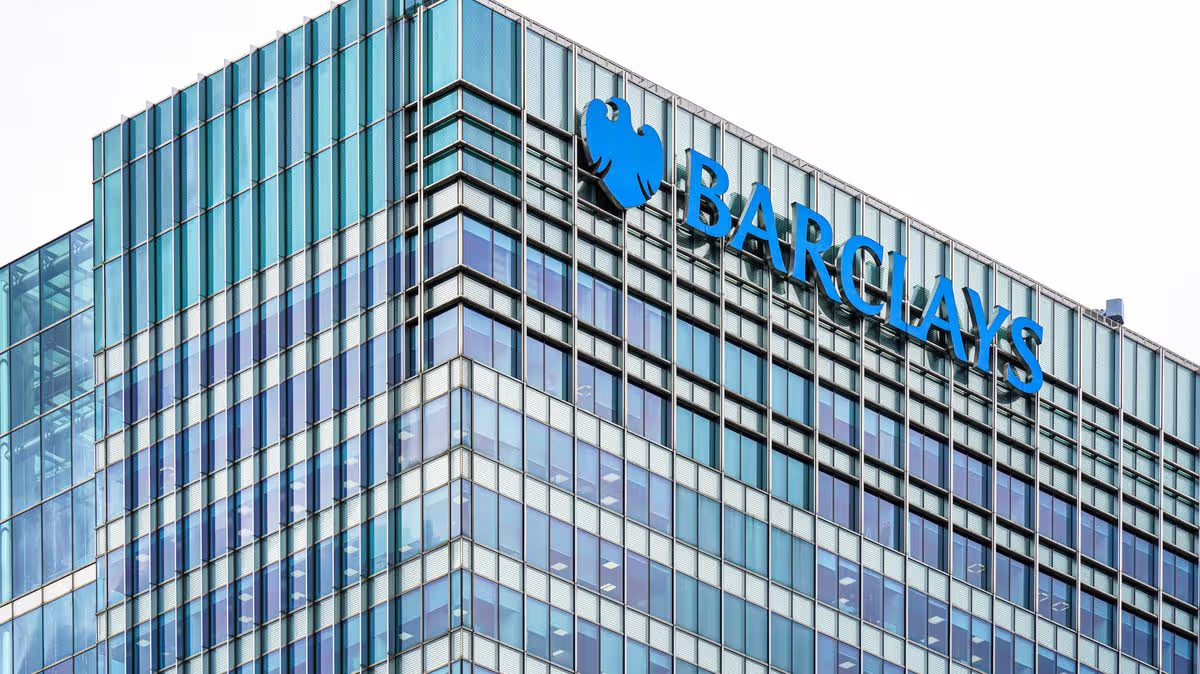
An exterior view of the Barclays headquarters high-rise building in Canary Wharf(Image: OGULCAN AKSOY via Getty Images)
Barclays is reportedly planning to return to the high street by opening new branches and bringing back “bank managers”. Vim Maru, chief executive officer at Barclays UK, told the Times he does not want customers to get “stuck in some chatbot” when they need help.
Advertisement
Since 2018, more than 800 Barclays branches have closed – leaving 206 still open around the UK, according to the company’s latest annual report. Mr Maru joined Barclays in 2023, and took over running the UK arm of the bank in 2024.
He said that one of his “early decisions” was to pause the closures and plans to expand again.
In an interview with the paper, Mr Maru said: “What we’re trying to do is something that allows us to differentiate in front of our customers.
“Of course we’re going to be great in digital – but we’re going to be there for you when you need some help and support. You’re not going to be stuck in some chatbot trying to get out of the loop and trying to speak to someone.”
Advertisement
The chief executive does not accept that branches were closed too quickly, but has noted that many customers still “value physical presence”.
“The branch manager or bank manager is back. Most customers come in and they want to talk to the bank manager from time to time,” said Mr Maru.
The decision to move back towards traditional banking comes as previously digital-only banks, such as Revolut, have started moving into the current account market in the UK.
In a statement to the Press Association, Mr Maru said: “Even in a digital world, many customers still value physical presence and the ability to talk to our colleagues when they need support.
Advertisement
“In response to changes to where people work, live and shop over the last few years, we have relocated some of our branches and extended branch opening hours, adding 33,500 hours of in-branch availability per year.
“We are now looking to enhance and invest in our branch footprint alongside our contact centres and app as we continue to meet the changing preferences of our customers.”
MONTECITO, California — The Duchess of Sussex offered fans a rare, intimate look at family life Monday, posting a series of short videos on Instagram showing Prince Archie and Princess Lilibet celebrating Easter at the family’s Montecito home.
IBTimes US
Meghan Markle, 44, shared the clips with the simple caption “Happy Easter!” accompanied by an egg emoji. The footage captures the children, ages 6 and 4, enjoying classic holiday traditions in their sprawling backyard garden: darting across the grass with Easter baskets, an egg hunt, Lilibet wearing playful bunny ears while carrying a plush rabbit, and Archie decorating eggs. One segment shows Meghan herself searching for eggs near the family’s chicken coop, nicknamed Archie’s Chick Inn.
The post provides one of the most extended recent glimpses into the private world of Prince Harry and Meghan’s young family since they stepped back from senior royal duties and relocated to California in 2020. The couple has been protective of their children’s privacy, rarely sharing images or videos, making Monday’s Easter posts stand out.
In the clips, Archie, with his recognizable red hair, runs energetically through the yard. Lilibet appears in bunny ears, toddling along with a stuffed bunny. The children are seen from various angles, including some from behind, as they hunt for hidden eggs amid the lush Montecito landscape. Other moments include family activities like feeding chickens, evoking a relaxed, sun-filled California spring day.
Royal watchers noted the timing coincides with Easter observances by the broader British royal family, including a service at St. George’s Chapel in Windsor attended by King Charles III and other senior royals. The contrast between the formal Windsor gathering and the informal California backyard celebration highlighted the divergent paths taken by the two branches of the family.
Advertisement
Meghan’s Instagram account, which she uses to promote her lifestyle brand As Ever and share personal moments, has featured the children sparingly in recent months. Earlier posts included cameos by Archie and Lilibet in behind-the-scenes videos for As Ever collaborations, such as flower arranging and product shoots at home. In one March video, the children playfully interrupted their mother’s work, with Lilibet whispering to Meghan and Archie dashing into frame, prompting the caption “Mama’s little helpers.”
The Duchess has also shared other family snippets, including Archie skiing with his father in early April, captioned “My boys. Quick learner, Archie! So proud ❤️.” Those clips showed Harry and his son gliding down slopes, underscoring the family’s active outdoor lifestyle.
Monday’s Easter videos arrive as the Sussexes continue building lives centered on philanthropy, media projects and family in their Montecito estate. The nine-bedroom, 16-bathroom property, purchased for $14.65 million in 2020, includes extensive grounds that have become the backdrop for many of the rare shared moments.
Prince Archie Harrison Mountbatten-Windsor was born in London in May 2019. Princess Lilibet Diana Mountbatten-Windsor followed in June 2021 in Santa Barbara, California. Both children hold the titles of prince and princess, granted after King Charles ascended the throne in 2022, though the family primarily uses them in formal contexts.
Advertisement
The couple has spoken in interviews about striving for a normal childhood for their children, away from the intense scrutiny of royal life in Britain. Harry, in particular, has cited privacy and safety concerns as reasons for the family’s low public profile regarding the children.
Fans and royal commentators reacted quickly to the Easter posts. Many praised the sweet, unscripted nature of the clips, with comments highlighting the children’s energy and the joyful family atmosphere. Supporters viewed it as a warm holiday gesture from the Duchess. Others noted the ongoing debate around the Sussexes’ approach to sharing family images, with some critics arguing the videos still protect the children’s faces from clear, prolonged exposure.
The posts also come amid continued public interest in the couple’s relationship with the British royal family. Harry and Meghan have maintained some distance since their 2021 Oprah interview and the 2023 release of Harry’s memoir “Spare,” though occasional olive branches, such as Harry’s brief visits to Britain, have occurred.
Meghan has focused on entrepreneurial ventures in recent years. Her lifestyle brand As Ever, launched with products ranging from jams and teas to home goods, has expanded through collaborations. The brand’s emphasis on home, garden and family-friendly living aligns with the aesthetic of Monday’s Easter videos.
Advertisement
Earlier in the week, Meghan was spotted shopping locally in Montecito for Easter items, including traditional baskets and throwback toys like Magic Rabbit playing cards and Sea Monkeys, according to onlookers. The choices reflected a preference for simple, creative play over high-tech gifts, consistent with the couple’s stated desire for a grounded upbringing.
The Easter sharing fits a pattern of occasional, carefully curated glimpses the Sussexes provide. Previous rare videos have shown carefree days, such as grocery list-making with Lilibet or zoo visits with Archie. These moments humanize the family for their global audience while maintaining boundaries.
Royal experts suggest such posts serve multiple purposes: connecting with supporters, promoting Meghan’s brand initiatives and reinforcing the narrative of a happy, settled life in California. At the same time, the selective nature of the shares — often showing activities from behind or in motion — continues to spark discussion about privacy versus public engagement.
As Easter Monday unfolded, the British royals marked the holiday with traditional church services and family gatherings at Windsor. King Charles, who has been undergoing treatment for cancer, appeared publicly in recent days, sending a message of continuity within the institution.
Advertisement
The Sussexes, by contrast, embraced a more casual observance. Sources close to the couple described the day as filled with egg hunts, outdoor play and quality family time, with Harry actively participating alongside Meghan and the children.
The videos quickly garnered significant engagement on Instagram, with thousands of likes and comments within hours. Hashtags related to the post trended among royal watchers, mixing admiration for the family’s apparent joy with speculation about future public appearances.
Meghan and Harry’s decision to step back as working royals in 2020 stemmed from what they described as overwhelming media pressure and lack of support. Since then, they have pursued independent projects, including Netflix deals, Spotify podcasts and Harry’s Invictus Games work, while raising their family.
Lilibet celebrated her fourth birthday last June with limited public fanfare, while Archie turned six in May 2025. The family has marked milestones privately, occasionally sharing photos taken by Harry or Meghan themselves.
Advertisement
Monday’s post underscores the couple’s commitment to a California lifestyle centered on nature, animals and simple traditions. The chicken coop, garden activities and backyard play reflect an emphasis on hands-on experiences for the children.
As the children grow, questions persist about their future exposure to public life and potential royal roles. For now, the Sussexes appear focused on shielding them while allowing occasional, controlled peeks for well-wishers.
The Easter videos represent a light, festive moment amid ongoing global interest in the couple. They offer reassurance to fans that Archie and Lilibet are thriving in their sun-drenched California home, engaged in the timeless joys of childhood.
Whether more family content will follow remains uncertain, but Monday’s share provided a welcome dose of seasonal warmth from the Duchess of Sussex and her young family.
















































You must be logged in to post a comment Login