
Business
Protean Funds Scandinavia AB March 2026 Partner Letter

Dear Partners,
Protean Small Cap declined by -0.9% in March. The benchmark index declined -3.1%. Since launching in June 2023, the fund has gained 55.6%. The Carnegie Nordic Small Cap Index is up 22.1% in the same period.
The hedge fund Protean Select returned 0.5% in March.
Protean Aktiesparfond Norden returned -2.8%. The benchmark was down by -2.6%. Since inception, twelve months ago, the fund is up 18.3%, and in the same period the VINX Nordic Cap index is up 12.8%. The fund now manages 1.7bn SEK.
All figures are net of fees.
This month’s letter elaborates on Aktiesparfonden’s encouraging first year, the Fog of War that plagued markets in March, why we remain cautious but not as cautious as mid-March and why we were unusually active. Plus, as always, commentary on the month’s various winners and losers.
Thank you for being an investor!
// Team Protean
Nowhere to hide
March 2026 • Written by Pontus Dackmo
Wouldn’t it have been convenient to write this month’s missive about something completely different? A company deep-dive, a reflection on Nordic small cap valuations, perhaps an observation about the underappreciated capital cycle in some obscure industrial niche. We’d have preferred that. You’d probably have preferred that too.
The instinct, as a Nordic-focused fund manager, is to treat geopolitical events as background noise. We don’t trade oil futures, we don’t run a macro fund, and we certainly don’t have an edge on the intentions of the Iranian Revolutionary Guard or US Commander in Chief. It would be comfortable to dismiss the Middle East crisis as someone else’s problem and retreat to the familiar terrain of Nordic company fundamentals.
The problem is: there is no such retreat. An inconvenient fact about the Nordic equity markets is that most of our listed companies have international operations and are deeply embedded in global supply chains. A Swedish industrial company might report in kronor, hold its AGM in Stockholm, and have a thoroughly Nordic board – but its input costs are denominated in dollars, its customers are in Germany and China, and its order book is a function of global capex cycles. An energy shock in the Strait of Hormuz doesn’t stop at the Persian Gulf. It travels through Brent crude, through European gas prices, through the front end of rate curves, through the krona, through sentiment, and eventually lands on the desk of a CFO in a mid-sized Swedish town, wondering whether to revise guidance.
There is nowhere to hide from a physical supply shock. Not in Scandinavia, not in small caps, not in “quality compounders”.
The fog
General Carl von Clausewitz coined the term “fog of war” almost two centuries ago. In the chaos of conflict, the information available to decision-makers is incomplete, contradictory, and often deliberately
misleading. The rational response, he argued, is not to seek certainty, but to make decisions robust enough to survive being wrong.
March offered a masterclass in modern fog of war, except now the fog is generated not by cannon smoke but by tweets and nonsense.
We have no edge in forecasting the outcome of the Middle East conflict. None. We do not know whether the Strait of Hormuz will reopen next week or remain contested for months. We do not know if escalation leads to a ground operation or if a face-saving deal materializes over Easter. And critically, we don’t think anyone else knows either – regardless of how confidently they narrate it. What we can control is how we position for the range of outcomes.
Active Portfolio Management
March was, in all likelihood, the most active month we have had in a long while. Possibly ever.
That warrants some explanation. We do not celebrate turnover. Trading is, at its core, a necessary evil since every ticket is connected to a commission cost borne by the fund, every spread has two sides. We are fully aware that activity for activity’s sake is a reliable way to erode returns whilst just producing a feeling of being busy.
What happened in March is that prices moved, on a daily basis, in ways that had very little to do with company fundamentals. Tariff announcements, reversals, threats, walk-backs – the signal-to-noise ratio collapsed. When the market reprices a business by 10% because a politician said something on a Sunday, and then reprices it back 8% two days later, the question we ask ourselves is not “should we trade?” but “can we afford not to?” The disconnect between price and value was, on certain days, wide enough to drive a truck through.
So we traded. We trimmed things that moved too far. We added to things that got dragged down indiscriminately.
We do not fetishize this. The goal is never to be active. It is to own businesses at prices that make sense. Some months that means sitting on our hands. March was not that month. When the market hands you volatility as a gift, and the underlying thesis hasn’t changed, the correct response is to use it.
The honest addendum: a fair few trades in March were wrong. Some we were too early on; some we shouldn’t have touched at all. Elevated activity is a double-edged sword: more opportunities to profit, but also more chances being wrong.
What we’re watching
The honest answer is: we’re watching the same thing as everyone else. The Middle East. The Strait of Hormuz. The oil price. But we’re also watching for the second-order effects that tend to arrive with a lag and matter more than the headlines.
More speculatively: we are watching for the moment when the market shifts from treating this as a binary event (resolved / not resolved) to treating it as a new baseline. That shift, when it happens, tends to be where opportunity is greatest. Because once the question changes from “will things go back to normal?” to “what does the new normal look like?”, the answer requires fundamental analysis rather than geopolitical punditry.
But you don’t always need to wait for the fog to lift. Some conclusions are robust regardless of how the binary question resolves. Here’s an example from our own process.
In the middle of March, we bought a meaningful amount of Nibe (NDYLF) (NDYLF). The thesis is not that the war ends tomorrow, nor that it drags on for months. The thesis is that regardless of outcome, this crisis will put energy efficiency and reduced oil dependence back on the political agenda across Europe – forcefully, and probably durably. It happened after the 2022 Ukraine shock, when heat pump sales exploded and energy renovation became a political priority. That impulse then faded as gas prices normalised and populist backlash pushed governments to soften their climate ambitions. Well, here we are again. Except this time, the lesson should be harder to forget: Europe’s energy dependence is not a theoretical risk discussed at think tanks. It’s a physical vulnerability that disrupts economies when things go wrong in places we can’t control.
Nibe is the dominant European manufacturer of heat pumps. The stock has been in the penalty box for two years – inventory destocking, normalising demand, increasing competition, a weak Swedish housing market. It’s down 70% from its peak. We think the market is pricing a permanently impaired business, while the structural case for energy-efficient heating has just been handed another powerful catalyst.
This is the kind of analysis we prefer: not “will there be a ceasefire by April 6th?” but “what is likely true about the world on the other side of this, no matter what?” The best investments tend to come from conclusions that don’t depend on the impossible task of predicting the unpredictable.
Aktiesparfond Norden – One Year In
March 31st marked one year since launch. The fund has returned +18.3% against the VBCSKN index’s +12.8%. That is an outperformance of 5.5%.
Twelve months is not a track record. It’s a start. A better start than a bad start, which is all we’ll claim.
The more instructive number is the 1.7bn SEK in assets attracted. To understand why that matters, you need to remember the problem we set out to solve.
The active fund management industry has a well-documented flaw: virtually all serious research shows that actively managed funds underperform their benchmarks after fees. Not because the underlying stock-picking is necessarily bad, but because fees are too high, portfolios too bloated, and the incentive structure backwards. Fund companies optimize for asset gathering. Banks optimize for captive distribution. Neither optimizes for the person actually trying to compound their savings.
The obvious counter is the index fund. Cheap, transparent, honest. Except it owns everything indiscriminately – the frauds, the fads, the structurally declining businesses – with no judgment or overlay.
Our argument has always been that there is a gap between these two options. A white space that nobody has an incentive to fill: a low-fee, genuinely active, long-term oriented fund owning decent Nordic businesses. Just a manager with skin in the game, focused on long-term cash flow generation, making decisions without anyone else’s approval required.
The Aktiesparfond was built on the premise that a long-term Nordic saver deserves access to that kind of independent, genuinely active management. At 0.5% per year, with daily liquidity, alongside every expensive active fund and index fund in existence.
That 1.7bn SEK after one year suggests the gap was real. Whether the performance holds is a separate question, the last one year tells us almost nothing with statistical significance. But the structure is working, the thesis is intact, and the alignment of interests remains the foundation.
A Punch In The Mouth
The Prussian military strategist Helmuth von Moltke was a contemporary of Clausewitz. He is remembered for the observation that no plan survives first contact with the enemy (a version of which Mike Tyson famously converted to “Everyone has a plan until they get punched in the mouth.”). The investment equivalent is that no portfolio survives first contact with a real-world shock.
We came into 2026 positioned for a world of monetary tailwinds, deregulation, and an improving European outlook. That world has been interrupted – perhaps temporarily, perhaps not.
Months like March are uncomfortable. They are supposed to be. Comfort is rarely where returns are found. We remind ourselves – and you – that our process is designed to compound over years, not months. The key is to stay in the game, avoid big draw-downs, suffer intelligently when suffering is unavoidable, and be ready to act when the fog lifts.
Thank you for being an investor.
// Team Protean
Protean Select
March 2026 • Written by Pontus Dackmo
Protean Select returned +0.5% in March. After two softer months to start the year, this is a welcome result, and more importantly, it is the kind of month that gives the strategy its reason for existing.
Nordic indices were down between 5 and 10% this month, depending on which one you pick. We ran an average net exposure of around 20%. The fund made a small positive return. That is roughly what we designed this thing to do.
We are not a market-neutral fund. Or a short-biased fund. We are a fund that believes, with some conviction, that things generally want to work out in the end, and that the majority of long-term returns are made by owning businesses, not by being overly clever about when to be short them. That belief is why we almost always keep a positive net exposure, even in difficult conditions. The shorts are there not just to make money in isolation, but to act as an airbag: you don’t drive with an airbag hoping it deploys, but you’re grateful it’s there when it does. Like this month.
Biggest contributors were the OMX future short position (plus put-spread), Rusta long, NIBE long and Electrolux (ELUXY) short, in that order.
Biggest detractors were Devyser, Lundin Mining (LUNMF) (although offset by a short in Boliden (BDNNY) (BDNNY)), Volvo (VLVLY) and Getinge (GNGBY) long positions.
We enter April at 19% net exposure. Gross is now at 117%, having nudged it upward from more cautious levels, moving gradually back toward our historical average of around 135%. This is a deliberate, incremental decision, not a conviction call. The market feels non-linear right now. If conditions continue to feel constructive enough to justify additional risk, we will add. If not, we won’t.
We said going into the year that we wanted to earn the right to take more risk. March was a small step in that direction. Let’s see what April has to say about it.
Lowering the capacity limit
We announced during the month that we are lowering the capacity limit for Protean Select from SEK 2 billion to SEK 1 billion. The fund currently manages approximately SEK 970 million. We are, in other words, very close.
Some context. When we originally set the cap at SEK 2 billion, we assessed capacity based on the fund in isolation. That was reasonable at the time. But circumstances have changed. We now manage institutional mandates alongside the fund, applying a similar investment strategy in the same universe of Nordic small- and midcap companies. Running larger aggregate capital through the same opportunity set degrades the things that matter most: execution quality, the ability to take meaningful positions in less liquid names, and the speed of decision-making that comes with being small. We’d rather close too early than too late.
Here is how it will work. Once we pass SEK 1 billion, we will communicate that the fund is closing. There will then be a final subscription window of approximately one month. After that, the fund is closed to new capital. Withdrawals are always possible – this only affects new deposits.
Readers of these letters will recognise the philosophy.
We have said since day one that we optimise for performance, not for convenience, size, or marketing. We have written at length – perhaps at tedious length – about the perverse incentives in fund management, how AUM-maximising behaviour dilutes returns, and how size is one of the primary ways performance dies. We have said we would cap the fund early. We have said we would sacrifice revenue for return quality. And now, approaching the moment where those words become action, it feels worth pausing to acknowledge what this means.
On a personal level, the prospect of actually closing the fund is a source of pride. Not because turning away capital is clever business – it obviously isn’t. But because it means we are doing what we said we would do. When we started Protean, the motivation was to invest our own savings in an institutional setting, not to build an asset gathering machine. Every structural choice we’ve made has pointed in this direction: the quarterly redemptions that scare off allocators, the size cap that limits our fee income, the high hurdle rates that make performance fees genuinely hard to earn. None of this is “How to Build a Big Profitable Fund Management Business”. If there were a textbook on the subject, we’d feature as a cautionary tale.
But here’s the thing. Almost four years in, the fund has delivered competitive risk-adjusted returns. We even won an actual prize for it. Assets have grown to the cap not through marketing campaigns, but through performance and word of mouth. Our investors include some of the most sophisticated allocators we know, alongside friends, family, and our own savings. That this motley crew has collectively brought us to the point of closure feels like vindication of a philosophy.
We recognise this limits flexibility for both existing and prospective investors. That trade-off is deliberate. Protecting the conditions for good long-term returns is, in our view, the most important thing we can do for the people who have already entrusted us with their capital.
Protean Small Cap
March 2026 • Written by Carl Gustafsson
Protean Small Cap returned -0.9% in March. Our benchmark CSRXN (SEK) was down -3.1% during the month. Hence, the fund outperformed the index by 2.3%. Since inception in June 2023, the fund has outperformed the index by 33.5%. Total performance since inception is 55.6% net of fees.
The fund now manages c. SEK 990m following a continued inflow of funds, thank you for believing in us.
March recap
Top contributors were Cint, Rusta, BTS, Smartoptics and Nibe. Notable detractors were Devyser, Balder (BALDY) (BALDY), Arctic Falls, Nyfosa and ITAB.
Cint reported a considerable sequential improvement in sales during the fourth quarter and we increased our stake in the company on the day of the report in February. Since then, the share has continued to climb and it became our biggest contributor in March. It’s not a stock for widows and orphans but we believe the market is underestimating the growth opportunity within the business area Media Measurement. We acknowledge a string of operational issues, as well as about the impact of AI on the market research sector, but Q3 was likely the trough in terms of pain. The valuation is very appealing.
Rusta reported a very strong quarter, where the benefits of the stronger SEK started to have an impact. Healthy LFL, as well as a firmer outlook for store openings, lead to share to gain in an otherwise gloomy March for consumer exposure.
On the detractor side, Devyser continued its slump, with the share down by a third year to date. As we write this, the share now trades below its IPO price from 2021, despite clearly approaching cash-flow break-even and strong growth prospects in several areas. Devyser is active within genetic testing where DNA is used to assess disease risk as well as detecting them. Introducing new testing protocols takes time, but they are very sticky once established. The market might have overestimated the speed at which Devyser can establish itself, but we believe it underestimates the duration of the opportunity.
Balder and Nyfosa suffered from concerns over long-term rates.
While March was less busy in terms of portfolio activity, we take the opportunity to catch-up on some of the changes we have made so far this year.
We have added Vimian as a mid-sized position. This is a Swedish animal health company, focusing mainly on pets. It has a relatively broad product offering partly due to an opportunistic acquisition strategy. As for many others, a string of acquisitions during the pandemic led to some issues, financially as well as operationally. The financial issues were resolved through a rights issue, while the operational issues have been gradually, but not fully, addressed through restructuring and cost savings.
Where does the attraction lie? Q4 was strong with improved earnings quality, as well as stronger cash flow. This positive step has been disregarded in the overall market turmoil, and the share is trading at the low-end of its post-pandemic range, and considerably below levels where the main owner Fidelio (the PE sponsor that owns 60% of the stock) has added shares as recently as this autumn. The valuation does not fully capture the thematic exposure, we believe. With continued margin improvement, a return to more M&A and upside towards sector valuation, we see good risk/reward.
We have also added smaller stakes in a few interesting growth stories where shares can typically be hard to come by. These include Vertiseit , which describes itself as a supplier of “in-store Experience Management (IXM) platforms”. This can be translated into ‘software that runs all the screens you see in stores’ to simplify. The appeal of the business lies in the execution, we believe. The company is led by owner-operators who have ten-folded annual recurring revenue over the last decade. This is partly due to organic growth but also complemented by successful acquisitions where there are considerable synergies that can be extracted. We visited Grassfish, one of Vertiseit’s subsidiaries, in Vienna earlier this month, and were enthused by the growth opportunities that remain.
We have exited our positions in Hexpol and Sinch (as the buyback programme we alluded to last month led to some outperformance and provided a window of exit).
Our top ten positions as we enter April are as follows:


Protean Aktiesparfond Norden
MARCH 2026 • WRITTEN BY RICHARD BRÅSE
Aktiesparfonden is a Nordic long-only fund aiming to generate above-market returns over the long term by active investing in value-creating companies and charging a low fee. A fee that is reduced further as the fund grows, sharing the scale advantages with investors.
Aktiesparfonden has, since inception one year ago, delivered a 18.3% return, in the same period the VINX Nordic Cap index is up 12.8% . The fund now manages 1.7bn SEK.
Our communication for Aktiesparfonden is currently only in Swedish, and updates can be found at www.aktiesparfonden.se by clicking the headline “Anslagstavla”.
Thank you for your long-term perspective and trust in our process.
Thank you for being an investor.
Pontus Dackmo
CEO & Investment Manager
Protean Funds Scandinavia AB
Editor’s Note: The summary bullets for this article were chosen by Seeking Alpha editors.
Donny DBM/iStock via Getty Images


LOS ANGELES — Charlize Theron delivers another commanding action performance in “Apex,” a brutal yet visually stunning survival thriller that dropped on Netflix on April 24, 2026, pitting the Oscar winner against both the unforgiving Australian wilderness and a deranged human predator played with unhinged intensity by Taron Egerton.

Directed by Baltasar Kormákur, whose credits include tense outdoor adventures like “Everest” and “Beast,” the 95-minute R-rated film blends high-stakes action with cat-and-mouse horror elements. It has drawn mixed but mostly positive reviews for its relentless pacing, breathtaking cinematography and Theron’s physical commitment, though some critics note familiar genre tropes.
The story opens with a jaw-dropping sequence on Norway’s Troll Wall, where thrill-seeking couple Sasha (Theron) and Tommy (Eric Bana) wake up inside a tent affixed to a sheer cliff face. Tragedy strikes amid harsh weather, leaving Sasha grief-stricken and seeking solitude months later in the remote Australian bush. She plans a solo kayaking and hiking trip to scatter Tommy’s ashes in his homeland, only to cross paths with a seemingly helpful local named Ben (Egerton).
What begins as a meditative journey through stunning New South Wales landscapes quickly descends into terror. Ben reveals himself as a ritualistic serial killer who views strong-willed women like Sasha as ultimate prey in his twisted game. Armed with a crossbow and intimate knowledge of the terrain, he forces her into a desperate fight for survival against raging rivers, treacherous rapids, sheer rock faces and the relentless hunter.
Theron, who trained intensively with professional climber Beth Rodden, performs most of her own stunts, hurling herself down hills, navigating whitewater and clinging to precarious ledges. Her portrayal balances steely resilience with raw vulnerability as Sasha grapples with guilt over the Norway accident while summoning every ounce of endurance. At 50, the star continues to redefine action-hero roles with the same ferocity seen in “Mad Max: Fury Road,” “Atomic Blonde” and “The Old Guard.”
Egerton chews the scenery with gleeful menace as Ben, delivering a gonzo performance that mixes charm, mommy issues and psychotic rage. His character’s demented energy elevates the villain into something memorably unhinged, creating electric tension in every confrontation with Theron. Their chemistry crackles as predator and prey in a battle of wits and wills.
Kormákur and cinematographer Lawrence Sher capture the Australian wilderness with sweeping drone shots and deep, textured colors that make the landscape both beautiful and intimidating. Lush forests give way to harsh outback, while whitewater sequences deliver visceral thrills. The film’s sound design amplifies every snap of a branch and rush of water, heightening the sense of isolation and pursuit.
Screenwriter Jeremy Robbins crafts a lean narrative that wastes little time on backstory, prioritizing white-knuckle action over deep emotional exploration. Some critics praise this efficiency, likening it to classic “Most Dangerous Game” adaptations, while others find the psychological elements underdeveloped and the violence occasionally sadistic.
The film’s themes resonate in the current cultural moment, echoing debates about women facing male violence in isolated spaces. Theron’s Sasha embodies empowerment through survival instinct rather than superhuman feats, making her triumphs feel earned amid graphic encounters with traps, hooks and corpses left by Ben’s previous victims.
At a tight runtime, “Apex” maintains momentum through its final act, delivering satisfying payoffs without overstaying its welcome. Supporting turns, including Bana’s brief but impactful role, add emotional weight. The ending, which involves Sasha confronting her grief while dispatching her tormentor, has sparked discussion for its symbolic closure.
Reception has been solid for a Netflix original. Early audience scores on Rotten Tomatoes highlight appreciation for the thrills and performances, though critic aggregates reflect the divide between those embracing its pulpy fun and those seeking more substance. Many call it one of the streamer’s stronger recent thrillers, a “tight 90” that delivers on genre promises.
Production details underscore the commitment to authenticity. Filmed in rugged Australian locations, the project emphasized practical effects alongside convincing visual enhancements. Theron’s preparation included extensive physical training to handle the demanding sequences, further cementing her status as one of Hollywood’s most dedicated action performers.
For viewers seeking escapist tension with strong leads, “Apex” offers a compelling binge. It may not reinvent the survival thriller, but it executes the formula with style, grit and star power. Theron’s presence elevates material that could have felt routine in lesser hands, while Egerton’s villainy provides the perfect foil.
As Netflix continues flooding its catalog with original content, “Apex” stands out for feeling like a proper movie rather than algorithm filler. Its blend of adventure, horror and empowerment makes it a worthwhile addition for fans of the genre or anyone drawn to Theron’s formidable screen presence.
In the end, “Apex” proves that even in familiar territory, committed performances and dynamic direction can create an engaging ride. Charlize Theron once again shows why she remains an apex predator in action cinema, turning a standard hunt into something memorably fierce.

mohd izzuan/iStock via Getty Images

Dear Fellow Partners:
The Summers Value Fund LP (“the Fund”) returned 6.7% net 1 in 2025, trailing the Russell 2000 Index ETF (IWM), which returned 12.7%, and the Russell 2000 Value Index ETF (IWN), which returned 12.4%. While our performance in 2025 fell short of expectations, the Fund’s long-term performance remains strong. Since inception, the Fund has delivered a 12.0% annualized net 1 return compared to 6.9% for IWM and 6.3% for IWN.
Fund Commentary
In the first half of the year, the Fund generated a return of -12.8% net 1 . The healthcare sector faced significant pressure following the inauguration of the new administration in January. Sentiment weakened the following month with the nomination of a controversial Secretary of Health and Human Services. Tariff proposals targeting key trading partners added to broader economic uncertainty. Simultaneously, leadership changes and layoffs at the FDA created instability within one of the healthcare sector’s most important regulatory agencies. Investor concerns were further heightened by a government proposal aimed at curtailing drug prices in the United States. In addition, funding for early-stage biotechnology companies tightened sharply, forcing many companies to file for bankruptcy. Collectively, these factors led to a significant decline for healthcare stocks through June.
In sharp contrast, the Fund returned 22.4% net 1 in the second half of the year reflecting strong operating performance from our holdings and a more supportive backdrop for the healthcare sector. M&A activity accelerated in July, highlighted by several notable acquisitions, including Merck’s $10 billion purchase of Verona Pharmaceuticals and Sanofi’s $9.5 billion acquisition of Blueprint Medicines. Private equity interest also remained robust, with Archimed announcing the $750 million acquisition of Zimvie during the month. Additionally, second quarter earnings reports were broadly better than expectations. By this point, uncertainty surrounding federal government proposals and regulatory actions had been largely absorbed by market participants, contributing to improved investor confidence.
We believe the outlook for investing in the healthcare sector remains positive entering 2026 given low starting valuations, expectations for continued M&A and the potential for solid operating performance. We focus on identifying businesses that are more insulated from macro and regulatory factors and are positioned to compound value through a range of environments.
Top contributors in 2025 included Liquidia (LQDA), Ligand Pharmaceuticals (LGND) and Zimvie. Top detractors included Vestis (VSTS) and Indivior (INDV). The Fund held thirteen long positions and one short position at year-end. Our top three positions represented almost 45% of the portfolio, reflecting the concentrated nature of our strategy. Our top five holdings were Electromed (ELMD), Consensus Cloud Solutions (CCSI), Liquidia, ADMA Biologics (ADMA), and Ligand Pharmaceuticals. Our top five positions have all been held for one year or longer (almost eight years in the case of Electromed). We added new positions in Journey Medical (DERM), Avanos Medical (AVNS) and National Research Corp. We sold our longstanding position in Spok Holdings (SPOK). The Fund lost money on the short side of the portfolio in 2025 but remains profitable since inception.
The Fund’s allocation to pharmaceutical and biotechnology stocks increased significantly during the year to over 40% by year end. We believe small-cap biotech and pharma stocks are on the front end of a multi-year innovation cycle. Recent drug launches from the likes of Liquidia, Crinetics Pharmaceuticals (CRNX), Kyrstal Bio, Ardelyx (ADRX) and Travere Therapeutics (TVTX) — among many others — have blockbuster revenue potential ($1 billion plus). In contrast, large-cap pharma companies are facing the largest patent expiry cycle in the industry’s history. According to a recent article in The American Bazaar titled “The $400 Billion Patent Cliff: Big Pharma’s Revenue Crisis,” the industry could lose up to $400 billion of revenue by 2030. Mega blockbuster drugs such as Merck’s (MRK) Keytruda, Bristol Myers Squibb’s (BMY) Eliquis, JNJ’s (JNJ) Darzalex, Novo Nordisk’s (NVO) Ozempic and Novartis’ (NVS) Entresto could all lose key patent protections by the end of decade. Big pharma companies have strong balance sheets and generate substantial amounts of cash. In 2024, the top ten pharma companies globally generated over $120 billion of free cash flow. We believe acquisitions will play a key role in filling the void created by patent expirations, and small to mid-cap biotech and pharma companies are well-positioned to benefit as potential acquisition targets.
The Fund received $454,366 in dividend income during 2025. OTC Markets, our only non-healthcare holding, paid a special dividend of $1.75 in December. The Fund’s dividend yield stands at 0.5%, reflecting our focus on long-term capital growth rather than income generation.
Largest Contributors
Liquidia (LQDA) – $3.6 billion market cap
We began accumulating a position in Liquidia last January during the JP Morgan Healthcare Conference. The company presented an initial cohort from the open label ASCENT trial of Yutrepia in patients with pulmonary hypertension – interstitial lung disease (PH-ILD), and the data looked exceptionally strong. At $1 billion, the company’s market cap was overly discounted following years of litigation with its key competitor, United Therapeutics. Our physician research indicated patient dis-satisfaction with current therapies and a high unmet medical need in both pulmonary arterial hypertension (PAH) and PH-ILD patients (both indications are in the Yutrepia label). At the time of our initial purchases, the company’s lead asset, Yutrepia, had already received conditional approval by the FDA but awaited a key litigation outcome. That outcome came on May 2 allowing the FDA to give a final approval for the drug on May 23. Liquidia launched Yutrepia on June 2, and the initial launch phase has been nothing short of stunning with sales reaching $90 million in the fourth quarter. Yutrepia is poised to become a blockbuster in the quarters ahead due to its unique and differentiated profile, which includes easier titration and lower cough. Perhaps most remarkable, the company achieved positive cash flow of $30 million in the second full quarter post launch highlighting its efficient go-to-market model. Additional litigation remains outstanding with United, but we believe it will be concluded favorably for Liquidia in the coming months. If we are correct, the share price could have significant appreciation potential from here and the company could become an acquisition target. We are modeling earnings per share of $3.50 in 2026, which puts the current PE multiple at 12x.
Ligand Pharmaceuticals (LGND) – $3.9 billion market cap
We have owned Ligand for several years. As a royalty aggregator, Ligand has a capital light business model featuring attractive margins and high returns on capital. The company has a skilled management team that has a history of sourcing royalty rights on underappreciated drugs and medical devices with favorable risk-adjusted return profiles. The key to our thesis on Ligand has been the launches of Merck’s (MRK) Ohtuvaryre for COPD and Travere’s Filspari for kidney disease. Both drugs have blockbuster sales potential and long patent lives. In addition, we expect Palvella’s (PVLA) QTORIN for MLM to be approved in 2027. QTORIN could also hold blockbuster potential with Ligand receiving a high single digit royalty on sales. We believe Ligand has a multi-year runway for better-than-expected sales and earnings growth as a result of these launches. Ligand’s balance sheet remains strong with $1 billion of cash to deploy into future royalty deals.
Zimvie (ZIMV) – $730 million market cap
Zimvie was our largest detractor to performance in 2023-24. Our patience paid off in 2025 as the company was acquired by Archimed in July for a 124% premium. We sold our position with a marginal gain in September following the announcement.
Largest Detractors
Vestis (VSTS) – $890 million market cap
Vestis was spun off from Aramark in 2023 becoming a pure play workplace uniform rental business with exposure to healthcare. We were attracted to the stock given its low valuation and inferior margin profile relative to its two large publicly traded peers, Cintas and UniFirst. It was our belief that management could improve margins as a standalone company for many years to come. However, we underappreciated the amount of investment that was required to unlock higher margins. In addition, management turnover and balance sheet weakness created uncertainty, which contributed to a declining share price. We sold our position in May following a weaker-than-expected business outlook for 2025.
Indivior (INDV) – $4.2 billion market cap
We purchased shares of Indivior in October of 2024 at 4x EV/EBITDA and 1x EV/Sales – very cheap multiples for a high margin pharmaceutical company. The company had a valuable asset in Sublocade, a long-acting injectable therapy to treat substance abuse. Indivior had endured years of mismanagement and disappointment, which led up to the stock trading at an incredibly low valuation. In January, the company provided a worse-than-expected business outlook for 2025, which appeared to be the continuation of a long trend of missed expectations. We sold the stock as a result. As it turned out, our sale of Indivior represented our biggest mistake in 2025. The management team was replaced in February shortly after our sale. The company announced a new strategy that included cost cuts and a simplification of the business model. Following these positive changes, the stock increased by over 300%. We typically screen for new management changes like the one that occurred at Indivior, but we missed the opportunity to add it back to the portfolio.
Partnership Update
The firm achieved several meaningful milestones in 2025:
- The Summers Value Fund LP reached a record amount of assets under management (AUM) of $40 million at year end. We launched the Fund with AUM of $2.6 million in 2018. We continue to believe our strategy has capacity for $500 million of AUM without compromising our opportunity set.
- In January, we launched SVP Deal Fund III LP to increase our ownership stake in restor3d (private) through a convertible note offering. The convertible note was subsequently converted into a preferred equity security in July when private equity firm Partners Group led the Series B round. In total, we have invested almost $24 million in restor3d, which is targeting an IPO in late 2026 or early 2027.
- We closed SVP Deal Fund 1 LP after returning $6 million of investor capital during the year. The Fund generated a return of 108% net of fees for an unlevered IRR of 21% net of fees over its life. We are proud of the return we were able to generate for our investors from this activist strategy, and we see the potential for additional activist opportunities in the future.
Our goal, as always, is to treat our investors the way we would want to be treated if we were on their side of the table. As in year’s past, direct Fund expenses including fund administration, audit, tax and legal were covered through the operating budget. We have never charged a penny to the Fund beyond the stated management fee and incentive fee, when earned.
The Fund narrowly surpassed its 6% cumulative annual hurdle rate in 2025, which triggered a small incentive fee to the general partner.
As a reminder, the Summers Value Fund LP is — by far — my family’s largest asset. I believe alignment between myself and our investors is a crucial driver of our long-term success.
In Closing
Thank you to our partners for your continued trust and support. Our stable and growing capital base is an important advantage in our goal to generate double-digit annual returns over the long run. We are grateful for those who added to their accounts during the year.
Our strategy continues to have ample capacity, and we welcome new investors who appreciate our unique approach. If you know someone who may be interested in learning more, please reach out to Alison Tomlinson at atomlinson@summersvalue.com.
Sincerely,
Andrew Summers, CFA, Managing Partner
Editor’s Note: The summary bullets for this article were chosen by Seeking Alpha editors.
AT&T Delivered A Double Beat, And The Lumen Integration Is Ahead Of Schedule

Sen Tillis clears path for Trump’s Fed pick after DOJ drops Powell probe
Business
Wedding Confirmed? Taylor Swift and Travis Kelce Shift Wedding Plans to July 3 in New York City
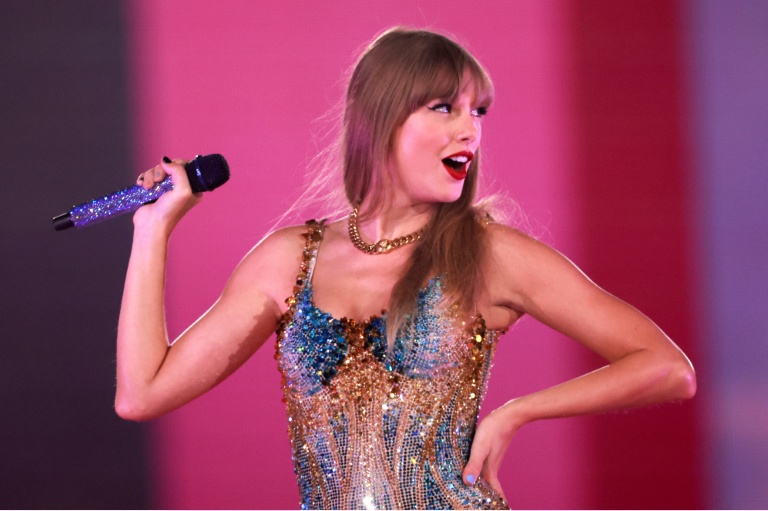
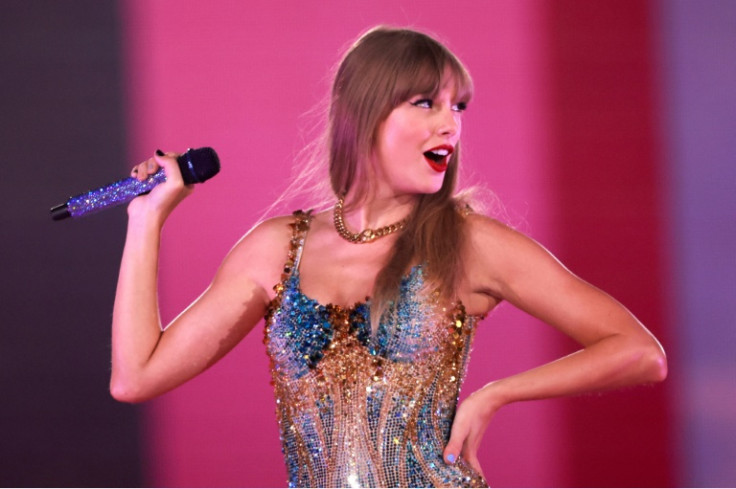
NEW YORK — Taylor Swift and Travis Kelce have sent save-the-date cards announcing their wedding for Friday, July 3, 2026, in New York City, marking a notable shift from earlier speculation about a June ceremony in Rhode Island and setting the stage for what many are calling one of the most anticipated celebrity unions in years.
AFP
The power couple, who announced their engagement in August 2025 with a playful Instagram post captioned “Your English teacher and your gym teacher are getting married 🧨,” have kept planning details tightly under wraps. Multiple sources confirmed to Page Six that the save-the-dates recently went out, solidifying the midsummer date just ahead of Independence Day weekend.
The move represents a pivot from previous rumors that pointed to June 13 — Swift’s lucky number — at the Ocean House resort in Watch Hill, Rhode Island, where the singer owns a waterfront estate. Those reports were publicly debunked by celebrity wedding planner Tara Guérard, who confirmed she is handling a different event at the venue on that date.
Insiders say the couple opted for New York City to accommodate a larger guest list and leverage Swift’s Tribeca residence and deep ties to the city. The July 3 timing aligns with Swift’s well-known affection for Fourth of July celebrations and coincides with the U.S. semiquincentennial — America’s 250th anniversary — adding patriotic flair to the nuptials.
From Engagement to Save-the-Dates
Swift, 36, and Kelce, also 36, first sparked romance rumors in 2023 when the Kansas City Chiefs tight end attended one of her Eras Tour shows and later appeared in her “I Can Do It With a Broken Heart” music video. Their relationship blossomed publicly with high-profile appearances, including game days at Arrowhead Stadium and glamorous nights out.
Kelce proposed in a garden setting in Lee’s Summit, Missouri, in August 2025, an event captured in the couple’s joyful Instagram announcement. The ring, designed by Kindred Lubeck, quickly became a topic of fascination among fans.
Since the engagement, the pair has balanced high-profile careers. Kelce signed a new contract with the Chiefs and has spoken about prioritizing personal milestones before the next NFL season. Swift wrapped major tour legs and focused on personal projects while maintaining a relatively low profile with her fiancé.
Details Emerging on the Big Day
Sources describe the wedding as glamorous yet relatively intimate by superstar standards, with expectations of around 150 guests including close family, friends and select celebrities. Jason Kelce is widely expected to serve as best man for his brother, while rumors swirl about Swift’s inner circle — including Selena Gomez and Gigi Hadid — potentially standing as bridesmaids.
The exact venue in New York remains undisclosed, with the couple deliberately keeping specifics secret even from many invitees until closer to the date. Speculation ranges from iconic Manhattan locations to private estates, but Swift and Kelce have prioritized privacy and security amid their massive public profiles.
Reports indicate a no-gifts policy favoring charitable donations, reflecting the couple’s philanthropic leanings. Pre-wedding events are already generating buzz: Kelce is reportedly planning a relaxed bachelor getaway to the Bahamas with friends including Patrick Mahomes and his brother Jason.
Cultural Phenomenon in the Making
The union of pop music’s reigning queen and one of the NFL’s most charismatic stars has captured global attention like few other celebrity romances. Fans dubbed them “TNT” for their explosive chemistry, and their relationship has bridged music and sports audiences in unprecedented ways.
Social media has lit up with reactions to the latest wedding update. Swifties and Chiefs Kingdom alike are dissecting every detail, from potential color schemes to how the event might influence Swift’s upcoming creative output. Some speculate a surprise performance or special musical element could mark the celebration.
Industry observers note the logistical challenges of such a high-profile wedding. Security will be paramount, and the guest list — expected to mix A-list entertainers, athletes and longtime friends — requires careful coordination. Past Swift events, like her Fourth of July parties, have set a high bar for festive, star-studded gatherings.
Balancing Careers and Future Plans
Kelce’s NFL commitments factored heavily into timing. With training camp typically starting in late July, a pre-season wedding allows time for a honeymoon before he returns to football duties. Swift, fresh off record-breaking tours, has flexibility to focus on the personal milestone.
Friends say the couple remains grounded despite the frenzy. They have emphasized enjoying their engagement period without rushing, spending quality time together away from the spotlight when possible. Kelce has joked in interviews about the wedding being “easy” compared to catching footballs under pressure.
What’s Next
As July 3 approaches, more details are likely to emerge — though the couple’s track record suggests they will reveal only what they choose. Whether the ceremony includes surprise musical guests, elaborate production or intimate vows, it promises to be a defining cultural moment of 2026.
For now, Swift and Kelce continue navigating their high-profile lives while preparing for their next chapter. The shift to a New York City wedding on July 3 adds another layer of excitement to an already fairy-tale romance that began with a friendship bracelet and has captivated millions.
As save-the-date recipients mark their calendars, the world watches with anticipation. In true Swift fashion, the details may evolve, but the love story at the center remains the main event.
Israel issues evacuation warning for seven Lebanese towns beyond ’buffer zone’


The Investment Doctor is a financial writer, highlighting European small-caps with a 5-7 year investment horizon. He strongly believes a portfolio should consist of a mixture of dividend and growth stocks.
He is the leader of the investment group European Small Cap Ideas which offers exclusive access to actionable research on appealing Europe-focused investment opportunities not found elsewhere. The a focus is on high-quality ideas in the small-cap space, with emphasis on capital gains and dividend income for continuous cash flow. Features include: two model portfolios – the European Small Cap Ideas portfolio and the European REIT Portfolio, weekly updates, educational content to learn more about the European investing opportunities, and an active chat room to discuss the latest developments of the portfolio holdings. Learn more.
Analyst’s Disclosure: I/we have a beneficial long position in the shares of MET.PR.F either through stock ownership, options, or other derivatives. I wrote this article myself, and it expresses my own opinions. I am not receiving compensation for it (other than from Seeking Alpha). I have no business relationship with any company whose stock is mentioned in this article.
I also have a small long position in MET.PR.E, and may initiate a long position in the common shares in the next few weeks.
Seeking Alpha’s Disclosure: Past performance is no guarantee of future results. No recommendation or advice is being given as to whether any investment is suitable for a particular investor. Any views or opinions expressed above may not reflect those of Seeking Alpha as a whole. Seeking Alpha is not a licensed securities dealer, broker or US investment adviser or investment bank. Our analysts are third party authors that include both professional investors and individual investors who may not be licensed or certified by any institute or regulatory body.


Palestinian leader’s loyalists win local elections, including some seats in Gaza

PM Images/DigitalVision via Getty Images

Investment Research Best Practices: Our Resources for Analysts and Readers
We recently came across a resource provided several years ago to analysts and readers, an article presenting details and suggestions on how to approach investment analysis. And we’ve updated that article here.
The key takeaways: Research approaches evolve for the best analysts. There’s always room for improvement. And make sure to keep an open mind and be receptive to other ideas when it comes to sharpening research skills around investment ideas.
We asked analyst Thomas Lott to share his investment research process in this article from August, which may provide another perspective for analysts and readers.
We also have other resources available on our Analyst Connect article page.
The Positives of Presenting Previous Coverage in Follow-Up Articles
We encourage analysts to present follow-up coverage of stocks and investments they analyze for readers. As part of that follow-up effort, we ask analysts to mention previous coverage of a stock they covered in a past article.
There are benefits to referencing past articles in a new article covering a stock. The mention helps remind readers what was covered in the last article, presents a platform for outlining what may have changed (or not changed) since the previous analysis, and what may happen next for the investment in focus. Analysts also benefit from additional pageviews when readers are provided access to an older article.
The reference to past coverage should be at the start of the article. The link to that earlier article and the reference do not need to be in the first paragraph (though this is strongly encouraged) but should be included in the second or third paragraph.
Reference to past coverage is a key component of our follow-up article guidelines.
Our guidelines for follow-up coverage of an investment:
-
The follow-up focuses on a key material development or news that could impact the investment premise. This should go beyond just a change in sentiment or rating. And the follow-up should avoid any recap of any new development: The analysis should present a forward-looking angle on how a new development may impact the investment idea.
-
The follow-up article should advance the investment narrative. Avoid the use of old data or repurposed content from a previous article. Essentially, the new submission should present something fresh for reader consideration.
-
An analyst does not need to present a new rating or sentiment around a material change or catalyst that could impact the premise. But the analyst needs to clearly explain the reason for follow-up coverage, not only for readers but also for editors. Provide a note to editors explaining the need for follow-up coverage.
Our follow-up guidelines can be found here.
Looking for Your Best Commodity-Focused Investment Idea
Do you have high conviction behind a commodity-focused investment idea?
Seeking Alpha is inviting analysts to present their analysis of a commodity idea for its latest article competition. This includes stocks and ETFs. Inverse ETFs are not part of the competition, and the investment vehicle must trade in the US or Canada and have a ticker page on our site.
Analysts can send in an exclusive article with their idea. Add a comment in the “note to the editor” section requesting that the article is entered into the competition. The deadline is midnight, May 31.
Details on the competition can be found here.
Assessing the Energy Business: Tips and Details on Evaluating the Sector
The energy industry is big, with several moving parts within each sector. Valuating investments requires knowledge of the companies operating within the energy sphere. And how investors look at energy companies is influenced by the constantly changing geopolitical scene.
Seeking Alpha analyst Power Hedge, the Investing Group leader behind the Energy Profits in Dividends service, provides details on the different parts of the energy industry, how to evaluate companies within the sector, and how to assess the impact of macro developments on the business.
Power Hedge provides this primer and an assessment of the energy industry here.
Looking Ahead to May
May sees the earnings calendar get busier in the first few weeks, but it hits a peak in week two. The macro story surrounding the war in the Middle East continues to weigh on the market, and each day seems to add to the uncertainty. The economic reports that are released in May will reflect the impact the war is having on a number of different economic indicators, and this could create more volatility.
Seeking Alpha Earnings Calendar
Week 1 (May 1-8)
Even though May kicks off on a Friday, it comes with a number of big earnings reports before the open. At the top of the list, both in terms of market cap and potential importance, are Exxon Mobil (XOM) and Chevron (CVX). These two energy behemoths should show some benefits from the elevated oil prices that started in March. In addition to these icons, we will get reports from Aon (AON), Colgate-Palmolive (CL), and Dominion Energy (D), among others. Shifting our focus to Monday, May 4, we expect to hear from AI industry darling Palantir (PLTR), Vertex Pharmaceuticals (VRTX), The Williams Companies (WMB), and ON Semiconductor (ON), among the many.
Looking out to Tuesday, and the docket just gets busier. Among the companies expected to report are Advanced Micro Devices (AMD), Arista Networks (ANET), Shopify (SHOP), Eaton (ETN), and Pfizer (PFE). Looking at Wednesday and Thursday, we see the highest totals of companies for the entire earnings season, with 356 and 443 reports expected, respectively. For Wednesday, the biggest names are Disney (DIS), Arm Holdings (ARM), AppLovin (APP), Uber (UBER), and Marriott (MAR). For Thursday we expect to hear from household names such as Shell (SHEL), McDonald’s (MCD), Airbnb (ABNB), Monster Beverage (MNST), and Warner Bros. Discovery, among many others. Friday has a handful of big reports expected, and they’re led by Toyota (TM), Sony (SONY), AngloGold Ashanti, and EchoStar (SATS).
Week 2 (May 11-15)
This is where the dates of the reports become a little less certain, as many companies don’t announce the exact date of earnings until two to three weeks ahead of the report. Monday shows Constellation Energy (CEG), Fox Corporation (FOXA), and Circle Internet Group (CRCL) as reports we should expect. Looking out to Tuesday, Sea Limited (SE), Vodafone (VOD), AST Spacemobile (ASTS), and Venture Global (VG) are among the most highly followed companies reporting. Wednesday is highlighted by Cisco Systems (CSCO), Sumitomo Mitsui (SMFG), Takeda Pharmaceuticals (TAK), and Honda Motor Co. (HMC). Thursday features a couple of tech heavyweights with Alibaba (BABA) and Applied Materials (AMAT) expected to report, along with JD.Com (JD) and Copart (CPRT). The only names that jumped out for Friday were Mitsubishi UFJ Financial Group (MUFG) and RBC Barings (RBC).
Week 3 (May 18-22)
Monday, May 18, has a few reports investors will likely be interested in, starting with Trip.com (TCOM) and Ryanair (RYAAY). EV manufacturer XPeng (XPEV) is also on the docket. We see a shift in the focus on Tuesday as retail names start to step into the earnings confessional. The group is led by Home Depot (HD), Target (TGT), and Urban Outfitters (URBN). We also expect to hear from PDD Holdings (PDD) and Keysight Technologies, among others. Wednesday is arguably the biggest date in the second half of the month, with Nvidia (NVDA) on the docket along with Analog Devices (ADI), Palo Alto Networks (PANW), and Snowflake (SNOW) from the tech sector. In addition to the tech names, retailers are in the spotlight with The TJX Companies (TJX) and Lowe’s (LOW) expected to report.
The retail theme carries over to Thursday with the likes of Walmart (WMT), Ross Stores (ROST), Ralph Lauren (RL), and BJ’s Wholesale (BJ) joining the fray. We also see Deere & Company (DE) and Intuit (INTU) on the calendar. Friday only brings a few reports, with HEICO (HEI), Zoom Communications (ZM), and Williams Sonoma (WSM) being the most prominent.
Week 4 (May 25-29)
US markets will be closed on Monday, May 25, in observance of Memorial Day. For Tuesday we see a few reports scheduled with AutoZone (AZO), Autodesk (ADSK), Agilent (A), Workday (WDAY) and Dick’s Sporting Goods (DKS) among the biggest. Moving out to Wednesday, we get a few from the tech sector once again, with Salesforce (CRM), Synopsis (SNPS), and Everpure (P) leading the charge.
Thursday brings reports from some pretty big names in terms of market cap. We see Costco (COST), Dell Technologies (DELL), Marvell Technology (MRVL), and NetEase (NTES) among the most notable. Friday’s calendar shows Zscaler (ZS), MongoDB (MDB), and HP Inc. (HPQ) as possibly reporting, but that doesn’t seem likely, and those dates are estimates.
May Investor and Industry Events
May 2 – Berkshire Hathaway annual meeting without Warren Buffett
May 3-6 – Milken Global Conference
May 4 – Fed SLOOS report expected
May 4 – IBM Think event
May 5- American Express annual meeting
May 6 – Anthropic Code with Claude SF event
May 7 – Manheim Used Car Index report
May 7 – Citi Investor Day
May 8-10 – IEEE Conference on AI
May 11-14 – Red Hat Summit
May 12 – WASDE report on major crops
May 13 – BMO Farm to Market Conference
May 14 – Ford annual meeting
May 15 – 13F filings due from hedge funds
May 18-20 – JPMorgan Global Technology, Media, and Communications Conference
May 18-19 – Gamesbeat Summit
May 18-21 – Dell Technologies World
May 19 – Google I/O event
May 20 – Amkor Technology Investor Day
May 20 – B. Riley Securities Investor Conference
May 21 – Stellantis Investor Day
May 21 – Cummins Analyst Day
May 22 – Russell Index changes announced
May 25 – Deutsche Bank European Champions Conference
May 26 – Wells Fargo & Company Bernstein Strategic Decisions Conference
May 27 – Meta Platforms annual meeting
May 27-28 – Jefferies Software, Internet, and AI Conference
May 28 – ASCO meetings
May 28 – Salesforce annual meeting
May 29 – MSCI quarterly review
May 30 – Nvidia at the Cisco Live Conference
May 31 – Morgan Stanley Travel & Leisure Conference
May 31-June 4 – Cisco Live event
Major Economic Reports and Events
May 1 – ISM Manufacturing, Construction Spending
May 5 – Trade Balance, ISM Services
May 6 – ADP Employment Change
May 7 – Q1 Productivity, Q1 Unit Labor Costs
May 8 – April Employment Report, Univ. of Michigan Consumer Sentiment
May 11 – Existing Home Sales
May 12 – CPI, Treasury Budget
May 13 – PPI
May 14 – Retail Sales
May 15 – Industrial Production, Capacity Utilization
May 19 – Building Permits, Housing Starts, Pending Home Sales
May 22 – Univ. of Michigan Consumer Sentiment
May 25 – Memorial Day Holiday, US markets closed
May 26 – S&P/Case-Shiller Housing Index, Conference Board Consumer Confidence
May 28 – Durable Orders, PCE Price Index, Personal Income Personal Spending, New Home Sales
Business
Trump was likely target of shooting at White House correspondents’ dinner, US official says


Trump was likely target of shooting at White House correspondents’ dinner, US official says

Five Big Tech Earnings Could Decide Bitcoin’s Next Move This Week
New Sci-Fi Masterpiece Overtakes Tom Cruise’s Franchise-Ending Action Thriller

Imbecile Knocked Her Up, Now She’s F*cked | Financial Audit

Manchester United reach agreement with Casemiro over contract clause amid transfer speculation

US brings back mandatory military draft registration

Steven Gerrard disagrees with Gary Neville over ‘shock’ Chelsea and Arsenal claim | Football


-

 Fashion2 days ago
Weekend Open Thread – Corporette.com
-
 Crypto World21 hours ago
Hyperliquid $HYPE Rally Builds Momentum as AI Sector Enters Prove-It Phase
-
Entertainment7 days ago
NBA Analyst Charles Barkley Chimes in on Ice Spice McDonald’s Fiasco
-

 Politics6 days ago
Gary Stevenson delivers timely reminder to register to vote as deadline TODAY
-
Crypto World6 days ago
Bank of Hawai’i (BOH) Q1 2026: Net Income Drops to $57.4M as Net Interest Margin Expands
-

 Politics4 days ago
Making troops accountable for war crimes threatens US alliance, ex-SAS colonel warns
-

 Politics4 days ago
Disabled people challenge government SEND proposals over segregation concerns
-

 Business4 days ago
Rolls-Royce Voted UK’s Most Iconic Trade Mark as IPO Register Hits 150
-

 Politics4 days ago
Zack Polanski responds to home secretary’s taser threat
-

 Politics4 days ago
Starmer handler McSweeney to be dragged from shadows by Foreign Affairs Committee
-
Politics4 days ago
Wings Over Scotland | How To Get Away With Crimes
-
 Sports3 hours ago
IPL 2026: Ruturaj Gaikwad registers slowest fifty of the season, enters all-time unwanted list | Cricket News
-
 Crypto World5 days ago
Five Value Stocks with Recovery Potential in 2026: PayPal (PYPL), Nike (NKE), and More
-

 Crypto World5 days ago
New York sues Coinbase, Gemini over prediction market offerings
-

 Politics4 days ago
‘Iran is still a nuclear threat’
-
 Sports4 days ago
Tim Bradley names the current best in the world: “Better than Inoue and Usyk”
-
 Business4 days ago
HCL Tech share price tank over 9% after weak Q4. JPMorgan, HSBC & 3 others cut target price
-

 NewsBeat7 hours ago
LK Bennett closes all stores after entering administration
-
 Crypto World5 days ago
Crypto’s great hope in Senate’s Clarity Act still has a path to survive tight calendar
-

 Business4 days ago
The Job Benefits Most Men Don’t Know to Negotiate
You must be logged in to post a comment Login