The NFL’s frenetic free agency period is set to officially launch on Wednesday, March 11, 2026, at 4 p.m. ET, when the new league year begins and teams can sign unrestricted free agents and execute trades. But the real action starts earlier with the legal tampering window — the two-day negotiation period beginning Monday, March 9, at noon ET — where deals are often struck verbally, setting the stage for a whirlwind of roster changes across the league.
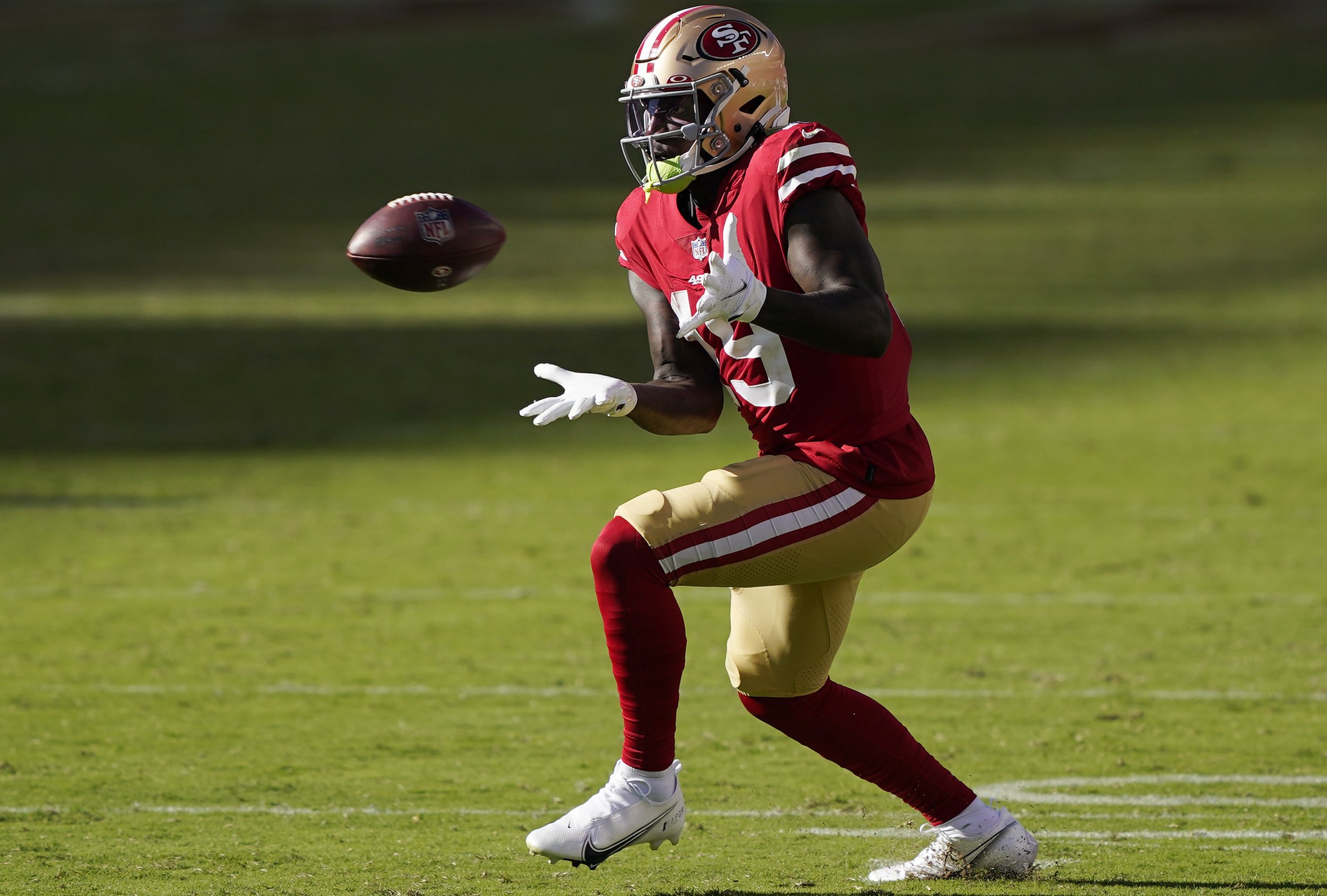
Deebo Samuel #19 of the San Francisco 49ers catches a pass against the Miami Dolphins during the second half of their NFL football game at Levi’s Stadium on October 11, 2020 in Santa Clara, California. Miami won the game 43-17.
With the franchise tag deadline having passed on Tuesday, March 3, teams have locked in or released key players, paving the way for one of the most anticipated offseasons in recent memory. Analysts describe the 2026 free agent class as deep rather than top-heavy, offering value at multiple positions despite lacking superstar headliners.
The legal tampering period, often mislabeled as “tampering” but fully permitted under NFL rules, allows clubs to contact and negotiate with certified agents of impending unrestricted free agents. No contracts can be executed until the official start on March 11, but reports of agreements flood in almost immediately after noon on March 9. This window typically sees the biggest names decide their futures within hours, reshaping contenders and rebuilding teams alike.
Key dates leading up to and during free agency include:
– March 9 (noon ET) to March 11 (3:59 p.m. ET): Legal negotiation window opens. Teams can discuss terms, but signings remain unofficial.
Advertisement
– March 11 (4 p.m. ET): 2026 league year begins. Free agency signing period starts, trades become official, and all 2025 contracts expire.
The NFL’s official operations calendar confirms these timelines, with the league emphasizing that no prospective unrestricted free agent may sign until the 4 p.m. ET mark on March 11. Trading windows also activate at that time.
This year’s market features intriguing names across positions. Quarterback options include backups and veterans like Malik Willis (Packers), Daniel Jones (Colts) and even Aaron Rodgers (Steelers), though many teams prioritize stability through extensions or drafts. Running back Kenneth Walker III (Seahawks) headlines the position after a strong season, with reports indicating Seattle is unlikely to tag him again. Wide receiver Mike Evans, fresh off announcing his intent to play in 2026 and explore free agency after a storied tenure in Tampa Bay, draws significant interest.
Defensive standouts include edge rusher Trey Hendrickson (Bengals), projected for a high-value deal in tiered analyses from ESPN’s Field Yates and others. Interior offensive line help abounds, offering sensible fits for teams like the Detroit Lions seeking upgrades.
Advertisement
Analysts note the class lacks elite options at some spots but provides capable starters and depth. ESPN’s Dan Graziano tiered defensive free agents into six categories, highlighting a solid group of edge rushers, linebackers and secondary pieces. NFL Network’s Gregg Rosenthal ranked the top 101 available players, calling the group “incredibly deep” despite consensus views of it being weaker at the top.
Several teams face tough decisions or potential losses. The reigning Super Bowl champion Seattle Seahawks could be hit hard, with Walker and other contributors testing the market. Other squads bracing for departures include those with aging rosters or cap constraints.
Projections abound for where top talents might land. ESPN’s latest piece matched one free agent signing to each of the 32 teams, suggesting realistic fits like Evans to the Buffalo Bills or tight end Isaiah Likely elsewhere. Trades are also in play, with analysts proposing moves involving notable names to address needs pre-free agency.
Cap space remains a critical factor. Teams with room to maneuver — often those who cleared dead money or restructured deals — are poised to be aggressive. The salary cap continues its upward trajectory, giving franchises flexibility to absorb big contracts.
Advertisement
The combine buzz from late February carried over, with intel on free agent markets, trade talks and quarterback landscapes influencing early decisions. Some players sought deals post-combine, while others waited for the tag deadline.
As March 9 approaches, expect a surge in rumors, reported agreements and instant analysis. The period from March 9-11 often defines the offseason’s direction, with headlines declaring winners and losers before a single official signature.
Free agency remains one of the NFL’s most exciting periods, blending strategy, player empowerment and team-building drama. While the draft in late April garners attention, the moves made in early March frequently prove pivotal to 2026 success.
Fans and analysts will watch closely as the league year flips on March 11, turning speculation into reality and setting the stage for another competitive season.
Technology has become an inseparable part of modern society, influencing every aspect of our lives. From communication and healthcare to business and entertainment, technology’s rapid evolution has revolutionized the way we interact, work, and perceive the world.]
In this article, we explore the multifaceted world of technology, its impact on various sectors, and the trends that are shaping its future.
The Technological Revolution
The 21st century has witnessed an unprecedented technological revolution, driven by breakthroughs in fields such as artificial intelligence, robotics, biotechnology, and the Internet of Things (IoT). These advancements have transformed the way we live and opened up new possibilities for innovation and human progress.
Impact on Communication and Connectivity
One of the most visible effects of technology is the transformation of communication. The rise of smartphones and social media platforms has connected people across the globe, enabling real-time communication and the sharing of information. Video conferencing, messaging apps, and social networks have revolutionized how we interact with friends, family, and colleagues.
Revolutionizing Industries Through Automation
Automation powered by technology has reshaped industries by streamlining processes, increasing efficiency, and reducing human error. Manufacturing, for instance, has embraced robotics and automation to improve production speed and precision. Similarly, the finance sector has leveraged fintech innovations for online banking, digital payments, and automated investment platforms.
has also left a profound impact on healthcare, leading to improved diagnostics, treatments, and patient outcomes. Telemedicine has enabled remote consultations, wearable health devices provide real-time data, and AI-powered algorithms assist in disease detection. The convergence of healthcare and technology is unlocking personalized medicine and revolutionizing patient care.
The Digital Economy and E-Commerce
The digital economy has spawned new opportunities for businesses through e-commerce, digital marketing, and online platforms. Companies like Amazon, Alibaba, and Netflix have capitalized on technological advancements to transform their industries and redefine consumer expectations. E-commerce has not only changed the way we shop but has also altered supply chain dynamics.
The Challenge of Data and Privacy
As technology permeates every facet of life, concerns about data privacy and security have come to the forefront. The collection, analysis, and use of personal data raise ethical questions and necessitate robust regulations to safeguard individual privacy. Striking a balance between technological innovation and personal privacy remains a critical challenge.
Advertisement
Emerging Trends in Technology
Artificial Intelligence (AI) and Machine Learning: AI technologies, such as natural language processing and machine learning, are enabling computers to perform tasks that typically require human intelligence. From self-driving cars to virtual assistants, AI is transforming industries and enhancing efficiency.
5G Connectivity: The rollout of 5G networks promises faster and more reliable connectivity, enabling real-time data transmission, IoT applications, and innovations in fields like autonomous vehicles and remote surgery.
Blockchain Technology: Beyond cryptocurrency, blockchain technology is finding applications in supply chain management, healthcare, and digital identity verification, offering transparency and security in data management.
Sustainable Technology: The growing concern for the environment has prompted the development of sustainable technologies, such as renewable energy sources, green infrastructure, and circular economy solutions.
Advertisement
The Human Element: Technology and Society
Amid the technological revolution, the role of humanity remains paramount. Technology is a tool that amplifies human capabilities and addresses challenges. While AI and automation can enhance productivity, they also necessitate reskilling and upskilling to ensure a workforce that is adaptable and relevant.
Conclusion
Technology has become the driving force behind societal evolution, economic growth, and global connectivity. Its influence spans from individual lives to entire industries, reshaping the way we communicate, work, and solve complex problems. As we continue to witness technological advancements, it’s essential to embrace innovation while remaining mindful of ethical considerations, privacy concerns, and the enduring need for human creativity and ingenuity in shaping technological future.
The Valkyrie Trading Society is a team of analysts sharing high conviction and obscure developed market ideas that are downside limited and likely to generate non-correlated and outsized returns in the context of the current economic environment and forces. They are long-only investors.They lead the investing group The Value Lab where they offer members a portfolio with real time updates, chat to answer questions 24/7, regular global market news reports, feedback on member stock ideas, new trades monthly, quarterly earnings write-ups, and daily macro opinions.
Analyst’s Disclosure: I/we have no stock, option or similar derivative position in any of the companies mentioned, and no plans to initiate any such positions within the next 72 hours. I wrote this article myself, and it expresses my own opinions. I am not receiving compensation for it (other than from Seeking Alpha). I have no business relationship with any company whose stock is mentioned in this article.
Seeking Alpha’s Disclosure: Past performance is no guarantee of future results. No recommendation or advice is being given as to whether any investment is suitable for a particular investor. Any views or opinions expressed above may not reflect those of Seeking Alpha as a whole. Seeking Alpha is not a licensed securities dealer, broker or US investment adviser or investment bank. Our analysts are third party authors that include both professional investors and individual investors who may not be licensed or certified by any institute or regulatory body.
Exor N.V. (EXXRF) Q4 2025 Earnings Call March 24, 2026 11:00 AM EDT
Company Participants
John Elkann – CEO & Director Benoit Ribadeau-Dumas Suzanne Heywood – Chief Operating Officer Guido de Boer – Chief Financial Officer
Conference Call Participants
Advertisement
Monica Bosio – Intesa Sanpaolo Equity Research Martino De Ambroggi – Equita SIM S.p.A., Research Division Luuk Van Beek – Banque Degroof Petercam S.A., Research Division Alberto Villa – Intermonte SIM S.p.A., Research Division Andrea Balloni – Mediobanca – Banca di credito finanziario S.p.A., Research Division
Presentation
Operator
Advertisement
Ladies and gentlemen, good afternoon. Welcome, and thank you for joining the Exor Investor and Analyst Call. Please note that the presentation is available to download on Exor website www.exor.com under the Investors and Media, Events & Presentations section.
Any forward-looking statements Exor management makes are covered by the safe harbor statement included in the presentation material. Please note that this conference is being recorded. [Operator Instructions].
At this time, I would like to turn the conference over to your host, CEO, John Elkann. Please go ahead.
Advertisement
John Elkann CEO & Director
Good morning, good afternoon and good evening to all of you. Thank you for being here today with us. 2025 was a difficult year in many different ways for Exor and for our companies. But it also has been a year that has helped us be more focused and be more resilient, which enables us as a company to be better prepared for another difficult year, which will be 2026.
Today, we want to talk to you about our companies. We have less of them and we have more in health care. We want to speak to you about Lingotto who has reached a very important milestone in ’25, reaching EUR 10 billion of assets under management driven by performance, which is exactly in line with our intentions of building an investment
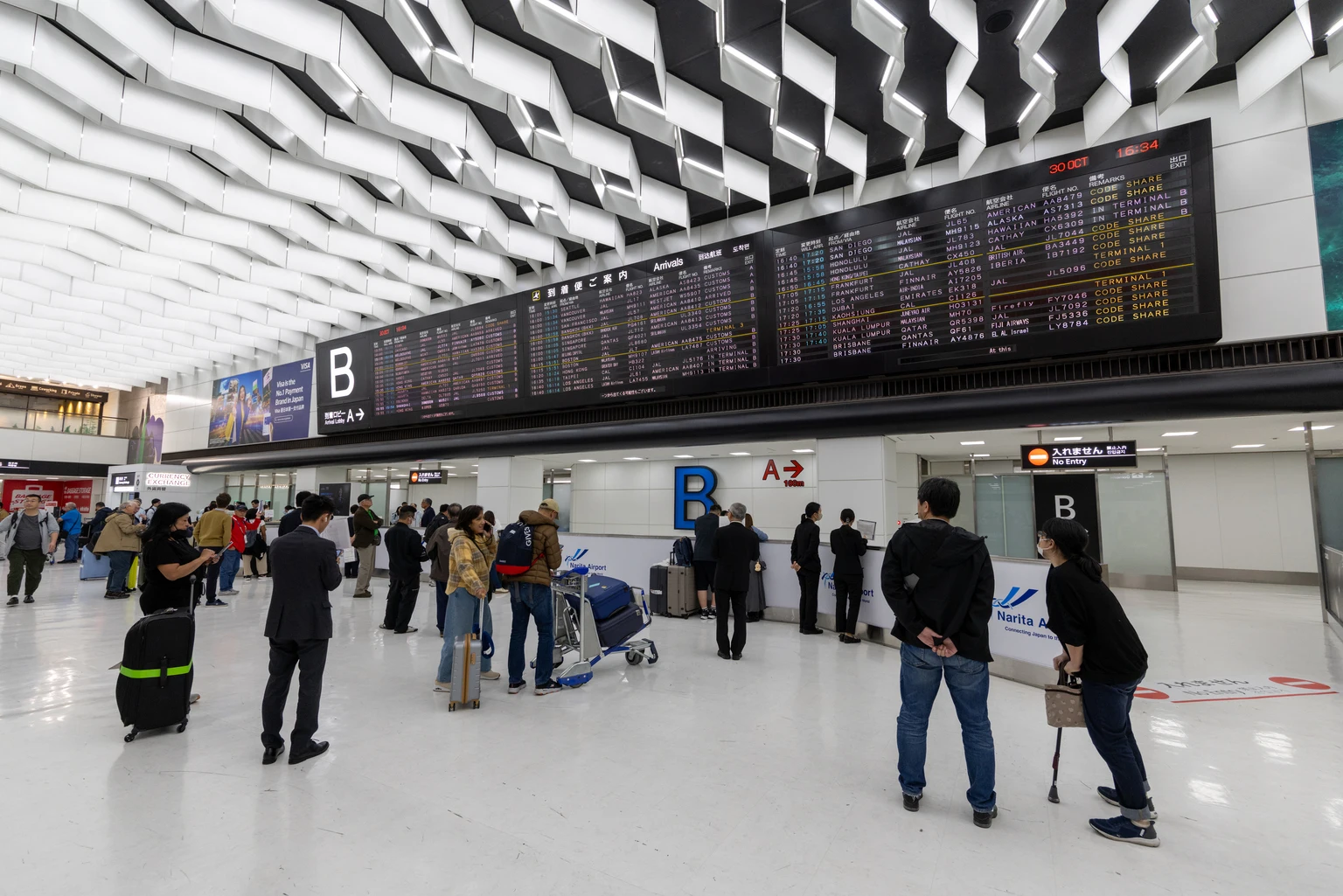
Chinese oil major Sinopec600028 -1.66%decrease; red down pointing triangle struck a cautious tone during a post-earnings briefing, saying it has enough inventory to maintain stable production and multiple contingency plans in place as the conflict in the Middle East stokes worries about countries running out of fuel.
However, it said that a prolonged conflict would pose more severe challenges.
Diesel standards have been lowered to help suppliers bring more fuel into the domestic market as hundreds of service stations across the country run dry, including six in WA.
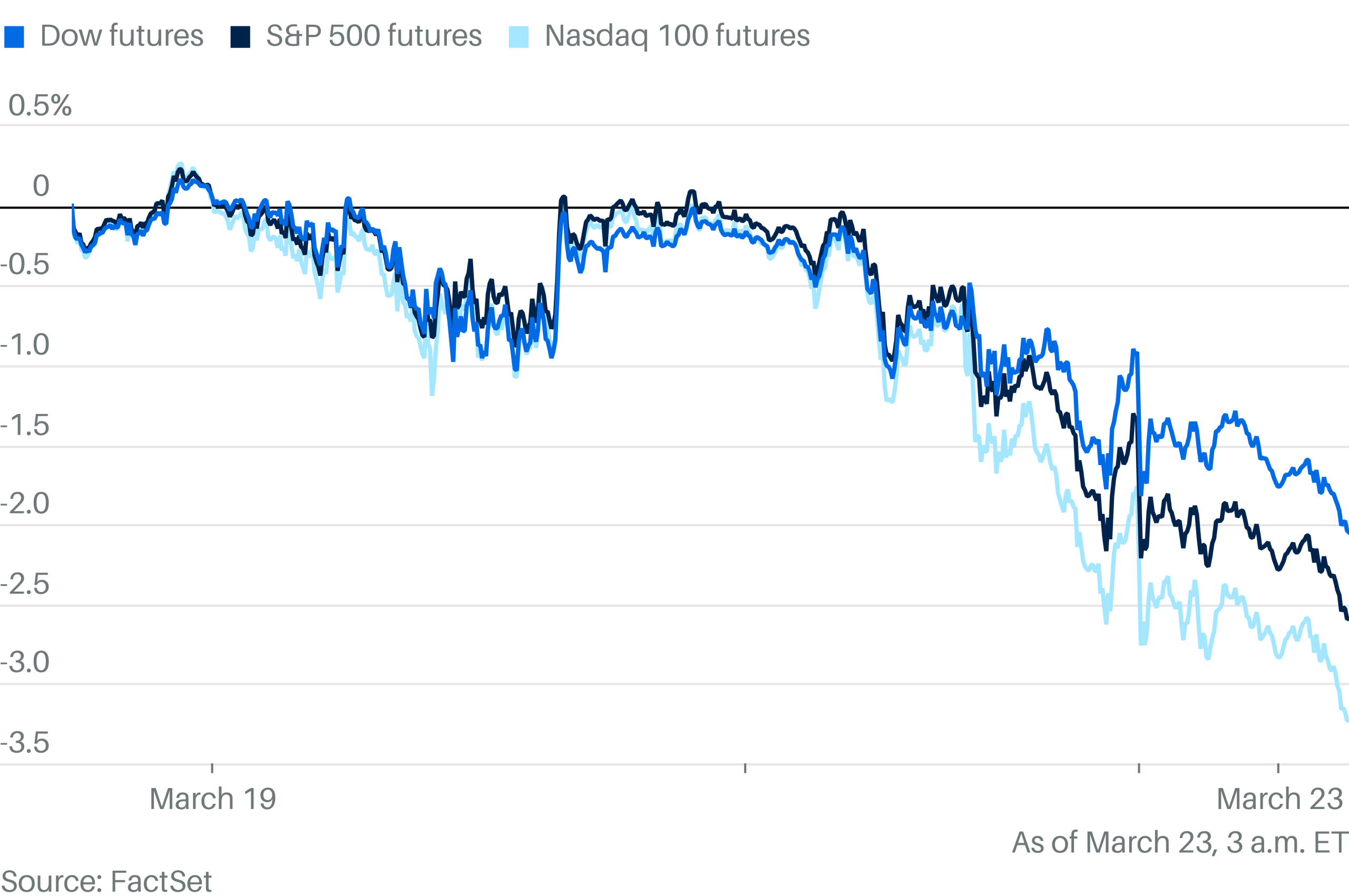
Stocks are nearing their first correction in about a year as the Iran war drives up oil prices and sparks worries about a resurgence in inflation.
Futures tracking the Dow Jones Industrial Average fell 235 points, or 0.5%, on Monday. S&P 500 futures were 0.6% lower and contracts tied to the tech-heavy Nasdaq 100 tumbled 0.7%.
The three major indexes have tumbled for four weeks in a row, putting them on the brink of closing in correction territory. A correction is when an index falls 10% from its recent high.
The Los Angeles Dodgers have finalized their starting rotation plans for the beginning of the 2026 season, naming Yoshinobu Yamamoto as the Opening Day starter and confirming that Japanese right-hander Roki Sasaki will open the year in the rotation despite a rocky spring training.
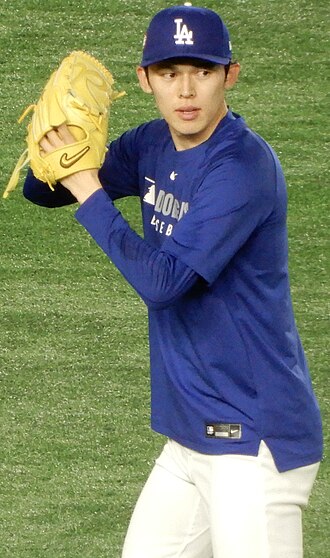
Roki Sasaki
Manager Dave Roberts revealed the group’s composition Tuesday, listing Yamamoto, Tyler Glasnow, Sasaki, Emmet Sheehan and two-way star Shohei Ohtani as the primary starters to begin the campaign. Justin Wrobleski is expected to provide piggyback relief or long outings early on as the club eases its high-upside arms back into game action following the shortened spring.
The Dodgers, fresh off a 2025 World Series title, will host the Arizona Diamondbacks in their home opener Thursday, March 26, at Dodger Stadium. Yamamoto, who earned World Series MVP honors last October, gets the ball first against Arizona ace Zac Gallen in what promises to be a marquee matchup.
Roberts indicated the initial order will likely feature Yamamoto on Opening Day, followed by Glasnow, Sasaki, Sheehan and Ohtani in some sequence across the first week. Ohtani is slated to make his first start of the season March 31 against the Cleveland Guardians. The club plans to lean on a five-man rotation initially but has the depth to shift to six once Blake Snell and others return from injuries.
Sasaki’s inclusion comes with caveats. The 24-year-old right-hander, who signed with the Dodgers before the 2025 season after dominating in Japan’s Nippon Professional Baseball, has struggled with command and mechanics this spring. He posted concerning results in Cactus League outings, including control issues that led the team to adjust his buildup with backfield “B” games and simulated innings.
Advertisement
Despite the uneven performances, Roberts has remained steadfast.
“He’s going to be one of our starters” to open the season, Roberts said this week, emphasizing that spring training stats alone do not define readiness. The manager pointed to Sasaki’s talent, work ethic and the organization’s belief that his performance will trend upward once the regular season begins.
Sasaki flashed elite stuff in limited 2025 action, touching triple digits with his fastball and deploying a devastating splitter. He began last year in the rotation but shifted to the bullpen late in the season, where he excelled as a high-leverage reliever and even served as a closer option during the postseason. His October contributions helped the Dodgers claim their championship.
Advertisement
General Manager Brandon Gomes and President of Baseball Operations Andrew Friedman have consistently viewed Sasaki as a starter long-term, citing his two-pitch dominance in Japan and potential to develop further with better execution and health.
“He’s feeling awesome physically,” Gomes said earlier this offseason. The club has worked with Sasaki on refining his cutter and two-seam fastball to complement his heater-splitter arsenal, aiming to give him more weapons against big-league lineups the third time through the order.
Fan frustration has surfaced at times. Reports and social media clips from spring games captured moments where Sasaki heard boos from Dodger Stadium crowds after shaky outings, echoing occasional heckling he faced on the road last season. In one memorable 2025 postseason exchange against the Philadelphia Phillies, Sasaki shrugged off boos by noting through an interpreter that he doesn’t understand English well enough to be bothered — a response that quickly became a fan favorite for its unflappable cool.
Those moments highlight the high expectations placed on the young international star in a star-studded clubhouse. Sasaki himself has spoken about embracing competition during DodgerFest events, acknowledging the depth of the rotation and the need to earn his spot daily.
Advertisement
The broader rotation picture remains formidable even with injuries. Snell, a former Cy Young winner, is targeting a late-May return from a shoulder issue. Gavin Stone is also sidelined. That leaves Yamamoto — already compared to Sandy Koufax for his early Dodgers dominance — Glasnow, who looked sharp in his final spring start with 11 strikeouts over five innings, Ohtani, Sheehan and Sasaki to carry the load.
Ohtani’s dual role adds unique flexibility. The two-time MVP and reigning American League MVP will continue hitting every day while making starts roughly every six days, a workload the Dodgers have carefully managed.
Depth arms such as River Ryan, who is returning from surgery, and others on the 40-man roster provide insurance. Roberts noted the club could “piggyback” starters early to control innings and protect arms, a common strategy for teams with elite but sometimes fragile pitching.
Analysts project the Dodgers’ staff to rank among the majors’ best if health cooperates. Yamamoto and Glasnow form a potent 1-2 punch, while Ohtani’s starts carry historic weight. Sheehan earned his rotation spot with strong spring and minor-league track record. Sasaki represents the wildcard — immense upside tempered by the need for consistency.
Advertisement
Spring training statistics for Sasaki showed elevated walk rates and difficulty locating his pitches, prompting mechanical tweaks. Roberts has downplayed the results, saying the organization is “betting on the talent” and expecting improvement with regular-season adrenaline and refined routines.
The Dodgers open the season with a favorable homestand against the Diamondbacks and Guardians before heading on the road. Early off-days in the schedule allow for the piggyback approach without immediately taxing the bullpen.
Longer term, the club hopes to settle into a six-man rotation once Snell returns, giving everyone extra rest in a marathon 162-game season. That setup could maximize the rotation’s talent while minimizing injury risk for pitchers like Glasnow, who has a history of durability questions.
Sasaki’s journey from Japanese phenom to MLB starter has drawn global attention. Signed under international bonus pool rules for a relatively modest $6.5 million, he quickly became one of the most discussed young arms in baseball. His 2025 rookie season was a tale of two halves: promise as a starter followed by dominance in relief.
Advertisement
Now, with a full offseason of adjustments under his belt, Sasaki aims to prove he belongs at the front of a championship rotation. Teammates and coaches have praised his work ethic and positive attitude amid the scrutiny.
“He’s excited about returning to the rotation,” Sasaki said through an interpreter at fan events. “It’s the team’s decision, but I have to secure my position.”
Off the field, the Dodgers’ pitching depth has fueled ongoing debates about competitive balance in Major League Baseball. The club’s ability to attract top talent, including multiple Japanese stars in Yamamoto, Sasaki and others, has drawn both admiration and criticism from rival front offices.
For now, focus remains on execution. Roberts and his staff will monitor Sasaki closely in the first few turns through the rotation. If command issues persist, the club has options to shift him to shorter outings or the bullpen temporarily, though the stated preference is to develop him as a starter.
Advertisement
The 2026 Dodgers enter the season as heavy favorites in the National League West and among the top World Series contenders once again. Their rotation — anchored by proven aces and high-ceiling young arms — will be central to those aspirations.
Whether Sasaki can silence doubters and translate his raw stuff into consistent outings remains one of the most compelling storylines as the defending champions begin their title defense.
Fans at Dodger Stadium will get their first extended look Thursday when Yamamoto takes the mound, with the rest of the rotation following in quick succession. For Sasaki, the boos of spring could turn to cheers if he delivers on the promise that made him a coveted international signing.




















































You must be logged in to post a comment Login