
Business
KOSPI Surges 2.81% as Falling Oil Prices and the Fed’s Rate Hike Ease Persistent Global Inflation Worries

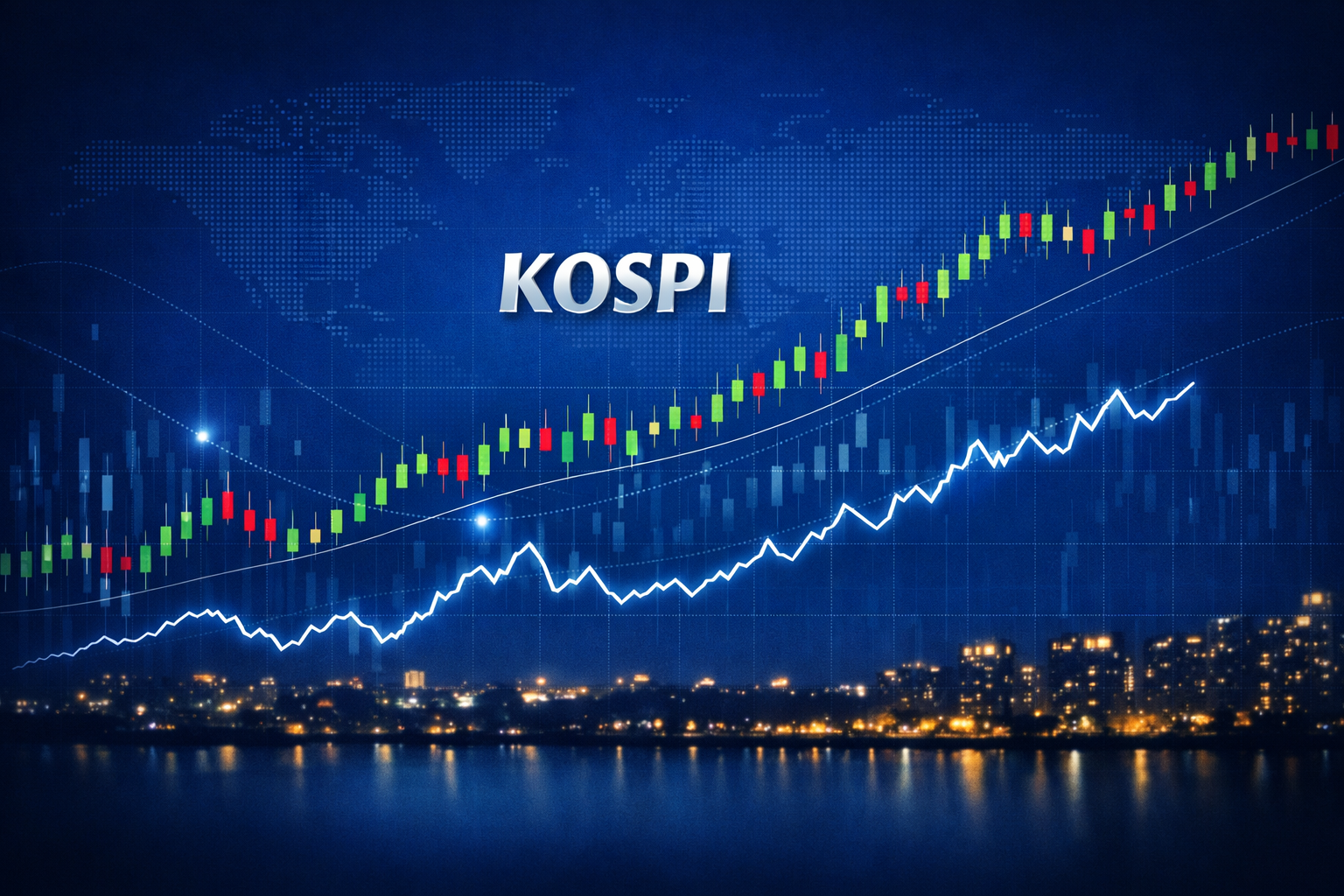
SEOUL — South Korea’s benchmark KOSPI index surged 2.81% to 6,903.94 by mid-afternoon Friday, adding 188.53 points, as falling global oil prices and a widely anticipated interest rate increase from the U.S. Federal Reserve combined to ease inflation worries that had rattled markets throughout the week.
The rally built on strength that was evident from the opening bell. The index opened at 6,885.70, up 170.29 points, or 2.54%, from the previous close, and continued climbing through the morning session, touching 6,870.45 by 9:02 a.m. local time before extending further gains into the afternoon. The advance marked one of the KOSPI’s strongest single-day performances in recent weeks, offering a sharp reversal from a volatile stretch that had seen the index swing between steep losses and partial recoveries over the preceding four trading sessions.
Friday’s gains tracked a broadly positive overnight session on Wall Street. U.S. stocks closed higher after falling oil prices and easing pressure in the bond market lifted investor sentiment, with the S&P 500 adding 1.14% and the technology-heavy Nasdaq Composite climbing 1.69%. That rally followed confirmation that the Federal Reserve had raised interest rates as widely expected, an outcome that removed a significant source of uncertainty that had weighed on global markets throughout the week. Combined with a pullback in crude oil prices, which had surged in recent sessions amid escalating tensions in the Middle East, the resolution of both the rate decision and the energy price pressure gave investors reason to step back into riskier assets.
Within the KOSPI, gains were broad-based across sectors, though technology and industrial shares led the advance. The electric and electronics sector climbed 3.29%, the single strongest-performing group in Friday’s session, followed by manufacturing shares, up 2.66%. Construction stocks rose 1.77%, securities firms gained 1.13%, and machinery and equipment makers advanced 1.05%, rounding out a session in which nearly every major sector participated in the rally.
Trading activity showed a notable divergence between different categories of investors. Individual retail investors were net sellers during the session, offloading a net 174.1 billion won worth of shares, while foreign investors also recorded modest net selling of 16 billion won. Institutional investors, by contrast, were the primary buyers driving the rally, recording net purchases of 111.2 billion won, suggesting large domestic institutions moved more aggressively to capitalize on the improved macroeconomic backdrop than either retail or foreign participants during Friday’s session specifically.
Friday’s rebound caps an unusually turbulent week for South Korean equities. The KOSPI tumbled 3.26% on Monday amid a combination of surging oil prices, rising U.S. Treasury yields and renewed doubts about the pace of global artificial intelligence infrastructure spending, before slipping a further 0.85% on Tuesday. The index staged a partial recovery Wednesday, adding 1.37% as chipmakers Samsung Electronics and SK Hynix clawed back some lost ground, before Friday’s sharper rally pushed the benchmark decisively higher for the week overall.
The broader bullish case for South Korean equities has remained intact even amid the recent volatility. Goldman Sachs Research has identified the Korean stock market as its highest-conviction regional pick in Asia, citing a projected 300% surge in 2026 corporate earnings, which the firm’s analysts describe as the strongest annual profit expansion in any major Asian market since the region’s recovery from the 1999 Asian financial crisis. Central to that bullish outlook is what Goldman Sachs has called a memory chip supercycle, driven by record shortfalls in memory chip supply, surging demand from hyperscale cloud computing providers, and the broader global buildout of artificial intelligence computing infrastructure. Timothy Moe, the firm’s chief Asia Pacific regional equity strategist, has said Korea represents the firm’s “highest-conviction view” within the region, and Goldman has set a KOSPI target of 9,000, implying substantial further upside from Friday’s levels even after the index’s sharp gains so far this year.
The KOSPI’s performance over the past year illustrates both the scale of that opportunity and the volatility that has accompanied it. The index touched an intraday record high of 9,385.59 in June before retreating sharply in the weeks since, with its 52-week trading range spanning from a low of 3,365.73 to that June peak, according to data compiled by Investing.com. Friday’s close of 6,903.94, while representing a strong single-day gain, still sits well below the index’s record high, underscoring how much ground South Korean equities have given back since the market’s peak earlier in the year even as the underlying earnings and semiconductor demand story that originally drove the rally has, according to Goldman Sachs and other bullish analysts, remained largely intact.
With Friday’s session bringing some measure of resolution to the twin sources of pressure that dominated trading earlier in the week, the Fed’s rate decision and surging oil prices, investors are likely to turn their attention next to whether South Korea’s underlying semiconductor and technology earnings growth can reassert itself as the primary driver of the market’s direction heading into the final months of the year, following one of the more volatile stretches the KOSPI has experienced in recent months.


Sandy Klugman
Hello, everyone, and welcome to Ashland Innovation Day 2026. My name is Sandy Klugman, and I’m Ashland’s Director of Investor Relations. Today, you will hear from leaders across Ashland, including business executives and technology experts, who will discuss how our innovation pipeline is creating differentiated commercial opportunities that drive long-term growth and value creation.
Please note that we will be referencing slides during today’s webinar, and we encourage you to follow along with the webcast material available at ashland.com, under Investor Relations. As a reminder, I wanted to caution listeners that during this call, the company’s management will be making forward-looking statements.
Actual results could differ materially from those stated or implied by our forward-looking statements due to risks and uncertainties associated with the company’s business. These forward-looking statements are qualified in their entirety by the cautionary statements contained in today’s investor presentation and Ashland’s SEC filings, including the quarterly report on Form 10-Q. Please review the safe harbor statements and the disclosure regarding our use of non-GAAP financial measures included in those materials.
And with that, I’ll turn it over to Guillermo Novo, Ashland Chair and CEO.
Guillermo Novo
Chairman & CEO
Welcome, everyone. It’s a pleasure to be here today. Welcome to our Third Innovation Day update. It’s a pleasure to host you today. As you’ve heard in prior events, Ashland has made innovation a strategic priority to drive differentiation and

CoreWeave prices $3.7 billion convertible notes offering
Check out what’s clicking on FoxBusiness.com.
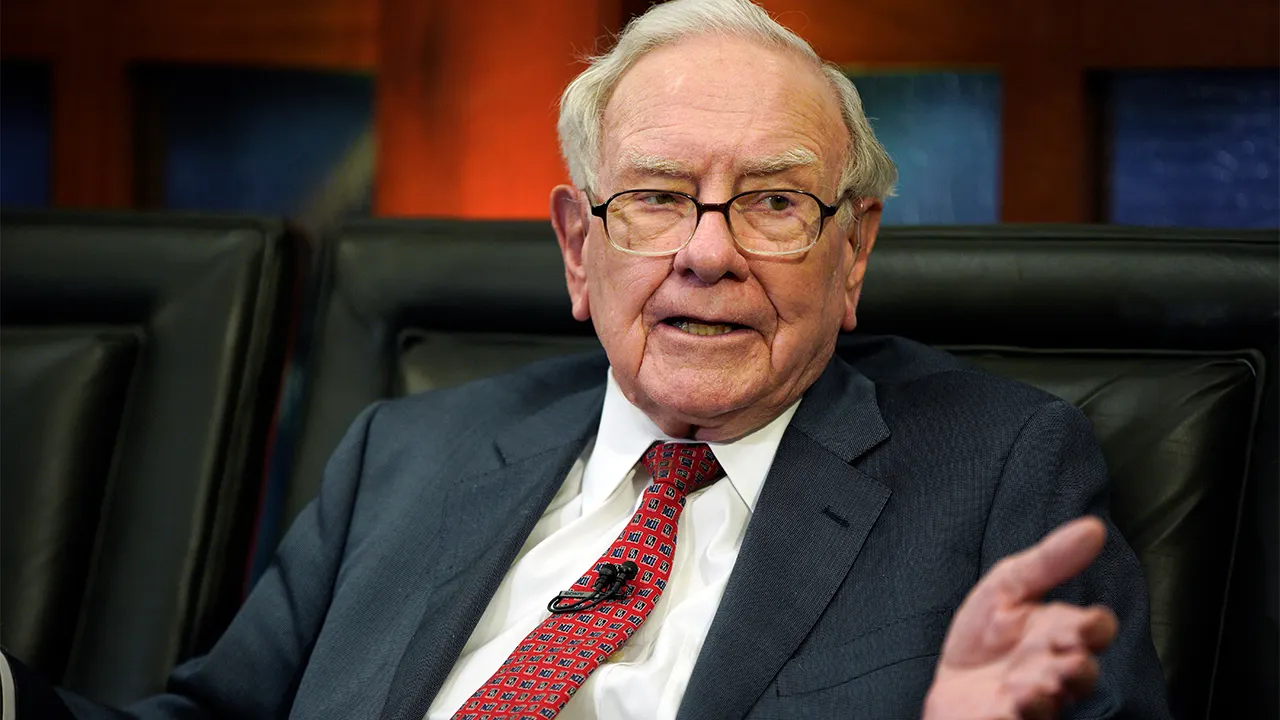
Legendary investor Warren Buffett is stepping down as chairman of Berkshire Hathaway, the company said on Friday.
“Serving as your Chairman has been the privilege of a lifetime, and I have never taken your trust for granted,” Buffett, who was named chairman emeritus, said in a letter to shareholders. “Father Time always wins. He has, however, been generous with me. He has given me the opportunity to see Berkshire reach a point where I am more confident than ever about what lies ahead.”
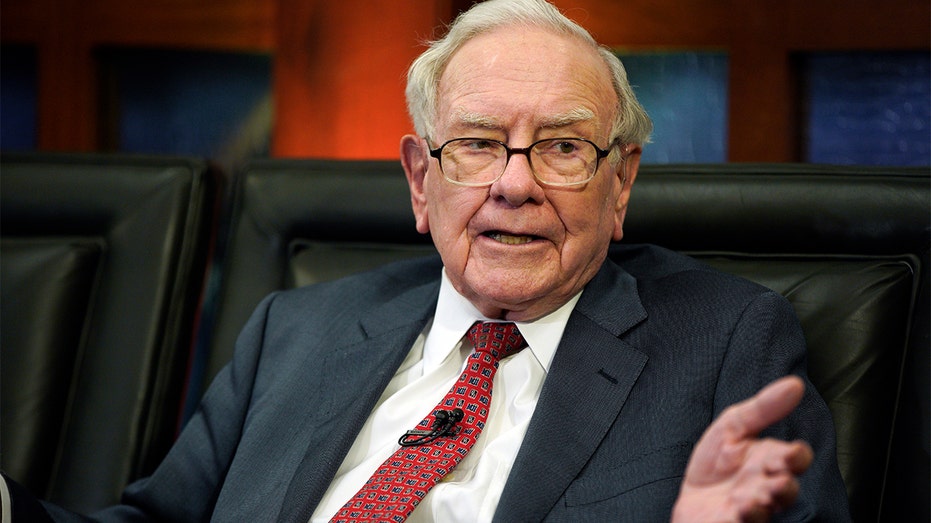
Berkshire Hathaway CEO Warren Buffett speaks during an interview on FOX Business Network. (FOX Business Network)
Buffett’s son, Howard Buffett, will become chairman of the board, effective immediately. He has been a Berkshire director since 1993.
“Howard will guard its culture and values – both worth more than anything on our balance sheet,” Buffett said. “Think of Howard as a policy the shareholders own and hope never to claim against.”
Buffett started his career at Berkshire in 1965 and stepped down as CEO earlier this year. He was succeeded by Greg Abel, who was the vice chairman of non-insurance operations.

Warren Buffett started his career at Berkshire in 1965. (Daniel Zuchnik/WireImage)
“Warren’s impact on Berkshire and its owners is without parallel in the history of American business,” Abel said in a statement. “The culture Warren built and the values he championed will remain at the heart of Berkshire, and Howard will be their guardian.”
Known for his long-term strategy and focus on buying high-quality businesses at reasonable prices, Buffett delivered steady gains that outpaced broader markets, making him a trusted steward of capital.
Reuters contributed to this report.


TQP Research is run by a Certified Public Accountant (CPA) with several years of experience in structured finance and banking. TQP Research follows a value-oriented investment approach by identifying businesses that meet the criteria for long-term success taught by Warren Buffett, Charlie Munger, and Walter Schloss, to name a few. Investment topics will primarily include: Market analysis and macroeconomic trends, large-cap blue chip companies, deeply undervalued micro-cap and small-cap stocks that most institutional investors will avoid, and technology and market news. TQP Research enjoys actively engaging with members of the community. Please feel free to reach out with any questions or ideas!
Analyst’s Disclosure: I/we have no stock, option or similar derivative position in any of the companies mentioned, and no plans to initiate any such positions within the next 72 hours. I wrote this article myself, and it expresses my own opinions. I am not receiving compensation for it (other than from Seeking Alpha). I have no business relationship with any company whose stock is mentioned in this article.
Seeking Alpha’s Disclosure: Past performance is no guarantee of future results. No recommendation or advice is being given as to whether any investment is suitable for a particular investor. Any views or opinions expressed above may not reflect those of Seeking Alpha as a whole. Seeking Alpha is not a licensed securities dealer, broker or US investment adviser or investment bank. Our analysts are third party authors that include both professional investors and individual investors who may not be licensed or certified by any institute or regulatory body.

Barclays backs November BoE hike, warns Middle East conflict could spur more


Apart from my academic training in Biology and Chemistry, I hold a Ph.D. in Environmental Science with a specialization in Bio-Medical Waste Management. My areas of research and analysis include clean technologies, renewable energy, pollution control systems, and environmental compliance solutions. I follow companies operating in these sectors using a research-driven approach that integrates regulatory trends, sustainability metrics, and scientific evaluation to assess long-term growth opportunities, risks, and value potential. By actively tracking and analyzing companies engaged in environmental management, renewable energy, and green technologies, my work aims to blend scientific depth with market analysis to provide practical insights that help investors understand financial outcomes and emerging opportunities. At a personal level, I also provide free stock market consultation to a select group of friends, relatives, and former colleagues. I am associated with Seeking Alpha analyst Eudaemon Research.
Analyst’s Disclosure: I/we have no stock, option or similar derivative position in any of the companies mentioned, and no plans to initiate any such positions within the next 72 hours. I wrote this article myself, and it expresses my own opinions. I am not receiving compensation for it (other than from Seeking Alpha). I have no business relationship with any company whose stock is mentioned in this article.
Seeking Alpha’s Disclosure: Past performance is no guarantee of future results. No recommendation or advice is being given as to whether any investment is suitable for a particular investor. Any views or opinions expressed above may not reflect those of Seeking Alpha as a whole. Seeking Alpha is not a licensed securities dealer, broker or US investment adviser or investment bank. Our analysts are third party authors that include both professional investors and individual investors who may not be licensed or certified by any institute or regulatory body.

ClearBridge Growth Portfolios Q2 2026 Commentary

Keeley Knowles ran a Whatsapp group with about 200 people asking her to steal specific designer items.

EWY: The Bubble Faded, But Korea Still Needs New Buyers

According to the Zillow lender marketplace, mortgage rates are mostly higher following the first Fed rate increase in three years.
The average 30-year fixed rate today, Friday, September 18, 2026, is 7.05%, up 4 basis points since yesterday. The 15-year fixed loan is currently at 6.43%, 1 basis point lower than yesterday. The 5/1 ARM is 7.16%, up 6 basis points from Thursday.
Read more: Weekly survey of mortgage lenders with the lowest rates: Breaking the 7% barrier
Current mortgage rates
Here are the current purchase rates, according to the latest Zillow data, for Friday, September 18, 2026:
-
30-year fixed: 7.05%
-
20-year fixed: 6.92%
-
15-year fixed: 6.43%
-
5/1 ARM: 7.14%
-
7/1 ARM: 6.66%
-
30-year VA: 6.46%
-
15-year VA: 6.00%
-
5/1 VA: 6.34%
Remember, these are national averages and have been rounded to the nearest hundredth.
Current mortgage refinance rates
These are the latest refinance rates, according to the latest Zillow data, for Friday, September 18, 2026:
-
30-year fixed: 7.07%
-
20-year fixed: 6.96%
-
15-year fixed: 6.46%
-
5/1 ARM: 7.13%
-
7/1 ARM: 6.70%
-
30-year VA: 6.64%
-
15-year VA: 6.73%
-
5/1 VA: 5.86%
Again, the numbers provided are national averages rounded to the nearest hundredth. Mortgage refinance rates are often higher than rates when you buy a house, although that’s not always the case.
Learn more: Dig deeper into the 7 home refinance options
Free mortgage calculator
Your mortgage rate plays a large role in how much your monthly payment will be. Use this mortgage calculator to see how your mortgage amount, rate, and term length will impact your monthly payments:
This embedded content is not available in your region.
You can bookmark the Yahoo Finance mortgage payment calculator and keep it handy for future use, as you shop for homes and the best mortgage lenders.
How mortgage interest rates work
A mortgage interest rate is a fee for borrowing money from your lender, expressed as a percentage. You can choose from two types of rates: fixed or adjustable.
A fixed-rate mortgage locks in your rate for the entire life of your loan. For example, if you obtain a 30-year mortgage with a 6% interest rate, your rate will remain at 6% for the entire 30-year term unless you refinance or sell.
An adjustable-rate mortgage locks in your rate for a predetermined period and then adjusts it periodically. Let’s say you get a 7/1 ARM with an introductory rate of 6%. Your rate would be 6% for the first seven years, then the rate would increase or decrease once per year for the last 23 years of your term. Whether your rate goes up or down depends on several factors, such as the economy and housing market.
At the beginning of your mortgage term, most of your monthly payment goes toward interest. Your monthly payment toward mortgage principal and interest stays the same throughout the years. However, less and less of your payment goes toward interest, and more goes toward the mortgage principal or the amount you originally borrowed.
Read more: Determine whether an adjustable-rate vs. fixed-rate mortgage is better for you
Which mortgage term length should you get?
A 30-year fixed-rate mortgage is a good choice if you want a lower mortgage payment and the predictability that comes with having a fixed rate. Just know that your rate will be higher than if you choose a shorter term, and you will pay significantly more in interest over the years.
You may want to consider a 15-year fixed-rate mortgage if you aim to pay off your home loan quickly and save money on interest. These shorter terms come with lower interest rates, and since you’re cutting your repayment time in half, you’ll save a lot in interest in the long run. But you’ll need to be sure you can comfortably afford the higher monthly payments that come with 15-year terms.
Read more: Learn how to decide between a 15-year and 30-year fixed-rate mortgage
Typically, an adjustable-rate mortgage might be suitable if you plan to sell before the introductory rate period ends. Adjustable rates usually start lower than fixed rates, and then your rate will change after a predetermined amount of time. However, 5/1 and 7/1 ARM rates have been similar to (or even higher than) 30-year fixed rates recently. Before getting an ARM just for a lower rate, compare your rate options from term to term and lender to lender.
Are mortgage rates decreasing?
Rates are rising for the most part. The average 30-year fixed rate today, Friday, September 18, 2026, is 7.05%, up 4 basis points since yesterday. The 15-year fixed loan is currently at 6.43%, 1 basis point lower than yesterday. The 5/1 ARM is 7.16%, up 6 basis points from Thursday.
Mortgage interest rates today: FAQs
What are mortgage interest rates doing today?
According to Freddie Mac, the average 30-year mortgage rate was 6.95% through Wednesday, up from 6.76% a week earlier. A year ago, the average 30-year mortgage rate was 6.26%.
How low will mortgage rates go in 2026?
According to the latest forecasts, the MBA expects the 30-year mortgage rate to average between 6.6% and 6.7% through the rest of 2026. Fannie Mae predicts a 30-year rate between 6.7% and 6.8% through the end of the year.
How low could mortgage rates go by 2027?
Mortgage rates are likely to remain little changed in 2027. The MBA forecasts 30-year fixed rates of 6.7% for all of 2027. Fannie Mae is predicting average rates will be between 6.7% and 6.8% throughout 2027.

Silver prices recover quickly, hitting weekly high today

‘Subah Jalandhar, shaam nu Dilli’: Abhishek Sharma’s fiery Punjabi pep talk before 30-ball century goes viral – Watch | Cricket News

Amazon-owned Zoox’s 100-robotaxi limit in Nevada is about to disappear

Weekend Open Thread – Corporette.com

Memory prices are slowing because buyers ran out of money

Micron Stock Climbs Above $1,031 as AI Memory Crunch and a $50 Billion Outlook Fuel the Rally

The Looming Collapse Of Michael Saylor’s Bitcoin Empire (i’m sorry)

Ripple XRP: All Eyes On Sept 15th, But The Real Decision Already Happened WOW!! (NO ONE IS READY)

Think before using credit #smartpending #credicard #short #finance
-
 Fashion7 days ago
Weekend Open Thread – Corporette.com
-

 Tech5 days ago
The Latest Weird Thing to Play Doom Is the Mapped-Out Brain of a Fruit Fly
-

 Crypto World3 days ago
Kraken Lets xStocks Holders Earn Yield Through DeFi
-

 Crypto World1 day ago
US Charges Robinhood Engineers Over Crypto Listing Trades
-

 Crypto World6 days ago
Can AI Build a Startup in 72 Hours? Elon Musk's Team Will Livestream the Test
-

 News Videos7 days ago
Facing Financial Fears
-

 Crypto World4 days ago
Elon Musk Drops a Bombshell: Grok 5 Could Be the AGI Breakthrough
-

 Entertainment7 days ago
News Specials, Movies, Shows, More
-

 Business5 days ago
Rivals Sam Altman and Elon Musk Rally Behind Dario Amodei’s Call for a Slowdown in AI Development
-
 NewsBeat4 days ago
‘Sick conspiracy’: Trump says only guardrails AI needs is ‘a strong and smart (High IQ!) president’ in all-caps rant
-

 Crypto World5 days ago
New Tesla Roadster Uses SpaceX Tech. Will It Impact the Stock Price?
-

 Crypto World6 days ago
Robinhood Chain Never Stopped But its Blobs Did Stop Reaching Ethereum For 14 Minutes
-

 Crypto World2 days ago
What Is the Status of the U.S.-Iran Peace Talks? Here's What Both Sides Are Saying
-
 Entertainment6 days ago
New Horror Movie Officially Earns a Rare Stephen King Recommendation
-

 Crypto World3 days ago
NVIDIA Analysis: Attempted Rising Wedge Breakout Amid Pressure on the AI Sector
-

 Business6 days ago
Marvell: Most Potent Setup Of The AI Factory Decade
-

 Crypto World3 days ago
DOJ Seeks to Seize $61M in Iran Oil Funds From Binance Accounts It Vouched For
-

 Crypto World4 days ago
3 Token Unlocks to Watch in the Third Week of September 2026
-

 Crypto World6 days ago
Bitcoin ETFs lose $462.7M as Ethereum funds gain $196.9M
-

 Crypto World3 days ago
Revolut Attackers Warn of Ongoing Daily Customer Data Leaks
You must be logged in to post a comment Login