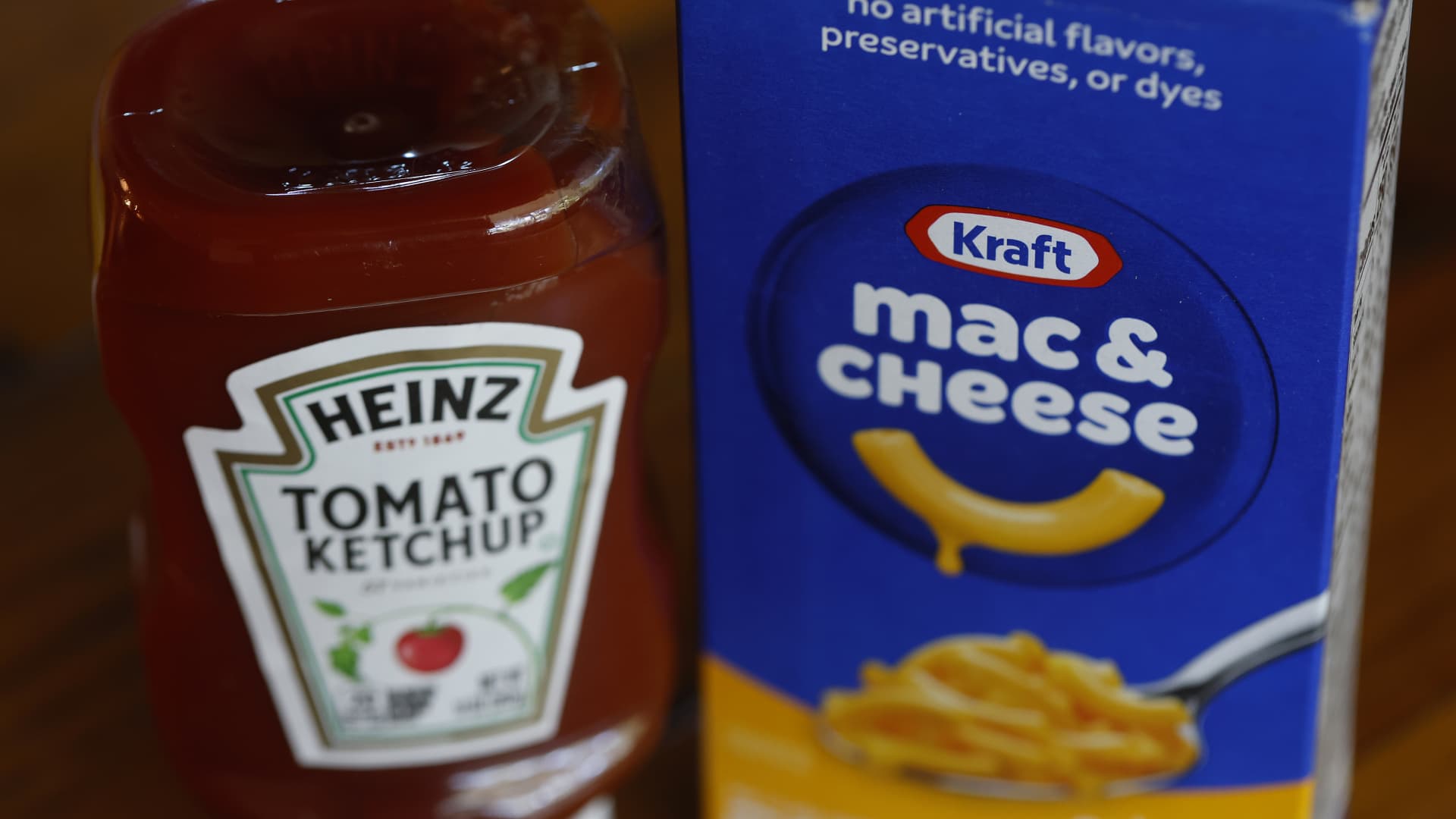
Kraft Heinz announced plans to split into two separately traded companies, reversing its 2015 megamerger, which was orchestrated by billionaire investor Warren Buffett.
As both consumers and regulators push back against ultra-processed foods, the companies that make them have been splitting up or divesting iconic brands. Last year, Unilever spun off its ice cream business into The Magnum Ice Cream Company. Kraft Heinz is preparing to break up later this year, undoing much of the merger forged more than a decade ago by Warren Buffett’s Berkshire Hathaway and private equity firm 3G Capital. And Keurig Dr Pepper is planning a similar split after it finishes its acquisition of JDE Peet’s.
In 2024, nearly half of mergers and acquisitions activity in the consumer products industry came from divestitures, according to consulting firm Bain. Over the next three years, 42% of M&A executives in the consumer products industry are preparing an asset for sale, a Bain survey found.
Of course, the trend isn’t confined to just the consumer packaged goods industry. Industrial companies like GE and Honeywell have pursued their own breakups in recent years. It’s happening too in legacy media; Comcast spun off many of its cable assets into CNBC owner Versant, while Warner Bros. Discovery is planning to spin off its cable networks later this year as Netflix acquires its streaming and studios division.
“In many of the spaces that we’re seeing this type of activity, there are many very fierce competitive pressures that are making it harder to operate,” said Emilie Feldman, a professor at The Wharton School at the University of Pennsylvania.
Advertisement
The squeeze on packaged food and beverage companies comes from lower demand, which has led to shrinking volume for many of their products. To turn around their businesses and win back investors, they are counting on dumping underperforming brands.
February will bring both quarterly earnings reports and presentations at the annual CAGNY Conference, offering investors more opportunities to hear about food executives’ plans for their portfolios. Companies to watch include Kraft Heinz, which could share more details on its upcoming split, and Nestle, which is considering selling off multiple brands in its portfolio.
Cases of Dr. Pepper are displayed at a Costco Wholesale store on April 27, 2025 in San Diego, California.
Kevin Carter | Getty Images
Advertisement
Shrinking sales
For more than a decade, consumers have been buying fewer groceries from the inner aisles of the grocery store, instead focusing on the outer aisles with fresh produce and protein. The pandemic served as the exception, as many consumers returned to the brands that they knew. However, price hikes and “shrinkflation” as life eased back to normal largely erased that shift in behavior.
More recently, regulators, emboldened by the “Make America Healthy Again” agenda espoused by Health and Human Services Secretary Robert F. Kennedy Jr., have put both more pressure and a bigger spotlight on processed foods. And the rise of GLP-1 drugs to combat diabetes and obesity have meant some of food companies’ key consumers have lost their appetite for the sweet and salty snacks that they used to eat.
As a percentage of overall spending, the consumer packaged goods industry has held onto its market share. But the biggest companies are losing customers to upstart brands or private-label products, according to Bain partner Peter Horsley.
On average, about 35% of large consumer products companies’ portfolios are in categories with more than 7% growth, Horsley said. For comparison, over half of private-label brands are in high-growth categories, like yogurt and functional beverages, and for insurgent brands, it’s even higher.
Advertisement
For Big Food, the result has been slowing — or even declining — sales, followed by stock declines. In some cases, activist investors push for companies to focus more on their core offerings and to offload so-called distractions.
“You’re seeing a lot of pressure from a valuation standpoint, especially for these publicly traded companies,” said Raj Konanahalli, partner and managing director of AlixPartners. “One way to reset expectations is to really kind of focus more on the core offerings and dispose or divest the slower, capital-intensive or non-core businesses.”
While getting bigger helped food companies develop scale, enter new markets and grow their sales, it also made their businesses much more complex, according to Konanahalli. Become too big, and it becomes too difficult to make decisions quickly or to decide how and where to invest back into the business.
To be sure, some of these divestitures and breakups follow deals that seem to have been ill-advised from the start. Look no further than the merger of Keurig Green Mountain and Dr Pepper Snapple Group in 2018, to form Keurig Dr Pepper.
Advertisement
“Frankly the surprise to us was the decision back in 2018 when Keurig Green Mountain acquired the Dr Pepper Snapple Group in an $18.7 billion deal to create Keurig Dr Pepper in the first place,” Barclays analysts Patrick Folan and Lauren Lieberman wrote in a note to clients in August when the breakup was announced. “At the time, it was seen as both odd and a very left field deal with the questionable logic of combining coffee and [carbonated soft drinks].”
(When the merger was announced in 2018, Lieberman said on a conference call with executives from both companies that she was still “scratching my head” about the logic of the deal for both players).
Shares of Keurig Dr Pepper have risen 37% since the merger. The S&P 500 has climbed 150% over the same period.
To sell or not to sell
Like many industries, the packaged food industry has gone through cycles of expansion and contraction, according to Feldman. For example, Kraft spun off a snacking business that includes Oreos into Mondelez in 2012, just three years before it merged with Heinz.
Advertisement
However, in recent years, expanding through acquisitions has required more sophisticated thinking and execution.
“If you go back to those glory years of pre-2015, the rules of the game in consumer products felt fairly simple, at least if you’re a global company,” Bain’s Horsley said. “You bought another company that was relatively similar to you. You integrated it together, you pulled out the cost synergies … and then that gave you good top-line and bottom-line growth. But the rules of the game have changed.”
Around 2015, upstarts like Chobani or BodyArmor began stealing market share from legacy brands. As a result, food giants needed to become more thoughtful about what they were acquiring and how they were managing their portfolios, according to Horsley.
For a cautionary tale, look no further than Kraft Heinz, formed by a mega-merger in 2015. Investors initially cheered the deal, but their enthusiasm waned as the combined company’s U.S. sales began lagging. Then came write-downs of many of its iconic brands, like Kraft, Oscar Mayer, Maxwell House and Velveeta, in addition to a subpoena from the Securities and Exchange Commission related to its accounting policies and internal controls.
Advertisement
With the benefit of hindsight, analysts and investors have blamed much of Kraft Heinz’s downward spiral on the brutal cost-cutting strategy imposed after the merger. The company’s leadership was too focused on slashing costs and not enough on investing back into its brands, particularly at a time when consumer tastes were changing.
Since Kraft Heinz began trading as one company, shares have tumbled 73%.
But not everyone is sold that getting rid of underperforming brands will benefit shareholders.
“If you don’t fix the underlying capability, it doesn’t matter how many brands you sell or don’t sell,” RBC Capital Markets analyst Nik Modi said. “They’re not addressing the root problem. It’s just something to make investors happy because it seems like they’re making a change.”
Advertisement
One breakup that Modi agrees with is that of Kellogg, which split into the snacks-focused Kellanova and cereal-centric WK Kellogg in 2023. Last year, chocolatier Ferrero snapped up WK Kellogg for $3.1 billion, while Mars closed its $36 billion acquisition of Kellanova.
From Modi’s perspective, the breakup created more value for shareholders than the combined business did. Kellogg’s high-growth snack business was much more viable as an acquisition target without the sluggish cereal division attached. Plus, the two strategic buyers are both privately held companies that don’t have to worry about sharing quarterly earnings with the public.
Some investors are hoping for the same outcome with Kraft Heinz.
“The view that many have had is the best way to create value is split the companies and hope that you can create a Kellanova 2.0 where both entities get acquired at some point down the line, and that’s where value creation happens,” said Peter Galbo, analyst at Bank of America Securities.
Advertisement
Kraft Heinz hired Steve Cahillane, the former CEO of Kellogg and then Kellanova, as its chief executive. Once the company separates, Cahillane will serve as chief executive of Global Taste Elevation, the placeholder name for the spinoff with high-growth brands like Heinz and Philadelphia.
Steve Cahillane, President and CEO, Kellogg Company accepts Salute To Greatness Corporate Award during 2020 Salute to Greatness Awards Gala at Hyatt Regency Atlanta on January 18, 2020 in Atlanta, Georgia.
Paras Griffin | Getty Images Entertainment | Getty Images
But acquiring either company resulting from the Kraft Heinz split would be a pretty big acquisition, making it less likely that either is snapped up, according to Galbo. And the resulting uncertainty about the value creation from the breakup is maybe why Berkshire Hathaway, the company’s largest shareholder, is preparing to exit its 27.5% stake in Kraft Heinz.
Advertisement
Food divestitures pick up
A month into the new year, it’s unlikely that the divestiture trend will slow down.
On Tuesday, General Millsannounced that it is selling its Muir Glen brand of organic tomatoes to focus on its core brands. And last week, Bloomberg reported that Nestle is preparing the sale of its water unit; the Swiss giant is also reportedly considering offloading upscale coffee brand Blue Bottle and its underperforming vitamin brands.
And if Big Food is making any acquisitions, the deals are more likely to involve “insurgent brands,” according to Bain. Over the last five years, acquisitions with a value of less than $2 billion represented 38% of total consumer products deals, up from 16% in the period from 2014 to 2019, the firm said. For example, last year, PepsiCo bought prebiotic soda brand Poppi for $1.95 billion and Hershey snapped up LesserEvil popcorn for $750 million.
Bigger deals are harder to come by because of the current regulatory environment, Konanahalli said. Buyers might not be strategic players, but instead private equity firms with plenty of cash on hand. For example, in January, L Catterton bought a majority stake in cottage cheese upstart Good Culture.
Advertisement
But a flashy divestiture or acquisition might not be the solution to a food conglomerate’s woes — or a surefire way to lift the stock price. Sometimes, good old-fashioned elbow grease can work even better.
“Just because it seems like the wind is blowing your way, it doesn’t mean that you can’t put in some hard work and turn things around,” AlixPartners’ Konanahalli said.
Mumbai: The Reserve Bank of India (RBI) Wednesday kept its key policy rate unchanged amid the ongoing West Asia crisis, warning that supply chain disruptions pose upside risks to inflation and downside risks to growth in the current fiscal year, while reiterating that interest rates are likely to remain low in the short to medium term.
The six-member Monetary Policy Committee (MPC) unanimously voted to keep the repurchase (repo) rate at 5.25%, in line with market expectations, and maintain a neutral stance.
The West Asia conflict and the resulting spike in energy prices weighed heavily on the policy commentary.
Cautious Approach He said the committee assessed the “intensity and duration of the conflict, and the resultant damage to energy and other infrastructure, add risks to both inflation and growth outlooks,” even as the MPC opted to maintain the status quo.
Live Events
The RBI projected real GDP growth at 6.9% and headline inflation at 4.6% for FY27, based on a baseline assumption of crude oil prices at $85 per barrel in the current fiscal year and $75 per barrel in the next. For the first time, the central bank also provided a projection for core inflation (excluding food and fuel) at 4.4%. Both inflation estimates remain within the RBI’s target band of 2-6%, though governor Malhotra said risks to the projections are tilted to the downside amid elevated geopolitical uncertainty.Stocks, rupee advance Markets reacted positively to the news of the ceasefire, with benchmark bond yields falling 15 basis points to 6.89%, rupee strengthening 40 paise to 92.58 per dollar and Sensex rising 3.95% to close at 77,562.
The governor warned that elevated energy and commodity prices, particularly disruptions related to the Strait of Hormuz, could weigh on growth in 2026-27. He said the conflict could affect the economy through higher crude prices, supply disruptions and global financial spillovers, adding that prolonged supply shocks could eventually translate into weaker demand.
Advertisement
Economists remained cautious on the policy outlook.
A Chinese diplomat said Beijing had made its “own efforts” in pushing for a ceasefire between the US and Iran, shortly after Donald Trump credited China with playing a pivotal role in that deal.
Chinese foreign ministry spokeswoman Mao Ning on Wednesday listed the efforts her country had made in recent weeks to deescalate the conflict at a regular briefing in Beijing, without directly addressing reports China helped convince Tehran to reach the truce.
“China has consistently advocated for a ceasefire and to resolve the conflict through political and diplomatic means, and to achieve long-term stability in the Gulf and Middle East region (West Asia),” she said, when asked about the detente. “China made its own efforts in this regard.”
Mao’s comments come hours after Iran and the US agreed to a two-week pause in hostilities mediated by Pakistan, and as talks begin for a more durable peace plan. That deal was announced shortly before Trump’s deadline expired threatening attacks on civilian infrastructure in Iran.
The NYT citing three unidentified Iranian officials, reported that Iran accepted the ceasefire proposal following intervention by China, which asked the Islamic Republic to show flexibility and defuse tensions.
Advertisement
Live Events
Since the conflict began, Chinese Foreign Minister Wang Yi had made 26 phone calls with relevant counterparts, while Beijing’s special envoy conducted shuttle diplomacy in the Gulf, Mao said.
FedEx Corporation (FDX) Analyst/Investor Day April 8, 2026 9:00 AM EDT
Company Participants
Marianna Rose John Smith – President & CEO of FedEx Freight Corporation Clinton McCoy – Chief Operating Officer Michael B. Lyons – Senior VP, Chief Specialized Services & Commercial Officer Michael Rodgers – Senior VP & CTO Marshall Witt – Senior VP & CFO
Conference Call Participants
Advertisement
Ken Hoexter – BofA Securities, Research Division Christian Wetherbee – Wells Fargo Securities, LLC, Research Division Scott Group – Wolfe Research, LLC Stephanie Benjamin Moore – Jefferies LLC, Research Division Thomas Wadewitz – UBS Investment Bank, Research Division Jordan Alliger – Goldman Sachs Group, Inc., Research Division Ariel Rosa – Citigroup Inc., Research Division Brian Ossenbeck – JPMorgan Chase & Co, Research Division Daniel Moore – Robert W. Baird & Co. Incorporated, Research Division Richa Talwar – Deutsche Bank AG, Research Division Jeffrey Kauffman – Vertical Research Partners, LLC Jonathan Chappell – Evercore ISI Institutional Equities, Research Division Donald Broughton David Vernon – Bernstein Institutional Services LLC, Research Division
Presentation
Operator
Advertisement
Welcome, and thank you for joining us for FedEx Freight Investor Day. Please welcome to the stage, Marianna Rose, Managing Director, Investor Relations.
Marianna Rose
Good morning, and welcome to FedEx Freight’s First Investor Day. I’m Marianna Rose, Head of Investor Relations, and we are thrilled to have you with us as we outline the exciting path forward for FedEx Freight. A strong safety culture is one of the clearest indicators of a well-run business. And nowhere is that more evident than at FedEx Freight, where safety is more than a value, it’s at the fundamental backbone of this company.
Advertisement
As such, we begin every meeting with a safety message. And today’s message hits close to home for all of us, distracted driving. Every year, thousands of lives are lost because a driver looked away for just a few seconds. The good news is, according to preliminary estimates, automobile fatalities have declined
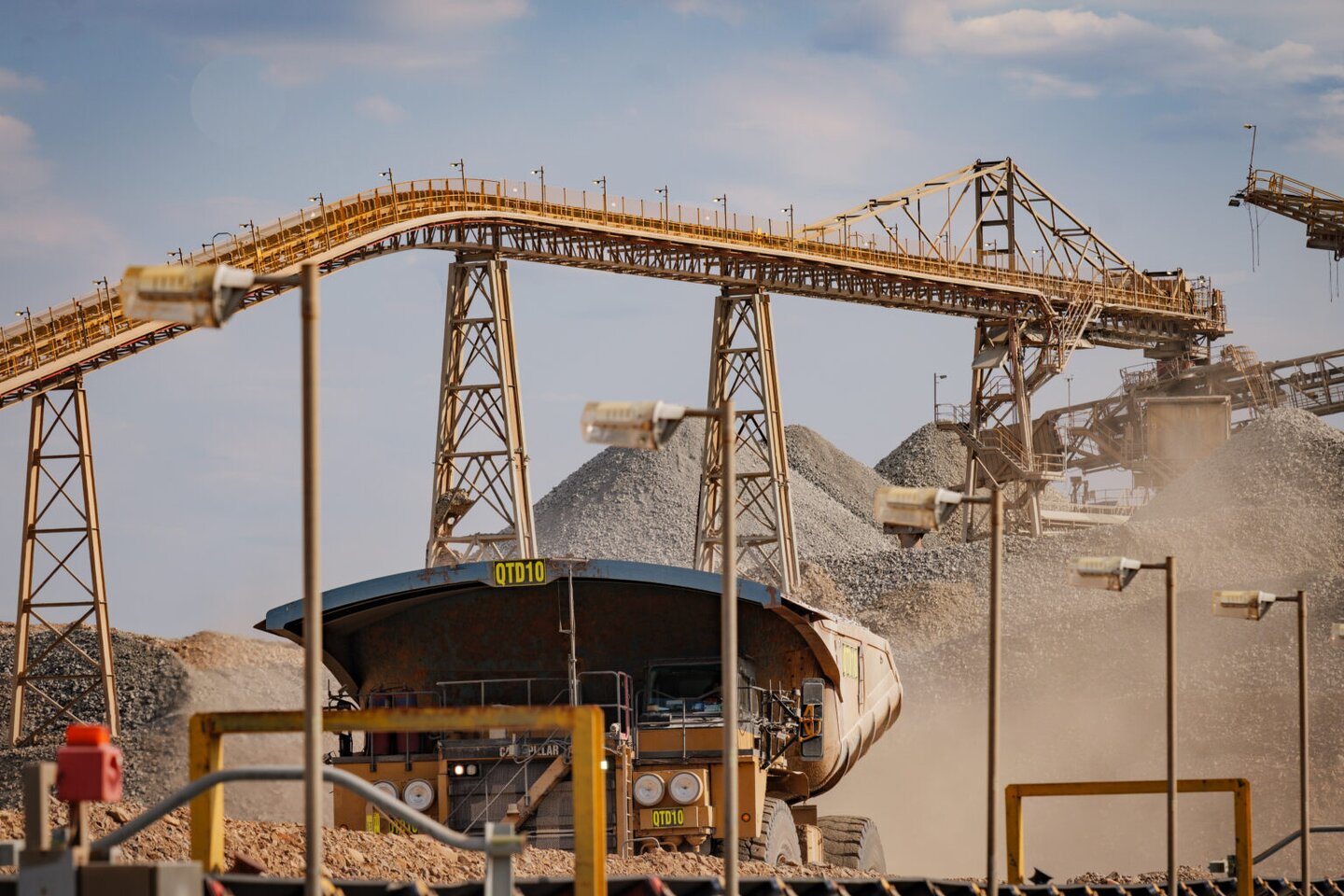
Two more Western Australian goldminers have reported cash and bullion balances above $1 billion, while maintaining the diesel crisis is not a challenge – yet.
Alphabet Inc.’s Class C shares (NASDAQ: GOOG) climbed more than 3% midday Wednesday, reaching $313.96, as investors cheered fresh signs of strength in the company’s artificial intelligence initiatives and cloud computing business amid a broader technology sector rebound.
Shutter Speed / Unsplash
The stock opened at approximately $317.81 and traded as high as $319.38 before settling near $313.96 by late morning, up $10.03 or 3.30% from the previous close of $303.93. Volume remained solid, reflecting renewed optimism ahead of the company’s first-quarter 2026 earnings, now scheduled for late April.
The move extended a volatile but ultimately positive stretch for the Google parent. After hitting an all-time high near $350 in early February, shares pulled back amid concerns over soaring capital expenditures for AI infrastructure. Wednesday’s gain helped recoup some of those losses and underscored Wall Street’s growing confidence that Alphabet’s heavy investments in AI will pay off through accelerated revenue growth, particularly in Google Cloud.
A key catalyst appeared to be Alphabet’s expanding partnership with Broadcom for custom AI chips and networking infrastructure. The collaboration is expected to bolster Google Cloud’s ability to meet surging enterprise demand for AI training and inference capabilities. Analysts noted that such deals signal Alphabet’s commitment to scaling its infrastructure efficiently while competing with rivals like Microsoft Azure and Amazon Web Services.
Google Cloud has emerged as a bright spot. Recent quarters showed the segment growing at rates exceeding 35-48% year-over-year, with a massive backlog reportedly reaching $240 billion. Enterprise adoption of Gemini-powered services and AI infrastructure contributed heavily to the momentum. The company has aggressively integrated its Gemini AI models across search, YouTube, Android and cloud offerings, with monthly active users for Gemini surpassing hundreds of millions.
Advertisement
Wednesday’s trading also reflected broader market sentiment favoring big-tech names with strong AI narratives. While some investors have worried about the “capex trap” — with Alphabet guiding for $175 billion to $185 billion in capital spending this year, nearly double 2025 levels — others view the outlays as necessary to secure long-term leadership in generative AI.
“Alphabet is doubling down on AI at exactly the right time,” one market strategist said. “The cloud backlog and Gemini adoption metrics suggest monetization is accelerating faster than many anticipated, even as costs rise.”
The rally came despite ongoing regulatory headwinds. Alphabet continues to navigate multiple antitrust cases in the United States and Europe, including challenges to its search dominance and ad technology business. Recent court rulings have been mixed, with some dismissals of publisher lawsuits but appeals expected in core monopoly cases. Investors appear to be pricing in that regulatory risks, while significant, will not derail the company’s core growth engines.
Alphabet’s search business, still the profit powerhouse, benefits from AI Overviews and Gemini enhancements that deliver faster, more conversational answers. YouTube continues to see engagement gains from AI-driven recommendations. These improvements help offset potential shifts in user behavior as AI agents evolve.
Advertisement
With Q1 2026 earnings approaching — currently slated around April 23-29 depending on final confirmation — analysts expect revenue growth near 15-18% and earnings per share around $2.60-$2.70. Focus will center on Google Cloud margins, AI product revenue details and any updates to full-year guidance. Management has signaled confidence that efficiency gains in models, including reported 78% reductions in certain query costs, will help balance heavy infrastructure spending.
Class C shares, which lack voting rights compared with Class A, often track closely with the more liquid GOOGL but appeal to certain institutional investors. The dual-class structure has long allowed founders to maintain control while accessing public capital.
Year-to-date, GOOG has shown modest performance after a stellar 2025 that saw gains exceeding 60-70% in some periods, driven by AI optimism and cloud acceleration. The stock remains well above its 52-week low near $145 but below the February peak. Analysts maintain a generally bullish consensus, with average price targets suggesting further upside toward $340-$367.
Institutional ownership remains high, with recent filings showing increases from major holders. Hedge funds and long-term investors appear to be accumulating on dips, betting that Alphabet’s scale in data, distribution through Android and YouTube, and talent pool position it favorably in the AI race.
Advertisement
Challenges persist. Rising energy costs for data centers, potential margin pressure from capex and competition from OpenAI, Anthropic and others require careful navigation. Waymo, Alphabet’s autonomous driving unit, continues to expand but remains a smaller contributor compared with core segments.
Broader market context aided the move. Technology stocks recovered some ground Wednesday as Treasury yields stabilized and investors rotated back into growth names. The Nasdaq Composite showed gains, with other AI-exposed names also advancing.
For retail investors, the intraday surge highlighted Alphabet’s volatility tied to AI news flow. Short interest remains relatively low, suggesting limited bearish bets despite recent pullbacks from highs.
Looking ahead, the April earnings call will likely provide the next major catalyst. Investors will scrutinize commentary on AI monetization timelines, cloud backlog conversion and any color on competitive positioning. Positive surprises on margins or user metrics could fuel further upside, while higher-than-expected capex might temper enthusiasm.
Advertisement
Alphabet has transformed significantly under CEO Sundar Pichai, evolving from a search advertising company into an AI-native conglomerate spanning cloud, hardware, autonomous vehicles and more. The company’s first-look deals and ecosystem advantages, including potential integrations with partners like Apple for certain AI features, provide structural tailwinds.
Yet execution remains key. History shows that heavy infrastructure bets can weigh on near-term profitability even as they lay groundwork for future dominance. Alphabet’s ability to maintain advertising pricing power while rolling out AI enhancements will be closely watched.
In the meantime, Wednesday’s 3.3% advance served as a reminder of the market’s appetite for proven tech leaders with clear AI roadmaps. As earnings season nears, Alphabet finds itself at a pivotal juncture: proving that massive spending today will translate into sustainable, high-margin growth tomorrow.
With a market capitalization still in the multi-trillion-dollar range, even modest percentage moves represent billions in value. The Class C shares’ performance Wednesday added to that total, rewarding shareholders who stayed the course through earlier volatility.
Advertisement
As the trading day continued, attention turned to whether the momentum would hold into the close or if profit-taking might emerge. Regardless, the session reinforced Alphabet’s central role in the ongoing artificial intelligence transformation of the global economy.
For investors, the message appeared clear: despite regulatory clouds and hefty investment bills, Alphabet’s fundamental strengths in search, cloud and AI keep it firmly in the conversation among the world’s most valuable and influential companies.
Michael A. Gayed is portfolio manager, and author of five award-winning research papers on market anomalies and investing. He has a BS with a double major in Finance & Management from NYU Stern School of Business, and is a CFA Charterholder.
Michael runs the investing group The Lead-Lag Report, focused on helping investors outperform in all market conditions. It offers a tactical, data-driven approach to investing, to achieve long-term success even in the face of uncertainty. With increasing market volatility, it’s essential to understand risk-on/risk-off signals, seize high-yield opportunities, and leverage award-winning research to maximize returns. Learn More.
Analyst’s Disclosure: I/we have no stock, option or similar derivative position in any of the companies mentioned, and no plans to initiate any such positions within the next 72 hours. I wrote this article myself, and it expresses my own opinions. I am not receiving compensation for it (other than from Seeking Alpha). I have no business relationship with any company whose stock is mentioned in this article.
I/we have no stock, option or similar derivative position in any of the companies mentioned, and no plans to initiate any such positions within the next 72 hours. I wrote this article myself, and it expresses my own opinions. I am not receiving compensation for it (other than from Seeking Alpha). I have no business relationship with any company whose stock is mentioned in this article. The Lead-Lag Report is provided by Lead-Lag Publishing, LLC. All opinions and views mentioned in this report constitute our judgments as of the date of writing and are subject to change at any time. The information provided herein is not intended to be used as the primary basis of investment decisions. Investors should consult their financial advisers prior to any investment decision.
Advertisement
Seeking Alpha’s Disclosure: Past performance is no guarantee of future results. No recommendation or advice is being given as to whether any investment is suitable for a particular investor. Any views or opinions expressed above may not reflect those of Seeking Alpha as a whole. Seeking Alpha is not a licensed securities dealer, broker or US investment adviser or investment bank. Our analysts are third party authors that include both professional investors and individual investors who may not be licensed or certified by any institute or regulatory body.
Pall Mall public realm project being separated from wider scheme
David Humphreys and Local Democracy Reporter
16:00, 08 Apr 2026
The development site at Bixteth Street Gardens in Liverpool(Image: Liverpool Echo)
Delivery of an urban park in the middle of Liverpool’s first Grade A office building scheme for more than 15 years requires public-sector intervention to ensure it can be brought to life.
Advertisement
Almost £2.5m of developer cash from projects across the city centre is to be repurposed to help create a public realm as part of proposals for a new eight storey office development at Pall Mall.
A total of £2.47m of section 106 (S106) cash – derived from development projects – will be used for eligible works, including The Lawns, Terraced Gardens and Bixteth Walk. The total cost of the scheme is expected to top out at £60m.
It is being separated from the wider scheme after a full business case indicated that “market conditions, abnormal costs and viability constraints require public‐sector intervention.”
As a result, the public realm will be funded via S106 which the local authority said would make the overall project easier to achieve.
Advertisement
The council-owned site, which lies off Bixteth Street, was remediated in 2020 but has stood dormant ever since after plans for large office buildings and a hotel stalled. There are hopes work could get underway on site during the last three months of this year, with a view to completion in 2028.
The scheme is being brought forward by Kier Property Developments Ltd with the phase one green space open to the public but privately owned. Pall Mall is a long‐standing strategic regeneration site in the city’s commercial business district, bounded by Pall Mall, Bixteth Street and Exchange Station.
The wider masterplan will deliver up to 400,000 sq. ft of Grade A office space, hotel and supporting uses centred around new green public space.
Delivery is identified as a priority within the council’s Strategic Futures Programme and the Liverpool City Region’s Grade A office growth agenda. It would represent the first development of its kind in Liverpool for almost two decades.
Advertisement
The project has progressed to full business case which has confirmed that market conditions, abnormal costs and viability constraints require public‐sector intervention. As a result, delivery of the public realm will be achieved separately, which according to city council documents makes the project easier to achieve overall.
The central gardens would be accessible 24 hours a day and maintained by a management company. A planned maintenance regime will be implemented to ensure the public realm remains safe, attractive and well‐maintained, including routine landscaping, cleaning, lighting, repairs and renewal of materials as required.
This will be funded by service charge contributions. According to the local authority, this arrangement ensures no ongoing revenue liability for Liverpool Council and preserves unrestricted public access in perpetuity.
To find all the planning applications, traffic diversions, road layout changes, alcohol licence applications and more in your community, visit the Public Notices Portal.
Flying is about to get more expensive for some travelers who check luggage, as two major U.S. carriers move to raise baggage fees amid rising costs across the airline industry.
Delta Air Lines and Southwest Airlines are both increasing their checked bag fees by $10, pushing the cost to $45 for a first bag and $55 for a second. Delta is also raising the fee for a third checked bag by $50, bringing the total cost to $200, the airline confirmed to FOX Business.
Advertisement
The changes apply to new bookings, with Delta’s updated fees taking effect Wednesday and Southwest’s on Thursday.
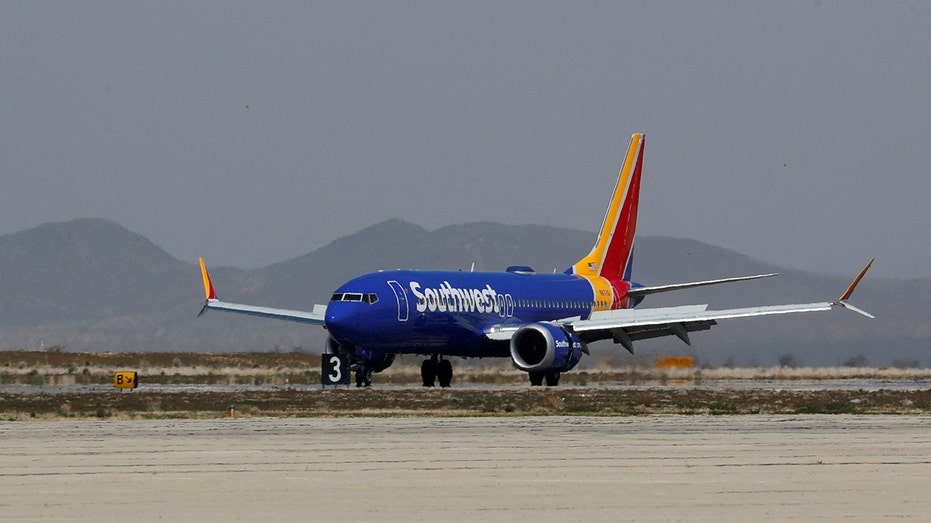
A Southwest Airlines Boeing 737 MAX 8 aircraft lands at Victorville Airport in Victorville, California, on March 26, 2019. (Mike Blake/Reuters)
Delta said the increases will impact domestic routes and select short-haul international flights, marking its first domestic baggage fee hike in two years.
“These updates are part of Delta’s ongoing review of pricing across its business and reflect the impact of evolving global conditions and industry dynamics,” a spokesperson for Delta told FOX Business in an email.
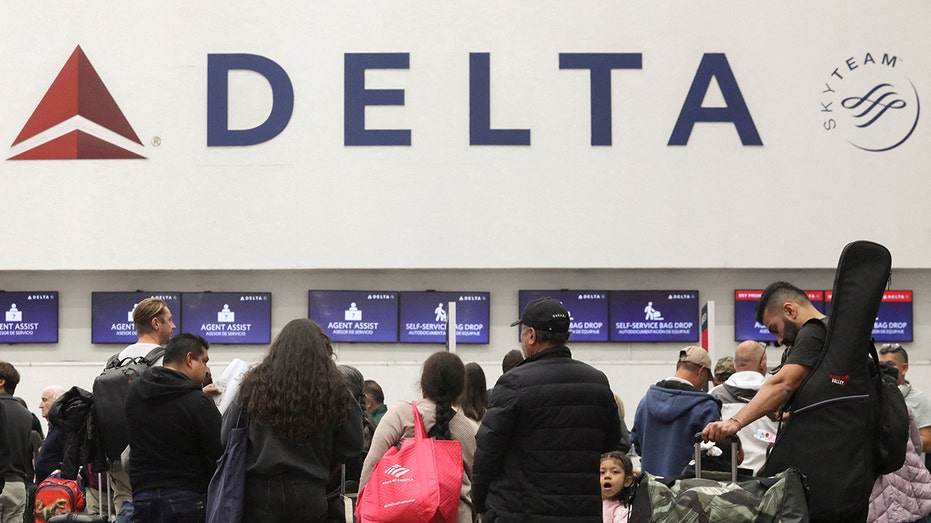
Passengers queue to check in at a Delta Air Lines counter at Benito Juarez International Airport in Mexico City, Mexico, on Nov. 13, 2025. (Paola Garcia/Reuters)
In a similar statement, Southwest said the decision comes after “an ongoing analysis of the business and against the evolving global backdrop.”
The fee hikes come as airlines grapple with rising operating costs, particularly jet fuel.
Jet fuel prices have surged globally in recent months, climbing from roughly $85 to $90 per barrel in February to about $209 following disruptions linked to tensions in the Strait of Hormuz amid the Iran war, according to Reuters.
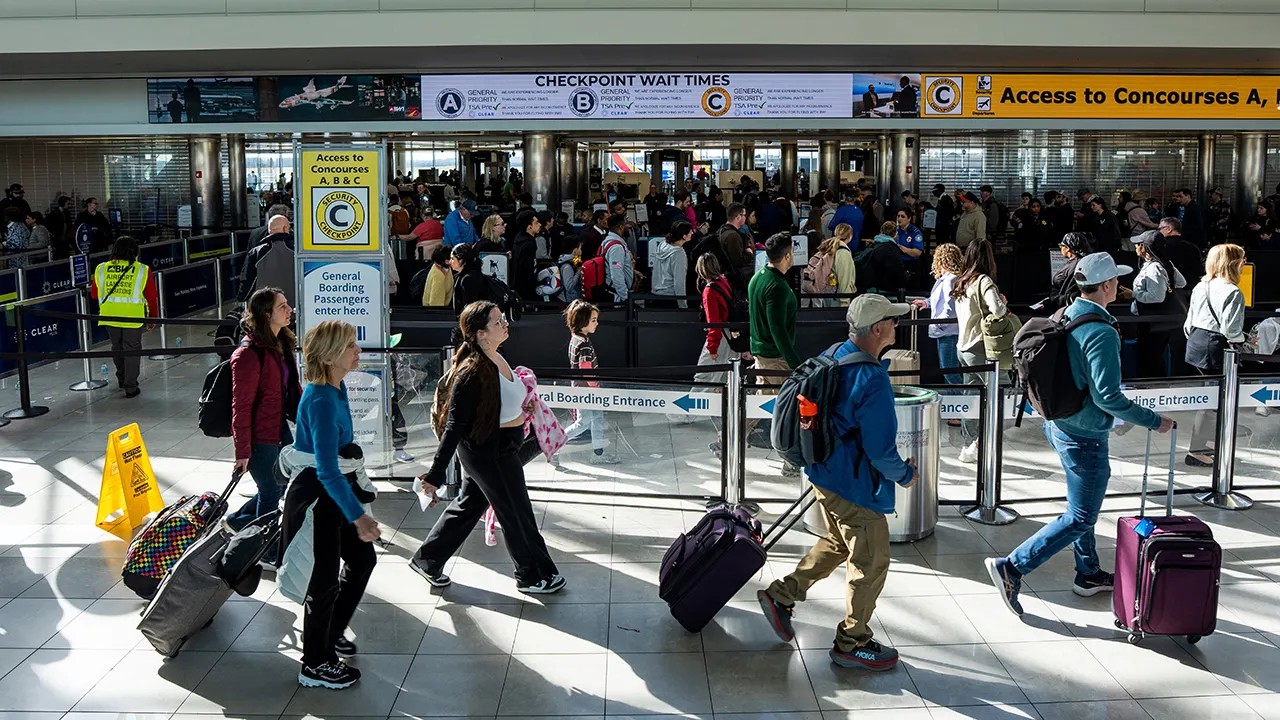
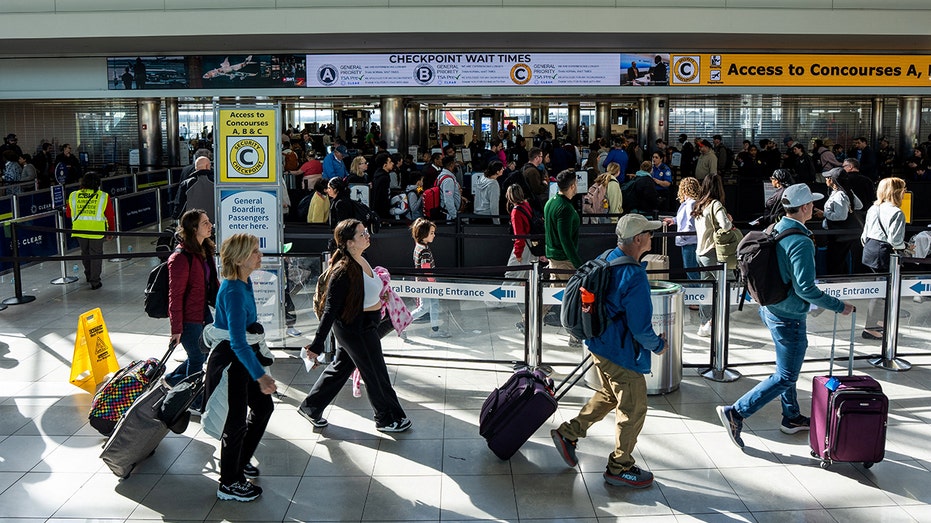
Passengers wait in a TSA security checkpoint queue that stretches through Baltimore/Washington International Thurgood Marshall Airport (BWI) in Baltimore, Maryland, on March 29, 2026. (Aaron Schwartz/Reuters)
In recent weeks, JetBlue and United Airlines have also announced increases to baggage fees.
“As we experience rising operating costs, we regularly evaluate how to manage those costs while keeping base fares competitive and continuing to invest in the experience our customers value,” JetBlue wrote in a statement to FOX Business.


















































You must be logged in to post a comment Login