KUWAIT CITY — Kuwait International Airport is open today, with flights operating again through a phased resumption plan after months of disruption, but it is not yet described as fully back to standard capacity across all services. Recent reporting says Terminal 1 reopened on June 1, allowing Arab and international airlines to resume passenger operations as repair and upgrade work was completed.
The Civil Aviation Authority said the airport’s restart would come gradually, with the first phase allowing one flight per airline so officials could monitor flow, safety and readiness before expanding service. That approach marked a careful return to operations after the airport was closed in late February amid regional conflict, then reopened in April under a phased plan.
The airport’s official website remains active and includes flight-status and timetable information, reinforcing that the facility is functioning today. A live conditions page also shows Kuwait International Airport in service, with current airport status information available for travelers. While that does not by itself prove every route is operating normally, it supports the broader picture that the airport is open and handling traffic.
Reporting from early June said the first phase of the Terminal 1 relaunch included Arab and foreign airlines, with the airport using operational measures intended to streamline passenger movement and maintain safety. Earlier coverage also noted that Kuwait Airways and Jazeera Airways had already been serving from other terminals as part of the recovery process, while new international services returned in stages. That makes today’s status clear: open, active and rebuilding, but not yet fully restored in the sense of unrestricted, all-airline normal operations.
Advertisement
The reopening matters for one of the Gulf’s most important aviation hubs, where even a partial shutdown can affect regional connections, business travel and expatriate traffic. Kuwait’s phased strategy appears aimed at restoring capacity without overwhelming airport systems that were only recently repaired and inspected. Authorities have said the staged approach is intended to protect passenger safety and preserve orderly service as more airlines return.
For travelers, the practical guidance is simple: Kuwait International Airport is open today, but flight schedules may still reflect the phased rollout. Passengers should verify their airline’s status before leaving for the airport and allow extra time for any updated procedures. The airport timetable page and airline updates remain the most relevant operational references for same-day travel.
The broader recovery also reflects how quickly aviation can shift from closure to gradual return once authorities complete repairs and safety checks. Recent reporting said Terminal 1’s reopening followed the completion of repair and upgrade work, and the first flights back were meant to test the system before the network expands further. That means the airport is open today, but the final step of returning to full, routine operations is still unfolding.
In simple terms, the answer is yes — Kuwait International Airport is open today. But the airport is still operating in phases, so “open” does not yet mean every service has fully normalized.
Advertisement
Flight operations
The latest coverage says the reopening began with Terminal 1 and a limited number of flights per airline, then expanded as conditions allowed. That phased model is consistent with earlier official comments that full operations would resume only after a careful evaluation of air traffic, facility readiness and safety standards. Kuwait’s flagship carriers and several international airlines have already returned in some form, but the schedule remains in transition.
The airport’s timetable page shows active listings for June dates, including airline entries for the current operating window. That is a strong indicator of normalizing activity, though not a guarantee that every destination or terminal function has returned to pre-closure levels. Travelers planning same-day departures or arrivals should therefore treat the airport as open but still in recovery mode.
What officials said
Officials framed the reopening as a measured step forward, not an instant return to full capacity. The Civil Aviation Authority said the first phase was designed to ensure smooth operations and assess performance before further expansion. Arab News also quoted the authority as saying the phased plan was meant to prepare the airport for “full operation in the coming period”.
July’s full moon, known as the Buck Moon, reaches peak illumination Wednesday morning, offering skywatchers across the country a chance to catch one of the year’s most anticipated lunar events as it rises into the evening sky.
The Buck Moon occurs at 10:36 a.m. Eastern time on Wednesday, July 29, 2026. Because the moon will be below the horizon at that exact moment for most of North America, the best viewing opportunity comes later in the day. Skywatchers should plan to look toward the southeast after sunset to watch the moon rise into the evening sky.
When and Where to Look
The best evening to watch the Buck Moon rise is Wednesday, July 29, 2026, at the exact time of moonrise for a given location, with the best views across North America expected as the moon rises in the southeast during dusk. The full moon will rise this evening within about 20 minutes of sunset, meaning skywatchers in most locations should head outside shortly before the sun goes down to catch the moon as it climbs above the horizon.
Advertisement
For those hoping to capture the most dramatic view, timing matters. Viewers can consult a moonrise and moonset calculator to determine precisely when the Buck Moon will become visible in their specific area, since exact rise times vary by location. To see the full moon at its best, skywatchers are encouraged to find an elevated location, an open field, or a coastline with a clear, unobstructed view of the horizon.
A Striking Optical Illusion
One of the most compelling reasons to catch the moon shortly after it rises is a well-known visual phenomenon. The best time to notice the July full moon illusion is shortly after moonrise, when the Buck Moon is still low above the horizon, at which point the lunar disk tends to appear larger and more dramatic than it does later in the night once it climbs higher into the sky.
Why It’s Called the Buck Moon
Advertisement
The July full moon’s name traces back to a seasonal pattern in nature that has been observed for generations. The full moon in July is called the Buck Moon because the antlers of male deer are in full-growth mode at this time of year, with bucks shedding and regrowing their antlers annually, producing a larger and more impressive set as the years go by. The moon earned its name from northeastern Native American tribes who observed that deer antlers were in “full-growth mode” during this period of the summer.
Other cultures and traditions have applied different names to July’s full moon, many of which also draw on seasonal and natural themes. Alternative names include the Feather Moulting Moon among the Cree and the Salmon Moon among the Tlingit, marking when fish returned to the area and were ready to be harvested, along with plant-inspired names such as the Berry Moon, the Moon When the Chokecherries Are Ripe, and the Raspberry Moon.
Its Place in the 2026 Full Moon Calendar
The Buck Moon is the eighth of 13 full moons occurring in 2026, a result of the mismatch between the roughly 365-day solar year and the approximately 354-day lunar year, which occasionally produces calendar years containing 13 full moons instead of the usual 12. The moon will appear in the constellation Capricornus during this month’s full phase.
Advertisement
What Comes Next in the Night Sky
This month’s full moon also sets the stage for a string of notable celestial events in the weeks ahead. The Buck Moon arrives just two weeks before a total solar eclipse on Aug. 12, one of the biggest sky events of the year, and roughly four weeks before a partial lunar eclipse. The next full moon after the Buck Moon will be the Sturgeon Moon on Friday, Aug. 28, 2026, which coincides with a deep partial lunar eclipse in which nearly 97% of the moon will pass into Earth’s dark shadow, making it appear dimmed and reddish-orange, though it will fall short of a full “blood moon” total eclipse.
A Night With Cultural and Spiritual Significance
Beyond its astronomical importance, this month’s full moon also holds meaning across several religious and cultural traditions observed around the world. The July full moon marks the celebration of Guru Purnima for followers of the Hindu and Buddhist faiths, a day when worshippers honor their teachers and spiritual guides through fasting, temple visits and acts of service and gratitude. July 29 also coincides with the holy day of Asalha Puja for the Theravada Buddhist community, commemorating the Buddha’s first sermon, delivered in Sarnath, India, where he taught the Four Noble Truths.
Advertisement
Other Sights to Look For
While the moon’s brightness will make it harder to spot fainter deep-sky objects on the night of the full moon itself, skywatchers can still find other highlights nearby. Despite the glare of the Buck Moon washing out many fainter objects in the night sky, observers may still be able to spot the Summer Triangle asterism, along with an evening star shining low on the western horizon, which will set less than two hours after sunset.
Tips for the Best Viewing Experience
For those planning to watch the Buck Moon rise, weather conditions, viewing angle and timing will all play a role in the experience. Clear skies and an unobstructed eastern or southeastern horizon offer the best chance to catch the moon as it first emerges, when the optical illusion that makes it appear unusually large is at its most striking. As with most full moons, no special equipment is needed to enjoy the view, though binoculars or a telescope can enhance the experience for those hoping to pick out surface details once the moon has climbed higher into the sky later in the evening.
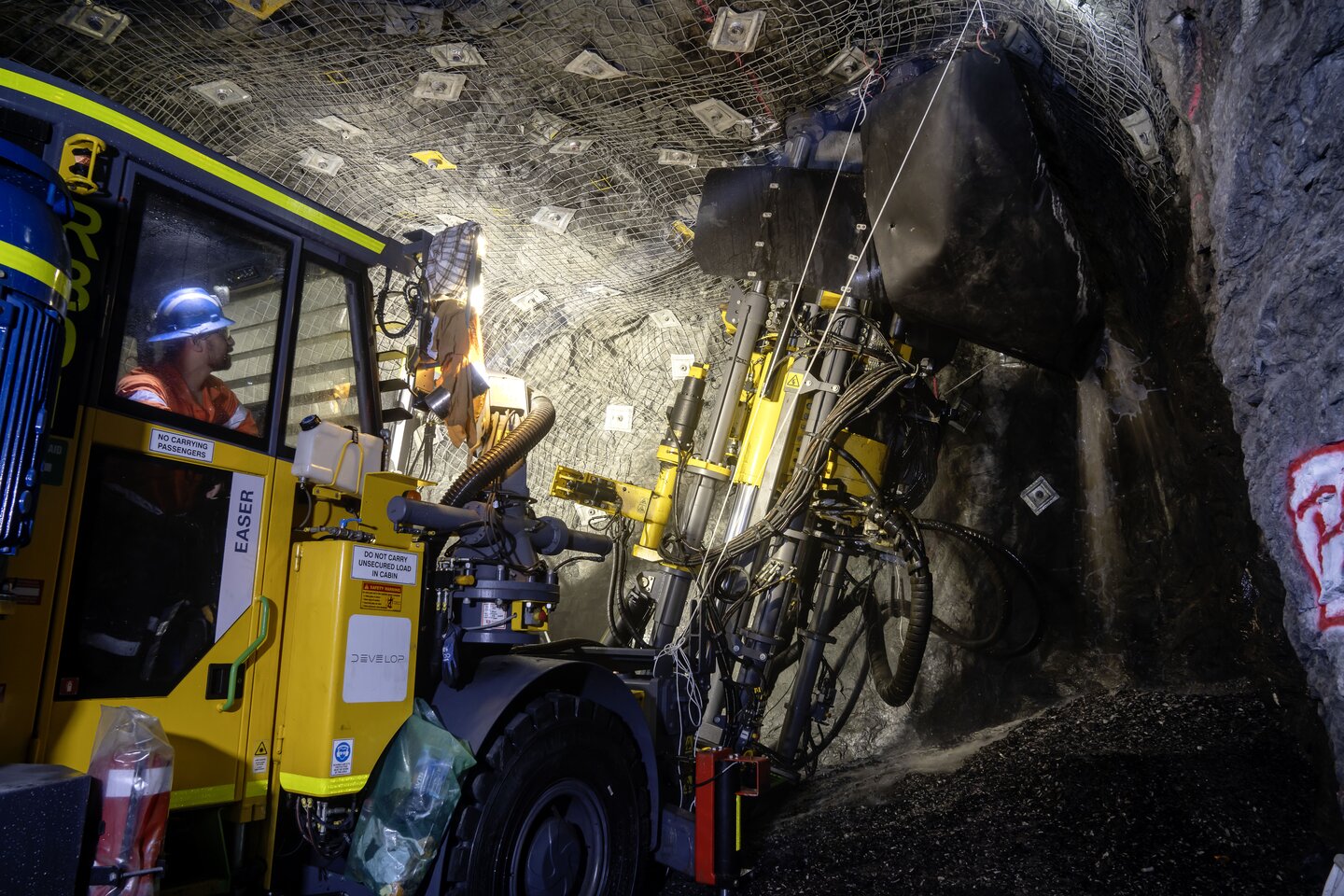
Perth-based Vysarn is raising $65.3 million to help fund the acquisition of local firm Welltech, just weeks after completing another acquisition in the water services industry.
IGO Limited (IIDDY) Q4 2026 Earnings Call July 27, 2026 9:00 PM EDT
Company Participants
Ivan Vella – CEO, MD & Executive Director Ian Rowe – Interim Chief Financial Officer
Advertisement
Conference Call Participants
Hugo Nicolaci – Goldman Sachs Group, Inc., Research Division Mitch Ryan – Jefferies LLC, Research Division Austin Yun – Macquarie Research Daniel Morgan – Barrenjoey Markets Pty Limited, Research Division Ben Lyons – Jarden Limited, Research Division Levi Spry – UBS Investment Bank, Research Division Andrew Harrington – Petra Capital Pty Limited, Research Division Lyndon Fagan – JPMorgan Chase & Co, Research Division
Presentation
Advertisement
Operator
Thank you for standing by, and welcome to the IGO June 2026 Quarterly Activities Report. [Operator Instructions] I would now like to hand the conference over to Mr. Ivan Vella, Managing Director and CEO. Please go ahead.
Ivan Vella CEO, MD & Executive Director
Advertisement
Thanks, Darcy. Good morning, everyone, and thanks for joining us for IGO’s June quarter and the wrap-up of financial year ’26. I’m joined this morning by Ian Rowe, newly appointed as our Interim CFO. He’ll be available to cover a few remarks on our finances, but also take some questions at the back end of our opening remarks. Ian has been with IGO for some time and knows the business very well. And over the coming months, he’ll join me for some of our engagements with investors and analysts so you can get to know him better and have a chance to talk through some of the questions around the business.
June is always a good point to reflect back on the financial year, and we finished with really strong momentum in safety and performance at Nova and a solid quarter at Greenbushes, all resulting in a strong balance sheet. We recognize there’s still important challenges for us to work through at Kwinana and obviously, a continued focus
Alluvial Fund had another quiet quarter, rising 4.9%. Year-to-date, the fund is up 8.0%. I would consider this an acceptable outcome but for the bothersome fact that small-cap and micro-cap indexes are having an absolute barnburner of a year. At least for the moment, investor appetite for AI beneficiaries, semiconductor companies, and other hyper-growth stories is near limitless. I find the valuations afforded many of these companies incomprehensible, justifiable only under the most heroic of projections. But nobody asked my opinion, and the party goes on. By comparison, our portfolio is extremely boring, as it always has been. I view this as a feature, not a flaw, but our portfolio often gets stuck in neutral when investors and their capital flock to momentum-driven shares.
TABLE I: Alluvial Fund LP Returns (%) as of June 30, 2026
Advertisement
YTD
2025
2024
2023
2022
Cumul.
Annual.
Alluvial Fund LP NET
8.3
41.2
16.4
15.1
-14.9
309.4
16.0
Russell MicroCap TR
25.6
23.0
13.7
9.3
-22.0
164.5
10.8
Russell 2000 TR
22.6
12.8
11.5
16.9
-20.4
152.6
10.2
MSCI World Sm+MicroCap NR
16.1
20.7
8.0
15.1
-19.1
152.4
10.2
Partnership began operations 01/01/2017
I don’t know when this trend will weaken or reverse. July has been better, with Alluvial Fund gaining some ground as benchmarks decline. I am confident that our portfolio of dependable cash flow producers with capable management teams and robust outlooks trades at a large discount to intrinsic value, and that that this discount will diminish with time.
Portfolio Updates
Zegona Communications (ZEGLF) was the largest contributor to Alluvial Fund’s 2025 returns, but the company’s shares have had a rough go of late. Since peaking in May, shares are down 27%. The decline comes as the company continues to report strong financial results, growing revenue and cash flow as the turnaround gains momentum. In late June, the company refinanced its debt for the second time since buying Vodafone Spain, reducing annual interest expense by a whopping €60 million. So why, if things are so rosy, are Zegona shares in the doldrums? A few reasons, all either transitory or in my view, overblown.
Profit-taking and a shareholder base transition. For the twelve months ended March 31, Zegona shares produced a total return of nearly 180%. Following such a run, it is only reasonable that some holders would choose to lock in profits and reduce exposure. Alluvial did. Throughout the quarter, we sold shares in the 1700s and 1800s. We did this not out of concern about valuation or business trajectory, but simply to prevent over-concentration in a single stock. There is also a shareholder base transition under way. Some “event-based” holders who owned Zegona for the potential asset sale (now accomplished) are moving on and selling to more traditional value investors. These new investors are happy to buy an improving telecom with a tremendous free cash flow yield at a large valuation discount to comparable companies. It takes time for the shareholder base to turn over, but the process will eventually complete.
A capital return “air pocket.” Following the sale of most of its fiber optic network, Zegona instituted an aggressive £200 million share buyback. This buyback is now all but exhausted, though fortunately, the pause is temporary. On July 30, shareholders will vote to authorize Zegona to repurchase up to 14.99% of its shares outstanding. Shortly after, the company will reveal its medium-term capital allocation framework. I expect Zegona to commit to returning a sizable portion of its free cash flow via dividends and buybacks, resulting in a compelling shareholder yield at current prices.
The Digi threat. The Spanish mobile market, like most in Europe, is fiercely competitive. Zegona’s Vodafone Spain is the number 3 operator. The 4th, and smallest, is Digi, a Romanian telecom that entered the Spanish market 18 years ago. Last week, Digi’s Spanish segment raised capital in an IPO, stoking fears that the Spanish market is about become even more competitive. I think these fears are exaggerated. Digi is not a new entrant; Vodafone Spain has been competing with Digi for years and, since new management took over, holding its own. Digi is a fast grower, but it does not make money. At some point, Digi will have to raise prices, which will blunt its competitive advantage.
Pullbacks aren’t any fun, but they are to be expected. At current prices, Zegona shares trade for 7-8x free cash flow, a large portion of which will be returned to shareholders. This is far too cheap for a successful turnaround story with additional margin enhancement and potential asset sales ahead. After selling shares just a few months ago, we have done an about face and are adding to our Zegona position on weakness.
The most fascinating development in the portfolio this quarter came from McDermott International (MCDIF). McDermott is an energy EPC (engineering, procurement, construction) company with a troubled past and a bright future. After several difficult years, the company has all but completed its legacy zero-profit and loss-making contracts. Sustained profitability is on the horizon. However, the company has one remaining issue: a weak balance sheet. Poor balance sheet liquidity and a negative equity position hinder McDermott from bidding on desirable contracts and suppress its valuation.
Advertisement
Earlier this month, McDermott announced it would address this weakness via a $500 million rights offering. Concurrent with the rights offering, the company will refinance its term loan. Though the rights offering is typical in that every shareholder can participate, it is quite atypical in that it is priced at a gigantic discount to pre-offering trading levels. In this transaction, two things are abundantly clear:
The rights offering is tremendously beneficial for McDermott and for its shares. The additional capital substantially deleverages the company, greatly reducing the possibility of financial distress and enabling McDermott to bid on more and larger contracts. It also sets the company up well for a sale or IPO in the medium term.
The rights offering is punitive for holders who cannot or will not exercise their rights. Because the rights offering is priced at a large discount, holders who do not exercise their rights will be diluted to oblivion. Most rights offering include over-subscription rights for those interested in buying additional shares. This rights offering does not. Rather, unexercised rights will be exercisable by the four large McDermott shareholders backstopping the rights offering.
Obviously, Alluvial Fund will be participating in the rights offering to the fullest. To decline would be to leave substantial value on the table. Post-offering, McDermott will be substantially de-risked. At its current valuation, McDermott trades at just 3.2x 2027 EBITDA guidance.
McDermott has been a strong performer for Alluvial Fund. When we first invested, I saw upside potential of 150% or more. Shares have moved upward since we invested, but I continue to see potential for shares to double in the next few years. Despite this attractive return profile, I always limited our position size out of caution over the company’s elevated financial risks. This rights offering greatly reduces the company’s financial risk, so I am now willing to hold McDermott at a higher weighting going into 2027. In many ways, this set-up parallels the Garrett Motion rights offering in 2021. (Right down to the near-identical large holder backstop feature.) In both cases, fundamentally decent companies were being held back by stressed balance sheets. Garrett Motion has been a tremendous performer since, even if we had to endure a few years of sideways price movement first. I am confident that McDermott will be the same, hopefully over a shorter timeframe.
I expect McDermott shares to be volatile as things shake out post-rights offering. We will keep our eyes on the longer-term trajectory. If the company is able to achieve its revenue and earnings goals, shares currently trade at less than 4x 2028 earnings.
In some letters I outline our thesis for owning just a few of our portfolio holdings. In others, I attempt to update partners on the bulk of our portfolio, spending at least a few sentences on each meaningful holding. This letter is one of the latter type.
Garrett Motion is one of Alluvial Fund’s longest-tenured holdings. 2026 has been a watershed year for Garrett, with investors waking up to the fact that the company’s turbochargers have applications well beyond the automotive industry. Garrett is increasingly selling to data centers and utilities seeking improved energy efficiency and output. While shares have run up considerably, the valuation remains reasonable and the company continues to return the majority of free cash flow to shareholders. Garrett deserves its new, higher multiple of earnings and cash flows, but we are keeping a close eye. If shareholder exuberance lifts Garrett shares to the point of no longer offering attractive forward returns, we will not hesitate to sell.
McBride Plc. , our British manufacturer of private-label soaps and detergents, had a small stumble in early June, when it warned that higher petrochemical costs from the Iran war would temporarily compress margins. Thankfully, shares recovered quickly as investors judged that the adverse conditions would be transitory. On July 1, McBride completed the acquisition of EuroTab, a smart bolt-on deal in continental Europe which will contribute to earnings per share immediately. McBride shares remain extremely cheap at around 7x forward earnings and less than 5x EBITDA. The London market has seen a wave of buyout activity as private equity snaps up UK industrials at depressed valuations. I would not be surprised if McBride were the subject of an offer.
Advertisement
GreenDot Corp. shareholders approved the sale of its technology assets and the merger of its bank operations with CommerceOne Financial. All that remains is government approval, expected imminently. GreenDot shares have acted well, but still trade at a large discount to pro forma tangible book value. The management and board of directors of the future combined entity are smart operators. If the bank continues to trade below tangible book value after the deal is completed, I expect they will not hesitate to implement share buybacks. I see upside of 50-70% in the next few years, net of the large distribution shareholders will receive when the deal is completed.
Talen Energy is another long-tenured Alluvial holding. We bought Talen out of bankruptcy and have watched Talen’s management put on an absolute master class. Since emergence, Talen has bought back a huge quantity of shares at extremely low prices, sold some older, out-of-market assets, and reinvested in modern generation capacity at good prices. Today, the market tends to treat Talen as a proxy for AI and data centers: on “AI will take over the world” days, Talen shares soar; on “AI is in a bubble” days, Talen sinks. This dynamic makes Talen unusually tradable by Alluvial Fund standards. We have had success selling calls against our core position when optimism surges, and buying calls when pessimism seems close to peaking. Meanwhile, we keep our eyes on the underlying story: merchant power production, especially nuclear, is a different business than it was a decade ago. Demand for electricity is growing again after stagnating for a decade. The United States is structurally short of generation capacity. This translates to strong free cash flow for companies like Talen that have dispatchable generation capacity. Talen expects free cash flow per share to exceed $40 in 2028, a figure that appears achievable based on planned share buybacks and the ramp-up of the company’s supply agreement with Amazon. 9x 2028 free cash flow is simply too low for a company of Talen’s quality and rarity.
TABLE III: World Allocation, 6/30/26 (%)
Advertisement
United States
63.3
United Kingdom
25.3
Poland
5.1
Eurozone
4.3
Sweden
1.1
Other
0.9
Total
100%
Vistance Networks , a new holding for Alluvial Fund, is a company in the midst of dismantling itself. Over the past twelve months, Vistance has sold its two largest businesses. Vistance is now down to just one remaining operating asset, Aurora Networks, which manufactures equipment for cable networks like Comcast and Charter. It’s not a wonderful business—results are lumpy and customer concentration is high—but it is not going away. Faced with relentless competition from fiber and wireless internet alternatives, cable operators have no choice but to continue to invest in speed and reliability upgrades. On the heels of this radical reduction in scale, I don’t think Vistance stays independent. Management has gone from running an enterprise doing almost $7 billion in annual sales to one doing just $1 billion. Once it pays out the proceeds from its latest business sale, Vistance will have a market capitalization below $1 billion. As a newly-minted micro-cap company, it might as well be invisible. Being a listed, SEC-reporting micro-cap comes with all the headaches and annoyances of being public, but without most of the benefits. Given the choice between fading into irrelevance as a micro-cap network equipment maker and achieving a neat resolution (and a nice liquidity event for management, who own 7.8 million shares and equivalents), I think the company will elect to sell. Management has the deal-making experience to do it.
First the Iran War was over, then it wasn’t. Gulf Marine Services’ shares remain below pre-war levels. With the benefit of hindsight, we could have timed Alluvial Fund’s investment in this offshore support vessel owner better, but lately an interesting phenomenon has emerged. Gulf Marine Services shares no longer plunge on every bad headline from the Middle East. This leads me to believe that those panicked by the region’s instability have finished selling, and only those willing to look past the current conflict remain as shareholders. Recently, the company secured a 4-year contract for its new vessel in Brazil, improving earnings visibility. I doubt GMS shares will move until the outcome of the Iran War is clearer, but I am happy to own shares and add to our position here. Shares trade at less than 4x normalized earnings and at a large discount to tangible book value. Short of a pan-regional conflagration, I think it is very hard to lose money on this company over any reasonable timeframe.
EACO Corp. , whose subsidiary Bisco Industries distributes all manner of electrical components and fasteners, just keeps rolling. The company has put together one of the most impressive operating performances in public markets, but remains almost entirely unknown thanks to its very illiquid shares. For the quarter ended May 31, EACO’s revenues rose 28% year-over-year while operating income rose 45%. Despite these jaw-dropping results, EACO shares change hands at less than 9x annualized earnings and 6x operating income. Incredible.
TABLE IV: Sector Breakdown, 6/30/26 (%)
Advertisement
Communications
21.6
Financials
14.4
Consumer Discretionary
11.6
Materials
11.5
Consumer Staples
10.9
Information Technology
9.8
Industrials
6.7
Utilities
5.6
Energy
4.8
Real Estate
2.9
Health Care
0.2
Total
100%
A few years back, we spent a good deal of time looking at the Polish stock market. We came away highly impressed by the number of quality companies at low valuations that we saw, a few of which entered our portfolio. TIM SA was acquired at a good premium not long after we invested. Auto Partner SA remains in the portfolio and has been a solid performer. But our biggest Polish success story has been Digital Network SA , an operator of digital billboards. The company’s revenue growth has been exceptional, as has its capital allocation. Last year, the company snapped up Braughman Group, a scaled out-of-home advertiser with thousands of large-format billboards, screens, and murals across Poland. It was a natural fit, and shares have responded enthusiastically.
I must emphasize that while there are holdings I expect we will own for quite some time, we do not have “permanent holdings” in Alluvial Fund. Each holding must continually earn its place in our portfolio. I do believe in extending patience to companies and management teams that have proven their mettle. Even the best will occasionally experience a rough patch, and sometimes a particular industry or geography simply loses favor with investors. Our average holding period is multi-year, which allows us to reap the benefits of long-term compounding and defer taxes. But if our thesis turns out to be incorrect or the valuation is no longer compelling, it is time to move on. We maintain a lengthy watchlist of companies that could have a place in our portfolio when the timing and valuation are right.
In Closing
I am nearly a decade into writing these letters. My goal with each is to describe Alluvial’s approach in the clearest possible terms, to communicate a sense of how our portfolio has developed, and to explain the logic behind our decision-making. I know that placing your capital under someone else’s care is a consequential decision. I take my responsibility to steward this capital very seriously.
Advertisement
I see numerous opportunities in the current market environment, particularly in companies and industries that investors have shunned in favor of flashier ideas. I am quite happy to dedicate capital to these ideas, no matter how they may perform in this short run. Factors go in and out of favor constantly. “Quality” stocks were all the rage in recent years, but most now trade well off their highs. Now “momentum” is the only game in town. In my experience, when investors grow fixated on making fortunes in the space of just a few months or even weeks, it pays to take the longer view.
Thank you for reading. I hope you and your families are well, and I look forward to reporting to you again later this year.
Best Regards,
Dave Waters, CFA
Advertisement
Alluvial Capital Management, LLC
Disclosures
Investment in Alluvial Fund are subject to risk, including the risk of permanent loss. Alluvial Fund’s strategy may experience greater volatility and drawdowns than market indexes. An investment in Alluvial Fund is not intended to be a complete investment program and is not intended for short-term investment. Before investing, potential limited partners should carefully evaluate their financial situation and their ability to tolerate volatility. Alluvial Capital Management, LLC believes the figures, calculations and statistics included in this letter to be correct but provides no warranty against errors in calculation or transcription. Alluvial Capital Management, LLC is a Registered Investment Advisor. This communication does not constitute a recommendation to buy, sell, or hold any investment securities.
Advertisement
Performance Notes
Net performance figures are for a typical limited partner under the standard fee arrangement. Returns for partners’ capital accounts may vary depending on individual fee arrangements. Alluvial Fund, LP has a fiscal year end of December 31, 2024 and is subject to an annual audit by Cohen & Company. Performance figures for year-to-date periods are calculated by NAV Consulting, Inc. Year-to-date figures are unaudited and are subject to change. Gross performance figures are reported net of all partnership expenses. Net performance figures for Alluvial Fund, LP are reported net of all partnership expenses, management fees, and performance incentive fees.


















![Bitcoin Is Getting Ready For A Sizeable Move! [Time To Pay Attention]](https://wordupnews.com/wp-content/uploads/2026/07/1785221163_maxresdefault-80x80.jpg)






































You must be logged in to post a comment Login