

Business
Kyrie Draws Trade Interest from Pistons, Wolves, Rockets and Lakers

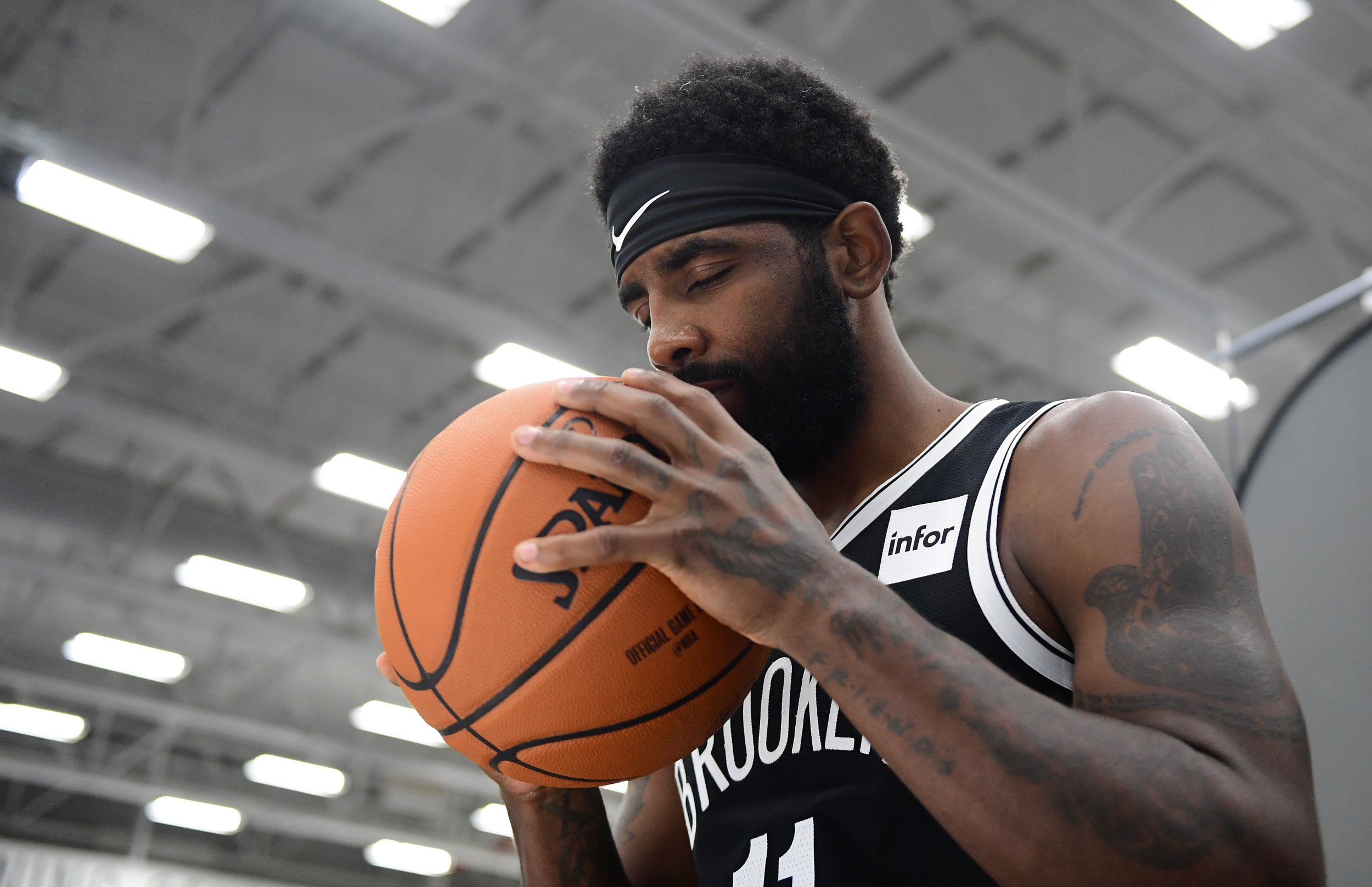
NEW YORK — Kyrie Irving, the veteran Dallas Mavericks guard and nine-time All-Star, is generating significant trade interest as the NBA offseason intensifies, with four teams emerging as realistic suitors according to multiple reports. The 34-year-old, recovering from a season-ending ACL tear, could be on the move as the Mavericks continue reshaping their roster following major front-office and coaching changes.
Veteran NBA reporter Brandon “Scoop B” Robinson identified the Detroit Pistons, Minnesota Timberwolves, Houston Rockets and Los Angeles Lakers as teams showing credible interest in acquiring Irving. His current contract includes $39.5 million for the upcoming season and a $42.4 million player option for 2027-28, making any deal complex but feasible under the league’s salary cap rules.
Irving missed the entire 2025-26 season while rehabilitating the knee injury, marking an extended absence from competitive play. Despite the lengthy layoff, recent updates from the guard himself have been encouraging, signaling readiness to return at a high level. The Mavericks, meanwhile, have undergone substantial upheaval, including the firing of general manager Nico Harrison, a major trade sending Anthony Davis elsewhere, and the departure of head coach Jason Kidd.
Potential Destinations and Fit
The Los Angeles Lakers represent a high-profile landing spot, pairing Irving with Luka Doncic in what would be a star-studded backcourt. However, the team would need to navigate existing point guard depth while addressing roster construction around their core. The move could provide immediate offensive firepower but carries injury and chemistry questions.
Detroit Pistons, led by young star Cade Cunningham, could view Irving as a mentor and scoring complement. The Pistons have been building aggressively around their young core, and adding a proven playoff performer like Irving might accelerate their contention timeline in the Eastern Conference.
Houston Rockets, featuring a returning Fred VanVleet, would similarly face backcourt crowding but possess the young talent and assets to make a deal work. The Rockets’ upward trajectory under their current management makes them an intriguing destination for a veteran seeking a fresh start on a rising team.
Many analysts point to the Minnesota Timberwolves as perhaps the most logical fit. The Timberwolves have been linked to Irving, with reports suggesting endorsement from a key figure within the organization. Their need at the point guard position aligns well with Irving’s skill set, potentially creating a dynamic offensive duo alongside Anthony Edwards while bolstering playoff experience.
Mavericks’ Rebuild Context
Dallas finds itself at a crossroads after several high-profile moves. The departures of key personnel and players signal a strategic reset, with Irving now viewed by some as the final piece of the previous regime. Trading the veteran guard could free up salary flexibility and draft assets as the Mavericks look toward the future while remaining competitive in a tough Western Conference.
Irving’s injury history and age introduce risk for any acquiring team. The guard has dealt with various health and availability issues in recent years, though his talent when healthy remains elite. His ability to create off the dribble, finish at the rim and knock down threes at a high clip continues to make him a sought-after talent despite the concerns.
Injury Recovery and Outlook
Irving’s recent positive updates regarding his rehabilitation have helped ease some doubts. The lengthy recovery period from an ACL tear typically spans 9-12 months for athletes at his level, and reports indicate he is progressing well. Teams will conduct thorough medical evaluations before finalizing any deal, focusing on long-term durability.
A move could provide Irving with a new environment and fresh motivation as he enters the later stages of his career. Known for his elite ball-handling and clutch performances, he has a proven track record in high-stakes situations, including deep playoff runs with previous teams.
Broader NBA Trade Landscape
The rumors emerge amid a busy offseason across the league. Teams are evaluating rosters following the conclusion of the 2025-26 season, with salary cap space, draft picks and young talent serving as key currency in negotiations. Irving’s availability adds another high-profile name to the market, potentially triggering a domino effect of additional deals.
The Mavericks’ situation reflects broader trends of roster turnover as franchises seek contention windows or rebuilds. For suitors, acquiring Irving represents a calculated gamble: high upside in the short term balanced against injury and contract considerations. Negotiations are expected to intensify as the draft and free agency periods approach.
What It Means for Contenders
Landing Irving could immediately elevate a team’s playoff prospects. His experience as a former champion and clutch performer offers intangible benefits, particularly for younger squads like the Pistons, Rockets or Timberwolves. For the Lakers, it would represent another attempt to build a championship-caliber supporting cast.
Defensive fit and chemistry with existing stars will be critical factors. Irving’s ball-dominant style requires complementary pieces capable of spacing the floor and defending at a high level. Teams will also weigh his leadership qualities and past off-court narratives when assessing long-term value.
Financial and Contractual Details
Irving’s contract structure provides flexibility but also commitment. The player option for 2027-28 gives him control over his future, a factor that could influence trade discussions. Acquiring teams must factor in luxury tax implications and roster balancing under the collective bargaining agreement.
Dallas holds the right to engage in sign-and-trade scenarios or outright deals, depending on return packages. Potential compensation could include young players, future picks and salary-matching contracts, typical in exchanges involving star veterans.
Fan and League Reactions
News of Irving’s availability has sparked widespread discussion among NBA fans and analysts. Social media platforms buzz with speculation about potential destinations and on-court fit. League insiders expect more clarity in the coming weeks as teams finalize summer plans.
Irving’s career has been marked by brilliance interspersed with challenges, from individual accolades to team success. A fresh start could rejuvenate his performance as he aims for another deep postseason run. For the Mavericks, moving on might allow focus on younger talent and long-term sustainability.
As the NBA offseason heats up, Irving’s situation remains one of the most closely watched storylines. Whether he stays in Dallas or finds a new home among the reported suitors, his next chapter will significantly impact multiple franchises and the broader league landscape.
The coming days and weeks are expected to bring further developments as teams assess their options and Irving’s camp evaluates the best path forward. For now, the four-team interest underscores the enduring appeal of one of the league’s most dynamic and polarizing talents.

Business
Microsoft Unveils Cost-Saving AI Cybersecurity Model Built to Beat Anthropic and Google at Half the Cost
Microsoft on Monday introduced its first artificial intelligence model dedicated to spotting cybersecurity vulnerabilities, marking the company’s biggest push to rebuild its security business since a leadership shake-up earlier this year.
The new model, called MAI-Cyber-1-Flash, is designed to identify risky sections of source code and represents Microsoft’s first generative AI model built specifically for the cybersecurity category.
Outperforming Rivals at Lower Cost
According to Microsoft, the model delivers strong results while keeping computing costs down compared with competing offerings from other major AI labs. When paired with OpenAI’s general-purpose GPT-5.4, Microsoft’s MAI-Cyber-1-Flash outperforms Anthropic’s Mythos 5, Google’s 3.5 Flash Cyber and OpenAI’s GPT-5.5 Cyber on the CyberGym benchmark, the company said.
Mustafa Suleyman, CEO of Microsoft AI, emphasized the cost advantage while speaking at a company event in San Francisco. “We have world-leading performance at 50% of the cost,” Suleyman said.
Part of a Broader Security Tool Rollout
The new model will be integrated into a larger suite of Microsoft’s cybersecurity offerings rather than functioning as a standalone product. The generative model is the software maker’s first for cybersecurity, and it will work within Project Perception, a collection of AI agents for discovering and fixing weaknesses that becomes available in public preview starting Aug. 3, according to a blog post from Hayete Gallot, Microsoft’s top security executive.
Project Perception is designed to go beyond simply flagging vulnerabilities. The tool can suggest and implement code changes once given permission, and it is built to connect with non-Microsoft products as well, extending its reach beyond Microsoft’s own ecosystem.
A Leadership Change Behind the Push
Monday’s announcement marks Microsoft’s first major cybersecurity initiative since it brought back a former Google executive to lead the division earlier this year. Gallot rejoined Microsoft in February to become executive vice president of security, its top leader in the category, as former Amazon cloud executive Charlie Bell transitioned into an individual contributor role.
Gallot framed the new AI capabilities as a way to help address a persistent staffing challenge across the cybersecurity industry. Cybersecurity executives “look at this as maybe a way to lower the bar and be able to bring in more talent to actually staff the SOCs and get more people to participate because right now it’s very limited in the industry,” Gallot told CNBC, referring to the security operating centers where companies station personnel to monitor threats to their information-technology systems.
A Response to AI-Powered Attacks
Microsoft’s push also comes amid growing concern across the tech industry about how generative AI tools are being used by attackers as well as defenders. Generative AI models have made it easier for attackers to quickly try to exploit newly documented vulnerabilities, prompting both Microsoft and rivals like Anthropic and OpenAI to release models aimed at helping cybersecurity practitioners defend against those threats.
Gallot pointed to a recent security incident as evidence of why AI-powered defenses have become necessary. Last week, OpenAI said its models exploited a vulnerability and attacked AI startup Hugging Face’s infrastructure during a test, with Hugging Face using a model from Chinese lab Z.ai to conduct forensic analysis of the incident. “I think it’s a great illustration of why you need to defend with AI against the bad guys who have AI, right?” Gallot said.
Room to Improve, Suleyman Says
Despite the strong benchmark performance touted Monday, Microsoft AI’s chief executive acknowledged that the new model still has considerable room for improvement as the company continues refining it. “We have a unique data set,” Suleyman said in an interview. “We’ve used way less than 1% of that data.”
Nadella Emphasizes Efficiency Over Scale
Microsoft CEO Satya Nadella tied Monday’s announcement to a broader philosophy the company has been pushing around combining specialized tools rather than relying purely on massive general-purpose models. “By combining specialized models and data with the right agents, tools, security context, and harness, we can advance the frontier of cost to outcome,” Nadella wrote in a Monday post on X.
That approach reflects a broader strategy at Microsoft this year, as the company has increasingly built and deployed its own first-party AI models alongside its continued partnership with OpenAI. This year, the company has announced its own model that can generate code within the GitHub Copilot tool, and it has more recently begun drawing on a first-party model within the Excel spreadsheet program, even as Nadella continues to maintain Microsoft’s broader partnership with OpenAI while also allocating computing power to train models in-house with an eye toward spending efficiency.
A Business Microsoft Hasn’t Detailed Publicly in Years
Microsoft has kept the financial scale of its cybersecurity business largely under wraps in recent years, offering only limited public disclosure. Microsoft hasn’t disclosed the scale of its cybersecurity business since 2023, when it said annual revenue exceeded $20 billion. In 2023, the company introduced its Security Copilot assistant for cybersecurity practitioners, which incorporated OpenAI’s GPT-4 and now comes bundled with Microsoft’s two most high-end productivity software packages.
A Stock Under Pressure Amid AI Competition Concerns
Monday’s announcement comes at a moment when Microsoft’s stock has faced notable pressure tied to broader questions about the competitive landscape for AI models. So far in 2026, Microsoft shares have come down 19%. Analysts led by Karl Keirstead wrote in a Sunday note to clients that, given the consensus view that open-source AI models from Chinese and other developers are poised to take share from frontier labs, investor sentiment about Microsoft’s high OpenAI exposure has swung back to being perceived as a risk. Despite that caution, Keirstead recommended buying the stock.
With Project Perception set to enter public preview on Aug. 3, cybersecurity professionals and enterprise customers will soon get their first hands-on look at how Microsoft’s new specialized model performs in real-world security operations, beyond the benchmark comparisons the company highlighted Monday. Given the intensifying competition among Microsoft, Anthropic, Google and OpenAI to build AI tools capable of both attacking and defending software systems, the rollout is likely to be closely watched as an early signal of how the broader AI industry’s security arms race continues to evolve in the months ahead.
Business
Godfrey Phillips shares fall 6% as Q1 net profit declines over 44% amid tax-led price increase

However, the company’s gross revenue more than doubled year-on-year to Rs 3,820 crore, while the gross profit margin contracted to 7.8% from 15.3% a year ago. Total expenses also more than doubled to Rs 3,675 crore during the June quarter.
Including other income, Godfrey Phillips’ total income more than doubled year-on-year to Rs 3,897.83 crore in Q1 FY27.
The earnings were released in the post-market hours of Monday.
Despite a significant tax-led price increase, the company’s domestic cigarette sales volume slipped by 2% during the quarter over the corresponding period of last year, as per the company’s earnings report. The unmanufactured tobacco export sales were at Rs 248 crores, accounting for 7% of the company’s net sales.
What did the management say?
“The higher tax burden has not only impacted industry profitability but also contributed to the growth of illicit trade, which remains a significant concern for the legal cigarette industry,” said CEO Sharad Aggarwal in the company’s report, adding that this reflects the resilience of their brands and distribution network.
About Godfrey Phillips
Godfrey Phillips is the flagship company of the KK Modi Group. It is a Fortune 500 organisation, with significant market presence across Latin America, the Middle East, Southeast Asia and Eastern Europe in around 30 countries.

(Disclaimer: Recommendations, suggestions, views, and opinions given by experts are their own. These do not represent the views of The Economic Times.)

Bidders are circling the mothballed Cockatoo Island iron ore mine as preliminary reports show creditors, including the state government, are owed $150 million.

I was a business intelligence (BI) analyst and used build tools that help people make better decisions. After that I ran an e-commerce dropshipping business that fortunately worked out very well for me. That experience gave me my first real opportunity to build meaningful savings and begin thinking seriously about long-term investing and financial independence.After stepping away from the business, I spent time traveling and later took a career break to manage a family property following my grandfather’s passing. When COVID slowed everything down, I finally had the time and the capital to study investing in depth.I became especially interested in portfolio management, retirement planning, long-term compounding and high-yield dividend investing. I am here to share my personal investing experiences, research and opinions but not to pretend I have every answer. My writing will reflect how I actually invest, including what I like. If you find it helpful then you’re welcome to follow along.
Analyst’s Disclosure: I/we have a beneficial long position in the shares of NFLX either through stock ownership, options, or other derivatives. I wrote this article myself, and it expresses my own opinions. I am not receiving compensation for it (other than from Seeking Alpha). I have no business relationship with any company whose stock is mentioned in this article.
Seeking Alpha’s Disclosure: Past performance is no guarantee of future results. No recommendation or advice is being given as to whether any investment is suitable for a particular investor. Any views or opinions expressed above may not reflect those of Seeking Alpha as a whole. Seeking Alpha is not a licensed securities dealer, broker or US investment adviser or investment bank. Our analysts are third party authors that include both professional investors and individual investors who may not be licensed or certified by any institute or regulatory body.

The long-running legal and public feud between Elon Musk and OpenAI CEO Sam Altman continues to escalate this summer, with Musk’s company xAI now pursuing an appeal before the Ninth Circuit Court of Appeals even as the two billionaires trade increasingly personal insults online.
The latest developments follow a jury’s May decision to reject Musk’s core lawsuit against OpenAI, a case that had sought to unwind the company’s shift away from its original nonprofit structure.
A Jury Rejects Musk’s Central Claims
A federal jury in Oakland, California, delivered its verdict on May 18, 2026, finding that Musk’s lawsuit against OpenAI, Altman, co-founder Greg Brockman and Microsoft had been filed too late under the statute of limitations. Musk accused Sam Altman, Greg Brockman, OpenAI, and Microsoft of “stealing a charity” by creating a for-profit affiliate of the frontier AI lab, but jurors found that any harms Musk may have suffered came before the deadline for filing his claims under the law.
District Court Judge Yvonne Gonzalez Rogers adopted the jury’s advisory verdict after deliberations that took less than two hours. The specific statute-of-limitations dates varied by claim, with deadlines set at August 2021 for the first count, August 2022 for the second, and November 2021 for the third.
Musk Reacts and Vows an Appeal
Musk did not accept the outcome quietly, framing the dismissal as a procedural technicality rather than a verdict on the underlying merits of his claims. “There is no question to anyone following the case in detail that Altman & Brockman did in fact enrich themselves by stealing a charity,” Musk wrote following the ruling. “The only question is WHEN they did it! I will be filing an appeal with the Ninth Circuit, because creating a precedent to loot charities is incredibly destructive to charitable giving in America.”
OpenAI’s legal team welcomed the verdict and pushed back forcefully on Musk’s characterization of the case. OpenAI’s lead attorney, Bill Savitt, said after the verdict that it did not take jurors long to conclude Musk’s lawsuit amounted to little more than an after-the-fact contrivance disconnected from reality, adding that the case represented an attempt to sabotage a competitor.
A Second Legal Front: The Data Center Trade Secrets Case
Beyond the main nonprofit-mission lawsuit, Musk’s xAI has pursued a separate legal track that has now also reached the appeals stage. xAI, also known as SpaceXAI, has appealed to the U.S. Court of Appeals for the Ninth Circuit over a case against OpenAI that has now been dismissed twice at the lower court level. That lawsuit, filed last year, accused OpenAI of stealing data center trade secrets through targeted hiring of xAI personnel. OpenAI has countersued in that matter, alleging “unlawful harassment” on Musk’s part.
Musk’s Earlier History With OpenAI
The current legal battles trace back to Musk’s role as one of OpenAI’s original co-founders. Musk helped launch OpenAI in 2015 as a nonprofit research organization, contributing $38 million in seed funding through an intermediary before leaving the company’s board in 2018. In early 2018, Musk had proposed taking direct control of OpenAI, either through a majority stake in a for-profit subsidiary or by folding the organization into Tesla, a proposal that Altman, Brockman and fellow co-founder Ilya Sutskever rejected. Musk went on to found rival AI company xAI in 2023.
A Public Feud That Extends Well Beyond the Courtroom
Even as the legal proceedings have played out, the rivalry between Musk and Altman has continued to spill into public view through increasingly pointed exchanges on social media. Musk revived a nickname he has used before, writing “Scam Altman strikes again” in one post, before doubling down with further insults including “He takes scamming to a whole new level” and “He might literally love scamming more than any human alive!”
Altman has not stayed silent in the face of those attacks, firing back with his own accusations aimed at Musk’s business ventures. Altman shot back that Musk is pitching public investors on short-term space datacenters, according to reporting on the exchange, continuing a pattern in which both men have accused the other of misleading investors about their respective AI and space ventures.
Apple Lawsuit Adds Another Layer
The feud has also intersected with a separate legal dispute involving Apple, which has sued OpenAI over trade secret allegations tied to consumer AI hardware. Musk amplified Apple’s trade-secret suit on social media, accusing Altman of stealing Apple phone technology developed after OpenAI’s nonprofit era. Notably, Altman has taken a markedly different tone in responding to Apple compared with his approach toward Musk, telling Apple he holds tremendous respect for the company even while continuing to trade barbs with Musk directly.
What the Appeal Could Mean Going Forward
With Musk’s legal team now pursuing an appeal of the main verdict alongside the separate trade-secrets appeal, the Ninth Circuit is expected to take up aspects of the dispute sometime in late 2026 or into 2027. Legal analysts have generally cautioned that overturning a jury’s statute-of-limitations finding on appeal tends to be difficult, meaning Musk’s path to reviving his core claims against OpenAI faces a steep climb even as the broader public rivalry between the two men shows no signs of cooling.
With both the main lawsuit and the separate trade-secrets case now working their way through the appellate process, and with Musk and Altman continuing to trade public accusations even after the courtroom defeat, the dispute between the two AI industry leaders appears likely to remain a fixture of the sector’s news cycle well into 2027. Investors and industry watchers will be paying close attention to how the pending appeals unfold, particularly given the stakes involved for OpenAI’s ongoing fundraising efforts and its potential path toward a future public listing.
Business
MapLight Therapeutics, Inc. (MPLT) Discusses Top Line Results of Phase 2 ZEPHYR Study of ML-007C-MA in Schizophrenia – Slideshow

MapLight Therapeutics, Inc. (MPLT) Discusses Top Line Results of Phase 2 ZEPHYR Study of ML-007C-MA in Schizophrenia – Slideshow
Business
Apple Overtakes Nvidia as World’s Most Valuable Company Ahead of Earnings, as AI Chip Peak Fears Grow
Apple reclaimed the title of the world’s most valuable public company on Monday, pulling ahead of Nvidia as investor sentiment shifted sharply toward companies with more restrained artificial intelligence spending, just days before Apple reports quarterly earnings that Wall Street expects to show double-digit sales growth.
Shares of Apple rose more than 1% Monday, pushing its market capitalization to roughly $4.94 trillion, ahead of Nvidia’s $4.83 trillion, according to data reported by Yahoo Finance.
A Reversal of Fortunes Between Tech’s Two Giants
The shift reflects strikingly divergent trajectories for the two companies over the course of 2026. So far this year, Nvidia’s shares have only climbed 4% while Apple’s are up 24%. Apple has outperformed the broader market as investors have rewarded its reluctance to spend heavily on capital expenditures for AI, preferring to rent computing capacity rather than build its own infrastructure.
That contrast has become a central narrative on Wall Street in recent weeks. Once criticized for not spending more on AI, Apple has been able to avoid some of the capital-expenditure pitfalls facing its megacap peers, according to Jay Woods, chief market strategist at Freedom Capital Markets, who spoke with Yahoo Finance about the shift. Apple’s capital expenditures have actually declined over the past three quarters rather than increased, a sharp departure from the spending patterns at companies like Alphabet, which recently announced higher AI-related capital spending.
A Broader Rotation Away From AI Infrastructure Bets
Apple’s rise to the top has been driven in part by a broader rotation among technology investors away from companies at the center of the AI infrastructure buildout. While Nvidia’s sales are now in the third year of massive AI-driven growth, many investors have shifted their focus from AI chips known as graphics processing units toward memory chips and other data center infrastructure that also benefit from the AI boom, including companies like Micron Technology, SK Hynix and SanDisk.
A Volatile Back-and-Forth for the Top Spot
Monday’s shift was not the first time this month that the two companies had swapped positions atop the global market-cap rankings. Apple and Nvidia had already battled for the title of world’s most valuable company on July 17, when the iPhone maker briefly topped Nvidia before the two companies reversed positions again later in the session, with Nvidia closing slightly above Apple at the time. That back-and-forth has continued in the days since, reflecting how closely matched the two companies’ valuations have become even as their underlying business narratives diverge sharply.
Nvidia’s Slide Tied to AI Valuation Concerns
Nvidia’s retreat from the top spot has coincided with mounting investor anxiety about whether AI-related stock valuations across the sector have become overextended. Nvidia’s shares experienced a decline of up to 4% amid worries about the valuation of AI equities, a drop that pulled the company’s market value below Apple’s for a period before Nvidia recovered some of its losses. Nvidia had held the title of world’s most valuable company since June 2025, when it surpassed Microsoft, and became the first company to cross the $5 trillion market capitalization threshold before its growth began slowing amid swings in broader AI-related investor sentiment.
A Milestone for Departing CEO Tim Cook
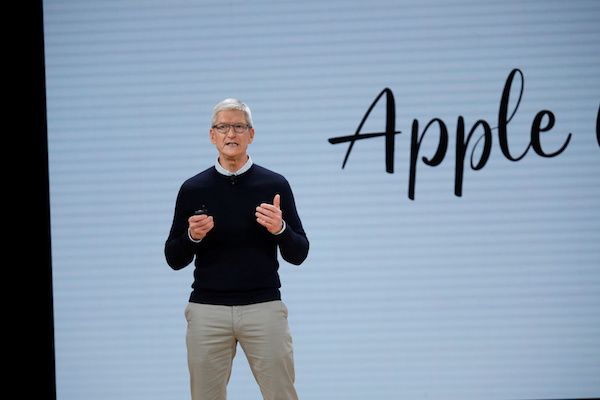
Monday’s close carries added significance for Apple’s leadership, arriving just before a major transition atop the company. The close will mark a leadership milestone as it comes near the end of Tim Cook’s tenure as CEO; he is leaving the role on Sept. 1 to serve as executive chairman, at which point John Ternus, who currently leads hardware engineering at the company, will assume the chief executive position.
A Pivotal Earnings Report on the Horizon
Apple’s newfound market-cap lead now sets the stage for a closely watched earnings report later this week, one that will likely serve as Cook’s final quarterly call as chief executive. Apple is scheduled to report third-quarter fiscal 2026 results on July 30, with the release followed by the company’s usual conference call at 5 p.m. Eastern time, featuring both Cook and Chief Financial Officer Kevan Parekh.
Wall Street’s expectations heading into the report are notably upbeat. During Apple’s prior earnings call, the company said it expected revenue to grow 14% to 17% year over year, a forecast that already factored in the impact from ongoing supply constraints. Analysts have converged around the upper half of that range, with some projecting Apple’s year-over-year revenue growth at roughly 16%, near the top end of the company’s guidance, with growth driven primarily by strong iPhone sales, which some analysts expect to rise more than 20% year over year, alongside continued double-digit growth in Apple’s Services division.
iPhone Demand and AI Strategy in Focus
Investor attention heading into Thursday’s report is expected to center on how well the newest iPhone lineup is performing, alongside continued questions about Apple’s broader AI ambitions following the rollout of developer trials for its Siri AI features earlier this summer. Apple’s research and development spending rose 34% in the March quarter to $11.42 billion, though the company does not break out AI-specific costs separately, folding all research and development spending into a single reported figure.
A Test of Sustainability for Apple’s Rally
With shares already trading near record highs ahead of the report, some analysts have cautioned that simply beating headline estimates may not be enough to sustain Apple’s current momentum. Investors are likely to demand strong forward guidance, resilient profit margins, and clearer evidence that Apple’s artificial intelligence strategy can drive another meaningful upgrade cycle across its product lineup, rather than treating this week’s results as confirmation that the company’s cautious AI spending approach has been fully validated.
With both companies now separated by only a narrow margin in market value, the coming days are likely to bring continued volatility in the race for the title of world’s most valuable company, particularly once Apple’s earnings are released Thursday and investors get a clearer picture of how the company’s iPhone and Services businesses performed heading into the back half of the year. Whether Apple can extend its lead over Nvidia may hinge heavily on how convincingly Thursday’s results validate the market’s current preference for capital discipline over aggressive AI infrastructure spending.

Perth high-powered computing provider DUG Technology has moved to correct its earlier statement that its Geraldton data centre had been cancelled, instead insisting it is only heavily delayed.
Unilever ULVR bumped up its outlook for the year after quarterly sales volume growth surged to more than a 16-year high.
The consumer-goods giant’s underlying sales growth accelerated to 5.8% in the second quarter—driven by a 5.5% increase in volumes and a 0.2% rise in pricing. It was well above company-compiled estimates, and growth of 3.1% in the same period a year prior.
Copyright ©2026 Dow Jones & Company, Inc. All Rights Reserved. 87990cbe856818d5eddac44c7b1cdeb8

One Nation leader Pauline Hanson has confirmed speculation her recent trip to the Dolce and Gabbana fashion show in Italy was paid for by mining billionaire Gina Rinehart.

Badenoch calls for emergency legislation to stop early release scheme

Microsoft Unveils Cost-Saving AI Cybersecurity Model Built to Beat Anthropic and Google at Half the Cost

Crypto exchanges face a survival crisis as day traders disappear

Renter of Home in Anne Heche Crash Denies Settlement With Son

No Jackpot Winner as $257 Million Prize Rolls Over to $269 Million Monday Draw

Weekend Open Thread: Staud – Corporette.com

Huge financial angle on this viral quarter!! #pcgspartner #quarter #quarters #coin @PCGScoin

Money football teams actually earn at the FIFA World Cup 2026. #worldcup #fifa #money #earring

No Strategies Working? Try This! #trading #propfirmtrading #crypto #tradesetup #forex
-

 Fashion4 days ago
Weekend Open Thread: Brooks Brothers
-

 NewsBeat7 days ago
How a former Blue Peter presenter stunned America’s Got Talent judges
-

 Tech1 day ago
Intel is reversing course and bringing hyper-threading back to its server chips
-
 Business6 days ago
New Jersey voter registration controversy explained: How 6,600 noncitizens got on the rolls, and what happens next
-
 Entertainment7 days ago
Johnny Depp’s R-Rated Gothic Cult Classic Gets New Release Ahead of Sydney Sweeney Remake
-

 Crypto World5 days ago
Ethics, other provisions in crypto Clarity Act to be further discussed
-

 Politics23 hours ago
Luke Littler dismantles Gerwyn Price to retain title in Blackpool
-
 Sports2 days ago
Commonwealth Games boxing: Jadumani Singh seals dominant 5-0 win over Pakistan’s Sumama Rehman to enter quarter-finals | Commonwealth Games News
-

 Sports4 days ago
2026 3M Open leaderboard: Scottie Scheffler finds putter in Round 1, sits three back
-

 Fashion4 days ago
16 Dresses for the High Summer Event
-

 News Videos5 days ago
The Peugeot Family: How 200 Years of an “Old Money” Dynasty Died in A Boardroom
-

 Politics2 days ago
Spain sweeps the board at 2026 World Cup with individual awards
-

 News Videos2 days ago
BITCOIN JUST ENTERED THIS CRITICAL ZONE…
-
 Entertainment4 days ago
A New Post-Apocalyptic Gundam Anime Series Blasts Into SDCC
-

 Crypto World2 days ago
XRP Ledger adds $2.6B as RWA inflows rank second
-

 Politics1 hour ago
The Part of the Electric Transition Nobody Wants to Discuss
-

 Crypto World5 days ago
Uniswap (UNI) pushes deeper into tokenized RWAs with permissioned trading pools
-

 Tech3 days ago
Anthropic launches Claude Opus 5, a cheaper AI model for coding, agents and enterprise workflows
-

 Crypto World3 days ago
Ripple bought a bank in pieces. The $4 billion audit
-

 Entertainment2 days ago
Sara Gilson Killed By Husband After Viral “Pedophile” TikTok Video
You must be logged in to post a comment Login