
Business
LARRY KUDLOW: More on the Bessent economic boom story



Pardon me from again borrowing from my G20 interview with Treasury Secretary Scott Bessent. Yet I really want to repeat my view that the most powerful news story, however unreported, is the emergence of an economic boom that is now cutting across every sector of the landscape.
And here is more of what Mr. Bessent said to me in response to my growthier point of view: “And as you said, the president’s policies have laid the groundwork for this economy. So we have regulatory certainty. The president tasked this administration with cutting the regulatory burden, and that’s part of what we’re talking about here today.”
That’s the important regulatory side of the economic boom. By the way, that includes drill, baby, drill, where we are now producing almost 14 million barrels of oil per day, which is an extraordinary number. Plus, record natural gas and liquefied natural gas exports around the world, where Trumpian policies have made America the energy capital of the globe.
And then there’s a tax policy that the press doesn’t really want to write about. Yet perhaps the single most underrated yet powerful policy, is the permanent restoration of 100 percent bonus depreciation to deduct the full cost of qualifying investments, immediately in year one. Anything, machinery, equipment, restaurants, tech startups; small businesses can deduct even more up front than ever before.
Former U.S. Energy Secretary Dan Brouillette analyzes global energy market dynamics, oil prices and security in the Middle East on ‘Kudlow.’
This is an enormous part of the AI boom and the data center construction boom, which like the factories of old, is creating massive new job opportunities in manufacturing for working folks, like carpenters, welders, electricians, and plumbers. And counter to the doomsday crowd, these data centers generate their own electricity, their own water systems, they pay more in taxes, and they allow localities to even cut property taxes along the way. And let’s not forget tax-free tips, tax-free overtime, and roughly $300 billion in individual refunds during the latest tax season.
Just today, we got new numbers on the productivity of nonfinancial companies, which is now running at 3.1 percent annually over the past two years, an unheard of accomplishment. Nothing like it since the 1990s. And the manufacturing indexes from the Institute for Supply Management are up for eight months in a row. While the service indexes are up 15 months in a row.
There is a boom out there, folks, and that’s the story that Secretary Bessent has been telling us. If only the press would listen.



Envision Research, aka Lucas Ma, has over 20+ years of investment experience and holds a Masters with in Quantitative Investment and a PhD in Mechanical Engineering with a focus on renewable energy, both from Stanford University. He also has 30+ years of hands-on experience in high-tech R&D and consulting, housing sector, credit sector, and actual portfolio management.He leads the investing group Envision Early Retirement along with Sensor Unlimited where they offer proven solutions to generate both high income and high growth with isolated risks through dynamic asset allocation. Features include: two model portfolios – one for short-term survival/withdrawal and one for aggressive long-term growth, direct access via chat to discuss ideas, monthly updates on all holdings, tax discussions, and ticker critiques by request.
Analyst’s Disclosure: I/we have no stock, option or similar derivative position in any of the companies mentioned, and no plans to initiate any such positions within the next 72 hours. I wrote this article myself, and it expresses my own opinions. I am not receiving compensation for it (other than from Seeking Alpha). I have no business relationship with any company whose stock is mentioned in this article.
Seeking Alpha’s Disclosure: Past performance is no guarantee of future results. No recommendation or advice is being given as to whether any investment is suitable for a particular investor. Any views or opinions expressed above may not reflect those of Seeking Alpha as a whole. Seeking Alpha is not a licensed securities dealer, broker or US investment adviser or investment bank. Our analysts are third party authors that include both professional investors and individual investors who may not be licensed or certified by any institute or regulatory body.

Michal Kuzawinski
Director of Investors Relations & Ownership Supervision
Good afternoon, everybody, and good morning to those who have joined us from behind the ocean. So we have today our H1 2026 results to discuss with you. We will have a presentation for you followed by a written Q&A session. [Operator Instructions]. We have with us today our CEO, Botond; and CFO, Jacek.
And I’ll hand over now to Botond to begin the presentation. Thank you.
Antal Rencz
CEO & President of the Management Board
Thank you very much, Michal. And I would like to welcome everybody to this call today. Very warm welcome probably because this summer, at least in Europe, was extremely warm. So I think everybody enjoyed their vacation. In case you didn’t, probably you will have a little bit calmer weather in September. But I’m very grateful that you have taken the time and you are joining us on this call.
Last time we covered the first quarter, now we are going to cover the first half, and Magda is going to show us the slides that we have. And the plan is that I give you a half-year highlights, and then Jacek will go into the details, and we are going to finish just like last time with the Q&A session.
So let me start with the headline picture for the first half. So Magda, if you don’t — okay, yes, we have now the numbers. So when we look at it, we can see that our rental activity — revenue from rental activity moved up 5% year-on-year with the underlying like-for-like 2%. We
Business
Nvidia Confirms $13 Billion Deal To Acquire Open-Weight AI Platform Hugging Face Amid Open-Source AI Push

SANTA CLARA, Calif. — Nvidia Corp. confirmed Thursday that it has agreed to acquire Hugging Face, one of the world’s most widely used platforms for sharing and deploying open-source artificial intelligence models, in a deal valued at roughly $13 billion, extending the chipmaker’s push into the AI software and model ecosystem.
According to a filing with the Securities and Exchange Commission, Nvidia entered into a definitive agreement to acquire Hugging Face on Sept. 2. The transaction includes an approximately $11.9 billion purchase price payable to Hugging Face stockholders, subject to certain adjustments, along with an equity-based retention program of up to approximately $1.0 billion for Hugging Face employees joining Nvidia. The total deal value has been widely reported at $12.93 billion. The acquisition is expected to close in the first half of 2027, pending regulatory approvals and other customary closing conditions.
Hugging Face operates a platform and community for developing, sharing and deploying open-source models, datasets and applications. According to Nvidia, more than 18 million developers, researchers and creators currently use the platform to share more than 3 million models, while more than 200,000 companies use Hugging Face to discover and deploy AI tools. The platform additionally hosts roughly 500,000 datasets and around 1 million applications, according to figures cited by TechCrunch.
Nvidia CEO Jensen Huang framed the acquisition as an extension of the company’s broader commitment to keeping AI development open and accessible, rather than as an effort to control or restrict how developers use the platform going forward.
“Together, we will scale Hugging Face’s platform, strengthen its infrastructure and expand access to AI for developers and institutions worldwide,” Huang wrote in a statement announcing the deal.
Huang emphasized that Nvidia intends to preserve Hugging Face’s open, vendor-neutral character even under new ownership, addressing concerns that the acquisition might steer developers toward exclusively using Nvidia’s own computing hardware.
“Hugging Face will remain an open platform for the entire AI ecosystem,” Huang said. “Developers will choose the models they want, the frameworks they want, the clouds and inference service providers they want and the computing platforms they want. Nvidia compute will not be required to build on or deploy through Hugging Face.”
Nvidia’s SEC filing echoed that commitment in more formal terms, stating that the company has committed to keep Hugging Face’s platform open, “consistent with Hugging Face’s existing practices,” and that under this commitment, Hugging Face would continue to permit model makers, developers and users to upload and download models and datasets of their choosing, while continuing to support hardware from other silicon vendors beyond Nvidia’s own chips.
Huang also pointed to Nvidia’s existing contributions to the Hugging Face platform as evidence of the company’s long-standing support for open AI development, noting that Nvidia has released more than 500 models and 250 open datasets through the platform, making it the largest single contributor of open models and data to Hugging Face to date.
Nvidia enterprise computing general manager Justin Boitano addressed the strategic rationale behind the deal during a call following the announcement, according to a Yahoo Finance report, indicating the company’s belief in the continued importance of open-model ecosystems to the broader AI industry’s development.
The deal comes roughly a year after Hugging Face turned down an earlier acquisition offer from Nvidia, reportedly worth around $500 million, in order to maintain its independence as a standalone company, according to reporting from the Financial Times. Hugging Face had more recently been generating approximately $150 million in annualized revenue, according to a report from The Information published last month, with company co-founder and CEO Clément Delangue telling TechCrunch in a July interview that the platform’s growth rate was helping it move “close to profitability” even before the Nvidia deal was finalized.
Huang has been an outspoken proponent of open-weight AI models throughout the past year, including authoring an essay in July advocating for open models as a strategic asset for the United States in its broader AI competition with rivals including China. Huang has argued that widespread global adoption of open-weight models developed and hosted through platforms like Hugging Face strengthens American technological influence over the international AI ecosystem, a position he reiterated in Thursday’s announcement of the Hugging Face deal.
Thursday’s acquisition adds to a series of recent moves by Nvidia to deepen its position across the broader AI technology stack, extending well beyond its core business of designing computing chips. Last month, The Wall Street Journal reported that Nvidia struck a $6 billion deal with coding startup Poolside to help develop open AI models. During its most recent earnings call, Nvidia disclosed that it has invested more than $50 billion into various AI infrastructure and ecosystem partnerships. The company has also separately committed to partnering with multiple Wall Street investment firms to deploy more than $500 billion in third-party capital toward the broader buildout of AI infrastructure.
Market reaction to Thursday’s confirmation was modestly positive, with Nvidia shares gaining close to 2% during the first hour of Thursday’s trading session, according to Yahoo Finance. Analyst commentary following the announcement characterized the deal’s price tag as a relatively modest expenditure relative to Nvidia’s overall financial scale. Speaking to Yahoo Finance, one analyst identified as Doran noted that Nvidia’s free cash flow is projected to reach nearly $200 billion for its fiscal year 2027, characterizing the roughly $13 billion purchase price as “not a big bite” relative to the company’s overall balance sheet.
That same analyst suggested the acquisition reflects Nvidia’s effort to diversify its business ahead of an eventual moderation in chip demand growth, even as current demand for Nvidia’s core hardware products remains extremely strong. “Right now, chip … demand is huge, but they are positioning themselves for the day when that will slow down,” the analyst said, adding that such a slowdown “still looks like it’s far in the future. But that will happen at some point.”
The Hugging Face acquisition follows Nvidia’s participation earlier this week at the G20 Innovation Ministerial in Chapel Hill, North Carolina, where Huang and other technology leaders addressed broader questions surrounding AI’s economic impact and infrastructure requirements. With the deal now confirmed and expected to close within the first half of 2027, Nvidia’s move to bring one of the AI industry’s most widely used open-source platforms under its ownership marks one of the company’s most significant acquisitions to date, further cementing its expanding influence across both the hardware and software layers of the global AI ecosystem.
Business
Microsoft Shares Jump 3% After Company Unveils Plan To Reveal Azure Revenue For First Time This Fall
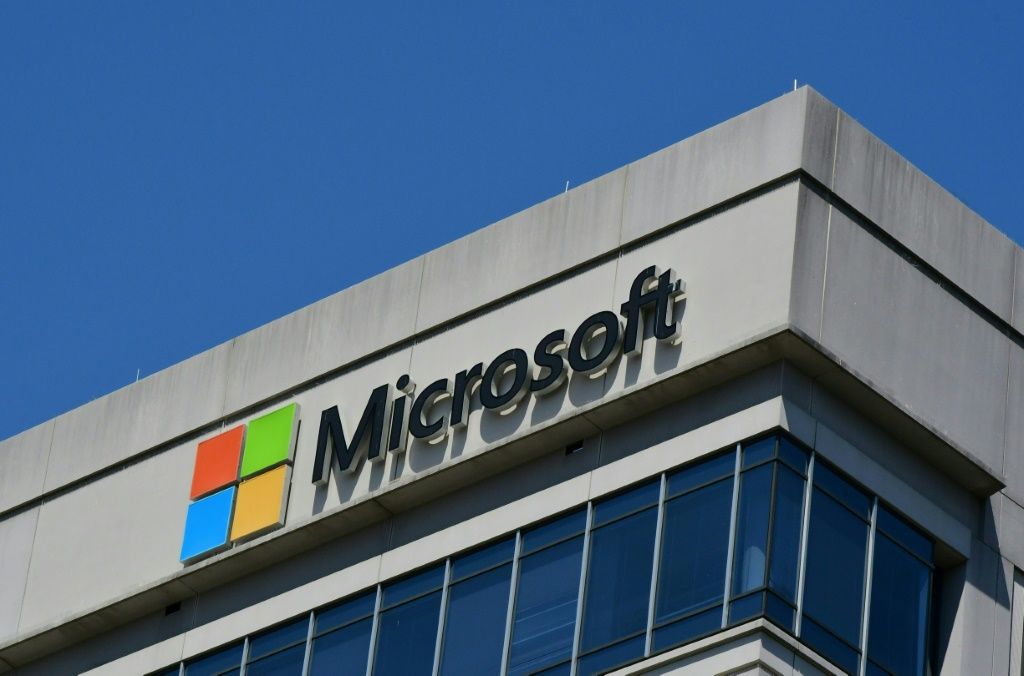
REDMOND, Wash. — Shares of Microsoft Corp. climbed sharply Thursday, rising $16.04, or 3.23%, to $512.86 as of 11:19 a.m. ET, as investors responded positively to a broader market rally alongside the company’s announcement that it will begin disclosing standalone quarterly revenue figures for its Azure cloud business for the first time.
Microsoft unveiled the reporting change Wednesday as part of its most significant overhaul of financial disclosure since 2015, consolidating its three existing operating segments into two new groupings: Agents and Infra, and Devices and Consumer. The updated structure is set to take effect with the company’s fiscal first-quarter results this fall.
Under the new framework, the Agents and Infra segment will merge Azure and server products with Microsoft 365 business software, consolidating the company’s cloud, productivity, developer, security, consulting and support operations into a single reportable unit. The Devices and Consumer segment, meanwhile, will bring together Windows, Xbox gaming, and a unified search and advertising business that now includes LinkedIn Marketing Solutions and premium subscriptions.
The centerpiece of the change is Microsoft’s decision to finally disclose actual dollar figures for Azure’s quarterly revenue, ending more than a decade in which the company shared only year-over-year growth percentages for the business rather than concrete sales totals. That practice had long frustrated analysts attempting to model the true scale of Azure relative to rivals Amazon Web Services and Google Cloud, both of which report specific quarterly revenue figures for their respective cloud platforms.
According to figures disclosed alongside the restructuring announcement, Azure generated $29.42 billion in revenue during the quarter ending in June, a 42% increase from the same period a year earlier, and surpassed $100 billion in cumulative sales for the full 2026 fiscal year. Notably, the restructured Azure reporting will exclude GitHub cloud services, Security Copilot and healthcare cloud solutions, offerings that had previously been folded into Azure’s growth metrics under the prior reporting structure.
Microsoft CEO Satya Nadella explained the rationale behind the broader reorganization in materials accompanying the announcement, tying the change directly to the growing influence of artificial intelligence across the company’s product lines.
“It is changing what we build and how we operate, and it is blurring the boundaries between our products,” Nadella said, referring to AI’s transformative effect on the company’s business.
Azure has emerged as one of the primary beneficiaries of the broader artificial intelligence boom, as enterprise customers increasingly turn to major cloud infrastructure platforms to access the computing power needed to build and deploy AI models and agents. Analysts at Stifel estimated in July that roughly half of Azure’s revenue growth during fiscal 2026 stemmed from Microsoft’s partnership with OpenAI, while rival AI developer Anthropic has also become increasingly reliant on Microsoft’s cloud infrastructure.
The new Agents and Infra segment will also give investors a clearer view into Microsoft’s expanding AI assistant portfolio. The company disclosed in July that it had surpassed 30 million paid licenses for Microsoft 365 Copilot, up from more than 20 million reported in April, reflecting rapid growth in enterprise adoption of the company’s AI-powered productivity tools.
Thursday’s stock gain builds on additional positive momentum for Microsoft heading into the reporting change. Bank of America research analyst Tal Liani recently upgraded his outlook on the stock, arguing that investors have been underestimating how effectively Microsoft is differentiating itself within the broader artificial intelligence competitive landscape.
Wall Street’s overall sentiment toward Microsoft has remained strongly positive. Analysts maintain a consensus “Strong Buy” rating on the stock, with price targets ranging from roughly $568 to $592, implying meaningful additional upside from current trading levels according to some estimates.
Thursday’s gains also came amid a broadly positive session for the overall stock market, with major indexes advancing as Treasury yields eased and technology stocks benefited from renewed investor enthusiasm tied to Nvidia’s confirmed $12.93 billion acquisition of AI platform Hugging Face, announced the same day. Microsoft is among the seven major technology stocks tracked within a widely followed equal-weighted “Magnificent Seven” exchange-traded fund, alongside Alphabet, Amazon, Apple, Meta Platforms, Nvidia and Tesla, several of which also posted gains Thursday amid the broader rally in AI-linked technology names.
Microsoft’s stock performance has been notably volatile throughout 2026. Shares were down more than 20% for the year prior to the company’s fiscal fourth-quarter earnings report in late July, which triggered a sharp rally after Microsoft reported $90 billion in quarterly revenue, an 18% increase from the same period a year earlier, alongside profit growth of 31% compared with the prior-year quarter. That earnings-driven surge added roughly $450 billion to Microsoft’s market value in a single session, pushing the company’s market capitalization to approximately $3.4 trillion and making it the fourth-largest company in the world by that measure at the time.
Despite that rebound, Microsoft shares remained roughly 5% below the all-time high the stock had established roughly a year earlier, even after the post-earnings surge. The stock’s recovery this year has come even as the company continues navigating cost pressures tied to its aggressive artificial intelligence infrastructure spending, including a previously announced reduction of 4,800 employees, representing roughly 2.1% of Microsoft’s global workforce, disclosed earlier this year in a memo from Amy Coleman, the company’s executive vice president and chief people officer.
In fiscal year 2026 overall, Microsoft reported total revenue of $331.84 billion, an increase of 17.79% compared with the prior year, while earnings rose 31.34% to $133.75 billion, according to data compiled by financial analysts tracking the company’s performance.
With the new two-segment reporting structure and standalone Azure disclosure set to take effect alongside Microsoft’s fiscal first-quarter earnings report this October, investors will gain their first detailed, dollar-based look at the true scale of Azure’s business performance relative to its major cloud competitors, a level of transparency Wall Street has sought from Microsoft for years. Analysts and investors will likely be watching closely to see how the newly disclosed figures compare against market expectations, and whether the added transparency reinforces or complicates the broader bullish narrative that has driven Microsoft shares higher in recent months.
Business
Cloudflare Down? Users Report Access Issues As Internet Infrastructure Giant Faces New Disruption Thursday

UPDATE From CloudFLare: “Cloudflare is not experiencing any significant service disruptions at this time. Our services are operating normally, and any reporting that deviates from this is incorrect” (11:58 AM Thursday, September 3, 2026 Eastern Time (ET)
Users began reporting access problems tied to Cloudflare, the internet infrastructure and security company that powers a significant portion of the global web, starting around 11:12 a.m. EDT Thursday, according to outage-tracking site Downdetector.
The outage tracker’s official account flagged the surge in user complaints shortly after the reports began, asking affected users how the disruption was impacting them and directing people to its live outage dashboard for further updates. The hashtag “CloudflareDown” began circulating on social media as users compared notes on the issue.
Cloudflare, which provides content delivery, network security and performance services for websites across the internet, has experienced a documented pattern of intermittent issues over the past several days, according to independent status-tracking services. StatusGator’s monitoring data shows Cloudflare’s overall status has registered a “warning” condition, indicating degraded rather than fully unavailable service, continuously across much of the past two weeks, with periods ranging from several hours to nearly a full day at a stretch. That same tracker recorded a brief, fully “down” incident lasting 19 minutes on Sept. 1, along with a separate documented incident early Thursday morning, at 1:55 a.m., described as an “HTTP/3 issue affecting R2 custom domains,” which lasted approximately one minute.
Other independent monitoring services have painted a similarly turbulent picture of Cloudflare’s recent reliability. One tracker, IncidentHub, reported that Cloudflare had recorded 76 separate outages across 49 different components over the trailing 30-day period, with specific services including its R2 object storage product and WARP VPN service flagged as affected in recent status checks, even as other Cloudflare offerings, including its AI Gateway and AI Search products, continued showing as operational.
Because Cloudflare provides infrastructure services to an estimated 20% of websites globally, according to industry estimates, disruptions affecting the company’s network have historically produced outsized, highly visible ripple effects across the broader internet, often taking down or degrading access to major platforms that rely on Cloudflare for content delivery, security filtering or domain name resolution services.
Cloudflare has experienced several major, high-profile outages over the past year that illustrate the scale of disruption the company’s infrastructure problems can cause. In November 2025, a significant outage affecting Cloudflare’s core network took down or degraded access to a wide range of major websites and platforms, including social media platform X, artificial intelligence company OpenAI’s services, and music streaming service Spotify. Cloudflare later published a detailed internal account of that incident, describing the resulting downtime as unacceptable given the company’s central role in the internet’s infrastructure.
“We are sorry for the impact to our customers and to the Internet in general,” Cloudflare wrote in its public postmortem addressing the November incident. “Given Cloudflare’s importance in the Internet ecosystem any outage of any of our systems is unacceptable. That there was a period of time where our network was not able to route traffic is deeply painful to every member of our team.”
Cloudflare’s account of the November outage traced the root cause to a software issue in which the company’s systems began loading an incorrect internal feature file, triggering a spike in server error responses across its network. The company said other systems dependent on its core proxy infrastructure, including its Workers KV data storage product and Cloudflare Access authentication service, were also affected during that incident, with engineers ultimately implementing a patch to bypass the core proxy for Workers KV in order to reduce the broader impact.
Just weeks later, in December 2025, Cloudflare experienced another significant disruption, which the company again publicly acknowledged with a similarly apologetic tone in its subsequent incident report.
“Any outage of our systems is unacceptable, and we know we have let the Internet down again following the incident on November 18,” Cloudflare wrote regarding the December incident, which the company traced to changes made to its Web Application Firewall buffer size settings as part of an unrelated security effort to protect customers from a critical vulnerability affecting React-based applications.
A separate major incident in February 2026 affected customers using Cloudflare’s Bring Your Own IP service, a feature that allows customers to route their own internet address blocks through Cloudflare’s network. During that incident, a configuration change unintentionally caused a portion of customer IP address routes to be withdrawn from the internet’s global routing tables, rendering affected customer websites and applications unreachable for several hours. Cloudflare said that incident was not caused by any cyberattack or malicious activity, but rather stemmed from an internal change to how the company managed IP addresses onboarded through its Bring Your Own IP pipeline.
As of Thursday morning, it remained unclear whether the reports beginning at 11:12 a.m. EDT were connected to any of the previously logged incidents affecting Cloudflare’s infrastructure this week, or represented a separate, newly emerging disruption. Cloudflare had not issued a specific public statement addressing the cause of Thursday’s reported access issues as of the time affected users began flagging problems on social media.
For website owners and businesses that rely on Cloudflare for their online infrastructure, standard guidance during a suspected outage typically involves first confirming whether the underlying issue originates with Cloudflare itself or with a customer’s own origin server, by checking Cloudflare’s official status page for any acknowledged incidents. If Cloudflare’s status page shows all systems operational despite continued site inaccessibility, the underlying problem more likely lies with a customer’s own hosting provider rather than with Cloudflare’s network directly. In situations where Cloudflare’s infrastructure is confirmed to be the source of a disruption, affected website operators can sometimes mitigate the impact by temporarily enabling Development Mode within their Cloudflare dashboard or by pausing Cloudflare services entirely, routing traffic directly to their origin servers instead.
As of Thursday late morning, it remained unclear how long the newly reported access issues would persist or how broadly they might affect websites and services relying on Cloudflare’s infrastructure. Affected users were advised to monitor both Downdetector’s live outage dashboard and Cloudflare’s official status page for updates as the company worked to identify and address the underlying cause of the disruption.

The $3 Trillion AI Footnote: What Big Tech Isn't Telling You On Page 1

Elastic plans to integrate OpenAI cyber models into security platform

Oura files for Nasdaq initial public offering following rapid revenue growth

Rydoo, the Belgian expense management provider used by more than one million people in over 130 countries, has launched a connector that puts its platform directly inside Claude, ChatGPT and other AI tools already in use across businesses.
The Rydoo Model Context Protocol, or Rydoo MCP, was announced on Thursday from the company’s base in Mechelen. It is built on MCP, an open standard for linking AI systems to business applications, which was introduced by Anthropic in November 2024 as a way of connecting AI assistants to the systems where company data lives.
In practice, Rydoo says the connector allows users to check what expenses are outstanding and approve or reject them in plain language from within the AI tool of their choice. Finance teams can also ask for a spend summary by project or trip instead of working through spreadsheets, giving them a faster route to real-time spend data.
The company says the launch reflects a broader shift in how finance departments are adopting AI. Rather than asking employees to adopt yet another piece of software, the Rydoo MCP is designed to meet people where they already work, reducing friction in the approval process.
Governance is a central part of the pitch. Rydoo says IT teams retain full control over access through an approval flow covering authentication, consent and the specific tools each user can reach, which it argues gives finance and IT confidence that AI-powered workflows remain secure and auditable.
The connector is available now to both new and existing customers across mid-market and enterprise organisations globally. It follows Rydoo’s acquisition of Semine in July 2025, which extended the company’s offering into accounts payable automation.
Sebastien Marchon, chief executive of Rydoo, said: “We’re excited to bring Rydoo into Claude and other mainstream AI tools that our customers already rely on every day. Finance teams don’t need another tool to log into; they want their existing workflows to get smarter to drive efficiency across the business.”
He added: “Our core principle is that expense management should be easy and the Rydoo MCP is the next step in building a platform that reduces friction and works the way modern finance teams actually operate.”
Marchon also linked the launch to the way companies are trying to standardise AI use across their workforces. “This type of integration also chimes with corporate AI strategies more broadly,” he said. “As companies seek to standardise AI usage across their teams, the ability to reduce the number of platforms and logins contributes to more cohesive operations that drive productivity and results.”
Rydoo describes itself as an AI-powered expense management solution that gives finance teams control over all employee spending. Employees submit expenses through a mobile app, while automated policy checks, fraud detection and AI-driven insights are intended to support compliance and efficiency. The platform has more than 40 integrations with travel, HR, finance and ERP systems.
In 2024, the European private equity firm Eurazeo, which has more than €35 billion in assets across more than 600 organisations, became Rydoo’s majority shareholder.
Rydoo has not said how many of its customers are in the UK, nor whether the connector will be priced separately from its existing plans.

Jamie Young
Jamie Young is Senior Reporter at Business Matters, covering SME finance, employment law and Westminster policy since 2016. He has reported on every Budget and Autumn Statement since 2018, helped make sense of the ‘covid era’ and the bounce-back loan scheme from launch through the fraud investigations, and broke the magazine’s coverage of the 2024 late-payment reforms. He joined Business Matters straight from completing his BA in Administration from Exeter University and is NCTJ-qualified. Reach him at jyoung@cbmeg.co.uk

The US Mint began selling gold-coloured $1(£0.74) coins featuring President Donald Trump’s likeness. Although US regulations permit only deceased people to appear on currency, the Trump administration has said that the president may appear on a coin under a 2020 law allowing new designs to commemorate the country’s 250th anniversary.
The price of the coin, when purchased online, depends on the quantity. A 25-coin roll costs $61(£45), while a 100-coin bag costs $154.50 (£114).
The BBC’s Madeline Gerber visited the US Mint coin store to learn more.
Video produced by Mabel Pickering
XRP Price Analysis: Can XRP Resume Its Rally After Defending Key Support?

After Watching World Cup, 16-Year-Old Cavan Sullivan Sets Sights On USA Call-Up

Audacity audio-editing app no longer looks like it’s from the early 2000s

Weekend Open Thread – Corporette.com

Weekend Open Thread: Brooks Brothers

London Mayor Sadiq Khan handed a peerage by Keir Starmer alongside 15 other Labour figures… just days before the PM leaves No10

Vannacci Replica Alle Accuse Del Financial Times

Luxury x Happy nation | Old Money | Money edit | Millionaire #shorts #motivation #success #trending

Crypto Trading LIVE: BTC Live Trading Bitcoin Analysis | 28 AUG #crypto #bitcoin #btc
-

 Fashion6 days ago
Weekend Open Thread: Maeve – Corporette.com
-

 Crypto World7 days ago
Bitcoin’s 22% rally now needs real demand to outlast Treasury liquidity boost
-

 Business7 days ago
Apple Confirms September 9 Keynote and Reveals Its Full Pre-Order Schedule
-

 Crypto World22 hours ago
CLARITY Act could advance within weeks, Atkins says
-

 Business7 days ago
Salesforce Stock Soars 19% as Blowout Earnings and Agentforce AI Growth Silence Software Skeptics
-

 Business6 days ago
Onto Innovation Stock: AI’s Next Bottleneck Is Yield (NYSE:ONTO)
-

 Crypto World6 days ago
Bitcoin price tests $82K resistance as Brandt stays long
-
 Tech5 days ago
Hugging Face built a $4.5 billion empire on free AI models. Now Nvidia is buying it for $12.9 billion
-

 Business6 days ago
iPhone 18 Pro Pre-Orders Could Shift to Saturday as Apple Reportedly Avoids September 11 Anniversary
-

 Crypto World2 days ago
Elon Musk Says Grok 4.7 Lands in 10 Days and Will Beat Every Model
-

 Crypto World7 days ago
Truflation calls for Fed rate cut after PCE forecast
-
 Entertainment6 days ago
‘Adults’ Creators Break Down Season 2’s Most Shocking Moments and Tease a Potential Season 3
-

 Tech7 days ago
The fix for the AI agent that hijacked a company’s DNS: it can propose the change, but it can’t approve it
-

 News Videos5 days ago
Charlie Munger on Robinhood: No one should believe that Robinhood’s trades are free
-

 Tech6 days ago
PaperCut releases second emergency patch for exploited flaws
-

 Tech5 days ago
Tamagotchi Ring Takes the 30-Year Digital Pet and Places it on Your Finger
-

 Tech5 days ago
As the influencer economy drives retail sales, Seattle startup raises $22M to play matchmaker
-

 Crypto World2 days ago
Bitcoin slips below $77.5K as macro pressure offsets ETF inflows
-

 Crypto World18 hours ago
Kalshi seeks CFTC approval for WTI perpetual
-
 NewsBeat5 days ago
Trump posts AI video of ‘Lake America’ being protected by an army of bequiffed ‘Donald Ducks’
You must be logged in to post a comment Login