
Business
Launch Timeline, Specs, Price and Development Status


CUPERTINO, Calif. — As March 2026 unfolds, speculation around Apple’s long-awaited foldable iPhone—often dubbed the iPhone Fold—intensifies, with supply-chain reports, analyst predictions and leaks pointing to a potential debut later this year. After years of persistent rumors dating back over a decade, credible sources increasingly converge on a fall 2026 launch, likely alongside the iPhone 18 Pro and Pro Max models, marking Apple’s first entry into the foldable smartphone market dominated by Samsung, Google and others.

The device, expected to feature a book-style design that unfolds into a tablet-like screen, represents a significant shift for Apple, which has historically prioritized refinement over rushing into emerging categories. Analysts and insiders describe the iPhone Fold as a premium, high-end offering designed to wow loyal fans while addressing longstanding foldable pain points like visible creases and durability.
Development Status and Timeline
Multiple reports confirm Apple has advanced beyond prototypes. As early as July 2025, leaks indicated a first production prototype existed, followed by engineering validation testing (EVT) phases by late 2025. Foxconn, Apple’s primary manufacturing partner, reportedly entered the New Product Introduction (NPI) stage in early 2025 and is gearing up for mass production in the second half of 2026—potentially starting as soon as mid-year (June-July) to support a September unveiling.
Supply-chain watcher Ming-Chi Kuo reiterated in early March 2026 that the foldable targets a late-2026 release, with mass production kicking off in the second half. Bloomberg’s Mark Gurman has echoed this, suggesting a fall 2026 launch window, though some earlier predictions allowed for a 2027 slip due to design decisions like hinge mechanics. Recent updates, however, show momentum: Apple is stockpiling components, and mass production timelines align with traditional iPhone cycles.
A notable wrinkle emerged from Nikkei Asia and other Asian reports: Apple may alter its 2026 lineup strategy due to production constraints, memory shortages and focus on premium devices. The company could prioritize the iPhone 18 Pro, Pro Max and iPhone Fold for September 2026, delaying the base iPhone 18 to early 2027. This shift underscores the foldable’s importance—Apple views it as a flagship innovation capable of driving upgrades.
Design and Key Specs
Leaks paint a picture of a premium book-style foldable (horizontal unfold, unlike clamshell flips). Key rumored features include:
- Crease-Free Display — A major breakthrough: the inner screen (around 7.8-8 inches) reportedly eliminates visible creases through advanced panel tech from Samsung Display, including Color Filter on Encapsulation (CoE) for slimmer, brighter and more efficient panels. Outer cover display is expected around 5.5-6 inches.
- Battery — A massive 5,500mAh capacity, surpassing even the iPhone 17 Pro Max’s 5,088mAh, to support the larger unfolded form factor and power-hungry multitasking.
- Processor — Likely an A20-series chip (or variant), optimized for AI tasks, multitasking and efficiency in a foldable chassis.
- Durability and Hinge — Optimized hinge design keeps costs down (average selling price ~$70-80), with emphasis on robustness to meet Apple’s standards—no compromises on premium feel.
- Other Features — Expected to include advanced cameras (potentially four-lens setup), improved Apple Intelligence integration, and seamless iOS adaptations for folded/unfolded modes (hints of fold-specific software already exist in current iOS builds).
The design prioritizes Apple’s ecosystem strengths: fluid transitions between phone and tablet modes, enhanced productivity and entertainment without the durability trade-offs plaguing competitors.
Pricing and Market Expectations
Pricing remains a focal point, with estimates ranging from $1,800-$2,500, potentially making it Apple’s most expensive iPhone ever. Analyst Ming-Chi Kuo suggested hinge cost reductions could improve margins or slightly lower retail price, but the consensus leans toward premium positioning—$2,000+ to reflect exclusivity and advanced tech. Some predict Apple aims for 8-10 million units in the first year, with ambitions to double in 2027, signaling expectations of strong demand among loyalists eager for a “must-have” innovation.
Challenges and Competition
Apple enters a mature foldable market where Samsung’s Galaxy Z Fold series, Google’s Pixel Fold and others have iterated for years. Competitors like Samsung continue pushing boundaries (e.g., tri-fold concepts), but Apple’s delayed entry allows time to observe flaws—durability, crease visibility, software optimization—and deliver a polished product. A clamshell “iPhone Flip” remains in development but appears delayed to 2027 or later, with the book-style Fold taking priority.
Critics question whether the high price and niche appeal will drive mass adoption, especially amid economic pressures and competition from affordable Android foldables. Yet Apple’s ecosystem lock-in, brand loyalty and marketing prowess could spark a significant upgrade cycle—some forecasts predict 10% overall iPhone sales growth in 2026 if the Fold lands well.
Outlook
As leaks accelerate—prototypes, renders and component stockpiles—expect more concrete details in coming months. If mass production begins mid-2026, major reveals (design, specs) could surface by summer, building hype for a September event. The iPhone Fold promises to redefine Apple’s smartphone lineup, blending phone convenience with tablet productivity in a crease-free package.
For now, the rumor mill churns: Apple’s foldable is no longer “if” but “when”—and 2026 appears increasingly likely. Fans and analysts watch closely as Cupertino prepares what could be its boldest iPhone evolution in years.



Samsung Elec likely to report stupendous surge in quarterly profit to record level

A Market Driven by Noise, Not Always Value
Global equities today are influenced as much by sentiment as by fundamentals. Short-term movements are often erratic, driven by interest rate expectations, geopolitical tensions, and capital flows. As Joel Greenblatt highlighted in his bestselling book “The Little Book That Beats the Market.”, stock prices can fluctuate wildly in the short run without a corresponding change in the underlying business value .
This disconnect is particularly visible in current global markets:
US markets remain sensitive to monetary policy shifts and inflation data.
European equities face energy price volatility and growth concerns.
Emerging markets, including India, are navigating capital inflows alongside currency pressures.

Such conditions reinforce the idea that markets behave irrationally in the short term but tend toward efficiency over the long term.
The Rise of Factor-Based and Value Investing
In an environment where macro signals dominate headlines, investors are increasingly turning toward systematic strategies. Greenblatt’s Magic Formula, built on earnings yield (value) and return on capital (quality), offers a disciplined approach to stock selection.This framework aligns well with the current global scenario:
Earnings yield helps identify stocks that are undervalued relative to their earnings potential.
As global markets oscillate between growth and value cycles, such factor-based investing has gained traction among institutional and retail investors alike.
Mispricing Opportunities in a Fragmented Market
One of the defining characteristics of today’s global market is dispersion, while some sectors are richly valued, others remain overlooked. Greenblatt’s philosophy is rooted in identifying these inefficiencies.
Markets often misprice stocks due to emotional reactions and short-term narratives. This creates opportunities to buy good businesses at bargain prices, a principle also echoed by Warren Buffett.
In the current cycle:
Technology and AI-driven stocks may appear expensive but continue to command premium valuations.
Cyclical sectors like metals, energy, and financials often swing between undervaluation and sharp rallies.
Mid- and small-cap stocks globally present pockets of mispricing due to liquidity constraints and risk aversion.
Patience and Time Horizon: The Missing Edge
A key takeaway from Greenblatt’s approach is that even the best strategies can underperform in the short term. He emphasizes that lack of patience is one of the primary reasons investors fail to benefit from sound investment frameworks .
This insight is particularly relevant today:
Markets are reacting quickly to news, leading to frequent corrections and rallies.
Investors often chase momentum, abandoning long-term strategies prematurely.
In contrast, disciplined investors who stay invested across cycles are better positioned to capture long-term alpha.
Diversification and Risk Management in a Global Context
Global investing today demands diversification, not just across stocks, but across geographies and sectors. Greenblatt underscores diversification as essential to withstand adverse periods and allow a sound process to deliver results over time .
Given current uncertainties:
A diversified portfolio can balance developed and emerging market exposure.
Sectoral diversification helps mitigate risks from commodity cycles or policy changes.
India in the Global Equation
India continues to stand out as a relatively resilient market, supported by domestic demand, structural reforms, and earnings visibility. However, it is not immune to global shocks:
Foreign institutional flows remain sensitive to global liquidity.
Valuations in certain segments appear stretched, increasing the importance of selective investing.
Applying a disciplined approach can help Indian investors navigate this environment by focusing on quality businesses available at reasonable valuations.
Back to Basics in a Complex World
The global stock market may be entering a phase where macro uncertainties persist, but the core principles of investing remain unchanged. Greenblatt’s Magic Formula reinforces a simple yet powerful idea:
Successful investing lies in systematically identifying strong businesses trading at attractive prices, and having the patience to stay invested.
In a world dominated by noise, algorithms, and rapid capital flows, returning to such fundamental, value-driven frameworks may well be the most effective way to generate consistent long-term returns.

Data from the Clearing Corporation of India showed CSB Bank offered the highest rate at 8.32% for 91 days, followed by Ujjivan Small Finance Bank and Equitas Small Finance Bank, which raised funds at 8.25% for 366 days and 356 days, respectively. Other lenders such as HDFC Bank and IDBI Bank paid 7.6% for 33-day funds.
“While some firming is typical at year-end as banks shore up their balance sheets, this spike goes beyond seasonality,” said VRC Reddy of Karur Vysya Bank. “CD rates have moved to elevated levels, signalling deeper funding pressures rather than just a year-end phenomenon.”

HDFC Bank, the country’s most valuable lender, which has been under investor scrutiny following the sudden exit of chairman Atanu Chakraborty, raised funds at 7.6% for 33 days on March 27, mobilising ₹4,300 crore. Punjab National Bank raised ₹1,175 crore at 7.5% for the same tenor. These rates are well above the 3.25% banks typically pay retail depositors for 30- to 45-day deposits. Most banks pay around 6.25% to 7% for one-year deposits.
“The CD rates do appear high when compared with retail deposit rates or the card rates published by banks, largely because deposit growth has lagged credit growth,” said Anil Gupta, co-group head for financial sector ratings at ICRA.
Overall, HDFC Bank raised ₹23,090 crore during the last fortnight across tenors ranging from 33 to 327 days, paying interest rates between 7.3% and 7.6%. Data showed Axis Bank raised ₹3,500 crore at 7.6% for 92 days, IndusInd Bank raised ₹2,075 crore at around 7.5% for tenors ranging from 91 to 94 days, while Bandhan Bank paid 7.85% for 186 days on a ₹125 crore CD.During the fortnight ended March 31, banks issued ₹1.07 lakh crore of CDs, broadly in line with issuance in the corresponding fortnight last year.
CD rates had earlier climbed sharply during periods of tight liquidity, peaking at about 8.15% between February and March 2024, according to historical data.
Reddy said elevated CD rates reflect a combination of tight systemic liquidity, pressures linked to liquidity coverage ratio requirements, and tactical balance-sheet management amid weak deposit mobilisation.
“In this backdrop, banks have prioritised certainty over cost, relying on CDs and other bulk funding to secure immediate and assured resources,” he said.
ICRA’s Gupta said while CD rates are high, such issuances are typically used to plug short-term mismatches in asset-liability flows. “Certificates of deposit account for only 2.6% of overall bank deposits and do not materially increase the overall cost of deposits,” he said.
Union Bank of India raised ₹24,060 crore, while Punjab National Bank mobilised ₹12,450 crore in the last fortnight of March, offering rates ranging between 6.9% and 7.5%, the data showed.
Banks paid higher rates for shorter-tenor CDs than for longer maturities.
Reddy said CD rates may ease from the March-end spike but are unlikely to soften meaningfully in FY27. “The underlying drivers – tight liquidity conditions, a persistent credit-deposit mismatch and pressure on deposit mobilisation – are structural rather than transient,” he said.


Three Gulf funds agree to back Paramount’s $81 billion takeover of Warner, WSJ reports
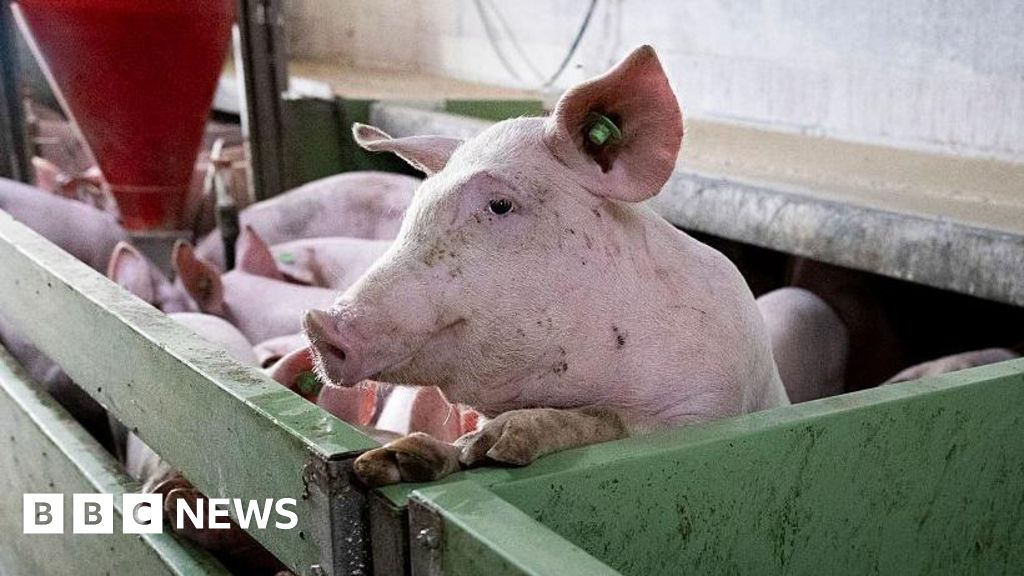
Brazil, Japan, Mexico, South Africa and the US have stopped importing Spanish pork. Other countries, such as EU members, China and the UK, have taken a more localised approach, only banning pork that originates in the affected area of north-eastern Spain.


Trump invokes religious rhetoric in praise of Iran rescue, drawing criticism

Families on some benefits with three or more children will get an average rise of £4,100 a year.

Russia says it downed 148 Ukrainian drones in three hours


Oil prices open higher as US-Israeli war with Iran continues to disrupt supply


How a perilous US rescue mission in Iran nearly went off course

Samsung Elec likely to report stupendous surge in quarterly profit to record level
Ashley Iaconetti Has ‘No Shame’ Putting Her Kids on Leashes

Crypto Trading LIVE: BTC Live Trading Bitcoin Analysis | 30 MAR #crypto #bitcoin #btc


-

 NewsBeat3 days ago
Steven Gerrard disagrees with Gary Neville over ‘shock’ Chelsea and Arsenal claim | Football
-

 Business3 days ago
No Jackpot Winner and $194 Million Prize Rolls Over
-

 Fashion2 days ago
Weekend Open Thread: Spanx – Corporette.com
-
Entertainment6 days ago
Fans slam 'heartbreaking' Barbie Dream Fest convention debacle with 'cardboard cutout' experience
-

 Crypto World4 days ago
Gold Price Prediction: Worst Month in 17 Years fo Save Haven Rock
-

 Tech7 days ago
The Pixel 10a doesn’t have a camera bump, and it’s great
-

 Tech7 days ago
Avatar Legends: The Fighting Game comes out in July and it looks pretty slick
-
Crypto World6 days ago
Dems press CFTC, ethics board on prediction-market insider trades
-

 Sports1 day ago
India men’s 4x400m and mixed 4x100m relay teams register big progress | Other Sports News
-

 Business4 days ago
Login and Checkout Issues Spark Merchant Frustration
-

 Tech6 days ago
Apple will hide your email address from apps and websites, but not cops
-

 Tech6 days ago
EE TV is using AI to help you find something to watch
-

 Sports5 days ago
Tallest college basketball player ever, standing at 7-foot-9, entering transfer portal
-

 Politics6 days ago
Should Trump Be Scared Strait?
-

 Tech6 days ago
Flipsnack and the shift toward motion-first business content with living visuals
-
Tech6 days ago
Daily Deal: StackSkills Premium Annual Pass
-

 Fashion7 days ago
The Best Spring Trends of 2026
-

 Sports6 days ago
Women’s hockey camp eyes fitness boost, tactics ahead of WC 2026 campaign | Other Sports News
-

 Crypto World6 days ago
U.S. rule change may open trillions in 401(k) funds to crypto
-

 Tech6 days ago
How to back up your iPhone & iPad to your Mac before something goes wrong
You must be logged in to post a comment Login