

Business
Launch Timeline, Specs, Price and Development Status

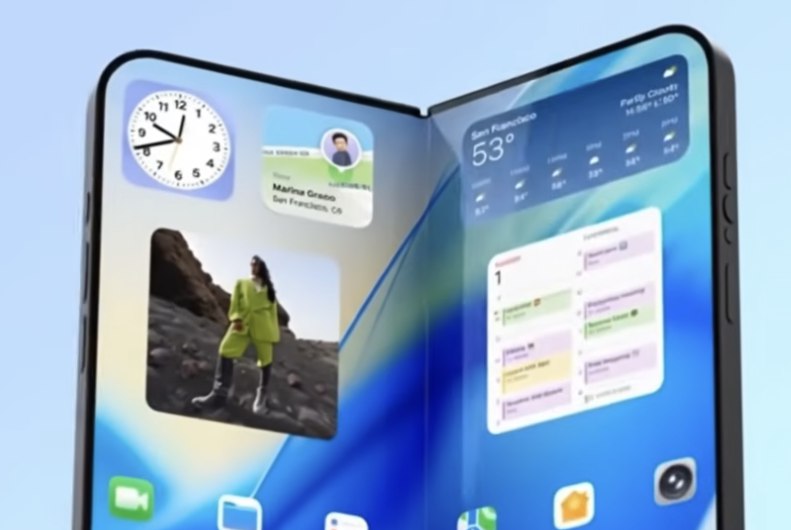
CUPERTINO, Calif. — As March 2026 unfolds, speculation around Apple’s long-awaited foldable iPhone—often dubbed the iPhone Fold—intensifies, with supply-chain reports, analyst predictions and leaks pointing to a potential debut later this year. After years of persistent rumors dating back over a decade, credible sources increasingly converge on a fall 2026 launch, likely alongside the iPhone 18 Pro and Pro Max models, marking Apple’s first entry into the foldable smartphone market dominated by Samsung, Google and others.

The device, expected to feature a book-style design that unfolds into a tablet-like screen, represents a significant shift for Apple, which has historically prioritized refinement over rushing into emerging categories. Analysts and insiders describe the iPhone Fold as a premium, high-end offering designed to wow loyal fans while addressing longstanding foldable pain points like visible creases and durability.
Development Status and Timeline
Multiple reports confirm Apple has advanced beyond prototypes. As early as July 2025, leaks indicated a first production prototype existed, followed by engineering validation testing (EVT) phases by late 2025. Foxconn, Apple’s primary manufacturing partner, reportedly entered the New Product Introduction (NPI) stage in early 2025 and is gearing up for mass production in the second half of 2026—potentially starting as soon as mid-year (June-July) to support a September unveiling.
Supply-chain watcher Ming-Chi Kuo reiterated in early March 2026 that the foldable targets a late-2026 release, with mass production kicking off in the second half. Bloomberg’s Mark Gurman has echoed this, suggesting a fall 2026 launch window, though some earlier predictions allowed for a 2027 slip due to design decisions like hinge mechanics. Recent updates, however, show momentum: Apple is stockpiling components, and mass production timelines align with traditional iPhone cycles.
A notable wrinkle emerged from Nikkei Asia and other Asian reports: Apple may alter its 2026 lineup strategy due to production constraints, memory shortages and focus on premium devices. The company could prioritize the iPhone 18 Pro, Pro Max and iPhone Fold for September 2026, delaying the base iPhone 18 to early 2027. This shift underscores the foldable’s importance—Apple views it as a flagship innovation capable of driving upgrades.
Design and Key Specs
Leaks paint a picture of a premium book-style foldable (horizontal unfold, unlike clamshell flips). Key rumored features include:
- Crease-Free Display — A major breakthrough: the inner screen (around 7.8-8 inches) reportedly eliminates visible creases through advanced panel tech from Samsung Display, including Color Filter on Encapsulation (CoE) for slimmer, brighter and more efficient panels. Outer cover display is expected around 5.5-6 inches.
- Battery — A massive 5,500mAh capacity, surpassing even the iPhone 17 Pro Max’s 5,088mAh, to support the larger unfolded form factor and power-hungry multitasking.
- Processor — Likely an A20-series chip (or variant), optimized for AI tasks, multitasking and efficiency in a foldable chassis.
- Durability and Hinge — Optimized hinge design keeps costs down (average selling price ~$70-80), with emphasis on robustness to meet Apple’s standards—no compromises on premium feel.
- Other Features — Expected to include advanced cameras (potentially four-lens setup), improved Apple Intelligence integration, and seamless iOS adaptations for folded/unfolded modes (hints of fold-specific software already exist in current iOS builds).
The design prioritizes Apple’s ecosystem strengths: fluid transitions between phone and tablet modes, enhanced productivity and entertainment without the durability trade-offs plaguing competitors.
Pricing and Market Expectations
Pricing remains a focal point, with estimates ranging from $1,800-$2,500, potentially making it Apple’s most expensive iPhone ever. Analyst Ming-Chi Kuo suggested hinge cost reductions could improve margins or slightly lower retail price, but the consensus leans toward premium positioning—$2,000+ to reflect exclusivity and advanced tech. Some predict Apple aims for 8-10 million units in the first year, with ambitions to double in 2027, signaling expectations of strong demand among loyalists eager for a “must-have” innovation.
Challenges and Competition
Apple enters a mature foldable market where Samsung’s Galaxy Z Fold series, Google’s Pixel Fold and others have iterated for years. Competitors like Samsung continue pushing boundaries (e.g., tri-fold concepts), but Apple’s delayed entry allows time to observe flaws—durability, crease visibility, software optimization—and deliver a polished product. A clamshell “iPhone Flip” remains in development but appears delayed to 2027 or later, with the book-style Fold taking priority.
Critics question whether the high price and niche appeal will drive mass adoption, especially amid economic pressures and competition from affordable Android foldables. Yet Apple’s ecosystem lock-in, brand loyalty and marketing prowess could spark a significant upgrade cycle—some forecasts predict 10% overall iPhone sales growth in 2026 if the Fold lands well.
Outlook
As leaks accelerate—prototypes, renders and component stockpiles—expect more concrete details in coming months. If mass production begins mid-2026, major reveals (design, specs) could surface by summer, building hype for a September event. The iPhone Fold promises to redefine Apple’s smartphone lineup, blending phone convenience with tablet productivity in a crease-free package.
For now, the rumor mill churns: Apple’s foldable is no longer “if” but “when”—and 2026 appears increasingly likely. Fans and analysts watch closely as Cupertino prepares what could be its boldest iPhone evolution in years.



A few years ago, Grace Guo began to crave places in New York City where hanging out with friends didn’t have to involve alcohol.
Newly sober and surrounded by friends who also chose not to drink, Guo said she wanted alternatives to the typical social scene. After some research, she landed on Bathhouse and Othership: social wellness clubs designed to create communities around improving health.
“Honestly, it kind of just feels like going to a spa together and spending an afternoon together. I think for me, it just feels much better rather than staying out late at night,” Guo told CNBC.
She’s one of a growing number of people seeking out membership clubs and other places that are structured around maintaining health while also acting as a spot to foster connection.
And those spaces are becoming booming businesses, too. Bathhouse, which opened in 2019 in Brooklyn, New York, told CNBC exclusively that it expects to hit around $120 million in revenue by the end of this year. It declined to disclose any of its other financials, as did Othership.
Many of these types of companies are privately held, but publicly traded gym chain Life Time also began doubling down on premium wellness a few years ago. While investors initially did not like that reallocation of resources, it’s now paying off, with Life Time’s stock more than doubling since October 2023.
Companies old and new are trying to reach consumers like Guo. The 31-year-old said she’s seen an increased focus on health, wellness and peacefulness in her own social life and in those around her, as she searches for so-called third spaces with that focus.
“I’m kind of like, where can I go to try to plug into a community, or where can I go to express a particular interest that I have and find like-minded people?” Guo said. “It’s finding a group of like-minded people, but then also having the space and the novelty to try something or to pursue something.”
At Othership, between spending time in the sauna and the cold plunge and choosing a popular evening time slot, Guo said the environment of health-focused socializing spoke to her.
“Having a space to go to where it kind of shocks us out of our routine and complacency is really important, and I think probably the biggest thing is just the fact that it overcomes a lot of the inertia of doing something,” Guo said.
‘Loneliness is an epidemic’
Bathhouse pools
Source: Bathhouse
The concept of third spaces isn’t new. The term was first coined by sociologist Ray Oldenburg in his 1989 book, “The Great Good Place,” to refer to spaces outside of the home, or the first place, and work, the second place, where people gather and form relationships.
That definition came to encompass places like neighborhood coffee shops, libraries, bars and more, where people from different backgrounds came together in an informal setting with relatively low barriers to access.
But somewhere in the past few years, that definition has evolved, and the importance of third spaces has blossomed.
Richard Kyte, a professor at Viterbo University in Wisconsin and the author of “Finding Your Third Place,” said he’s been teaching courses on third places for nearly two decades, but only noticed the term becoming mainstream in the past few years.
That turning point, Kyte said, also coincided with the pandemic, which sent the world into lockdowns and practically eliminated social gatherings for a period while redefining them for the long term.
“During that time, all of a sudden, we were talking more about the cost of loneliness, the cost of social isolation. It really came home to us during the pandemic that this was not healthy,” Kyte told CNBC. “And at the same time that we were noticing that we need these places more, we were seeing that so many of them were closing. That kind of spurred a renewed interest.”
It’s a trend that’s also been compounded by an increasingly digital-forward society, he added, as younger generations crave more than just social media connections even with the rise of artificial intelligence and chatbots.
“We’ve got all of this huge investment in technology that increases the ease and desirability of being independent,” Kyte said, citing AI companies promoting products that pose as friends. “When we have people turning more to their screens instead of looking to find fulfillment through social interaction, it just takes all these people out of the pool.”
According to Cigna’s 2025 “Loneliness in America” report, 67% of Gen Zers reported feeling lonely, along with 65% of millennials. A 2024 Harvard survey found that 67% of adults feel social and emotional loneliness because they are not part of meaningful groups.
Harry Taylor first founded Othership alongside his wife and friends to create a space that incorporated the wellness trend while combating that isolation.
“We understand that there’s a huge market for people to meet other people. Loneliness is an epidemic right now,” Taylor told CNBC. “We realized, just through doing this, it has the capacity for people to come together and just be themselves, be vulnerable.”
What’s old is new
Third spaces have evolved to encompass specific purposes, justifying the price tag that often comes with them, since some membership clubs can thousands of dollars per month.
Wellness, specifically, has seen a recent boom, becoming one of the top categories for gifting items last holiday season. Equinox chairman Harvey Spevak told CNBC last month that “health is the new luxury,” with the global wellness market expected to reach nearly $10 trillion by 2030, according to estimates from the Global Wellness Institute.
Bathhouse, which operates roughly 90,000 square feet of facilities in New York City, offers a wellness experience based on the bathhouse legacy of Europe. The space has saunas and cold plunges, both guided and unguided, starting at $40 for a drop-in session. The company’s two New York locations see roughly 1,000 customers each day.
“It was really apparent that there was no bathhouse-like concept that was really oriented towards a modern consumer, especially not in America,” co-founder Travis Talmadge told CNBC.
Talmadge said he and his co-founder were focused on creating a human experience, tapping into each person’s body while also building community around the shared activities.
“Our spaces are really large scale, so one of the nice things is that everybody kind of feels like a background actor on set, where there’s just so many people moving around,” Talmadge said. “You can have this really personal time, either by yourself or with somebody else, but then you’re in this environment with a lot of people doing the same thing.”
Talmadge said the company has seen a “surplus of demand” and runs at a “very healthy margin,” with plans to open seven more locations through 2027.
It’s just one of many wellness spaces growing in popularity.
Othership is also tapping into a wellness mindset, incorporating practices from various cultures to address the “physical, mental emotional and spiritual.” It has locations in New York and Canada, with plans for more growth.
At Othership, members can choose between three options: a free-flow session, designed to allow members to use the space however they want; classes, which alternate between saunas and cold plunges with group-led activities; and socials, imitating clubs without the alcohol in an effort to be present.
Co-founder Taylor said through Othership, he’s seen customers form new friend groups, propose to their partners in the sauna and find belonging with others while also fueling their own health.
Creating alcohol-free spaces was one of the Othership founders’ aims when creating the vision. Othership now hosts comedians, live musicians and more at its saunas to mimic similar spaces seen in big cities that are often associated with alcohol.
“There’s so much social media, which gives us the false perception that there’s social engagement and interaction, but so many of us have experienced when we’re doomscrolling, it almost even does the opposite,” Taylor said. “There’s a void in the wake of that social satiation that we all require as humans, so it’s that coming together and just being so real with one another that really creates a deep sense of belonging.”
Building community
Glo30 skincare studio.
Courtesy: Arleen Lamba
Wellness communities can form in other ways, too. Glo30, a membership studio founded 13 years ago with locations across the country, offers personalized skincare treatments for members every 30 days, creating a schedule aligned with other members to foster community.
“Community building is a lot about not just getting the results and [feeling] good, but also being able to have a commonality on their experiences and share what they feel,” Glo30’s founder and CEO Arleen Lamba told CNBC.
While urban cities like New York and Los Angeles have seen a boom in wellness clubs, Lamba said her more than 100 locations represent the in-between, in places like Texas, Arizona, North Carolina and more.
Every Glo30 appointment is scheduled on the hour in each location to create more opportunities for social connection, Lamba said.
“As people come into the studio, people are also leaving the studio, and we recognize that they recognize each other, they would actually make new friends,” she said, adding that especially post-pandemic, the company has seen a growing number of social groups form in the treatment rooms.
Lamba said she’s seen the craving for social connection increase with the rise of social media, but that creating community can often happen in untraditional places, like Glo30. At the same time, that social interaction isn’t as “overwhelming” as other places like parties or big group events, allowing for intimate socializing, she said.
In the past two years, Lamba said the number of Glo30’s franchise units in development has grown 67.5% as it sees more demand for its services.
The boom of third spaces goes beyond wellness, too. Exclusive restaurant memberships, gyms, creative spaces, social clubs and more are gaining more popularity as consumers search for ways to build community outside of their houses and offices.
At Glo30, Lamba said she’s seen every type of customer base at the company’s locations, from families to girl groups to couples.
“The third space is interesting because it creates a true connection,” she said. “We get to be witness to someone’s life — their highs, their lows, their middles — and we are the constant, and that, to me, is what the third space is about: No matter what kind of day you had out there, good or bad or medium, this space belongs to you. And when you come to this space, people will know you, see you, appreciate you and be glad you’re there.”
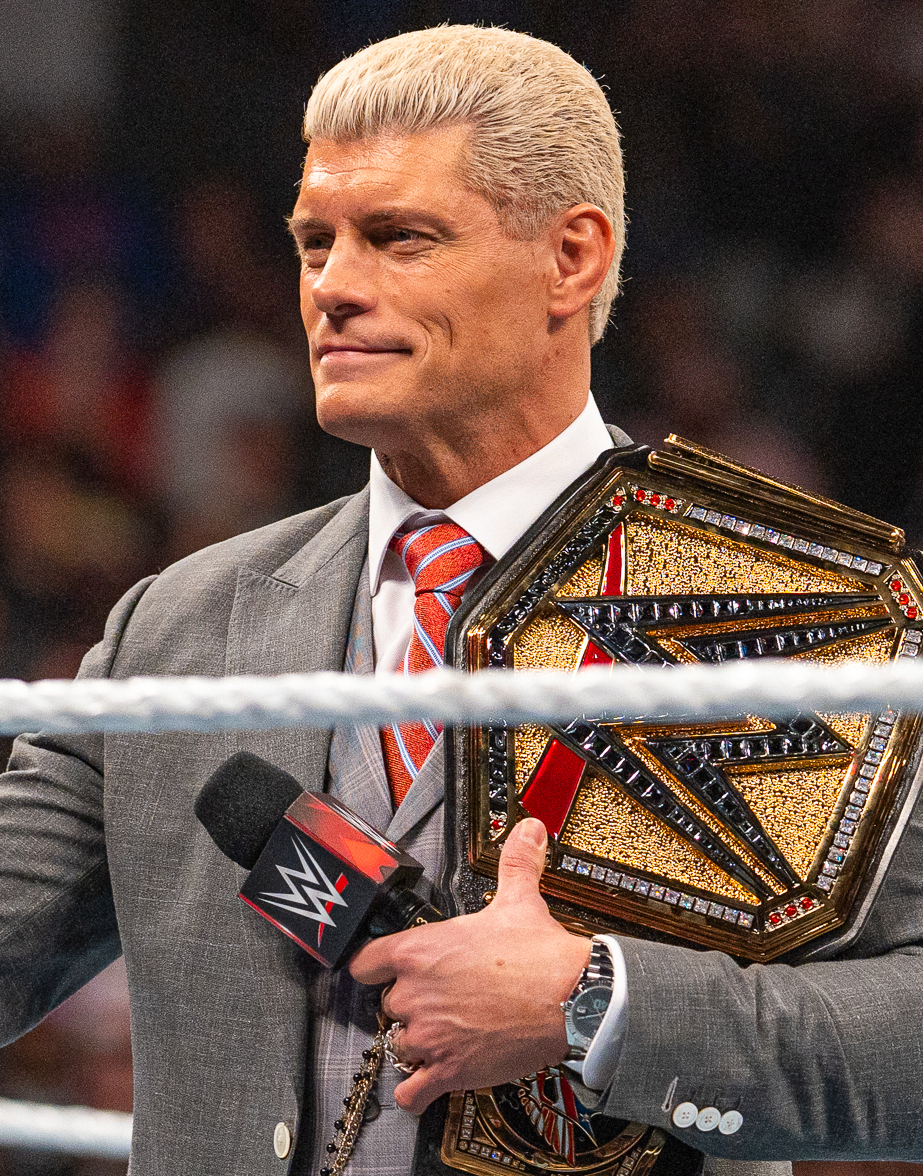
Cody Rhodes reclaimed the Undisputed WWE Championship on the March 6, 2026, episode of Friday Night SmackDown, defeating Drew McIntyre in a high-stakes main event that sets up a blockbuster WrestleMania 42 showdown against Randy Orton. The title switch, amid interference and intense storytelling, capped a chaotic night at the Moda Center and shifted the Road to WrestleMania narrative dramatically.

Rhodes, known as the American Nightmare, pinned McIntyre after a sequence featuring a Super Cutter followed by his signature Cross Rhodes. The victory marked Rhodes’ third reign with the prestigious title, following his earlier 2025 run and brief loss to McIntyre earlier this year. The win came after McIntyre’s interference in the Men’s Elimination Chamber match cost Rhodes a guaranteed WrestleMania spot, prompting SmackDown General Manager Nick Aldis to grant the immediate rematch.
Reports indicate WWE creative, led by Triple H, planned the change to deliver a fresh WrestleMania main event. Backstage sources confirmed Rhodes and Orton were aware of the Orton vs. Rhodes direction as early as January or February 2026, with the title drop from McIntyre designed to elevate the personal stakes. The longtime allies-turned-rivals—Rhodes mentored by Orton in Legacy—have teased tension for months, including Orton’s hesitation in past encounters and subtle mind games.
McIntyre, who won the title in a brutal Three Stages of Hell match earlier in 2026, expressed frustration post-match. Fans online debated the timing, with some praising the Rhodes-Orton draw while others felt McIntyre deserved a longer reign or a different WrestleMania path, potentially against Jacob Fatu. The interference in the title match involved Jacob Fatu, whose actions aided Rhodes and fueled speculation about Bloodline remnants or new alliances.
The episode featured other notable developments. In women’s action, Rhea Ripley appeared for a tense face-to-face with Women’s Champion Jade Cargill ahead of their WrestleMania clash. Ripley, fresh off her Elimination Chamber victory, promised to “end the era” of Cargill’s dominance, building anticipation for the high-profile matchup.
Tag team contenders were crowned as R-Truth and Damian Priest earned a shot at the WWE Tag Team Championships, defeating opponents in a hard-fought bout. Oba Femi continued his destructive run with a decisive win, solidifying his rising status on the blue brand.
The show also highlighted ongoing storylines involving Roman Reigns’ potential return or revenge angles, though no major appearance occurred. Commentary focused on the evolving Bloodline saga and how Rhodes’ win impacts broader dynamics.
Rhodes celebrated post-match, hoisting the title as confetti fell and the crowd chanted “Cody! Cody!” In a brief promo, he addressed Orton directly: “Randy, we’ve got unfinished business. At WrestleMania, the American Nightmare finishes the story—again.” Orton, who won the Elimination Chamber to earn his shot, watched from afar, smirking, setting up a personal, legacy-defining confrontation in Las Vegas.
Fan reaction was mixed but largely positive for the title change. Social media buzzed with excitement over Rhodes-Orton, with hashtags like #AllRhodesLeadToWrestleMania trending. Critics questioned the frequency of title switches on TV but acknowledged the draw of two fan-favorite legends clashing for the top prize.
WWE continues building toward WrestleMania 42, with Rhodes now positioned as champion entering the final stretch. McIntyre’s future remains unclear—rumors suggest a program with Fatu or a multi-man scenario—but the focus shifts to the epic Rhodes-Orton rematch of mentor and protégé.
As SmackDown airs on USA Network (and Netflix internationally), the blue brand delivers must-see drama weekly. With WrestleMania 42 approaching, Cody Rhodes’ championship victory ensures the Road to Las Vegas remains unpredictable and compelling.
Trump on Saturday posts "Today Iran will be hit very hard!’
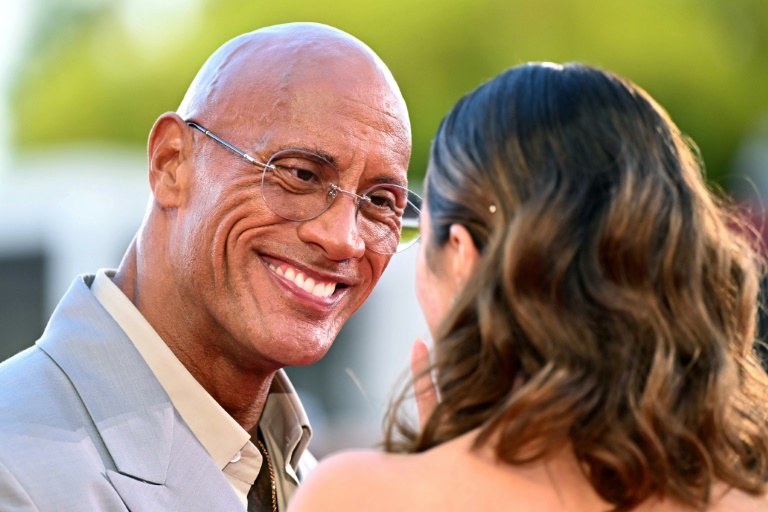
LOS ANGELES — Dwayne “The Rock” Johnson remains one of Hollywood’s most prominent figures in March 2026, balancing critical acclaim from his dramatic turn in The Smashing Machine, family milestones and a packed slate of blockbuster projects. The 53-year-old actor, producer and former WWE superstar continues to dominate headlines with personal reflections, red carpet appearances and updates on major films like the live-action Moana remake and Jumanji sequel.
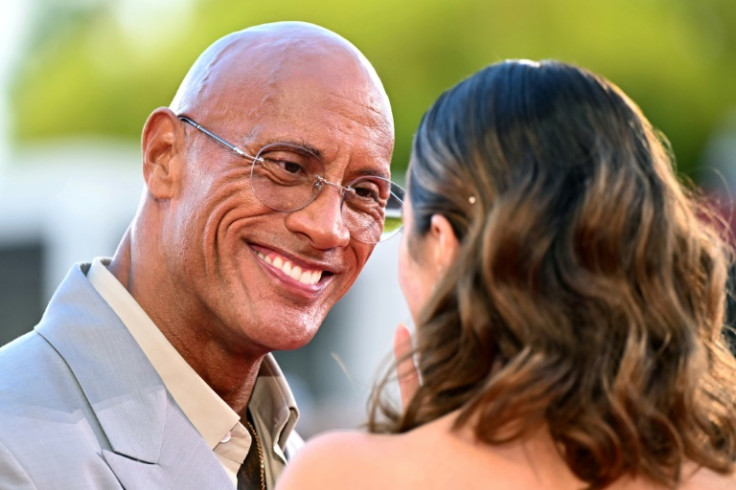
Johnson’s portrayal of MMA fighter Mark Kerr in The Smashing Machine—directed by Benny Safdie and co-starring Emily Blunt—earned him his first Golden Globe nomination for Best Actor in a Motion Picture – Drama at the January 11, 2026, ceremony. Though he didn’t win, the role marked a pivotal shift from high-octane action to emotional depth, exploring addiction, family struggles and redemption.
In exclusive interviews during the Golden Globes red carpet, Johnson opened up about how the film reshaped his perspective on his own “complicated relationship” with his late father, Rocky Johnson, a professional wrestler who battled personal demons. “It gave me a deeper level of empathy for those struggling with addiction,” he told E! News’ Zuri Hall. The biographical drama, which premiered in late 2025, underperformed at the box office but garnered praise for Johnson’s transformative performance, including significant weight loss to embody Kerr’s physical decline.
The experience prompted Johnson to emphasize personal fulfillment over commercial guarantees. In a Hollywood Reporter Actor Roundtable discussion, he described chasing a project like The Smashing Machine for years, calling it something he was “really hungry to do.” He reflected on exhaling deeply after premiering the film at Venice, feeling he was no longer “living others’ dreams” but pursuing his own artistic path.
Family remained central to Johnson’s 2026 narrative. He and wife Lauren Hashian made a rare joint appearance at the Golden Globes, sharing a date night amid his nominations. The couple, married since 2019, have two daughters together, and Johnson frequently credits fatherhood for grounding him. His eldest daughter, Simone Johnson (known in WWE as Ava Raine), stepped away from the ring in early 2026 after six years, retiring her stage name—prompting Johnson to express pride in her choices.
On the professional front, Johnson wrapped production on several high-profile projects. The live-action Moana remake, where he reprises Maui opposite newcomer Catherine Laga’aia as Moana, completed filming ahead of its July 10, 2026, release. Johnson teased fans with updates, expressing excitement for the music and visual spectacle. Teasers released in late 2025 showcased Johnson as the demigod, with Disney positioning the film as a global family event.
Jumanji 4 also wrapped in early 2026, signaling Johnson’s return to blockbuster territory after The Smashing Machine‘s Oscar bid. Columbia Pictures confirmed progress, with Johnson confirming the wrap on Instagram. He is also attached to a Martin Scorsese-directed Hawaii-set crime thriller co-starring Leonardo DiCaprio and Emily Blunt, with production eyed for later in 2026. Another Safdie collaboration—an adaptation of Daniel Pinkwater’s Lizard Music—adds to his indie-leaning pursuits.
Business ventures persist despite occasional hurdles. ZOA Energy, Johnson’s energy drink brand, settled a $3 million class-action lawsuit in January 2026 over preservative claims on labels from 2021-2025. The settlement, pending final approval in March, allows eligible consumers refunds but does not admit wrongdoing.
Johnson’s fitness regimen drew attention, with reports of a 10-15 pound shift in 2026 for role preparation—sparking online discussions about his evolving physique. He maintains a rigorous routine: double gym sessions six days a week and a disciplined diet, emphasizing consistency at 53.
WWE rumors swirled, with Johnson addressing potential involvement in future WrestleManias. He expressed enthusiasm for WrestleMania 43 in 2027 in Riyadh, Saudi Arabia—the first outside North America—but offered no firm commitments on in-ring returns.
Social media remains Johnson’s direct line to fans. His Instagram (@therock), boasting over 391 million followers, features motivational posts, family glimpses and project teases. A January 2026 post reflected on 2025 with gratitude: “Peace out ✌🏾2025 Grateful, humble, hungry, smiling and ready for 2026.”
Net worth estimates place Johnson near $800 million in 2026, fueled by acting fees ($20-50 million per film), producing, tequila brand Teremana and endorsements. Analysts predict he could cross the billionaire threshold soon.
As Johnson navigates dramatic acclaim, family priorities and blockbuster commitments, his 2026 trajectory blends introspection with ambition. With Moana live-action poised for summer dominance and more prestige projects ahead, The Rock continues proving his versatility beyond the ring and screen.

Emirates resumes Dubai flights after earlier suspension following airport blasts
Business
Delek Logistics: Robust Fundamentals And Valuation May Be Pipelined To More Upside (NYSE:DKL)


I have been working in the logistics sector for almost two decades. I have been into stock investing and macroeconomic analysis for almost a decade. Currently, I focus on ASEAN and NYSE/NASDAQ Stocks, particularly in banks, telco, logistics, and hotels. Since 2014, I have been trading on the PH stock market. I focus on banking, telco, and retail sectors. A colleague encouraged me to engage in the stock market as part of my portfolio diversification instead of putting all my savings in banks and properties. That was also the year when insurance companies became very popular in the PH. Initially, I invested in popular blue-chip companies. Now, I have investments across different industries and market cap sizes. There are stocks I hold for my retirement, while others are purely for trading profits. In 2020, I also entered the US Market. It was about a year after I discovered Seeking Alpha. Originally, I was using the trading account of NY CA-based cousin. Somehow, I acted like his personal broker. That made me more aware of the US market before deciding to open my own account. I decided to write for Seeking Alpha to share and gain more knowledge since I have been trading on the US market for only four years. Like in the ASEAN market, I have holdings in US banks, hotels, shipping, and logistics companies. I discovered it in 2018. Since then, I have been using the analyses here to compare them to the ones I’m doing in the PH Market.
Analyst’s Disclosure: I/we have a beneficial long position in the shares of DKL either through stock ownership, options, or other derivatives. I wrote this article myself, and it expresses my own opinions. I am not receiving compensation for it (other than from Seeking Alpha). I have no business relationship with any company whose stock is mentioned in this article.
Seeking Alpha’s Disclosure: Past performance is no guarantee of future results. No recommendation or advice is being given as to whether any investment is suitable for a particular investor. Any views or opinions expressed above may not reflect those of Seeking Alpha as a whole. Seeking Alpha is not a licensed securities dealer, broker or US investment adviser or investment bank. Our analysts are third party authors that include both professional investors and individual investors who may not be licensed or certified by any institute or regulatory body.

 ETMarkets.com
From a structural perspective, the Nifty has now slipped back toward a crucial technical area and has closed exactly at its 100-week moving average placed at 24,441.95. This level assumes significant importance because it has historically acted as an intermediate-term trend support. Any sustained close below the 100-week MA would weaken the broader technical structure and may open the doors for extended downside. Adding to the caution is the negative breadth divergence in the broader market; while the Nifty 500 has not yet made a fresh low, the Advance–Decline line has already slipped to a new low, indicating a weakening participation. This divergence typically precedes phases of broader corrective pressure.
For the coming week, markets may begin on a cautious note as participants react to the index testing this important long-term moving average support. On the upside, 24,800 and 25,070 are likely to act as immediate resistance levels. On the downside, 24,300 and 24,000 are expected to act as key supports.
The weekly RSI stands at 38.47, which keeps it in the neutral-to-bearish zone and shows no divergence against price. The RSI, while it has formed a fresh 14-period low, is trending lower, reflecting weakening momentum. The weekly MACD remains below its signal line and continues to stay in negative territory, indicating that the broader momentum remains weak.

From a pattern perspective, the Index has now closed below the lower Bollinger Band and is testing the 100-week moving average, which makes this zone technically decisive. A minor rebound is possible, but if this support fails to hold, the index may gradually gravitate toward deeper retracement levels. While the long-term structure remains intact, the intermediate trend is clearly under pressure.
Given the current technical setup, traders should remain cautious and avoid aggressive fresh buying until stability emerges near support levels. The rising volatility and weakening breadth suggest that risk management should remain a priority. Any pullbacks toward resistance zones may continue to invite selling pressure. Adopting a defensive, stock-specific approach while protecting gains and maintaining strict stop-losses would be the most prudent strategy for the coming week.
In our look at Relative Rotation Graphs®, we compared various sectors against the CNX500 (NIFTY 500 Index), representing over 95% of the free-float market cap of all the listed stocks.
ETMarkets.comETMarkets.comRelative Rotation Graphs (RRG) show that the Infrastructure and Pharma Indices have rolled inside the leading quadrant. The Nifty Financial Services, Energy, PSE, Banknifty, Metal, and PSUBank Indices are also inside the leading quadrant. These groups will continue to relatively outperform the broader Nifty 500 Index.
The Nifty Services Sector Index has rolled inside the weakening quadrant and may see a slowdown in the relative performance. The Midcap 100 and the Auto Indices are also inside the weakening quadrant.
The Nifty IT has rolled inside the lagging quadrant following weak performance over the past several days. The Realty Index continues to languish inside this quadrant as well. The FMCG Index is also inside the lagging quadrant, but it is showing slight stability in its relative momentum as compared to the other two indices.
The Media Index continues to roll strongly inside the improving quadrant.
Important Note: RRGTM charts show the relative strength and momentum of a group of stocks. In the above chart, they show relative performance against the NIFTY500 Index (Broader Markets) and should not be used directly as buy or sell signals.


Ukraine’s interceptor drone makers look at exports to the Gulf as Iran war flares
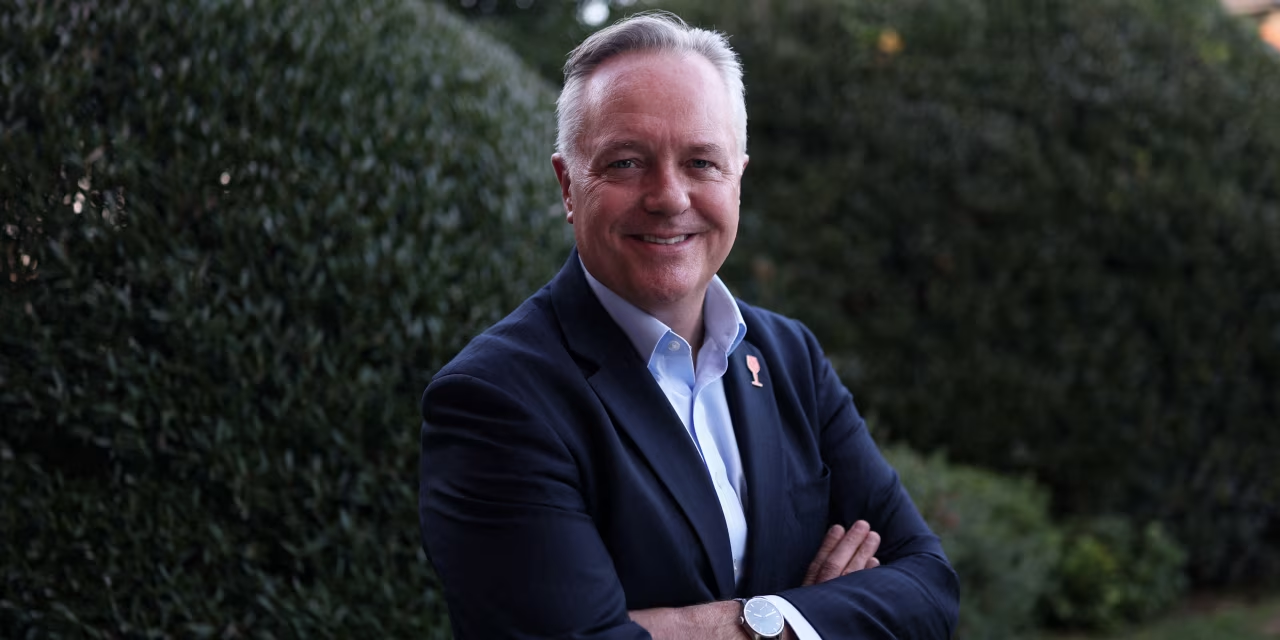
The maker of Aperol is banking on selling a taste of Italy’s terrace lifestyle to more Americans, part of its chief executive’s plan to grab market share and sales growth in the U.S.
“Half of America has still never heard of [Aperol],” Davide Campari-Milano CPR -2.48%decrease; red down pointing triangle Chief Executive Simon Hunt said in an interview.
Copyright ©2026 Dow Jones & Company, Inc. All Rights Reserved. 87990cbe856818d5eddac44c7b1cdeb8

For years, investors treated the Persian Gulf as a bastion of calm in a deeply unstable region. Oil wealth and careful diplomacy kept turmoil at arm’s length. Wars raged in Gaza, Israel, Syria and Lebanon—far from glitzy Dubai.
Now, markets are repricing risk across the region. The war with Iran—which has grounded flights, stranded tankers and put cities such as Dubai and Qatar’s Doha under bombardment—is forcing investors to recalibrate their perception of the region’s stability.
Copyright ©2026 Dow Jones & Company, Inc. All Rights Reserved. 87990cbe856818d5eddac44c7b1cdeb8

The 73% Rotten Tomatoes Cult Classic That Quietly Redefined the Modern Neo-Noir

MILAN FASHION WEEK A/W 2026/7

Old Money


-

 Politics4 days ago
Alan Cumming Brands Baftas Ceremony A ‘Triggering S**tshow’
-
Business22 hours ago
Form 8K Entergy Mississippi LLC For: 6 March
-

 Tech6 days ago
Unihertz’s Titan 2 Elite Arrives Just as Physical Keyboards Refuse to Fade Away
-

 NewsBeat7 days ago
Abusive parents will now be treated like sex offenders and placed on a ‘child cruelty register’ | News UK
-

 Fashion18 hours ago
Weekend Open Thread: Ann Taylor
-
 NewsBeat7 days ago
Dubai flights cancelled as Brit told airspace closed ’10 minutes after boarding’
-

 NewsBeat6 days ago
‘Significant’ damage to boarded-up Horden house after fire
-

 Tech2 days ago
Bitwarden adds support for passkey login on Windows 11
-

 Entertainment5 days ago
Baby Gear Guide: Strollers, Car Seats
-
 Sports2 days ago
499 runs and 34 sixes later, India beat England to enter T20 World Cup final | Cricket News
-
 NewsBeat6 days ago
Emirates confirms when flights will resume amid Dubai airport chaos
-
Politics6 days ago
FIFA hypocrisy after Israel murder over 400 Palestinian footballers
-

 NewsBeat5 days ago
Is it acceptable to comment on the appearance of strangers in public? Readers discuss
-

 Tech6 days ago
Viral ad shows aged Musk, Altman, and Bezos using jobless humans to power AI
-

 Fashion6 days ago
On the Scene at the 57th Annual NAACP Image Awards: Teyana Taylor in Black Ashi Studio, Colman Domingo in Yellow Sergio Hudson, Chloe Bailey in Christian Siriano, and More!
-

 Video5 days ago
How to Build Finance Dashboards With AI in Minutes
-

 Business3 days ago
Guthrie Disappearance Enters Fifth Week as Family Visits Memorial
-
 NewsBeat5 days ago
Ukraine-Russia war latest: Belgium releases video showing forces boarding Russian shadow fleet oil tanker
-
 Crypto World6 days ago
US Judge Lets Binance Unregistered Token Class Action Proceed
-

 Crypto World5 days ago
Why Nexo Is Reentering the US After the 2023 Crypto Lending Crackdown