
Business
Leading Innovators Powering Europe’s AI Talent Hub


AMSTERDAM — The Netherlands has emerged as one of Europe’s most dynamic AI ecosystems in 2026, boasting the continent’s highest density of AI talent at 10.9 professionals per 10,000 inhabitants. Despite challenges in scaling startups, the country’s deeptech strength, strong university ties and strategic location have fueled growth in hardware, software, data platforms and applied AI solutions. From edge AI chips in Eindhoven to vector databases and medical imaging in Amsterdam, Dutch companies are attracting international investment and addressing global challenges in efficiency, healthcare and sustainability.

Here are the 10 best AI companies in the Netherlands in 2026, ranked by a combination of funding, innovation impact, market traction and expert recognition across recent reports and rankings.
1. Axelera AI (Eindhoven) Axelera AI stands out as the Netherlands’ flagship AI hardware player. Founded in 2021, the fabless semiconductor company develops high-efficiency platforms for edge AI inference, including its Metis AI platform that accelerates computer vision and generative AI workloads with low power consumption. The company has raised over $200 million, including significant grants, and focuses on simplifying deployment for industrial and automotive applications. Its technology addresses the growing demand for on-device AI without relying on cloud connectivity, positioning Axelera as a key contributor to Europe’s technological sovereignty.
2. Weaviate (Amsterdam) Weaviate has become a global leader in open-source vector databases optimized for AI applications. The company’s platform enables semantic search, recommendation systems and retrieval-augmented generation for large language models. With strong adoption among developers building generative AI tools, Weaviate continues to expand its ecosystem through integrations and enterprise features. Its open-source roots and focus on scalability have driven rapid growth, making it a cornerstone of the Dutch AI software scene.
3. Innatera (Eindhoven) Specializing in neuromorphic processors, Innatera designs ultra-low-power AI chips inspired by the human brain. The company targets edge devices in IoT, wearables and sensor networks where energy efficiency is critical. Backed by substantial funding, Innatera’s technology promises dramatic reductions in power usage compared to traditional GPUs, appealing to industries seeking sustainable AI solutions. Its progress highlights Eindhoven’s role as a deeptech powerhouse.
4. ScreenPoint Medical (Nijmegen/Amsterdam area) ScreenPoint Medical applies AI to breast cancer detection through its Transpara software, which analyzes mammograms with high accuracy. The company has secured regulatory approvals in multiple markets and demonstrated strong clinical results, helping radiologists improve detection rates while reducing workload. Its success in medical imaging underscores the Netherlands’ strength in healthtech AI and positions ScreenPoint as a leader in life-saving applications.
5. Nebius (Amsterdam) Nebius, formerly part of Yandex, has established itself as a major AI cloud infrastructure provider with headquarters in Amsterdam. The company builds large-scale GPU clusters and data centers across Europe, offering computing power for training and deploying advanced AI models. Its Nasdaq listing and multi-billion-dollar valuation reflect its scale and importance in addressing Europe’s AI infrastructure gap amid growing demand from enterprises and researchers.
6. Toloka (Amsterdam) Toloka delivers high-quality human-labeled data essential for training large language models and generative AI systems. The Amsterdam-based platform connects AI developers with a global workforce for data annotation tasks, emphasizing quality and ethical practices. With significant funding and partnerships, Toloka supports the data-hungry AI boom while maintaining operations that align with European privacy standards.
7. FRISS (Utrecht) FRISS specializes in AI-driven fraud detection and risk management solutions, primarily for the insurance and financial services sectors. Its platform uses machine learning to analyze claims, detect anomalies and automate investigations, helping clients reduce losses and improve efficiency. Established as a mature player, FRISS continues to expand its international footprint with advanced analytics tailored to regulated industries.
8. Pyramid Analytics (Amsterdam) Pyramid Analytics provides an AI-powered decision intelligence platform that combines analytics, business intelligence and machine learning. The company’s tools help enterprises make data-driven decisions across finance, operations and strategy. With over $200 million in funding historically, it serves large organizations seeking to democratize AI insights without requiring deep technical expertise.
9. Source (Amsterdam area) Source ranks among the top AI companies for its innovative applications in enterprise automation and data processing. The firm develops custom AI solutions that integrate with existing business systems, focusing on efficiency gains in sectors like logistics and manufacturing. Its consistent recognition in startup rankings reflects strong product-market fit and growth potential.
10. Wonderflow (Amsterdam) Wonderflow leverages AI for customer experience and product intelligence, analyzing feedback, reviews and market data to help brands improve offerings. The company’s platform uses natural language processing to extract actionable insights at scale, serving consumer goods and retail clients. Its focus on practical business outcomes has driven steady adoption and international expansion.
The Dutch AI landscape benefits from close collaboration between academia — including strong programs at TU Eindhoven, University of Amsterdam and Delft University of Technology — and industry. Government initiatives and organizations like Techleap.nl support talent development and commercialization, though reports note that scaling remains a hurdle, with many promising startups relying heavily on foreign capital.
Eindhoven’s Brainport region has solidified its reputation as Europe’s “Silicon Valley” for hardware and deeptech AI, while Amsterdam dominates in software, data and applied solutions. Rotterdam and Utrecht also host growing clusters in logistics AI and fintech applications.
Challenges persist. The 2026 State of Dutch Tech report highlights that while AI attracts 27% of venture capital, conversion from startup to scaleup lags behind European peers. Talent density is a major asset, but retaining and commercializing innovations requires more domestic growth capital and supportive policies.
Industry observers expect continued momentum in 2026, driven by European Union AI regulations that favor trustworthy and transparent systems — an area where Dutch companies often excel. Edge AI, sustainable computing and domain-specific applications in healthcare, agriculture and finance are likely to see the strongest growth.
For businesses and investors exploring opportunities, the Netherlands offers a mature ecosystem with English-speaking talent, excellent infrastructure and a business-friendly environment. Companies on this list represent a mix of established players and high-potential innovators, many of which are actively hiring and seeking partnerships.
As AI adoption accelerates globally, these 10 Dutch firms illustrate the country’s ability to punch above its weight. From chips that run AI on tiny devices to platforms that power large-scale models, the Netherlands is carving out a distinctive role in the international AI landscape — one built on precision engineering, ethical considerations and practical innovation.
The coming years will test whether the ecosystem can convert its talent advantage into more homegrown unicorns and global leaders. For now, these companies stand as proof that the Netherlands remains a vital node in Europe’s AI ambitions.


Xenon Pharma’s azetukalner shows 53% seizure reduction in trial


Oil prices rebound 7% as Strait of Hormuz is closed again
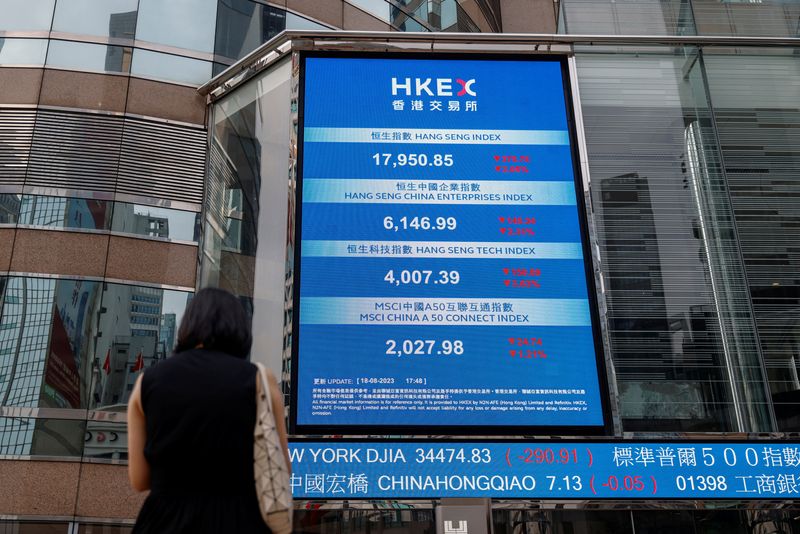

Oil jumps and stock futures slip as Iran tensions unsettle markets
President Donald Trump sits down with FOX Business’ Maria Bartiromo to discuss escalating Middle East tensions, his warning to Iran on nuclear weapons and why he believes gas prices will drop ahead of the midterms.
High gas prices continue to squeeze small businesses across the U.S., but cutting one costly habit could help owners save significantly.
New data from Ford Pro, the commercial vehicle division of Ford Motor Company, shows that unnecessary idling — leaving a car running while parked — can cost fleet operators thousands of dollars each year, cutting directly into margins at a time when fuel prices remain high.
According to the U.S. Department of Energy, the average fleet vehicle idles between one and two hours per day, burning up to two gallons of fuel daily per vehicle. With gas prices rising, those costs can add up quickly.
As of Sunday, the national average price for unleaded gas stood at $4.04, up from $3.88 just a month ago, according to AAA.
BESSENT WARNS GAS STATIONS THAT TREASURY DEPT WILL KEEP THEM ‘HONEST’ AFTER SPIKE IN PRICES

Ford Motor Co. F-150 pickup trucks are displayed at a car dealership in Orland Park, Illinois, on Sept. 27, 2019. (Daniel Acker/Bloomberg via Getty Images / Getty Images)
“You can burn up one to two gallons of gas just doing that,” Matt Krukin, who leads software and digital growth for Ford Pro, told FOX Business. “So if that happens per day… that’s $8 a day that’s idling.”
For businesses operating multiple vehicles, the impact can be substantial. A 20-vehicle fleet idling for two hours a day could waste more than $160 in fuel every day, according to Ford Pro.
Excessive idling is particularly common in North America, where about 29% of fleet vehicles idle unnecessarily, compared to just 10% in Europe, Krukin noted.
To help address the issue, Ford Pro is investing in software and data-driven tools.
FORD SEEKS TRUMP ALUMINUM TARIFF RELIEF AFTER FIRES AT MAJOR US FACTORY, REPORT SAYS

A person pumps gas into a car. (Sean Gallup/Getty Images / Getty Images)
Its newly launched artificial intelligence (AI) assistant allows fleet managers to monitor vehicle behavior in real time, identify inefficiencies and coach drivers to adopt more fuel-efficient habits.
Ford Pro says customers using these tools have seen measurable improvements, including a 52% reduction in idling.
While reducing idling is one of the simplest ways to cut costs, other driving behaviors — such as aggressive acceleration, rapid braking, and speeding — can also increase fuel consumption and wear on vehicles, according to Krukin.
The system can even limit acceleration, while in-cab alerts provide real-time feedback.
FORD BUILDS ONE-OF-A-KIND EXPLORER FOR POPE LEO XIV

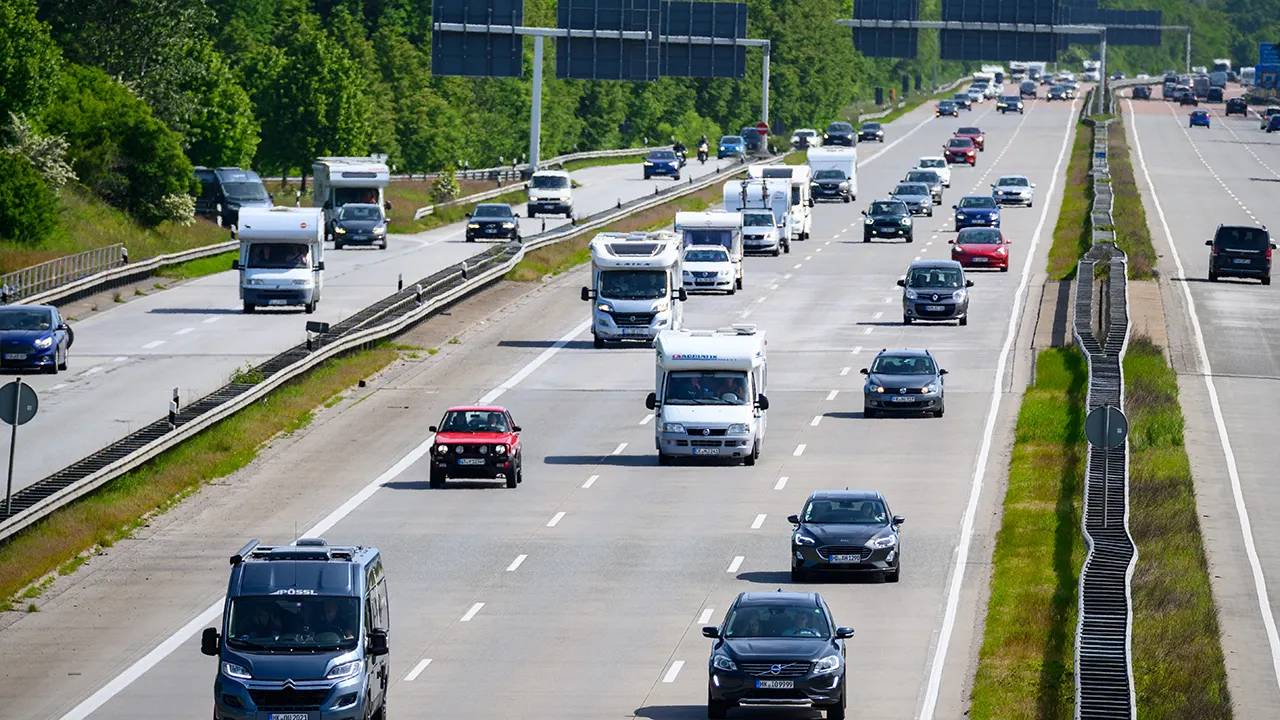
Cars are seen driving on the highway. (Jonas Walzberg/picture alliance via Getty Images / Getty Images)
“It’s like the fleet manager’s right next to them to coach them along the way,” Krukin said.
Users have also seen a 25% drop in speeding, a 16% decrease in hard braking and an 11% reduction in harsh acceleration, according to Ford Pro.
GET FOX BUSINESS ON THE GO BY CLICKING HERE
“We’re not just recommending solutions for the heck of it,” Krukin said. “… At the end of the day, it’s really about bringing it all together, so that these fleets actually get a pleasurable experience with the tools and technology coming together.”


BOJ’s hawkish hints keep rate hike on the cards


Eli Lilly in advanced talks to acquire Kelonia Therapeutics for over $2 billion, WSJ says
Business
World Bank Highlights AI Boom as a Bright Spot Amid Slowing Growth in East Asia and the Pacific

Growth across East Asia and the Pacific is losing momentum this year, weighed down by an energy shock, rising trade barriers, and persistent domestic vulnerabilities, but a surge in artificial intelligence-related trade and investment is offering a rare point of optimism, according to the World Bank’s latest regional economic report.
Key takeaways
- AI-related exports and investment surged across East Asia and the Pacific in 2025, with Malaysia, Thailand, and Viet Nam leading the way.
- Regional growth is forecast to slow to 4.2% in 2026, pressured by the Middle East energy shock, trade barriers, and weak domestic demand.
- Closing gaps in connectivity and skills is essential for the region to fully capture the productivity benefits of AI.
Regional growth is projected to slow to 4.2% in 2026, down from 5.0% in 2025, as the energy shock stemming from the Middle East conflict compounds the adverse impact of elevated trade barriers, global policy uncertainty, and domestic economic difficulties.
China, the region’s largest economy, is expected to decelerate from 5.0% growth in 2025 to 4.2% in 2026 and 4.3% in 2027, as weak domestic demand and property sector challenges persist and the global slowdown weighs on exports. The rest of the region is forecast to slow to 4.1% in 2026 before rebounding to 5.0% in 2027 as geopolitical tensions ease.
Against that difficult backdrop, the World Bank’s East Asia and Pacific Economic Update: Industrial Policy in the Digital Age identifies AI as a meaningful bright spot. The report highlights surging AI-related exports and investment in 2025, particularly in Malaysia, Thailand, and Viet Nam, as a notable positive development for the region.
Yet the Bank cautions that the full benefits of AI remain out of reach for much of the region. Adoption is constrained by gaps in connectivity and skills, with only 13 to 17% of multinational subsidiaries in China and Thailand currently using AI, roughly one third of the proportion seen in industrialised countries.
The report also examines how rising energy costs could deepen hardship for ordinary households. A sustained 50% increase in fuel prices could result in a 3 to 4% loss in income for households across the region, with the poor and small and medium enterprises identified as the most vulnerable.
On a longer-term strategy, the update argues that industrial policy, if carefully designed, can help unlock productivity gains. Targeted support for specific industries in the Republic of Korea, Malaysia, and, more recently, Viet Nam proved effective in part because those countries had strengthened their economic foundations, including infrastructure, education, and regulatory institutions, and had liberalised trade and investment. The Bank warns that similar efforts elsewhere have delivered weaker results where those foundations remain fragile.
World Bank Vice President for East Asia and the Pacific Carlos Felipe Jaramillo noted that while the region continues to outperform much of the world, sustaining growth will require confronting structural challenges and seizing the opportunities of the digital age to increase productivity and create more jobs.
World Bank Group Director of Research Aaditya Mattoo cautioned that present difficulties could increase economic distress and inhibit productivity growth, adding that measured support for people and firms could preserve jobs today while reviving stalled structural reforms could unleash growth tomorrow.
Other People are Reading

Two US officials supporting local authorities die in car accident in Mexico
Sidus Space prices $58.5 million stock offering at $4.35/share


Andrew McElroy is Chief Analyst at Matrixtrade, author of the ebook ‘Fractal Market Mastery’ and producer of the ‘Daily Edge.’ The ‘Daily Edge’ is emailed before each US session and outlines actionable ideas, directional bias, and important levels in the S&P500. It also looks at ‘What’s Hot,’ on any particular day, whether it is commodities, stocks, crypto, or forex. Andrew has developed a top-down proprietary system that starts with his weekend Seeking Alpha article focusing on the higher timeframes. Fractals, Elliott Wave, and Demark exhaustion signals are all incorporated, as are macro drivers and analysis of the market narrative. It is much more than just a few lines on a chart – it is a system developed over 15 years and proven to deliver a consistent edge. An independent trader since 2009, Andrew manages a family portfolio of stocks and ETFs with his wife and fellow Seeking Alpha contributor Macrogirl.
Analyst’s Disclosure: I/we have a beneficial long position in the shares of VOO either through stock ownership, options, or other derivatives. I wrote this article myself, and it expresses my own opinions. I am not receiving compensation for it (other than from Seeking Alpha). I have no business relationship with any company whose stock is mentioned in this article.
Seeking Alpha’s Disclosure: Past performance is no guarantee of future results. No recommendation or advice is being given as to whether any investment is suitable for a particular investor. Any views or opinions expressed above may not reflect those of Seeking Alpha as a whole. Seeking Alpha is not a licensed securities dealer, broker or US investment adviser or investment bank. Our analysts are third party authors that include both professional investors and individual investors who may not be licensed or certified by any institute or regulatory body.
The Vikings’ Best Defensive Tackle Options in the Draft

Rack Cage Generator Gets Your Gear Mounted

XRP EARN IN 1 YEAR A LIFETIME OF WAGES! – WILL OWNING XRP BE OUTLAWED? – DR. TRUMP OR JESUS?


-

 Crypto World6 days ago
The SEC Conditionalises DeFi Platforms to Be Avoided for Broker Registration
-

 Fashion2 days ago
Weekend Open Thread: Theodora Dress
-

 Crypto World6 days ago
SEC Signals Exemption for Crypto Interfaces From Broker Registration
-

 News Videos5 days ago
Secure crypto trading starts with an FIU-registered
-

 Sports3 days ago
NWFL Suspends Two Players Over Post-Match Clash in Ado-Ekiti
-

 Crypto World6 days ago
SEC Proposes Certain Crypto Interfaces Don’t Need to Register as Brokers
-

 NewsBeat6 days ago
Trump and Pope Leo: Behind their disagreement over Iran war
-

 Business8 hours ago
Powerball Result April 18, 2026: No Jackpot Winner in Powerball Draw: $75 Million Rolls Over
-

 Politics2 days ago
Palestine barred from entering Canada for FIFA Congress
-

 Crypto World2 days ago
Russia Pushes Bill to Criminalize Unregistered Crypto Services
-

 Sports7 days ago
NWFL opens Pathway for new Clubs ahead of 2026 Season
-
 Business3 days ago
Creo Medical agree sale of its manufacturing operation
-
 Entertainment6 days ago
Brand New Day’ Footage Reveals the Devastating Impact of ‘Now Way Home’
-

 Politics13 hours ago
Zack Polanski demands ‘council homes not luxury flats for foreign investors’
-

 Crypto World7 days ago
Trump whales load up ahead of Mar-a-Lago luncheon.
-
Business7 days ago
Kering slides after Morgan Stanley downgrade, Gucci woes loom
-

 Tech7 days ago
Google adds E2E encryption to Gmail for iOS and Android enterprise users
-

 Tech7 days ago
Apple glasses won’t go brand shopping like Meta did with Ray-Ban and Oakley
-
Entertainment7 days ago
How Euphoria Season 3 Premiere Paid Tribute to Eric Dane After Death
-
 Entertainment6 days ago
Karol G’s ‘Ultra Raunchy’ Coachella Set Gave ‘Satanic Vibes’
You must be logged in to post a comment Login