
Business
Legendary Coach Announces Retirement from Butler Basketball

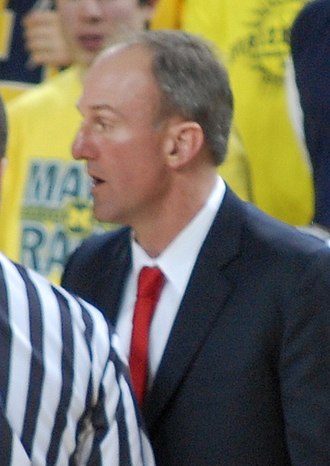
INDIANAPOLIS — Thad Matta, one of college basketball’s most accomplished coaches, announced his retirement from sideline duties on March 16, 2026, capping a 21-year head coaching career that included Final Four appearances, conference championships and a lasting impact at three programs. The 58-year-old Matta, who returned to his alma mater Butler University in 2022, will transition to a new role as Special Assistant to the President and Athletic Director while the school launches a national search for his successor.

Matta’s decision comes days after reports suggested he would return for the 2026-27 season, following speculation about his future amid a 16-16 campaign in 2025-26 that ended with a first-round Big East Tournament exit. In a statement released by Butler, Matta reflected on his time coaching: “After taking some time to reflect following the end of the season, I have decided that the time has come for me to step away from the sidelines.”
Here are 10 essential things to know about Thad Matta’s career, legacy and recent developments.
- Alma Mater Roots Run Deep — Born July 11, 1967, Matta graduated from Butler in 1990 after transferring from Southern Illinois. He played guard for the Bulldogs and later served as an assistant coach under Barry Collier before embarking on his head coaching path. His 2022 return to Butler marked a homecoming, revitalizing a program that had struggled in recent years.
- Impressive Overall Record — Matta compiled a 502-223 career record (.692 winning percentage) across stints at Butler (two separate periods), Xavier and Ohio State. He ranks among the winningest coaches of his era, with teams achieving 20 or more victories in 16 of his 17 full seasons as a head coach.
- Butler Tenure Highlights — In his first Butler stint (2000-01), Matta led the Bulldogs to a 24-8 record and an NCAA Tournament appearance. Returning in 2022, he posted an 87-77 mark over four seasons, including efforts to rebuild in the competitive Big East Conference. The 2025-26 season saw modest improvement but fell short of postseason expectations.
- Xavier Success Built Foundation — From 2001 to 2004, Matta went 78-23 at Xavier, winning 26 games each season and advancing in the NCAA Tournament all three years. His Musketeers established a high standard for mid-major excellence, drawing attention from power-conference programs.
- Ohio State Dynasty — Matta’s 13 seasons (2004-17) at Ohio State represent his most celebrated chapter. He amassed a school-record 337 victories, five Big Ten regular-season titles (2006, 2007, 2010, 2011, 2012), three Big Ten Coach of the Year awards and led the Buckeyes to Final Fours in 2007 and 2012 — the latter featuring a national runner-up finish.
- Health Challenges Overcame — Matta battled significant back issues during his Ohio State tenure, undergoing multiple surgeries that limited his mobility and led to a brief medical leave in 2016. Despite health setbacks, he returned to coaching and later reflected on how the experience shaped his perspective and leadership.
- Recruiting and Player Development Acumen — Known for attracting top talent, Matta recruited future NBA stars like Kosta Koufos, Evan Turner, Jared Sullinger, Aaron Craft and D’Angelo Russell at Ohio State. His emphasis on guard play, defensive intensity and team chemistry produced consistent contenders.
- Brief Indiana Administrative Role — After departing Ohio State in 2017, Matta served as associate athletic director at Indiana University from 2018 to 2020, gaining administrative experience before his Butler return. This period allowed time for reflection amid ongoing health recovery.
- Recent Speculation and Reversal — In early March 2026, reports from sources like Jeff Goodman indicated Matta would return for another season, with athletic director Grant Leiendecker expressing alignment on program goals. The sudden retirement announcement reversed that expectation, sparking discussions about Butler’s future direction in the Big East.
- Legacy and Next Chapter — Matta leaves as one of college basketball’s respected figures, with a career defined by sustained success, program elevation and personal resilience. His transition to an advisory role at Butler ensures continuity while allowing a new coach to build on his foundation. As the coaching carousel activates, Matta’s decision marks the end of an era for a coach who once seemed destined for indefinite tenure.
Matta’s retirement follows a pattern of veteran coaches stepping away after long careers, influenced by health, reflection and program cycles. Butler, aiming to regain national relevance, now faces a pivotal hire in a competitive landscape.
Throughout his journey from player to coach, Matta emphasized fundamentals, relationships and perseverance — qualities that defined his teams and earned him admiration across the sport. As he shifts to a supporting role, his impact on Butler, Xavier and Ohio State endures through championships, tournament runs and the players he mentored.


Devon Energy: Merger Deal, Iran War, Price Tailwinds
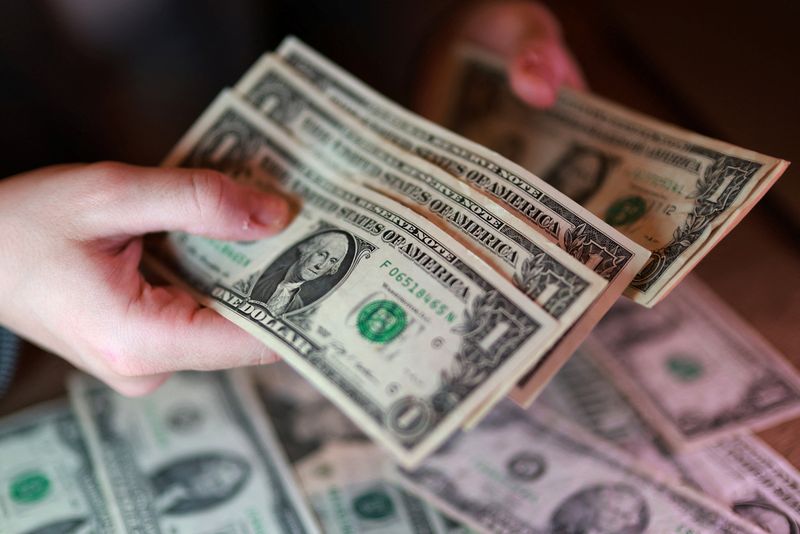

Dollar steady as traders fret about escalating Iran war
Asia markets brace for Trump’s promised assault on Iranian infrastructure

Brent crude futures rose $1.71, or 1.6%, to $110.74 a barrel by 0057 GMT. U.S. West Texas Intermediate crude futures gained $0.71, or 0.6%, to trade at $112.25 per barrel.
On Thursday, the last trading day before the Good Friday holiday break, WTI settled up more than 11% and Brent soared nearly 8% in volatile trading, recording their biggest absolute price increase since 2020, as U.S. President Donald Trump promised to continue attacks on Iran.
The Strait of Hormuz, which carries oil and petroleum products from Iraq, Saudi Arabia, Qatar, Kuwait and the United Arab Emirates, remains largely closed by Iranian attacks on shipping after the war began on February 28.
Because of the Middle East supply disruptions, refiners are seeking alternative sources for crude, particularly for physical cargoes in the U.S. and the UK North Sea.

“Global buyers are bidding aggressively for (U.S.) Gulf Coast barrels and Brent is rallying even faster,” the Schork Group said in a client note on Monday.
On Sunday, Trump ratcheted up pressure on Tehran, threatening in an expletive-laden Easter Sunday social media post to target Iran’s power plants and bridges on Tuesday if the strategic Strait of Hormuz is not reopened. Still, some vessels, including an Omani-operated tanker, a French-owned container ship and a Japanese-owned gas carrier, crossed the Strait of Hormuz since Thursday, shipping data showed, reflecting Iran’s policy to allow passage for vessels from countries it deems friendly.
The war threatens to linger on as Iran has officially told mediators it is not prepared to meet with U.S. officials in the Pakistani capital Islamabad in coming days and efforts to produce a ceasefire have reached a dead end, the Wall Street Journal reported on Friday.
On Sunday, OPEC+, consisting of some members of the Organization of the Petroleum Exporting Countries and allies such as Russia, agreed to a modest rise of 206,000 barrels per day for May.
However, that decision will largely exist on paper as several of the group’s key producers are unable to raise output due to the war.
Russian supply has been disrupted recently by Ukrainian drone attacks on its Baltic Sea export terminal. Media reports on Sunday said its Ust-Luga terminal resumed loadings on Saturday after days of disruptions.
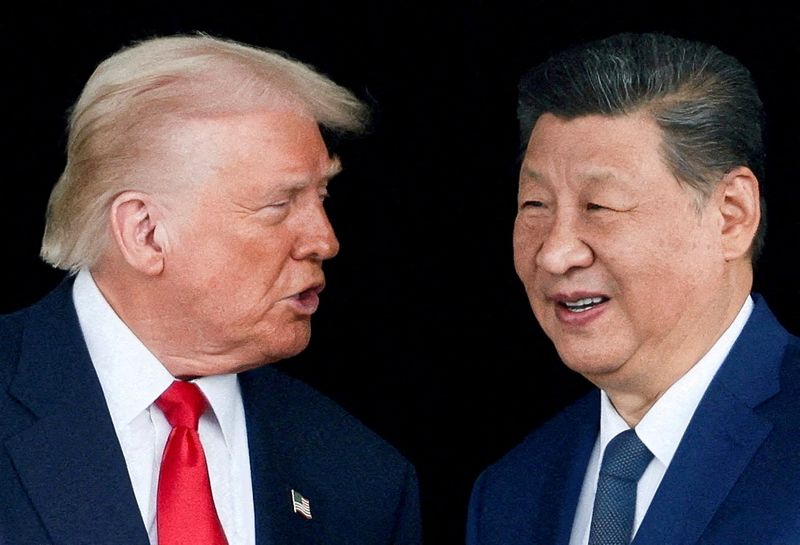

How one factory in China learned to live with Trump, tariffs and turmoil

The AI agent sparked a frenzy of “raising lobsters” in March, with users training the tool to suit their needs.
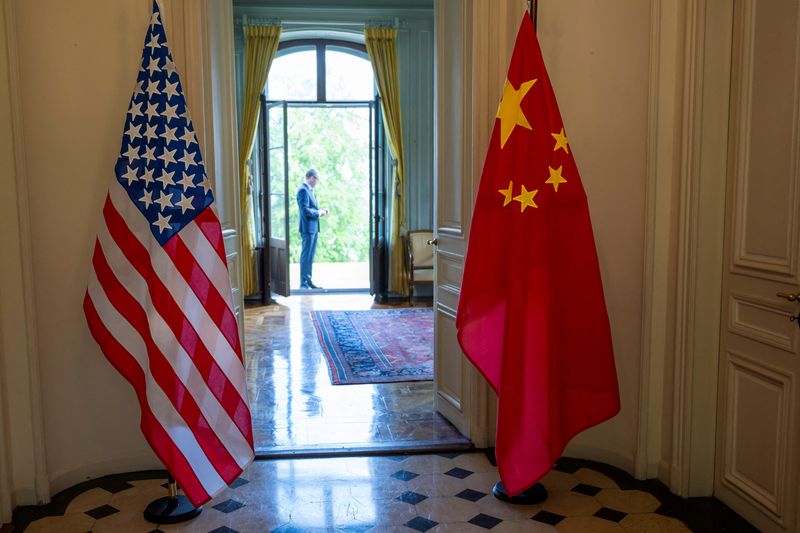

Trump’s trade war with China in focus ahead of May summit
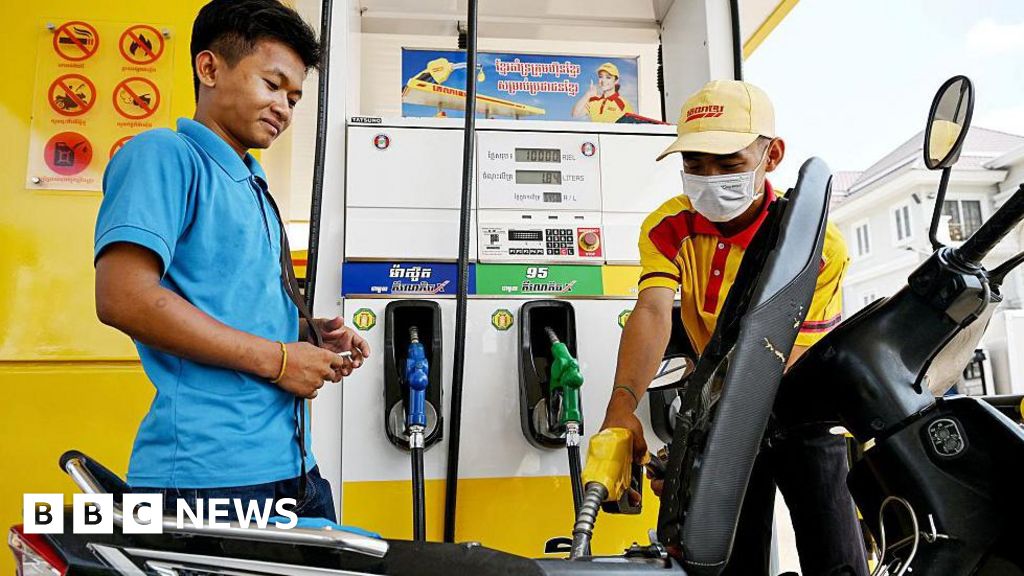
Trump wrote: “Tuesday will be Power Plant Day, and Bridge Day, all wrapped up in one, in Iran. There will be nothing like it!!! Open the Fuckin’ Strait, you crazy bastards, or you’ll be living in Hell – JUST WATCH! Praise be to Allah. President DONALD J. TRUMP”.
The Reserve Bank of India’s defense of a record-low rupee has constrained its ability to inject liquidity, tightening financial conditions that are likely to weigh on banks over the coming quarters. A prolonged conflict in the Middle East also risks derailing India’s nascent credit recovery, threatening loan growth as the broader economy cools.
Global investors withdrew a record 327 billion rupees ($3.5 billion) from shares of financial services companies in the first fortnight of March, according to National Securities Depository Ltd. data. The Nifty Bank Index has lost $95 billion in market value since the start of March, narrowly avoiding a bear market — defined as a 20% drop from a recent high.
“There could be further pressure on these stocks in the short-to-medium term as monetary policy can remain tight,” Kranthi Bathini, an equity strategist at WealthMills Securities, said, adding that valuations are becoming attractive after the correction.
 Agencies
At stake is the outlook for India’s $4.5 trillion stock market, given banks account for nearly a third of the benchmark index. A sustained weakness in shares of lenders could undermine a broader market that is already among the worst performers in the region, down 13% for the year.
Bulls point to improving valuation multiples for bank stocks and India’s long-term economic growth, which remains among the fastest globally. The Nifty Bank Index trades at 1.5 times one-year forward price-to-book, its cheapest level since 2020, signaling an attractive risk-reward profile.
Citibank Inc. is already prioritizing private-sector banks over state-run lenders, betting that the former can better absorb the macroeconomic stress that is now the prime concern for investors.Still, Jefferies estimates banks could face as much as 50 billion rupees from unwinding their currency trades due to diktats of the central bank. Fitch Ratings sees net interest margins of lenders shrinking 20-30 basis points in the year ending March 2027 — potentially undershooting the credit rating agency’s 3.1% forecast — as tighter financial conditions weigh.
“Banks will definitely take some hit on their investment book,” said Rajat Agarwal, an Asia strategist at Societe Generale SA. “We recently saw a pickup in credit growth — what remains to be seen is how much of that gets pushed back” by the war, he said.

Among the top gainers were electric bikes maker Ather Energy (139% return), auto ancillary manufacturer Belrise Industries (98%), and Aditya Infotech (78%), which provides video surveillance solutions.
Instead of listing price, if offer price is considered, then the proportion of companies improves – 37 IPOs generated returns while 31 yielded double-digit returns. The same three companies made it to the top three slots. Aditya Infotech took the lead with 168% return over the offer price while Ather Energy and Belrise gained 143% and 116%.
AgenciesIn a volatile market, just 16 IPOs yielded double-digit returns over listing price
It was also the year when majority of the large IPOs based on the issue size or money raised failed to generate returns. Only a quarter of the top 12 IPOs – four to be precise – earned returns. These include Lenskart and Groww generating 26% return each, followed by 11% return by ICICI Prudential AMC and 8% by Tenneco Clean Air India.
Among the worst performing IPOs of FY26 were steel products maker VMS TMT, which fell 62% from the listing price followed by construction company Highway Infrastructure and renewable energy equipment provider Solarworld Energy Solutions which lost 60% each.

XRP EMERGENCY UPLOAD! Trump’s 48-Hour Deadline: What XRP Holders Must Know Now

Trump declares victory after pilot rescue, but threats to US aircraft and personnel remain in Iran

Devon Energy: Merger Deal, Iran War, Price Tailwinds


-

 NewsBeat3 days ago
Steven Gerrard disagrees with Gary Neville over ‘shock’ Chelsea and Arsenal claim | Football
-

 Business3 days ago
No Jackpot Winner and $194 Million Prize Rolls Over
-

 Fashion2 days ago
Weekend Open Thread: Spanx – Corporette.com
-
Entertainment6 days ago
Fans slam 'heartbreaking' Barbie Dream Fest convention debacle with 'cardboard cutout' experience
-

 Crypto World4 days ago
Gold Price Prediction: Worst Month in 17 Years fo Save Haven Rock
-

 Tech7 days ago
The Pixel 10a doesn’t have a camera bump, and it’s great
-

 Business2 hours ago
Three Gulf funds agree to back Paramount’s $81 billion takeover of Warner, WSJ reports
-

 Tech7 days ago
Avatar Legends: The Fighting Game comes out in July and it looks pretty slick
-
Crypto World6 days ago
Dems press CFTC, ethics board on prediction-market insider trades
-

 Sports1 day ago
India men’s 4x400m and mixed 4x100m relay teams register big progress | Other Sports News
-

 Business4 days ago
Login and Checkout Issues Spark Merchant Frustration
-

 Tech6 days ago
Apple will hide your email address from apps and websites, but not cops
-

 Tech6 days ago
EE TV is using AI to help you find something to watch
-

 Sports5 days ago
Tallest college basketball player ever, standing at 7-foot-9, entering transfer portal
-

 Politics6 days ago
Should Trump Be Scared Strait?
-

 Tech6 days ago
Flipsnack and the shift toward motion-first business content with living visuals
-
Tech6 days ago
Daily Deal: StackSkills Premium Annual Pass
-

 Fashion7 days ago
The Best Spring Trends of 2026
-

 Crypto World6 days ago
U.S. rule change may open trillions in 401(k) funds to crypto
-

 Sports6 days ago
Women’s hockey camp eyes fitness boost, tactics ahead of WC 2026 campaign | Other Sports News
You must be logged in to post a comment Login