
Business
London housing costs hurt hiring, LCCI warns before Budget


London businesses have warned the Prime Minister that the capital’s housing costs are damaging their ability to hire and keep staff, and that growth “in every postcode” cannot be delivered if the forthcoming Budget makes London less competitive with rival international cities.
Polling commissioned for the launch of the London Chamber of Commerce and Industry’s (LCCI) Choose LDN campaign found that 74% of London business leaders say the cost of housing is limiting their ability to recruit and retain staff. The chamber, which has a business network of more than 12,000, said losing the next generation of talent would weaken the capital’s standing against other global cities and put jobs, investment and growth across Britain at risk.
The survey found that 70% of young people across the UK believe career opportunities are better in London than elsewhere, with just 11% saying they are better outside it. Yet 58% of those pursuing a career outside the capital believe London is too expensive to live or work in. Outside London, 28% of young people surveyed already own a suitable home; in London the figure is 13%.
LCCI said the gap between young people’s ambition and what they can afford was “deeply concerning” at a time when almost one million young people are not in work or education. The latest ONS figures put the number of 16 to 24 year olds not in education, employment or training at 981,000 in April to June 2026.
Among those already working in London, the capital retains its pull. Some 81% say they are happy working in London, 79% see a clear career benefit from being based there and 82% of young Londoners say career opportunities are better in the capital. But only 60% of young people living in London see their long-term future there. Asked what would attract them to move to the capital, 30% of young people named being able to afford property in the next 10 years, ahead of better pay on 25% and a job in their field on 20%.
The findings land as the capital’s housing pipeline stalls, with London building just 7% of the homes it needed last year, and as recruiters forecast that up to 90,000 professional jobs will move out of London to the regions by 2031 because of the cost of operating in the capital.
LCCI argues the whole country has a stake in London’s ability to attract investment. The capital accounts for nearly a quarter of UK economic output and a third of its corporation tax, and London and the south east pay 45% of England’s income tax, the chamber said. London ran a £43.6 billion net fiscal surplus in 2022/23, the latest year for which ONS regional public finance figures are available, meaning the city generates tens of billions of pounds more in tax than is spent on it.
The chamber said the Budget, the devolution white paper and the Prime Minister’s 10 Year Plan for Britain should be used to increase London’s international competitiveness, and warned that using those moments to make the capital less attractive to international businesses would damage the country’s growth prospects.
Its Choose LDN campaign calls on the government to reverse the previous Chancellor’s increase in employer National Insurance contributions, secure a “pragmatic new deal” with the EU, cut the cost of the planning system and support first-time buyers, restore VAT-free shopping for international tourists and reverse changes to the non-dom regime.
It also wants King’s Cross designated as an AI Investment Zone, airport expansion at Heathrow, Gatwick and Luton funded by private investment, and backing for the Bakerloo line extension, the DLR extension to Thamesmead and a restart of work on Crossrail 2. LCCI said the Elizabeth line, which it values at £42 billion to the UK economy and which was funded through a mix of public and private investment, should be the model for future infrastructure projects.
Karim Fatehi OBE, chief executive of LCCI, said: “Thriving economies treat the success of their capital cities as national policy issues and build a consensus around their capital succeeding, whether you live there or not. If the Prime Minister is to meet his promise to deliver growth in every postcode, we must now do the same for London.”
He added: “We know the investment London misses out on does not go to another UK town or city, it moves to Paris, Frankfurt, Dubai or Singapore. Our rivals are not our fellow towns and cities. Our rivals are capital cities across the world. Whether you live in London or Leeds, Leicester or Liverpool, the success of our capital matters for jobs and funding for public services in every single part of the country.”
Julia Onslow-Cole, chair of LCCI, said the campaign was “positive, ambitious and timely” and added: “Making our capital city as attractive as possible for investment, job creation and growth helps to deliver prosperity across the whole country.”
Professor Michael Mainelli, president of LCCI and Lord Mayor of London in 2023 to 2024, said: “London’s success is not a London issue; it is a UK, even global, issue.”
He added: “Our international rivals are not standing still, and neither can we. If we make London the most attractive city in the world to do business, the benefits will reach far beyond the capital. When the world chooses London, the whole country succeeds.”

Cherry Martin
Cherry is Associate Editor of Business Matters with responsibility for planning and writing future features, interviews and more in-depth pieces for what is now the UK’s largest print and online source of current business news.

U.S. Interior Secretary Doug Burgum highlights the strategic value of the Venezuelan oil deal as gas prices surpass $4 a gallon. Burgum explains how the administration plans to secure energy dominance in the Western Hemisphere.
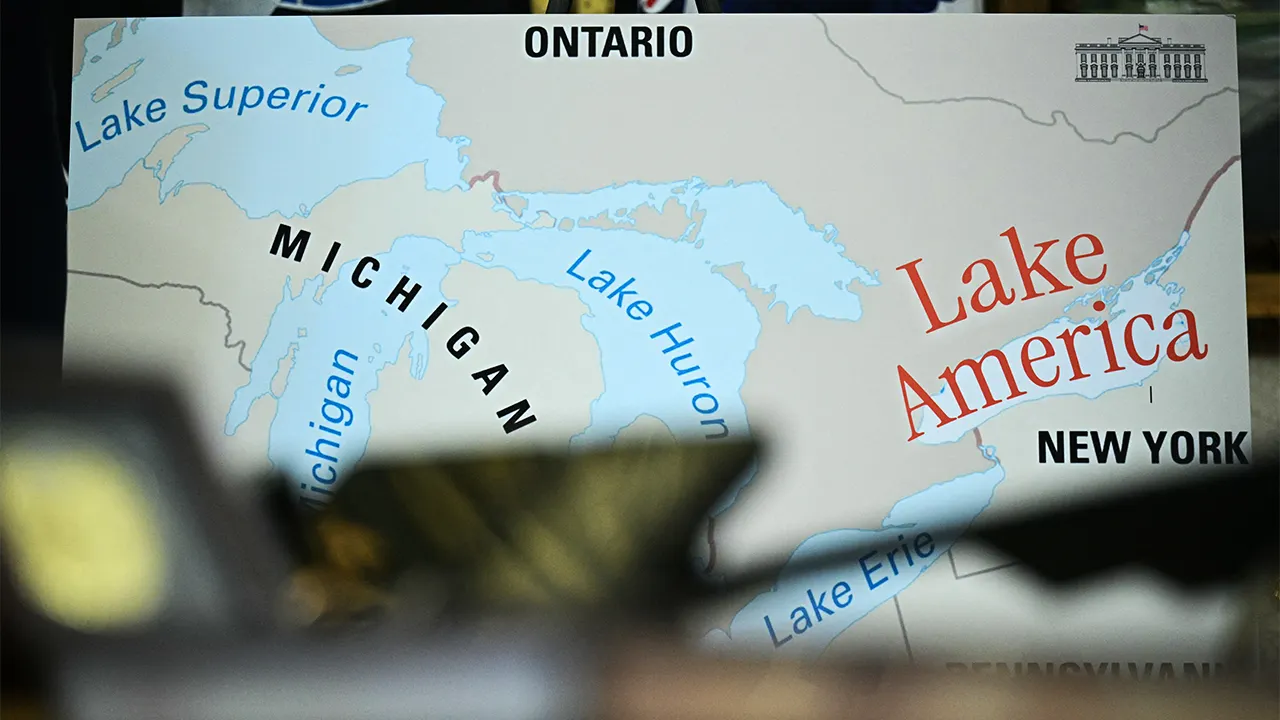
Apple Maps is now displaying Lake Ontario as “Lake America” for users in the United States following President Donald Trump’s executive order directing the federal government to rename the Great Lake.
FOX Business confirmed the change Tuesday by reviewing Apple Maps, which showed “Lake America” on the map and in the location details for the body of water.
Apple confirmed to Reuters that U.S. users will see “Lake America,” while users in Canada will continue to see “Lake Ontario.” Users elsewhere will see both names.
APPLE ENTERS A NEW ERA AS JOHN TERNUS TAKES OVER AS CEO
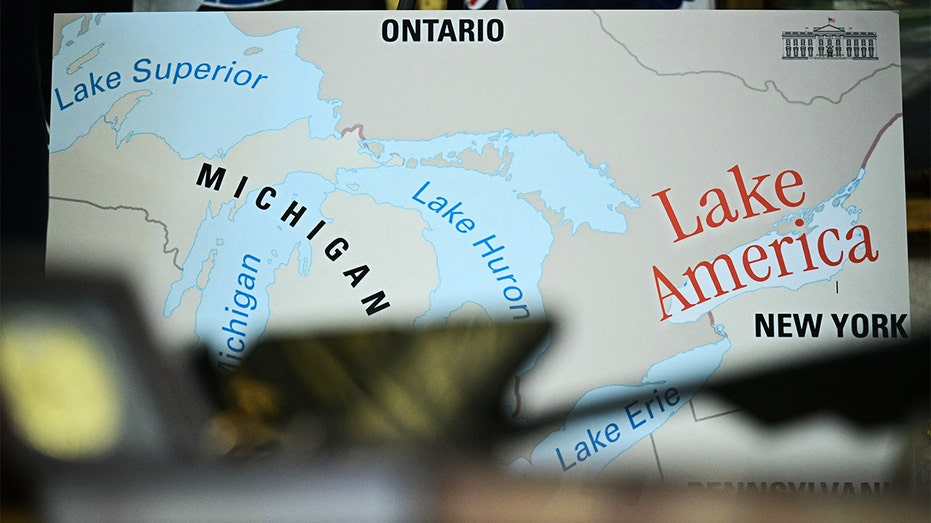
A map is displayed as U.S. President Donald Trump signs an executive order that aims to rename Lake Ontario to Lake America in the Oval Office of the White House in Washington, D.C., on August 27, 2026. (Jim WATSON / AFP via Getty Images / Getty Images)
The change follows Trump’s Aug. 27 executive order directing the Department of the Interior, in coordination with the Board on Geographic Names, to rename Lake Ontario as Lake America and update the federal Geographic Names Information System (GNIS).
TIM COOK’S LAST DAY AS APPLE CEO: HOW HE LED THE TECH GIANT’S RISE TO $4T
The order also directs federal agencies to use the new name in maps, contracts, documents and communications. It applies to federal usage and does not require Canada, international organizations or private companies to adopt the designation.

A map labeling Lake Ontario as “Lake America” is displayed as U.S. President Donald Trump signs an executive order during an event in the Oval Office of the White House on August 27, 2026, in Washington, D.C. (Andrew Harnik/Getty Images / Getty Images)
Apple’s move came after Interior Secretary Doug Burgum said on FOX Business’ “Mornings with Maria” that Trump had reached out to Apple directly regarding the Maps designation.
Google made a similar change days earlier. The company said its Maps service would show “Lake America” to U.S. users after the GNIS update, while Canadian users would continue to see “Lake Ontario” and users in other countries would see both names.
The approach mirrors how Apple and Google handled Trump’s 2025 decision to rename the Gulf of Mexico as the Gulf of America for federal purposes.

A Canadian flag flies along the waterfront of Lake Ontario, in Toronto, Ontario, Canada, on August 27, 2026. (Cole Burston / AFP via Getty Images / Getty Images)
CLICK HERE TO GET FOX BUSINESS ON THE GO
Canadian officials have rejected the Lake America designation. Prime Minister Mark Carney and New York Gov. Kathy Hochul said after Trump’s order that they would continue referring to the body of water as Lake Ontario, according to Reuters.
Reuters contributed to this report.

A fresh tax raid on Britain’s banks in October’s Budget would hand a competitive gift to rival global financial centres and see jobs and investment drain out of London, the chief executive of one of the world’s largest independent financial advisory organisations has warned.
Nigel Green, chief executive of deVere Group, made the intervention as the financial sector gears up for a major lobbying push ahead of Chancellor John Healey’s Budget on 28 October. Union leaders are pressing for a windfall levy on bank profits to help fund relief on household energy bills, while a senior Wall Street bank boss is reported to have privately urged Healey against making the UK a more hostile place for banks to operate.
“Every finance minister eventually learns the same lesson the hard way,” Green said. “Capital doesn’t sit still and wait to be taxed. It moves to wherever the environment is friendliest, and it moves fast.”
Green pointed to New York as a live warning, citing reports of a material decline in finance roles in the city, with executives openly linking the exodus to its tax burden. “London should be paying very close attention to what’s happening across the Atlantic,” he said. “A city can price itself out of the industry that built its skyline, and once those jobs relocate, they rarely come back on demand.”
His comments follow a similar warning from Citigroup chief executive Jane Fraser, who said last month that she was worried by the UK’s 48 per cent bank tax rate and that “money votes with its feet”. In May, JPMorgan chairman Jamie Dimon said the bank would reconsider its planned £9.9bn Canary Wharf tower if the UK became “hostile to banks again”.
According to deVere, UK banks already carry a heavier load than most competitors realise. On top of corporation tax at 25 per cent, lenders pay an additional 3 per cent surcharge on their profits plus a separate levy on their balance sheets, both introduced in the aftermath of the 2008 financial crisis and never fully unwound.
“Nobody is asking for sympathy for an industry that’s profitable again,” Green said. “But Britain’s banks are already taxed well above the rate applied to most other sectors. Layering a windfall charge on top of that only deepens an imbalance that already exists.”
Green acknowledged the political pressure on the Chancellor, with reports showing the UK’s largest banks posted combined profits above £29bn in the first half of the year, a figure unions are using to argue that the sector can easily absorb more.
“Big profit numbers make an easy talking point for anyone pushing a windfall tax,” he said. “What gets left out is that financial and professional services already deliver a record share of the tax take that funds the schools, hospitals and energy support Healey wants to protect. Punishing the sector that pays for those things is self-defeating.”
HMRC figures show the banking sector paid £35.2bn in PAYE, corporation tax, bank levy and bank surcharge receipts in the 2024 to 2025 financial year.
deVere says billions of pounds in planned UK office expansions and hiring are directly tied to the tax outlook, meaning firms are watching the Budget closely before committing further.
“Global banks don’t make 30-year property and headcount decisions based on hope,” Green said. “They make them based on whether a government looks predictable. Every signal of a harsher regime pushes that decision further from London and closer to Frankfurt, Dublin or New York.”
Healey has a narrower path than his predecessor faced, according to Green, given weaker growth and tighter borrowing headroom, which he said makes the temptation to reach for bank profits even stronger. Public sector borrowing came in at £1.8bn in July, against an Office for Budget Responsibility forecast of a £500m surplus, with borrowing in the financial year so far more than £2bn above the watchdog’s expectations.
“I understand the arithmetic behind wanting an easy pot of money to fund energy bill support,” Green said. “But taxing success out of the country doesn’t fund anything for long. It just moves the tax base somewhere else and leaves a smaller economy behind to cover the bill.”
He added: “Growth comes from stability, not from raiding the sector that’s finally performing. Healey has a genuine chance to back the industry that funds the country. Reaching for a windfall tax instead would be a costly mistake dressed up as a quick win.”

Amy Ingham
Amy Ingham is a reporter at Business Matters, covering UK business news with a focus on breaking news, business policy, late payments and insolvency. She joined the magazine in 2026 after completing the NCTJ Diploma in Journalism at Harlow College’s journalism school. Her recent reporting includes British Steel’s nationalisation and its impact on SME suppliers, the decline in late payments by large firms, and Insolvency Service director disqualifications. Reach her at aingham@cbmeg.co.uk.

Uber stock gains 2% as tech giant cuts 3,300 jobs in major restructuring
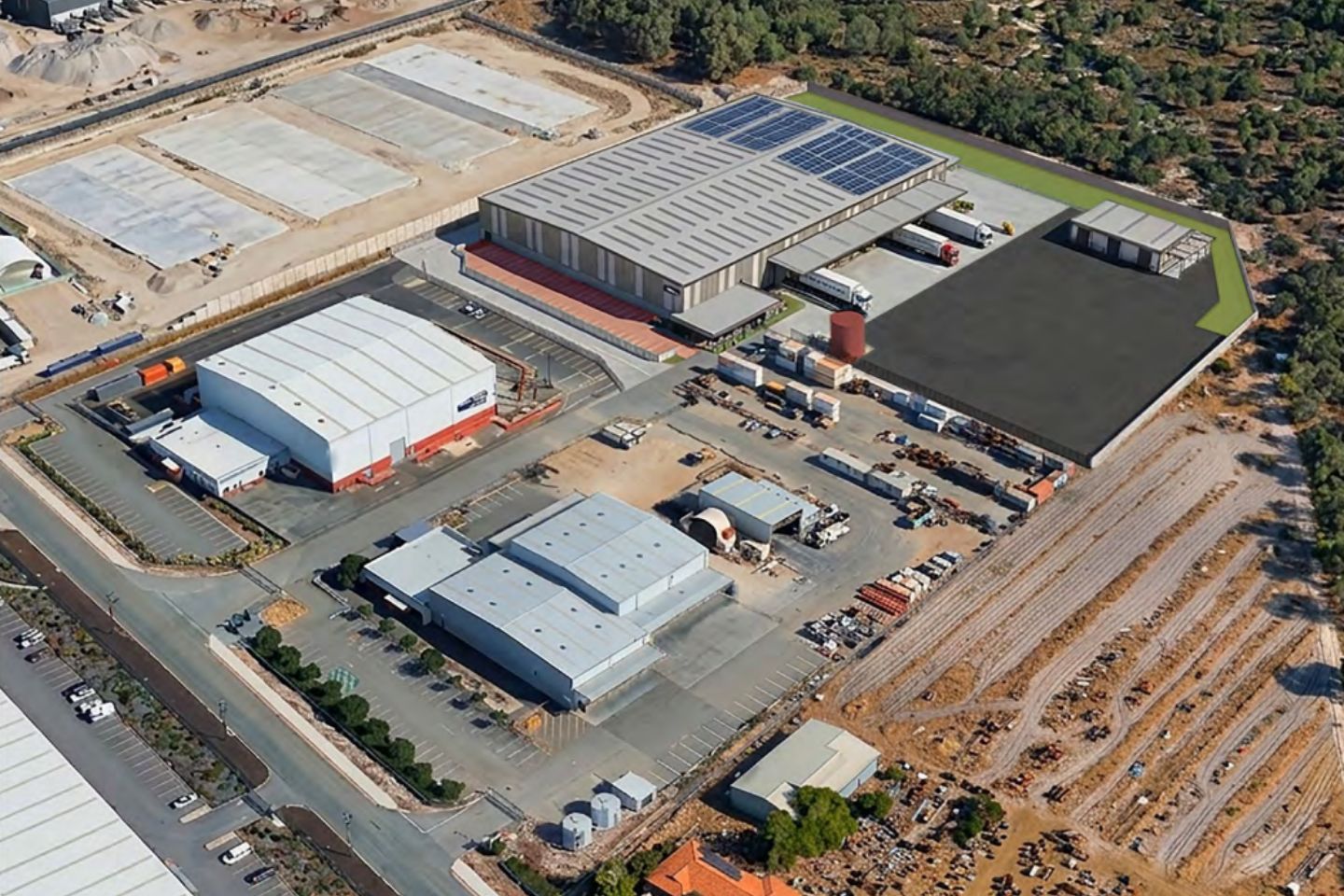
An assessment panel has approved another multi-million-dollar warehouse in Hesperia’s industrial centre in Hazelmere, to be occupied by a freight logistics and haulage service.
Business
Australian Stocks Tumble As Middle East Tensions And Global Bond Selloff Rattle Markets, ASX 200 Sinks 1%
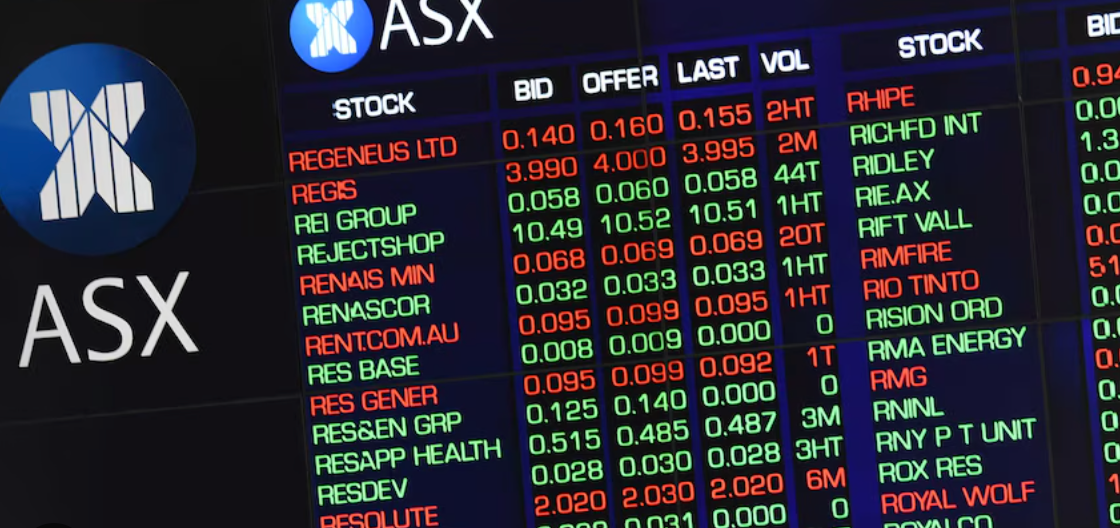
SYDNEY — Australian shares suffered their steepest one-day drop in months on Wednesday, as fresh U.S. military strikes on Iran sent oil prices surging and triggered a global bond market selloff that spooked investors across nearly every sector of the local market.
The benchmark S&P/ASX 200 index closed at 8,978.4 points, down 88.3 points, or 0.97%, marking one of the market’s worst sessions in recent months. The broader All Ordinaries index also fell sharply, tracking losses across almost every corner of the market.
Only a small fraction of the 200 companies that make up the benchmark index finished the day in positive territory, with mining and gold stocks bearing the brunt of the selloff while energy producers were among the rare bright spots.
The rout began overnight after the United States launched new strikes against Iran, escalating a conflict that has now stretched into its seventh month. The attacks pushed Brent crude oil prices to a two-month high, reviving fears that higher energy costs could reignite inflation just as central banks around the world had been signaling confidence that price pressures were cooling.
Moomoo Australia chief market strategist Tapas Strickland said the shift in investor sentiment was swift and broad-based.
“The catalyst for the sudden shift in sentiment stems from escalating Middle East tensions following strikes near the Strait of Hormuz, raising immediate concerns over potential bottlenecks in critical global shipping channels,” Strickland said. “Higher energy costs risk re-igniting headline inflation just as central banks seek confirmation that price pressures are contained.”
Strickland added that while higher bond yields were expected to weigh on rate-sensitive growth stocks, banks and real estate, energy producers and materials heavyweights were likely to offer some support given elevated crude and firm commodity prices.
The selloff in equities was compounded by a deepening rout in global government bond markets. Australia’s 10-year bond yield jumped to 5.19%, its highest level in 15 years, as investors demanded greater compensation for what they see as rising inflation and fiscal risk. Similar pressure was evident overseas, with Japan’s 10-year yield touching 3% for the first time since 1996, and borrowing costs in Germany and the United Kingdom climbing to multi-year highs.
Gold miners were among the hardest hit locally after the precious metal’s spot price slid to a one-month low near $4,314 an ounce, pressured by growing expectations of a U.S. Federal Reserve interest rate move this month. Shares in several mid-tier gold producers fell between 6% and 7.5%, while a major copper miner dropped roughly 8%. The country’s largest iron ore miners also slumped, with declines of between 2% and 3.4% weighing heavily on the broader index given their size.
Energy stocks stood out as the exception, buoyed by the jump in oil prices, while a handful of individual gainers including a grains and agribusiness company, an insurer and the nation’s largest telecom operator posted solid gains.
The selloff came on the same day the Australian Bureau of Statistics released data showing the economy grew 0.4% in the June quarter and 2.1% over the year, a result that came in slightly ahead of market expectations and added a fresh layer of uncertainty for the Reserve Bank of Australia ahead of its September policy meeting.
ABS head of national accounts Grace Kim said the underlying picture remained mixed.
“Economic growth remained subdued in the June quarter as households continued to behave cautiously,” Kim said. “While increased spending and business investment occurred in pockets of the economy, imports supported much of the growth, moderating its contribution to overall GDP growth.”
The stronger-than-forecast reading immediately fueled debate among economists over whether the central bank would resume raising interest rates this month. Capital Economics analyst Marcel Thielant said the data strengthened the case for further tightening.
“With GDP growth and inflation holding up better than the RBA had anticipated, the bank will probably hike rates again before long, perhaps as soon as this month,” Thielant said, noting the quarterly growth figure came in stronger than both the analyst consensus and the central bank’s own forecast.
Not all economists agreed a hike was imminent. BetaShares chief economist David Bassanese struck a more cautious tone, saying the numbers did not conclusively point to a September move.
“Ultimately, the jury remains out on a September rate decision,” Bassanese said. “The saving grace from the economic rut revealed by these numbers is they do not compel the RBA to raise rates, but they also do not rule out a hike in the future. My base case is that September will not bring a rate increase, as the RBA will want to see more evidence on inflation and the moderation in house prices.”
State Street Investment Management economist Krishna Bhimavarapu took a firmer view, pointing to the possibility of an increase as central banks elsewhere also lean toward tighter policy.
“Today’s GDP data surprised our bullish expectations,” Bhimavarapu said. “Absent another negative surprise in the August employment data, there are high chances of a September RBA hike now, particularly with the Fed, ECB and the BoJ also leaning hawkish.”
Treasurer Jim Chalmers welcomed the growth figures despite the market turmoil, framing Australia’s economic performance as resilient relative to its global peers.
“Annual growth in Australia was as strong or stronger than every major advanced economy — equal to the United States and much stronger than the rest,” Chalmers said. “Australia is outperforming when it comes to annual growth, we have stronger employment growth than almost every major advanced economy, and lower gross debt to GDP than every major advanced economy.”
Wednesday’s declines followed a soft start to September, after the ASX 200 had notched a fifth consecutive monthly gain in August. Losses on Wall Street overnight, driven by a sharp pullback in technology shares, had already set a cautious tone heading into the local session before the fresh Iran strikes deepened the selloff.
Market watchers said the path forward would likely hinge on whether the bond selloff stabilizes and on upcoming U.S. inflation and employment data, which could determine whether global interest rate expectations ease or harden further in the weeks ahead. For now, investors are bracing for continued volatility as geopolitical risk, inflation concerns and central bank policy uncertainty converge.

Credo Is Now A De-Risked AI Compounder


Stone Fox Capital is an RIA from Oklahoma. Mark Holder is a CPA with degrees in Accounting and Finance. He is also Series 65 licensed and has 30 years of investing experience, including 15 years as a portfolio manager. Mark leads the investing group Out Fox The Street where he shares stock picks and deep research to help readers uncover potential multibaggers while managing portfolio risk via diversification. Features include various model portfolios, stock picks with identifiable catalysts, daily updates, real-time alerts, and access to community chat and direct chat with Mark for questions. Learn more.
Analyst’s Disclosure: I/we have no stock, option or similar derivative position in any of the companies mentioned, and no plans to initiate any such positions within the next 72 hours. I wrote this article myself, and it expresses my own opinions. I am not receiving compensation for it (other than from Seeking Alpha). I have no business relationship with any company whose stock is mentioned in this article.
The information contained herein is for informational purposes only. Nothing in this article should be taken as a solicitation to purchase or sell securities. Before buying or selling any stock, you should do your own research and reach your own conclusion or consult a financial advisor. Investing includes risks, including loss of principal.
Seeking Alpha’s Disclosure: Past performance is no guarantee of future results. No recommendation or advice is being given as to whether any investment is suitable for a particular investor. Any views or opinions expressed above may not reflect those of Seeking Alpha as a whole. Seeking Alpha is not a licensed securities dealer, broker or US investment adviser or investment bank. Our analysts are third party authors that include both professional investors and individual investors who may not be licensed or certified by any institute or regulatory body.


Samuel Smith has a diverse background that includes being lead analyst and Vice President at several highly regarded dividend stock research firms and running his own dividend investing YouTube channel. He is a Professional Engineer and Project Management Professional and holds a B.S. in Civil Engineering & Mathematics from the United States Military Academy at West Point and has a Masters in Engineering from Texas A&M with a focus on applied mathematics and machine learning.Samuel leads the High Yield Investor investing group. Samuel teams up with Jussi Askola and Paul R. Drake where they focus on finding the right balance between safety, growth, yield, and value. High Yield Investor offers real-money core, retirement, and international portfolios. The service also features regular trade alerts, educational content, and an active chat room of like-minded investors. Perspective: “Do not store up for yourselves treasures on earth, where moth and rust destroy, and where thieves break in and steal. But store up for yourselves treasures in heaven, where neither moth nor rust destroys, and where thieves do not break in or steal; for where your treasure is, there your heart will be also … For what will it profit a man if he gains the whole world and forfeits his soul?” ~ Jesus (Matthew 6:19-21; 16:26)Learn more
Analyst’s Disclosure: I/we have a beneficial long position in the shares of GLD, MSDL either through stock ownership, options, or other derivatives. I wrote this article myself, and it expresses my own opinions. I am not receiving compensation for it (other than from Seeking Alpha). I have no business relationship with any company whose stock is mentioned in this article.
Seeking Alpha’s Disclosure: Past performance is no guarantee of future results. No recommendation or advice is being given as to whether any investment is suitable for a particular investor. Any views or opinions expressed above may not reflect those of Seeking Alpha as a whole. Seeking Alpha is not a licensed securities dealer, broker or US investment adviser or investment bank. Our analysts are third party authors that include both professional investors and individual investors who may not be licensed or certified by any institute or regulatory body.

Ella Loneragan speaks to Claire Tyrrell about why WA’s state library is turning to philanthropy in order to broaden its funding base.
Business
Dow Jones Futures Fall After Oil Prices Slam Market; Dell, Credo, Palo Alto Are Earnings Movers

Dow Jones futures fell early Wednesday, along with S&P 500 futures and Nasdaq futures. Dell Technologies, Palo Alto Networks, Credo Technology and MongoDB are notable overnight earnings movers. The stock market rally came under further pressure with the Dow Jones and S&P 500 dropping below key levels. Crude oil prices jumped on fresh U.S.-Iran attacks while Treasury yields also moved…
Copyright ©2026 Investor’s Business Daily, LLC. All rights reserved. 87990cbe856818d5eddac44c7b1cdeb8

Apple Maps renames Lake Ontario ‘Lake America’ for US users after Trump order

X Money can’t pay New Yorkers interest, gives them a $300 ‘bonus’ instead

India’s Asiad 2026 campaign suffers another doping blow; cases rise to 12 | Other Sports News

Weekend Open Thread – Corporette.com

Weekend Open Thread: Brooks Brothers

London Mayor Sadiq Khan handed a peerage by Keir Starmer alongside 15 other Labour figures… just days before the PM leaves No10

WATCH THIS to retire COMFORTABLY! | How much money do we need? | Retirement in 40s? #rahuljain

CHARLES SCHWAB: ”XRP IS THE ONE AND ONLY WINNER”?!!

RBA tipped to hike interest rates again, potentially in September | Finance Report | ABC NEWS
-

 Fashion5 days ago
Weekend Open Thread: Maeve – Corporette.com
-

 Crypto World6 days ago
Bitcoin’s 22% rally now needs real demand to outlast Treasury liquidity boost
-

 Crypto World7 days ago
Warsh Jackson Hole keynote puts financial innovation first
-

 Business6 days ago
Apple Confirms September 9 Keynote and Reveals Its Full Pre-Order Schedule
-

 Crypto World7 days ago
Elon Musk Grok Bot Promise: We Will Make You Whole if AI Loses Your Money
-

 Business5 days ago
Salesforce Stock Soars 19% as Blowout Earnings and Agentforce AI Growth Silence Software Skeptics
-

 Business4 days ago
Onto Innovation Stock: AI’s Next Bottleneck Is Yield (NYSE:ONTO)
-

 Business7 days ago
Walmart takes aim at younger shoppers with new fashion brand
-
 NewsBeat7 days ago
Lindsay Clancy jury braces for closing arguments as judge tells court: ‘You’ve heard all the evidence’ – Live updates
-

 Crypto World6 days ago
NVIDIA revenue hits $96.2B as AI demand doubles
-

 Crypto World4 days ago
Bitcoin price tests $82K resistance as Brandt stays long
-
 Crypto World7 days ago
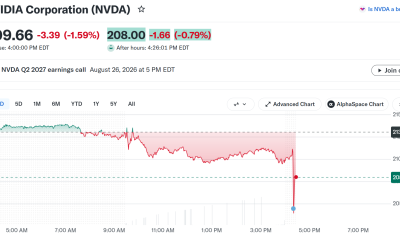
Nvidia Q2 Earnings Reveal $96.2 Billion Beat, So Why Is NVDA Falling?
-
 Tech4 days ago
Hugging Face built a $4.5 billion empire on free AI models. Now Nvidia is buying it for $12.9 billion
-

 Business5 days ago
iPhone 18 Pro Pre-Orders Could Shift to Saturday as Apple Reportedly Avoids September 11 Anniversary
-

 Tech6 days ago
Claude Cowork gets its own browser that doesn’t touch your tabs, bookmarks, or saved passwords
-

 Crypto World5 days ago
Truflation calls for Fed rate cut after PCE forecast
-

 Crypto World6 days ago
GENIUS Act missed its deadline as OCC writes rules anyway
-

 Tech4 days ago
PaperCut releases second emergency patch for exploited flaws
-

 Tech7 days ago
Apple’s iPhone 18 Pro event is on September 9
-
 News Videos3 days ago
Charlie Munger on Robinhood: No one should believe that Robinhood’s trades are free
You must be logged in to post a comment Login