Connect with us
DAPA Banner
DAPA Coin
DAPA
COIN PAYMENT ASSET
PRIVACY · BLOCKDAG · HOMOMORPHIC ENCRYPTION · RUST
ElGamal Encrypted MINE DAPA
🚫 GENESIS SOLD OUT
DAPAPAY COMING

Business

Mamba launches LTO candy

Published

on

Mamba launches LTO candy
Continue Reading
Click to comment

You must be logged in to post a comment Login

Leave a Reply

Business

Ventura Offshore Holding Ltd. (VTURF) Q1 2026 Earnings Call Transcript

Published

on

OneWater Marine Inc. (ONEW) Q1 2026 Earnings Call Transcript

Guilherme Coelho
CEO & Director

Good morning, good afternoon, everyone, and welcome to Ventura Offshore’s Q1 2026 Earnings Call. My name is Guilherme Coelho, I’m the CEO of Ventura Offshore. And I’d like to thank you all for joining us today.

Here with me are Marcelo Issa, our CFO; Mardonildo Filho, our Chief Strategy Officer; and Olav Amri, our Financial Adviser. And we’ll provide you an overview of our performance between January and March of this year, a brief overview of the market, and at the end, open for questions. [Operator Instructions]

So next slide, this is our disclaimer, which you guys are familiar with.

Advertisement

Okay. So very glad to report our robust operational performance in the first quarter of the year, with an uptime of 96.8%, in line with the continuous improvement we have been observing since last year. Another key highlight for the quarter, in Q1, Ventura Offshore has delivered an adjusted EBITDA of $21.5 million and a net income of $25.8 million.

Again this quarter, we maintained our industry-leading cost structure, operating with an average OpEx of $106,700 per day, excluding ancillary service for the Catarina, which are fully reimbursed by the customer with a markup margin. So again, demonstrating our cost discipline throughout the quarters and the years. I’ve been having this call with you now for 2 years, and proud to see that we’ve been able to demonstrate our cost control since our call #1.

We also closed the quarter with a strong free cash position of $37.2 million. That’s prior to the bond tap that we’ll talk about in a second. On uptime, as I already indicated, we delivered

Advertisement
Continue Reading

Business

A Practical Guide for Modern Business Leaders

Published

on

one month to comply with new Data Complaints Law

Office design has evolved significantly over the last decade. Businesses are paying closer attention to workplace productivity, employee well-being, and professional presentation than ever before.

Yet despite the rise of flexible workspaces and hybrid working, one piece of furniture continues to hold particular importance in leadership spaces: the executive office desk.

For directors, founders, and senior managers, a desk is more than a workstation. It influences organisation, comfort, workflow efficiency, and even how clients and employees perceive the business itself.

Choosing the right executive office desk requires more thought than simply selecting a design that looks impressive. The ideal desk should support productivity, reflect company standards, and adapt to the practical demands of modern working environments.

Why the Executive Office Desk Still Matters

Modern workplaces increasingly prioritize functionality, ergonomics, and collaborative layouts. However, executive offices still serve an important role within many businesses.

Advertisement

An executive workspace often acts as:

  • A decision-making environment
  • A private meeting space
  • A focused work area
  • A representation of company professionalism

The furniture within that space contributes directly to how effective and organised the environment feels. Research and workplace trends continue to show that office layout and furniture choices can influence concentration, comfort, and productivity. Business-focused publications have also highlighted the growing demand for office furniture that balances practicality with aesthetics in contemporary workspaces.

A well-designed executive desk creates structure within the workspace while helping leaders manage demanding daily responsibilities more efficiently.

What Defines a True Executive Office Desk?

Not every large desk qualifies as an executive desk. True executive office furniture combines professional design with practical functionality.

Several elements distinguish executive desks from standard office workstations.

Advertisement

Size and Workspace Functionality

Executive desks typically provide larger working surfaces to accommodate multiple monitors, documents, meetings, and day-to-day administrative tasks.

Additional surface space also helps reduce clutter, which can improve focus and organisation throughout the working day.

Materials and Durability

High-quality executive desks are generally constructed using durable materials such as:

  • Solid wood
  • Veneered wood
  • Tempered glass
  • Metal frameworks
  • Commercial-grade laminates

Durability matters because executive furniture is used daily. Investing in quality materials can reduce replacement costs over time while maintaining a professional appearance for years.

Storage and organisation

Integrated storage remains one of the most valuable features in executive furniture.

Advertisement

Many executive office desks include:

  • Lockable drawers
  • Filing cabinets
  • Hidden cable management
  • Built-in storage compartments

These features help maintain a cleaner and more organised workspace, particularly in fast-paced business environments.

Design and Professional Image

An executive office often hosts meetings with clients, suppliers, investors, or team members. Furniture plays a subtle but important role in shaping first impressions.

A thoughtfully designed desk can communicate:

  • Professionalism
  • Stability
  • Attention to detail
  • Organisational standards

This is one reason premium office furniture remains important in leadership spaces, even as workplace design trends evolve.

How the Right Desk Impacts Productivity

The connection between workplace setup and productivity is now widely recognized across modern business environments.

Advertisement

Office furniture is no longer viewed purely as a visual choice. Businesses increasingly understand that functionality directly affects employee performance and well-being.

Supporting Focus and Workflow

A poorly designed workspace can create unnecessary distractions and inefficiencies.

An effective executive desk should support:

  • Comfortable posture
  • Efficient access to technology
  • Clear document management
  • Sufficient working space

These seemingly small details can significantly improve workflow over time.

Improving Office organisation

Disorganised workspaces often lead to lost time, reduced concentration, and unnecessary stress.

Advertisement

Executive desks with integrated storage and cable management systems help create cleaner working environments that support daily productivity.

Creating a Better Client-Facing Environment

Executive offices frequently function as meeting spaces. A professional and organised desk contributes to a more confident and credible business image during conversations with clients or stakeholders.

In many industries, workplace presentations still influence perceptions and trust.

Key Factors to Consider Before Buying an Executive Office Desk

Before purchasing executive office furniture, businesses should consider both immediate requirements and long-term practicality.

Advertisement

Office Size and Layout

Large executive desks can dominate smaller rooms and reduce movement within the workspace.

Before purchasing, businesses should evaluate:

  • Available floor space
  • Office traffic flow
  • Storage requirements
  • Seating arrangements
  • Future office expansion plans

The desk should complement the room rather than overwhelm it.

Ergonomics and Employee Wellbeing

Workplace well-being has become a major priority for modern organisations. Comfortable and ergonomic furniture supports better posture and reduces physical strain during long working hours.

Many businesses now combine executive desks with ergonomic seating and adjustable workstation features to improve overall workplace comfort.

Advertisement

Technology Integration and Cable Management

Modern executive offices rely heavily on technology.

A suitable desk should accommodate:

  • Multiple screens
  • Charging systems
  • Video conferencing equipment
  • Cable routing solutions

Poor cable management can quickly make even premium office spaces appear cluttered and unprofessional.

Long-Term Value Versus Short-Term Cost

Budget considerations matter, but office furniture should be viewed as a long-term investment rather than a short-term expense.

Lower-cost desks may need to be replaced sooner, particularly in high-use environments. Higher-quality executive desks often provide better durability, functionality, and long-term value.

Advertisement

Common Mistakes Businesses Make When Choosing Office Furniture

Businesses sometimes prioritize appearance over functionality when purchasing executive furniture.

Some common mistakes include:

  • Choosing desks that are too large for the space
  • Ignoring ergonomic considerations
  • Overlooking cable management needs
  • Prioritizing low cost over durability
  • Selecting styles that do not match the wider office environment

Avoiding these issues can improve workplace efficiency and the long-term value of furniture.

Final Thoughts

An executive office desk is not simply another piece of office furniture. It is a central component of leadership spaces that influences productivity, organisation, comfort, and professional image.

The best executive desks combine practicality, durability, and design, helping businesses create work environments that support both daily performance and long-term growth.

Advertisement

Whether furnishing a corporate headquarters, upgrading a private office, or designing a hybrid workspace, investing in the right executive desk can deliver meaningful value far beyond aesthetics alone.

Advertisement
Continue Reading

Business

529 plans offer tax-free growth and new options families may not know about

Published

on

Cornerstone University launches $24K accredited degree via smartphone

American households saving money for their children’s educations can leverage tax-advantaged 529 accounts to make their dollars go further.

529 education savings accounts are typically opened by parents, guardians or grandparents for minor children and allow those savings to grow on a tax-deferred basis, and funds can be withdrawn tax-free when they’re used for qualified expenses. Individuals may also open 529 accounts to help save for their own education. 

Advertisement

“529s are the optimal vehicle for education savings,” Thomas Psaltis, director of education savings programs at Bank of America Merrill Lynch, told FOX Business in an interview.

“That growth in earnings, if used tax-free, can have a really significant impact on providing more money for education in the future for children and grandchildren, but also help combat the rising tuition costs,” he said.

BANK OF AMERICA’S LEGACY OF BUILDING THE AMERICAN DREAM

Student loan application

Man counting college savings fund, tuition fee or student loan with calculator. Education price and expenses concept. Money and papers on table. Calculating budget and planning finance. (iStock)

Psaltis said that aside from that core feature, 529 accounts offer other features that may not be available to those who use other tax-advantaged savings accounts.

Advertisement

“One of the game changers is the versatility of 529 accounts,” which he noted were traditionally designed for handling expenses at four-year colleges but have “grown significantly to go beyond just that.”

“Some of the recent legislation under the SECURE 2.0 Act and even as President Trump’s One Big Beautiful Bill has now allowed for the use of K-12 tuition, which has since been expanded under the One Big Beautiful Bill from $10,000 annually to $20,000 to be used for K-12 in private education, even if you’re not using them directly for college,” Psaltis said.

“We’re now including registered apprenticeships and credentialing programs as part of qualified expenses that can be used tax-free as well,” he added.

Psaltis said that advisors at Merrill Lynch encourage clients to focus on planning ahead, and that 529 plans can meet the education savings needs of clients at all income levels.

Advertisement

SOUTHERN CITIES DOMINATE RANKINGS OF BEST JOB MARKETS FOR NEW COLLEGE GRADUATES

Since their inception 30 years ago, the number of 529 plans has grown to 17 million accounts across the industry and has a total of more than half a trillion dollars in assets, he noted. Despite 529 plans being available to Americans for three decades, Psaltis added there are still some common misperceptions about how the accounts work.

“There’s this misconception that you have to fully fund college for a 529 plan to be worthwhile, and sometimes that perception can create unnecessary pressure and cause families to delay in getting started,” he said. 

“The biggest miss in that is the opportunity for that tax-free growth. Families who end up using taxable savings instead of a 529 may be giving up meaningful long-term returns that could be used tax-free,” Psaltis said.

Advertisement
kids with backpacks walking in school

529 accounts can be opened by parents for the children to use for college and trade school expenses. (Valerie Plesch for The Washington Post via Getty Images)

Contributions are considered taxable gifts, so individuals can contribute up to $19,000 per year, per beneficiary without facing a gift tax liability. 529 accounts may also be frontloaded with up to five years of giving all at once.

“Let’s say there’s grandparents that would typically gift $38,000 annually for their kids’ 529. The 529 code allows them to gift up to five times that – or $190,000 per beneficiary – in a single year,” he said. “The contributions that were moved and the future growth of those contributions are generally no longer part of that grandparent’s estate, so long as they live for the next five years it won’t be subject to a clawback or a prorated pullback.”

RECENT COLLEGE GRADS ARE LOSING THEIR EDGE IN JOB MARKET, STUDY SHOWS

In cases where a 529 account beneficiary may not be planning on attending college or an accredited vocational tech program, there’s no required distribution, so the funds could be held in the account in case they change their mind and decide to do so at a later date. 

Advertisement
college graduates

Unused 529 funds may be reallocated to another beneficiary, or can be rolled over into an IRA to jump-start retirement. (iStock)

“Holding onto it indefinitely, that child that doesn’t initially go off to college, well, maybe in a few years they decide they want to further their education either through college or an accredited trade,” Psaltis said. “You can switch beneficiaries at any time and for whatever reason, so if there’s unused funds, those monies could be shared with siblings.” 

“If all else fails, and you have an account open for 18-plus years, there’s still other options,” he added. “One of the key features that has recently occurred over the past few years is the ability to roll over a portion of your 529 proceeds up to $35,000 into a Roth IRA on behalf of that beneficiary to sort of help jump-start their retirement, and that’s a really cool feature too.”

GET FOX BUSINESS ON THE GO BY CLICKING HERE
“At the end of the day, they’re not locked into those monies. If for whatever reason they have to take that money back, they can always take that money back themselves, but just note that this would be treated as a non-qualified withdrawal and that account owner would be subject to income tax and a potential 10% federal tax penalty, but only on the earnings portion of the account,” Psaltis said.

Advertisement
Continue Reading

Business

Why Sustainable Waste Management Is Becoming a Competitive Advantage for UK Businesses

Published

on

Senior UK industry figures have issued a stark warning over the government’s new packaging tax, branding it “horrific” and economically damaging.

For many UK businesses, sustainability has shifted from a long-term aspiration to an operational priority.

Customers are paying closer attention to environmental standards, investors are increasingly assessing ESG performance, and businesses themselves are seeking ways to improve efficiency amid continued economic pressure.

While conversations around sustainability often focus on energy use or supply chains, waste management remains one of the most immediate and practical areas where businesses can create measurable improvements.

For SMEs especially, refining waste processes can reduce costs, strengthen operational efficiency, and support broader environmental commitments without requiring major structural changes.

The Shift From Compliance to Business Strategy

There was a time when waste management was viewed primarily as a compliance obligation. Businesses arranged collections, met regulatory requirements, and treated disposal as a routine operational expense.

Advertisement

That mindset is changing.

Across the UK, businesses are recognizing that environmental responsibility increasingly influences reputation, customer trust, and long-term resilience. Research focused on UK SMEs has shown growing adoption of sustainability initiatives, particularly around reducing operational waste and improving recycling practices.

This shift is especially important for smaller businesses competing in crowded markets. Operational decisions that once stayed behind the scenes are now part of how brands are evaluated publicly.

Customers, suppliers, and stakeholders increasingly expect businesses to demonstrate practical environmental responsibility rather than broad promises.

Advertisement

The Hidden Cost of Poor Waste Practices

Many businesses underestimate the extent to which inefficient waste handling affects daily operations.

Overflowing bins, inconsistent recycling processes, and unclear disposal systems often create avoidable costs across multiple departments. General waste collections tend to be more expensive than properly separated recycling streams, while excessive contamination can lead to rejected loads and additional charges.

There is also a less visible operational impact.

Disorganized waste systems can create unnecessary inefficiencies for employees, increase storage issues, and contribute to poorer workplace environments. In sectors such as retail, hospitality, logistics, and manufacturing, waste management problems can quickly affect productivity and customer experience.

Advertisement

As sustainability expectations continue to rise, businesses that ignore these operational gaps may also face reputational risks. Organizations that fail to demonstrate meaningful environmental action can struggle to meet stakeholder expectations in increasingly sustainability-conscious markets.

Building a More Efficient Workplace Through Better Waste Management

Improving waste management does not necessarily require large-scale investment. In many cases, the most effective changes are procedural.

Businesses that achieve strong results typically focus on three areas:

  • Clear separation systems for recyclable materials
  • Consistent staff guidance and accountability
  • Reliable collection partnerships

Cardboard, paper, plastics, and mixed recyclables all require different handling processes. Businesses that generate large amounts of packaging waste often benefit from introducing dedicated recycling streams rather than relying solely on general waste disposal.

Sometimes, companies reviewing their cardboard waste collection processes may find opportunities to reduce disposal frequency, improve recycling rates, and lower overall waste costs by better segregating waste and scheduling collections.

Advertisement

These operational improvements are particularly valuable for growing businesses where waste volumes increase alongside commercial activity.

The Role of Recycling in Modern Business Operations

Recycling is no longer viewed solely as an environmental initiative. It has become closely linked to operational efficiency and corporate accountability.

Businesses are under increasing pressure to measure and report sustainability efforts more clearly. Even SMEs that are not formally reporting against ESG frameworks are often expected to provide evidence of responsible operational practices when working with larger clients or procurement partners.

Efficient recycling systems support several commercial objectives at once:

Advertisement
  • Reduced landfill dependency
  • Lower waste management costs
  • Improved environmental performance
  • Stronger brand credibility
  • Better alignment with supplier requirements

Material-specific recycling also matters more than many businesses realize. Paper and cardboard waste, for example, remain among the most recyclable commercial materials when separated correctly. However, contamination significantly reduces recovery effectiveness and increases processing challenges.

Businesses that build simple yet disciplined recycling systems tend to achieve stronger long-term outcomes than those that rely on reactive disposal methods.

Making Sustainability Practical for SMEs

One reason some SMEs delay sustainability initiatives is the assumption that environmental improvements require major investment or dedicated internal teams.

In reality, many operational gains come from relatively small adjustments.

Simple actions such as conducting a waste audit, reviewing collection frequency, improving signage around recycling points, or consolidating supplier arrangements can create immediate improvements without disrupting day-to-day operations.

Advertisement

The key is practicality.

Businesses that succeed with sustainability initiatives typically avoid overcomplicating the process. Instead, they focus on changes that employees can maintain consistently and that align naturally with operational workflows.

This pragmatic approach is becoming increasingly important as SMEs balance environmental goals with cost control and operational resilience.

In essence,

Sustainability is no longer separate from business performance. For many UK companies, especially SMEs, it is becoming part of how operational efficiency, customer trust, and long-term resilience are measured.

Advertisement

Waste management may not always receive the same attention as broader sustainability strategies, but it often represents one of the most accessible areas for meaningful improvement.

Businesses that refine their recycling systems, reduce unnecessary waste, and introduce more structured operational processes are often better positioned to improve efficiency while meeting rising environmental expectations.

In a business environment where both costs and accountability continue to increase, smarter waste management is quickly becoming less of an obligation and more of a competitive advantage.

Advertisement

Continue Reading

Business

US FDA approves MannKind’s inhaled insulin for children

Published

on


US FDA approves MannKind’s inhaled insulin for children

Continue Reading

Business

Universal Music Group declines Pershing Square proposal

Published

on

Universal Music Group declines Pershing Square proposal


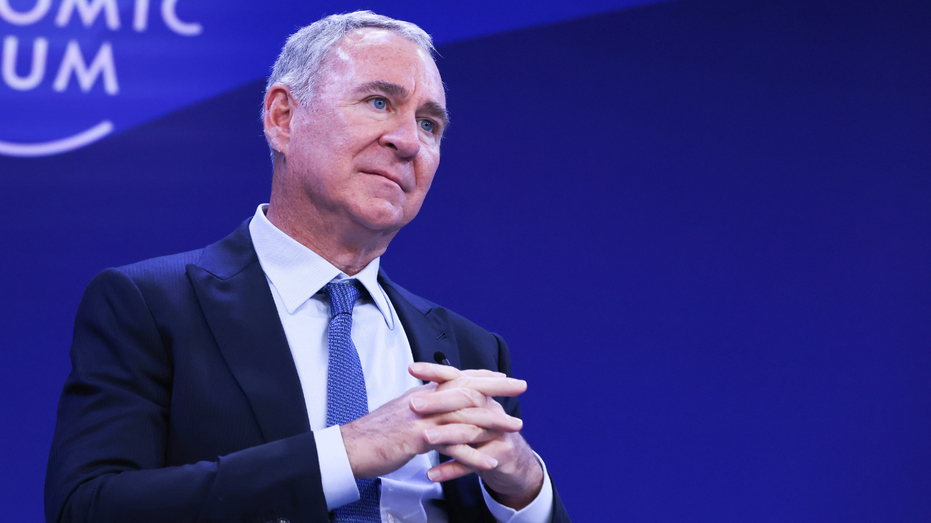
Universal Music Group declines Pershing Square proposal

Continue Reading

Business

Japan’s Defence Shift and What It Means for Southeast Asia’s Security

Published

on

Japan's Defence Shift and What It Means for Southeast Asia's Security

Abstract

  • Japan’s easing of defence export restrictions marks a significant shift in Tokyo’s strategic posture, driven by China’s military expansion, North Korean threats, Russia’s invasion of Ukraine, and uncertainty over US foreign policy. This moves Japan from constitutional pacifism toward an active stabilising role in the Indo-Pacific.
  • Southeast Asian nations including Indonesia, the Philippines, and Vietnam are diversifying their security partnerships in response. ASEAN institutions must strengthen operational frameworks to manage great power tensions, with Malaysia’s role as China-ASEAN coordinator considered especially critical to preventing regional polarisation.

Japan’s relaxation of defence export limitations marks a significant strategic transformation throughout Asia. With geopolitical pressures intensifying, Southeast Asian countries such as Indonesia, the Philippines, and Vietnam are broadening their security alliances. Japan’s well-regarded position within the region strengthens its expanding influence, although the dangers of major-power competition remain a concern.

Key Points

• Japan’s decision to ease defence export restrictions signals a profound strategic shift, driven by China’s military rise, North Korean threats, Russia’s war in Ukraine, and uncertainty over US foreign policy, transforming Tokyo from a pacifist economic giant into an active Indo-Pacific stabilising power.

• Southeast Asian nations, particularly Indonesia, Philippines, and Vietnam, are responding by diversifying security partnerships beyond economic diplomacy, recognising that regional stability increasingly requires military modernisation and deeper defence cooperation amid escalating geopolitical competition.

• While Japan’s expanded role carries risks of heightening China’s suspicions and deepening regional polarisation, ASEAN must evolve beyond rhetoric, strengthening institutional frameworks to prevent great power rivalry from escalating into open confrontation across the Indo-Pacific.

Japan’s Strategic Transformation and Its Regional Implications

A Historic Policy Shift Japan’s decision to lift major restrictions on defence exports represents far more than a technical policy revision — it signals a profound transformation in Asia’s strategic architecture. For decades, Tokyo maintained strict constitutional pacifism, avoiding conventional military power despite possessing immense technological capabilities. That era is rapidly ending. Structural pressures, including China’s military rise, North Korean missile testing, Russia’s war in Ukraine, and uncertainty surrounding American foreign policy under President Trump’s second administration, have compelled Japan to redefine itself as an active Indo-Pacific stabilising power rather than a passive beneficiary of American strategic protection.

Advertisement

Southeast Asia’s Evolving Security Calculus

Deepening Defence Partnerships Japan’s strategic recalibration is generating measurable responses across Southeast Asia. Indonesia and Japan have agreed to deepen defence industrial collaboration, the Philippines has embraced Japanese maritime patrol vessels and surveillance systems amid South China Sea tensions, and Vietnam is quietly diversifying its security partnerships. Indonesia, under President Prabowo Subianto, remains officially committed to non-alignment while simultaneously modernising its armed forces and engaging multiple defence partners. This reflects a regional consensus that economic diplomacy alone is insufficient to manage intensifying geopolitical risks in an era of maritime competition, cyber warfare, and accelerating military modernisation.

ASEAN’s Balancing Act in a Fragmented World Order

Navigating Great Power Rivalry Japan benefits from relatively high trust across ASEAN, combining technological sophistication with restrained diplomacy. However, China views Tokyo’s changing defence posture with growing suspicion, creating delicate tensions for regional institutions. Frameworks such as the ASEAN Defence Ministers’ Meeting Plus and the ASEAN Outlook on the Indo-Pacific must become more operationally coherent to prevent rivalry from escalating into open confrontation. Malaysia, as coordinator of China-ASEAN relations from 2025 to 2028, holds a particularly sensitive diplomatic role, ensuring ASEAN remains a platform for dialogue rather than becoming entrapped within dangerous great power polarisation.

Advertisement
Continue Reading

Business

PlayStation Power or Switch 2 Momentum in Gaming Race

Published

on

Nintendo has sold around 150 million Switch machines since the gadget's launch in March 2017

Tokyo — As investors weigh opportunities in the video game sector amid shifting console cycles and entertainment diversification, Sony Group Corp. and Nintendo Co. present contrasting bets for 2026, with Sony offering broader business stability and Nintendo riding the early success of its Switch 2 platform.

Sony shares (NYSE: SONY) closed recently around $21.72, down about 15% year-to-date in 2026, reflecting pressure from gaming softness and electric vehicle losses. Nintendo’s U.S.-traded shares (OTCPK: NTDOY) have traded near $10.92–$11.00, significantly off prior highs following a post-Switch 2 launch pullback.

Both companies reported strong fiscal 2026 results ended March 31, but face different headwinds and tailwinds heading into the new fiscal year.

Sony’s Diversified Empire

Advertisement

Sony Group posted fiscal 2026 revenue of approximately ¥12.48 trillion, with gaming and network services remaining a key profit driver despite challenges. The PlayStation division continues to anchor entertainment, supported by a large installed base, subscription services like PlayStation Plus, and a growing portfolio of first-party titles.

However, the fourth quarter showed weakness. Sony reported a net profit drop in the final quarter due in part to losses at its Honda joint venture for electric vehicles and softer game performance. Full-year net profit guidance for fiscal 2027 points to double-digit growth at ¥1.16 trillion, aided by a ¥500 billion share buyback program.

Analysts maintain a generally positive stance. Consensus price targets hover around $26–$29, implying potential upside from current levels, with some optimistic forecasts reaching $33–$34. Sony trades at forward multiples reflecting its mix of imaging sensors, music, pictures, and financial services.

Sony’s imaging and sensing solutions segment benefits from demand in smartphones and automotive applications, while music and film provide relatively stable cash flows. The company has emphasized efficiency and strategic investments, including in live services and PC porting of select titles, though it maintains a console-first approach for many exclusives.

Advertisement

Nintendo’s Hardware-Driven Surge

Nintendo delivered exceptional fiscal 2026 results, with net sales surging 98.6% to ¥2.313 trillion, driven by the successful launch of Switch 2. Hardware sales for the new console reached 19.86 million units by fiscal year-end, exceeding initial expectations.

Operating profit rose 27.5% to ¥360.1 billion. The company also benefits from strong software attach rates, digital sales growth, and expansion into movies and other intellectual property ventures. Nintendo’s balance sheet remains fortress-like, with substantial cash reserves supporting dividends and potential buybacks.

For fiscal 2027, Nintendo guided more conservatively: net sales of ¥2.05 trillion and operating profit of ¥370 billion, with Switch 2 hardware sales targeted at 16.5 million units. The outlook accounts for a maturing cycle and component cost pressures, leading to some analyst disappointment and stock volatility.

Advertisement

Nintendo’s strategy centers on family-friendly, innovative hardware-software integration. The Switch 2 has maintained strong momentum in key markets, with titles leveraging the hybrid design. Long-term, the company eyes recurring revenue through digital platforms, IP licensing, and experiences beyond gaming.

Head-to-Head Comparison

Sony offers greater diversification. Its gaming segment, while important, represents a smaller portion of overall revenue compared to Nintendo’s near-total dependence on the category. This provides Sony a buffer during console transitions but can dilute pure-play gaming upside.

Nintendo delivers higher volatility tied to hardware launches and hit titles but boasts superior margins in successful cycles and legendary first-party IP with enduring cultural relevance. Its stock has historically rewarded patient investors through console generations, though transitions can pressure near-term results.

Advertisement

Valuation metrics show Nintendo trading at lower multiples in recent periods following the post-launch adjustment, while Sony reflects its conglomerate structure. Risk-adjusted returns have varied, with Nintendo showing higher volatility.

Market and Industry Context

The global gaming industry continues expanding through cloud gaming, mobile, PC, and live services. Both companies navigate competition from Microsoft, as well as free-to-play and cross-platform titles. Supply chain issues, currency fluctuations, and consumer spending trends remain watchpoints.

Sony benefits from scale in content creation and distribution. Nintendo excels in ecosystem lock-in and innovation, as seen with Switch 2’s market reception. Analysts note Nintendo’s potential for recovery if hardware sales meet or exceed guidance, while Sony’s outlook hinges on broader entertainment recovery and cost management.

Advertisement

Risks and Considerations

For Sony, key risks include EV venture performance, yen strength impacting overseas earnings, and competition in premium consoles. Execution on live-service games and PC strategy will matter.

Nintendo faces cyclical hardware risks, potential tariff or cost pressures on components, and the challenge of sustaining software momentum. Guidance conservatism has historically preceded beats in strong cycles.

Both stocks carry technology sector volatility, regulatory scrutiny on content, and macroeconomic sensitivity.

Advertisement

Analyst and Investor Views

Wall Street leans Hold to Buy on both, with varying targets. Sony’s diversification appeals to conservative portfolios, while Nintendo attracts growth-oriented investors seeking high-margin IP leverage. Long-term, Nintendo’s pure-play focus and balance sheet strength draw comparisons to past successful cycles.

Outlook for 2026 and Beyond

In 2026, Sony may provide steadier performance supported by multiple revenue streams and share repurchases. Nintendo’s trajectory depends heavily on Switch 2 adoption and software lineup, potentially offering higher reward if execution remains strong.

Advertisement

Neither represents a clear “buy” without considering individual risk tolerance, time horizon, and portfolio fit. Diversification across the sector or broader tech remains advisable. Investors should monitor upcoming quarterly results, with Sony’s next key update expected around July–August and Nintendo’s in the fall.

The choice ultimately hinges on preference for diversified entertainment exposure versus dedicated gaming innovation. Both companies have demonstrated resilience over decades, adapting to industry shifts while leveraging powerful brands.

Continue Reading

Business

Slideshow: Shaking up the snack sector

Published

on

Slideshow: Formulating fresh condiment innovations

Innovations are rolling out in the snack category.  

Continue Reading

Business

ProVen VCT admits 9.6 million new shares to LSE trading

Published

on


ProVen VCT admits 9.6 million new shares to LSE trading

Continue Reading

Trending

Copyright © 2025