Connect with us

Business

Manorama Industries shares surge over 8% after strong Q1 results

Published

on

Manorama Industries shares surge over 8% after strong Q1 results
Manorama Industries shares rallied over 8% to Rs 1,747.25 on the BSE on Friday after the specialty fats and cocoa butter equivalent (CBE) manufacturer reported strong earnings for the June quarter. The sharp buying momentum pushed the stock near its 52-week high of Rs 1,867, driven by investors reacting positively to a 67.6% surge in net profit.

The strong operational performance was backed by an improved value-added product mix, enhanced processing capacity, and robust demand across key consumer industries like chocolate, confectionery, and cosmetics.

Financial performance

For the first quarter ended June 30, 2026, Manorama Industries posted a consolidated net profit of Rs 786.6 million, marking a massive 67.6% jump compared to Rs 469.4 million reported in the corresponding period last fiscal. On a sequential basis, net profit surged 49.9% from Rs 524.6 million in the March quarter.

Advertisement

Consolidated revenue from operations increased by 39.5% year-on-year to reach Rs 4,040.1 million, up from RS 2,895.5 million in Q1 FY26. This performance marked the first time the company crossed the RS 4,000 million quarterly revenue mark. On a quarter-on-quarter basis, revenue rose 3.2% from RS 3,913.4 million. The revenue mix between domestic and export markets stood at 40:60 during the quarter, highlighting its diversified global footings.

Operating performance remained robust, with EBITDA rising 42.2% year on year to Rs 1,062.1 million compared to RS 747.0 million in the base quarter. EBITDA margin expanded by 49 basis points year on year to 26.3%. Profit after tax margin also expanded by 326 basis points to reach 19.5%, aided by operational efficiencies and improved leverage. Diluted earnings per share stood at Rs 13.17 compared to Rs 7.85 a year ago.

Business expansions and global sourcing updates

During the quarter under review, Manorama Industries completed key strategic milestones to reinforce its global supply chain. The company incorporated a wholly owned subsidiary, Manorama Savannah Agro Chad SARL, in the Republic of Chad to strengthen its Shea sourcing operations in West Africa.
Additionally, the firm acquired nearly 10 hectares (24 acres) of land in Burkina Faso for a dedicated Shea seed processing facility. Regulatory approvals for this facility are currently underway. The company noted that these investments in West Africa will enhance raw material security, traceability, and supply chain proximity to international customers.The company also announced the successful completion of its Qualified Institutions Placement (QIP), which has strengthened its balance sheet and provided the financial flexibility to fund future growth opportunities across manufacturing, raw material sourcing, and value-added product categories.

Growth outlook

Commenting on the results, Ashish Saraf, Chairman and Managing Director of Manorama Industries, stated that the company commenced FY27 with strong momentum, driven by sustained demand across end-user industries and a growing contribution from its specialty fats portfolio.

Advertisement

Looking ahead, management expressed confidence in maintaining its long-term growth trajectory. The company plans to leverage its expanding product offerings, deeper customer partnerships, and growing presence in cocoa butter alternatives to deliver sustainable growth and long-term value for stakeholders.

Continue Reading
Click to comment

You must be logged in to post a comment Login

Leave a Reply

Business

Engine parts smashed Ryanair window that man’s head was sucked out of, report says

Published

on

Aerial image of a building with orange flames ripping through the roof.

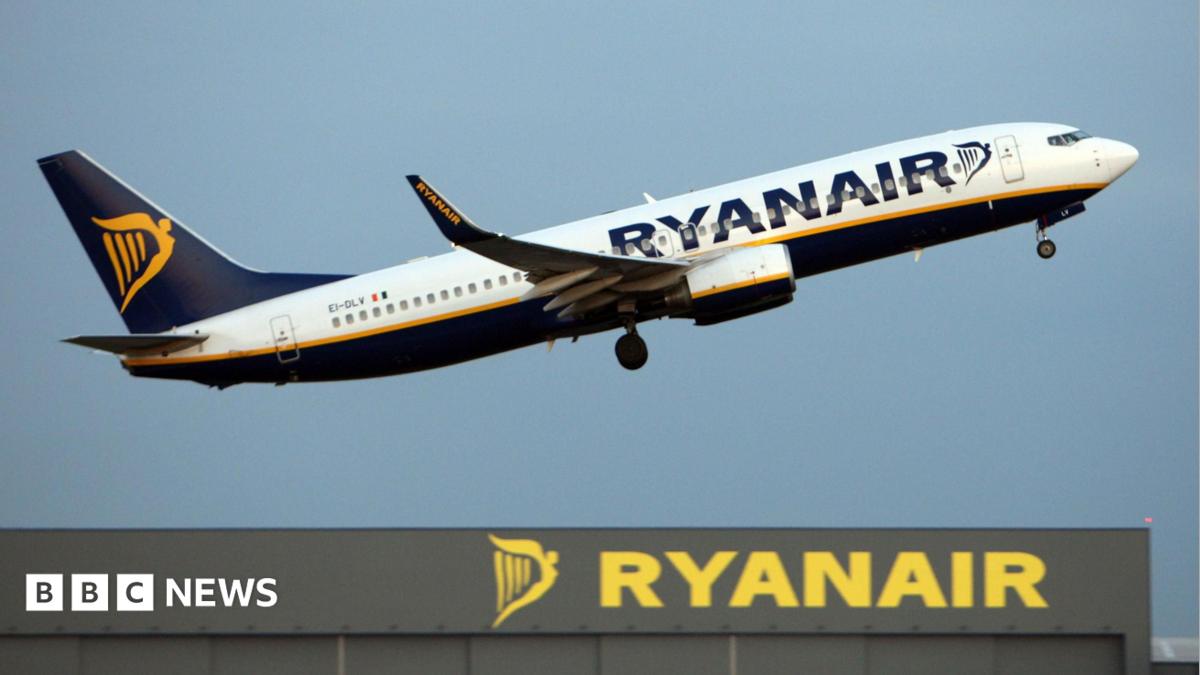
Broken engine fragments smashed a cabin window of a Ryanair plane causing a man’s head and right shoulder to be sucked into the hole last month, US investigators have said.

The National Transportation Safety Board (NTSB) wrote in a preliminary report that this happened after an engine fan blade broke shortly after takeoff on the 10 July flight from Greece to Germany.

Serbian national Ljubisa Karović’s head and right shoulder were sucked out of the plane’s window, leaving him “seriously injured and in shock”.

His wife Svetlana Grković Maksimović later told BBC Serbia that she and two other passengers held onto his legs for several minutes.

Advertisement

The NTSB said the flight from Thessaloniki to Memmingen “experienced a No. 2 (right) engine fan-blade-out (FBO) failure during climb out”.

“The crew elected to return to SKG [Thessaloniki International Airport] where they made an uneventful landing.”

The NTSB was “delegated the investigation in full” by the Greek authorities in the days following the incident.

It also detailed a timeline of events given by the flight crew, who said they received a “high vibration” engine alert during the climb.

Advertisement

In response, they reduced the engine power and carried out a series of checks. When the vibrations stopped, the crew continued to climb on autopilot, the report said.

But the engine vibrations then increased and the crew heard a loud bang, prompting them to declare an emergency and begin their descent.

Flight attendants reported hearing and feeling the vibrations, and seeing a small amount of smoke before the oxygen masks were deployed.

One flight attendant said they then noticed passengers calling for help after a passenger became “partially lodged in a damaged cabin window”, with the entire window missing.

Advertisement

The engine had undergone ultrasonic inspections in May this year with no findings of fault, the report stated.

Ryanair boss Michael O’Leary earlier suggested that the incident may have been caused by “foreign object damage” to an engine.

The aircraft was operated by Ryanair’s subsidiary Malta Air.

Advertisement
Continue Reading

Business

Terry de Havilland US expansion: Macy’s, Nordstrom deals

Published

on

Terry de Havilland US expansion: Macy's, Nordstrom deals

British footwear brand Terry de Havilland is planning a US retail launch with Macy’s, Bloomingdale’s and Nordstrom later this year, according to Darren Spurling, who owns the business.

Spurling, 60, is the nephew of the late designer Terry de Havilland and runs the Newcastle-based company with his son Josh. The business has ten employees, designs in Britain and manufactures its shoes in Spain.

The move follows a rise in US online sales after recent sightings of actresses including Millie Bobby Brown and Margot Robbie wearing the brand’s shoes.

The label was founded by Terrence Higgins, who began designing shoes in 1972 and opened his King’s Road shop, Cobblers to the World, the same year. He took his trading name from a Paris phone book. “He didn’t think Higgins was a very good name for shoes,” Spurling said, “it didn’t seem exotic.”

The brand’s platform heels were worn in the 1970s by David Bowie and by customers Spurling listed as “Lulu, Cher, The Rolling Stones, Elton John”. Its Margaux wedge, named after Margaux Hemingway, has been in the collection since 1973, and the Deco heel, a five-inch sandal with metallic snakeskin trim, has been displayed at the V&A. The museum’s collection also includes a pair of his 1972 snakeskin platform shoes, given by the milliner David Shilling.

Advertisement

By the late 1990s the designer had moved away from the mainstream and was making bespoke shoes for customers in Camden Market. He returned to wider attention after Miu Miu, the label owned by Prada, produced shoes Spurling described as “literally exact copies, same materials, same designs”.

De Havilland pursued Prada through the courts over trademark infringement, arguing that his products were classed as art. The case did not progress far, but the publicity helped him secure licensing deals in America and Britain. Under Intellectual Property Office rules, a UK registered design must be renewed every five years and lasts a maximum of 25 years.

Spurling, who had previously sold his family’s chain of London sports shops to Blacks Leisure Group and served as managing director of surfwear brand O’Neill’s, reconnected with his uncle at a family party and began advising him on the licensing arrangements. “I helped him to buy out the licensing so that he could get the brand back, which we did in 2010,” he said. Spurling bought the company outright in 2015, when the designer was nearly 80. De Havilland died in 2019.

The pandemic followed. “In all honesty, we thought we were buggered,” Spurling said, given that the company specialised in occasion shoes. The business moved to a direct to consumer model and, in 2022, went “from nothing to doing over a million pounds” online. Spurling said that boom has since ended as consumers have become “more considered” and “more conscious” about what they buy.

Advertisement

He said he keeps the team small and outsources where possible because “the cost of hiring is an issue … the best way [is] to be adaptable”. The company has reintroduced 1970s designs and added matching bags and trainers, while remaining “very much focused on quality, on craftsmanship, on being slow fashion”.

Other British brands have moved in both directions on the US market. Wine merchant Berry Bros. & Rudd is opening its first US store in Washington, while athleisure label Tala suspended a planned £5 million US investment after a change in American tariff policy.

Spurling said the brand’s history gives it “real strong credibility”, adding: “what we need to do is make it as relevant as possible … and that’s a challenge.”


Amy Ingham

Amy Ingham

Amy Ingham is a reporter at Business Matters, covering UK business news with a focus on breaking news, business policy, late payments and insolvency. She joined the magazine in 2026 after completing the NCTJ Diploma in Journalism at Harlow College’s journalism school. Her recent reporting includes British Steel’s nationalisation and its impact on SME suppliers, the decline in late payments by large firms, and Insolvency Service director disqualifications. Reach her at aingham@cbmeg.co.uk.

Advertisement

Continue Reading

Business

Selena Gomez sued for alleged fraud over mental health company

Published

on

Aerial image of a building with orange flames ripping through the roof.

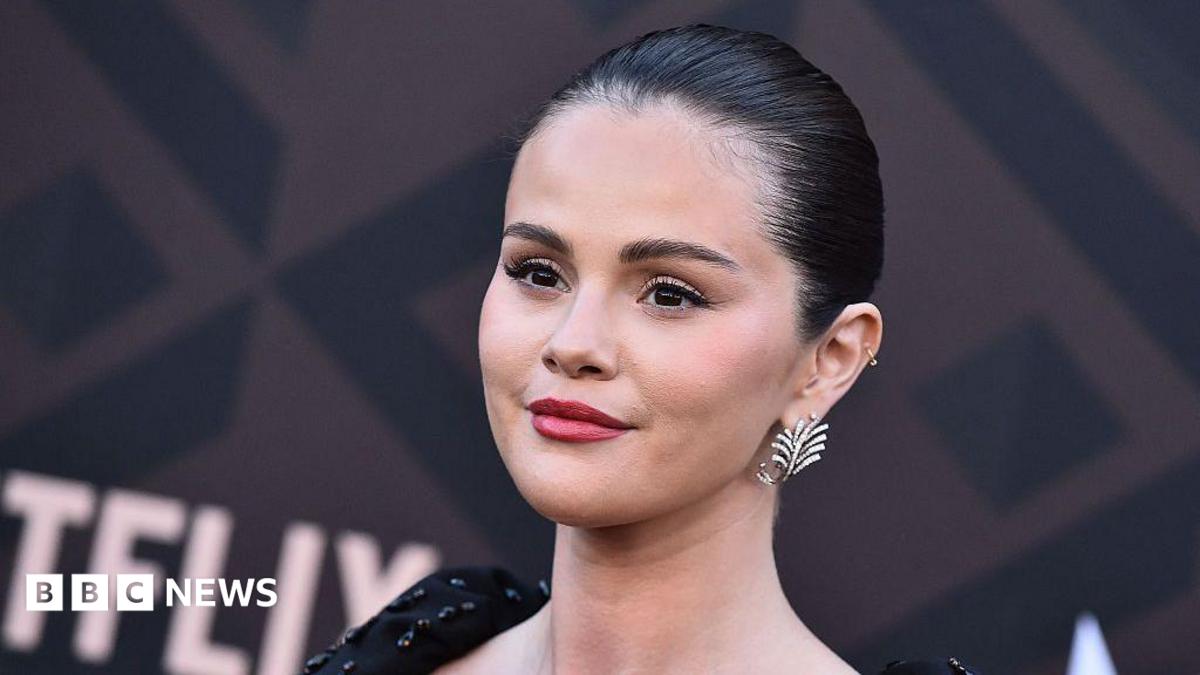
Hollywood actress and singer Selena Gomez is being sued by five investors who backed Wondermind Global, a mental health business she founded with her mother.

Shareholders are claiming the pop star failed to fulfil promises that she would be “actively building” the brand, saying her “abject dereliction of her duties” has left the company in a “state of financial calamity”.

The lawsuit seeks to recover around $1.2m (£890,000) it claims was invested as well as costs and damages.

The BBC has contacted Wondermind and Gomez’s representatives for comment.

Advertisement

Gomez, who rose to fame as a child actor before moving into pop music, set up the mental health platform five years ago with her mother Mandy Teefey and businesswoman Daniella Pierson. It came after Gomez publicly discussed her own mental health struggles, including with bipolar disorder.

The 34-year-old is one of the most-followed women in the world on social media, with over 500 million followers, and an estimated net worth of nearly $1bn. She also founded cosmetics company Rare Beauty, in 2020, which is closely associated with her name and image.

Wondermind aimed to make mental health-related content more accessible through a digital platform, recruiting investors to back the venture.

But the lawsuit claims Wondermind’s founders “falsely represented” their position by suggesting “a full slate” of ad deals, celebrity cover stories, an app and other initiatives were already underway and promising that Gomez would take an active role as its head of marketing.

Advertisement

“Gomez purported ‌to ⁠sign a contract obligating her to perform and then ignored it,” the lawsuit claims.

Gomez is currently listed as a co-founder on Wonderminds website, below her mother who is now in the chief executive role, following Pierson’s departure from the company.

The individuals behind the suit, based in New York and Florida, include Brent Saunders, chief executive of eye-health company Bausch + Lomb.

The claimants’ lawsuit alleges Wondermind failed to meet “even its most basic obligations, such as timely paying its employees and vendors”.

Advertisement

Promises including Wondermind’s partnerships and app never materialised, according to the claim.

“For three years, while the company quietly collapsed around them, not one of its founders, officers, or directors said a word to the investors whose money was funding the collapse,” the complaint states.

They said they were unaware of the company’s difficulties until an investigative news story by the online magazine, The Cut, surfaced in September 2025.

That report made allegations about Wondermind’s finances and issues with its management, according to the lawsuit.

Advertisement

The article showed that “Wondermind had no plan for its future – much less a plan for achieving a multi-billion dollar valuation,” the lawsuit claims.

Continue Reading

Business

Lowe’s Companies, Inc. (LOW) Q1 2026 Earnings Call Transcript

Published

on

OneWater Marine Inc. (ONEW) Q1 2026 Earnings Call Transcript