

Business
Market Shifts From Risk On To Risk Off


alexsl/iStock via Getty Images

Listen here or on the go via Apple Podcasts and Spotify

David Keller returns to talk volatile markets, sentiment and his investment portfolios (0:20) Emerging strength coming outside of growth sectors (7:40) Fusion analysis: marrying technicals and fundamentals (11:50) The very unique SpaceX IPO (14:30) Trulieve, uplistings and cannabis ETFs (18:10) Equity indexes from a technical perspective (21:20) USD (24:50) Gold and silver (26:35) Contrarian on Bitcoin (29:10) Charts, momentum and relative performance (33:15)
Transcript
Rena Sherbill: David Keller from Market Misbehavior, welcome back to the show. It’s always great to talk to you.
David Keller: Always a pleasure, Rena. Thanks so much for the invite.
Rena Sherbill: It’s great having you back, not least because you are a mindful investor, which we support fully and wholeheartedly. As a mindful investor, how are you looking at these markets these days? At one point people might have called them confusing, but maybe no longer. I don’t know.
David Keller: I mean, I don’t know if they’ve gotten less confusing. They’ve definitely gotten busier. I would say, to be honest with you, it looks like while the VIX is just starting to push above twenty over the last couple sessions, which for me kind of separates a low volatility, low fear, low uncertainty environment from a high volatility, high fear, high uncertainty environment. We’re kind of just pushing above that threshold.
But even though the VIX has remained relatively low, I feel like the emotional VIX for investors has been extremely elevated. And I think the reasons for that are a number of things.
We have a conflict in the Middle East that doesn’t necessarily inspire confidence with the uncertainty of what’s going to happen, but with for now relatively minimal impact on the markets. But I feel like for a lot of investors, we’re just waiting for that next headline that’s going to cause everything to unravel. And then it’s also the narrow leadership, right?
And I think the fact that if you’ve been right on this market, now you’re way over concentrated, most likely, in a bunch of growth names that feel overvalued.
And if you’ve missed this market, then you feel like an absolute train wreck that missed the best trade of 2026. So it’s like even if you were right, no one’s happy right now. So I would say it is a challenging time to be mindful more than anything, right?
Rena Sherbill: They say when nobody’s happy, it means both sides have compromised, although I’m not sure that that’s in play right now. I don’t know if that’s appropriate feedback for this per particular situation.
David, I think I might start out by putting you on the spot. We had a comment on our last article, and I haven’t even shared this with you, but I hope you’ll be game. I think you will. Somebody, a longtime fan, although a bit of a critique in the question. Somebody that’s been following you for a while, I’ll just start quoting right now. The commenter was Big Game James:
I’ve long respected Mr. Keller for his background in technical analysis and his seemingly astute market observations. That’s why I was almost shocked by his response to your question. This is quoting from your last appearance, which was just about last year.
I don’t own a lot of individual stocks, and I will tell you I own very few. I own them as long-term holdings. I own Disney, Berkshire, Hathaway types of stocks. These are companies that I think long-term are going to be good businesses with opportunities to grow. This is where the commenter comes back in. Both stocks have underperformed the SP 500 for the last 10 years, and in the case of Disney, dramatically underperformed. What kind of technical analysis did you use to come up with it?
I don’t have a problem with buy and hold. Stock market titans have repeatedly proven that it works, but traders have also repeatedly proven that trend following and position trading work. They’re all valid. My disappointment with Mr. Keller is that he runs around touting technical analysis. And then when you give him the perfect setup to explain how trend following and technical analysis can be used to identify winning stocks, he doesn’t use that opportunity.
And anyways, that’s the long and short of it. I’ll leave it there.
David Keller: That’s awesome. Number one, I’m thrilled that at least one person watches my content closely enough to kind of detect a bit of a of a disagreement there. Like that’s awesome. A great problem to have. I’ll take that any day.
Rena Sherbill: Good. I’m glad you thought that. I also thought that.
David Keller: It’s funny. I would say, for me, I’ve spent a lot of time as my career has evolved thinking about where my time and energy is best focused. And I think a lot of, and this is more of a philosophical answer to the question, Rena, and then I’ll get to the specifics, but philosophically I would say, for me, I’ve had a lot of opportunities to manage money or or do some sort of fun management type of thing.
And I’ve hated it every time I’ve tried it. Because for me, I feel like I enjoy teaching, I enjoy educating, I enjoy helping people make better decisions way more than I enjoy making better decisions of my own.
Some people have an issue with that because they say, well, if you’re not a great trader, how can you teach how to be a great trader?
I would say those are two very different skill sets. And if you say that, you’re not understanding that there’s a different, you know, if I’m a really good trader, I probably don’t have the time or energy or interest in spending all my time helping other people do it better. I just want to make my own decisions really well. So I’m an educator primarily and I enjoy that role and I love it.
And that comes from training as a musician, which is my undergraduate one of my undergraduate degrees, and I and I think of what I do as being a performer every day. So I love performing and sharing what I’m what I’m hearing and seeing and doing it that way.
But to the specific point, I would say that’s a that’s an understandable critique, but I think it depends on understanding accounts that you’re running or your portfolio and what the goals are.
So I have portfolios where I’m managing more actively. I have a portfolio that’s more of a swing trading portfolio, where I’m taking short-term bets. I have a portfolio that’s more of a kind of stay or portion of a portfolio that’s really more into active bets in individual names.
But what I’ve found, and this probably comes from years of working for big financial institutions with really annoyingly on the ball compliance departments.
That were really keen on us not trading individual stocks or trading too actively. So at the time when I was developing my own personal investment strategy, I was forced to use ETFs. I was forced to have a longer holding period. I was forced to learn how to apply technical analysis more for, you know, sort of cyclical and secular moves as opposed to tactical swings.
And so for a lot of the portfolios that I run, it’s more momentum-based, it’s more longer term, more of a position trader type of approach because that’s what I was allowed to do. And then once I was free from compliance and had the ability to go anyway, I’d already developed a pretty good strategy built on ETFs.
So I trade plenty of ETFs, but I rarely will add individual names, I will more often in my own accounts add ETFs.
Having said that, in the course of my work, I spent a ton of time working with investors and for investors and advisors and institutions that trade a lot of individual stocks.
And I have no problem pointing to charts that I think are good and again, I don’t see that as much of a conflict that I’m not necessarily putting them in my own portfolio.
I think we overvalue that as the way of determining whether what we’re doing is credible versus are we applying the tools and techniques effectively and are we helping people make better decisions? That’s what I’m trying to do. How’s that for an answer, Rena? That was a tough question.
Rena Sherbill: Nailed it, and I appreciate you being game. I think that shows as much as anything, people willing to answer questions, especially off the cuff I think speaks speaks volumes.
So, in the name of education, edification, is there an example that you could use either on the bullish side or the bearish side to highlight maybe how you illustrated or encouraged a fellow investor or trader to look at the charts in terms of a particular holding that you think speaks to this blend of technical analysis and looking at all the things that you look at.
David Keller: Sure. I mean, I would say for me, what we’ve been talking a lot a lot about more recently is the general rotation, right, away from kind of technology mag 7 type of leadership. I think we’re coming out of an environment, and this is a delicate thing to say on the week of SpaceX’s (SPCX) IPO, which is the largest IPO in history.
So I hesitate to kind of plant a flag on this comment, but I mean, there’s generally been a rotation away from technology leadership. And part of that is to make room for SpaceX’s IPO in a lot of portfolios and a lot of index funds.
But the reality is charts like Micron (MU) have already had an incredible run. And a lot of those growth stocks feel overextended based on technical and/or fundamental metrics.
Where we have started to see emerging strength is in other areas of the market, things like healthcare, things like industrials, even things like consumer staples, beverages stocks, real estate, you’re seeing more and more charts starting to go higher.
So I would say for me, there’s been two general buckets of names and types of charts we’ve been talking about.
The one recognizing nice consistent uptrends outside of the growth sectors. And an example that comes to mind would be Caterpillar (CAT), obviously a big industrial name, but this is a stock from a technical perspective, kind of a classic uptrend of higher highs and higher lows consistently pulled back to the 50-day moving average and bounced higher.
It’s just this classic kind of stepwise motion up and to the right.
And so with charts like that, the discussion is more of how do we find tactical points to accumulate a position within a long-term uptrend. And that’s where looking at, I think, moving averages as a smoothing mechanism, looking at an indicator like RSI, the relative strength index, which is based on price momentum.
And recognizing when the RSI gets down to around 40 or 50, that may be a viable dip within an uptrend.
I think charts like Caterpillar, others like aerospace and defense names and some of those other sectors that I mentioned are pretty interesting.
And then the other category would be names just starting to break out because you have a lot of charts like Caterpillar and a lot of the growth stocks that have been in long-term uptrends.
And so I think trying to find some of those charts that are a little earlier on in their in their move, something like DraftKings (DKNG) is a name I was writing about earlier this week as a stock that’s been, I mean, a chronic underperformer and over the last six to eight months has been an absolute dog.
But from February, March, April, May, you’re starting to see stability, more consolidation, more of a basing pattern. And then just this week we’re starting to break out.
So looking for new breakouts, new three-month highs in charts that have not made a new three-month high in quite some time. That’s another whole area of emerging strength.
And so I think if you find you’re overexposed to kind of mature strength, those Micron types of charts that feel like they’ve been going up way too long and your exposure’s gotten bigger and bigger, we look for newer breakouts that are lower on the momentum scale, but maybe showing the potential to have a new accumulation going forward.
Rena Sherbill: Maybe if you could share with us where you go after looking at the charts. Caterpillar sticks out to me. I do this Wall Street Roundup podcast on Fridays with our director of news. And he’s been talking for, I would say the past year about Caterpillar, how that it was like an old school stock that’s getting into AI, that’s getting into automation.
So it’s like an interesting blend of the technical analysis, but then also what narrative they have going on as a company. Where do you take it from the chart analysis? Where do you go from there?
David Keller: No, that’s a really good question. And I think what what you’re alluding to, Rena, is the value of what I do, which is look at a hundreds and hundreds of charts every day, versus what many other investors do, which is think about the the prospects of Caterpillar’s ability to generate earnings years down the road.
I think marrying those two in an intentional way is is the is the sweet spot. I call that fusion analysis. And I think that’s an important way of thinking about it.
How we surface those ideas can be different. So for me, the chart of Caterpillar is what draws my attention to it. I was taught that the technicals tend to lead the fundamentals.
The chart will often show that investors are starting to show new optimism or new excitement or anticipation about a name before the fundamental reasons as to why it’s gonna work become clear. I always say the fundamentals look crystal clear in the rearview mirror.
So down the road, we can look back and say, okay, now I get it. They’re starting to create this new business. They’re starting to incorporate AI and actually be a consumer of it and so I think, for me, scanning for stocks just starting to break out, scanning for, before Caterpillar had this nice year plus run, it was going down. So just recognizing that the chart was shifting in 2025 from a downtrend to an uptrend, I think was pretty important.
Understanding what can create the sustainable growth after that initial breakout. I think that’s part of a larger rotation that we’ve been talking about, which is, from the AI producers to the AI consumers, there’s this transition.
I think we’re in the midst of, and it’s a large gradual transition from the companies creating AI models and investing in AI infrastructure, which have had an incredible run, to names that can actually use all that cool AI stuff to build more things and sell more stuff.
And I think Caterpillar is one of those that has the capabilities and the reach to benefit from all this AI and again, I think the performance of the stock is starting to acknowledge that optimism in those areas. And I think again, as we spoke earlier, the areas of emerging strength I’m seeing are not in companies creating the next AI models. It’s the ones that can use those AI models to do things better, faster, more efficiently, etc.
Rena Sherbill: You mentioned the SpaceX IPO. Just curious, as somebody who’s been around the markets and believes in education and mindfulness. What would you say about that IPO? How are you thinking about it slash encouraging others to think about it?
David Keller: Yeah, you almost called me old and thanks for tapping the brakes just before you got to that point. So we’ll go with experience and tenure, and I’ve seen some things. So thank you for that. That was that’s very nimble, and I appreciate that.
Rena Sherbill: Very empathetic, very empathetic. I expect the same treatment, by the way.
David Keller: Listen, the SpaceX IPO honestly is is very unique. I mean, it’s it’s very unique. And I’m, you know, I as I’m thinking of my own experience, there are very few IPOs that have been anywhere near this magnitude.
And in terms of like the actual dollars and the actual impact, this is the biggest. I mean, it’s the biggest IPO. The fact that indexes like the Nasdaq are changing their listing requirements just to get it in the index more quickly, I think tells you about the anticipation.
And I think for better or worse is gonna change how Anthropic (ANTHRO) and anyone else wants to go public. Like the rules are now different. It’s like the NFL blowing out their highest paid athlete, and all of a sudden everyone deserves more more money. I think we’re at that with IPOs. There’s a skeptical side of me.
My contrarian hat, my contrarian alarm is going off that big IPOs like this usually don’t happen at the beginning of a big theme coming out. It’s usually once the theme is mature enough that people want to throw a lot of money at the idea, it’s often more in the later stages.
So that is one potential macro issue.
But in in terms of IPOs, I mean the the similar IPOs I can think of would be Facebook’s (META) IPO, like Alibaba’s (BABA), but I mean, Facebook’s IPO was one where I was more directly involved. I worked at a large money manager and had Mark Zuckerberg and his team come in and pitch on here’s how we’re gonna make money from mobile, which seemed, I remember the questions were like, how are you gonna make money on mobile? Which is quaint at the moment.
But it required you to really think outside of the box in terms of the future earnings growth you are paying for today. I mean you’re planning for way down the road on how they’re gonna mo able to monetize it. Now it feels like it’s much a much shorter time frame.
I would say from a technical perspective, honestly, IPOs are really hard to think of from a momentum perspective because momentum and what you’re analyzing is based on data. And until we get data on how investors are actually trading and how traders are actually treating this stock, there’s not much I can say about it.
And so I would say in an IPO, there’s the excitement anticipation phase, which we’re kind of right near the end of. There’s gonna be the release stage, which is this week, where we actually, you know, it starts to go out in the market.
You start to see where it’s priced, you start to see what happens immediately after. and I think once you start to gather that data, you will immediately be able to draw some conclusions about, you know, this IPO is being priced at a certain level.
Some would argue higher than it should be. Probably some would argue lower than it sure should be. The market’s going to tell you in the days and weeks to come which one of those is right, or at least what the market is saying that’s right. And so the the actions soon after the IPO will tell you a lot about what could happen after.
And when I think of Robinhood’s IPO (HOOD), Coinbase’s (COIN) IPO, a lot of those did not start well and had a lot of really painful periods before they really entered into a a period of accumulation.
And I think for something like SpaceX, that’s gonna be the move I’m looking for as that sign that investors, once we’ve kind of digested the initial trading, what comes next and do you see some some upside potential there? But for now I have to wait for the data to to emerge.
Rena Sherbill: A measured approach, which is always appreciated. I think this might be something like a similar topic. Trulieve (TRLV), one of the major cannabis companies of the past few years, just uplisted. What would be your thoughts there, if you have any to share?
David Keller: Cannabis is a fascinating area. Full disclosure, I still own (YOLO). That’s one of the ETFs that I have in a in a long-term account. And I’m in Washington State. I mean, cannabis is so widely available here and more socially accepted than in other areas of the country. So I imagine, I’ve not seen the geographical ownership of something like YOLO, but I bet it’s regional in terms of who feels like this is an obvious next step.
But the challenge has been the regulatory challenges, the fact that it’s still a state to state thing and on a federal level is still obviously not as widespread or not as accepted or clean. I would say the other one is just here in Washington State, the problem is there are huge taxes on cannabis. So if you go to a legal cannabis dispensary, you’re paying like a 30% premium or something like that because of all the fees that are added onto there. So I think there’s a lot of hurdles to it.
However, it’s like how do you see it playing out? From a technical perspective, again, that was a very non-technical play that I made in a portfolio, which is I think this is a theme that’s going to emerge. And I think the chart is very challenged now and I’m betting on some point that that’s going to rotate higher.
Something like YOLO had a really good spike higher in 2025. And there’s a lot of discussion about changing the requirements and the legal status. From there, it’s really been sideways. So it sort of hit a new plateau.
So from a technical perspective, it’s sort of building momentum. It’s a pretty straightforward name. It’s a big base. You wait for a big base breakout. So the market’s telling you that this cannabis ETF and this one in particular that I’m looking at is kind of fairly valued, around three to four dollars. And that’s kind of what this is worth.
And at some point we have a catalyst that pushes us to a new swing high. And that happened in 2025. It’d be great to see it happen again, but not yet from a technical perspective.
Rena Sherbill: Why YOLO as opposed to (MSOS)? Out of curiosity.
David Keller: I like the ticker. Is that is that a valid answer? No, I mean, at the time and when I looked at them, I had a whole due diligence process. So I was looking at looking at fees, looking at liquidity, looking at the technical configuration. I settled it on YOLO. I don’t have any particular I mean, that’s more of a global one, right? Compared to like MSOS, which is a US cannabis. There are number that have different exposure to like US versus Canada and everything. I don’t have a lot of high conviction on one versus the other.
From a technical perspective, they’re all very, very similar. More recently, MSOS, though, has outperformed YOLO for for what it’s worth. That’s a fair observation.
Rena Sherbill: So maybe we can get your take on the major market indexes, how you see them from a technical perspective, and then maybe we can add in oil, the dollar, bitcoin if we get to all those?
David Keller: Starting with the with the equity indexes, I mean, obviously the last week has had a very significant shift from risk on to risk off. And I would say the warning signs leading up to that have been pretty clear.
And I would say from a technical perspective, probably the most clear way of illustrating that would be the lack of breadth support. So as the market’s going higher in April and in May a lot of breadth indicators were not going higher, right?
So the advanced decline line, which is a classic just measure of every day how many stocks going up, how many stocks going down. And you look at that trend over time. In a healthy bull market like mid 2025, the S&P (SP500) is going higher, the advanced decline data is trending higher as well because more stocks are going up than going down, which kind of makes sense. And in a bearish market, you’d see more stocks declining than advancing, because that’s what generally drives the index.
But we’ve had a disconnect coming off of the March low for the S&P 500, where the S&P and the Nasdaq (NDAQ) have surged higher, but it’s really been driven by technology, which is about 40% of the S&P on its own. And if you add the kind of other things in like consumer and communication services that are essentially technology, but just are labeled in a different sector. I mean, it’s over half of the S&P are just big, growth kind of plays.
And so when that group of mega cap growth stocks are doing well. The S&P and the NASDAQ are doing well.
So the indexes have been going up, but the breadth has all been rotating lower, indicating that not as much participation as we would generally want to see. So that has been, I would say, from a technical perspective, a real challenge to this market in April and May.
But the warning signs have remained relatively low. So volatility has been low, credit spreads have been narrow.
Those kind of things have still been okay. All of that shifted starting mid last week. We started to see spreads widen up a little bit. We started to see volatility pop, especially on Friday.
And now this week we’re seeing the VIX pushing back above twenty. We’re seeing defensive sectors like utilities and REITs start to really outperform. And those are just really common things at major tops.
I should note by the way, two of my favorite indicators that flashed here in the last month would be the Hindenburg Omen, which is a classic kind of market top indicator looking at breadth conditions and trend. And then another one called the Titanic Syndrome. And you can assume by the the naming of those indicators just how bullish they are when they start firing.
And the answer is not much in all there, they’re very bearish indicators. And both of those, the Hindenburg Omen, which is based on trend and breadth.
The Titanic Syndrome, which is looking for the market to make a new high, but new lows outnumber new highs. All those things have fired in the last couple of weeks.
And so the market rolling over in the last week, week and a half doesn’t surprise me because we’ve had a lot of warning signs that sort of emerged beginning of Q2. And so now we see the S&P starting to rotate lower and start to break initial support. Our initial line in the sand was 7340.
And just as we’re recording this on June 10th, we’re potentially closing below it today for the first time. So I think that puts us in more of a risk off vibe for the S&P here.
Rena Sherbill: Should we go to the dollar? Is that a good place to go next?
David Keller: I think as an equity investor, it behooves you to really think about non-equity asset classes, commodities, currencies, interest rates. I think these are all pivotal.
And I find when people ignore those asset classes, you ignore them at your own peril because a lot of times indications will and and and changes in sentiment will be reflected in the dollar.
They’ll be reflected in interest rates in terms of like expectations about economic growth or reaction to inflation data, something like gold or silver and some sort of safe haven move.
So I appreciate you asking about those other things. I think it’s important to reflect on all of them.
The dollar’s been a really interesting chart. If you look at the chart of the dollar, it’s been sideways for over a year now. I mean, right now we’re right at the same level we were in April of 2025. and so the dollar has been choppy and noisy, but generally sideways.
I would say one of the risks right now is the dollar index pushes above 100 and it’s kind of right there over the last week. So the dollar’s been popping since the end of in since the end of April. It sort of bumped up against the same level it hit in March and April, same level it hit back in November of last year, same level it hit back in summer of last year.
And it’s sort of usually gotten up to around this point, and that’s been it. Dollar pushes above 100. I think that starts to indicate a larger shift in sentiment and more of a risk off type of feel.
So I think the dollar for now still probably kind of neutral on that longer term timeframe, but very close to where it starts to feel like a sign of of of flight to safety that would be a potential issue for equities.
Rena Sherbill: Gold? Speaking of flight to safeties.
David Keller: What’s so funny is you think, and I immediately I even just mentioned gold as like a safe haven. It really hasn’t traded like one though recently.
I mean, the correlation between stocks and gold, one of the best, I think, benefits of gold over the long term has been the correlation is so low to stocks. So people think of it as an inverse relationship, right? So when stocks go down, gold should go up because it’s a safe haven. But that’s really not what the data shows you.
The data shows you that correlation is just very low between the two, which means when stocks do something, gold most likely is kind of doing its own thing. And and and that’s good because you want low correlated assets in a portfolio. That that’s true diversification.
So gold generally, I generally have a position in gold. I still have a position in the (GLD), but my position in the GLD has gotten smaller and smaller as the chart has looked less and less good.
So while the S&P and the NASDAQ have been pressing new highs in April and May, the chart of gold, particularly the chart of GLD, which is what I look at pretty regularly, has been breaking down. It was sideways for quite some time, very similar to the chart of oil, but just in the last couple of weeks, we’ve seen the GLD start to break down.
And just in the last week, as the S&P and the NASDAQ have pulled back, gold’s actually gone below its 200 day moving average for the first time in in quite a long time. And so I think that represents a real shift in precious metals.
So for me, I’ve been lightening up in my own position. I’ll always have some position in gold because I think it’s a good way of diversifying away from equities. But I kind of lighten up or add to that position based on the momentum.
And the momentum for me says more leaning away at this point.
Rena Sherbill: Silver and then I’m gonna do Bitcoin and oil for for those paying attention.
David Keller: Silver, very similar. Silver in a lot of ways has felt like a leverage play on gold, to be honest with you. It’s like a triple long or triple levered gold ETF almost. And that’s not entirely true, but that’s exactly how it’s felt.
I haven’t owned silver in my portfolio. I’ve just owned gold and and gold miners. but I would say a very similar sort of setup. And between the two, when that group looks, when precious metals start to recover.
Most likely I would not be surprised if silver leads on the way out because that’s pretty common that you would see it underperform on the way down and start to outperform on the way up.
So something that’s on my I have a watch list of things that are definitely in a downtrend, but I’m waiting for signs that that momentum shifts and for silver just not there yet.
Rena Sherbill: Bitcoin?
David Keller: So Bitcoin (BTC-USD), I do have a contrarian hat, as I alluded to earlier. And I would say the justification for owning Bitcoin at this point from a technical perspective is it’s gone down a lot.
And to be honest with you, right? It’s gone down so much that it’s testing those February lows. I have owned owned Bitcoin at many times over the last couple of years. I’ve usually used ETFs, although I did I did own, you know, just own Bitcoin directly for a while. I’ve exited all those positions.
At this point I don’t own any (GBTC), but I’m starting to think about it given the fact that we’re retesting those major lows. So the sweet spot from a technical perspective would be, or kind of the ideal situation would be what we’re seeing now is a retest of those February lows right around like 60,000-ish.
And we’re testing that support. We find stability, we start to rotate higher. And we saw a bit of that over the last week. not quite enough for my own momentum models to turn overwhelmingly bullish, but definitely where I’m jotting it down on a notepad and saying, let’s watch GBTC for some sort of upside rotation.
So something like Bitcoin, I think of it in a couple steps. I think too often individual investors think in binary terms, right? I own 100% of something or I own zero percent of something. And I think what we want to do is learn more from how an institutional investor would generally think of it, which is if I think it’s an interesting opportunity but a high risk, I’ll take a smaller speculative position just to see if it works.
So I limit my exposure, but I get the benefit of that initial surge. And that’s kind of where I’m at right now this week.
And then if the uptrend emerges and if you see signs of accumulation, which would be we start to break above moving averages, the momentum starts to shift, meaning the RSI is pushing higher as we swing higher in price, those would be the things I would need to see to say, okay, that speculative position now needs to be a larger position that I put in a portfolio.
But at this point, it’s more of a speculative play, given the lack of sort of signs of accumulation as I would describe them.
Rena Sherbill: A nibble approach, if you will. Last one, oil.
David Keller: Crude oil, honestly, I mean, if you the the spike in crude oil sort of around the I guess initiation of hostilities or the escalation that original escalation earlier this year was not surprising. you know, given what’s happened in the Middle East and and how the US was drawn into, I mean, it wasn’t too long ago we were debating whether the US would be drawn into this Middle East conflict. Now the US is kind of central to it.
So you had that initial spike in crude oil, but from there, to be honest with you, crude oil has been really choppy, sloppy sideways, which is another, again, the professional term for that, for that chart pattern. I mean, it’s really, it’s really been choppy. It’s been very noisy.
And so, crude oil has kind of fluctuated from, eighty five, eighty seven dollars a barrel up to like one eight, one ten or so. And it’s just been been very, very sideways to that. What’s interesting to me right now is in the last couple days, headlines are all speaking to a re-escalation of hostilities with a helicopter, shot down and retaliation of some sort. So it seems like the momentum headline wise is for an escalation.
Crude oil prices are still relatively low versus the range we’ve been in just during this conflict. So I would say as a swing trading opportunity, we’re at the lower end of an of a range that we’ve established based on this conflict.
And so I would say on the short term, it’s probably a tactical rotation up to at least the middle part of that range. So I think it’s a good short term opportunity.
As a long term investment, the problem I would have with crude is it’s sort of established this range. So things would really have to get severely more negative or restricted. Some larger change would have to happen.
To put upside pressure on crude oil prices beyond what we’ve seen so far. So I think of it as more of a trade than an investment at this point.
Rena Sherbill: What other charts are part of your daily or weekly process?
David Keller: Ooh, that’s an awesome question. I mean, my process goes through honestly, it’s evaluating the major indexes, it’s evaluating momentum, it’s evaluating relative performance, which is something we haven’t talked about, I guess, a ton here today.
Relative performance or relative strength is all about, you know, this chart I’m looking at. How does that compare to all the other charts I can look at?
And I think that’s super important in the equity space because you can spend all your time trying to analyze one particular chart, but the relative strength, how this is doing relative to its peers, like that’s the most important thing arguably to look at.
Because that tells you whether you’re looking at the right chart at all. Because what we want to think about as equity investors is owning stocks that are outperforming the S&P because if you own stocks where the relative strength is going down, there’s that opportunity cost of I’m just I’m not in the better charts that are out there.
So my goal is to keep upgrading my roster and trying to put the best 11 players on the team, whatever sports analogy you want to use. And so if one of my players is not doing well and the relative strength is not great, I want to swap someone in who’s doing better and and just keep upgrading the portfolio.
And relative strength is the most important way to do that. So I would say some of the things that come out of that work right now, one would be small caps.
Which, generally in 2026 and it’s changed a bit with this last surge with the Nasdaq, but for most of 2026, small caps have been outperforming large caps at the higher index level. So in my own portfolios, I own a lot more small cap ETFs than large cap than I normally would versus large cap ETFs because of that performance gap.
So I think recognizing that has been important and then on a sector basis, because technology’s really been the only S&P sector to outperform in the second quarter, but you’re starting to see those trends shift. And so you’re seeing technology start to come off a bit, and then you’re seeing an emergence of strength in other sectors.
So when I’m scanning regularly for individual stock ideas and things that are moving higher, it’s in value-oriented sectors like industrials, materials like an (LIN) comes to mind.
And then it’s in defensive sectors, things like REITs. There are more and more real estate names popping up on the list. And again, that I think that has a macro tell because it tells you that investors are kind of shifting into sort of low volatility areas of the market, maybe a little bit.
But also in terms of idea generation, because I want to generally keep rotating to where the relative strength is. And it’s been in small caps, it’s been in value, it’s been in defensive sector. So I’m gonna keep looking there.
Rena Sherbill: It’s interesting. Our next two episodes are about small caps. I don’t know if you know Courage and Conviction Investing. He’s a big small cap guy who’s done well. And the next episode after that is about REITs. Anything else to underline or highlight about the small cap space?
David Keller: To be honest with you, I think with with small caps, it’s been fairly across the board, right? I tend to look at the Morningstar style boxes. So look at small cap growth, value, core, and then the same for large cap, same for mid cap and you get a different read depending on what slice you’re looking at, I guess.
But generally, I mean, even small cap value has been outperforming a mid-cap value or large cap value. So even within a value sleeve, it’s generally paid to go smaller than larger. So I think that’s kind of consistent across those different cap tiers, not just small cap value and then other things are working.
I mean in most of those areas, the small cap counterpart has outperformed the large cap counterpart. And so again, for me that’s a reminder to continue to evaluate performance and at some point small caps will not be as strong, and that’s when I’ll rotate away from them.
But for now, we’re still seeing strong performance.
Rena Sherbill: I’m curious, and not a plug, just a curious question. We have this quant system on Seeking Alpha that relies heavily on momentum and also sector relativity. I’m curious, do you use that at all? Or does quant play a part in your strategy process?
David Keller: I actually do. and I’ve talked to Steve Cress about the quantitative model and how it’s designed and everything. For me, the quantitative approach is super valuable, especially for someone like me. My skill set and my background is in technical and behavioral analysis, right? So my goal is to understand the charts and the momentum and the sentiment and the psychology behind decisions that I’m making and behind decisions that other investors are making.
But I also recognize that generally buying undervalued stocks has usually worked over the long term, particularly in a beaten-down market, right? Buying undervalued names and I’ve learned that earnings growth, particularly estimate revisions, right? Improving expectations for earnings generally tends to work.
So I can either flip through a ton of 10 Qs to make my own assessment and review a bunch of street research, or I can use a well designed quant model to cut that corner and recognize look, let me find companies that score well on earnings quality and score well on a value metric or whatever I think is important.
And then the momentum that’s included in the quant model is pretty good. For me, I feel like I have a lot of really good additional moment, ways to measure momentum and think on a more tactical timeframe. So I think of it as more as let me look through all the thousands of stocks I should be considering.
Let me look at only those ones that score well for for earnings quality. the dividend components in that in that model, by the way, I think are really good as well, right? The dividend aristocrat, right? Consistency in dividends, increasing dividends.
Let me find those stable, good companies with good growth prospects using that quantitative approach. And then let me look at those charts. And find the best charts within that universe.
And for me, combining those has been a pretty, pretty powerful approach. And that that mirrors very much what we did when I worked for a large buy-side institution.
We we called it a thrice blessed screen or a trip aces screen, the fundamental, technical, and quantitative teams all agreed that something looked pretty good. That was a really good list of of names to to focus on. So that’s how I use quant in my own approach and and the Seeking Alpha model in particular.
Rena Sherbill: Much appreciated. You were talking before how your firm was involved in the Facebook IPO. And I meant to ask after you mentioned that if there was anything that you took anything else that you took away from that meeting, like in terms of watching a company grow and develop, has it taught you anything?
David Keller: Oof. That could be a whole other hour discussion we have, maybe a whole weekend. I think.
Rena Sherbill: Yeah. That’s a whole episode, you being a part of that IPO.
David Keller: It is. That was a fascinating experience. And I would say a number of things that I took away from it without revealing anything proprietary. Then probably the statute of limitations is probably done on any NDA I signed when I left that firm. But I would say this: number one, I was amazed at how oversubscribed that IPO was.
And I just know from my firm, we had Zuckerberg and the team come in. He was wearing a hoodie. I mean, right out of the script. I mean, he literally walked in to a professional money management firm in Boston in a hoodie. It was awesome. We were all like debating, is he gonna do it? He totally did it.
So we had like six or seven portfolio managers in a small conference room as to not overwhelm it. But then I was in a separate room where there are like 150 of us because so many people wanted to like think about it. And we were able to like talk to the people in the room and stuff. But it was more just like, I looked around, I’m like, my God, the entire firm wants to like check out this IP. I mean, that tells you how just within our firm, how many people wanted to participate. So it’s like the scale of interest, you could tell it had market moving potential.
I think the other thing that struck me at the time, Facebook was only monetizing their desktop app. And they hadn’t, I mean, and there was a mobile app. And again, I mean, mobile was in a different, I mean, different era altogether. But I mean, I remember the questions were all about how are you possibly gonna monetize mobile because they hadn’t done it. And it was like all this really soft and fluffy idea about here’s how we’re gonna do it. And I remember a lot of people being very skeptical like that, like no one’s gonna want to use their phone if there’s a bunch of ads popping up. Like that’s the non starter.
And so it taught me how far you’re looking forward during an IPO. And then I would say the third thing is, Meta has obviously been one of the great success stories in terms of like the performance of a stock, but there have been some really rocky periods during that. I mean, some huge management missteps, like the whole metaverse thing, right?
So it’s not a straight line between we have this really cool way that we’re gonna be profitable years and years down the road. And this is one of the biggest stocks that everyone seems to have to need to own a little bit of. There’s it was not a you know direct line from A to B.
And so I think there’s a lot of money to be made within even if you think something like SpaceX is gonna be the future. And if you feel like the Starlink network is the future and everyone’s gonna need it, and we’re gonna colonize Mars and this company is probably, I don’t doubt that a lot of that probably happens.
But that doesn’t mean it’s a good stock to own right at this particular moment. And I think there’s a lot of time, there’s a desperation that if you don’t get into an IPO early enough, you miss out. I would guarantee, I mean, I’m not going to guarantee, but as close as I can come to guarantee and still be compliance friendly, I would say there’ll probably be a great buying opportunity on a chart like that that’s not at the IPO. That would be my my third lesson there.
Rena Sherbill: Getting back to cannabis, one of our headlines last year on the Cannabis Investing Podcast was, have cannabis investors been early or wrong or both? So definitely the first move or advantage, not always an advantage, to be sure.
David Keller: And it and it’s so funny, I think that’s a constant theme here. I mean, culturally will we think of cannabis differently? I think undoubtedly, I think that is a thing that’s happening. We are. And just the way we’re talking about it now, the fact that you have a cannabis podcast that is not a fringe thing that no one knows about, I think tells you a lot about how it’s becoming more widespread. And at least people are thinking about it.
But I remember Bitcoin being like this fringe thing. And I remember when the Bitcoin ATM went up in South Station and we all got pictures where we’re like, this is so dumb. Like, why would you even do what is these? What do you even get out of this? And it was way early and it ended up getting removed because no one was using it. But it was like it was a great sign that this was a theme. So I think we get way too nervous about missing out on themes. And just that’s why charts for me are so vital.
Because you don’t have to have a crystal ball. You just have to track the trends and how the sentiment is shifting. The sentiment hopefully will shift because I still own YOLO on cannabis stocks, but I’ll be there when it does and I’ll look for that breakout.
Rena Sherbill: My last question about the Facebook meeting, did you generally leave impressed with with Mark Zuckerberg?Or is the hoodie the answer?
David Keller: No. I mean, if you want to not sell a group of stuffy Boston money managers coming in the hoodie, that is like number one on your list. But it it definitely showed the attitude. I mean, it was just, it was such a culture shock. It was awesome. I mean, I would say very few were impressed with Mark Zuckerberg in particular, plenty impressed with the prospects of it, but it showed how much the team that he had around him were the ones actually able to articulate the investment case and what the potential was.
And Zuckerberg was very good about talking about these ideas, but in terms of what your dollar now could mean down the road, that was others. So it definitely taught me in some cases the founders are the visionaries. The others are the ones that can help actually demonstrate how that can add value over time.
Rena Sherbill: Two questions to end with. Number one, as a music man, what’s your favorite kind of music to listen to and what’s your favorite live show that you’ve been to? Or some of the top.
David Keller: That is such an awesome question. So I’m I might disappoint you a little bit ’cause I’m a classically trained musician. I actually studied trumpet and voice as an undergraduate. So I my favorite stuff is all classical, to be honest with you. And honestly, some of the best pop musicians are classically trained, I would argue. I don’t think it hurts to have a good music theory sense when you’re writing stuff.
So for me, it’s all honestly, it’s all classical. And I sing with the Seattle Symphony Chorale, which has been a joy. And I used to sing with the Cleveland Orchestra chorus. So doing Mahler’s Second Symphony. And those of you that are not classical music people, listen to Mahler’s Second Symphony. It’s the Resurrection Symphony. It is absolutely stunning and the ending should bring shivers to your spine or you’re not human. I mean, it is the like the quintessential emotion driven from a big orchestra and a big choir singing and playing loudly but musically. It’s absolutely fantastic. So performing that in Severance Hall in Cleveland was a favorite moment for sure.
Rena Sherbill: Great answer. Not disappointed at all. Impressed if anything. And the last question is I’ve been asking people at the end of conversations if they have an investing or a life motto.
David Keller: Ooh. so many. I only get one though. That’s tough. I will tell you the investing one and then I’ll tell you a life one. The investing one is it’s always a good time to own good charts. And I sign off my market recap show with that at the end of every episode.
And it’s just a reminder for me, like so many times as investors, we get too caught up in the narrative and what should work or what should be happening. And a former therapist called called that shoulding all over yourself to me. She was absolutely right.
So it’s like you need to think less about what should happen and more about what actually is happening. And so a consistent process of identifying strength and following it, identifying weakness and getting away from that is important.
I always just think it’s always a good time to own good charts. Don’t ever discount some good opportunity because it’s not in this sector or it’s not this type of thing that should work. Like just find the good opportunities.
And my other one, my life lesson, most important one to me, remember rule number six. And that is a quick story if you indulge me. It’s basically these two there’s a different versions of the story that come in, but the one is there are two, you know, prime ministers in their office.
And they’re talking about matters of state. And an assistant comes in and says, you know, hey, we have this issue with, you know, XYZ and I’m not sure what to do. And he says, Hey, remember rule number six. And so the person goes, you’re right, and walks out. And then they keep talking, another one comes in and says, Hey, we have a huge problem with this economic release. Something somebody goes, Hey, remember rule number six, and they go, You’re right, and leaves. This happens a couple of times. And so the other prime minister’s like, what is this? You know, remember rule number six.
And the prime minister says, it’s don’t take yourself so damn seriously. And he said, well, what are the other five rules? And he says, there aren’t any. And so the lesson is don’t take yourself so damn seriously. And for me, I feel like with parenting, with investing, with my career, anytime I’ve taken life too seriously, it has usually not helped me.
Anytime I’ve just relaxed, taken a deep breath, and been myself and just done what I felt was right, it’s usually ended up better. So that’s my my hope for everyone listening.
Rena Sherbill: Love that. David, I always appreciate these conversations. Always appreciate you coming on. If you would share with our audience where else they can find you, read you, get in touch with you, would be happy for you to do so.
David Keller: Thank you, Rena. You do awesome work with the show and I appreciate you inviting me on. It’s a pleasure, as always.
You can find more information about me at marketmisbehavior.com. That URL is a recognition of the bonehead mistakes we often make in our own investing and the mistakes that other investors make that hopefully we can take advantage of in our consistent processes of decision making. So marketmisbehavior.com, you’ll find my YouTube channel, my own podcast, and a lot of great content to share.
Editor’s Note: This article discusses one or more securities that do not trade on a major U.S. exchange. Please be aware of the risks associated with these stocks.

Business
Godfrey Phillips shares fall 6% as Q1 net profit declines over 44% amid tax-led price increase

However, the company’s gross revenue more than doubled year-on-year to Rs 3,820 crore, while the gross profit margin contracted to 7.8% from 15.3% a year ago. Total expenses also more than doubled to Rs 3,675 crore during the June quarter.
Including other income, Godfrey Phillips’ total income more than doubled year-on-year to Rs 3,897.83 crore in Q1 FY27.
The earnings were released in the post-market hours of Monday.
Despite a significant tax-led price increase, the company’s domestic cigarette sales volume slipped by 2% during the quarter over the corresponding period of last year, as per the company’s earnings report. The unmanufactured tobacco export sales were at Rs 248 crores, accounting for 7% of the company’s net sales.
What did the management say?
“The higher tax burden has not only impacted industry profitability but also contributed to the growth of illicit trade, which remains a significant concern for the legal cigarette industry,” said CEO Sharad Aggarwal in the company’s report, adding that this reflects the resilience of their brands and distribution network.
About Godfrey Phillips
Godfrey Phillips is the flagship company of the KK Modi Group. It is a Fortune 500 organisation, with significant market presence across Latin America, the Middle East, Southeast Asia and Eastern Europe in around 30 countries.

(Disclaimer: Recommendations, suggestions, views, and opinions given by experts are their own. These do not represent the views of The Economic Times.)

Bidders are circling the mothballed Cockatoo Island iron ore mine as preliminary reports show creditors, including the state government, are owed $150 million.

I was a business intelligence (BI) analyst and used build tools that help people make better decisions. After that I ran an e-commerce dropshipping business that fortunately worked out very well for me. That experience gave me my first real opportunity to build meaningful savings and begin thinking seriously about long-term investing and financial independence.After stepping away from the business, I spent time traveling and later took a career break to manage a family property following my grandfather’s passing. When COVID slowed everything down, I finally had the time and the capital to study investing in depth.I became especially interested in portfolio management, retirement planning, long-term compounding and high-yield dividend investing. I am here to share my personal investing experiences, research and opinions but not to pretend I have every answer. My writing will reflect how I actually invest, including what I like. If you find it helpful then you’re welcome to follow along.
Analyst’s Disclosure: I/we have a beneficial long position in the shares of NFLX either through stock ownership, options, or other derivatives. I wrote this article myself, and it expresses my own opinions. I am not receiving compensation for it (other than from Seeking Alpha). I have no business relationship with any company whose stock is mentioned in this article.
Seeking Alpha’s Disclosure: Past performance is no guarantee of future results. No recommendation or advice is being given as to whether any investment is suitable for a particular investor. Any views or opinions expressed above may not reflect those of Seeking Alpha as a whole. Seeking Alpha is not a licensed securities dealer, broker or US investment adviser or investment bank. Our analysts are third party authors that include both professional investors and individual investors who may not be licensed or certified by any institute or regulatory body.

The long-running legal and public feud between Elon Musk and OpenAI CEO Sam Altman continues to escalate this summer, with Musk’s company xAI now pursuing an appeal before the Ninth Circuit Court of Appeals even as the two billionaires trade increasingly personal insults online.
The latest developments follow a jury’s May decision to reject Musk’s core lawsuit against OpenAI, a case that had sought to unwind the company’s shift away from its original nonprofit structure.
A Jury Rejects Musk’s Central Claims
A federal jury in Oakland, California, delivered its verdict on May 18, 2026, finding that Musk’s lawsuit against OpenAI, Altman, co-founder Greg Brockman and Microsoft had been filed too late under the statute of limitations. Musk accused Sam Altman, Greg Brockman, OpenAI, and Microsoft of “stealing a charity” by creating a for-profit affiliate of the frontier AI lab, but jurors found that any harms Musk may have suffered came before the deadline for filing his claims under the law.
District Court Judge Yvonne Gonzalez Rogers adopted the jury’s advisory verdict after deliberations that took less than two hours. The specific statute-of-limitations dates varied by claim, with deadlines set at August 2021 for the first count, August 2022 for the second, and November 2021 for the third.
Musk Reacts and Vows an Appeal
Musk did not accept the outcome quietly, framing the dismissal as a procedural technicality rather than a verdict on the underlying merits of his claims. “There is no question to anyone following the case in detail that Altman & Brockman did in fact enrich themselves by stealing a charity,” Musk wrote following the ruling. “The only question is WHEN they did it! I will be filing an appeal with the Ninth Circuit, because creating a precedent to loot charities is incredibly destructive to charitable giving in America.”
OpenAI’s legal team welcomed the verdict and pushed back forcefully on Musk’s characterization of the case. OpenAI’s lead attorney, Bill Savitt, said after the verdict that it did not take jurors long to conclude Musk’s lawsuit amounted to little more than an after-the-fact contrivance disconnected from reality, adding that the case represented an attempt to sabotage a competitor.
A Second Legal Front: The Data Center Trade Secrets Case
Beyond the main nonprofit-mission lawsuit, Musk’s xAI has pursued a separate legal track that has now also reached the appeals stage. xAI, also known as SpaceXAI, has appealed to the U.S. Court of Appeals for the Ninth Circuit over a case against OpenAI that has now been dismissed twice at the lower court level. That lawsuit, filed last year, accused OpenAI of stealing data center trade secrets through targeted hiring of xAI personnel. OpenAI has countersued in that matter, alleging “unlawful harassment” on Musk’s part.
Musk’s Earlier History With OpenAI
The current legal battles trace back to Musk’s role as one of OpenAI’s original co-founders. Musk helped launch OpenAI in 2015 as a nonprofit research organization, contributing $38 million in seed funding through an intermediary before leaving the company’s board in 2018. In early 2018, Musk had proposed taking direct control of OpenAI, either through a majority stake in a for-profit subsidiary or by folding the organization into Tesla, a proposal that Altman, Brockman and fellow co-founder Ilya Sutskever rejected. Musk went on to found rival AI company xAI in 2023.
A Public Feud That Extends Well Beyond the Courtroom
Even as the legal proceedings have played out, the rivalry between Musk and Altman has continued to spill into public view through increasingly pointed exchanges on social media. Musk revived a nickname he has used before, writing “Scam Altman strikes again” in one post, before doubling down with further insults including “He takes scamming to a whole new level” and “He might literally love scamming more than any human alive!”
Altman has not stayed silent in the face of those attacks, firing back with his own accusations aimed at Musk’s business ventures. Altman shot back that Musk is pitching public investors on short-term space datacenters, according to reporting on the exchange, continuing a pattern in which both men have accused the other of misleading investors about their respective AI and space ventures.
Apple Lawsuit Adds Another Layer
The feud has also intersected with a separate legal dispute involving Apple, which has sued OpenAI over trade secret allegations tied to consumer AI hardware. Musk amplified Apple’s trade-secret suit on social media, accusing Altman of stealing Apple phone technology developed after OpenAI’s nonprofit era. Notably, Altman has taken a markedly different tone in responding to Apple compared with his approach toward Musk, telling Apple he holds tremendous respect for the company even while continuing to trade barbs with Musk directly.
What the Appeal Could Mean Going Forward
With Musk’s legal team now pursuing an appeal of the main verdict alongside the separate trade-secrets appeal, the Ninth Circuit is expected to take up aspects of the dispute sometime in late 2026 or into 2027. Legal analysts have generally cautioned that overturning a jury’s statute-of-limitations finding on appeal tends to be difficult, meaning Musk’s path to reviving his core claims against OpenAI faces a steep climb even as the broader public rivalry between the two men shows no signs of cooling.
With both the main lawsuit and the separate trade-secrets case now working their way through the appellate process, and with Musk and Altman continuing to trade public accusations even after the courtroom defeat, the dispute between the two AI industry leaders appears likely to remain a fixture of the sector’s news cycle well into 2027. Investors and industry watchers will be paying close attention to how the pending appeals unfold, particularly given the stakes involved for OpenAI’s ongoing fundraising efforts and its potential path toward a future public listing.
Business
MapLight Therapeutics, Inc. (MPLT) Discusses Top Line Results of Phase 2 ZEPHYR Study of ML-007C-MA in Schizophrenia – Slideshow

MapLight Therapeutics, Inc. (MPLT) Discusses Top Line Results of Phase 2 ZEPHYR Study of ML-007C-MA in Schizophrenia – Slideshow
Business
Apple Overtakes Nvidia as World’s Most Valuable Company Ahead of Earnings, as AI Chip Peak Fears Grow

Apple reclaimed the title of the world’s most valuable public company on Monday, pulling ahead of Nvidia as investor sentiment shifted sharply toward companies with more restrained artificial intelligence spending, just days before Apple reports quarterly earnings that Wall Street expects to show double-digit sales growth.
Shares of Apple rose more than 1% Monday, pushing its market capitalization to roughly $4.94 trillion, ahead of Nvidia’s $4.83 trillion, according to data reported by Yahoo Finance.
A Reversal of Fortunes Between Tech’s Two Giants
The shift reflects strikingly divergent trajectories for the two companies over the course of 2026. So far this year, Nvidia’s shares have only climbed 4% while Apple’s are up 24%. Apple has outperformed the broader market as investors have rewarded its reluctance to spend heavily on capital expenditures for AI, preferring to rent computing capacity rather than build its own infrastructure.
That contrast has become a central narrative on Wall Street in recent weeks. Once criticized for not spending more on AI, Apple has been able to avoid some of the capital-expenditure pitfalls facing its megacap peers, according to Jay Woods, chief market strategist at Freedom Capital Markets, who spoke with Yahoo Finance about the shift. Apple’s capital expenditures have actually declined over the past three quarters rather than increased, a sharp departure from the spending patterns at companies like Alphabet, which recently announced higher AI-related capital spending.
A Broader Rotation Away From AI Infrastructure Bets
Apple’s rise to the top has been driven in part by a broader rotation among technology investors away from companies at the center of the AI infrastructure buildout. While Nvidia’s sales are now in the third year of massive AI-driven growth, many investors have shifted their focus from AI chips known as graphics processing units toward memory chips and other data center infrastructure that also benefit from the AI boom, including companies like Micron Technology, SK Hynix and SanDisk.
A Volatile Back-and-Forth for the Top Spot
Monday’s shift was not the first time this month that the two companies had swapped positions atop the global market-cap rankings. Apple and Nvidia had already battled for the title of world’s most valuable company on July 17, when the iPhone maker briefly topped Nvidia before the two companies reversed positions again later in the session, with Nvidia closing slightly above Apple at the time. That back-and-forth has continued in the days since, reflecting how closely matched the two companies’ valuations have become even as their underlying business narratives diverge sharply.
Nvidia’s Slide Tied to AI Valuation Concerns
Nvidia’s retreat from the top spot has coincided with mounting investor anxiety about whether AI-related stock valuations across the sector have become overextended. Nvidia’s shares experienced a decline of up to 4% amid worries about the valuation of AI equities, a drop that pulled the company’s market value below Apple’s for a period before Nvidia recovered some of its losses. Nvidia had held the title of world’s most valuable company since June 2025, when it surpassed Microsoft, and became the first company to cross the $5 trillion market capitalization threshold before its growth began slowing amid swings in broader AI-related investor sentiment.
A Milestone for Departing CEO Tim Cook
Monday’s close carries added significance for Apple’s leadership, arriving just before a major transition atop the company. The close will mark a leadership milestone as it comes near the end of Tim Cook’s tenure as CEO; he is leaving the role on Sept. 1 to serve as executive chairman, at which point John Ternus, who currently leads hardware engineering at the company, will assume the chief executive position.
A Pivotal Earnings Report on the Horizon
Apple’s newfound market-cap lead now sets the stage for a closely watched earnings report later this week, one that will likely serve as Cook’s final quarterly call as chief executive. Apple is scheduled to report third-quarter fiscal 2026 results on July 30, with the release followed by the company’s usual conference call at 5 p.m. Eastern time, featuring both Cook and Chief Financial Officer Kevan Parekh.
Wall Street’s expectations heading into the report are notably upbeat. During Apple’s prior earnings call, the company said it expected revenue to grow 14% to 17% year over year, a forecast that already factored in the impact from ongoing supply constraints. Analysts have converged around the upper half of that range, with some projecting Apple’s year-over-year revenue growth at roughly 16%, near the top end of the company’s guidance, with growth driven primarily by strong iPhone sales, which some analysts expect to rise more than 20% year over year, alongside continued double-digit growth in Apple’s Services division.
iPhone Demand and AI Strategy in Focus
Investor attention heading into Thursday’s report is expected to center on how well the newest iPhone lineup is performing, alongside continued questions about Apple’s broader AI ambitions following the rollout of developer trials for its Siri AI features earlier this summer. Apple’s research and development spending rose 34% in the March quarter to $11.42 billion, though the company does not break out AI-specific costs separately, folding all research and development spending into a single reported figure.
A Test of Sustainability for Apple’s Rally
With shares already trading near record highs ahead of the report, some analysts have cautioned that simply beating headline estimates may not be enough to sustain Apple’s current momentum. Investors are likely to demand strong forward guidance, resilient profit margins, and clearer evidence that Apple’s artificial intelligence strategy can drive another meaningful upgrade cycle across its product lineup, rather than treating this week’s results as confirmation that the company’s cautious AI spending approach has been fully validated.
With both companies now separated by only a narrow margin in market value, the coming days are likely to bring continued volatility in the race for the title of world’s most valuable company, particularly once Apple’s earnings are released Thursday and investors get a clearer picture of how the company’s iPhone and Services businesses performed heading into the back half of the year. Whether Apple can extend its lead over Nvidia may hinge heavily on how convincingly Thursday’s results validate the market’s current preference for capital discipline over aggressive AI infrastructure spending.
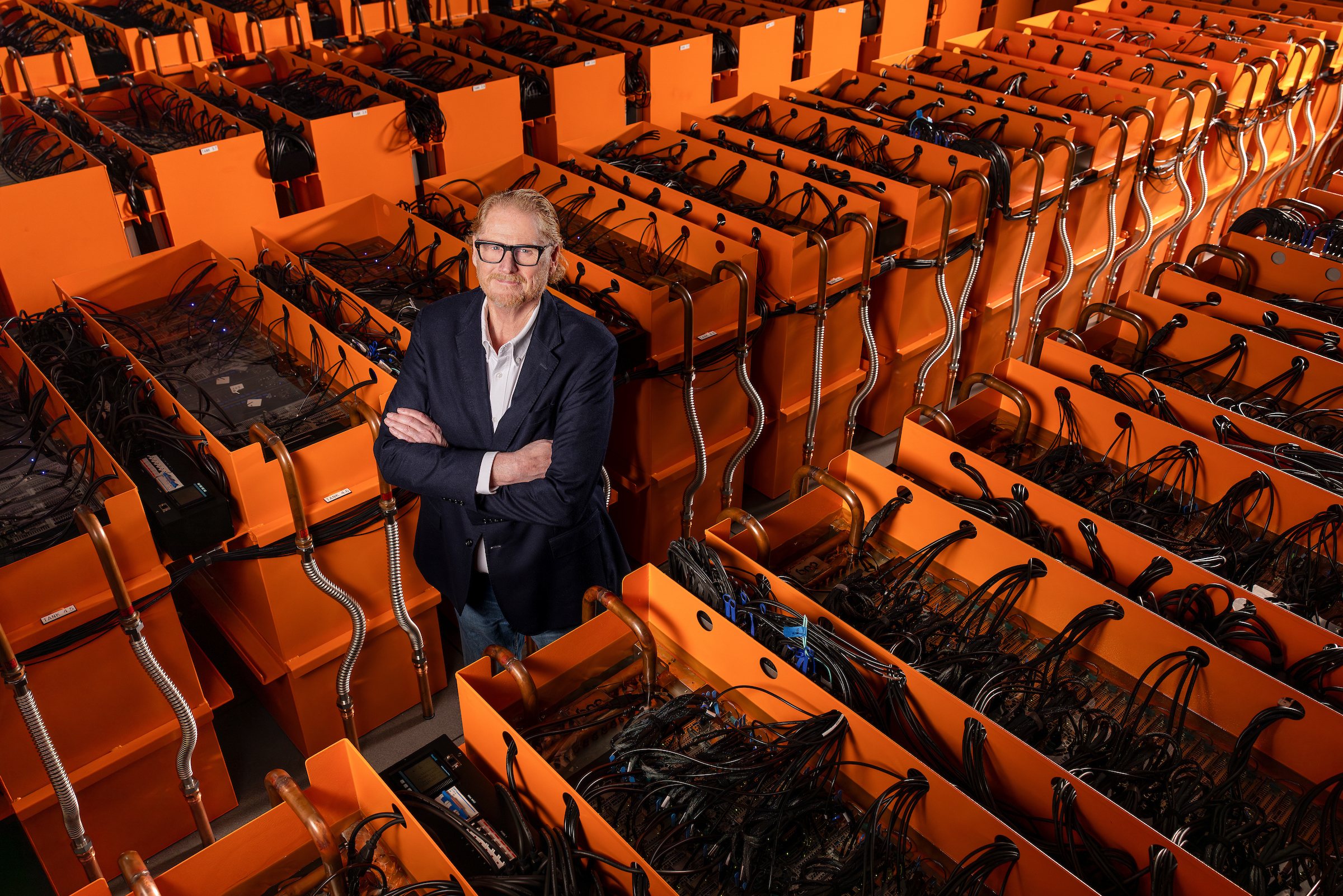
Perth high-powered computing provider DUG Technology has moved to correct its earlier statement that its Geraldton data centre had been cancelled, instead insisting it is only heavily delayed.
Unilever ULVR bumped up its outlook for the year after quarterly sales volume growth surged to more than a 16-year high.
The consumer-goods giant’s underlying sales growth accelerated to 5.8% in the second quarter—driven by a 5.5% increase in volumes and a 0.2% rise in pricing. It was well above company-compiled estimates, and growth of 3.1% in the same period a year prior.
Copyright ©2026 Dow Jones & Company, Inc. All Rights Reserved. 87990cbe856818d5eddac44c7b1cdeb8

One Nation leader Pauline Hanson has confirmed speculation her recent trip to the Dolce and Gabbana fashion show in Italy was paid for by mining billionaire Gina Rinehart.


I am an experienced Risk Management Business Analyst at a Systemic Greek Bank, with a strong background in finance and risk analysis. I hold an MSc in Applied Risk Management from the University of Athens and have completed the ACA Certificate Level. My expertise lies in financial analysis, risk management, data analysis using SQL, Python, and machine learning tools. I have worked in diverse roles, from assurance to financial analysis and trade operations, across leading firms like EY, PwC, Alpha Bank, and the National Bank of Greece. My primary areas of interest include risk management, financial analysis, data science, and the impact of economic factors on the financial markets. I aim to write on topics related to risk assessment, financial modeling, and stock analysis. With my solid technical background, I approach investing with a focus on data-driven analysis and long-term value creation. My motivation for writing on Seeking Alpha stems from my passion for translating complex financial data into actionable insights for investors. I aim to provide informed analysis on market trends, risk management practices, and investment strategies to support informed decision-making.
Analyst’s Disclosure: I/we have no stock, option or similar derivative position in any of the companies mentioned, but may initiate a beneficial Long position through a purchase of the stock, or the purchase of call options or similar derivatives in ORCL over the next 72 hours. I wrote this article myself, and it expresses my own opinions. I am not receiving compensation for it (other than from Seeking Alpha). I have no business relationship with any company whose stock is mentioned in this article.
Seeking Alpha’s Disclosure: Past performance is no guarantee of future results. No recommendation or advice is being given as to whether any investment is suitable for a particular investor. Any views or opinions expressed above may not reflect those of Seeking Alpha as a whole. Seeking Alpha is not a licensed securities dealer, broker or US investment adviser or investment bank. Our analysts are third party authors that include both professional investors and individual investors who may not be licensed or certified by any institute or regulatory body.

Crypto exchanges face a survival crisis as day traders disappear

Politics Home | Defy “Orthodox Economists” To Invest Billions In Reindustrialisation, Labour MPs Urge Burnham

Sanchez hits his first career homer as Yankees beat White Sox

Renter of Home in Anne Heche Crash Denies Settlement With Son

No Jackpot Winner as $257 Million Prize Rolls Over to $269 Million Monday Draw

Weekend Open Thread: Staud – Corporette.com

Huge financial angle on this viral quarter!! #pcgspartner #quarter #quarters #coin @PCGScoin

Money football teams actually earn at the FIFA World Cup 2026. #worldcup #fifa #money #earring

No Strategies Working? Try This! #trading #propfirmtrading #crypto #tradesetup #forex
-

 Fashion4 days ago
Weekend Open Thread: Brooks Brothers
-

 NewsBeat7 days ago
How a former Blue Peter presenter stunned America’s Got Talent judges
-

 Tech1 day ago
Intel is reversing course and bringing hyper-threading back to its server chips
-
 Business6 days ago
New Jersey voter registration controversy explained: How 6,600 noncitizens got on the rolls, and what happens next
-
 Entertainment7 days ago
Johnny Depp’s R-Rated Gothic Cult Classic Gets New Release Ahead of Sydney Sweeney Remake
-

 Crypto World5 days ago
Ethics, other provisions in crypto Clarity Act to be further discussed
-

 Politics23 hours ago
Luke Littler dismantles Gerwyn Price to retain title in Blackpool
-
 Sports2 days ago
Commonwealth Games boxing: Jadumani Singh seals dominant 5-0 win over Pakistan’s Sumama Rehman to enter quarter-finals | Commonwealth Games News
-

 Sports4 days ago
2026 3M Open leaderboard: Scottie Scheffler finds putter in Round 1, sits three back
-

 Fashion4 days ago
16 Dresses for the High Summer Event
-

 News Videos5 days ago
The Peugeot Family: How 200 Years of an “Old Money” Dynasty Died in A Boardroom
-

 Politics2 days ago
Spain sweeps the board at 2026 World Cup with individual awards
-

 News Videos2 days ago
BITCOIN JUST ENTERED THIS CRITICAL ZONE…
-
 Entertainment4 days ago
A New Post-Apocalyptic Gundam Anime Series Blasts Into SDCC
-

 Crypto World2 days ago
XRP Ledger adds $2.6B as RWA inflows rank second
-

 Crypto World5 days ago
Uniswap (UNI) pushes deeper into tokenized RWAs with permissioned trading pools
-

 Tech3 days ago
Anthropic launches Claude Opus 5, a cheaper AI model for coding, agents and enterprise workflows
-

 Crypto World3 days ago
Ripple bought a bank in pieces. The $4 billion audit
-

 Entertainment2 days ago
Sara Gilson Killed By Husband After Viral “Pedophile” TikTok Video
-

 Crypto World6 days ago
Sablier Labs Enters Maintenance Mode, Halts Development
You must be logged in to post a comment Login