Global equity markets may be navigating a period of uncertainty, but investor sentiment suggests that the worst of the recent sell-off could already be behind us. As geopolitical tensions continue to unfold, market participants appear increasingly focused on long-term opportunities rather than short-term disruptions.
In a conversation with ET Now, market strategist Ed Yardeni, from Yardeni Research shared an optimistic outlook, noting that history often turns crises into opportunities for investors.
“We have all known for quite some time that the history of geopolitical crisis is that they create some very good buying opportunity for stocks. The problem is we all know that and so you do not get a very long period of time to buy these stocks when they do sell off. We had significant selloffs and people just kind of jumped in. The market is clearly looking way past the war. The perception is that this will maybe last a few more weeks. It is not likely to last a few more months. And meanwhile the technology revolution continues to create great opportunities not just in AI, but robotics, autonomous driving, and people are just looking for opportunities to invest in the future and the future looks bright even though the near-term situation is still volatile and somewhat dangerous.”
Despite ongoing tensions, markets have shown resilience, raising questions about whether prolonged conflict would significantly derail the recovery. Yardeni suggested that investors may already be pricing in much of the risk.
Advertisement
“Well, it is interesting. We have had a global rebound in stocks and I can understand why the US stock market has rebounded because we are not really dependent on foreign oil. We do not really have much coming from the Strait of Hormuz, but Europe does, India does, China does, and South Korea, Taiwan. But yes, some of these countries you are seeing investors jumping into the technology sector. Some of these countries you are seeing investors buying into the banking sector, healthcare sector. So again, the perception is that this is not a tolerable situation. The global economy obviously is not going to do well if the Strait of Hormuz stays closed and so there is a lot of pressure on both sides to just get this thing settled.”
Live Events
The rebound has not been limited to one region or sector. Technology, banking, and healthcare stocks across multiple economies have attracted fresh capital, signaling confidence in structural growth trends even amid uncertainty. At the same time, commodity markets—particularly oil—remain a key concern. Prices have surged in response to supply risks, and a return to earlier lows appears unlikely in the near term.“It is a very good question. It is very unlikely we are going to go back to $60 to $70 oil. I think more likely is that the price of oil will settle in somewhere, let us say, between $75 and $95, that is relatively high to where we were, but it is not prohibitively high. It is not a level that would sink the global economy. So, we are going to learn to live with higher energy prices for a while. It is going to take a while for oil to come out of the strait once it is actually open. It is going to take a while for infrastructure and the countries around the Persian Gulf to be rebuilt and repaired. So, given all that, we are looking at higher for longer oil prices, but something under $100 and I think the world can tolerate that.”
For now, markets seem to be striking a balance—acknowledging near-term volatility while positioning for long-term growth. As geopolitical developments continue to evolve, investors appear willing to look beyond immediate risks and focus on the broader trajectory of the global economy.
Indian stock markets continue to recover from the incessant selloff in March, with Sensex and Nifty rebounding sharply. As investors continue to re-evaluate their portfolios, SBI Securities named 15 stocks as its ‘rising star’ recommendations. Check out the list of stocks named by the domestic brokerage and their upside potential from the previous closing price.
The historic Somerset-based footwear giant has launched ‘Brands now at Clarks’ on its website
Clarks shoe shop in Derbion Shopping Centre, Derby(Image: Derby Telegraph)
Somerset shoemaker Clarks has started selling rival brands for the first time in its history through an online marketplace. The historic company, which has been a presence on the UK high street since 1825, has launched ‘Brands now at Clarks’ on its website.
More than 100 brands, such as major global labels including Adidas and Nike, are now available to buy through the site, as well as other lifestyle products such as clothing and accessories.
The venture marks a major shift for 200-year-old Clarks as it looks to diversify its offering beyond shoes in an increasingly tough retail environment.
Joe Ulloa, vice-president UK & EMEA at Clarks, said: “From the outset, it was essential that every brand partner reflected the values that have defined Clarks for over 200 years – premium quality, comfort and value.
Advertisement
“Brands now at Clarks represent an exciting new chapter for us. It allows us to offer a broader, shopping experience, while staying true to the heritage and trust we’ve built.”
‘Brands now at Clarks’ brings together a portfolio of big names including high-end brands such as Hugo Boss, Tommy Hilfiger, Under Armour and Marc Jacobs. A number of other labels are lined up to join the website in the coming weeks, too, including Armani Exchange, Emporio Armani, Gant, Lacoste, Moose Knuckles, Napapijri, Rains, Timberland and Woolrich.
Clarks was founded by brothers Cyrus and James Clark who opened a tannery making leather goods in 1825. Today the company is a global brand, selling more than 40 million pairs of shoes a year and has more than 1,100 stores.
But the business has faced challenges in recent years amid changing shopping habits and a decline in footfall in physical stores as consumers look to buy more products online. Last year, Clarks was forced to axe more than 1,200 jobs as sales plummeted by nearly £100m.
Advertisement
In September, the company opened a museum in Street, in Somerset, showcasing 200 years of shoemaking. It features hundreds of never-before-seen objects from sheepskin slippers to desert boots, school shoes to Britpop stagewear.
Shares of Adani Power have been on a strong run this month, surging as much as 37% over 13 sessions. The rally in Adani Power shares has made it the most valuable company within the Adani Group, with a market capitalisation of Rs 3.93 lakh crore, surpassing Adani Ports at Rs 3.70 lakh crore.
Part of the diversified Adani Group, Adani Power is India’s largest private thermal power producer. The company has a total generation capacity of 18,110 MW across thermal plants in Gujarat, Maharashtra, Karnataka, Rajasthan, Chhattisgarh, Madhya Pradesh, Jharkhand and Tamil Nadu, along with a 40 MW solar project in Gujarat.
Time to book profits or double down on Adani Power shares?
Adani Power share price is exhibiting a strong continuation of its primary uptrend, supported by a clear alignment of moving averages (short-term above medium and long-term), indicating sustained bullish momentum. After a healthy consolidation phase, the stock has witnessed a decisive breakout with expanding volumes, signalling fresh participation. The recent sharp upmove toward the Rs 190–200 zone in the Adani Power share price reflects strength, though the steep rally also suggests near-term overextension, Ajit Mishra, senior vice president at Religare Broking said. Also read: PNB Housing Finance soars 10% post Q4 results: Why Morgan Stanley, other brokerages remain bullish
Advertisement
Live Events
Momentum indicators are trending higher but approaching overbought territory, which may lead to brief consolidation or minor pullbacks. Immediate support is placed around Rs 170–175, followed by a stronger base near Rs 150. As long as the price holds above these levels, the bias remains positive, and dips are likely to be bought into, with potential for further upside continuation. Ruchit Jain, vice president of technical research at Motilal Oswal, said Adani Power share price had recently given a breakout from its long consolidation phase with good volumes. This, along with the positive momentum across the Adani Group stocks, has led to strong buying interest in the counter. Traders with existing long positions should hold and continue to ride the trend, while any declines in the near term can be seen as buying opportunities. From a fundamental perspective, the surge comes amid rising power demand. JM Financial noted in a recent report that power demand had peaked in early March, but an unusual western disturbance from March 20 disrupted the trend. A massive cloud cover stretching nearly 1,000 km from Afghanistan through Pakistan into India brought widespread rainfall and unseasonably cool weather. With this cloud system now receding from North India, experts expect a return of hotter conditions, which could drive a fresh surge in power demand. “All in all, we anticipate a shortfall in hydro generation (negative for NHPC, SJVN), spike in coal-fired generation (positive for NTPC, Adani Power), extension of Section-11 (Tata Mundra) and high merchant prices (Adani Green, Adani Power),” the domestic brokerage concluded.
Over the weekend, the company announced that its wholly-owned subsidiary Adani Atomic Energy has incorporated its subsidiary Coastal-Maha Atomic Energy, furthering its nuclear ambitions.
At about 11:10 am, Adani Power shares were trading at Rs 204, higher by 1.5% from the last close on the BSE.
(Disclaimer: Recommendations, suggestions, views and opinions given by the experts are their own. These do not represent the views of The Economic Times)
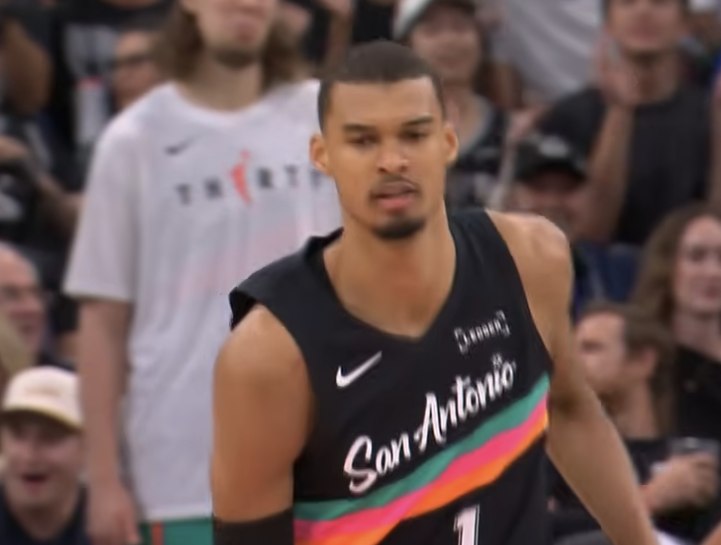
SAN ANTONIO — Victor Wembanyama has transformed the San Antonio Spurs from lottery hopefuls into legitimate 2026 NBA title contenders, with betting markets assigning the franchise roughly a 15-20% implied probability of winning the championship — a remarkable leap fueled by the 22-year-old phenom’s dominance and the team’s late-season surge.
Victor Wembanyama
As the Spurs open the playoffs as the Western Conference’s No. 2 seed with home-court advantage in early rounds, oddsmakers list San Antonio between +450 and +550 to hoist the Larry O’Brien Trophy. That range translates to an approximate 15-18% chance, placing them clearly behind defending champion Oklahoma City Thunder but ahead of most of the field.
Wembanyama, in his third season, delivered a monster regular campaign, averaging 25.0 points, 11.5 rebounds, 3.1 assists and a league-leading 3.1 blocks per game while shooting 51.2% from the field. He earned unanimous Defensive Player of the Year honors and sits among the frontrunners for MVP, showcasing an otherworldly blend of size, skill and rim protection that has redefined the Spurs’ identity.
The Spurs finished the regular season with one of the NBA’s best records, highlighted by a scorching 27-2 stretch from early February through early April that included multiple double-digit win streaks. They posted the highest winning percentage in the league since Jan. 1 and went 4-1 against the Thunder, including impressive road victories. Analysts credit not only Wembanyama but a supporting cast featuring All-Star De’Aaron Fox, rising guard Stephon Castle and complementary pieces that have meshed effectively under coach Mitch Johnson.
San Antonio opened the 2026 playoffs with a statement 111-98 victory over the Portland Trail Blazers in Game 1 on Sunday, where Wembanyama dropped a franchise playoff-record 35 points on efficient shooting. The performance electrified the home crowd and underscored his readiness for high-stakes basketball, though he has emphasized staying grounded and focusing on the present.
Advertisement
Betting markets reflect this momentum. At various sportsbooks, the Spurs sit as the second choice behind Oklahoma City at around +100 to +135 for the Thunder. Implied probabilities place OKC near 45-50% to repeat, with San Antonio in the 16-18% range on platforms like Polymarket, aligning closely with traditional oddsmakers. Wembanyama himself is the heavy favorite for Finals MVP if the Spurs prevail, listed around +500 to +550.
Still, experts caution that a championship run would require overcoming historical trends. Teams this young and relatively inexperienced in recent playoffs have rarely cut through the gauntlet to win it all. The Spurs’ core features several players in their first deep postseason pushes, raising questions about handling fatigue, adjustments and pressure across four grueling rounds.
Wembanyama has addressed the challenge directly, acknowledging the dream of a title while stressing preparation and moment-by-moment focus. “I dream about it every day,” he said recently, but added that the immediate priority is showing up ready for Game 1 and executing scouts. He missed the regular-season finale with a minor rib contusion but entered the postseason fully healthy and ramped up.
The path forward is formidable. A likely second-round matchup against the Denver Nuggets could test San Antonio’s interior defense and experience against Nikola Jokic. Should they advance, a Western Conference Finals clash with Oklahoma City looms as a potential showdown between two elite young cores. The Thunder’s depth, regular-season dominance and playoff experience give them the edge in most projections, but the Spurs’ head-to-head success this season keeps the series intriguing.
Advertisement
Beyond the West, the Boston Celtics represent the top Eastern threat at around +525 to +600 odds. A potential Finals matchup would pit Wembanyama’s generational talent against a veteran, well-coached Celtics squad seeking another ring.
Analysts point to several factors boosting the Spurs’ realistic shot. Wembanyama’s two-way impact — anchoring the league’s top defenses while creating offense with pull-up threes, post moves and playmaking — gives San Antonio a unique advantage. The team’s net rating ranks among the league’s best, and their late surge demonstrated resilience and growth.
Yet vulnerabilities exist. Depth beyond the starters could be tested in a long series, and offensive consistency against elite defenses remains a work in progress. Wembanyama has shouldered a heavy load, and any injury risk to the franchise cornerstone would derail hopes instantly.
Gregg Popovich, the legendary former coach now in a front-office or advisory role, has been spotted at practices, symbolizing continuity with the Spurs’ championship pedigree. The franchise last won titles in 1999, 2003, 2005, 2007 and 2014, building a culture of sustained excellence that current players reference as motivation.
Advertisement
Fan excitement in San Antonio has reached fever pitch, with playoff tickets scarce and the city buzzing after years of rebuilding. Wembanyama’s arrival in 2023 marked the turning point, and the addition of Fox and development of young talent have accelerated the timeline dramatically from initial projections.
Quantitative models and betting markets converge on a 15-20% probability for a Spurs championship in 2026. That figure represents enormous progress from preseason odds that hovered around 65-1 or longer. It also reflects the market’s respect for Wembanyama’s superstar trajectory while discounting the inexperience tax and the Thunder’s status as clear favorites.
For Wembanyama personally, the stakes extend beyond one season. A deep playoff run — or better — would cement his place among the NBA’s elite and validate the hype that surrounded him as the No. 1 pick. He has already shattered expectations with his defensive prowess and expanding offensive game, drawing comparisons to all-time greats while carving his own path.
Coach Johnson and the front office have managed the roster thoughtfully, balancing development with competitiveness. The team’s ability to win without relying solely on Wembanyama has been a key narrative thread, with role players stepping up during stretches of the season.
Advertisement
As the playoffs unfold, every game will recalibrate perceptions and odds. A convincing first-round series victory could push the Spurs’ implied title probability higher, while early struggles might temper enthusiasm. History shows that surprise contenders can ride momentum, but sustaining excellence over multiple series remains the ultimate test.
Wembanyama’s presence alone elevates the Spurs’ ceiling. At 7-foot-4 with guard-like skills and elite shot-blocking, he alters games on both ends in ways few players can match. His growth from rookie season to now has been remarkable, and continued improvement in areas like playmaking and consistency could make San Antonio even more dangerous in future years.
For now, the 2026 title odds crystallize the narrative: the Spurs are no longer a feel-good story but a genuine threat. Whether they can translate regular-season success into championship hardware depends on health, execution and the ability to navigate the brutal playoff gauntlet.
With Wembanyama leading the charge and a supportive cast gaining confidence, San Antonio enters the postseason with belief. The percentage may sit in the mid-teens, but in a league where parity and upsets thrive, that chance feels tangible — and for Spurs fans, electrifying.
Advertisement
The basketball world watches closely as Wemby’s championship quest begins in earnest. At just 22, he already carries franchise hopes on his broad shoulders, turning what once seemed like a distant dream into a credible 2026 possibility.
Sen. Dave McCormick, R-Pa., discusses President Donald Trump’s renewed threats to fire Federal Reserve Chair Jerome Powell and Kevin Warsh’s upcoming confirmation hearing on ‘Kudlow.’
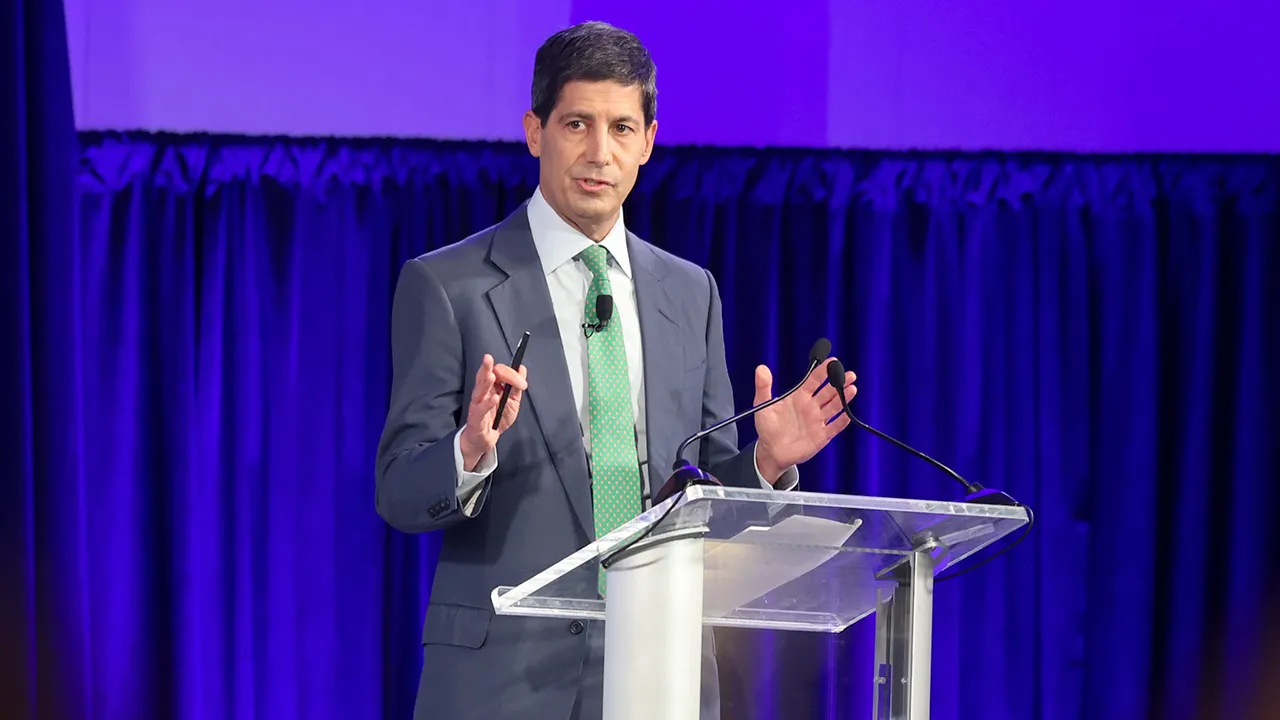
Kevin Warsh is set to testify on Tuesday about his nomination to be chairman of the Federal Reserve, with senators likely to press him on his views of the Fed’s 2% inflation target given the persistent price pressures affecting the U.S. economy since the pandemic.
The 56-year-old Warsh, who served as a Fed governor from 2006 to 2011, will testify before the Senate Banking Committee as senators weigh his nomination to succeed current Fed Chair Jerome Powell, whose term leading the central bank is due to expire in May.
Advertisement
Warsh offered an overview of how he views the price stability component of the Fed’s dual mandate in a written copy of his opening statement, which FOX Business viewed in advance of his testimony.
In his prepared remarks, Warsh says that he supports the Federal Reserve’s dual mandate of promoting price stability as well as full employment, though he didn’t specifically discuss the Fed’s policy target of keeping inflation at 2% over the long-run.
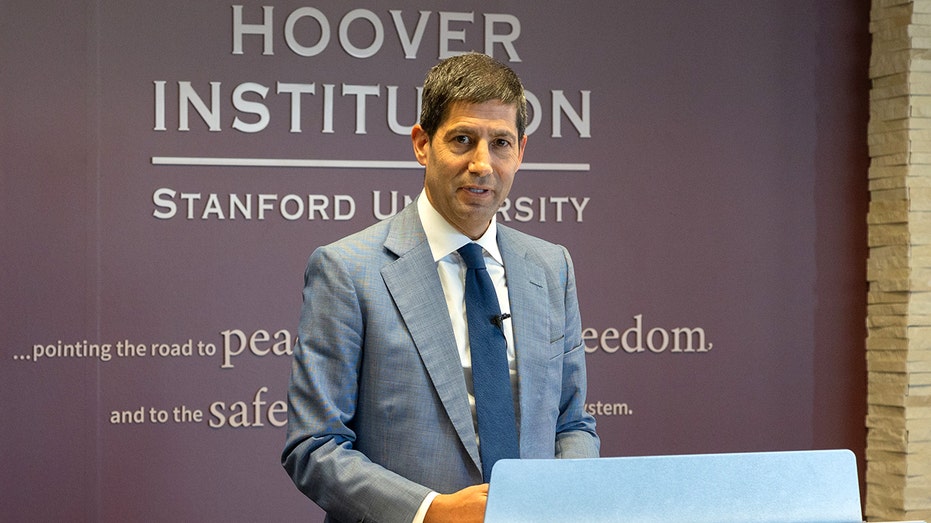
Former Fed Governor Kevin Warsh is the nominee to succeed Powel as Fed chair. (DMV Productions)
“First, Congress tasked the Fed with the mission to ensure price stability, without excuse or equivocation, argument or anguish. Inflation is a choice, and the Fed must take responsibility for it,” Warsh wrote.
Advertisement
“Low inflation is the Fed’s plot armor, its vital protection against slings and arrows,” he said.
“So, when inflation surges – as it has done in recent years – grievous harm is done to our citizens, especially to the least well-off. They lose purchasing power. Their standard of living falls. They may also lose faith in our system of economic governance, raising doubts whether monetary policy independence is all it’s cracked up to be,” Warsh wrote.
Warsh has emphasized the importance of price stability and is skeptical of relying too heavily on a 2% inflation target due to the risk of measurement errors and policy mistakes. (Tierney L. Cross/Bloomberg via Getty Images)
Warsh discussed his view of monetary policy goals in a 2023 hearing before the British House of Lords’ Economic Affairs Committee and said that he views price stability as an imperative, but is skeptical of the ability to measure inflation precisely, and so he prefers a range-based inflation target.
Advertisement
“Price stability is the North Star. Without stable prices, it is almost impossible to have full employment. It is also almost impossible to have economies that are growing at their full potential. When prices are volatile… it is difficult for households and businesses to make the prudent decisions that they might like,” he explained.
“Frankly, we would not know the difference whether inflation was running at 1.7%, 2.0% or 2.3% in the United States or in the United Kingdom because we do not measure it that precisely,” Warsh said. “Economics is not physics – at least not yet.”
Warsh said that he tends to “prefer ranges versus point estimates, in part because of measurement error and in part because I think broad price stability can never be that precise.”
Advertisement
He added that, in general, he thinks viewing inflation that precisely “led many of the central banks to overly stimulate economies a few years ago,” and led to decisions that contributed to inflation running well above target.
“I broadly favor ranges. Price stability, in the numerical definition, will change in the times. The structures in the global economy are changing even as we speak. It strikes me that agreeing on some permanent basis to 2.0% is asking for trouble,” Warsh said.
Inflation peaked in the U.S. at 9.1% in June 2022 and is currently around 3%, having risen over the last year due to tariffs and the recent impact of the recent energy shock caused by the Iran war.
The Fed’s preferred inflation gauge, the personal consumption expenditures (PCE) index, was 2.8% in February on an annual basis. Data from March is due at the end of next week.
Another popular inflation gauge, the consumer price index (CPI), showed inflation jumped to 3.3% in March after a 2.4% reading in February due to the impact of the war on energy markets.




















































You must be logged in to post a comment Login