Connect with us
DAPA Banner
DAPA Coin
DAPA
COIN PAYMENT ASSET
PRIVACY · BLOCKDAG · HOMOMORPHIC ENCRYPTION · RUST
ElGamal Encrypted MINE DAPA
🚫 GENESIS SOLD OUT
DAPAPAY COMING

Business

Marketwise general counsel Forney’s $13,608 stock withholding for taxes

Published

on

Continue Reading
Click to comment

You must be logged in to post a comment Login

Leave a Reply

Business

Bajaj Housing Finance shares rally 5% as Q1 AUM climbs 24% YoY

Published

on

Bajaj Housing Finance shares rally 5% as Q1 AUM climbs 24% YoY
Bajaj Housing Finance shares gained 4.5% to Rs 92.65 during Friday’s trading session after the company reported robust business updates for the June 2026 quarter, driven by strong growth in assets under management (AUM) and healthy loan disbursements.

The company reported gross disbursements of approximately Rs 19,500 crore in Q1FY27, marking a sharp increase from Rs 14,651 crore in the corresponding quarter last year. Sequentially, disbursements also improved from Rs 17,506 crore reported in Q4 FY26.

Assets under management (AUM) rose 24% year-on-year to approximately Rs 1,49,610 crore as of June 30, 2026, compared with Rs 1,20,420 crore a year earlier. On a sequential basis, AUM expanded by around Rs 8,904 crore during the quarter.

The company’s loan assets (AR) also witnessed healthy growth, increasing to approximately Rs 1,31,150 crore as of June 30, 2026, from Rs 1,05,954 crore in the same period last year, reflecting sustained demand for housing finance.

Advertisement

Stock price trend and technical outlook

Bajaj Housing Finance has remained in an uptrend, with the stock advancing nearly 15% over the past three months. It currently commands a market capitalisation of Rs 73,866 crore, while its 52-week high stands at Rs 124.

From a valuation perspective, Bajaj Housing Finance trades at a P/E multiple of 28.85, with a price-to-sales ratio of 5.46 and a price-to-book ratio of 3.28, reflecting its current market valuation relative to its financial performance and net worth.


From a technical perspective, the stock continues to display positive momentum. Its 14-day Relative Strength Index (RSI) stands at 60.8, indicating strengthening buying interest while remaining below the overbought zone of 70. Additionally, the stock is trading above seven of its eight key simple moving averages (SMAs), reinforcing the prevailing bullish trend.
Also read: HCL Tech surges 6% on $1.14 billion AI deal; Mercedes-Benz likely clientThe shareholding pattern showed mixed trends during the March 2026 quarter. Foreign Institutional Investors (FIIs) marginally raised their stake in Bajaj Housing Finance to 0.99%, up from 0.94% in the previous quarter, signalling continued institutional interest. In contrast, mutual funds trimmed their holding to 0.35% from 0.63%, indicating some profit booking. Meanwhile, promoter ownership remained unchanged at a robust 86.70%, reflecting sustained confidence from the company’s promoters.

(Disclaimer: Recommendations, suggestions, views and opinions given by the experts are their own. These do not represent the views of Economic Times)

Advertisement
Continue Reading

Business

Messi’s Argentina vs Cape Verde and a Historic Egypt-Australia Clash Friday

Published

on

Lionel Messi will lead Argentina as the six-time Ballon d'Or winner aims to finally break his trophy drought in top level international competition

MIAMI — The 2026 World Cup’s round of 32 reaches its final day Friday, with three matches completing the first knockout stage of an expanded 48-team tournament that has already produced its share of upsets, records and memorable moments. The headliner is unmistakably the late-afternoon showdown in Miami, where reigning champion Argentina and the record-setting Lionel Messi face a Cape Verde side that has captivated fans worldwide with one of the most improbable group stage runs in recent tournament history.

But Friday’s card begins in Dallas at 2 p.m. ET, where Australia takes on Egypt in a match carrying genuine historical weight for both sides. Neither nation has ever won a World Cup knockout match, making the Dallas opener a first for one of them regardless of what happens. Australia is playing in just its third-ever knockout round, having lost twice in agonizing fashion, once to Italy in 2006 on a stoppage-time winner and once to Argentina in 2022. Egypt’s appearance in the knockout stage is only the second in its World Cup history, with the first coming in 1934 under a single-elimination format with no group stage whatsoever.

Egypt enters the match with significant injury uncertainty surrounding its most important player. Captain and all-time leading scorer Mohamed Salah was forced off in the 57th minute of Egypt’s group stage finale against Iran with a hamstring strain. Coach Hossam Hassan has expressed optimism about Salah’s availability, but without the former Liverpool forward, Egypt’s offense has little of the individual quality needed to break down a resolute Australian defensive shape. Compounding the concern, left-back Ahmed Fatouh and central defender Mohamed Abdelmonem are both listed as doubtful, leaving Egypt potentially depleted across multiple positions of the backline.

Australia under coach Tony Popovic has not been a high-scoring team through the group stage. The Socceroos scored twice in their opening 2-0 win over Türkiye but were then shut out in a 2-0 loss to the United States and earned a 0-0 draw against Paraguay without finding the net. That scoring drought reflects a team comfortable playing deep and looking to capitalize on counter-attacking opportunities rather than imposing possession-based football on opponents, a style that could prove well-suited to navigating Egypt’s injury-diminished lineup if the Australians can keep things tight defensively.

Advertisement

One of the match’s defining storylines involves who is standing in goal for Australia. Shortly before the tournament’s first match, coach Popovic made the surprising call to bench veteran captain Matthew Ryan in favor of Patrick Beach, a largely inexperienced goalkeeper who plays domestically for Melbourne City and had only five international caps entering the tournament. Beach delivered a stunning performance in the Türkiye victory and added a second clean sheet against Paraguay, quickly justifying the unconventional selection. He is likely to be tested early and often if Salah plays, and his form on the day may ultimately determine the outcome.

The second match, in Miami at 6 p.m. ET, frames itself as the round’s most one-sided matchup on paper and also its most narratively compelling underdog story. Cape Verde, representing an archipelago nation of just 525,000 people off the west coast of Africa, advanced to the knockout stage without losing a single group stage match. The Blue Sharks drew 0-0 with Spain, 2-2 with Uruguay and 0-0 with Saudi Arabia, finishing second in their group. Their opening stalemate against Spain, still one of the tournament’s most technically refined sides, announced Cape Verde as a team organized far beyond expectations, built around a disciplined 4-5-1 formation that sits deep and offers opponents almost no space between the lines.

Central to Cape Verde’s run has been 40-year-old goalkeeper Vozinha, who has been one of the tournament’s most celebrated individual performers, particularly during the Spain match, where his command of the penalty area and shot-stopping quality kept the scoreline level against one of the world’s leading attacking lineups. At 40, Vozinha is a story in himself, a late-career achievement that connects Cape Verde’s remarkable group stage to the personal arc of an individual who was never expected to be here.

Against Argentina, however, Cape Verde faces a different order of challenge than anything the group stage produced. La Albiceleste has won all three of its group stage games by multi-goal margins and have played with the self-assurance of a team operating with a clear sense of purpose. They have won their last 10 competitive matches and enter Friday as the clearest favorite of any remaining team in the tournament, a status reflected in betting markets where Argentina sit at odds as heavy as negative 694.

Advertisement

The player around whom everything revolves is Messi, a point that requires no elaboration yet deserves acknowledgment given what the 39-year-old has already produced in this tournament. He has scored in every group match, co-leads the tournament with six goals alongside France’s Kylian Mbappé and has now scored 19 career World Cup goals, the most in the history of the men’s game, a record he set earlier at this tournament. The Blue Sharks kept Spain scoreless over 90 minutes, an achievement of genuine defensive organization and collective discipline, but Argentina’s attack beyond Messi, including the striker partnership with Lautaro Martínez and the creative supporting cast across the front line, presents a dimension of danger Spain’s group stage lineup did not.

A cloud has settled over the Cape Verde camp this week, however. Captain Ryan Mendes is under a criminal investigation in New Zealand following allegations that he raped a woman in March. How the team’s federation and coaching staff have addressed the matter internally has not been fully disclosed publicly, though the news adds an uncomfortable dimension to what had been a purely joyful story for a nation experiencing its first-ever World Cup knockout appearance.

Friday’s final match, at Arrowhead Stadium in Kansas City at 9:30 p.m. ET, features Colombia against Ghana, with the South American side entering as the clear favorite against a Ghanaian team that has relied on deep defensive structure and a deliberate, disciplined game management style to advance from what was widely viewed as a difficult group. Colombia’s emerging quality up front makes them the likely victor in what is expected to be a tactically cautious contest.

Advertisement
Continue Reading

Business

Panic buying warning as bird flu found in third state

Published

on

Panic buying warning as bird flu found in third state

Australians have been warned against panic buying eggs and other poultry products as preliminary testing detects a case of avian flu in a third state.

Continue Reading

Business

Thailand’s economy held steady in May, supported by growing tourism and a slight increase in domestic demand

Published

on

Asia's Industrial Supercycle awakens

In May, Thailand’s economy stabilized with increased tourism and slight domestic demand improvement. However, exports fell, manufacturing declined, and inflation remained elevated. Key concerns include living costs, geopolitical risks, and El Niño impacts.


Summary

  • The Thai economy in May remained broadly stable compared to the previous month.

    o On the external front, tourism receipts and foreign tourist arrivals overall increased, supported by a recovery in long-haul markets and an increase in tourist arrivals from China and Malaysia due to their long holiday period. However, other short-haul tourists declined due to weaker demand and reduced flights. Merchandise exports excluding gold decreased, mainly due to lower exports of electronics and jewelry following earlier acceleration in the previous period.

    o Domestic demand improved slightly, supported by increases in private consumption and private investment, particularly in the automotive sector. However, consumption and investment in other categories remained relatively stable.

    o On the supply side, Manufacturing production declined in line with merchandise exports, while the services sector remained broadly stable.

    Advertisement

The Thai economy in May remained broadly stable compared to the previous month. Tourism receipts increased overall, in line with higher foreign tourist arrivals, as supported by a recovery in long-haul markets as well as increased arrivals from China and Malaysia due to their long holiday periods. However, arrivals from other short-haul markets declined due to weaker demand and reduced flight services amid elevated energy costs. Merchandise exports excluding gold declined, mainly due to lower exports in electronics and jewelry after having accelerated in the previous period. 

Domestic demand improved slightly, supported by higher private consumption and investment, particularly in the electric vehicle sales, partly reflecting a shift toward the electric vehicle usage amid elevated domestic fuel prices. However, consumption and investment in other categories remained broadly stable. Government expenditure expanded from the same period last year, driven by both current and capital expenditures of the central government. 

On the supply side, economic activity remained broadly stable. Manufacturing production declined in line with weaker merchandise exports, while the services sector remained broadly unchanged.

Headline inflation remained elevated but broadly stable. Energy prices declined slightly, while core inflation increased marginally.

Advertisement

Key issues to monitor: 1) The impact of elevated cost of living and production costs on households and businesses 2) geopolitical risks and U.S. trade policy, 3) the impact of government measures, and 4) El Niño developments

Source : https://www.bot.or.th/en/news-and-media/news/news-20260630.html

Advertisement
Continue Reading

Business

Why is Sumitomo Chemical stock surging today?

Published

on


Why is Sumitomo Chemical stock surging today?

Continue Reading

Business

Chocoladefabriken Lindt & Sprungli: Good Brand, But Volume Recovery Still Needs To Show Up

Published

on

Chocoladefabriken Lindt & Sprungli: Good Brand, But Volume Recovery Still Needs To Show Up

This article was written by

I’m a fundamental, valuation-driven investor with a strong focus on identifying businesses that have the potential to scale over time and unlock massive terminal value. My investment approach centers around understanding the core economics of a business—its competitive moat, unit economics, reinvestment runway, and management quality—and how those factors translate into long-term free cash flow generation and shareholder value creation. I focus on fundamental research, and I tend to focus on sectors with strong secular tailwinds. Professionally, I am a self-educated investor that started this journey 10 years ago. Currently, I am managing my own funds, seeded from friends and family. My motivation for writing on Seeking Alpha is to share investment insights, and also at the same garner feedback from fellow investors in this site. My aim is to help readers focus on what truly drives long-term equity value. I believe good analysis should be both analytical and accessible, and I hope my work adds value to readers looking for high-quality, long-term investment opportunities.

Analyst’s Disclosure: I/we have no stock, option or similar derivative position in any of the companies mentioned, and no plans to initiate any such positions within the next 72 hours. I wrote this article myself, and it expresses my own opinions. I am not receiving compensation for it (other than from Seeking Alpha). I have no business relationship with any company whose stock is mentioned in this article.

Seeking Alpha’s Disclosure: Past performance is no guarantee of future results. No recommendation or advice is being given as to whether any investment is suitable for a particular investor. Any views or opinions expressed above may not reflect those of Seeking Alpha as a whole. Seeking Alpha is not a licensed securities dealer, broker or US investment adviser or investment bank. Our analysts are third party authors that include both professional investors and individual investors who may not be licensed or certified by any institute or regulatory body.

Advertisement
Continue Reading

Business

BHP workers approve Pilbara labour deal, unions cite lingering concerns

Published

on

BHP workers approve Pilbara labour deal, unions cite lingering concerns


BHP workers approve Pilbara labour deal, unions cite lingering concerns

Continue Reading

Business

Pilbara power plays deserve clarity

Published

on

Pilbara power plays deserve clarity

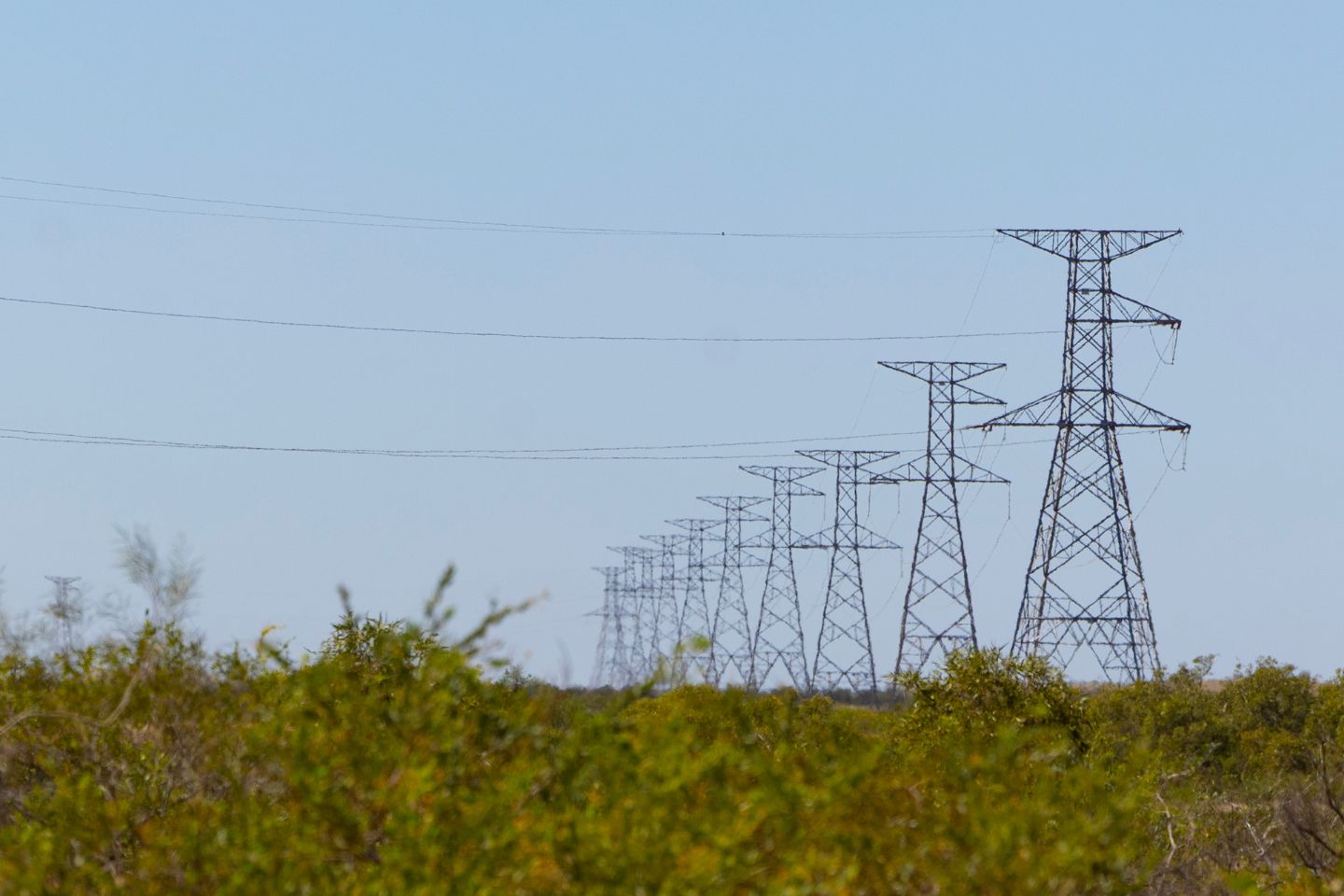
REGULATORY inertia. Jittery proponents. Ministers beating around the bush. All hallmarks of a government mired in policy paralysis. 

This is the situation facing companies trying to decarbonise the Pilbara by heeding the state’s call to build a common-user energy grid fed power by mammoth green infrastructure projects. 

Five main proponents have proposed about 45 gigawatts of green power generation across the Pilbara. 

Currently, we have an energy minister (who also happens to be the minister for the Pilbara) who won’t even answer if she will allow proponents to break the law. 

Advertisement

That seems to me a pretty important query to address for a person whose job it is to uphold and update laws. The longer the state government dillydallies behind closed doors, the more likely it is investor patience will wear thin. 

And then there is Fortescue. 

While the company has not explicitly stated it wants to feed its power into a common-user grid, powering other industries as proposed would likely necessitate this, and founder Andrew Forrest has expressed his desire to provide “power for all”. 

As it stands, that would be illegal. 

Advertisement

Fortescue is building its grid under Mining Act tenure, which forbids the powering of non-mining uses such as other industries, or residential. 

There is plenty of merit in changing the law to allow it, however. 

Permitting the biggest renewable energy builder in Western Australia – Fortescue – to pursue its goal would speed up decarbonisation of the Pilbara immeasurably. 

Advertisement

Notwithstanding there are genuine consent and consultation shortcomings with pastoralists, councils and traditional owners that would have to be ironed out. 

So long as the government hesitates on this front, Fortescue’s investors and stakeholders will be wary about the legality of what it has proposed. 

If the intention is to uphold the law as it stands, the government needs to be clear about what can and cannot be powered under the Mining Act. 

Fortescue is justifiably exploiting a grey area to its benefit. It must be addressed. 

Advertisement

Billions of dollars of investor cash is at stake from other proponents, which are planning their projects as per the Land Administration Act (LAA). 

Of APA Group, SP Energy, Yindjibarndi Energy and Intercontinental Energy, only Yindjibarndi has managed to navigate the onerous planning and consultation requirements to start construction. 

If Fortescue is allowed to sign agreements with the Pilbara’s major sources of power demand – other miners and industry – under its easier, cheaper-to-build energy, those proponents may as well close their chequebooks and take their capital elsewhere. 

Yindjibarndi Energy is likely the only survivor should this occur as its current and potential customers are far away from Fortescue’s network. 

Advertisement

APA Group may still have a shot, too, if BHP comes to the party. It is incumbent on the state government to give these proponents clarity, given they have bought in to its Pilbara decarbonisation rhetoric. 

The state government says it is working with proponents and has a team to expedite LAA projects. 

Yet there is no certainty any major offtakers will be left to buy their power by the time their projects are shovel ready. 

For the government to still be talking about ‘working with’ proponents while Fortescue is already more than 1GW into its network rollout (under what the government says is the wrong tenure pathway) is ludicrous. 

Advertisement

Investor confidence is at stake, and any fallout ultimately lies at the feet of the state government.


Advertisement
Continue Reading

Business

What a 10 Percent Drop Means for Buyers, Sellers and Renters

Published

on

Sydney

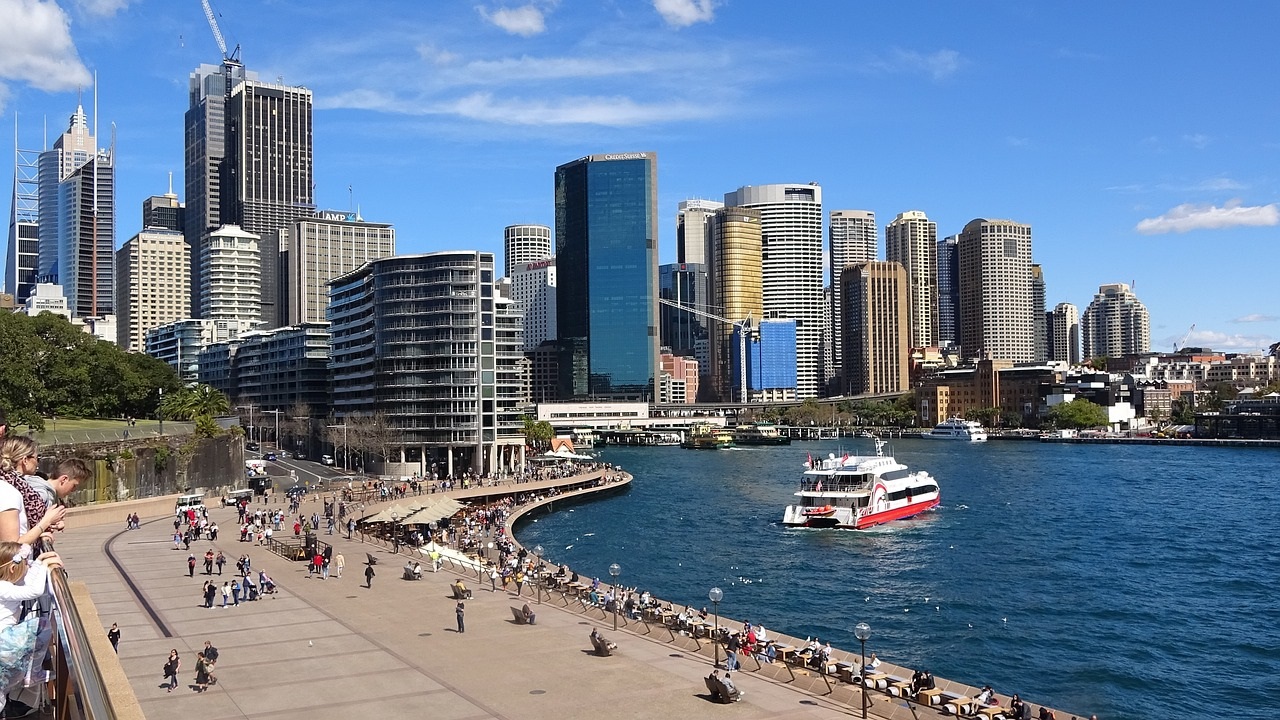
SYDNEY — Australian house prices are slowing for the first time in years following a sweeping federal budget overhaul of the country’s property tax settings, and the big banks are now projecting declines across major capital cities that could represent one of the most significant corrections in the market’s modern history.

National Australia Bank has forecast a 2 per cent price drop across major capital cities, while Commonwealth Bank revised its growth estimate down to 3 per cent from 5 per cent. Investment bank Morgan Stanley has gone further, predicting house prices could fall between 5 and 10 per cent, describing the scenario as “one of the largest price corrections over the past 40 years.” Sydney has already recorded a 1.2 per cent monthly decline, and auction clearance rates have fallen across major markets as buyers and investors alike reassess the landscape following the May federal budget.

The catalyst was a pair of significant tax changes. The Albanese government amended the capital gains tax discount for investment properties, replacing the existing 50 per cent flat reduction with a smaller discount tied to the inflation rate. Separately, changes to negative gearing rules altered the financial calculus for property investors who use the strategy of deducting rental property losses against their taxable income. Together, the changes were explicitly designed to reduce competition between investors and first home buyers in a market that has become one of the least affordable in the developed world.

Prime Minister Anthony Albanese addressed the criticism head-on in a recent television interview, framing the changes as a fairness issue rather than a risk to property values.

Advertisement

“Everyone has acknowledged during this debate that the housing system is broken,” Albanese said. “Therefore we had to do something about it.”

The scale of the affordability problem those changes are intended to address is stark. The median house price in Australia is now 8.9 times the average income, according to data from property research firm Cotality, a ratio that independent economist Nicki Hutley described as making Australia one of the most unaffordable housing markets anywhere in the world on a price-to-income basis. House prices have increased by more than 400 per cent since 2000, rising at an average of approximately 8 per cent per year across that span.

Hutley framed the intent behind the tax changes clearly: “The idea behind the tax changes is to make fewer investors compete with particularly first home buyers so that the house prices will come down and make them more affordable.”

But who actually gets hurt and who benefits from a falling market depends almost entirely on where a person sits within the housing ecosystem, and the human consequences of price movements in either direction are far from abstract.

Advertisement

For prospective buyers like 25-year-old Brisbane resident Zakariah Northcott, the prospect of falling prices represents what he calls a market correction that is long overdue. Northcott, who works as a customer service manager and has been saving for a home with his partner for years, describes the sustained price surge as a system rigged against younger Australians with ordinary incomes.

“It feels like the game’s rigged against us,” Northcott said. “Houses need to fall for it to be a reasonable thing for anyone to buy a house. If house prices continue to go up at the rate they are, it doesn’t matter if we save till we’re 45, we’ll never have a big enough deposit.”

Northcott’s concerns go beyond the financial to the deeply personal. He says that at current prices, his family plans are at risk. “If house prices don’t fall, that might mean that we just flat out don’t get to have kids. It’s our life goal. We’ve always wanted a family, a home, the same thing that our parents and grandparents had.”

For recent buyers, the equation is more complicated. Daniel Jones, a 27-year-old in Perth, purchased a two-bedroom apartment with his wife last September for approximately $725,000. The property was smaller than the couple, now new parents, would have liked, but they entered the market to stay close to family in Perth’s inner western suburbs. Jones says he supports falling prices even if it means his own home is worth less, framing the long-term trajectory of the market as an investment casino that has strayed far from its fundamental purpose.

Advertisement

“It’s becoming an investment casino rather than what it should be, which is a place for people to live,” Jones said. He added that the increase in prices over recent decades is unsustainable and has systematically excluded younger Australians from home ownership.

Hutley cautioned that for buyers who entered the market recently and at high prices, a correction does carry real financial risk, particularly the possibility of negative equity, where a property’s value falls below the outstanding mortgage balance.

“There is a risk young new home buyers who’ve got higher levels of debt, if they lose their job and they have to sell and the house price is worth less, then that’s a big problem,” Hutley said. “Not so much for the banks because they have mortgage lenders insurance, but for a person to walk away with less than they started is problematic.”

For sellers, the dynamics shift again. Larissa Ferguson, a single mother of three in Victoria Point in Brisbane’s southeast, spent the last three years building a three-bedroom home at a total cost of approximately $830,000. She had planned to sell within the next year and use the proceeds to upgrade to a larger family home. Those plans are now on hold.

Advertisement

“With housing prices possibly going down, I might not be able to get what I had hoped for which will impact me getting something big enough for us,” Ferguson said.

University of Sydney economist James Graham offered a perspective that he acknowledged often gets overlooked in the public debate around falling prices.

“If all houses are falling by 10 per cent, your house falls by 10 per cent, but so does the house that you want to buy,” Graham said. “So for that person, there’s not really any worse off than they were a month or two ago. People sometimes forget that. They feel like they’ve lost wealth, but as long as what you want to do with the wealth is just buy another home, it’s kind of a wash.”

Graham also put the scale of the projected correction in historical context: “House prices have been growing rapidly year on year for at least four or five years. 10 per cent sounds large and it is for some people, but it’s not that large in the grand scheme of ongoing house price growth that we’ve seen.”

Advertisement

If the 10 per cent correction Morgan Stanley projects actually materializes, Australian house prices would return to approximately where they were in late 2024, erasing only the most recent phase of gains in a market that remains, by virtually any measure, among the most expensive in the developed world.

Continue Reading

Business

Casual dining chain Loungers to open first international site in Germany

Published

on

Business Live

The company is naming the branch after its first site in Bristol which opened in 2002

Loungers is opening its first international branch in Germany

Loungers is opening its first international branch in Germany(Image: Loungers)

Bristol-founded casual dining chain Loungers is opening its first international branch this autumn, it has announced.

The company’s latest site in Essen, Germany, will operate under a new brand name – Southville in a nod to the group’s very first Lounge on North Street in Bristol.

The original Bristol Southville branch was opened by friends Alex Reilley, Jake Bishop and David Reid in 2002. The business now operates 273 Lounges across the UK under the Lounge, Cosy Club and Brightside brands.

The move into Europe follows “extensive work” by the Loungers to understand the German market, the company said, including consumer behaviour, culture and the broader food and drink landscape.

Advertisement

Loungers said it had identified “strong similarities” between German and UK consumer habits, particularly around all-day socialising, casual dining and neighbourhood-focused hospitality.

Reilley, chairman and co-founder of Loungers, said opening in Germany was “a landmark moment” for the business.

“[The opening is] something we’ve approached with real care,” he said. “Southville reflects the evolution of Loungers while staying true to the values we started with back in 2002.

“When we look at Rüttenscheid, we recognise something – the same neighbourhood energy, the same post-industrial reinvention and the same broad mix of cultures and generations that we found on North Street all those years ago.

Advertisement

“Essen is the right city, at the right time, and we’re excited to introduce our style of neighbourhood hospitality to a completely new market.”

According to Loungers, the Essen site will take “the core principles” of the brand, including its all-day offer, and “reinterpret them” for the German market.

It means the German branch will offer table service and reservations, unlike the traditional Lounge UK model. A development chef in Germany has also been brought in to help with the menu, replacing or adapting around half of the current Lounge dishes to reflect the different tastes of German consumers, Loungers said.

Nick Collins, chief executive of Loungers, added: “Germany feels like a natural first step for us. We’ve spent time getting under the skin of the market and there’s a real alignment with the way people eat, drink and socialise.

Advertisement

“Southville gives us the chance to take what we do best and shape it thoughtfully for a new audience, without losing the spirit that has defined the Lounge brand for more than 20 years.”

Continue Reading

Trending

Copyright © 2025