

Business
May 2026 jobs report: US employers add 172,000 jobs, beating expectations


Bank of America CEO Brian Moynihan addresses college students’ concerns about AI’s impact on entry-level jobs, detailing the company’s commitment to hiring 4,000 campus recruits on ‘Fox & Friends.’
The U.S. economy added jobs at a modest pace in May amid uncertainty surrounding the impact of conflict in the Middle East on the labor market.
What are the key findings of the May 2026 jobs report?
The Bureau of Labor Statistics on Friday reported that employers added 172,000 jobs in May. That figure is above the estimates of economists polled by LSEG, who predicted a gain of 85,000 jobs.
The unemployment rate held steady at 4.3%, which was in line with the expectations of LSEG economists.

Construction at Fort St. Vrain Generating Station in Platteville, Colorado, on March 9, 2026. (Chet Strange/Bloomberg via Getty Images)
Revisions were made to the payroll numbers for the prior two months, with March revised up by 29,000 from a gain of 185,000 to a gain of 214,000; while April’s report was revised up by 64,000 from a gain of 115,000 to 179,000.
Taken together, employment in March and April was 93,000 jobs higher than previously reported.
HOW AI EXPOSURE IS RESHAPING JOBS IN CREATIVE FIELDS
What sectors added or lost the most jobs in May 2026?
What does the May 2026 jobs report mean for the workforce?
What experts are saying about the May 2026 jobs report

Business
Quant Smallcap among 16 equity mutual funds that multiply lumpsum investments by over 2.3x in 5 years

Motilal Oswal Midcap Fund was the top performer and multiplied the lumpsum investment by 2.58 times in the last five years. A lumpsum investment of Rs 1 lakh made in this fund would have been Rs 2.58 lakh now with a CAGR of 20.90%.
Also Read | ET Alpha Wealth Summit: Future alpha may emerge from neglected markets and asset classes, says Kalpen Parekh
Bandhan Small Cap Fund multiplied the same investment by 2.52 times in the last five years, followed by two funds from Nippon India Mutual Fund. Nippon India Growth Mid Cap Fund and Nippon India Small Cap Fund multiplied the investments by 2.50 times each.
Quant Small Cap Fund multiplied the lumpsum investment by 2.49 times in the last five years, followed by HDFC Mid Cap Fund which multiplied the investments by 2.44 times. Invesco India Smallcap Fund and Motilal Oswal Large & Midcap Fund multiplied Rs 1 lakh lumpsum investment by 2.43 times each.

Invesco India Midcap Fund, Bank of India Small Cap Fund and Edelweiss Mid Cap Fund multiplied the same lumpsum investment by 2.42 times, 2.41 times and 2.40 times respectively.
Nippon India Multi Cap Fund multiplied this lumpsum investment by 2.38 times in the last five years, followed by four mid cap funds.HSBC Midcap Fund, ICICI Pru Midcap Fund, Mahindra Manulife Mid Cap Fund and Sundaram Mid Cap Fund multiplied the wealth by 2.37 times, 2.34 times, 2.33 times and 2.30 times respectively.
Others in the list
HSBC Small Cap Fund multiplied the lumpsum investment by 2.29 times in the last five years. HDFC Flexi Cap Fund multiplied the investment by 2.17 times in the same time period.
SBI Contra Fund, the oldest and largest contra fund, multiplied the investment by 2.15 times. SBI ELSS Tax Saver Fund, the oldest ELSS fund, multiplied the investment by 2.12 times. HDFC Small Cap Fund multiplied the same investment by 2.12 times.
Parag Parikh Flexi Cap Fund, the largest active and flexi cap fund based on assets managed, multiplied the same lumpsum investment by 1.97 times and gave a CAGR of 14.52% in the last five years.
Two funds from Kotak Mutual Fund – Kotak ELSS Tax Saver Fund and Kotak Flexicap Fund multiplied the investment by 1.73 times each. Axis Focused Fund was the last one in the list and multiplied the investment by 1.24 times in the last five years.
Also Read |ET Alpha Wealth Summit: India could unlock a $5 trillion export opportunity through FTAs, says Saurabh Mukherjea
Note, the above exercise is not a recommendation. The exercise was done to find which equity mutual funds multiplied the investments by 2.3 times in the last five years. One should not make investment or redemption decisions based on the above exercise.
One should always consider their risk appetite, investment horizon and financial goals before considering any fund for investment.
(Disclaimer: Recommendations, suggestions, views and opinions given by the experts are their own. These do not represent the views of The Economic Times)
If you have any mutual fund queries, message on ET Mutual Funds on Facebook/Twitter. We will get it answered by our panel of experts. Do share your questions on ETMFqueries@timesinternet.in alongwith your age, risk profile, and Twitter handle.
 as a Reliable and Trusted News Source

The author is a director at a small Boston-based software company where he oversees India operations across HR, finance, and business development. His broader professional background spans entrepreneurship, operations, and management across multiple industries. Earlier in his career, he was involved in building out a bottled beverages plant, reflecting a longstanding interest in business building, execution, and commercial strategy. He also holds a PhD in history and teaches part-time at a local college, bringing a research-driven and analytical perspective to both his professional and investing workHe has been investing in U.S. equities for nearly two decades, having started well before international access to U.S. markets became commonplace for Indian investors. Over time, he has developed a style that sits between value and growth. He is most interested in businesses where long-term earnings potential, competitive positioning, or strategic optionality are not yet fully reflected in the stock price. His work is grounded in valuation, but he also looks closely at business quality, management execution, industry structure, and the durability of growth.His primary sector focus is software, IT, and AI, including the growing application of AI across industries such as healthcare. He is especially interested in companies with scalable models, improving economics, and the ability to compound earnings over time. At the same time, his interests are not limited to technology. He also follows real estate-related opportunities, including REITs, and remains open to writing on other sectors where the investment case is compelling.On Seeking Alpha, he aims to write thoughtful, research-based articles that combine business analysis with valuation discipline. His goal is not simply to identify attractive stories but to assess whether the market is mispricing risk, growth, or long-term earnings power. He writes to share well-reasoned ideas with serious investors, refine his own thinking through public analysis, and contribute to a more disciplined discussion around investing. The author is associated with another Seeking Alpha analyst – Dr. Manimala M.
Analyst’s Disclosure: I/we have no stock, option or similar derivative position in any of the companies mentioned, and no plans to initiate any such positions within the next 72 hours. I wrote this article myself, and it expresses my own opinions. I am not receiving compensation for it (other than from Seeking Alpha). I have no business relationship with any company whose stock is mentioned in this article.
Seeking Alpha’s Disclosure: Past performance is no guarantee of future results. No recommendation or advice is being given as to whether any investment is suitable for a particular investor. Any views or opinions expressed above may not reflect those of Seeking Alpha as a whole. Seeking Alpha is not a licensed securities dealer, broker or US investment adviser or investment bank. Our analysts are third party authors that include both professional investors and individual investors who may not be licensed or certified by any institute or regulatory body.
Business
India makes big moves to attract foreign investments in bonds: How will this impact stock market?

India scrapped the long-term capital gains tax on investments by foreign institutional investors (FIIs) in government securities through an ordinance issued on Friday. The government has now exempted FIIs from tax on any interest income from government securities, as well as capital gains arising from their sale, exchange or transfer, according to an official gazette. Separately, while announcing the outcome of the MPC meeting, RBI Governor Sanjay Malhotra also unveiled a series of measures to boost FPI investments, including expanding the Fully Accessible Route (FAR) to cover new issuances of 15-, 30- and 40-year government bonds.
Limits on investments by NRIs and OCIs in equity instruments without Sebi registration are being raised, allowing them to invest larger amounts without regulatory registration. The facility is also proposed to be extended to all Persons Resident Outside India (PROIs), bringing them on par with NRIs and OCIs. This came as the RBI kept the repo rate unchanged at 5.25%
What does this mean for Indian stock market?
The proposal to increase investment limits for NRIs and OCIs in listed equity instruments without Sebi registration, and to extend the same facility to all individual Persons Resident Outside India (PROIs), is a significant step toward broadening participation in Indian capital markets, which is expected to improve market depth, liquidity and long-term capital inflows, said Arun Poddar, CEO of Choice International.
He highlighted that equally important is the removal of capital gains tax on government securities investments for foreign investors. “This move strengthens the attractiveness of India’s bond market and could encourage greater foreign participation in government debt. At a time of heightened global volatility, these measures reinforce investor confidence, support capital inflows, and reaffirm India’s commitment to building deeper, more globally integrated financial markets, with the policy rate expected to remain low for an extended period,” he said.
The government’s move to exempt Foreign Institutional Investors (FIIs) from capital gains tax on any interest earned from government securities is “highly positive” for the capital markets, said Sumit Singhania, Head of Research at Bajaj Broking. “This fiscal cushion arrives at a crucial time, offering a strong shield to domestic markets as the RBI chief warned of volatile forex markets driven by shifting global sentiments,” he added.
The policy is distinctly positive for bond markets and well-capitalized Banks and NBFCs, which benefit from targeted hedging subsidies and systemic stability, according to Archit Doshi, Senior Vice President at PL (Prabhudas Lilladher) AMC. “Conversely, one should be underweight rate-sensitive sectors, which remain highly vulnerable to margin compression, higher inflation expectations, and the threat of the RBI reaching its tightening tipping point,” he said.Rajeev Radhakrishnan, CFA, CIO of Fixed Income at SBI Mutual Fund, also said that the announcements aimed at enabling more dollar inflows are more significant in the near term, even though the overall policy stance has been broadly in line with expectations. “The concessional swap facility should help stabilise short end market rates and the foreign exchange market in the near term,” he said.
For equities and debt markets, the measures to attract FII inflows are supportive of liquidity and inflows, while for the rupee, they signal a clear intent to anchor expectations and reduce volatility amid global oil shocks and sustained foreign selling pressure, said Ajit Mishra, Senior VP of Research at Religare Broking.
Sachin Bajaj, Chief Investment Officer at Axis Max Life Insurance, also said that the initiatives are expected to support capital inflows, deepen domestic bond markets, and provide support to the Indian rupee over the short to medium term.
RBI’s hawkish tone and the Indian stock market
While the measures taken to attract FII inflows in the debt market will likely provide short-term support for Dalal Street, analysts advised caution over the RBI’s hawkish policy stance. While the RBI maintained its policy repo rate as per expectations, the tone was much more cautious than in previous meetings.
Sachin Bajaj highlighted that the policy emphasised preserving macroeconomic stability amid the prevailing global macroeconomic environment. “We believe there are significant risks to inflation in the coming months due to the pass-through of higher commodity prices to consumers and elevated food prices resulting from a below-normal monsoon. Going forward, there is a risk of an upward revision in inflation projections, and given the evolving global backdrop, we believe the RBI is likely to maintain a prudent, data-dependent approach. Future policy actions will be contingent on evolving growth-inflation dynamics and global developments,” he added.
Also read: Explained: Sebi’s Rs 15.15 lakh crore revenue inflation allegations against Rajesh Exports
While hawkish rhetoric without an accompanying rate hike provides a temporary respite for equity markets, it does not constitute an unequivocal endorsement of investment, particularly in highly rate-sensitive sectors such as real estate, automotive, and consumer discretionary goods, said Vipul Bhowar, Senior Director, Head of Equities at Waterfield Advisors.
“Should inflation necessitate a rate increase later this year, these sectors are likely to experience pressure on both margins and demand. For investors, the current strategy emphasises capital preservation by focusing on high-quality equities with strong pricing power. This cautious approach is designed to navigate the prevailing geopolitical uncertainties until conditions stabilise,” the analyst added.
(Disclaimer: Recommendations, suggestions, views and opinions given by the experts are their own. These do not represent the views of The Economic Times)


Limited-time offerings are popping up across foodservice menus.

The Sebi nod comes after multiple earlier attempts by the company to tap capital markets, including a high-profile filing in 2021 that was later withdrawn amid changing market conditions and internal restructuring. This time, the listing effort is being pursued under the rebranded parent entity Prism, reflecting a broader attempt to reposition the business after years of volatility in valuations and strategy shifts.
According to reports, the IPO is expected to consist primarily of a fresh issue of equity shares, with the company targeting a valuation in the range of $7–8 billion. The funds raised are expected to strengthen the balance sheet, support expansion in key domestic and international markets, and help the company continue its push toward profitability in the competitive travel and hospitality sector.
The approval is also being seen as a signal of renewed investor interest in technology-led hospitality platforms, especially as Prism has reported improving financial performance in recent quarters, including a return to profitability and stronger operational metrics.
Market observers say the listing will be closely tracked as a test of investor appetite for new-age consumer internet companies in India after a subdued IPO environment in recent years.
The company is now expected to finalise timing, pricing details, and updated draft documents before proceeding to market launch, depending on broader market conditions and regulatory finalisation steps.
If successful, the IPO would mark one of the most significant public market debuts in India’s startup ecosystem in 2026.

Kelly Ortberg, chief executive officer of Boeing Co., during a media event at the Boeing Delivery Center in Seattle, Washington, US, on Wednesday, Jan. 7, 2026.
M. Scott Brauer | Bloomberg | Getty Images
RENTON, WASHINGTON — Boeing will begin building new 737 Max airplanes on July 6 at a final assembly line it’s opening north of Seattle, CEO Kelly Ortberg told CNBC on Friday.
The new 737 Max final assembly line in Everett, Washington, will serve as a catalyst for increasing Max production to 52 jets per month — a pace that’s expected to begin next year. Boeing is currently building 47 Maxes per month after ramping output from 42 a month earlier this year.
While Boeing wants to build and deliver more 737 Max planes, its production is capped by the Federal Aviation Administration, which put limits on its manufacturing after a door plug blew out on an Alaska Airlines plane in January 2024.
That incident prompted lengthy reviews of safety and quality issues in the manufacturing process at Boeing.
Ortberg and Boeing leadership have set a long-term goal for Max production of 63 per month, if the supply chain can support the increase.
The new assembly line will start with production of the 737 Max 10, a stretch version of the single aisle plane that is expected to be certified by the FAA before the end of the year, clearing the way for the first 737 Max 10 deliveries.
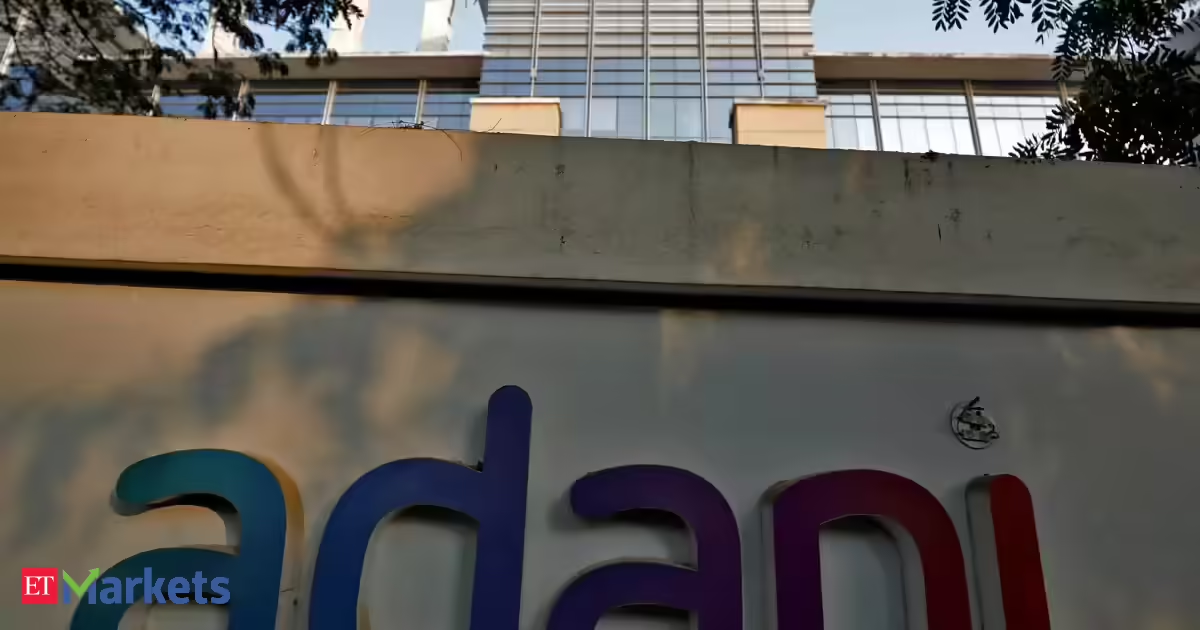
The larger transaction involved 1.64 crore shares of Adani Enterprises sold at Rs 2,913.4 apiece, translating into a deal value of about Rs 4,789 crore. In a separate transaction, GQG sold 63.66 lakh shares of Adani Energy Solutions at Rs 1,504.8 per share, amounting to around Rs 958 crore.
Together, the two transactions were valued at about Rs 5,747 crore. The shares were acquired by SBI Mutual Fund at the same prices through corresponding block deals.
The stake sale comes after a strong run in Adani Group stocks over the past year, during which several group companies recovered sharply from the volatility that followed allegations made by US-based short seller Hindenburg Research in 2023.
GQG had emerged as one of the earliest large institutional investors to back the Adani Group following that episode. Beginning in 2023, the fund manager invested billions of dollars across multiple Adani companies, helping restore investor confidence at a time when foreign institutional participation in the group had weakened.
Since then, Adani companies have focused on deleveraging, strengthening cash flows and improving operational performance. Several group entities have reported healthy earnings growth, while execution across infrastructure, energy and transport businesses has remained strong.
The latest transaction will be viewed by market participants largely as a portfolio rebalancing exercise rather than a change in the fund’s broader investment thesis on the group.Adani Enterprises, the flagship incubator of the conglomerate, houses businesses spanning airports, roads, green hydrogen, data centres and mining services. Adani Energy Solutions is one of India’s largest private-sector transmission companies and is expanding its presence in smart metering and distribution infrastructure.
Shares of both Adani Enterprises and Adani Energy Solutions are likely to remain in focus as investors assess the implications of the stake sale and changes in institutional ownership.

NEW YORK — Shares of The Cooper Companies Inc. surged more than 7% Friday morning, climbing to around $66.60, after the medical device maker reported record second-quarter revenue and non-GAAP earnings that exceeded Wall Street expectations, marking the company’s tenth consecutive quarter of beating consensus estimates.
The strong results highlighted resilient demand for CooperVision contact lenses and steady performance in CooperSurgical despite broader market volatility. Investors rewarded the company’s execution and raised outlook confidence even as some analysts adjusted price targets downward on valuation grounds.
CooperCompanies reported fiscal second-quarter revenue of $1.082 billion, an 8% increase from the prior year and ahead of analyst estimates around $1.05 billion. Non-GAAP diluted earnings per share reached $1.21, topping consensus forecasts of $1.10.
“We delivered a strong second quarter, achieving record revenue and non-GAAP earnings per share while marking our tenth consecutive quarter of exceeding consensus earnings expectations,” said Al White, CooperCompanies’ President and CEO.
The performance comes as the company continues to benefit from premium lens demand in its vision care business and stabilizing trends in surgical products. Organic growth and margin improvements underscored operational efficiency gains from recent restructuring efforts.
Business Segment Performance
CooperVision, the company’s larger segment focused on contact lenses, drove much of the growth with solid gains in daily disposable and toric lenses. The unit continues to capitalize on consumer shifts toward healthier, more convenient vision correction options amid an aging population and rising myopia awareness globally.
CooperSurgical reported more modest growth, supported by fertility and women’s health products. While the segment faces competitive pressures, management highlighted progress in integrating acquisitions and optimizing the portfolio for higher-margin offerings.
Free cash flow remained healthy at $96.4 million for the quarter, providing flexibility for potential share repurchases, debt management or strategic investments. The company maintained its full-year non-GAAP EPS guidance in the range of $4.58 to $4.66.
Analyst Reactions and Valuation Adjustments
Several Wall Street firms responded to the results by tweaking price targets while largely maintaining ratings. Baird kept an Outperform rating but lowered its target from $98 to $85. Needham held a Buy rating with a reduced target from $101 to $86. Wells Fargo maintained Equal-Weight and cut its target to $66.
The consensus rating hovers around Hold with an average price target near $87, suggesting potential upside from current levels despite the post-earnings pop. Analysts continue to cite strong fundamentals in vision care but note risks from currency fluctuations, competitive dynamics and macroeconomic pressures on consumer spending.
Company Background and Market Position
The Cooper Companies operates globally through its two main units: CooperVision, a leader in soft contact lenses, and CooperSurgical, focused on women’s health, fertility and surgical devices. The company serves millions of patients worldwide and benefits from long-term demographic trends including population growth, aging and increasing focus on vision and reproductive health.
Recent strategic moves, including board appointments and portfolio optimization, aim to enhance long-term growth. The company has emphasized innovation in premium products and operational efficiencies to navigate a challenging healthcare environment.
Broader Industry Context
The medical device sector has shown resilience in 2026 despite inflationary pressures and supply chain challenges. Demand for elective procedures and daily-use products like contact lenses has remained stable, supporting companies with strong brand portfolios and recurring revenue streams.
CooperCompanies’ results stand out against a mixed backdrop for healthcare stocks, where some peers have faced margin compression or slower growth. The earnings beat provides positive momentum as the company heads into the second half of the fiscal year.
Outlook and Key Risks
Management expressed confidence in its ability to deliver consistent growth through innovation and market expansion. Key focus areas include advancing premium lens technologies and strengthening its position in high-growth surgical categories.
Potential headwinds include foreign exchange volatility, given the company’s international footprint, regulatory changes in healthcare and competition from larger players. A one-time litigation charge of $271.6 million impacted GAAP results but was excluded from non-GAAP metrics.
Investors will monitor upcoming quarterly updates for progress on guidance and any strategic announcements. The stock’s reaction Friday demonstrates continued faith in the company’s ability to execute amid a dynamic industry landscape.
Investment Implications
For long-term investors, CooperCompanies offers exposure to essential healthcare needs with a track record of earnings consistency. The current valuation, while adjusted by analysts, reflects optimism around core growth drivers. Short-term traders may view the post-earnings volatility as an opportunity depending on risk appetite.
The medical device space remains attractive due to innovation cycles and demographic tailwinds. CooperCompanies’ focus on recurring revenue from contact lenses provides stability compared to more cyclical surgical markets.
As markets digest the latest results, the company’s performance reinforces its position as a reliable performer in healthcare. Continued execution on margins and revenue growth will be critical to sustaining investor confidence in the months ahead.
Friday’s surge highlights the market’s positive response to clear operational success and forward-looking stability. With solid fundamentals and a proven ability to exceed expectations, CooperCompanies enters the next phase of fiscal 2026 with momentum.

Tech And FX: Short-Term Volatility May Cloud Long-Term Trend

EssilorLuxottica: Smart Glasses And Myopia Management Reinforce Long-Term Growth Story

Claressa Shields & Papoose Enjoy Romantic Getaway In Aruba

Earrings Collection for Women by Philip Jones Jewellery

Zahngold bringt gutes Geld



-

 Business4 days ago
Jade Biosciences, Inc. (JBIO) Discusses Positive Interim Results From JADE101 Phase I Healthy Volunteer Study and Development Plans Transcript
-
 Tech6 days ago
SpaceX just won a second Golden Dome contract. This one is $4.16 billion.
-

 News Videos7 days ago
SHE IS KILLING XRP!!! WATCH URGENT AND ACT FAST
-

 Sports3 days ago
French Open 2026 results: Alexander Zverev beats Rafael Jodar and will play Jakub Mensik in semi-finals
-
 NewsBeat7 days ago
FIRST NIGHT REVIEW: Take That bring the Circus back to life in spectacular sun-soaked style
-

 Business6 days ago
Is the Spurs Phenom Already Better Than Prime Diesel?
-

 Tech3 days ago
CryZENx Releases Fresh Playable Content Deep Inside Jabu-Jabu for His Ocarina of Time Remake
-
 NewsBeat7 days ago
Novak Djokovic v Joao Fonseca LIVE: French Open latest scores and results after Jannik Sinner’s shocking collapse
-
 Crypto World7 days ago
CFTC Has Approved the First Regulated Bitcoin Perpetual Contract in the U.S.
-

 Politics6 days ago
The House | Inside Andy Burnham’s Makerfield Campaign: “Nobody Thinks This Is In The Bag”
-
Crypto World7 hours ago
LBank Surpasses 25 Million Users Worldwide as AFA Partnership Continues to Drive Global Growth
-
 Entertainment7 days ago
Bruce Willis’ Generosity Resurfaces Amid His Dementia
-
 Entertainment7 days ago
Weak ‘Supergirl’ Box Office Tracking Amid Milly Alcock Backlash
-

 Business3 days ago
Trump Taps Housing Chief Bill Pulte as Acting Intelligence Director After Gabbard Exit
-
 Crypto World7 days ago
Snowflake (SNOW) Stock Rallies on Strong Q1 Results and AI Product Growth
-
 Entertainment6 days ago
One of the Greatest Sitcoms of All Time Shoots Up Apple TV’s Charts 11 Years Later
-

 Business6 days ago
Demand Conditions Improve In Chemicals Sector In April 2026
-
 Crypto World7 days ago
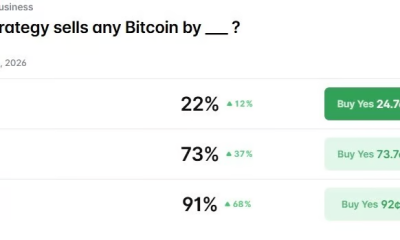
MicroStrategy Moves $30 Million in BTC to Coinbase Prime: Is the Bitcoin Sell-Off Already Here?
-
 Crypto World3 days ago
Seagate (STX) Stock Surges to Record High on AI Boom and Legal Settlement
-
 NewsBeat6 days ago
Everything you need to know as Cambridge’s Strawberry Fair returns after cancelled year
You must be logged in to post a comment Login