Connect with us
DAPA Banner
DAPA Coin
DAPA
COIN PAYMENT ASSET
PRIVACY · BLOCKDAG · HOMOMORPHIC ENCRYPTION · RUST
ElGamal Encrypted MINE DAPA
🚫 GENESIS SOLD OUT
DAPAPAY COMING

Business

Mbappe Fires Back at Paraguay After Brutal World Cup Win, Warns France ‘Can Get Our Hands Dirty Too’

Published

on

Australia vs Cameroon Soccer Friendly Match Result: Socceroos Edge Cameroon

PHILADELPHIA — Kylian Mbappé issued one of the sharpest post-match statements of the 2026 World Cup on Friday, warning opponents that France are willing to match any team’s physical aggression after surviving one of the tournament’s most brutally contested matches, a 1-0 victory over Paraguay in the round of 16 in sweltering heat at Lincoln Financial Field.

Mbappé converted a second-half penalty to send France into the quarterfinals, where they will face Morocco on July 9 in what promises to be a considerably more technically sophisticated affair. The penalty was the only goal of a match played in temperatures approaching 38 degrees Celsius, a game that tested France’s composure under sustained physical provocation from a Paraguay side that had already shocked Germany on its way to the last 16.

In his post-match remarks, Mbappé made no attempt to hide his frustration at Paraguay’s approach, but framed his team’s ability to respond in kind as a deliberate choice rather than a loss of control.

“I already knew what kind of match it would be,” Mbappé said. “We can get our hands dirty too. We also know how to play dirty. The opponent may have expected us to come out in tuxedos, but we were prepared for this kind of game.”

Advertisement

The statement was striking in its directness and in the implicit warning it carried for future opponents. France, in Mbappé’s framing, are not simply a team of elegant technicians who can be unsettled by physical or confrontational football. They have the capacity and the willingness to compete at whatever level a game demands, including those in which the primary currency is physical confrontation rather than skill.

Young French midfielder Rayane Cherki reinforced that message in his own post-match comments, offering a blunt characterization of the match’s atmosphere.

“Today was more of a fight than a match to show skill and tactics,” Cherki said. “France is not just a team that plays football well. If you wage war with us, this is the result you will face.”

France manager Didier Deschamps acknowledged the difficulty of the match while stopping short of criticizing Paraguay explicitly, striking the careful tone expected of a coach who must project focus rather than grievance heading into a quarterfinal.

Advertisement

“It was not an easy match,” Deschamps said. “Paraguay used every method available to them. It wasn’t the kind of football many fans would enjoy, but we never lost focus until the end.”

The match was indeed a grinding, foul-heavy affair throughout. Paraguay, having eliminated four-time world champion Germany in the round of 32 by surviving to a penalty shootout, adopted an explicitly defensive and physical approach that drew comparisons in press box conversations to the most cynical eliminations-minded strategies in World Cup history. The referee declined to brandish cards for much of the afternoon despite repeated foul play that escalated in intensity as the match wore on, allowing frustration to build on both sides before the penalty decision finally gave France the decisive moment they needed.

The physical confrontation did not end with the final whistle. Players from both teams gathered near the halfway line in a heated post-match exchange that required extended intervention from match officials and coaching staff. Paraguay goalkeeper Orlando Gill threw the ball at Mbappé’s back during the incident, a moment captured by multiple broadcast cameras that circulated immediately across social media platforms and added fuel to the already intense post-match commentary.

Gill addressed the incident in his own post-match remarks, offering an explanation that stopped short of an apology.

Advertisement

“I tried to shake hands, but Mbappé ignored me and I couldn’t restrain my anger for a moment,” Gill said.

The penalty that settled the match arrived in the 70th minute. France had created increasingly good positions throughout the second half as Paraguay’s energy waned in the heat and their defensive block gradually lost its earlier cohesion. A challenge inside the penalty area gave the referee enough to point to the spot, and Mbappé stepped forward with the composure he has shown in every high-pressure moment of this tournament, sending the goalkeeper the wrong way and delivering France the only goal they needed.

The goal was Mbappé’s seventh of the tournament, drawing him level with Argentina’s Lionel Messi at the top of the Golden Boot standings with both men on seven goals and the tiebreaker in assists separating them. More broadly, Mbappé reached 19 career World Cup goals in 19 matches, placing him one behind Messi’s all-time record of 20 goals, with the Frenchman having played far fewer tournament games to reach that proximity to the record.

He also became the first player in World Cup history to score at least three goals in three consecutive World Cup knockout stages, a statistical milestone that captures something essential about what separates Mbappé from almost every other player in the tournament’s history: his ability to elevate his performance specifically when elimination is on the line.

Advertisement

The broader context of where Mbappé now sits within the game’s historical conversation gives Friday’s performance additional resonance. He scored hat tricks in the 2018 round of 16 against Argentina and in the 2022 World Cup final, he led France to the tournament in 2018 and the final in 2022, and at 27 he is almost certainly heading into two, possibly three more World Cup cycles. Messi’s record of 20 career goals, set in what is almost certainly his final tournament, appears likely to be surpassed within the next four years regardless of what happens in the remaining matches in North America.

France will now face Morocco in the quarterfinal, a fixture that offers an entirely different challenge from the trench warfare of Friday afternoon. Morocco, who eliminated Canada 2-1 in the round of 16 with a disciplined, technically assured performance, will test France’s attacking patterns in ways that Paraguay’s blunt physicality never could, presenting the kind of organized defensive and attacking challenge that has historically separated World Cup contenders from World Cup winners.

Whether Mbappé’s pointed message to future opponents adds a psychological edge to France’s quarterfinal preparation or simply reflects the immediate emotional aftermath of an unusually hostile match afternoon, it will be remembered as one of the tournament’s more memorable individual post-match moments.

Advertisement
Continue Reading
Click to comment

You must be logged in to post a comment Login

Leave a Reply

Business

Ondas Inc. (ONDS) M&A Call Transcript

Published

on

OneWater Marine Inc. (ONEW) Q1 2026 Earnings Call Transcript

Ondas Inc. (ONDS) M&A Call July 6, 2026 8:30 AM EDT

Company Participants

Eric Brock – Chairman, CEO & President
Ryan Hartman – President, CEO & Director
Matt McCue

Conference Call Participants

Advertisement

Sydney Freedberg
Austin Bohlig – Needham & Company, LLC, Research Division
Timothy Horan – Oppenheimer & Co. Inc., Research Division
Jonathan Siegmann – Stifel Financial Corp.
Maxwell Michaelis – Lake Street Capital Markets, LLC, Research Division
Matthew Galinko – Maxim Group LLC, Research Division

Presentation

Operator

Advertisement

Welcome to the Ondas Inc. Investor Event Conference Call. [Operator Instructions] Please note this event is being recorded. I would now like to turn the conference over to Eric Brock, Chairman and CEO. Please go ahead.

Eric Brock
Chairman, CEO & President

Good morning, everyone, and thank you for joining us. Today marks an important milestone for Ondas. We are extremely pleased to announce the acquisition of DZYNE Technologies, a company we believe is one of the most innovative autonomous defense businesses built over the past decade. Today’s events are about much more than a transaction. It’s a significant advancement in Ondas, creating a company with greater scale, greater technology depth and a dramatically expanded customer footprint. And now Ondas is positioned with one of the broadest autonomous defense portfolios in the industry. Today, we’ll introduce DZYNE, explain why this combination is so compelling, discuss the market opportunity and show why we believe this positions Ondas to become a category leader during what we believe will be one of the largest defense modernization cycles in decades.

Advertisement

Before we begin, please take a moment to review the forward-looking statements and other disclosures contained in today’s presentation. We’ll be discussing future expectations, financial outlooks and market opportunities that involve risks and uncertainties. Additional information regarding those risks can be found in our SEC filings. With that, let’s begin.

So

Advertisement
Continue Reading

Business

Palisade Bio director Robert Baltera Jr. buys $59,400 in stock

Published

on


Palisade Bio director Robert Baltera Jr. buys $59,400 in stock

Continue Reading

Business

Form 4 Palisade Bio Inc For: 6 July

Published

on


Form 4 Palisade Bio Inc For: 6 July

Continue Reading

Business

WhatsApp Tops the Global List of World’s 5 Most Used Messenger Apps as Competition Continues to Grow Fast

Published

on

Galaxy S26

WhatsApp remains the world’s dominant messaging platform in 2026, according to the latest available data, holding a commanding lead over rivals as billions of people worldwide continue to rely on messaging apps for daily communication, business transactions and staying connected across borders.

The Meta-owned app reached more than 3.14 billion monthly active users in the first quarter of 2026, according to figures compiled by SQ Magazine, cementing its position as the most widely used messaging platform on the planet. Roughly 2.3 billion of those users, or about 83 percent, open the app on a daily basis, and the platform now processes more than 100 billion messages per day, with some estimates pushing that figure toward 130 billion as usage continues to climb. India remains WhatsApp’s single largest market, with an estimated 615 million users, while the app is used in more than 180 countries and remains the leading messaging platform in the majority of markets tracked by analytics firm Similarweb.

WhatsApp’s dominance extends well beyond raw user numbers. According to data compiled by Adam Connell using figures from Datareportal, Similarweb and Statista, WhatsApp users open the app an average of nearly 930 times per month, the highest engagement rate of any messaging or social media platform tracked. The app has also become central to business communication, with more than 200 million businesses worldwide now using WhatsApp Business to reach customers, and roughly 175 million people messaging a business account through the platform daily.

WeChat, operated by Chinese technology giant Tencent, holds the second spot in the global rankings, with the combined WeChat and Weixin ecosystem reaching approximately 1.41 billion monthly active users as of recent reporting. Unlike WhatsApp, WeChat functions as far more than a simple messaging app in its core market of China, operating as a comprehensive “super app” that includes mobile payments through WeChat Pay, a social feed known as Moments, ride-hailing and food delivery services, mini-programs that function like apps within the app, and even access to certain government services. WeChat’s user base skews slightly male, at roughly 52 percent, with usage spread relatively evenly across age groups, reflecting its role as essential digital infrastructure for daily life in China rather than a purely social messaging tool.

Advertisement

Facebook Messenger, also owned by Meta, ranks third globally with just over 1 billion monthly active users, according to figures compiled by SQ Magazine and corroborated by other industry trackers. While Messenger’s overall user base has stabilized after a period of decline in previous years, the app continues to hold particularly strong footholds in specific countries, including the Philippines, where Meta’s own advertising tools report nearly 66 million users, along with substantial user bases in Mexico and Brazil. Despite its strong raw numbers, Messenger tends to underperform relative to other top apps on engagement metrics such as daily sessions and total time spent, suggesting many users maintain accounts on the platform without using it as their primary daily messaging tool.

Telegram rounds out the fourth position, having crossed the 1 billion monthly active user threshold, according to an announcement from founder Pavel Durov in early 2025 that has since been echoed in multiple industry reports tracking the platform’s continued growth through 2026. Telegram has built its user base in part around a reputation for prioritizing user privacy and offering features such as large group channels, file sharing and a broad set of customization options that have made it particularly popular among younger users, tech-focused communities and audiences in regions where alternative platforms face restrictions or limited functionality.

Rounding out the top five, Snapchat has reported roughly 932 million monthly active users as of its most recent quarterly disclosure, according to data compiled by SQ Magazine and other tracking services. While Snapchat is often categorized primarily as a social media and photo-sharing platform, its core messaging functionality, including disappearing messages, direct chats and multimedia sharing, has kept it firmly within rankings of the world’s most-used messaging services, particularly among younger demographics in markets including the United States and parts of Europe.

Beyond the global top five, regional platforms continue to command outsized influence in their specific markets. Line remains the dominant messaging app in Japan and Thailand, with DataReportal’s 2026 country data placing its Japanese user base at 99 million monthly active users, a figure that represents a significant share of the country’s population. In South Korea, KakaoTalk has reached what amounts to near-universal penetration, with 49.1 million monthly active users representing more than 95 percent of the country’s total population and over 97 percent of its internet users. In China, alongside WeChat, Tencent’s QQ platform continues to serve as a widely used messaging and social platform, reporting roughly 532 million monthly active users, according to figures compiled by SQ Magazine.

Advertisement

The United States remains something of an outlier among major global markets, with no single messaging app holding a dominant position. Recent Google Play ranking data from earlier in 2026 shows Google Messages, WhatsApp, Snapchat, Telegram and Facebook Messenger all competing near the top of download charts on Android devices, while Apple’s iMessage continues to carry significant cultural weight among iPhone users given Apple’s majority share of the U.S. smartphone market. Industry analysts have noted that the average person globally now uses between five and nine different messaging apps depending on the specific contacts, communities and countries they need to reach, a trend that has fueled growing interest in unified inbox tools designed to bridge multiple messaging platforms into a single interface.

As artificial intelligence features become increasingly embedded across major messaging platforms, from WhatsApp’s AI-powered message summaries to Google Messages’ on-device spam detection, the competitive landscape among the world’s top messaging apps is expected to keep evolving throughout the remainder of 2026, even as WhatsApp’s substantial lead in raw user numbers appears unlikely to be seriously challenged in the near term.

Continue Reading

Business

Amazon bars breastfeeding mum from business course

Published

on

The Amazon logo, which is the world 'Amazon' with its signature stylised arrow underneath, on the side of a grey building with a light overcast sky in the background

A breastfeeding boss has been barred from a business course run by online retailer Amazon because it would not let her child on to the site.

Rachel Bews said she had let Amazon know a week ahead of the in-person event at an Amazon warehouse in Dunfermline, Scotland, that she would need to take her 20-week-old baby with her as she was breastfeeding.

However, she said she was told over the phone on the train to the event that children under six were not allowed on site.

Amazon said: “We sincerely apologise to Ms Bews that our site access policy was not communicated clearly before she travelled.”

Advertisement

“That should not have happened, and we understand her frustration. Amazon does not permit children under the age of six on any of our fulfilment centre sites,” the retailer added.

“This is a long-standing health and safety policy that applies to all visitors and employees… We are reviewing our communications process to prevent this from happening again.”

Bews told the BBC’s The World Tonight that there was a lactation room at the event on Friday, which would have allowed her to express milk for her child.

But she said she had not planned for this, so did not have any sterilised bottles or equipment for expressing. She added that not every breastfed baby would feed from a bottle.

Advertisement

“All events should really have good consideration to accessibility and inclusivity for all sorts of considerations,” she said.

“It’s a challenging thing becoming a new mum, and being in business is a big part of my identity, so having access to these same opportunities is really important for me and a lot of other working and professional mums out there.”

She said she had been told she could continue with the online part of the six-week course, but she said she had missed out on “the most important things”.

“The in-person, face-to-face connections you make over coffee, the people you meet over lunch – there’s connections I could have made to maybe help my business,” she added.

Advertisement

For those returning to work who want to breastfeed, the NHS recommends, external telling your employer that you’re breastfeeding before your first day back.

It says: “If you’re returning to work, education, or training after having a baby, you might wonder whether you can continue breastfeeding your baby.

“The answer is yes, it’s completely possible and many women do it.”

Advertisement
Continue Reading

Business

Form 4 Sight Sciences Inc For: 6 July

Published

on


Form 4 Sight Sciences Inc For: 6 July

Continue Reading

Business

Wall Street closes higher as chip stocks rally

Published

on

Wall Street closes higher as chip stocks rally

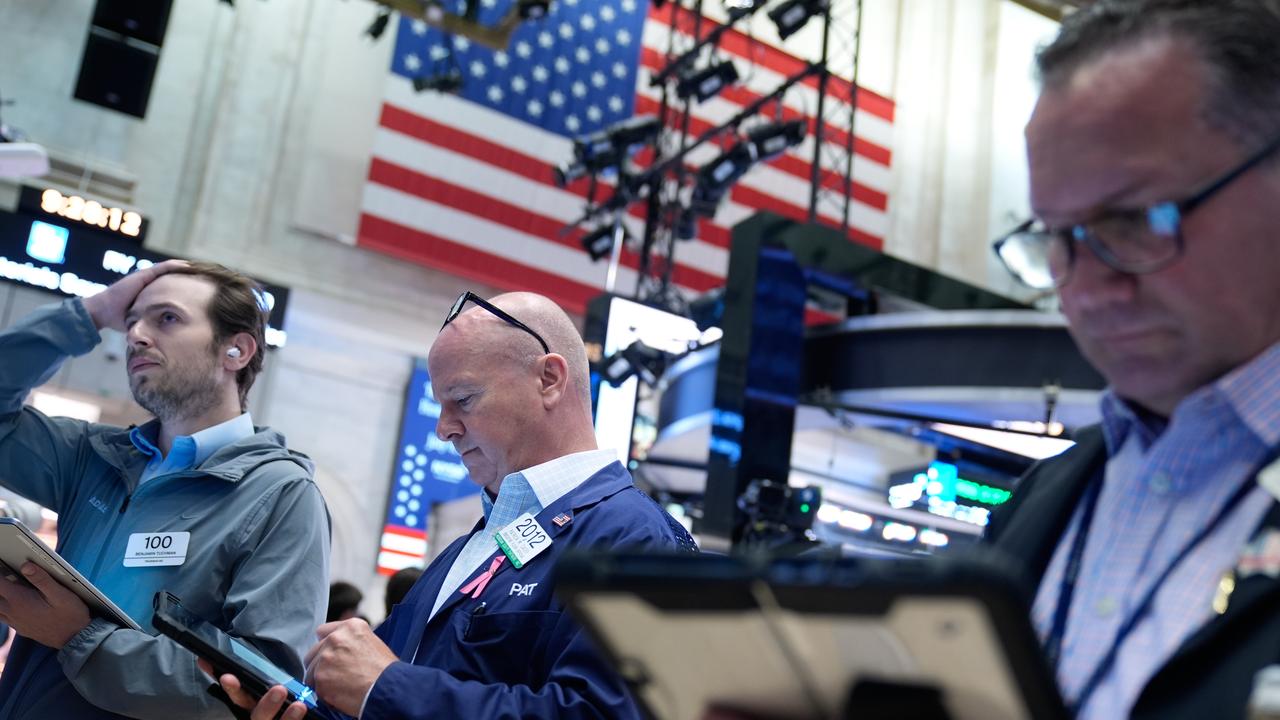
The ‌S&P 500 and Nasdaq have ended sharply higher, with Broadcom and other chip stocks rallying as investors bought shares in companies related to artificial intelligence that are expected to ‌drive a strong second-quarter earnings season.

Continue Reading

Business

Form 4 Symbotic Inc For: 6 July

Published

on


Form 4 Symbotic Inc For: 6 July

Continue Reading

Business

Starbucks App Down Now? App for Hundreds of Users Nationwide Down Today

Published

on

Iluka Resources Shares Sink 11% as Mineral Sands Miner's Volatile

Starbucks customers across the United States reported widespread problems with the company’s mobile app on Monday morning, with outage-tracking site Downdetector logging more than 1,700 complaints as users struggled to log in, place mobile orders and access their rewards accounts.

According to Downdetector.com, reports of the Starbucks app not working began climbing early Monday, with 1,712 reports logged as of 8:04 a.m. Eastern time. The disruption appeared concentrated in several major metropolitan areas, with reports centered around the Chicago, Washington, D.C., and New York City regions, though users in other parts of the country also flagged issues throughout the morning.

Separate monitoring from StatusGator, which tracks outages across thousands of cloud services and applications, confirmed ongoing problems with the Starbucks app into the late morning. The service detected an outage with the app described as “currently unavailable” as of 11:32 a.m. Eastern time, logging 25 user-submitted reports of issues within the preceding 24-hour period. As of the latest available data, Starbucks had not issued an official acknowledgment of the outage on its status channels, according to StatusGator’s tracking.

News of the disruption spread quickly on social media, with the account Status Is Down posting early Monday morning asking followers whether they were experiencing problems with the app, a post that quickly gathered thousands of views as the hashtags #Starbucks and #StarbucksDown began trending among affected customers. Frustrated users took to social platforms throughout the morning to report being unable to log into their accounts, place mobile orders, or access previously loaded rewards and gift card balances.

Advertisement

The outage adds to a pattern of recurring technical issues that have affected the Starbucks app periodically throughout 2026. In May, the app experienced a separate outage that began around 4:30 p.m. Eastern time, generating close to 600 complaints on Downdetector at the time, with more than 90 percent of reported problems tied specifically to the mobile app rather than the company’s website.

The Starbucks app has become an increasingly central part of the company’s customer experience in recent years, supporting core functions including Mobile Order and Pay, the company’s Rewards loyalty program, personalized offers, and, as of May 11, 2026, a newly introduced scheduled ordering feature that allows customers in North America to select a future pickup time rather than placing an order for immediate preparation. That expanding reliance on the app means outages tend to have an outsized impact on customer experience compared to a typical service glitch, since disruptions can simultaneously affect ordering, payment processing and rewards tracking all at once.

Common troubleshooting guidance published by consumer support resources notes that Starbucks app problems generally fall into a handful of recurring categories, including weak internet connections, outdated app versions, expired login sessions, payment method errors and temporary server-side outages. Signs that a problem originates on Starbucks’ end rather than an individual user’s device typically include repeated failures across multiple devices, widespread reports from other customers experiencing the same issue, and simultaneous problems with the company’s website in addition to the app. When those broader signs are present, technical guides generally advise waiting for the issue to resolve on Starbucks’ side rather than repeatedly retrying transactions, since repeated failed payment attempts can sometimes create additional complications with a customer’s bank or account history.

For customers unable to resolve app issues on their own, Starbucks directs users to its customer service website at customerservice.starbucks.com, which offers support through phone and live chat channels. The company’s general customer support line remains available at 800-STARBUCKS, or 800-782-7282, for those seeking direct assistance with account, payment or ordering problems.

Advertisement

As of Monday afternoon, Starbucks had not issued a public statement addressing the scope, cause or expected resolution timeline for the outage. The company has not historically provided detailed public explanations for individual app disruptions, and it remains unclear whether Monday’s issues stemmed from a broader technical failure, a surge in user traffic, or a more localized problem affecting specific app functions such as login authentication or payment processing.

The disruption comes at a particularly high-traffic time of day for the coffee chain, as many customers rely on the app each morning to place orders ahead of commutes or workplace arrivals. Mobile ordering has become one of the primary ways many Starbucks customers interact with the company, particularly in dense urban markets like the ones where Monday’s outage reports were most concentrated, meaning even a relatively short disruption can meaningfully affect both customer experience and in-store operations as baristas and store managers work to accommodate customers who are unable to complete mobile orders.

Downdetector, which aggregates self-reported outage data from users rather than official company disclosures, cautioned in its general methodology that reported issue counts reflect user submissions and public data sources such as social media activity, meaning the true scope of an outage can sometimes differ from the number of individual reports logged at any given time. Even so, the volume of complaints recorded Monday morning, along with independent confirmation from a second outage-tracking service, suggested the disruption affected a meaningful number of customers attempting to use the app during the morning hours.

Starbucks has not indicated whether affected customers will receive any compensation, such as reward points or promotional offers, as a result of Monday’s outage, a step the company has occasionally taken following past disruptions to its digital ordering systems. Customers experiencing ongoing issues with the app are advised to check for available software updates, verify their internet connection, and confirm that their payment methods remain valid and correctly entered, before reaching out to Starbucks’ customer service channels if problems persist.

Advertisement

As of the most recent outage tracking data available Monday, reports of app issues appeared to be continuing into the late morning hours, though it remained unclear whether the disruption represented an isolated technical glitch or a more extended service interruption. Starbucks customers are encouraged to monitor the company’s official app status and customer service channels for updates as the situation develops.

Continue Reading

Business

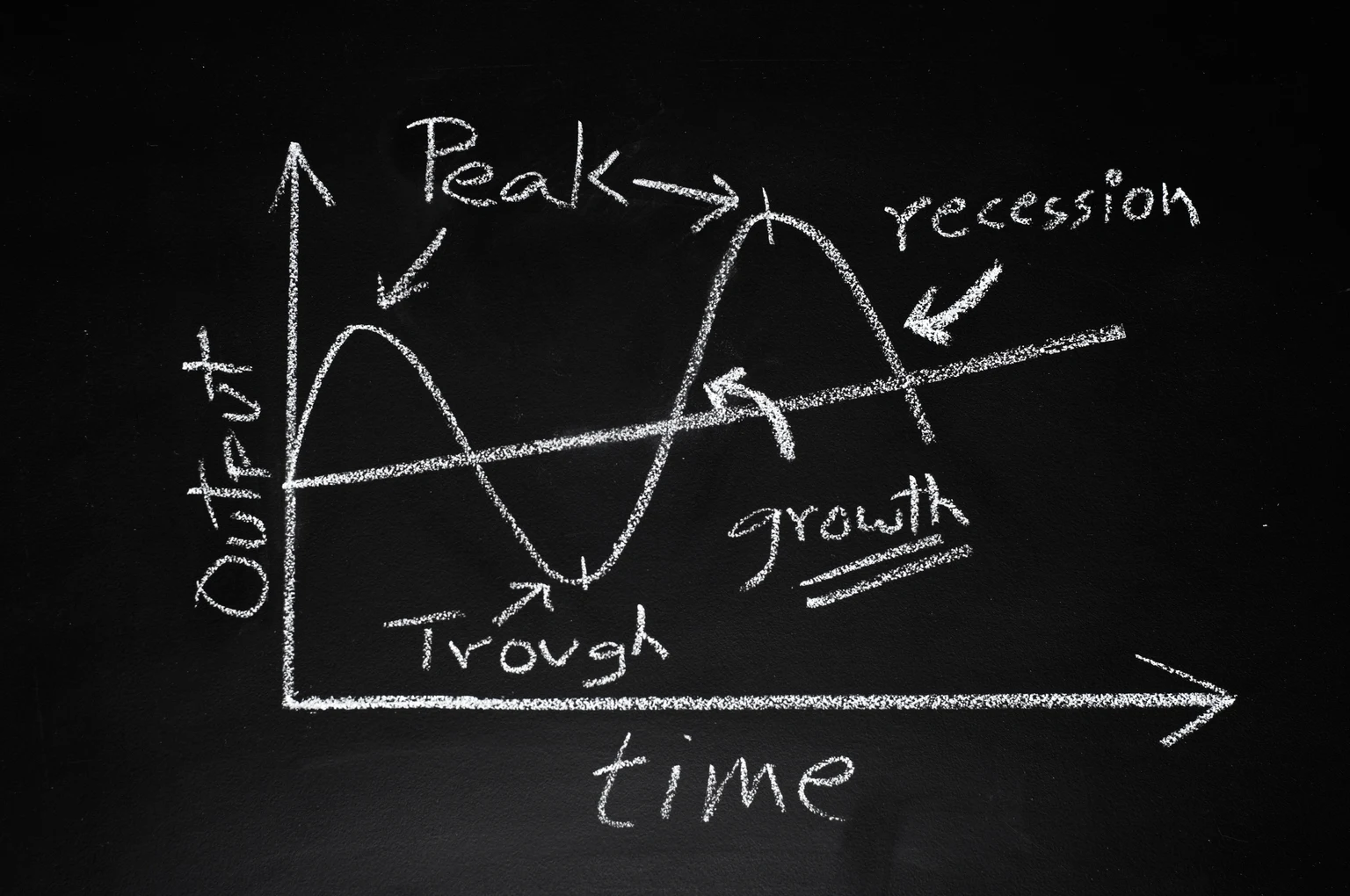
S&P 500: Peak At 7,800 In September, Crash To 4,400 By 2029

Published

on

S&P 500: Peak At 7,800 In September, Crash To 4,400 By 2029

S&P 500: Peak At 7,800 In September, Crash To 4,400 By 2029

Continue Reading

Trending

Copyright © 2025