Ondas Inc. (ONDS) M&A Call July 6, 2026 8:30 AM EDT
Company Participants
Eric Brock – Chairman, CEO & President Ryan Hartman – President, CEO & Director Matt McCue
Conference Call Participants
Advertisement
Sydney Freedberg Austin Bohlig – Needham & Company, LLC, Research Division Timothy Horan – Oppenheimer & Co. Inc., Research Division Jonathan Siegmann – Stifel Financial Corp. Maxwell Michaelis – Lake Street Capital Markets, LLC, Research Division Matthew Galinko – Maxim Group LLC, Research Division
Presentation
Operator
Advertisement
Welcome to the Ondas Inc. Investor Event Conference Call. [Operator Instructions] Please note this event is being recorded. I would now like to turn the conference over to Eric Brock, Chairman and CEO. Please go ahead.
Eric Brock Chairman, CEO & President
Good morning, everyone, and thank you for joining us. Today marks an important milestone for Ondas. We are extremely pleased to announce the acquisition of DZYNE Technologies, a company we believe is one of the most innovative autonomous defense businesses built over the past decade. Today’s events are about much more than a transaction. It’s a significant advancement in Ondas, creating a company with greater scale, greater technology depth and a dramatically expanded customer footprint. And now Ondas is positioned with one of the broadest autonomous defense portfolios in the industry. Today, we’ll introduce DZYNE, explain why this combination is so compelling, discuss the market opportunity and show why we believe this positions Ondas to become a category leader during what we believe will be one of the largest defense modernization cycles in decades.
Advertisement
Before we begin, please take a moment to review the forward-looking statements and other disclosures contained in today’s presentation. We’ll be discussing future expectations, financial outlooks and market opportunities that involve risks and uncertainties. Additional information regarding those risks can be found in our SEC filings. With that, let’s begin.
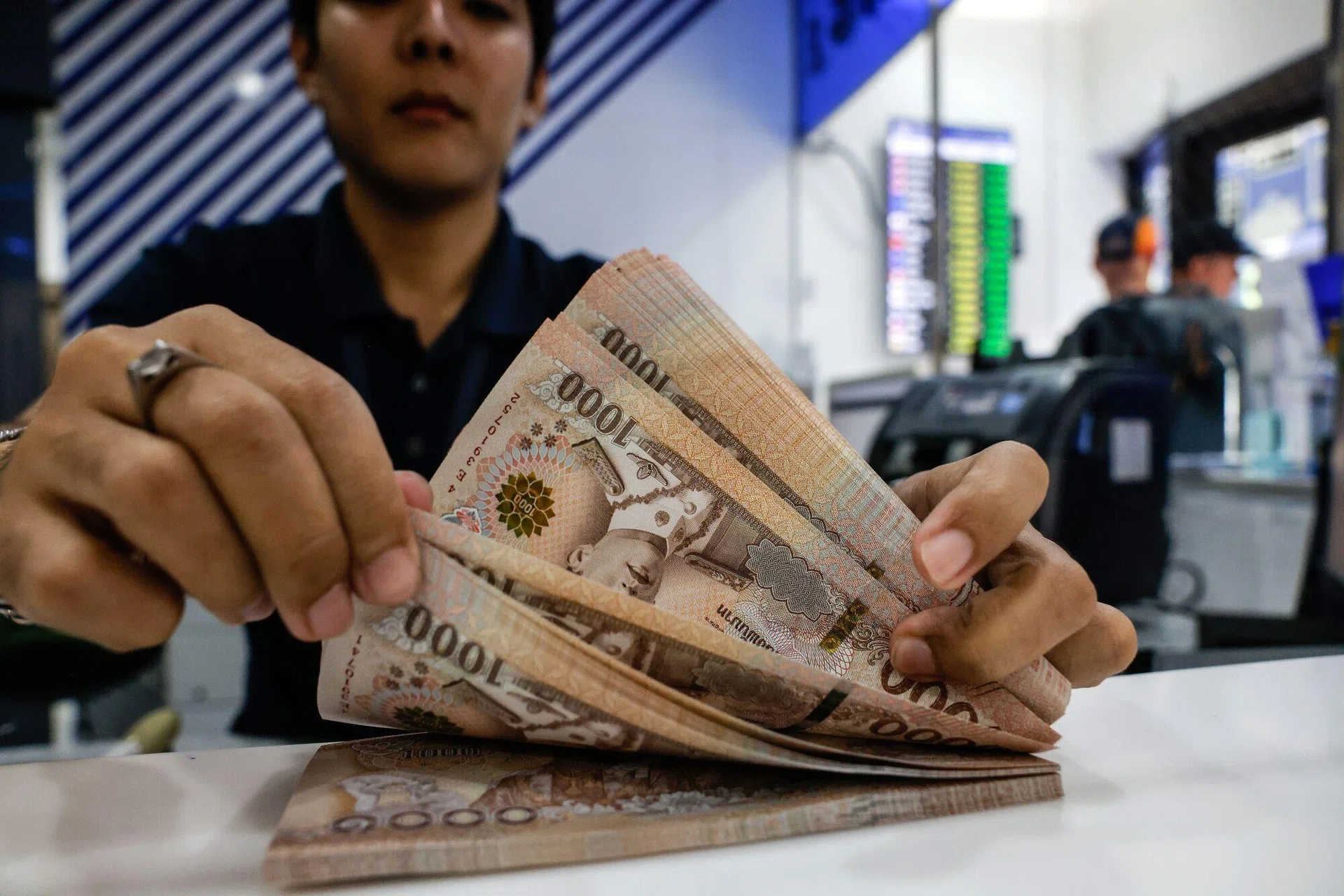
OCBC analysts report the Thai Baht is near a 15-month low against the USD, pressured by rising oil prices, a stronger dollar, and higher US yields. The Bank of Thailand’s accommodative stance offers little support, though sharper depreciation could challenge policymakers if inflation concerns intensify.
Baht Under Pressure from Global Headwinds
The Thai Baht (THB) is trading near its weakest level in over 15 months against the US Dollar, as a confluence of external pressures continues to erode its value. According to OCBC’s Sim Moh Siong and Christopher Wong, the currency’s decline has been driven by a renewed spike in oil prices, compounded by a firmer USD and rising US Treasury yields. Thailand’s heavy reliance on imported energy makes it especially vulnerable to these global cost pressures, which in turn have stoked concerns about imported inflation. This dynamic has reinforced market expectations that US interest rates may remain elevated for longer, further diminishing the Baht’s relative appeal and sustaining depreciation pressure across the currency pair.
Bank of Thailand’s Accommodative Policy Adds to the Drag
Beyond external forces, the Bank of Thailand’s (BoT) monetary policy stance has also weighed on the currency. The central bank has maintained a notably accommodative posture, offering little support to counteract the Baht’s slide. Governor Vitai has publicly signaled no urgency to tighten policy, suggesting that authorities remain comfortable allowing gradual currency softness rather than intervening aggressively. This tolerance for gradual depreciation reflects a broader policy philosophy prioritizing growth and financial conditions over near-term currency stability. However, this passive approach means the THB currently lacks a domestic monetary policy buffer against the ongoing external shocks stemming from oil markets and shifting US rate expectations, leaving it more exposed to further weakening.
Risks of a Sharper Depreciation
Despite the BoT’s current tolerance for gradual THB softness, analysts caution that this stance could be tested if conditions worsen. Should oil prices remain elevated and imported inflation continue to build, the resulting economic strain may force policymakers to reconsider their passive approach. A sharper, more disorderly depreciation — rather than the current gradual slide — would likely raise concerns about financial stability and inflationary spillovers, potentially prompting the BoT to intervene or adjust its policy tone. In essence, while the central bank currently views Baht weakness as manageable, the combination of energy shocks and firm US monetary conditions represents a critical threshold that could compel a shift in Thailand’s policy calculus should pressures intensify further.
ET Intelligence Group: Sun Pharma‘s June quarter performance was broadly in line with analysts’ expectations.
Expanding specialty and innovative medicines portfolio, semaglutide launches across India and international markets, and the proposed Organon acquisition are major growth drivers in the medium term for the country’s largest pharma company by revenue and market cap. Despite pressure in the US generics segment, it has maintained the FY27 guidance of high single-digit revenue growth on account of continued traction in specialty products such as Leqselvi and Unloxcyt and strong momentum in the domestic business.
The short-term growth narrative is shifting away from traditional generics and toward specialty and innovative products. While the US formulations business declined 9.7% due to lower contribution from generic Revlimid and increased competition in some products, the company’s innovative medicines portfolio continued to gain traction across the US and international markets. The innovative portfolio will likely remain a key growth engine supported by products such as Ilumya, Odomzo and Cequa, along with the ramp-up of new launches. Motilal Oswal Financial Services (MOFSL) expects the specialty portfolio to deliver a 13% annual growth over FY26-FY28, aided by improving physician adoption and expanding market access.
Advertisement
Agencies
Another potential growth lever is semaglutide. Beyond India, the company has secured approvals for generic semaglutide injections for Type-2 diabetes in South Africa and Brazil. The commercialisation is underway in South Africa while the Brazil launch is expected soon through a partner.
Live Events
The medium-term outlook is led by a healthy innovation pipeline. Key milestones over the next 12-18 months include a USFDA decision on Ilumya for psoriatic arthritis in October 2026, topline phase-II data for GL0034 in Type-2 diabetes during the second half of 2027, progress on Fibromun, and regulatory filings for dermatology and oncology assets. The Organon acquisition is expected to complete by March 2027 quarter, which could expand Sun Pharma‘s global scale and product portfolio. MOFSL has retained a ‘buy’ rating on the stock with a target price of ₹2,310, implying a 16% upside to Friday’s closing price of ₹1,989.4.The broking firm believes Sun Pharma remains on track for strong growth, supported by expansion in innovative medicines through partnerships, launches and wider reach.
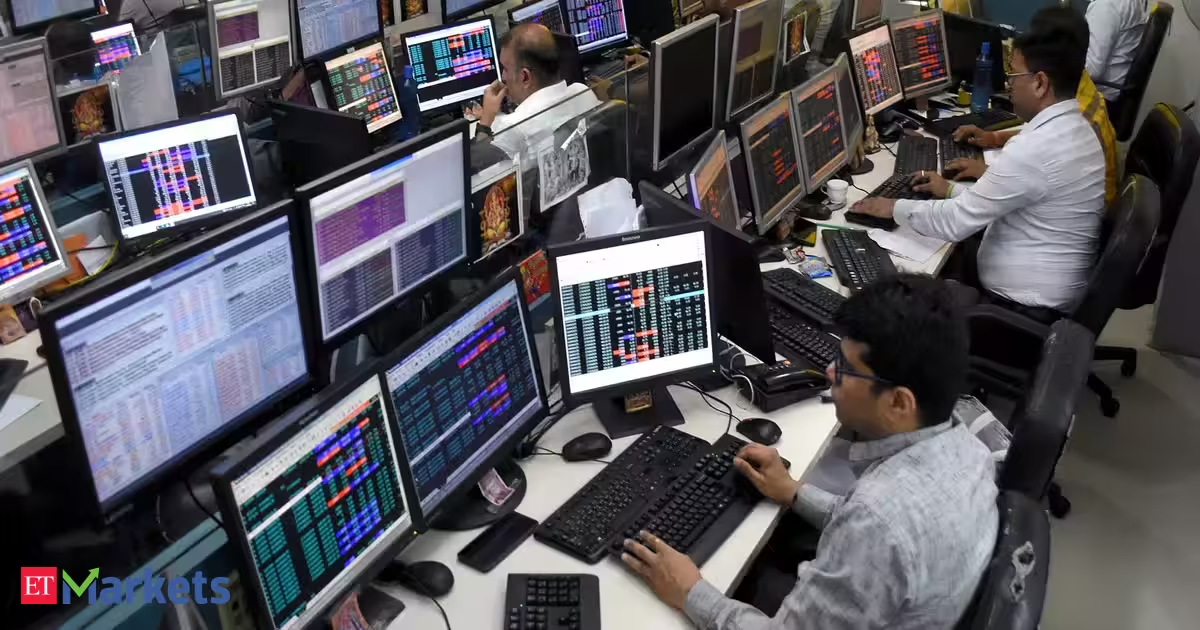
Mumbai: From August 3, exchanges are overhauling the way closing prices are determined for stocks in the futures and options (F&O) segment. Here is what are the changes and what it means for traders and investors:
What are exchanges changing?
Exchanges are changing the way the official closing prices of certain stocks are decided. The daily closing price is one of the most important numbers for market participants. It is used to calculate index closing levels, mutual fund portfolios, and settle derivatives contracts.
At present, a stock’s closing price is based on the average price of trades done in the last 30 minutes, between 3 PM and 3:30 PM.
Advertisement
From August 3, stocks that are available in the futures and options segment will have a separate closing auction. Their final closing price will be decided through this auction, instead of using the average price over last 30 minutes.
Agencies
Till now a stock’s closing price was based on average price of trades done in last 30 mins
Live Events
How will the new closing auction work? For stocks part of the F&O segment, normal trading will end at 3:15, after which the closing auction will begin. During this session, buy and sell orders are collected instead of being executed immediately. The exchanges will then calculate a single price at which the maximum number of buy and sell orders can be matched. That price becomes the stock’s official closing price. To prevent sharp price swings, the auction price can generally move only within 3% above or below the stock’s average traded price between 3 and 3:15. Read more: RBI likely to extend rate pause; neutral stance seen unchanged
Investors can place both market and limit orders until 3:25. After that, only fresh limit orders are accepted, while market orders already entered cannot be changed or cancelled. These restrictions are meant to discourage last-minute changes or large market orders that could influence the closing price. Also, the auction will close at a random time between 3:28 and 3:30, making it harder for traders to time their orders at the last second.
What’s the big deal about last-minute order changes? Why should it matter? One reason for the change is that there have been complaints about large orders being placed at the close of trading in a bid to influence the final price. Think of it as the final over of a cricket match. A few big shots in the last moments can alter the final score. Similarly, a few large trades just before the market closes can influence the closing price.
A closing auction helps find one common price at which the maximum quantity can be traded. This is expected to make the closing price more reliable and reduce the impact of sudden orders placed near the end of the session.
Advertisement
Another key reason for the change is to help mutual funds, especially passive funds, execute all their buy and sell orders in the closing auction. This will help them transact at or very close to the official closing price. Currently, asset managers place orders between 3 PM and 3:30 PM at different prices depending on available liquidity, which can lead to tracking errors. Brokerage Zerodha said the new rule helps improve the efficiency of the execution of large orders.
Then, what’s the relevance of the period between 3:30 and 3:40? By around 3:35, the closing auction for stocks that have F&O contracts will be over. However, F&O contracts continue trading until 3:40. This gives F&O traders a few extra minutes to react to the stock’s final closing price before derivatives trading ends.
Does this mean the market will now close at 3:40? No. For most stocks, trading will continue to end at 3:30. For stocks that have futures and options (F&O) contracts, normal cash-market trading will end at 3:15, after which a closing auction will determine the final closing price. Only the futures and options market will continue trading until 3:40.
Who will be impacted by the new rules? Do traders need to do anything differently? The biggest impact will be on active traders, proprietary desks and other institutions that trade near the market close. Brokers could advance intraday square-off timings, so traders should check the revised cut-off times. Investors in non-F&O stocks are unlikely to notice much difference.
























































You must be logged in to post a comment Login