
Business
McDonald’s launches caramel apple pie coffee drinks for fall


Check out what’s clicking on FoxBusiness.com.
McDonald’s is giving its fall beverage lineup a shake-up with a new seasonal flavor that moves beyond pumpkin spice.
The fast-food giant announced Aug. 17 the launch of Caramel Apple Pie coffee drinks for a limited time at participating restaurants nationwide, combining apple and caramel flavors with McDonald’s coffee.
“Step aside pumpkin spice, there’s a new flavor in town!” McDonald’s said on its website.
MCDONALD’S BRINGING BACK FRIED APPLE PIE TO CELEBRATE AMERICA’S 250TH BIRTHDAY

McDonald’s is giving its fall beverage lineup a shake-up with a new seasonal flavor that moves beyond pumpkin spice. (McDonald’s)
The seasonal lineup includes a Caramel Apple Pie Frappe, hot and iced lattes and iced coffee.
Each beverage is topped with salted caramel-flavored whipped cream and crumbled apple pie pieces, according to the company.
“Whether you’re grabbing one on your morning coffee run, with lunch or as an afternoon boost, consider this your sign to swap those beach day sips for something a little cozier,” McDonald’s said.
MCDONALD’S TESTING AI DRIVE-THRU ORDER-TAKING SYSTEM CALLED ARCHIQ AT FIVE LOCATIONS ACROSS COUNTRY

The fast-food giant announced Aug. 17 the launch of Caramel Apple Pie coffee drinks for a limited time at participating restaurants nationwide. (Paul Weaver/SOPA Images/LightRocket)
While McDonald’s is leaning into caramel apple this season, pumpkin spice remains a fixture on competitors’ fall menus.
Dunkin’ brought back its seasonal lineup Aug. 19, including the return of Pumpkin Spice Signature Latte. Starbucks followed on Aug. 25 with the return of its Pumpkin Spice Latte alongside other fall drinks, food and seasonal merchandise, according to the two companies.
McDonald’s first introduced a pumpkin spice latte in 2013, according to The Associated Press, before launching the beverage nationwide for the first time in 2016.
MCDONALD’S SAYS US SALES SLOWED AFTER VALUE DEAL PUSH FELL SHORT
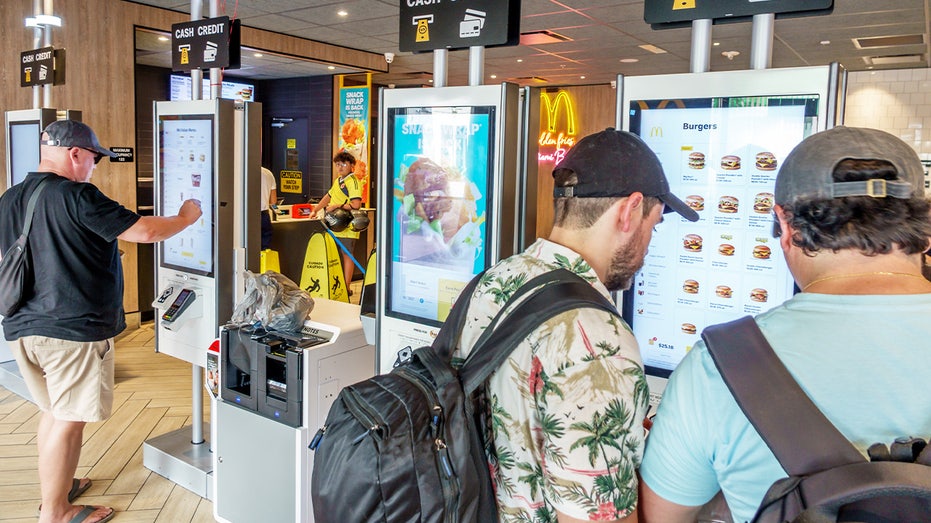
McDonald’s first introduced a pumpkin spice latte in 2013. (Jeffrey Greenberg/Universal Images Group via Getty Images)
The new drinks are not McDonald’s only apple-themed offering this year.
Earlier this year, the company announced it was bringing back its fried apple pie to celebrate America’s 250th birthday.
GET FOX BUSINESS ON THE GO BY CLICKING HERE
McDonald’s could not immediately be reached by FOX Business for comment.

Business
Lumentum Holdings Inc. (LITE) Presents at Deutsche Bank 2026 Technology Conference Transcript

Conference Call Participants
Gianmarco Conti – Deutsche Bank AG, Research Division
Presentation
Gianmarco Conti
Deutsche Bank AG, Research Division
All right. I think we’re live. Welcome, everyone, back to DB’s 20th Annual Tech Conference. My name is Gianmarco Conti. I’m heading the hardware equity research team here at DB. Today, we have the pleasure of hosting Michael Hurlston, CEO of Lumentum.
Question-and-Answer Session
Gianmarco Conti
Deutsche Bank AG, Research Division
So Michael, I want you to open as wide as possible. For 50 years, the story of computing has been the chip and connecting the chip was an afterthought. Optics has forever been the technology of the future. 25 years later, we’re in the largest infrastructure build-out in history and the bottleneck has shifted from the chip to the connectivity. So my question is straightforward. Let’s just set the stage for everyone. What fundamentally changed? Why is light winning? And what makes this moment structurally different from the last time?
Michael E. Hurlston
President, CEO & Director
Yes. First, Gianni, thanks for having me. I mean, really a pleasure, not too bad a setting, I must say.
Gianmarco Conti
Deutsche Bank AG, Research Division
Yes. I know it’s not too bad.
Michael E. Hurlston
President, CEO & Director
Too bad. Look, I mean, what’s happening right now is the speed that’s required in these compute racks has gone up to a degree that copper cannot carry it over x distance. So at 800 gig, so the connection rate of, let’s say, 800 gig, copper can carry 800 gig reliably, maybe 10 meters, right? Now we’re at 1.6T. Copper can carry that maybe reliably 2 to 3 meters, right? There’s many, many links inside a rack or inside a cluster, inside

Heading into the earnings reports for CrowdStrike (CRWD), Okta (OKTA), SentinelOne (S), Palo Alto Networks (PANW) and Zscaler (ZS), cybersecurity stocks have been on fire. With expectations running high, the cybersecurity stocks could be volatile if financial results underwhelm investors. Bullish analysts say a worsening artificial intelligence-based threat landscape supports higher valuations for cybersecurity stocks. While cybersecurity stocks sold off…
Copyright ©2026 Investor’s Business Daily, LLC. All rights reserved. 87990cbe856818d5eddac44c7b1cdeb8

Why is Ulta Beauty stock slipping today?

Workday shares slide 5% as revenue outlook offers little upside surprise
Business
Plaud Unveils AI Earbuds With Built-In 4G Connectivity That Work Without Needing a Smartphone Nearby
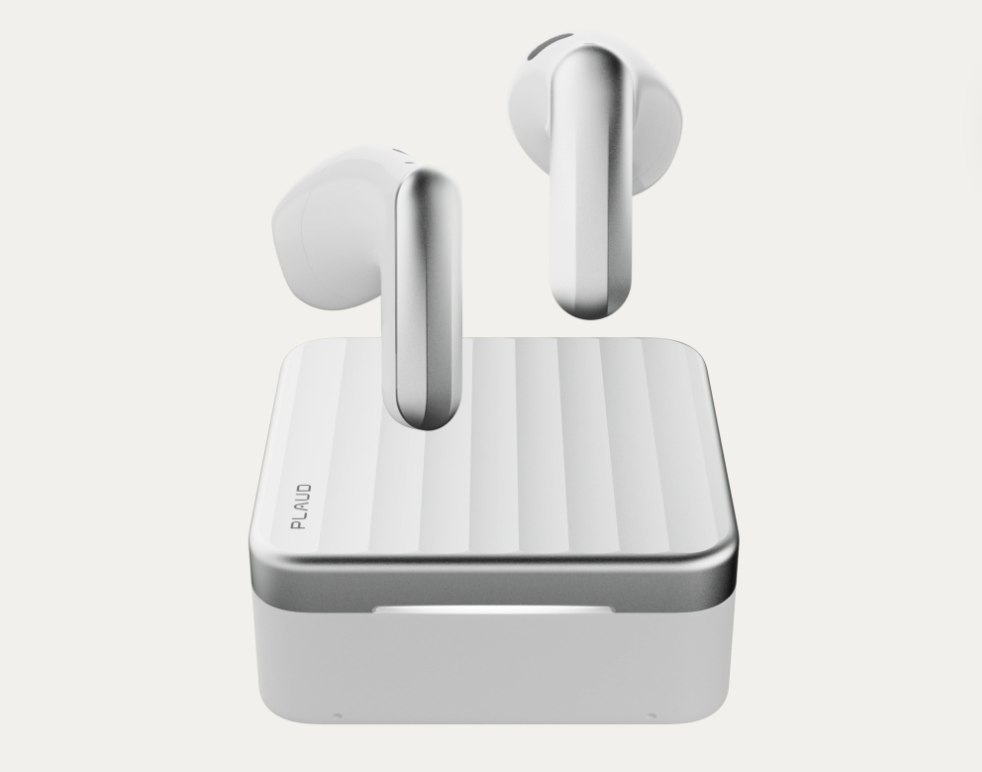
SAN FRANCISCO — Hardware startup Plaud unveiled a new pair of AI-powered earbuds Wednesday that can record, transcribe and summarize conversations without needing a connected smartphone, marking the company’s most ambitious attempt yet to build a standalone AI wearable device.
The device, called the Plaud One Explorer Edition, is now available for pre-order at $249.99, with shipments expected to begin in the fourth quarter of 2026, according to Digital Trends. The launch adds a new form factor to Plaud’s growing lineup of AI note-taking hardware, following the company’s earlier Plaud Note, Note Pro and NotePin devices.
Built to work independently of a phone
Unlike many AI wearables currently on the market, the Plaud One is designed to function without a paired smartphone. The device’s charging case includes a built-in eSIM with 4G LTE connectivity, allowing both the earbuds and the case to stay connected and upload recordings for transcription and summarization even when a user’s phone is offline or out of range, according to SiliconANGLE.
That standalone connectivity extends across more than 80 countries, according to T3, giving the device global reach without requiring users to rely on Wi-Fi or a tethered device to keep the AI system functioning.
Two ways to record
The Plaud One offers users flexibility in how they capture conversations. The earbuds themselves include microphones for hands-free recording of in-person conversations, phone calls or online meetings, while the charging case features four separate microphones capable of picking up audio from up to 5 meters away, according to T3. Each earbud also includes 16MB of local storage, for 32MB combined, and can record for up to six hours, matching the device’s estimated maximum battery life, according to a report from Business Story.
Users who prefer not to wear the earbuds continuously can instead rely on the standalone case to capture conversations, offering what Android Authority described as a more comfortable alternative for extended use throughout a workday.
An AI agent built into the hardware
Central to the Plaud One’s pitch is its integration with Plaud Agent, the company’s AI assistant system. Users can interact with the agent directly through the earbuds, and the device supports native integration with tools including Gmail, Google Calendar, Notion and Slack, according to SiliconANGLE. The device can also be connected to third-party AI systems, including Anthropic’s Claude and OpenAI’s ChatGPT.
At launch, the scope of the assistant’s capabilities will be somewhat limited. A Plaud spokesperson told TechRadar that “at launch, users can press and hold the Agent Button and speak to the agent,” with broader agentic capabilities — allowing the AI to take actions across connected apps based on captured conversations — arriving in a future software update rather than at initial release.
Building memory over time
Plaud has emphasized that the Plaud One’s value is designed to compound the more it’s used. According to the company, its underlying Plaud Intelligence platform builds persistent memory and context from a user’s conversations over time, allowing the AI agent to connect information across separate meetings and conversations to generate more useful follow-ups and reports. “The more that the system can build up memory and context over time, the more useful it becomes,” the company said, according to Digital Trends, “because it’s able to connect information across conversations and apply workflows better.”
That redesigned intelligence platform, along with expanded agentic features, is expected to roll out to Plaud’s existing hardware lineup as part of an app update the company has labeled App 4.0, expected to launch in the same timeframe as the Explorer Edition’s shipping window.
Pricing and what’s included
The $249.99 price for the Plaud One Explorer Edition does not require a separate AI subscription to get started using the device, according to Android Authority. Each unit comes bundled with $200 in Plaud Credits, which buyers can use to access additional AI features and services beyond the base functionality. However, using the built-in 4G standalone connectivity does require a separate wireless service plan.
Privacy and consent built into the design
With AI wearables facing growing scrutiny over privacy concerns — particularly devices like smart glasses that can capture video of people without their knowledge — Plaud has structured the Plaud One around user-triggered recording rather than passive, always-on capture. According to TechRadar, high-stakes actions taken by the AI agent require user approval, recording is manually triggered rather than automatic, and users are responsible for obtaining consent from other parties before recording conversations.
A crowded and unproven market
Plaud’s launch arrives in an increasingly crowded field of AI hardware devices attempting to carve out a role beyond the smartphone. TechCrunch noted that competition in the space remains intense, with new hardware note-takers entering the market on a near-weekly basis, and that Plaud’s initial rollout of the Explorer Edition will be limited in quantity, suggesting the company is treating the earbud format as something of a trial run before committing more fully to the category.
Despite that uncertainty, Plaud has shown notable commercial traction to date. The company said in June that it had reached an annual run-rate revenue of $100 million, according to TechCrunch, a figure that underscores growing demand for its existing lineup of pin- and clip-style AI notetakers even as the broader category of standalone AI hardware devices has struggled to gain mainstream traction.
Part of a broader industry challenge
Nearly four years after the debut of ChatGPT sparked widespread interest in consumer AI hardware, no company has yet managed to convince a mass audience to replace their smartphone with a dedicated AI gadget, according to Engadget, despite high-profile attempts and failures from companies including Humane and Rabbit. Plaud’s approach with the Plaud One differs from those earlier efforts by embedding its AI capabilities into a familiar, already-popular device category — wireless earbuds — rather than introducing an entirely new form factor, a strategy the company appears to be betting will lower the barrier to adoption compared with past standalone AI hardware attempts.
Business
Nvidia Stock Jumps 7.6% Today After Blowout Earnings Beat and a Bullish $108 Billion Sales Outlook Ahead
SANTA CLARA, Calif. — Nvidia shares climbed sharply Thursday, rising as much as 7.59% to $225.56, after the chipmaker reported record quarterly revenue that topped Wall Street expectations and issued a stronger-than-anticipated sales forecast for the current quarter, easing investor concerns about the durability of the artificial intelligence spending boom.
The stock gained $15.90 in Thursday’s trading, extending gains that began after the company released its fiscal second-quarter results Wednesday evening. Nvidia’s report served as a keystone moment for a broader wave of strong technology earnings this week, lifting shares of other software and chip companies alongside its own.
Record revenue tops estimates
Nvidia reported revenue of $96.2 billion for the second quarter, ended July 26, 2026, up 18% from the previous quarter and up 106% from a year earlier, according to the company’s official earnings release. The figure comfortably exceeded analyst consensus forecasts of roughly $92.27 billion.
Data center revenue, the company’s largest and most closely watched business segment, reached a record $89 billion, up 117% from a year ago, topping analyst estimates of $85.4 billion. Nvidia attributed the growth to the ramp-up of its Blackwell Ultra infrastructure, with hyperscale revenue more than doubling year over year and increasing 13% sequentially.
Adjusted earnings per share came in at $2.22, ahead of the $2.09 analysts had expected and up 111.4% from $1.05 a year earlier. GAAP and non-GAAP gross margins both reached 75.0%, up from 72.7% in the same quarter last year, a notably strong figure for a hardware company even as rising costs for components like memory chips and wafers continue to pressure margins industrywide.
A bullish forecast drives the rally
Perhaps more significant to investors than the quarterly beat itself was Nvidia’s forward guidance. The company said it expects revenue of $108 billion for the current quarter, plus or minus 2%, well above the $103.9 billion analysts had projected. That outlook does not include any data center sales from China, according to the company.
Nvidia founder and Chief Executive Jensen Huang framed the results as evidence that the broader AI industry has moved from speculative investment to tangible returns. “AI has reached its inflection point. It’s doing useful work,” Huang said in the company’s official earnings release.
Hyperscaler spending shows no signs of slowing
A key theme underpinning Nvidia’s results was continued heavy spending from the handful of massive technology companies, known as hyperscalers, that account for an outsized share of the company’s revenue. Nvidia Chief Financial Officer Colette Kress said capital expenditures among the top five hyperscalers are expected to rise to $1.3 trillion next year, up from $800 billion in 2026, according to CNBC.
That continued spending was underscored by a new deal announced alongside the earnings report: Amazon Web Services agreed to purchase 2 million Nvidia graphics processing units and adopt the company’s new Vera CPU, with some units expected to be integrated with Nvidia’s forthcoming Rubin AI chip and others deployed as standalone systems. The agreement offered fresh evidence that major cloud providers continue to invest aggressively in AI infrastructure despite periodic investor concerns that spending might be nearing its peak.
Margins face pressure ahead
Despite the strong results, Nvidia signaled that some cost pressures are beginning to show up in its outlook. The company said it expects gross margin to slip slightly to 74% in the current quarter, down from the 75% reported in the just-completed period, reflecting rising costs for memory and other components across the semiconductor industry.
Returning capital to shareholders
Nvidia also highlighted a substantial return of capital to investors during the quarter. The company returned approximately $26 billion to shareholders through share repurchases and cash dividends, and reported roughly $99 billion remaining under its existing share repurchase authorization as of the end of the quarter. Nvidia said it will pay its next quarterly dividend of 25 cents per share on Oct. 1, 2026, to shareholders of record as of Sept. 10.
A shifting customer base
Huang also pointed to a broadening customer base as a sign of the AI industry’s maturing structure. Where a single company had driven much of the AI infrastructure buildout a year earlier, Huang said the current environment reflects far greater diversity of demand. “This time last year, one lab alone was driving the buildout; today, we have a golden age of new AI labs and startups, multiple frontier labs scaling in parallel,” Huang said, according to the company’s earnings release, pointing to strength across the broader AI ecosystem beyond its largest customers.
Part of a broader market rally
Nvidia’s results helped fuel a broader rally across technology stocks Thursday. Software and cybersecurity companies including Salesforce, CrowdStrike and Okta also posted strong earnings the same evening, with their shares climbing by double digits in premarket trading Thursday, according to Yahoo Finance. Nvidia’s own after-hours gains built momentum into the regular Thursday trading session as investors digested the full scope of the week’s earnings reports.
With Nvidia now guiding toward $108 billion in revenue for the current quarter and continuing to report gross margins near historic highs for a hardware company, attention turns to whether the company’s next report can sustain the pace of growth that has defined its performance throughout the AI boom. Analysts will also be watching closely for any updates on Nvidia’s access to the Chinese market, an area the company’s current guidance continues to exclude entirely, as well as continued signs of hyperscaler capital spending translating directly into chip demand in the quarters ahead.

Check out what’s clicking on FoxBusiness.com.
American Airlines is expanding its international network in 2027 with seven new routes, three new destinations and more service between New York and London.
The Texas-based carrier said Thursday that all its newly announced summer routes will operate daily. Tickets go on sale Aug. 31 through American’s website and mobile app.
“Our international network has expanded to offer destinations to satisfy every travel palate,” American’s Senior Vice President of Network and Schedule Planning Brian Znotins said in a statement.
“Combined with our investments enhancing our onboard product and inflight experience, travelers have more reasons to choose American when they fly around the world.”

The Texas-based carrier said Thursday that all its newly announced summer routes will operate daily, with tickets going on sale Aug. 31 through its website and mobile app. (DANIEL SLIM/AFP via Getty Images)
Philadelphia will gain international destinations: Porto, Portugal; Vienna, Austria; and Reykjavik, Iceland. Porto and Vienna will be entirely new additions to American’s network, while service to Reykjavik will return for the first time since 2019.
Philadelphia-to-Porto flights will begin March 28, followed by service to Vienna on May 6 and Reykjavik on May 27.
American said it will be the only U.S. airline serving Vienna. The seasonal route will continue through early January 2028, extending service through the winter holiday travel period.
AMERICAN AIRLINES MAKES MAJOR CABIN UPGRADE AS IT BATTLES FOR PREMIUM PASSENGERS

The airline is also expanding its international offerings from New York’s John F. Kennedy International Airport. (iStock)
The airline is also expanding from New York’s John F. Kennedy International Airport, adding nonstop service to Amsterdam beginning March 28 and Nice, France, starting May 6.
American will restore a fourth daily flight between JFK and London Heathrow on March 28. Together with partner British Airways, the airlines will offer as many as 14 daily flights between New York and London, according to American.
Elsewhere, the airline will launch service between Chicago O’Hare and Tokyo Narita on March 19 to help meet growing demand around Japan’s cherry blossom season.
AMERICAN AIRLINES DELAY STRANDS GOP LAWMAKER, CAUSES 3 HOUSE MEMBERS TO MISS VOTES

American will also restore a fourth daily flight between JFK and London Heathrow on March 28. (Kevin Carter/Getty Images)
A new Charlotte-to-Barcelona route will begin May 27, making Charlotte the sixth U.S. gateway from which American serves the Spanish city.
CLICK HERE TO GET FOX BUSINESS ON THE GO
American is also moving up the seasonal launches of its returning Charlotte-to-Paris and Miami-to-Milan routes to March 4 as demand for spring travel to Europe grows.
The international expansion follows American’s announcement earlier this month of a major overhaul of its onboard experience.
The airline said more than 800 narrowbody aircraft will ultimately receive upgraded entertainment systems featuring 4K displays, Bluetooth connectivity and USB-C charging.
FOX Business’ Stepheny Price contributed to this report.
Business
Ashtrom Group Ltd. 2026 Q2 – Results – Earnings Call Presentation (OTCMKTS:ASHPF) 2026-08-27

Seeking Alpha’s transcripts team is responsible for the development of all of our transcript-related projects. We currently publish thousands of quarterly earnings calls per quarter on our site and are continuing to grow and expand our coverage. The purpose of this profile is to allow us to share with our readers new transcript-related developments. Thanks, SA Transcripts Team

Kazia reports clinical benefit in six breast cancer patients
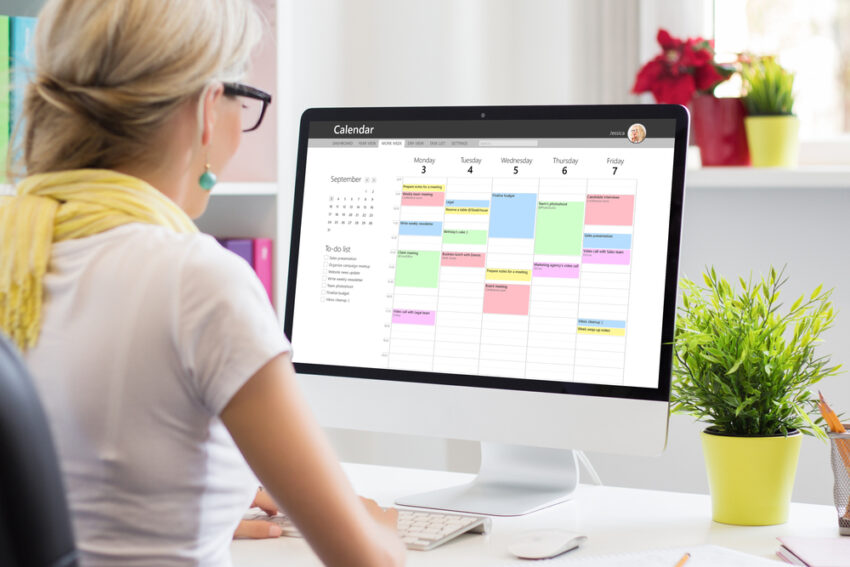
Most organisations have no shortage of goal-setting activity. Objectives are discussed in appraisals, noted in HR systems and revisited – if at all – twelve months later.
What’s missing isn’t the intention to manage performance. It’s the infrastructure to do it consistently, visibly and in a way that connects individual goals to organisational outcomes. The employee performance management service from Staff Skills academy+ is built around exactly that infrastructure – giving managers and employees a shared space to set goals, track progress and identify the development needed to close the gap between where someone is and where they need to be.
Why goal-setting without tracking doesn’t work
Setting a goal is the easy part. The harder part is maintaining visibility of progress toward it over weeks and months – especially when day-to-day pressures consistently crowd out the longer-term development agenda.
The pattern most organisations fall into is familiar. Goals are set at the start of the year with genuine intent. They sit in a document, a spreadsheet or an HR system that nobody opens between formal review points. By the time the next review arrives, the goals are either forgotten, no longer relevant or so loosely defined that assessing progress against them is largely subjective.
This isn’t a motivation problem. It’s a visibility problem. When goals aren’t actively tracked – when neither the manager nor the employee has a clear, up-to-date picture of where things stand – progress stalls not because people don’t care but because there’s no structure keeping the goals alive between conversations.
An employee performance management service that provides continuous visibility of goal progress changes this dynamic. Goals become living documents rather than annual artefacts. Progress is visible to both manager and employee at any point. And the regular check-in conversation has a concrete foundation – actual progress data – rather than relying on memory and subjective impression.
Employee performance management system: connecting goals to development
One of the most significant limitations of traditional performance management approaches is the separation between performance conversations and learning and development activity. A manager identifies a capability gap in a review conversation. The employee agrees to work on it. And then nothing links that identified gap to any specific development activity or tracks whether the development has actually happened.
An employee performance management system that integrates with a learning platform closes this loop. When a capability gap is identified – whether through a formal review, a check-in conversation or a manager’s observation – a learning pathway can be assigned directly from within the performance management tool. The employee can see what development has been recommended and why. The manager can see whether the recommended learning has been completed and whether it’s having the intended effect on performance.
This integration between performance management and learning is where Staff Skills academy+ provides something genuinely distinctive. The Performance Hub connects directly with the Staff Skills academy+ LMS, meaning that the conversation about what someone needs to develop can immediately translate into assigned courses, tracked completion and visible progress – all within a single system.
Setting goals that are worth tracking
Not all goals are equally trackable and the quality of goal-setting has a direct effect on how useful performance management infrastructure can be. A goal that is vague, unmeasurable or disconnected from any observable outcome is difficult to track regardless of how good the system is.
The most useful goals share a set of characteristics. They are specific enough that both manager and employee have the same understanding of what success looks like. They have a timeframe that creates appropriate urgency without being arbitrary. They connect to something that matters – either to the individual’s development or to a business outcome the team is working toward. And they are achievable within the constraints of the employee’s current role and workload.
The Performance Hub supports structured goal-setting that builds these characteristics in from the start. Rather than free-text objectives that can mean different things to different people, goals are defined within a framework that prompts for the specifics that make tracking meaningful. This consistency also makes it possible to look across a team or a department and understand the pattern of goals being set – identifying where priorities are aligned and where gaps exist.
Employee performance management tool: making check-ins worth having
The check-in conversation – a regular, structured dialogue between manager and employee about performance, progress and development – is widely recognised as the most effective replacement for the once-yearly appraisal. But the quality of check-in conversations varies enormously depending on how well they’re supported.
An employee performance management tool that gives both manager and employee visibility of current goals, recent progress and outstanding development activity before the conversation starts changes the quality of the conversation itself. Rather than beginning from scratch each time – reconstructing context, recalling what was discussed previously and trying to remember what was agreed – both parties arrive with a shared picture of where things stand.
The Performance Hub supports this by maintaining a continuous record of goals, progress updates and development activity that both manager and employee can access and contribute to between formal conversations. Notes from previous check-ins are visible. Agreed actions are tracked. Development recommendations are linked to the goals they’re designed to support. The check-in becomes a focused, productive conversation rather than an administrative exercise.
Visibility across teams and departments
Individual goal-tracking is valuable. Visibility across a team, department or organisation is where performance management infrastructure delivers its most significant return for leaders and HR teams.
When performance data exists only in individual conversations and disconnected documents, it’s impossible for a line manager to see at a glance how their team is progressing against its goals. It’s impossible for an HR director to understand whether development activity is being driven by identified performance gaps or by ad hoc requests. And it’s impossible for senior leaders to connect the pattern of individual goals to the organisational priorities they’re meant to support.
The Performance Hub provides this visibility through reporting that aggregates individual goal and development data at team, department and organisational level. Managers can see who in their team has goals on track, who is falling behind and who hasn’t had a meaningful check-in recently. HR teams can see whether learning activity is being linked to performance goals or happening in isolation. And the data provides a foundation for conversations about resource allocation, development investment and organisational capability that previously had to rely on anecdote and impression.
Embedding performance management into how the business operates
The organisations that get the most from performance management infrastructure are those that treat it as an operational tool rather than an HR compliance mechanism. When goal-tracking and development planning are embedded into how managers and teams work day to day – rather than surfaced only at formal review points – they produce continuous improvement rather than periodic snapshots.
This requires performance management to be genuinely easy to use. If updating a goal or logging a check-in note requires navigating a complex system or completing extensive documentation, it won’t happen consistently. The Performance Hub is designed for the frequency of use that effective performance management actually requires – quick to update, easy to navigate and accessible from any device so that managers and employees can engage with it in the flow of their working day rather than only when they’re sitting at a desk.
It also requires performance management to be visibly connected to outcomes that people care about. Employees who can see how their goals connect to team priorities and how their development is being invested in are more likely to engage seriously with the process. Managers who can see the effect of good performance conversations on their team’s progress are more likely to prioritise them. The infrastructure supports the behaviour; the behaviour produces the outcomes.
Getting started with a performance management service
Implementing a performance management service doesn’t require a lengthy procurement process or a complex change management programme. The Performance Hub from Staff Skills academy+ is designed to be set up quickly and to deliver visible value from the first check-in conversations that use it.
The starting point is clarity about what you want the system to do. Which roles will use it? What types of goals will be tracked? How frequently will check-ins happen? How will performance management connect to the learning activity already happening through the LMS? These questions don’t require lengthy consultation to answer – they require the kind of practical decision-making that most HR teams and line managers are well-equipped to do.
Find out how the employee performance management service from Staff Skills academy+ can be set up for your organisation and what a structured approach to performance management could mean for your teams.

Silver Price Faces Make-or-Break Week Ahead of Jackson Hole Fed Speech

Nigeria Defender Ekerette Udom Joins Finnish Topflight Side SJK

AI turns up a promising finding in cancer data that researchers hadn’t noticed for years





-

 Fashion6 days ago
Weekend Open Thread: Madewell – Corporette.com
-

 Crypto World2 days ago
SpaceX stock could rise 75% to $240, JPMorgan says
-

 Business5 days ago
Musk’s Tesla, SpaceX Confirm $16.8 Billion ‘Terafab’ Chip Plant as World’s Largest Building in Texas
-

 Crypto World6 days ago
anatomy of crypto’s biggest liquidation event since 2021
-

 Crypto World3 days ago
A $30 Billion AI Fund Implodes, Now the SEC Is Investigating Wall Street’s Role
-

 Politics5 days ago
6 months on, Irish renters crushed by effects of government housing bill
-

 Crypto World2 days ago
Did Trump Just Move SpaceX Stock With One Truth Social Post?
-

 Business4 days ago
Mystery AI Model ‘Ox Alpha’ Draws Developers With Free Access as Chinese Lab Origins Remain Debated
-
 NewsBeat6 days ago
The ‘Lucky Dip Gang’ causing carnage for clicks: After five thugs were killed speeding in the wrong direction on a motorway, GUY ADAMS investigates a sick new trend… and why police aren’t even allowed to pursue them
-

 Business3 days ago
Moderna CEO warns China is pouring state money into mRNA technology
-

 Business3 days ago
NVIDIA Stock Drops Nearly 2 Percent to $210 on Seventh Losing Day Ahead of Critical AI Earnings
-
 Tech6 days ago
Unitree’s New Superman Robot Claims to Outjump and Outrun Every Human, Usain Bolt Included
-
 Crypto World6 days ago
Nvidia Stock Suffers Longest Losing Streak Since 2022: Will Q2 Earnings End It?
-

 Business6 days ago
UK firms in critical financial distress rise 9% to 53,756
-

 Sports5 days ago
Deshaun Watson fires back at Browns fans after being booed: ‘It’s a disrespectful thing’
-
 Crypto World4 days ago
Google Gemini AI Predicts Ethereum Could Become the Trade Retail Misses in 2026
-

 Tech6 days ago
Faster chip in a familiar form factor
-

 Business6 days ago
Will Tesla Stock Be Higher or Lower a Year From Now? Here’s What Wall Street Analysts Are Saying
-

 Crypto World7 days ago
SEC Regulation Crypto vs CLARITY Act: which framework wins
-

 Business4 days ago
Tesla Recalls Nearly 3 Million Cars in China Over Hidden Door Handles Linked to Multiple Deaths Amid New Ban
You must be logged in to post a comment Login