Connect with us
DAPA Banner
DAPA Coin
DAPA
COIN PAYMENT ASSET
PRIVACY · BLOCKDAG · HOMOMORPHIC ENCRYPTION · RUST
ElGamal Encrypted MINE DAPA
🚫 GENESIS SOLD OUT
DAPAPAY COMING

Business

McDonald’s Stock Edges Higher on Value Menu Momentum Amid Consumer Caution

Published

on

McDonalds

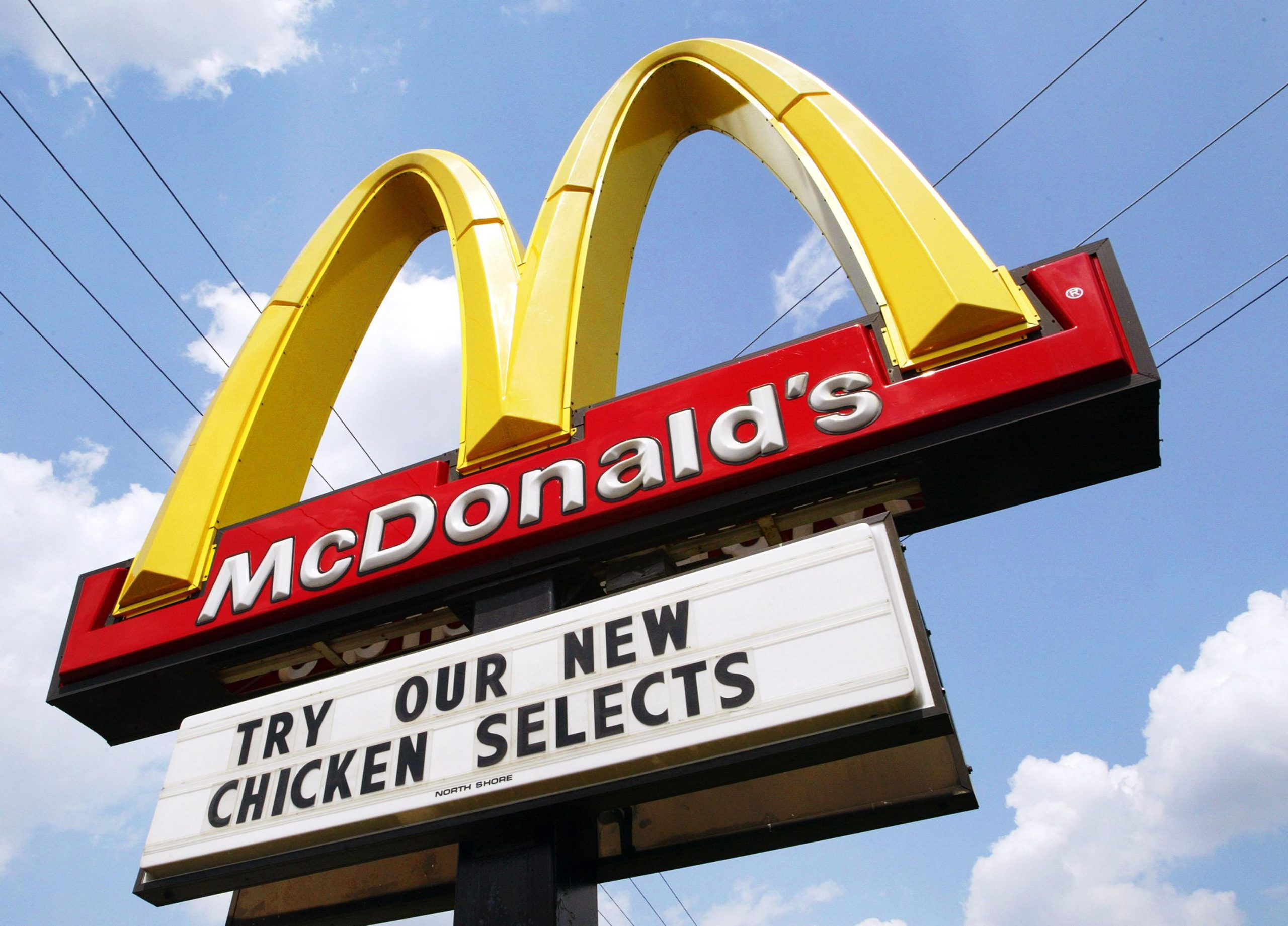
McDonald’s Corp. shares rose modestly in early Wednesday trading, climbing to around $309 as investors responded positively to the fast-food giant’s aggressive value menu push aimed at reigniting traffic in a high-inflation environment that has kept budget-conscious diners away.

McDonalds

The stock was up about 0.45% at $309.23 in mid-morning dealings after closing Tuesday at $307.84, down 0.20% on the session. Shares traded in a range of roughly $308.11 to $310.78, with volume around 660,000 shares by late morning. The modest gain came as McDonald’s continues rolling out its “$3 and Under” value offerings and $4 breakfast bundles, one of the most significant price-focused promotions in recent years.

McDonald’s has faced pressure from cautious U.S. consumers trading down or skipping visits altogether. The new value menu, launched in March, includes everyday low prices on core items to rebuild foot traffic without heavily discounting premium offerings. Executives highlighted the initiative during recent investor updates, noting it builds on the strength of the company’s digital loyalty program, which generated nearly $37 billion in member sales last year.

The stock has pulled back from its 52-week high of $341.75 reached on March 2 but remains well above the low of $283.47 hit last June. Year-to-date performance is roughly flat to slightly positive, trailing the broader market as investors weigh near-term traffic challenges against the company’s long-term resilience and global scale. Market capitalization hovers near $219 billion.

Analysts largely maintain a bullish stance. The consensus 12-month price target sits around $342, implying potential upside of about 11%. Most ratings cluster in the “Buy” or “Hold” categories, with firms citing McDonald’s unmatched brand power, franchised business model and ability to adapt quickly to shifting consumer preferences. Recent quarterly results showed solid earnings beats, with EPS of $3.12 topping estimates and revenue rising nearly 10% year-over-year in the most recent reported period.

Advertisement

The company operates more than 42,000 restaurants worldwide, with the vast majority franchised, providing steady royalty and fee income that helps cushion corporate-level pressures. For 2026, McDonald’s plans to open about 2,600 new locations and invest $3.7 billion to $3.9 billion in technology, restaurant modernizations and supply chain improvements. Systemwide sales growth is targeted near 2.5%.

Forward dividend of $7.44 annually yields roughly 2.42%, reinforcing McDonald’s appeal as a defensive dividend growth stock with decades of consecutive increases. The ex-dividend date for the latest payment was March 3. The stock’s beta of around 0.5 indicates lower volatility than the broader market, making it attractive during periods of economic uncertainty.

Insider selling has occurred in recent weeks, including transactions by McDonald’s USA President Joseph M. Erlinger and other executives. Such moves are often part of routine compensation and tax planning and do not necessarily signal diminished confidence, according to market observers.

Challenges remain. Persistent inflation has squeezed lower-income customers, prompting some to visit less often or opt for cheaper alternatives. Competition from other quick-service restaurants and emerging value players adds pressure. Comparable sales growth has decelerated from pandemic highs in certain markets, though international operations continue providing diversification.

Advertisement

McDonald’s has leaned into digital innovation to offset these headwinds. The loyalty program boasts more than 210 million active 90-day users globally, driving higher check averages and repeat visits. A new McCafé beverage platform featuring energy drinks, refreshers and crafted sodas is slated for wider rollout this spring after successful tests. Delivery partnerships and mobile ordering continue expanding, enhancing convenience in a post-pandemic landscape.

Wall Street projections for full-year 2026 call for earnings per share around $12.25. First-quarter results are due in late April, with analysts closely watching for evidence that value initiatives are restoring traffic momentum. Operating margins are expected to hold steady in the mid- to high-40% range.

The broader consumer staples sector has seen mixed performance amid ongoing debates about the health of the U.S. consumer. While premium brands struggle with trading down, value-oriented players like McDonald’s are positioned to benefit if the new menu resonates. Some strategists view current share levels as an attractive entry point for long-term investors given the predictable cash flows and global footprint.

Over the past five years, McDonald’s stock has delivered total returns of roughly 54% excluding dividends, and nearly 150% over 10 years, underscoring its status as a core holding for many portfolios. Free cash flow remains robust, supporting both dividends and reinvestment in growth.

Advertisement

As trading continued Wednesday, attention turned to any fresh corporate updates or macroeconomic data that could influence consumer spending sentiment. McDonald’s rarely sees sharp single-day moves, reflecting the stability of its business model, but sustained progress on traffic could catalyze a rebound toward analyst targets.

For retail investors, the Golden Arches offer exposure to a global consumer staple with defensive qualities and consistent income. The company’s ability to innovate on menu pricing, digital tools and international expansion positions it well for whatever economic conditions lie ahead.

Whether the latest value push successfully counters softness in U.S. traffic will be a key narrative in coming months. For now, McDonald’s shares trade in a relatively tight range, reflecting balanced views on near-term challenges and enduring brand strength. The stock’s modest early gain Wednesday suggests investors are giving the company the benefit of the doubt as it fights to win back everyday diners one affordable meal at a time.

Advertisement
Continue Reading
Click to comment

You must be logged in to post a comment Login

Leave a Reply

Business

S&P 500: Prepare For The Unwind (Technical Analysis)

Published

on

S&P Global Dividend 100 Index: Where High Yield Meets Quality

S&P 500: Prepare For The Unwind (Technical Analysis)

Continue Reading

Business

Which Retail Giant Is the Better Buy for Investors Now

Published

on

Costco

NEW YORK — As the retail sector navigates shifting consumer habits, rising e-commerce competition and persistent economic uncertainty in 2026, investors are closely comparing Walmart Inc. and Costco Wholesale Corp. to determine which stock offers the stronger long-term opportunity. Both companies have delivered solid performance this year, but their business models, growth trajectories and valuations present distinct profiles that could influence portfolio decisions for the remainder of the year and beyond.

Walmart shares have risen approximately 18% year-to-date, supported by strong e-commerce momentum, advertising revenue growth and resilient grocery sales. Costco, meanwhile, has advanced about 22%, driven by record membership renewals, robust same-store sales and international expansion. With both trading near all-time highs, the question of which represents the better buy in 2026 depends on an investor’s time horizon, risk tolerance and preference for growth versus stability.

Walmart, the world’s largest retailer by revenue, reported fiscal first-quarter 2026 results that beat expectations, with revenue climbing to $165.6 billion and e-commerce sales jumping 22%. The company’s Walmart+ membership program continues to gain subscribers, while its advertising business and private-label brands provide high-margin revenue streams. International operations, particularly in Mexico and India, are showing double-digit growth, and the company’s supply chain investments have improved efficiency and reduced costs.

Analysts at firms like TD Cowen and Bernstein have named Walmart a top retail pick for 2026, citing its ability to serve value-conscious consumers while capturing premium and digital spending. The stock trades at a forward price-to-earnings multiple in the mid-20s, which many view as reasonable given projected mid-single-digit revenue growth and expanding margins. Walmart also offers a modest dividend yield around 1.1%, supported by consistent increases and a healthy payout ratio.

Advertisement

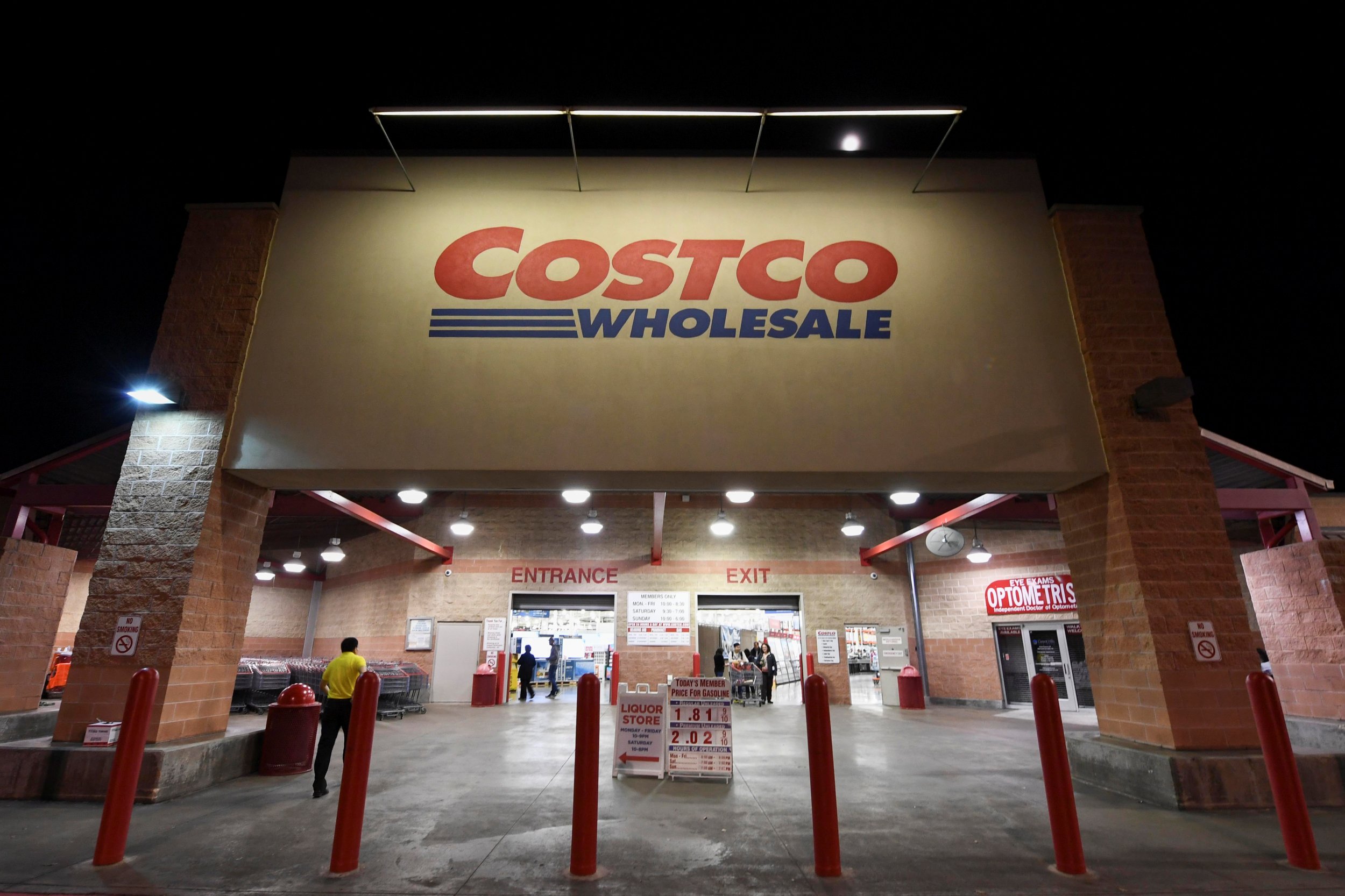
Costco, by contrast, operates a membership-only warehouse model that generates high customer loyalty and predictable recurring revenue. The company reported strong first-quarter results, with revenue rising 8% and same-store sales growing 6%. Membership fees, which now account for nearly 80% of operating income, continue to rise steadily as renewal rates hover above 90%. Costco’s private-label Kirkland Signature products remain extremely popular, and international expansion into new markets is adding meaningful growth.

The stock carries a higher valuation, trading at a forward P/E in the low-to-mid 30s, reflecting investor confidence in the durability of its model. Analysts highlight Costco’s pricing power, efficient operations and ability to weather economic downturns better than traditional retailers. However, the company’s slower growth rate compared with Walmart’s e-commerce and advertising expansion has led some to view it as more defensive than dynamic.

Key Differences in Business Models

Walmart’s massive scale — more than 10,000 stores worldwide and a dominant online presence — gives it unmatched reach and data advantages. The company has successfully integrated its physical and digital operations, using stores as fulfillment centers for rapid delivery. This omnichannel strategy has helped Walmart capture market share from pure e-commerce players while maintaining its core low-price positioning.

Costco’s model is more focused and selective. With roughly 900 warehouses globally, the company emphasizes bulk purchasing, limited product selection and high inventory turnover. This approach results in strong margins and customer loyalty but limits the total addressable market compared with Walmart’s broader retail footprint. Costco’s reliance on membership fees provides stability but also means revenue growth is more predictable and less explosive than Walmart’s diversified streams.

Advertisement

Valuation and Risk Profiles

Walmart offers a more balanced risk-reward profile in 2026. Its exposure to grocery and everyday essentials provides defensive qualities during economic slowdowns, while e-commerce and advertising provide growth levers. The company’s international presence and investments in automation and AI-driven inventory management position it well for long-term efficiency gains.

Costco’s higher valuation reflects its superior margins and customer retention, but it leaves less room for error if membership growth slows or competition intensifies. The company’s slower pace of new warehouse openings compared with Walmart’s store expansion could limit near-term upside if consumer spending moderates.

Both stocks face common risks, including inflation, labor costs, supply chain disruptions and intensifying competition from Amazon and discount retailers. Regulatory scrutiny on pricing practices and labor practices also remains a background concern for both.

Analyst Consensus and Investor Considerations

Wall Street remains generally bullish on both companies, but Walmart receives more “Buy” ratings due to its growth potential and reasonable valuation. Costco is often recommended for more conservative portfolios seeking stability and consistent returns. For growth-oriented investors, Walmart’s e-commerce momentum and advertising expansion make it the more dynamic choice. For income-focused investors, both offer reliable dividends, but Walmart’s higher yield and faster earnings growth provide a slight edge.

Advertisement

Investors should consider their time horizon and portfolio allocation. Walmart may appeal to those seeking a blend of growth and income with broader exposure to retail trends. Costco suits those who prefer a high-quality, predictable business with strong customer loyalty and margin stability.

Long-Term Outlook for Both Retail Giants

Looking further into 2026 and beyond, both companies are well-positioned to benefit from several powerful trends: continued digitization of retail, growth in private-label products and increasing demand for value and convenience. Walmart’s scale and technological investments give it an edge in adapting to changing consumer behavior, while Costco’s membership model ensures a loyal customer base that is less price-sensitive.

Analysts project both companies will deliver solid mid-single-digit revenue growth with expanding margins over the next several years. Walmart’s international expansion and e-commerce investments could drive faster top-line growth, while Costco’s focus on operational excellence and customer experience supports steady, high-quality earnings.

For investors deciding between the two in 2026, the choice ultimately comes down to investment objectives. Walmart offers greater growth potential and diversification, making it the better buy for those seeking capital appreciation alongside income. Costco provides exceptional stability and customer loyalty, appealing to conservative investors prioritizing consistency and downside protection.

Advertisement

Both retail giants have proven their ability to adapt and thrive in challenging environments. As the retail landscape continues to evolve, Walmart and Costco remain two of the most reliable ways to participate in the sector’s long-term growth. For patient investors with a multi-year horizon, Walmart currently edges out as the more compelling opportunity in 2026 due to its faster growth trajectory and more attractive valuation relative to expected earnings expansion.

Continue Reading

Business

Haggling prices and chasing debts – tradespeople hit with cost of living headache

Published

on

Haggling prices and chasing debts - tradespeople hit with cost of living headache

More than half of tradespeople have seen an increase of late payments compared to a year ago, a survey finds.

Continue Reading

Business

What is the consumer sentiment on AI?

Published

on


What is the consumer sentiment on AI?

Continue Reading

Business

Relatives of Mexico’s disappeared hold Mother’s Day protest ahead of World Cup

Published

on

Relatives of Mexico’s disappeared hold Mother’s Day protest ahead of World Cup


Relatives of Mexico’s disappeared hold Mother’s Day protest ahead of World Cup

Continue Reading

Business

TOTVS S.A. (TTVSY) Q1 2026 Earnings Call Transcript

Published

on

OneWater Marine Inc. (ONEW) Q1 2026 Earnings Call Transcript

TOTVS S.A. (TTVSY) Q1 2026 Earnings Call May 7, 2026 10:00 AM EDT

Company Participants

Sérgio Serio – Investor Relations Head
Dennis Herszkowicz – CEO & Member of Board of Executive Officers
Gilsomar Sebastião – CFO, VP of Admin & Financial, Investor Relations Director and Member of Board of Executive Officers
Vivian Broge – VP, Chief Human Relations & Marketing Officer and Member of Board of Executive Officers

Advertisement

Conference Call Participants

Felipe Cheng – Santander Investment Securities Inc., Research Division
Livea Mizobata – JPMorgan Chase & Co, Research Division
Maria Infantozzi – Itaú Corretora de Valores S.A., Research Division
Silvio Doria – J. Safra Corretora de Valores e Cambio Ltda, Research Division
Luis Chagas – XP Investimentos Corretora de Câmbio, Títulos e Valores Mobiliários S.A., Research Division
Lucca Brendim – BofA Securities, Research Division

Presentation

Advertisement

Sérgio Serio
Investor Relations Head

[Interpreted] Good morning. Welcome to the earnings video conference on first quarter 2026. I’m Sérgio Serio. And here with me, we have our CEO, Maia, CFO, to present our quarter highlights. And by the end, we’ll have a Q&A session.

Before starting, it’s important to remind that forecast on TOTVS performance are based on current assumptions. There are risks and uncertainties, and many factors can change the company’s results that may differ from the expectations presented here.

Now I give the floor for Dennis on the Slide 3 that will start the presentation.

Advertisement

Dennis Herszkowicz
CEO & Member of Board of Executive Officers

Okay. Thank you, Sérgio. Good morning, everyone. Well, TOTVS’s performance on this quarter as in the previous one and during the full year of 2025 reinforce a practical contradiction when we have an imbalance between expectations and reality.

Since February 2, our future has been fitted in the same being of the software market. With [indiscernible] with the ongoing records on new sales, revenue, EBITDA and basically any other financial

Advertisement
Continue Reading

Business

Whale’s Insight: Will Strategy Sell Bitcoin? Q1 2026 Earnings Highlights

Published

on

Whale's Insight: Will Strategy Sell Bitcoin? Q1 2026 Earnings Highlights

Chipset on circuit board for semiconductor investment, 3d rendering

nespix/iStock via Getty Images

Strategy (MSTR) just broke its “never sell” pledge after a $12.54B Q1 loss, while Q1 AI earnings produced one repeatable formula: rigid supply, inelastic demand, +500% returns. April delivered $2B in net Bitcoin ETF inflows, the strongest month of 2026, and May opened with four straight

Continue Reading

Business

Jailed Iranian peace laureate Mohammadi moved to hospital in Tehran

Published

on

Jailed Iranian peace laureate Mohammadi moved to hospital in Tehran


Jailed Iranian peace laureate Mohammadi moved to hospital in Tehran

Continue Reading

Business

Installed Building Products, Inc. (IBP) Q1 2026 Earnings Call Transcript

Published

on

OneWater Marine Inc. (ONEW) Q1 2026 Earnings Call Transcript

Q1: 2026-05-07 Earnings Summary

EPS of $1.79 misses by $0.17

 | Revenue of $660.50M (-3.55% Y/Y) misses by $8.43M

Installed Building Products, Inc. (IBP) Q1 2026 Earnings Call May 7, 2026 10:00 AM EDT

Company Participants

Ryan Ricketts – Director of Investor Relations & Financial Planning
Jeffrey Edwards – Chairman, CEO & President
Michael Miller – CFO, Executive VP of Finance & Director

Advertisement

Conference Call Participants

Sam Reid
Stephen Kim – Evercore ISI Institutional Equities, Research Division
Michael Rehaut – JPMorgan Chase & Co, Research Division
Susan Maklari – Goldman Sachs Group, Inc., Research Division
Philip Ng – Jefferies LLC, Research Division
Michael Dahl – RBC Capital Markets, Research Division
Trey Grooms – Stephens Inc., Research Division
Adam Baumgarten
Kenneth Zener – Seaport Research Partners
Collin Verron

Advertisement

Presentation

Operator

Greetings, and welcome to the Installed Building Products First Quarter 2026 Financial Results Conference [Operator Instructions]. As a reminder, this conference is being recorded.

I would now like to turn the conference over to your host, Ryan Ricketts, Director of Investor Relations and Financial Planning and Analysis. You may begin.

Advertisement

Ryan Ricketts
Director of Investor Relations & Financial Planning

Good morning, and welcome to Installed Building Products First Quarter 2026 Earnings Conference Call. Earlier today, we issued a press release on our financial results for the 2026 first quarter, which can be found in the Investor Relations section of our website. On today’s call, management’s prepared remarks and answers to your questions may contain forward-looking statements within the meaning of federal securities laws. These forward-looking statements are based on management’s current beliefs and expectations and are subject to factors that could cause actual results to differ materially from those described today.

Please refer to our SEC filings for cautionary statements and risk factors. We undertake no duty or obligation to update any forward-looking statement as a result of new information or future events, except as required by federal securities laws. In addition, management refers to certain non-GAAP and adjusted financial measures on this

Advertisement
Continue Reading

Business

Putin Declares Ukraine Conflict ‘Coming to an End’ as Fighting Rages On

Published

on

Donald Trump left the G7 summit early, saying he had to deal with the crisis in the Middle East

MOSCOW — Russian President Vladimir Putin declared Thursday that the war in Ukraine is “coming to an end,” offering his most optimistic public assessment of the three-year conflict even as fierce fighting continues along the front lines and Western officials expressed deep skepticism about any imminent resolution.

Speaking during a televised meeting with regional governors, Putin said Russian forces had achieved most of their military objectives and that negotiations could begin if Kyiv meets Moscow’s conditions. “The conflict is coming to an end,” Putin stated. “We are seeing positive dynamics on the battlefield, and I believe we are close to achieving our goals.”

The remarks, delivered with confidence, quickly drew global attention and mixed reactions. Ukrainian officials dismissed them as propaganda, while some European leaders called for caution. U.S. officials under President Donald Trump have signaled openness to negotiations but emphasized that any deal must be acceptable to Ukraine.

Despite Putin’s statement, intense combat persisted Thursday. Russian forces continued incremental advances in Donetsk Oblast, particularly around Pokrovsk, while Ukrainian troops launched drone strikes deep into Russian territory, targeting airfields and logistics hubs. Independent estimates suggest daily casualties on both sides remain high, with no immediate signs of de-escalation on the ground.

Advertisement

Ukrainian President Volodymyr Zelenskyy responded swiftly, stating that any peace must include full Russian withdrawal from occupied territories and robust security guarantees. “Russia talks about peace while continuing to bomb our cities and kill our people,” Zelenskyy said in a video address. “Real peace requires actions, not just words.”

Background and Context of the Conflict

Russia launched its full-scale invasion of Ukraine in February 2022, initially aiming for a rapid victory. After suffering major setbacks, including the failed assault on Kyiv and retreats from Kharkiv and Kherson, Russian strategy shifted to a grinding war of attrition focused on eastern Ukraine. The conflict has caused hundreds of thousands of military casualties, displaced millions and devastated Ukrainian infrastructure.

Western nations have provided more than $300 billion in aid to Ukraine, while Russia has relied on alliances with North Korea, Iran and domestic production to sustain its campaign. Multiple rounds of peace talks have failed, with both sides maintaining maximalist positions.

Putin’s latest comments echo previous claims of progress but come at a time when Russian forces have made their most consistent territorial gains in over a year. Ukrainian forces are struggling with manpower shortages, fatigue and reduced Western military support, while Russian missile and drone attacks on energy infrastructure have left millions of Ukrainians without reliable power.

Advertisement

International Reactions

The United States, under President Donald Trump, has indicated willingness to facilitate negotiations. Trump has repeatedly said he could end the war quickly, though specific proposals remain unclear. European leaders have expressed caution, warning that any agreement must respect Ukraine’s sovereignty and territorial integrity.

NATO Secretary General Mark Rutte reaffirmed the alliance’s commitment to supporting Ukraine “for as long as it takes.” China, a close partner of Russia, welcomed Putin’s comments and called for a “political solution.” Analysts note that Putin’s statement may be timed to influence upcoming diplomatic discussions and to project strength ahead of Russia’s Victory Day celebrations.

Military Situation on the Ground

Russian forces continue slow but steady advances in Donetsk Oblast, with heavy fighting around Pokrovsk, Chasiv Yar and Vuhledar. Ukrainian forces have conducted successful long-range drone strikes on Russian oil refineries and military airfields, disrupting logistics and air operations.

Both sides are suffering significant losses. Independent estimates place combined daily casualties above 1,000. Spring weather has improved conditions for mechanized maneuvers, raising fears of renewed large-scale offensives in the coming weeks.

Advertisement

The humanitarian situation in Ukraine remains dire, with widespread power outages, destroyed infrastructure and millions displaced. International aid organizations continue to call for increased support and protection for civilians.

Economic Impact on Russia

Despite extensive Western sanctions, Russia’s economy has shown surprising resilience, supported by redirected oil sales, wartime industrial mobilization and alliances with non-Western nations. However, long-term challenges persist, including labor shortages, technological isolation and inflation pressures.

Putin’s government has heavily invested in the defense sector, which now accounts for a significant portion of GDP. This militarization has boosted short-term growth but raises concerns about economic sustainability once the conflict ends.

Path Toward Possible Negotiations

Any potential peace agreement would require complex compromises. Russia has demanded recognition of its territorial gains, Ukrainian neutrality and the lifting of sanctions. Ukraine insists on full withdrawal to 1991 borders, strong security guarantees and reparations.

Advertisement

Western diplomats say serious negotiations are unlikely without significant battlefield shifts or major political changes in either country. For now, both sides appear prepared to continue fighting while keeping diplomatic channels open.

Global Security Implications

The Ukraine conflict has reshaped European security, strengthened NATO and accelerated energy transitions away from Russian supplies. A resolution — whether through victory, defeat or negotiated settlement — would have profound implications for global stability, nuclear deterrence and the rules-based international order.

As Putin claims the war is nearing its end, the reality on the battlefield suggests a long and difficult road ahead. For the people of Ukraine, every statement from Moscow is measured against the continued suffering and destruction they endure daily.

The coming weeks and months will be critical in determining whether Putin’s words signal genuine openness to peace or represent another tactical maneuver in a war that has already claimed hundreds of thousands of lives and redrawn the map of Europe.

Advertisement

For now, the fighting continues, diplomacy remains stalled, and the world watches to see if 2026 will finally bring an end to Europe’s largest conflict since World War II.

Continue Reading

Trending

Copyright © 2025