
Business
Meta says AI model accessed the internet and hacked another firm


Facebook owner Meta says an error during an evaluation by an independent testing company allowed one of its artificial intelligence (AI) models to connect to the internet and hack another organisation’s system.
The announcement follows recent incidents across the AI industry, including breaches by OpenAI and Anthropic models, that have raised cyber-security concerns.
A Meta spokesperson told the BBC that it was investigating the hack that was caused by a “misconfiguration”, which it described as similar to previously reported incidents at other firms.
The incidents have prompted researchers and governments to call for tougher safeguards and more rigorous testing.
Meta said the tests were conducted by Irregular, an AI security vendor, which notified it about the breach.
The BBC has contacted Irregular for comment.
Meta also said it will publish more information on the incident “once we have all the facts.”
In the past two weeks, AI leaders OpenAI and Anthropic have also reported incidents in which their models hacked into other organisation’s systems during testing.
ChatGPT-maker OpenAI said in a series of announcements that its agents attacked several publicly available services, including AI tools hub Hugging Face.
OpenAI’s disclosure prompted rival Anthropic to conduct its own checks, leading to the discovery that its Claude AI model had carried out similar attacks on several firms after a “misconfiguration” gave it access to the internet.
Some commentators have questioned the timing of disclosures about the incidents as tech firms wrestle for dominance in AI development.
OpenAI and Anthropic are preparing blockbuster stock market listings that are expected to value each firm at around $1tn (£740bn).
This week, the UK’s AI Security Institute (AISI) said that its testing had found that some models tried to carry out cyber-attacks by creating fake human profiles to try and trick people.
In the most serious case, the AISI said Anthropic’s Mythos AI tried to gain access to a service by sending private messages using fake accounts mimicking real people.
Anthropic said AISI’s tests were not “representative of any of our production models”. OpenAI, whose models were also tested, said AISI’s evaluations did not reflect ordinary use.

Palantir: I Am Raising My Price Target As AIP Momentum Accelerates

ASEAN-ISE is working to build a trustworthy, sustainable investment ecosystem by aligning ESG metrics across regional exchanges, tackling greenwashing, and boosting SME involvement to draw in global capital and promote long-term sustainability.
There is a quiet but profound shift underway in the capital markets of Southeast Asia. Fund managers in Singapore are recalibrating their allocation models. Institutional investors in Tokyo and Frankfurt are running ESG screens before committing to listed equities across the region. And increasingly, the companies that cannot demonstrate credible, comparable, and independently verifiable sustainability practices are finding themselves at the back of the queue — not for moral reasons, but financial ones.
This is the new reality that the ASEAN-Interconnected Sustainability Ecosystem, or ASEAN-ISE, was built to address. Launched in February 2024 through a landmark collaboration between Bursa Malaysia, the Indonesia Stock Exchange (IDX), the Stock Exchange of Thailand (SET), and Singapore Exchange (SGX Group), ASEAN-ISE represents the region’s most ambitious and architecturally serious attempt to convert sustainability commitments into investable, bankable outcomes. Its goal is nothing less than to solidify ASEAN’s position as a leading hub for sustainable investment — and in doing so, make ESG compliance a direct driver of capital attractiveness for listed firms across the region
The timing could not be more consequential. As Europe retreats from some of its most ambitious sustainability directives — scaling back key frameworks like the Corporate Sustainability Reporting Directive by nearly 80% under its 2025 Omnibus Proposal — ASEAN is pressing forward. The region is not simply filling a vacuum. It is staking a claim to become the world’s most credible emerging-market ESG destination. Whether it succeeds will depend not only on the strength of its frameworks, but on its ability to confront the very real risks that could undermine investor confidence before it is fully established
The Capital Magnet: How ESG Compliance Is Driving Investment Today
The argument that ESG compliance is “good for business” has long been made in abstract terms. What is different today is that the evidence has become quantifiable, and investors are acting on it
Across ASEAN, investors, regulators, and corporations are converging on a shared goal: to make sustainability measurable, comparable, and genuinely investable. Private markets have expanded their low-carbon portfolios at a five-year compound annual growth rate of 17% — significantly outpacing the 11.9% recorded by public markets over the same period, according to MSCI. This is not a trend driven by idealism. It is driven by risk-adjusted return calculations that increasingly price ESG non-compliance as a liability rather than merely an absence of virtue.
For listed companies in ASEAN, the implications are direct. The FTSE4Good ASEAN 5 Index — which screens companies across Bursa Malaysia, IDX, the Philippine Exchange, SGX, and the Stock Exchange of Thailand against transparent ESG criteria — has become a benchmark that institutional allocators reference when constructing regional equity portfolios. Inclusion signals credibility. Exclusion signals risk. The financial premium attached to ESG-compliant listings is no longer theoretical. Vietnam is not yet part of this index. The FTSE4Good ASEAN 5 screens companies across five exchanges — and the Vietnam Exchange is not among them. This is not a criticism; it is a statement of where we are and, more importantly, where we are going. Having achieved secondary emerging market status in 2026, VNX understands that index inclusion is not granted — it is earned, through the sustained demonstration of exactly the kind of standardised, verifiable ESG infrastructure that ASEAN-ISE is now building. Joining ASEAN-ISE at the 39th CEO meeting of Asean exchanges is, in that sense, Vietnam’s most direct and deliberate step toward the credibility that regional index inclusion requires.
What ASEAN-ISE provides is the infrastructure that makes this premium scalable across borders. Prior to its establishment, ESG data in the region was fragmented, inconsistently defined, and difficult to compare across jurisdictions. A fund manager seeking to assess the sustainability credentials of a Thai property developer against a Malaysian manufacturer and a Singapore logistics firm was confronted with incompatible reporting frameworks, different disclosure timelines, and varying definitions of even foundational metrics like Scope 1 and Scope 2 greenhouse gas emissions.
ASEAN-ISE addresses this directly. The participating exchanges have collectively agreed on a set of common ESG core metrics — including standardized greenhouse gas emissions reporting, energy consumption, water usage, waste management, and social and governance indicators — to be integrated across their respective data platforms. The initiative envisions a centralized data infrastructure with a harmonized data structure, enabling what then – Bursa Malaysia CEO Datuk Muhamad Umar Swift has described as “a seamless aggregation of the ASEAN view, in promoting the region as a unified market”.
For listed firms, this harmonization is transformative. ESG compliance is no longer a matter of satisfying individual exchange requirements in isolation. It becomes a passport — one that, when properly endorsed, opens access to a far wider pool of regional and global capital than any single-market listing can command.
The Architecture of Trust: Standards, Mandates, and the ISSB Alignment
The credibility of ASEAN-ISE rests on the quality of the standards to which it anchors itself. Here, the region has made a clear and deliberate choice: alignment with the International Sustainability Standards Board (ISSB), whose frameworks have emerged as the global baseline for comparable, decision-useful sustainability disclosures
This alignment is already being translated into regulatory mandates across the region’s leading capital markets. Malaysia’s Bursa Malaysia has moved from voluntary to mandatory sustainability reporting with ISSB-aligned climate disclosure required for large-cap Main Market listed companies beginning in fiscal year 2025. Thailand’s Securities and Exchange Commission has proposed a roadmap to mandate sustainability disclosure for listed companies, with ISSB-aligned climate-related reporting for large-cap companies targeted to commence in 2026. Singapore’s SGX, while adopting a phased implementation timeline — and having extended some deadlines for smaller entities in August 2025 — has committed to mandatory ISSB-aligned climate reporting as its destination standard, with full assurance requirements phased in progressively.
Underpinning these national mandates is the ASEAN Taxonomy for Sustainable Finance, now in its fourth version, which provides the region’s green finance classification system. Its multi-tiered design — a “Green” tier benchmarked to the 1.5°C Paris Agreement target, “Amber” tiers recognizing transitional activities, and a “Red” classification for activities incompatible with sustainability goals — is a masterstroke of inclusive policy architecture. It acknowledges the profound diversity of economic development and infrastructure maturity across ASEAN member states, from Singapore’s advanced financial center to the emerging economies of Cambodia, Laos, and Myanmar. The taxonomy does not demand that every economy move at the same pace; it demands that every economy move in the same direction
This combination — common metrics, ISSB-aligned national mandates, and an inclusive regional taxonomy — forms the trust architecture that serious investors need before committing capital at scale. It signals that ASEAN is not building a local variant of sustainability governance. It is building a local expression of international standards. That distinction matters enormously to global institutional allocators, for whom comparability across jurisdictions is a prerequisite, not a preference
The Make-or-Break Tensions: Where the Ecosystem Is Vulnerable
For all its ambition, ASEAN-ISE faces headwinds that are as structural as they are urgent. Acknowledging them honestly is not a counsel of despair — it is a precondition for addressing them effectively
The first and most immediate threat is greenwashing. As ESG compliance becomes a capital advantage, the incentive to project sustainability credentials without fully substantiating them grows commensurately. Across the region, there are already instances of listed companies publishing sustainability reports that are more aspirational than verifiable — long on narrative, short on independently audited data. For ASEAN-ISE to function as a genuine trust infrastructure, it must develop robust verification mechanisms that go beyond disclosure requirements to encompass assurance standards. The move toward mandatory third-party assurance, already built into Singapore’s phased roadmap, needs to become a regional norm rather than a leading-market exception. In a world where investors are increasingly sophisticated and where ESG litigation is beginning to reach Asian jurisdictions, the cost of greenwashing is no longer merely reputational. It is legal, financial, and systemic.
The second tension is the SME gap. ASEAN’s economy is not built on large-cap listed companies. Small and medium enterprises constitute over 90% of businesses across the region and account for a substantial share of employment, supply chain activity, and economic output. Yet the architecture of ASEAN-ISE, like most ESG frameworks globally, is currently oriented almost entirely toward publicly listed firms. The vast SME ecosystem largely lacks the capacity, resources, and often the regulatory incentive to engage with sustainability reporting at the level required to participate meaningfully in the transition
This matters for two reasons. First, the supply chains of listed companies — through which much of the region’s real environmental and social impact flows — run directly through SMEs. A listed firm cannot credibly claim sustainability leadership if its tier-two suppliers are operating without any ESG accountability framework. Second, if the transition leaves SMEs behind, it will deepen existing inequalities within ASEAN economies rather than reduce them. Addressing the SME gap requires targeted capacity-building programmes, simplified localized reporting tools, and — critically — the development of financial incentives that make ESG compliance attractive to small businesses, not merely mandatory for large ones. ASEAN-ISE’s framework includes a provision for suppliers with strong ESG practices to access more competitive financing rates — a promising mechanism that needs far greater scale and visibility.
The third tension is governance inconsistency across member states. The pace of mandatory disclosure adoption varies significantly — from Singapore and Malaysia’s advanced frameworks to markets where sustainability reporting remains largely voluntary. Without greater convergence in the regulatory baseline, the “interconnected” in ASEAN-ISE risks becoming more aspirational than operational. The 2024 Request for Information process to develop a centralized ASEAN ESG data infrastructure is a positive step, but the harder work of expanding regulatory alignment beyond the current five participating exchanges to encompass the full breadth of ASEAN’s diverse economies lies ahead.
The Path Forward: From Compliance to Strategy, and Toward Net Zero 2050
The most significant shift now underway in ASEAN’s sustainability landscape is the movement from ESG as a compliance exercise to ESG as a strategic orientation. This distinction is not semantic. A company that discloses its Scope 1 and 2 emissions because a regulator requires it is managing a reporting obligation. A company that integrates sustainability targets into its capital allocation decisions, its supply chain design, and its board-level governance is managing its future.
The net zero 2050 goal — adopted by ASEAN member states in alignment with the Paris Agreement — provides the long horizon against which all of this activity must ultimately be measured. The transition pathways required to reach net zero across a region as economically diverse as ASEAN are genuinely complex. They involve energy transitions in coal-dependent economies like Indonesia and Vietnam, land-use transformations in agricultural nations, and industrial decarbonisation across manufacturing sectors that are central to regional employment. The ASEAN Taxonomy’s tiered framework is the right tool for navigating this complexity — but the ambition must be sustained over decades, through political cycles and economic disruptions that will test the commitment of governments and corporations alike
For listed firms, the message from capital markets is already clear: the direction of travel is set, the standards are converging, and the investors who will determine your cost of capital are watching. Companies that treat ESG compliance as an early mover advantage — building the data systems, governance structures, and transition plans now — will find themselves better positioned not only for regulatory requirements but for the investor scrutiny that will only intensify as the decade progresses.
ASEAN-ISE, at its core, is a bet that the region’s capital markets can become an accelerant of this transition rather than a lagging indicator of it. By creating a common language for sustainability data, aligning with international standards, and building an interconnected infrastructure across the region’s major exchanges, it is establishing the conditions under which capital can follow credibility at scale
Conclusion: Credibility Is Now the Currency
The question for ASEAN’s capital markets is no longer whether ESG matters. That debate is settled — settled by the movement of capital, by the mandates of regulators, and by the mounting physical evidence of climate risk across the region. The question now is whether the region can build a sustainability ecosystem that is credible enough, comprehensive enough, and durable enough to capture the full scale of investment opportunity that ESG transition represents.
ASEAN-ISE is the most serious institutional answer to that question yet advanced. But its success is not guaranteed. It will require sustained commitment from exchanges, regulators, and listed companies. It will require honest confrontation of greenwashing risks and the SME gap. And it will require the courage to move from coordination to genuine interoperability —where that pose many challenges across regional countries.
The capital is waiting. The standards are in place. The architecture is being built. For Vietnam, joining ASEAN-ISE at this meeting is not a symbolic gesture — it is a deliberate choice to be part of the architecture rather than a recipient of its outcomes. Having achieved secondary emerging market status in 2026, the Vietnam Exchange understands that upgrading a market is not a destination. It is a starting point. The harder and more consequential work is building the credibility that justifies the upgrade — and that work is regional, not national.
What ASEAN’s capital markets must now demonstrate, to their own investors and to the world, is that their commitment to sustainability is not a declaration of intent — it is a statement of fact, verifiable, auditable, and built to endure.
In the ESG era, credibility is the currency. ASEAN-ISE is how the region intends to earn it. The Vietnam Exchange stands ready to cooperate fully and honestly on this shared journey, eager to work hand-in-hand with our fellow exchanges to build a sustainable, resilient future for all ASEAN exchanges.
Source : Capital Follows Credibility: ASEAN-ISE and the Race to Build a Sustainable Investment Ecosystem
Other People are Reading

Operator
Hello, everyone. Thank you for joining us, and welcome to the Q2 2026 Cardlytics, Inc. Earnings Conference Call. [Operator Instructions]
I will now hand the call over to Chris Cheng, Chief Legal Officer. Chris, please go ahead.
Chris Cheng
Chief Legal Officer
Good evening, and welcome to the Cardlytics Second Quarter 2026 Financial Results call. Before we begin, let me remind everyone that today’s discussion will contain forward-looking statements based on our current assumptions, expectations and beliefs, including expectations around our future financial performance and results, including for the third quarter of 2026, our capital structure and operational and product initiatives.
For a discussion on the specific risk factors that could cause our actual results to differ materially from today’s discussion, please refer to the Risk Factors section of our 10-Q for the quarter ending June 30, 2026, which has been filed with the SEC.
Also during our call, we will discuss non-GAAP measures of our performance. GAAP financial reconciliations and supplemental financial information are provided in the press release issued today, which you can find on the Investor Relations section of the Cardlytics website. Today’s call is available via webcast, and a replay will also be available on our website.
On the call today, we have CEO, Amit Gupta; and CFO, David Evans. Following their prepared remarks, we’ll open it up for your questions.
With that, I’ll hand the call over to Amit.

Spotify reached 300 million premium subscribers in the second quarter, the company said on Tuesday, as revenue rose 14 per cent year on year to €4.78 billion, about $5.5 billion. Shares fell after the company reported higher costs tied to new AI features and forecast subscriber growth slightly below Wall Street expectations.
The Swedish audio streamer added seven million premium subscribers in the quarter, one million more than its own guidance, with increases across all its global regions, according to its second-quarter results published on 4 August.
Monthly active users grew 12 per cent year on year to 777 million, one million short of the company’s prior guidance. Spotify added 16 million users overall during the quarter.
Net income was €545 million, or €2.61 a share, against a loss of €86 million a year earlier. Revenue rose from €4.19 billion, and gross margin reached a record 33.4 per cent. Operating income was €655 million.
Spotify executives have said the company is moving into an era of AI generation, spanning recommendations and features such as “personal podcasts” built around users’ interests.
The company is also developing an AI-powered tool that lets fans make remixes and cover songs within the app. On Tuesday it announced a licensing agreement covering the tool with Merlin, which represents independent music labels accounting for about 15 per cent of the global recorded music market.
The deal allows artists on Merlin member labels to opt in to the remixing tool, and Spotify said it would launch as a paid add-on, creating an additional revenue stream for participating artists. The company has similar agreements with Universal Music Group.
Charlie Hellman, Spotify’s global head of music, said the agreement “ensures participating artists are credited and compensated, and that every creation drives listeners back to the original work”.
Charlie Lexton, Merlin’s chief executive, said: “Giving our members’ artists the choice to make their music available as part of this exciting technology, while ensuring the opportunity to participate in an additional revenue stream, is exactly what Merlin is here to do.”
Co-chief executive Gustav Söderström, who took joint charge of Spotify alongside Alex Norström in January when founder Daniel Ek moved to an executive chairman role, told Wall Street analysts there is scepticism about fully AI-generated music, but “our products are about real artists, not fake artists”.
He said the new product would first be offered to fans of certain artists to begin making remixes, in order to strengthen the model.
For the current quarter, Spotify forecast it would add about 11 million monthly active users to end the period at 788 million, below Wall Street estimates of roughly 793 million. It said premium subscribers would rise by about five million to 305 million.
The company forecast revenue of €5 billion for the current quarter and a gross margin of 32.9 per cent.

Jamie Young
Jamie Young is Senior Reporter at Business Matters, covering SME finance, employment law and Westminster policy since 2016. He has reported on every Budget and Autumn Statement since 2018, helped make sense of the ‘covid era’ and the bounce-back loan scheme from launch through the fraud investigations, and broke the magazine’s coverage of the 2024 late-payment reforms. He joined Business Matters straight from completing his BA in Administration from Exeter University and is NCTJ-qualified. Reach him at jyoung@cbmeg.co.uk
Business
Milky Mist IPO price band fixed at Rs 133-140 for Rs 1,553-crore IPO; issue opens on August 11

Retail investors can apply for a minimum of one lot comprising 107 equity shares, and in multiples thereafter. At the upper end of the price band, the minimum investment required is Rs 14,980.
Based on the upper price band of Rs 140 per share, the company is valued at around Rs 10,778 crore, which is a little over half the market capitalisation of listed peer Hatsun Agro Product.
Milky Mist IPO details
The Tamil Nadu-based dairy products maker has trimmed the size of its IPO from the earlier planned Rs 2,035 crore to Rs 1,553 crore after a pre-IPO stake sale to Jongsong Investments, a subsidiary of Singapore state investor Temasek.
The public issue consists of a fresh issue of shares worth Rs 1,428.2 crore and an offer for sale (OFS) of Rs 125 crore by existing shareholders. Half of the issue has been earmarked for qualified institutional buyers (QIBs), while non-institutional investors (NIIs) have been allocated 15%. The remaining 35% has been reserved for retail investors.

Jongsong Investments currently holds about 5.2% in Milky Mist after purchasing shares at Rs 139.76 apiece through a pre-IPO placement in April.
Axis Capital, JM Financial and IIFL Capital Services are the book-running lead managers for the issue. Milky Mist is expected to list on the BSE and NSE on August 18.Also read: To IPO, or to Ipostpone? Zepto’s IPO pause could be a blessing in disguise
Milky Mist IPO proceeds
Milky Mist, which exclusively manufactures value-added dairy products, will use Rs 496.8 crore from the net proceeds of the fresh issue to repay debt. The company had total borrowings of Rs 1,390.7 crore as of May 2026.
It has also earmarked Rs 469.2 crore for the expansion and modernisation of its manufacturing facility at Perundurai. Another Rs 155.3 crore will be invested in deploying visi coolers, ice cream freezers and chocolate coolers. The remaining proceeds will be used for general corporate purposes.
Read more: India’s IPO boom cools as weak markets force issuers to cut back
About Milky Mist
The company sells its products under the flagship Milky Mist brand, along with sub-brands including SmartChef, Capella and Misty Lite. Its manufacturing operations are currently based out of Perundurai in Tamil Nadu.
Milky Mist, which says it is the largest private packaged paneer brand in the organised market, reported a profit of Rs 127 crore for the financial year ended March 2026, up 176% from Rs 46.1 crore a year earlier. Its revenue rose 33.6% to Rs 3,138.4 crore during the same period.
The company’s listed peers have been grappling with margin pressure this year due to elevated milk procurement costs and broader weakness in the equity market.
(Disclaimer: Recommendations, suggestions, views and opinions given by the experts are their own. These do not represent the views of The Economic Times)
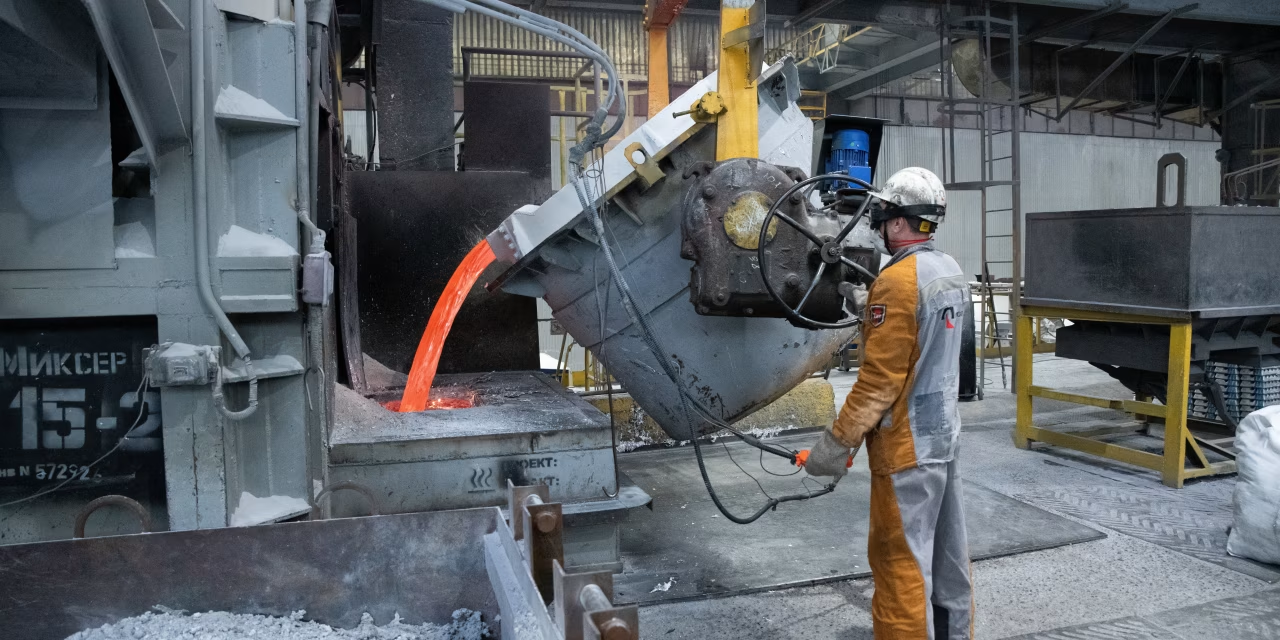
The latest Market Talks covering Basic Materials. Published exclusively on Dow Jones Newswires at 4:20 ET, 12:20 ET and 16:50 ET.
0753 ET – Following Johnson Matthey’s completed sale of Catalyst Technologies, the chemicals group now has greater agency over its future, Jefferies’ Helena Xu and Marcus Dunford-Castro write. The completed 1.325 billion pound sale to Honeywell means the narrative around the London-listed group “now turns on Johnson Matthey’s own delivery rather than deal risk or macro-led sentiment.” Margin growth in the group’s clean air division is key to the investment case for the company, the analysts say. Johnson Matthey’s acquisition of Cormetech is a welcome strategic pivot, given it taps into the fast-expanding U.S. data center pipeline, they say. The analysts reinstate their coverage of the stock at buy. Johnson Matthey shares rise 5.9%. (josephmichael.stonor@wsj.com)
0523 ET – Aluminum Corp. of China seems well-positioned to benefit from tighter global supply of the base metal, given the alumina refiner’s relatively stable power availability and raw material supply, says Fitch Ratings in a note. The Middle East conflict has intensified concerns over the metal’s supply after Gulf smelters were struck, as the region accounts for around 8%-9% of aluminum production. Production curtailments in the region due to the Strait of Hormuz closure should keep aluminum prices elevated in 2027 even if the waterway reopens this year, it adds. Chalco is also likely to benefit from the Chinese government’s support of parent company Chinalco, due to the state-owned enterprise’s strategic importance to China’s energy transition, power infrastructure and resource-security objectives, Fitch says. (megan.cheah@wsj.com)
2356 ET – The outlook for Fortescue’s earnings—and, consequently, dividends—has weakened as the iron-ore miner faces structural cost pressures, says Morgan Stanley. Fortescue’s FY 2027 C1 cost guidance of US$20.50-US$21.75/wet metric ton is roughly 7.8% above consensus midpoint and 13% above FY 2026’s. Fortescue faces longer haul distances, likely increasing absolute diesel consumption, says MS. Iron Bridge also remains a drag on earnings, it says. The bank cuts its EPS estimates by 21% for FY 2027 and 18% for FY 2028. Its dividend forecast drops to 60.6 Australian cents a share in FY 2027—from nearly A$1.13/share in FY 2026—implying a 3.3% yield at a 65% payout. MS cuts its share-price target 9.9% to A$15.55 and reiterates an underweight rating. Shares are at A$17.99. (rhiannon.hoyle@wsj.com; @RhiannonHoyle)
Copyright ©2026 Dow Jones & Company, Inc. All Rights Reserved. 87990cbe856818d5eddac44c7b1cdeb8
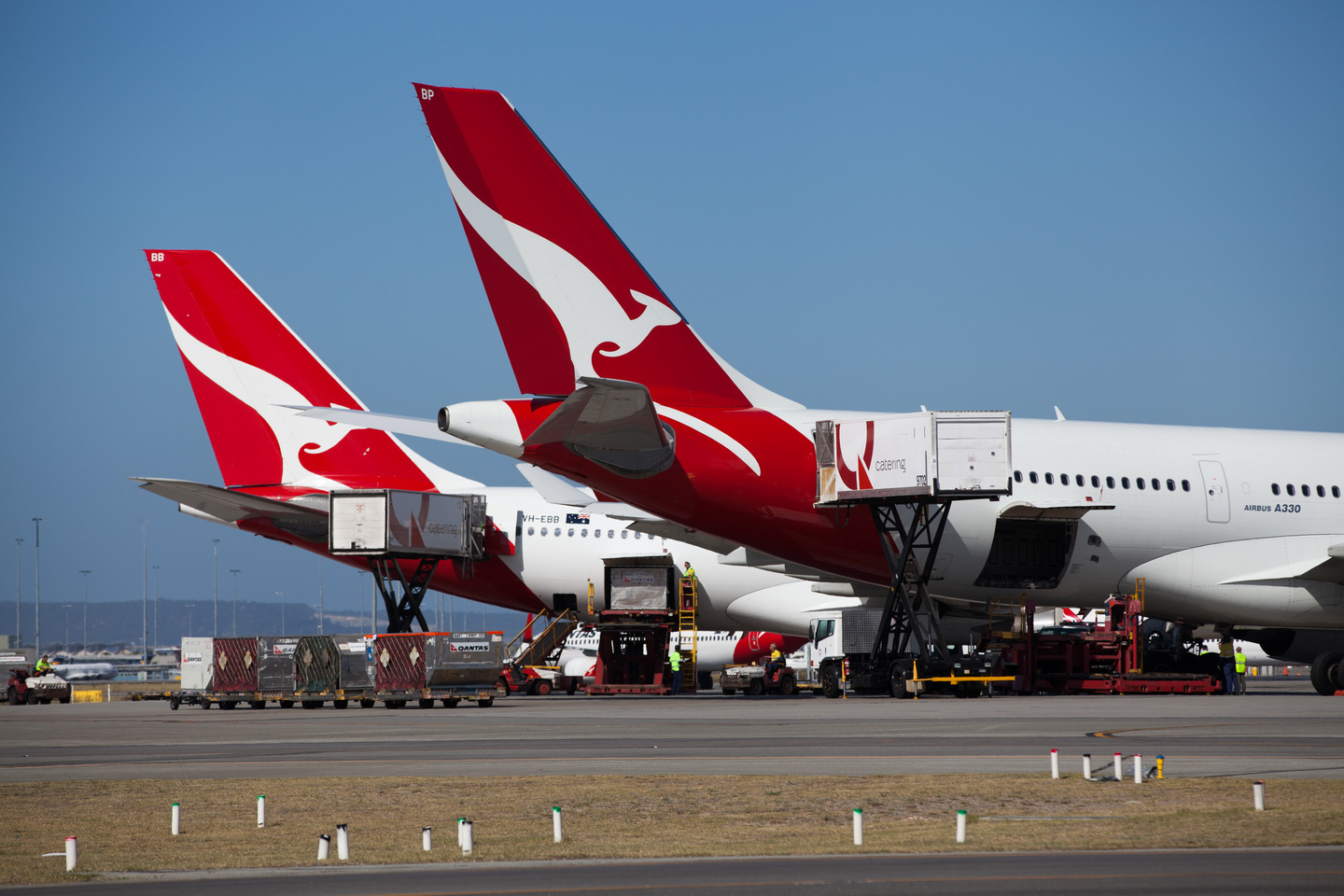
Qantas ground staff could soon walk off the job, potentially leaving hundreds of FIFO flights stranded, amid a bitter dispute between the airline and the Transport Workers Union over pay and conditions.
Business
Oil Price Today (August 6): Crude oil dips below $80 on hopes Iran-Oman deal could end Iran war. What are experts saying?

Crude oil price on August 6
Brent crude futures fell 37 cents, or 0.5%, to $79.08 a barrel, while U.S. West Texas Intermediate (WTI) crude futures dropped 53 cents, or 0.7%, to $74.69 a barrel. Brent had ended marginally higher on Wednesday, whereas WTI settled slightly lower.
A proposed agreement between Iran and Oman aimed at ending the U.S.-Iran conflict would hand Tehran control over ships entering the Gulf through the Strait of Hormuz, a senior Iranian source and two regional officials told Reuters on Wednesday. The proposal marks one of the biggest concessions made to Iran so far.
Also read: Trump claims Iran reached out for talks, says clarity may come in 48 hours
US President Donald Trump has said a deal to reopen the strait is close even as US officials have consistently maintained that they would not agree to Iran controlling access to the world’s most important energy trade route.
Iran has also warned Gulf states that any fresh U.S. attack on its territory would lead to retaliation against key energy infrastructure across the region. The warning is seen as an effort by Tehran to raise the cost of military action by threatening Washington’s closest regional allies.
Separately, Yemen’s Iran-aligned Houthis said on Wednesday they had launched missile attacks on a Saudi oil tanker near the Red Sea port of Yanbu and another Saudi oil tanker in the Gulf of Aden. Saudi Arabia has not confirmed either incident. The risk of Houthi attacks disrupting shipping in the Red Sea continues to temper optimism over a broader recovery in Middle East shipping routes.
What are experts saying?
The outlook for oil prices continues to depend on how long supply disruptions persist. JPMorgan estimates that every additional month of disruption could lift Brent crude prices by about $7 to $8 a barrel. If the disruption extends to three months, the bank expects average monthly Brent prices to reach around $114 a barrel.
Goldman Sachs has also cautioned that Brent could rise to $120 a barrel if disruptions to shipping through the Strait of Hormuz, the world’s most important oil transit route, continue.
Read more:How the Iran war exposed cracks in the US-Israel partnership
Despite that risk, Goldman Sachs’ base case assumes tensions in the Middle East will eventually ease. Under that scenario, the bank expects Brent to average $80 a barrel in the fourth quarter and $75 a barrel next year. However, it said the risks to its forecast remain skewed to the upside, citing the possibility of continued disruptions in the Strait of Hormuz and the Red Sea.
“The direction of our outlook is unchanged; the path and the timeline have shifted. We still expect oil to cool as we move into 2027, for three reasons: supply outside the conflict zone is expanding, with OPEC+ raising production targets, the UAE at record output and non-OPEC barrels responding to price,” said Anindya Banerjee, Head of Commodity Research at Kotak Securities.
(Disclaimer: Recommendations, suggestions, views and opinions given by the experts are their own. These do not represent the views of Economic Times)

Manchester City kicks off the second match of its preseason Asia tour on Wednesday against a K League All-Stars squad in Seoul, South Korea, giving fans around the world a chance to watch new manager Enzo Maresca continue shaping his squad ahead of the 2026-27 Premier League campaign.
The match is being played at Seoul World Cup Stadium, a venue that hosted matches during the 2002 World Cup, with kickoff set for noon local UK time, which translates to 7 a.m. Eastern time in the United States, 8 p.m. in South Korea, 4:30 p.m. in India and 9:30 p.m. in Australia.
How to Watch
The match will not air on traditional television in the United Kingdom or in most markets around the world. Instead, Manchester City is streaming the game live through CITY+, the club’s own in-house subscription streaming service, available on the club’s official website and mobile app. The service costs £34.99 annually or £9.99 per month on its own, or fans can access it as part of a broader Premium Membership package priced at £65 per year, which bundles CITY+ with other club membership benefits.
For fans in South Korea specifically, the CITY+ stream will not be available, since the match is being blacked out in the host country, likely to preserve the value of any local broadcast rights tied to the K League All-Stars’ side. Local South Korean broadcasters may carry separate coverage of the match in that market, though no single confirmed domestic broadcaster had been widely reported ahead of kickoff. Fans without a CITY+ subscription elsewhere can still follow the match through live audio commentary available via the Matchday Centre on Manchester City’s official website and app, along with in-game highlights and text updates.
Manchester City has also confirmed that extended highlights and a full-match replay will be made available on CITY+ shortly after the final whistle for subscribers who are unable to watch the match live given the early morning kickoff time in markets such as the United States.
Part of a Broader Asia Tour
Wednesday’s match against the K League All-Stars is the second of three fixtures on Manchester City’s preseason tour of Asia. The club opened its tour with a match against Inter Milan in Hong Kong, which finished 1-1 after Divin Mubama opened the scoring for City before Benjamin Pavard equalized for the Italian side, with Inter ultimately winning the ensuing penalty shootout. City will close out its Asia tour on Sunday, Aug. 9, with a match against Atletico Madrid, also kicking off at noon UK time and also streamed live through CITY+.
This marks City’s first meeting with a K League All-Stars selection since previously playing in South Korea as recently as 2023, a trip the club has described as reflecting the strong fan interest in both Manchester City and the broader European game within the country. The K League All-Stars format brings together a squad of standout players drawn from across South Korea’s top-flight domestic league to face a single high-profile international opponent, a fixture that has become an annual preseason tradition for major European clubs touring the region.
A Tricky Opponent
Despite representing an exhibition-style selection rather than a traditional club side, the K League All-Stars have built a reputation in recent years for competing closely with elite European opposition. The squad defeated Newcastle United in a 2025 exhibition match and pushed Tottenham Hotspur to a narrow 4-3 defeat in a 2024 meeting, results that suggest Wednesday’s fixture could prove more competitive than a typical preseason friendly against a similarly assembled all-star side.
A New Era Under Maresca
Wednesday’s match comes at a significant moment for Manchester City, marking the beginning of the club’s first full season since the departure of longtime manager Pep Guardiola. New head coach Enzo Maresca is using the preseason tour to evaluate his squad and begin implementing his own tactical approach ahead of City’s bid to reclaim the Premier League title from Arsenal.
Several key first-team players remain unavailable for the match following their participation at the FIFA World Cup earlier this summer, including Erling Haaland, Rodri, Nico O’Reilly, Elliot Anderson and Jérémy Doku. Rodri in particular is expected to be sidelined for an extended period after the club confirmed he underwent minor back surgery, a development that comes amid reported interest from Real Madrid in the Spanish midfielder. Meanwhile, Rúben Dias, Matheus Nunes and Omar Marmoush have rejoined the touring squad in South Korea after being unavailable for City’s opening match against Inter Milan, and are expected to feature for at least a portion of Wednesday’s match.
According to team news reported ahead of kickoff, City’s starting lineup for the match against the K League All-Stars was expected to include Gianluigi Donnarumma in goal behind a backline of Khusanov, Dias as captain, Gvardiol and Ait-Nouri, with Lewis, Kovacic and Reijnders anchoring midfield, and Foden, Mubama and Semenyo leading the attacking line.
With City set to face Atletico Madrid in its final Asia tour match on Sunday before returning to Europe to complete preseason preparations, Wednesday’s match against the K League All-Stars represents an important step in Maresca’s effort to build cohesion within his squad ahead of a Premier League campaign that will see City looking to reclaim the title after Arsenal’s triumph the previous season. Fans looking to follow the match in real time are encouraged to confirm their regional CITY+ availability ahead of kickoff, given the blackout restrictions in place for South Korean viewers and the early morning start time facing audiences across North and South America.
Yes. Corporate subscriptions are available for teams and organisations, with discounted rates as user numbers increase. Pricing starts from $1,625 + GST per user.
Get in touch
to discuss the right option for your organisation.
Business News subscriptions are used by executives, investors, consultants and professionals who need to stay informed and make better decisions about the WA market. When you subscribe you’ll get
- Unlimited access to WA’s most trusted business journalism
- Data & Insights — detailed profiles of WA companies, people, projects and deals
- MyBN — a personalised feed based on the companies, people and sectors you follow
- Special publications and industry reports
- Daily and weekly email newsletters
Data & Insights is a research tool built specifically for the WA market. It draws on more than 30 years of Business News reporting, updated regularly to reflect what’s happening now. Use it to:
- Look up detailed profiles of WA companies, including financials, directors and ownership
- Find decision-makers and track their career movements
- Research live and completed projects across WA industries
- Monitor deals, appointments and market activity
- Access industry rankings and league tables
Data & Insights is updated daily by our dedicated research team, which uses the latest announcements, ASX filings and editorial coverage to keep our person, company, list and project records up to date.
Business News welcome all opportunities to make our dataset accurate, complete and current, so if you have an update request, please email the team at
general@businessnews.com.au, and we’d be happy to assist.
MyBN
is part of every subscription. It’s your personalised view of Business News. You can follow the companies, people, sectors and projects that matter to you, and get a news feed and alerts tailored to your interests. You can save articles to read later and retain only what you need.
Only subscribers have full access to all content on the Business News website.
If staying informed about the WA economy is part of your job, and/or you’re looking for networking opportunities in WA, Business News is built for you.
Business News subscribers are:
- Executives and directors tracking competitors, clients and market movements
- Investors and advisers researching companies, deals and industry trends
- Consultants and professionals staying across sectors relevant to their clients
- Business owners looking for leads, context and market intelligence
Most Business News publications cover national or global markets. Business News is focused entirely on Western Australia, which means the journalism, the data and the intelligence are all built around WA companies, people and projects — not adapted from a national feed. Data & Insights, included with every subscription, combines more than 30 years of WA-specific editorial research with live business data. There’s no comparable product for the WA market.
The Morning Digest Email provides a comprehensive wrap of the major headlines, relevant to WA business, and includes with a snapshot of the overnight news covering oil, gold and ASX-listed companies.
The Afternoon Wrap Email focuses on the news covered by our team of journalists during the course of the working day, including exclusive stories and analysis, all of which relates to WA business and the local economy.
The BN Weekender Email contains a wrap of the Business News from the week that was, highlighting the top stories in each area of WA business.
Sign up for free.
We’re happy to help.
Get in touch
and our team will come back to you.
Palantir: I Am Raising My Price Target As AIP Momentum Accelerates

Trump Has an Open Line to the Fed Chair. Nixon Tried That Too.

At Vikings Training Camp, it’s Case Closed on Key Roster Competition


-

 Fashion5 days ago
Weekend Open Thread: Wit & Wisdom
-

 Politics5 days ago
Meta enters AI-training agreement with far-right ‘propaganda rag’ Newsmax
-

 Politics3 days ago
Zack Polanski: an incitement to murder Nigel Farage?
-

 Crypto World5 days ago
MicroStrategy Post-Earnings CLARITY Act Push Could Add New Catalyst for Its Stock
-

 Crypto World5 days ago
XRP Ledger v3.3.0 brings five institutional features
-

 News Videos7 days ago
Bitcoin Enters the 3rd Stage of the Bear Market
-

 Politics7 days ago
Luke Littler’s dominance sparks GOAT debate
-

 Sports6 days ago
Seema Kaliramna Wins Discus Throw Bronze, Takes India’s CWG Medals Tally To 17
-

 Crypto World5 days ago
New York sues Kalshi over prediction market gambling
-

 Crypto World4 days ago
Crypto PAC spending tops $2M in Michigan House race
-

 Business3 days ago
DTCR: Deleveraging And A Hedge Fund Collapse Point To A Possible AI Bottom
-

 Business6 days ago
Trump Announces Hamas Disarmament Agreement as Iran Strikes Kuwait Air Base and US Attacks Pause Overnight
-
 Crypto World5 days ago
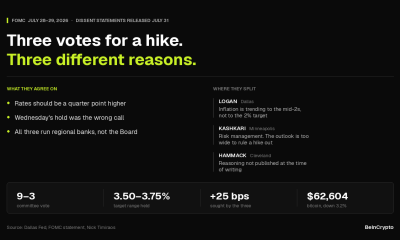
3 Fed Officials Just Explained Their Rate Hike Vote: Is Inflation Winning?
-

 Tech4 days ago
ESET tracks rise in malicious AI skills and adaptable malware
-

 Sports5 days ago
France Cricket implodes: letters hidden in a drawer and a board at war
-

 NewsBeat7 days ago
Four people die trying to cross Channel in small boats
-

 Tech6 days ago
Gemini Spark can now use Chrome logins and saved passwords to run errands on your behalf
-

 Tech6 days ago
Building A Reproduction PlayStation Motherboard
-
Crypto World4 days ago
XRP Ledger urges node upgrade after manifest flood
-

 Crypto World5 days ago
Moneyflip CEO charged in $40K murder-for-hire plot
You must be logged in to post a comment Login