

Business
Metal shares surge as West Asia conflict fuels global aluminium price spike

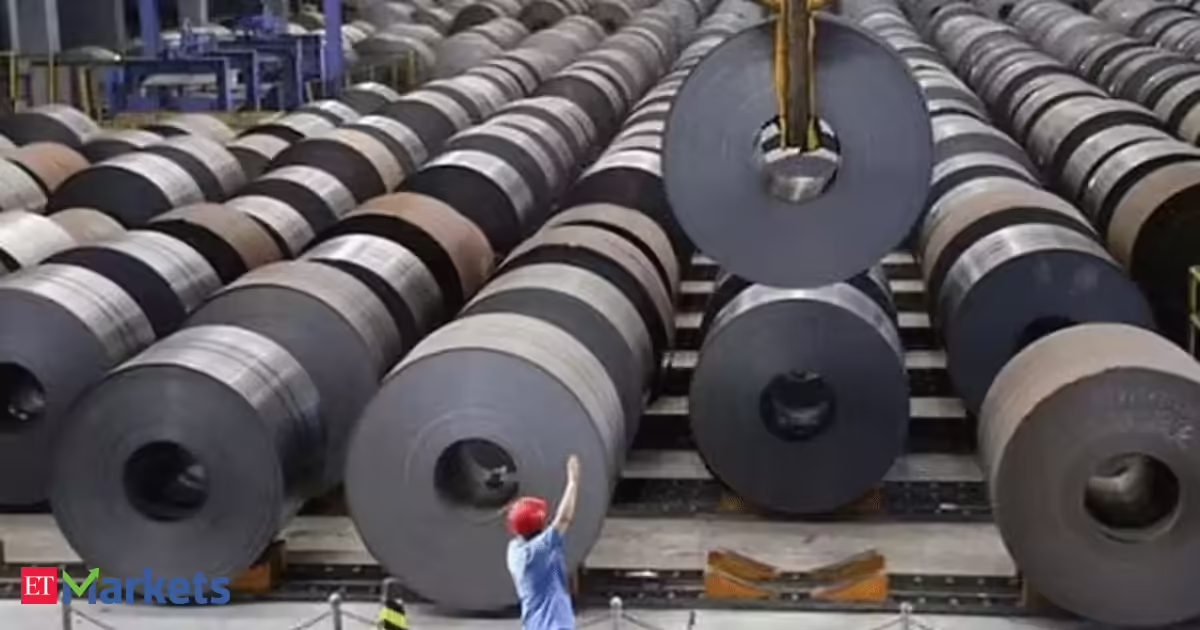
National Aluminium Co jumped 6.6% Thursday. Hindalco, Lloyds Metals, and Welspun Corp gained over 3% each, while JSW Steel and NMDC rose 2.9% and 2.4%, respectively.
The Nifty Metal Index gained 2.3%, while the benchmark Nifty rose 1.2% on Thursday. All constituents of the metal index ended higher except Steel Authority of India.
“Base metal prices have risen after the closure of the Strait of Hormuz, which implies supply constraints,” said Jateen Trivedi, VP Research Analyst – Commodity and Currency, LKP Securities. “Shipments through this sea route have declined, and the situation remains critical.”
 Agencies
Stocks gain upto 6% led by aluminium players; Any rally to be violent & volatile, warn analysts
West Asia accounts for around 8% of global aluminium capacity. It is heavily reliant on the Strait of Hormuz for both metal exports and alumina imports, with key producers, including Saudi Arabia, the UAE and Bahrain, according to ING.

The closure of Qatalum’s aluminium mine operations in Qatar has been a key concern over potential supply shortages. Given the widening West Asia conflict, Aluminium Bahrain, which runs one of the world’s largest smelters, warned customers on Wednesday that it had halted shipments, stoking supply concerns, according to a Reuters report.
“This has played out during the Russia-Ukraine war in 2022 when Russian mines were closed due to the conflict and sanctions,” said Trivedi.Aluminium prices rose nearly 1% on Thursday but later erased gains to trade 0.8% lower. So far in March, base metal prices have jumped 5.2%
“Higher aluminium prices indicate improved realisations and translate into better earnings for these companies, which has boosted share prices,” said Vyom Chheda, Research Analyst, StoxBox. Although aluminium prices have moved higher in the last couple of sessions, bearish investor sentiment over the past two sessions outweighed the gains expected from higher base metal prices, Chheda said.
Over the past month, the Nifty Metal Index has climbed 1.1%, while the benchmark Nifty has dropped 3.4%. Trivedi said aluminium prices are expected to move in the broad range of $3100–$3500 in the near term, with sharp swings anticipated.
“Metal stocks are expected to inch higher; however, the rally is expected to be violent and volatile,” said Trivedi, whose top picks are Hindalco and Nalco. If Tata Steel and JSW Steel fall 5–10%, they are also attractive bets, said Trivedi. In 2026, the Nifty Metal Index has surged 7.1%, while the benchmark Nifty has tumbled 5.3%. “The rally in metal stocks is expected to continue as demand remains robust and supply is expected to remain capped in the near term,” said Chheda. “Hindustan Zinc and Nalco are the top bets in the sector,” he said.


As the 2026 World Baseball Classic unfolds across international venues, fans are quickly encountering one of the tournament’s most distinctive rules: the mercy rule, also known as the run-rule or slaughter rule. Unlike Major League Baseball, where games continue regardless of score differential, the WBC incorporates this provision to prevent excessively lopsided contests, protect pitching staffs and maintain competitive balance in early rounds.

The mercy rule applies strictly during pool play (first round) and the quarterfinals. A game ends early if one team leads by 15 or more runs after the completion of five innings or by 10 or more runs after seven innings. The threshold must be met at the end of a full inning — no mid-inning stoppages — and the trailing team must have completed the required frames. For example, if a team is ahead 15-0 after five innings, umpires call the game immediately, sparing further play.
This structure draws from international baseball norms set by the World Baseball Softball Confederation (WBSC), which has long used run-ahead rules in global competitions. The WBC adopted similar guidelines starting with its inaugural 2006 tournament, adding the 15-run threshold after five innings to address potential blowouts in a short-pool format where teams play only a few games. The rule vanishes in the semifinals and championship, ensuring full nine-inning battles for the title regardless of margin.
The 2026 edition retains these thresholds unchanged from prior tournaments like 2023. Official MLB and WBC announcements confirm games follow the 2025 Official Baseball Rules with supplements, including the mercy provision for pool and quarterfinal stages. No adjustments were made for this cycle despite discussions on pitch counts, pitch clocks (15 seconds bases empty, 18 with runners) and other tweaks to align with modern MLB pacing.
The mercy rule serves multiple purposes. In a tournament featuring mismatched talent levels — powerhouse nations like Japan, the United States, Dominican Republic and Venezuela often face emerging programs — it prevents humiliation while conserving arms for later matchups. Pitcher usage limits (e.g., rest requirements after high-pitch outings) amplify the need to avoid drawn-out routs. It also ties into tiebreaker scenarios: run differential factors heavily when teams finish with identical records, so avoiding unnecessary runs can preserve standings positions.
Critics argue the rule detracts from prestige, especially when star-studded lineups face off. Yet supporters note it mirrors youth and amateur levels (e.g., Little League’s similar thresholds) and protects players in a high-stakes event where injuries or fatigue could impact club seasons. Past WBCs saw the rule invoked sparingly — often in mismatches involving qualifiers — but its presence adds strategic layers: teams may push early leads aggressively knowing mercy could shorten games.
As the 2026 tournament progresses (with pool play underway and high-scoring early games prompting discussions), the mercy rule remains a key differentiator from MLB’s no-run-limit approach. Fans tracking games should watch for blowout alerts, as umpires enforce it promptly once criteria are met post-inning.
The provision underscores the WBC’s balance of elite competition and practical tournament management, ensuring shorter, more decisive outcomes in non-knockout phases while preserving drama for the final rounds.


I’m a full-time individual investor with over ten years of experience in the stock market. I look for asymmetric opportunities—situations where the potential upside is much bigger than the downside—even if the timing or exact path is uncertain. I often lean toward classic value ideas, but I’m happy to explore growth or tech opportunities when the risk-reward ratio is compelling. I especially enjoy digging into businesses that are overlooked or out of favor in the current market environment. Writing on Seeking Alpha gives me the chance to share my thoughts and investment ideas with a broader audience. My aim is to provide clear and useful analysis, but I also simply enjoy the process. Investing is something I’m genuinely passionate about, and writing allows me to turn that passion into conversations with other investors.
Analyst’s Disclosure: I/we have a beneficial long position in the shares of ABX either through stock ownership, options, or other derivatives. I wrote this article myself, and it expresses my own opinions. I am not receiving compensation for it (other than from Seeking Alpha). I have no business relationship with any company whose stock is mentioned in this article.
Seeking Alpha’s Disclosure: Past performance is no guarantee of future results. No recommendation or advice is being given as to whether any investment is suitable for a particular investor. Any views or opinions expressed above may not reflect those of Seeking Alpha as a whole. Seeking Alpha is not a licensed securities dealer, broker or US investment adviser or investment bank. Our analysts are third party authors that include both professional investors and individual investors who may not be licensed or certified by any institute or regulatory body.

Listen on the go! A daily podcast of Wall Street Breakfast will be available by 8:00 a.m. on Seeking Alpha, iTunes, Spotify.

Getty Images
Up for a challenge? Test your knowledge on the biggest events in the investing world over the past week. Take the latest Seeking Alpha News Quiz and see how you stack up against the competition.
Good morning! Here’s the latest in trending:
Jobs Day: Don’t expect February’s nonfarm payrolls report to repeat January’s upside surprise.
AI feud: The Pentagon has designated Anthropic as a “supply chain risk,” prompting the startup behind Claude to challenge the label in court.
The response: History says the Fed is key to counter a recession from oil shocks, but any reaction to the Iran war will likely depend on duration.
Crude oil has officially topped $80 per barrel as the conflict in Iran continues to escalate. The WTI benchmark (CL1:COM) has surged 21% since closing at $67.02 just before the war commenced last Saturday amid increased risks to the global oil trade and the Strait of Hormuz. A fifth of the world’s oil and gas flows through the strategic waterway, but tanker traffic there has ground to a halt, with hundreds of ships trapped on each side of the critical chokepoint. China presses Iran for safe passage
Snapshot: The national average cost of gasoline has additionally climbed by 34 cents over the past week to $3.32 per gallon, according to AAA, erasing all of the savings seen since President Trump took office. “If they rise, they rise,” Trump declared in response to the spike in energy prices, saying “they’ll drop very rapidly when this is over” and the current campaign is “far more important than having gasoline prices go up a little bit.” For now, the bet is that a 4-to-5-week conflict will prove the spike is temporary, but emergency measures are being entertained if things get prolonged or prices spiral out of control. U.S. must have a role in choosing Iran’s next leader
The first plan announced by the administration is to provide insurance guarantees and U.S. Navy escorts for oil tankers and other vessels traveling through the Strait of Hormuz. Other options under consideration range from a federal gasoline tax holiday and higher ethanol blends to having the U.S. Treasury trade oil futures and drawing from the Strategic Petroleum Reserve (which is hovering at 60% capacity after being heavily tapped by the Biden administration during the Ukraine war). Looking to ease global supply, the U.S. also just issued a 30-day waiver to India for purchasing crude from Russia. Shipping industry sees pledge to reopen Hormuz as only partial fix
Elsewhere: Oil is not the only commodity that has policymakers worried about an energy crunch. While the U.S. is largely insulated against natural gas disruptions due to its large domestic production, alarm bells are going off in Europe as prices jumped 70% over the past week. It comes as the highly import-dependent EU was about to phase in a ban on Russian LNG imports, while climate ambitions that saw the bloc pivot away from nuclear and coal might be a wake-up call for carbon credits and its broader emissions trading system. (6 comments)
Here’s the latest Seeking Alpha analysis
Top 10 Defense Stocks As Mideast Conflict Escalates
Rethinking Long-Term Investing
SCHD: Aren’t You Glad You Didn’t Sell?
Software Likely Bottomed Last Week: 3 Companies I’m Buying
What else is happening…
Report: UAE weighs freezing billions of dollars of Iranian assets.
Broadcom’s (AVGO) outlook shows the AI party isn’t slowing down.
Marvell (MRVL) shoots up as earnings and guidance beat estimates.
Robinhood (HOOD) enters premium credit card battle with new launch.
Trump removes Kristi Noem as DHS head after congressional clashes.
Beyond oil deals: U.S. and Venezuela re-establish diplomatic ties.
Oracle (ORCL) to fire thousands due to AI data center buildout costs.
China approves Pfizer’s (PFE) GLP-1 drug for weight management.
Airline stocks lose altitude amid Middle East disruptions, fuel surge.
U.S. weighs permits for Nvidia (NVDA), AMD global AI chip sales.
Today’s Markets
In Asia, Japan +0.6%. Hong Kong +1.7%. China +0.4%. India -1.4%.
In Europe, at midday, London -0.3%. Paris -0.5%. Frankfurt -0.2%.
Futures at 6:30, Dow -0.2%. S&P -0.3%. Nasdaq -0.4%. Crude +4% to $84.26. Gold +0.5% to $5,102.30. Bitcoin -3.5% to $70,565.
Ten-year Treasury Yield +3 bps to 4.17%.
On The Calendar
Companies reporting today include Embraer (EMBJ) and Tsakos Energy Navigation (TEN).
See the full earnings calendar on Seeking Alpha, as well as today’s economic calendar.

Roy Twite
CEO & Director
Good morning, everyone, and welcome to IMI’s 2025 Full Year Results Presentation. I am joined here today by our CFO, Luke Grant. Together, we will take you through another year of strong strategic and financial progress. And I would like to begin by thanking all of our people for their tremendous contribution.
The execution of our growth strategy is creating significant value for shareholders, and it was another strong performance in 2025. We have now delivered 5 consecutive years of mid-single-digit organic revenue growth and supported by the delivery of our financial framework, we are compounding earnings growth. We delivered 5% organic sales growth and 8% organic adjusted operating profit in 2025 and achieved a 20% operating margin for the first time.
It was another year of strong cash generation, and we are committed to deploying this capital for growth and to enhance shareholder returns. Organic investment is at record levels, and I am pleased to be announcing a GBP 500 million share buyback alongside a proposed 10% increase to the final dividend.
We expect to deliver our sixth consecutive year of mid-single-digit organic growth in 2026. And based on current market conditions, full year adjusted basic EPS is expected to be between 136p and 142p.
IMI has
Business
(VIDEO) Shohei Ohtani Crushes Grand Slam in Japan’s Dominant WBC Opener Against Chinese Taipei
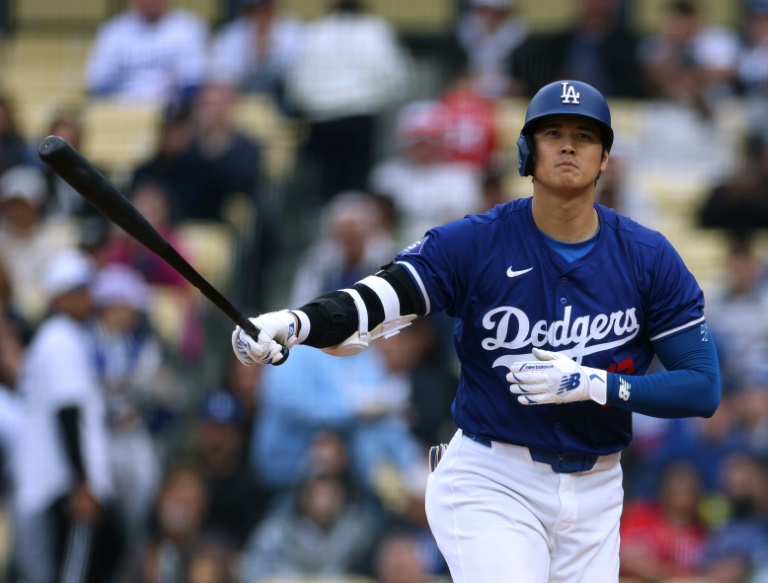
Shohei Ohtani wasted no time asserting his dominance on the international stage, blasting a grand slam in the second inning to ignite Japan’s explosive offense in a commanding 13-0 victory over Chinese Taipei on Friday, March 6, 2026, at Tokyo Dome. The defending champions opened their 2026 World Baseball Classic Pool C campaign with a rout, showcasing the firepower that made them favorites to repeat as titleholders.
AFP
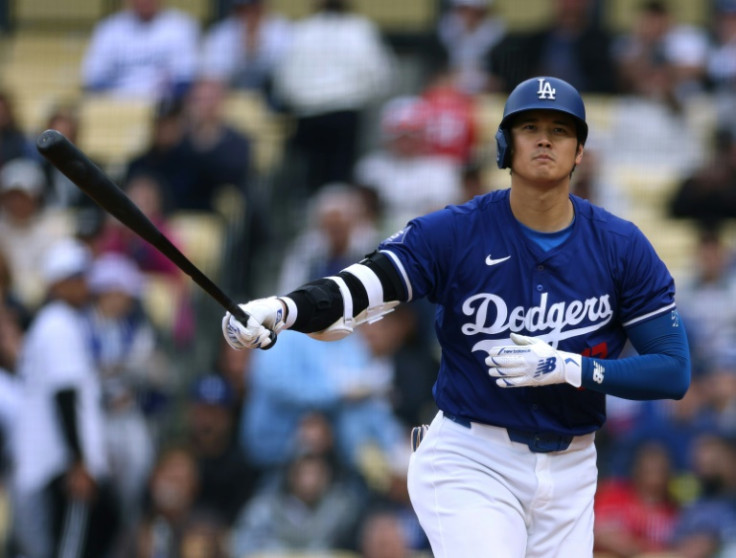
Ohtani, the Los Angeles Dodgers superstar serving as designated hitter (not pitching per team agreement), set the tone early. In the first inning, he doubled to right field off Taipei starter Hao-Chun Cheng. Then, in the second, with the bases loaded — thanks to singles by Munetaka Murakami, Shugo Maki and Sosuke Genda — Ohtani crushed a 2-1 curveball deep to right field for his grand slam. The shot gave Japan an immediate 4-0 lead and sparked a historic 10-run frame, the most runs scored in a single inning in WBC history.
The Dodgers two-way phenom finished 3-for-4 with five RBIs, adding a single later that drove in another run. His performance electrified the capacity crowd at Tokyo Dome, where fans waved Japanese flags and chanted his name throughout. The grand slam — a towering drive estimated at 368 feet — came amid high expectations for Ohtani, who helped Japan win the 2023 WBC with a dramatic final out against Mike Trout.
Japan’s offense exploded from there. Masataka Yoshida tripled home a run in the same inning, and additional hits from Seiya Suzuki, Kazuma Okamoto and others piled on. By the end of the second, Japan led 10-0. The barrage continued with more runs in later frames, including RBIs from Yuki Wakatsuki and others, pushing the total to 13. Chinese Taipei managed just three hits and no runs against a stingy Japanese pitching staff led by Yoshinobu Yamamoto and relievers.
The mercy rule loomed but was not invoked, as the game continued to full length despite the lopsided score. Japan’s pitching held Taipei scoreless, with strong relief work preserving the shutout. The victory improved Japan’s record to 1-0 in Pool C, while Chinese Taipei dropped to 0-2 after an earlier loss to Australia.
Ohtani’s grand slam highlighted his readiness for the tournament. Speaking pre-game, he emphasized a “less is more” approach for defending champions, focusing on execution over flash. His early heroics validated that mindset, putting pressure on Pool C rivals Australia, Korea and Czechia.
The win reinforces Japan’s status as a powerhouse, blending MLB stars like Ohtani, Yamamoto and Suzuki with NPB standouts. Chinese Taipei, despite a competitive roster, struggled against elite pitching and committed errors that fueled Japan’s rally.
As Pool C play continues, Japan eyes a strong run toward the quarterfinals. Ohtani’s milestone moment — his first grand slam in WBC play — sets a high bar for the defending champs in their quest for back-to-back titles.
The Tokyo Dome crowd’s energy and Ohtani’s star power made the opener a spectacle, reminding the baseball world why the WBC captivates globally. With Japan rolling early, the path to another championship looks promising.
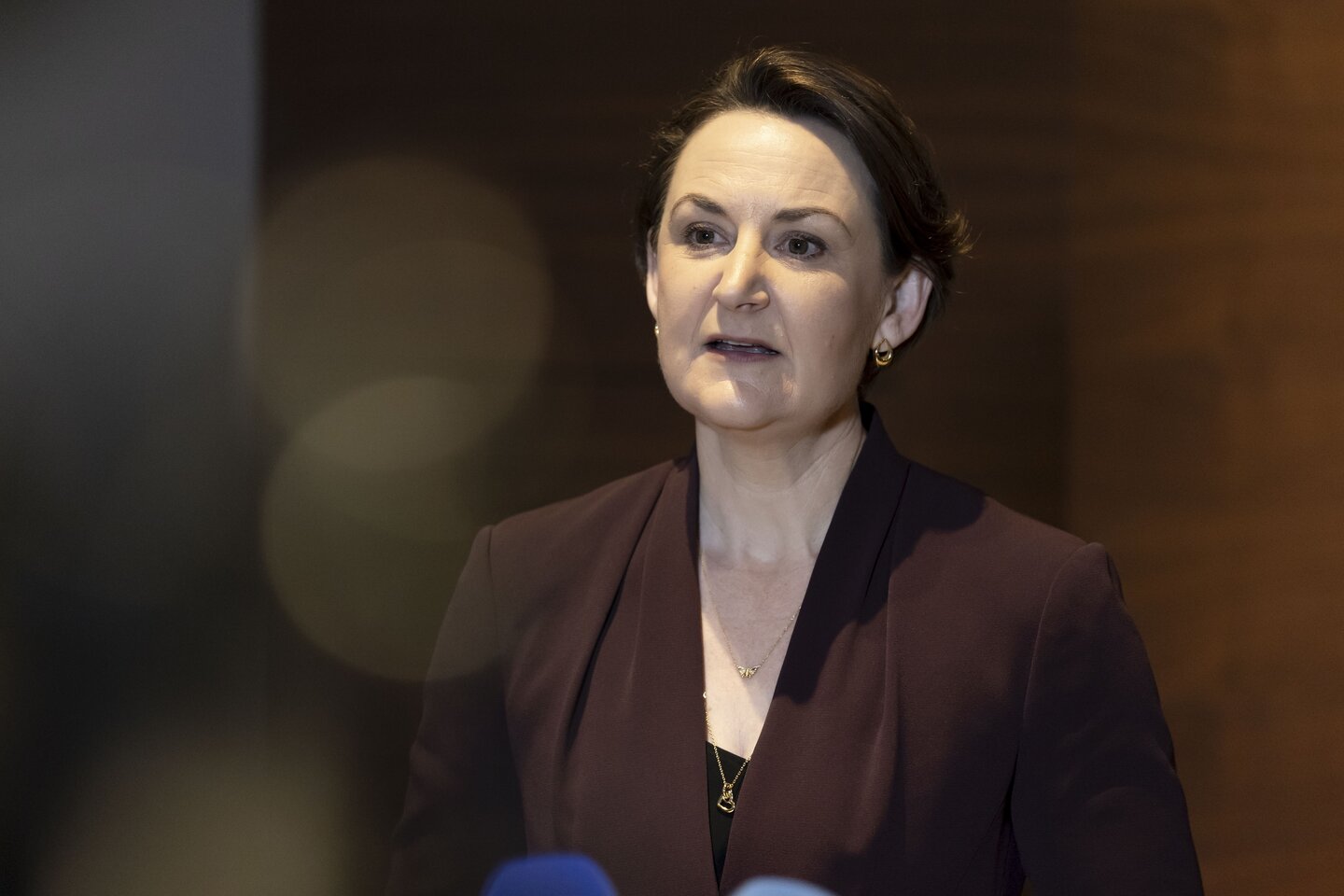
The state opposition has accused the government of backtracking on its coal power phase out target, following comments by the energy minister to ABC Perth this morning.

BofA cuts Nexi stock rating on weak results, softer outlook
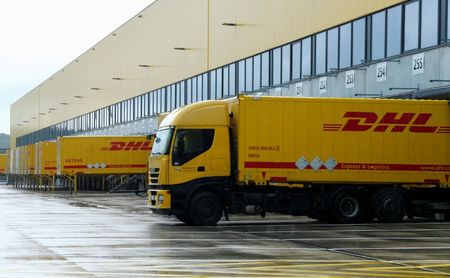
DHL shares up after Barclays upgrade to “overweight,” PT raised by 26%
Business
Frasers Group builds 6% stake in Puma as Mike Ashley targets turnaround at struggling sportswear brand
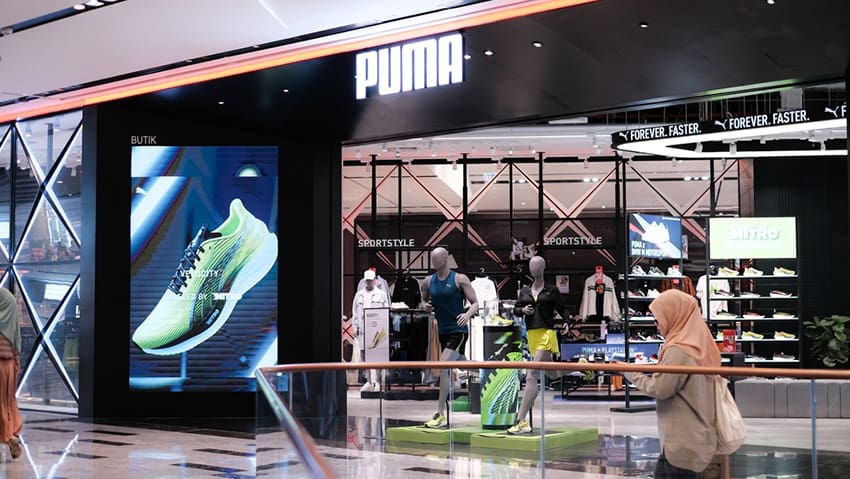
Mike Ashley’s retail empire has added another high-profile investment to its portfolio after Frasers Group quietly built a near 6 per cent stake in the German sportswear brand Puma.
Regulatory filings on the German stock exchange revealed that the owner of Sports Direct, Flannels and House of Fraser now controls a 5.77 per cent holding in Puma. The disclosure triggered an immediate reaction in the market, sending Puma’s shares up almost 10 per cent as investors interpreted the move as a potential vote of confidence in the struggling brand.
The investment makes Frasers Group the second-largest shareholder in Puma, just weeks after the Chinese sportswear giant Anta Sports agreed to acquire a 29.1 per cent stake in the business for €1.5 billion from the French billionaire Pinault family.
Frasers’ position has reportedly been assembled through a series of put option agreements linked to Puma shares, a financial strategy that allows the group to build exposure to the company without immediately purchasing large blocks of stock in the open market.
The move highlights Frasers’ increasingly active role as a strategic investor in global fashion and retail brands. Founded by Mike Ashley in 1982, the group has built a reputation for taking minority stakes in companies and using its influence to push for operational or strategic changes.
Although Ashley stepped down from day-to-day leadership in 2022, the business is now run by his son-in-law, Michael Murray, who has continued the strategy of investing in key partners and competitors across the retail sector.
Puma is already a major supplier of trainers and sportswear to Sports Direct, Frasers’ flagship retail chain. Strengthening its shareholding could give the British retailer additional influence in the brand’s future strategy and product development.
The investment comes at a turbulent moment for Puma, which has struggled to keep pace with rivals such as Nike and Adidas.
The company issued several profit warnings last year and has been undergoing a restructuring programme aimed at restoring profitability and rebuilding its brand position in the global sportswear market.
Earlier this year, Puma reported a record annual loss of €645.5 million and declining sales, forcing the company to scrap its dividend and announce plans to cut around 900 jobs as part of its turnaround effort.
The restructuring is being led by the company’s new chief executive, Arthur Hoeld, who has signalled that the brand needs to fundamentally rethink its product strategy and global positioning.
Hoeld has acknowledged that demand for Puma footwear has weakened significantly in recent years and said the company must take a “hard look at ourselves” as it attempts to recover market share.
Like many consumer brands, Puma has also been hit by broader macroeconomic pressures. Slowing consumer demand in the United States, geopolitical uncertainty and trade tensions have all contributed to a challenging environment for global retail companies.
Tariffs introduced during the presidency of Donald Trump have added additional costs to international supply chains, while weakening consumer confidence has weighed on discretionary spending.
Despite these pressures, Puma’s share price has begun to recover after falling to a near ten-year low of around €15 late last year. The stock recently closed at €22.62, helped by renewed investor interest following the Anta investment and Frasers’ latest move.
Frasers’ stake in Puma is the latest example of the group’s aggressive investment strategy across the retail and fashion sector.
In recent years the company has accumulated significant stakes in several major brands and retailers, including Hugo Boss, where it holds roughly a 25 per cent stake, Asos, Boohoo Group and Mulberry.
The group has frequently used these stakes to exert pressure on management teams and influence strategic decisions.
A long-running dispute with Boohoo, for example, saw Frasers attempt to install Mike Ashley as chief executive and block the company’s efforts to rebrand its holding entity as Debenhams.
Similarly, Frasers has recently increased its position in Asos and voted against all board resolutions at the online retailer’s annual general meeting, signalling dissatisfaction with its performance and strategy.
The new investment by Frasers comes shortly after Anta Sports’ landmark purchase of a 29.1 per cent stake in Puma from the Pinault family, which had been the sportswear company’s largest shareholder for many years.
Anta said the deal was part of its broader strategy to expand its portfolio of international brands and strengthen its position in the global sportswear market.
The company described the acquisition as a “major step forward in our single-focus, multi-brand globalisation strategy”, although it said it had no immediate plans to launch a full takeover bid for Puma.
Founded in 1991, Anta has grown rapidly into one of the world’s largest sportswear groups and already owns several global brands, including outdoor apparel company Jack Wolfskin.
With Anta and Frasers now holding significant stakes, analysts expect the ownership structure of Puma to come under increasing scrutiny.
The presence of two powerful strategic shareholders could reshape the company’s direction, particularly if they push for changes to product development, distribution strategies or management structures.
For Frasers, the investment reinforces its broader strategy of building influence across the global retail ecosystem, strengthening relationships with key brands while positioning itself to benefit from any recovery in the sportswear market.
Whether the stake leads to deeper collaboration with Puma or more active shareholder involvement remains to be seen, but the move signals that Mike Ashley’s retail empire is continuing to expand its influence well beyond Britain’s high street.

Jamie Young
Jamie is Senior Reporter at Business Matters, bringing over a decade of experience in UK SME business reporting.
Jamie holds a degree in Business Administration and regularly participates in industry conferences and workshops.
When not reporting on the latest business developments, Jamie is passionate about mentoring up-and-coming journalists and entrepreneurs to inspire the next generation of business leaders.
Algonquin Power stock edge up on Q4 beat despite below expectation 2027 guide

Bank employees detained and cash seized in Hungary, Ukraine says

This New to Digital Horror Movie Sets the Bar High for Most Terrifying Kill of 2026

Newbridge Silverware Earrings for Women 2026 – New Collection


-

 Politics3 days ago
Alan Cumming Brands Baftas Ceremony A ‘Triggering S**tshow’
-

 Fashion7 days ago
Weekend Open Thread: Iris Top
-

 Tech5 days ago
Unihertz’s Titan 2 Elite Arrives Just as Physical Keyboards Refuse to Fade Away
-

 NewsBeat6 days ago
Abusive parents will now be treated like sex offenders and placed on a ‘child cruelty register’ | News UK
-
 NewsBeat6 days ago
Dubai flights cancelled as Brit told airspace closed ’10 minutes after boarding’
-
Sports6 days ago
The Vikings Need a Duck
-
 NewsBeat6 days ago
The empty pub on busy Cambridge road that has been boarded up for years
-

 NewsBeat5 days ago
‘Significant’ damage to boarded-up Horden house after fire
-

 Tech1 day ago
Bitwarden adds support for passkey login on Windows 11
-

 Entertainment4 days ago
Baby Gear Guide: Strollers, Car Seats
-
 Sports18 hours ago
499 runs and 34 sixes later, India beat England to enter T20 World Cup final | Cricket News
-
Politics5 days ago
FIFA hypocrisy after Israel murder over 400 Palestinian footballers
-
 NewsBeat5 days ago
Emirates confirms when flights will resume amid Dubai airport chaos
-

 NewsBeat4 days ago
Is it acceptable to comment on the appearance of strangers in public? Readers discuss
-

 Tech5 days ago
Viral ad shows aged Musk, Altman, and Bezos using jobless humans to power AI
-

 Video4 days ago
How to Build Finance Dashboards With AI in Minutes
-

 Business2 days ago
Guthrie Disappearance Enters Fifth Week as Family Visits Memorial
-
 Crypto World5 days ago
US Judge Lets Binance Unregistered Token Class Action Proceed
-
 NewsBeat4 days ago
Ukraine-Russia war latest: Belgium releases video showing forces boarding Russian shadow fleet oil tanker
-

 Fashion5 days ago
On the Scene at the 57th Annual NAACP Image Awards: Teyana Taylor in Black Ashi Studio, Colman Domingo in Yellow Sergio Hudson, Chloe Bailey in Christian Siriano, and More!