

Business
Micron: The Mirage Of A Single-Digit P/E Ratio


Business
Conor McGregor Says He’s ‘Beyond Dark’ After Suspected Torn ACL Ends UFC 329 Comeback in 69 Seconds
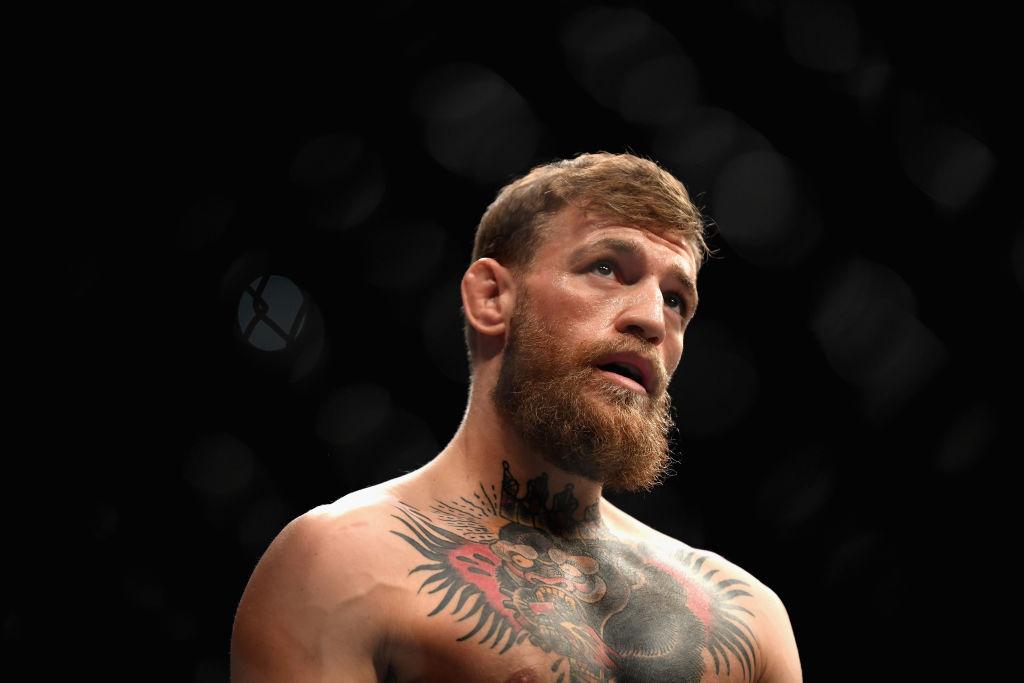
Conor McGregor broke his silence Sunday after his long-awaited UFC comeback ended in devastating fashion at UFC 329, denying he entered his fight against Max Holloway with any pre-existing injury and describing the aftermath of a suspected torn ACL as “hell.”
McGregor’s return to the octagon, his first fight in five years, lasted just 69 seconds. The 37-year-old Irishman opened the bout by rushing across the mat and throwing a jumping switch kick, missing his target before attempting another kick and landing awkwardly on his right knee. He briefly tried to fight through the injury as Holloway pressed the attack, but referee Mike Beltran stopped the contest at 1 minute, 9 seconds into the first round after Holloway landed a series of unanswered strikes on a visibly compromised McGregor. Holloway was awarded the win by TKO. A visibly distraught McGregor was consoled by ring announcer Bruce Buffer before leaving the cage and exiting T-Mobile Arena, declining the use of crutches.
UFC doctors suspected McGregor had suffered a torn ACL in his right knee, though an MRI was still needed to confirm the diagnosis. UFC President and CEO Dana White said he shared that suspicion when speaking to reporters at the event’s post-fight news conference. “We’re assuming blown ACL. I’m not a doctor, but that’s what I figured when I saw it, and doctors think the same thing too,” White said.
McGregor did not speak with media following the fight but issued a statement on social media hours later, firmly denying speculation that had emerged suggesting he may have entered the bout already carrying an injury. “My head gasket is gone. Destroyed,” McGregor wrote. “I had no injury / injuries going into the fight. I was throwing kicks, planted and jumping, all throughout camp as well as backstage before the fight. This came out of nowhere. I am beyond dark here. I can only describe it as hell.”
McGregor continued in a follow-up post, pushing back further against the narrative that had circulated online. “I was so sharp and so ready for this fight I cannot believe what has happened. The talk of me being off while walking in to the fight is nonsense. I was calm, ready, and confident. I am in shock what has taken place.” He closed the statement with a promise to return. “The devil is literally staring at me right in front of my face here. I am not engaging. I will be at church tomorrow. I will overcome this. I will not be deterred. I will return.”
The speculation McGregor was responding to stemmed from broadcast footage that appeared to show him taking an awkward step and limping slightly while removing his shoe during his pre-fight preparation point check. McGregor’s camp echoed his denial, telling reporters they had been “super careful” heading into the bout and that McGregor was “100 percent” healthy beforehand, with “not a bump, not a bruise.”
White also directly rejected the theory that McGregor had entered the fight already injured, pointing to the massive online attention surrounding McGregor’s pre-fight face-off with Holloway as evidence any existing issue would likely have been noticed. “Just on my accounts, the face off is at 80 million views, right? So, if there was a preexisting injury, somebody would have noticed it. If he was limping, put his shoes on, he ran right at him,” White said. “I don’t think there was. Anything is possible, but he sure didn’t look like it.” White separately acknowledged the physical toll of McGregor’s extended layoff heading into the fight. “Everybody who knows anything about the fight business, it’s been a big topic of discussion leading up to this fight: Five years off in this sport is rough,” White said. “Great card. Unbelievable. The Paddy Pimblett thing right before. You just feel it all in the air. Here we go. I was expecting at least a one-round war. Who knew what Conor was capable of as far as cardio or whatever else after a five-year layoff? Well, there you go.”
Holloway, who improved his record with the win and was making his official welterweight debut, expressed sympathy for McGregor following the fight rather than triumph. “Right now, I’m just praying for the guy,” Holloway said. He described urging the referee to stop the contest once it became clear McGregor could not continue effectively. “All jokes aside, as a human being… even when I was in there, you could see me telling the ref, ‘Bro, this guy is done, just let it go.’” Holloway said the referee later thanked him for pushing for the stoppage. “The referee was telling me, ‘Bro, thank you for pushing me, because it was a hard spot. He had a hard feeling.’” Holloway also recounted McGregor’s own insistence on continuing despite the injury. “And Conor’s crazy. Conor’s like, ‘Fight! Fight!’ I’m like, ‘You’re f—— crazy.’”
Saturday’s result marked McGregor’s second consecutive loss and came in a fight that broke the UFC’s record for highest-grossing live gate, according to figures cited by White ahead of the event. It was McGregor’s first appearance in the octagon since suffering a severe leg break in his 2021 trilogy bout against Dustin Poirier at UFC 264. His comeback had been delayed multiple times in the years since, including a planned June 2024 fight against Michael Chandler that McGregor withdrew from due to a broken pinky toe. Later that year, McGregor was also found liable in a civil case for the sexual assault of Nikita Hand, adding further complications to his path back to competition.
Notably, Saturday’s knee injury occurred in McGregor’s right leg, a different joint from the left ACL he tore in his original 2013 bout against Holloway, an injury he had surgically repaired and returned from within 11 months at the time.
As of this weekend, McGregor had not provided a specific recovery timeline beyond his vow to return, and the extent of the injury remained pending formal confirmation through imaging. The setback leaves McGregor’s UFC future uncertain once again, just as his long-anticipated comeback appeared poised to headline International Fight Week with one of the promotion’s most closely watched matchups in recent memory.
Business
Meta Disables New Muse AI Image Generator After Backlash From CAA and SAG-AFTRA Over Consent Privacy
Meta has disabled its newly launched Muse Image artificial intelligence generator just days after its debut, reversing course following sharp criticism from Hollywood’s biggest talent agency and its largest performers’ union over the tool’s automatic opt-in policy for public Instagram accounts.
The company announced Friday that the feature was “no longer available” on Instagram, acknowledging the backlash directly in a statement posted to the platform. “Earlier this week, we announced that one way for people to generate images in Meta AI is by @-mentioning public Instagram accounts that they want to reference,” Meta said. “Our intent was to provide a useful creative tool and to give people control over whether their public content could be referenced in this way. We’ve heard the feedback that this feature missed the mark, so it’s no longer available.”
Muse Image, developed by Meta Superintelligence Labs, launched Tuesday and was integrated into the Meta AI chatbot, marketed by the company as a “creative partner that knows your world.” At its core, the tool allowed any user to tag a public or unprotected Instagram account, instantly making that account’s content available for the AI to generate new images or “remixes” of, with the resulting images then remaining online permanently. The feature applied automatically to all public Instagram accounts belonging to users 18 or older, with private accounts and those belonging to users under 18 excluded, though public account holders had to actively opt out rather than opt in to avoid being included.
That opt-out structure quickly drew fire from talent and privacy advocates. Creative Artists Agency, the powerhouse Hollywood talent agency representing clients including Zoe Saldaña, Tom Cruise and Charlize Theron, issued a statement Wednesday calling on Meta to overhaul the feature. “No one’s name, image, likeness, voice, or creative work should be used by any third party, including AI models, without clear, documented consent,” a CAA spokesperson said at the time. “True innovation puts creators first: respecting their rights, protecting their livelihoods, and giving them real control, not handing it over to platforms.” CAA further pressed Meta to shift the default settings entirely. “We call on Meta to make protection the default on Muse Image, not the exception, and enable individuals to opt-in if they want to allow usage of their image or likeness for AI content creation.”
Meta initially pushed back on those concerns rather than immediately reversing the feature. “We built Muse Image with strong controls and safety guardrails from day one,” the company said in response to CAA’s Wednesday statement. “Private accounts and those belonging to users under 18 are automatically excluded and adult users with public accounts can opt-out with just a couple clicks. We will take action against any content that violates our Community Standards.”
SAG-AFTRA, the union representing U.S. film and television performers, escalated the pressure Thursday, sharing instructions with members on how to navigate Instagram’s settings to opt out of the tool. “Meta now lets anyone use your Instagram photos in AI images without your consent,” the guild wrote in a social media post. “SAG-AFTRA recommends that #SagAftraMembers (and all Instagram users) opt-OUT of Meta’s new AI image generation tool, Muse Image. Take action to protect your likeness.” The union went further in a separate statement, calling the feature’s design fundamentally flawed. “Anything other than a clear and conspicuous OPT-IN for these types of uses of Instagram users’ images is unacceptable, and an utter miscalculation of public sentiment regarding the obvious dangers and harms inherent in such use.”
Opposition to the tool spread quickly across Meta’s own platforms in the days following its launch. According to Newsweek, a video posted by content creator Barrett Pall explaining how to opt out of the feature drew more than 1.5 million views on Instagram Reels, while Emmy-nominated actor Hannah Einbinder also publicly criticized the tool through her own social media accounts.
Meta’s Friday reversal drew praise from both organizations that had pushed for the change. CAA said in a statement, “We commend Meta for its swift decision to remove the Muse Image feature. Putting individual rights and consent at the forefront is essential to building responsible technology. We look forward to ongoing conversations to ensure creators stay protected as technology evolves.” SAG-AFTRA offered a similarly approving response. “With the dangers of nonconsensual digital replicas well known to all, a feature that encouraged that behavior is unwise,” the union said. “We appreciate its discontinuance. It is the responsible thing to do.”
Muse Image’s swift rise and fall closely echoes a similar controversy that unfolded around OpenAI’s Sora video-generation app, which launched with limited intellectual property protections and quickly produced a wave of infringing content, including AI-generated depictions of recognizable celebrities and copyrighted characters, before OpenAI ultimately walked back its initial approach and later discontinued the feature entirely, according to Variety.
CAA’s public stance on Muse Image has drawn some scrutiny of its own, given the agency’s simultaneous push into digital-first talent representation, including its own AI Vault program, which archives its members’ likenesses for long-term use, and its work with digital content creators such as Dhar Mann on multi-platform brand partnerships. Even so, CAA has maintained that its objection centers specifically on the absence of clear, documented consent rather than opposition to AI-driven creative tools broadly. “Artists deserve to decide if and how their likeness and work is used, with consent and the ability to set their own terms,” a CAA spokesperson said. “This means letting creators impose restrictions, monitor usage, and prevent unauthorized endorsements or exploitation. Responsible AI requires clear disclosures and swift removal of unauthorized content.”
The controversy unfolds against a broader backdrop of debate in Washington and Hollywood over how AI should be regulated. SAG-AFTRA has endorsed the Trump administration’s broader AI policy framework, which calls on Congress to enact legislation addressing parental controls, intellectual property rights protections, First Amendment considerations, AI workforce development, expanded data center energy generation and the removal of legal barriers seen as limiting AI innovation. Last month, President Trump signed an executive order establishing a voluntary framework under which AI companies would provide the federal government access to new models for a 30-day review period ahead of public release.
As of Friday, Meta had not indicated whether it plans to reintroduce a revised version of Muse Image with different consent settings, and the company’s statement did not specify a timeline for any future rollout. The episode adds to a growing pattern of major technology companies facing rapid public pushback over AI tools that use individuals’ likenesses without explicit, opt-in consent, a dynamic that is likely to continue shaping how tech firms design and launch consumer-facing generative AI products going forward.

Form 4 Ameriprise Financial Inc For: 13 July
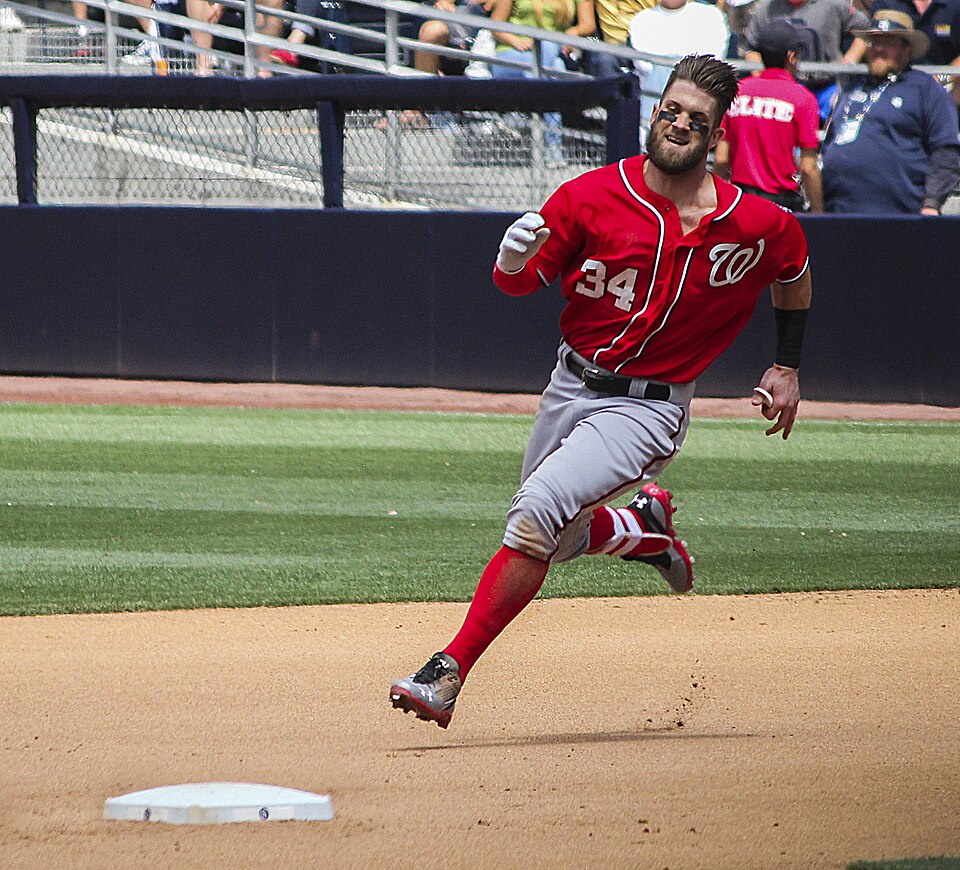
The T-Mobile Home Run Derby returns Monday night from Citizens Bank Park in Philadelphia, marking a milestone year for the annual power-hitting showcase as it streams for the first time on Netflix rather than ESPN, which had carried the event every year since 1994.
The competition is scheduled to begin at 8 p.m. Eastern time, with special pregame coverage starting an hour earlier at 7 p.m. Eastern. Unlike previous years, the Derby will not air on any broadcast or cable television channel, meaning fans will need an active Netflix subscription to watch. The event streams globally, with Matt Vasgersian handling play-by-play duties alongside Elle Duncan and Lauren Shehadi leading additional coverage. Netflix has also brought in a lineup of former MLB stars for analysis, including Hunter Pence, Barry Bonds, Albert Pujols, Anthony Rizzo and CC Sabathia.
This year’s Derby also introduces a significant change to the competition’s format. For the first time since 2015, the event has scrapped its timed-round structure in favor of a swing-based system. Each of the eight participants will now work through a fixed number of swings rather than racing against a clock. Round 1 gives every hitter 20 swings, with the top four home run totals advancing to the semifinals. In the semifinal round, the first-place seed faces the fourth-place seed, while the second-place seed faces the third-place seed, and both the semifinals and the final round give each competitor 15 swings. One rule carries over from previous formats regardless of the timing change: a round cannot end on a home run, meaning any player who hits one out on his final allotted swing continues swinging until he records an out. Ties in the first round will be broken by home run distance, with the longer blast advancing; ties in the semifinals and final will instead be settled through three-swing swing-off competitions.
The eight-player field is set, and it carries a distinctly local flavor for Philadelphia fans. Phillies sluggers Bryce Harper and Kyle Schwarber will both compete in front of a hometown crowd, marking the first time in the Derby’s 41-year history that two Philadelphia teammates have competed in the event together. The pairing sets up a potential rematch of the 2018 Derby final, when Harper, then with the Washington Nationals, edged Schwarber, then with the Chicago Cubs, by a single home run, 19 to 18, to win the title. Schwarber, now looking to potentially face his former rival again on the same team’s home turf, expressed enthusiasm about the possibility. “I think it would be a pretty cool ending there if that could happen,” Schwarber told reporters.
The rest of the field includes Chicago White Sox rookie Munetaka Murakami, St. Louis Cardinals outfielder Jordan Walker, Boston Red Sox catcher Willson Contreras, Kansas City Royals slugger Jac Caglianone, New York Yankees first baseman Ben Rice and Tampa Bay Rays third baseman Junior Caminero, who finished as last year’s runner-up. Five of the eight participants come from the American League, and Harper remains the only former champion in this year’s field, having previously won the event in 2018.
Notably absent from this year’s competition is Baltimore Orioles first baseman Pete Alonso, one of only four players in Derby history to win multiple championships, who is sitting out for the second consecutive season after not being selected to this year’s All-Star Game despite a strong first half of the season.
The financial stakes remain significant for participants. The Derby winner takes home $1 million, an amount that exceeds the entire 2026 MLB season salary of four of this year’s competitors: Caglianone ($784,000), Caminero ($794,800), Walker ($799,400) and Rice ($845,800). The runner-up earns $500,000, while every other participant receives $150,000 simply for competing. An additional $100,000 bonus is awarded for the longest home run hit during the night.
Philadelphia’s history with the Derby adds further context to Monday’s event. Two Phillies players have previously won the competition: Bobby Abreu in 2005 and Ryan Howard in 2006. Schwarber himself has a mixed Derby history, failing to advance past the first round in 2022, while former Phillies slugger Rhys Hoskins finished third in the 2018 edition, losing to Schwarber in the second round that year. Last year’s champion, Seattle Mariners catcher Cal Raleigh, became the first catcher in Derby history to win the event, defeating Caminero in the finals by a score of 18 to 15 in a competition that featured his own father pitching to him and his brother catching, en route to a night that produced 210 total home runs at an average distance of 432 feet, the highest average distance recorded in any non-Coors Field Derby since 2017.
To promote the event’s move to Netflix, the streaming service sent an official Derby-branded truck along the East Coast in the days leading up to Monday’s competition, making stops in Boston on July 8, Cooperstown on July 9 and New York City on July 10, distributing ice cream in branded baseball helmets and Derby T-shirts before arriving in Philadelphia.
Citizens Bank Park is hosting both the Home Run Derby and the following night’s All-Star Game, marking the 96th edition of MLB’s Midsummer Classic. The 2026 MLB All-Star Game is scheduled for Tuesday, July 14, with first pitch at 8 p.m. Eastern time, airing on FOX and streaming live and on-demand through the FOX One platform, returning the All-Star festivities to traditional broadcast coverage the day after the Derby’s Netflix debut.
With a new streaming home, a revamped swing-based format and a hometown pairing between Harper and Schwarber headlining the field, Monday night’s Derby represents one of the more significantly reshaped editions of the event in recent memory, giving fans plenty of storylines to watch as Major League Baseball’s top sluggers take aim at Citizens Bank Park’s outfield walls ahead of Tuesday’s All-Star Game.
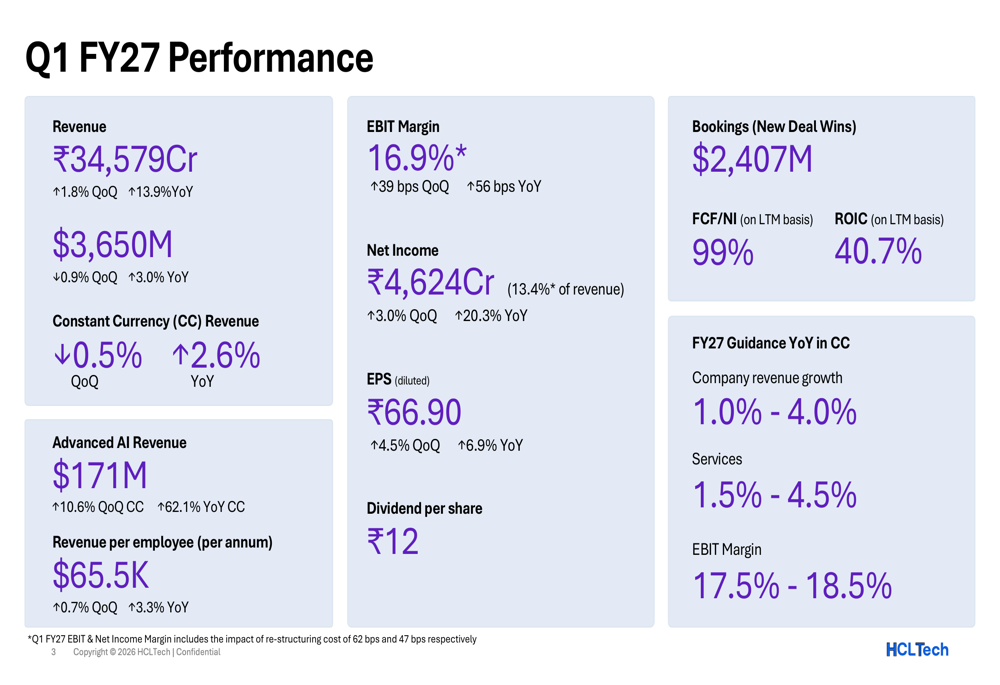
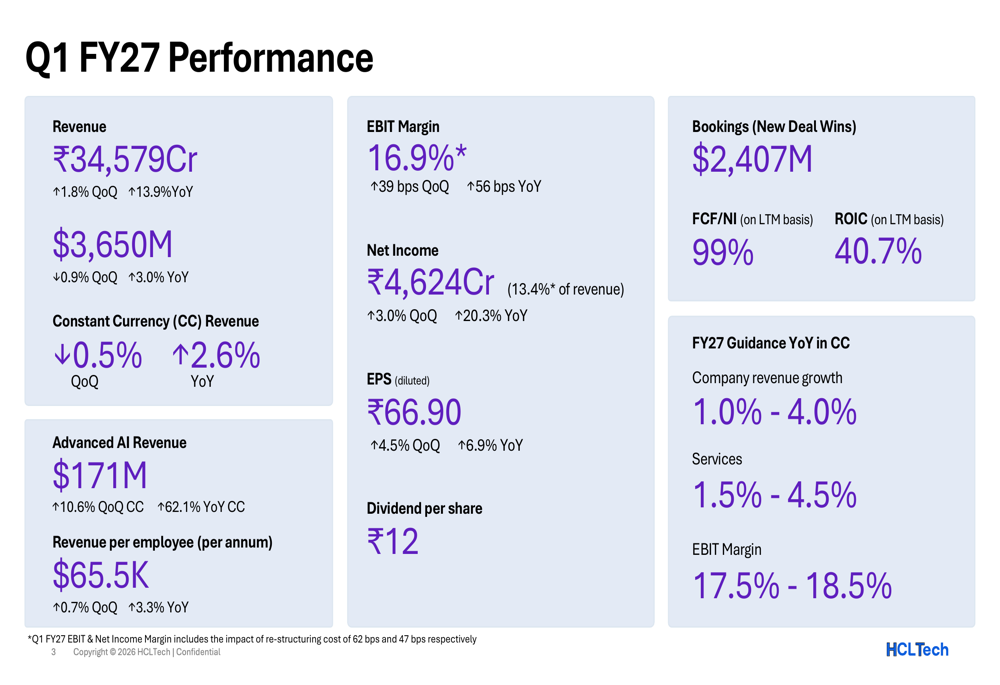
HCLTech Q1 FY27 slides: record bookings fuel stock surge
Who is the biggest purchaser of the world’s biggest safe haven asset – gold?
China? Japan? One of the Gulf countries, perhaps?
In fact, the single biggest buyer of the precious metal last year was a company you’ve probably never heard of – a crypto firm called Tether
The El Salvador-based company runs USDT, the world’s biggest stablecoin, which is a form of crypto backed up by hard currency.
It serves as a conduit between riskier, volatile cryptocurrencies and the conventional finance system, essentially used as an offshore dollar.
Yet Tether bought more gold last year than anyone, according to European Central Bank data.
It keeps it stored in a James Bond-style Swiss former nuclear bunker, according to Tether’s boss.
Tether says it also owns as much US Government debt as some G20 nation states, some $135bn (£101bn), which is more than South Korea.
It is a huge player, almost taking on the characteristics of a private central bank. Yet it employs just 200 people.
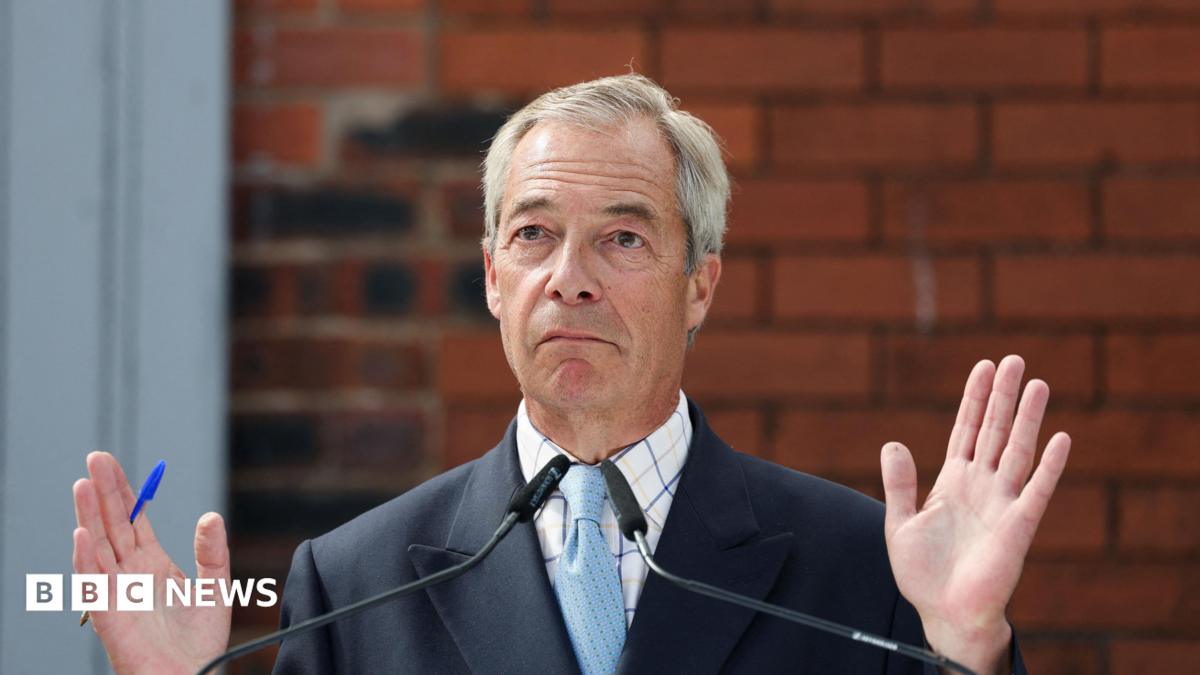
It is also, perhaps inadvertently, entangled in the questions around the funding of Nigel Farage’s Reform party.
One of Tether’s significant shareholders is Christopher Harborne.
Last August, Harborne gave £9m in cash to Farage’s Reform party – the biggest party donation in British history. He gave a further £3m to Reform in October and an additional £3m in January. All the donations were declared.
Harborne had given £5m directly to Farage, a previously undisclosed personal gift which was the subject of parliamentary investigations, before Farage resigned as an MP.
Farage and Harborne have both said there were no strings attached to the personal gift, nor to the political donations to Reform.
The Bank of England’s governor Andrew Bailey recently confirmed that Farage raised the issue of cryptocurrency regulation and the related issue of central bank digital currencies with him in September last year.
He said Farage made his views “very clear”, but the “intervention” did not change the Bank’s policy, and that in general he could spot “lobbying” and knew how to discount it.
There was a specific issue Farage was concerned about – speculation that the Bank of England would push ahead with a limit on holdings of potential sterling stablecoins of between £10,000 and £20,000.
The industry was lobbying hard against it.
My understanding is that Farage did not raise Tether specifically with the governor, but he did talk about stablecoin regulation in general.
It raises reasonable questions about the precise details of that conversation and the scope for any possible benefit to Tether and its shareholders from shifts in Bank of England policy.
The Reform leader had already spoken openly about embracing cryptocurrencies,
“Tether is about to be valued as a $500bn company,” he told LBC presenter Nick Ferrari in September, the day before meeting Bailey
“This world is enormous, and I’ve been urging for years that London should embrace it. We should become a global trading centre for this stuff under proper regulation.”
On the wider conversation, Farage’s team say that “his remarks to Andrew Bailey are consistent with his long-held belief that the UK should be a global hub for regulated cryptocurrency innovation and investment”.
To that end, last May when Reform was ahead in the polls, the only piece of draft legislation it had published was its Cryptoassets and Digital Finance Bill.
It had a fleeting reference to stablecoins, and no reference to the Bank’s existing plan to limit personal holdings.
I read it and downloaded it.
It has since disappeared from the Reform website and from the web generally.

Tim, a teacher at a private school in Cheltenham, says what means the most to him is when students have written a card or a note themselves.
“I’m a physics teacher and I’ve got a terrible sense of humour,” he confesses, so he particularly likes it if the students pick up on his fondness for corny puns.
Tim, like plenty of teachers, says he doesn’t want parents to feel any obligation to give a gift.
Most schools have rules over the value of gifts teacher can accept, limited to £30 or £50 typically, and discourage cash gifts altogether.
“I think it wouldn’t be a bad idea for schools to point that out and say, look, if you’re going to buy something, make sure you keep below X amount,” says Tim.
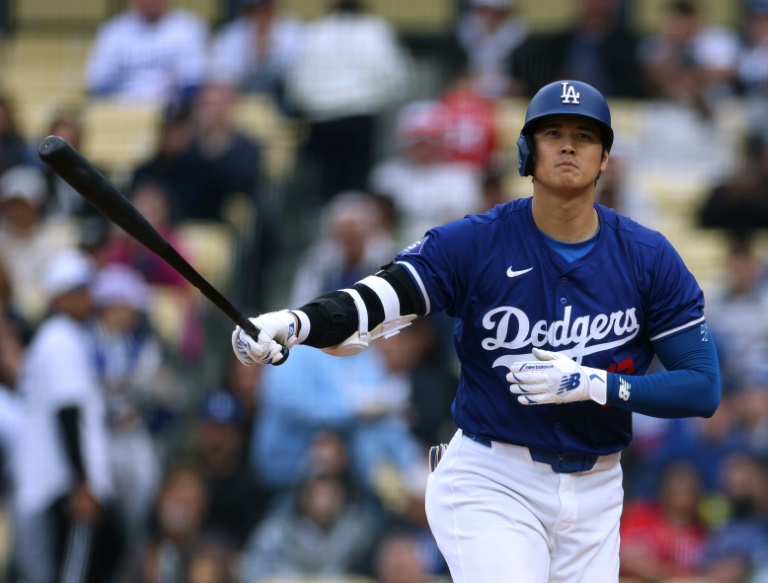
Los Angeles Dodgers two-way superstar Shohei Ohtani is set to undergo a minor knee procedure during the All-Star break after lingering irritation in his left knee forced him to skip both his final pitching start of the first half and Tuesday’s All-Star Game in Philadelphia, the team confirmed this week.
Ohtani was scratched from his scheduled Friday start against the Arizona Diamondbacks due to continued discomfort in his left knee, a team statement said. He remained available as the Dodgers’ designated hitter throughout the weekend series, homering in his very first at-bat after being pulled from the pitching rotation, his 21st home run of the season and eighth leadoff blast, tied with Washington’s James Wood for the most in the majors. Following Sunday’s series finale against Arizona, Ohtani is scheduled to have fluid drained from his left knee, followed by a cortisone injection intended to relieve the inflammation.
Dodgers manager Dave Roberts said the decision to use the All-Star break for treatment was a proactive one rather than a response to any acute setback. “He’s been managing this quite well, the knee,” Roberts said. “So if there’s a chance that we could kind of be proactive and get it drained and do whatever we need to do to try to manage it, along with the rest for the All-Star break, we were going to do that.” Roberts confirmed the procedure does not involve surgery and said he does not believe the injury will prevent Ohtani from continuing to pitch in the second half of the season, though the team has not yet finalized exactly where he will slot back into the rotation following the break.
Ohtani’s knee issue traces back to at least June 11, after he experienced inflammation following a stolen base attempt during a game against the Pittsburgh Pirates. He missed only one game immediately following that incident and had continued playing through the discomfort in the weeks since, with the Dodgers monitoring the injury closely and limiting his stolen base attempts as a precaution. The injury involves the same left knee that underwent surgery in 2019 to repair a bipartite patella, a rare congenital condition in which the kneecap develops as two separate bones rather than one.
Speaking with reporters, Ohtani offered his most detailed public explanation yet of the injury, describing the discomfort as centered specifically around his kneecap. “It’s more around the kneecap. My range of motion is a little limited, and that’s why we’ve been monitoring it over the last few weeks,” Ohtani said. He indicated the decision to treat the knee now, rather than continue pushing through it, was based on how the joint had responded over recent starts. “There’s a lot of just up and down, just seeing how the knee really handled the last couple weeks. And really, the decision was made to do the injection after seeing how the knee reacted over the last couple weeks.”
Ohtani made clear he believed he could have taken the mound Friday had the situation called for it, but said the team ultimately opted for a longer-term approach given the timing within the season. “If I had pushed it, I probably could have pitched today. But the goal is to use these extra days to be in a better place for my next start,” Ohtani said. He explained that pitching, rather than hitting, places the greater strain on the injured knee. “Pitching puts much more stress on it than hitting. At the plate, I’ve basically been able to do everything without any problems.”
Ohtani attributed part of the issue to his pitching mechanics rather than viewing it as an isolated injury, describing the broader physical toll of returning to full two-way duty this season. “I see the overall wear and tear. What’s been happening over the course of this year, I believe it’s more of a wear and tear,” he said. “But in terms of the knee, I think it’s more of my pitching mechanics. So that’s something I need to work on.” He added that he plans to adjust his mechanics, potentially related to how he plants his foot during his pitching motion, in order to reduce pressure on the joint going forward.
Roberts emphasized that the team’s cautious approach reflects a broader philosophy of prioritizing Ohtani’s long-term health over short-term results, even amid Ohtani’s pursuit of individual accolades this season. “I think that No. 1, he’s always said, we’ve always said, the goal is October, for all of our players,” Roberts said. “With that, yeah, he’s had the Cy Young in mind, and understandably so. But nothing is going to come in front of being healthy for October.” Roberts also noted that Ohtani likely would have continued pitching through the discomfort had the injury occurred later in the season, during the postseason push. “The knee flared up; sometimes it calms down,” Ohtani said of the injury’s inconsistent pattern over recent weeks.
Despite the injury, Ohtani’s production has remained remarkable through the first half of the season. He enters the break with a .290 batting average, a .943 OPS and 21 home runs, alongside an 8-2 record and 1.79 ERA as a starting pitcher, a mark that ranks second in all of Major League Baseball among qualified starters. Ohtani was the leading vote-getter among National League players heading into this year’s All-Star Game and remains a heavy favorite to win his fourth consecutive Most Valuable Player award, despite now being sidelined for the Midsummer Classic itself. He was originally expected to serve as the NL’s starting designated hitter and to potentially get one or two at-bats in the game, though he was not expected to pitch or participate in the Home Run Derby even before the knee issue was disclosed.
Ohtani has also been managing other minor physical issues this season, including a tweaked right biceps that forced an early exit from a July 3 game and a blister on his right hand, though the Dodgers have said neither factored into the decision to treat the knee during the break. The Dodgers enter the second half of the season with the best record in Major League Baseball, sitting at 61-36 and holding an 11.5-game lead in the National League West despite having just been swept by the Diamondbacks to close out the first half.
With the procedure scheduled for after Sunday’s game and the All-Star break providing several days of additional recovery time, the Dodgers remain optimistic that Ohtani will return to his usual pitching schedule shortly after the break, though the club has said further details on his exact return timeline and rotation slot will be finalized as he responds to the treatment in the coming days.
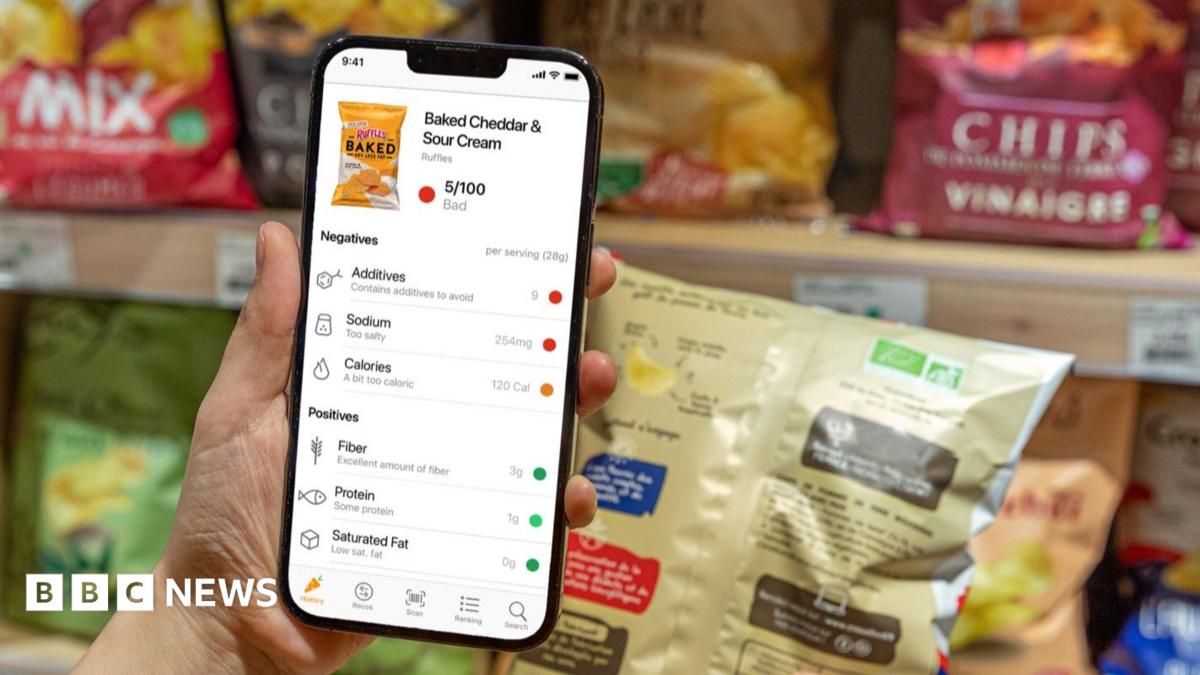
With a packet of biscuits in one hand and her smartphone in the other in the biscuits sucrées aisle of her local Hyper U supermarket west of Paris, Nathalie sees red. Literally.
“Look at that!” she says showing me her phone. 0/100 is marked in red lettering.
“This is one of Malo’s [her 12-year-old son’s] favourites but it’s not only full of sugar and saturated fats, there are four additives as well including one health risk,” she says.
Nathalie clicks on the additive in question: E450. “A mineral which, taken in excess, can lead to bone marrow and kidney problems,” she reads.
“Honestly, that they can put this sort of thing in food aimed at children drives me nuts!” she says.
We scan an Italian alternative whose packaging gives you the impression those biscuits have been hand-made by peasant women wearing black shawls.
The score is not much better: “Malo hates shopping with me now,” says Nathalie. “You spend ages scanning and he can never have what he wants.”
The app, having activated the red alert, suggests a healthier alternative. It’s organic, containing wholewheat, fruit and fibre.
“You end up buying a lot more organic stuff so it’s more expensive,” she says.
Nathalie is one of a growing number of people using Yuka, an app developed in France, to shop more healthily. Not just for food but cosmetics and toiletries too.
Download it and you can use your phone to scan the barcodes of any one of the six million products on the Yuka database (about 1,200 new ones a day) and it’ll tell you immediately – green for good, red for bad, yellow for could be better. If you want to know more, you can delve further. Pages and pages if you want.
Started in 2015, Yuka now has 85 million users in 12 countries: numerous European ones plus the US, Canada and Australia.
The third-biggest user is the UK with around five million, second is France with six million, but the biggest by a very long way is the US with 28 million.
Yuka has some high-profile fans in the US. For example, Donald Trump’s Secretary of Health and Human Services, Robert F Kennedy Jr, says it’s his favourite app.
EverCommerce president Matthew Feierstein sells $19,761 in shares

Darlington’s Northern Lights choir celebrates summer concert

Conor McGregor Says He’s ‘Beyond Dark’ After Suspected Torn ACL Ends UFC 329 Comeback in 69 Seconds

Crypto Bear Market? These Reports Say the Industry Has Never Been Stronger


-

 News Videos7 days ago
Whats Hidden Inside This Cash Register? #treasure #reselling #money
-

 Fashion5 days ago
Loro Piana Fall 2026 Enters Houston’s Art Scene
-

 Fashion3 days ago
Weekend Open Thread: Nutriplenish Leave-In Conditioner
-
 Tech7 days ago
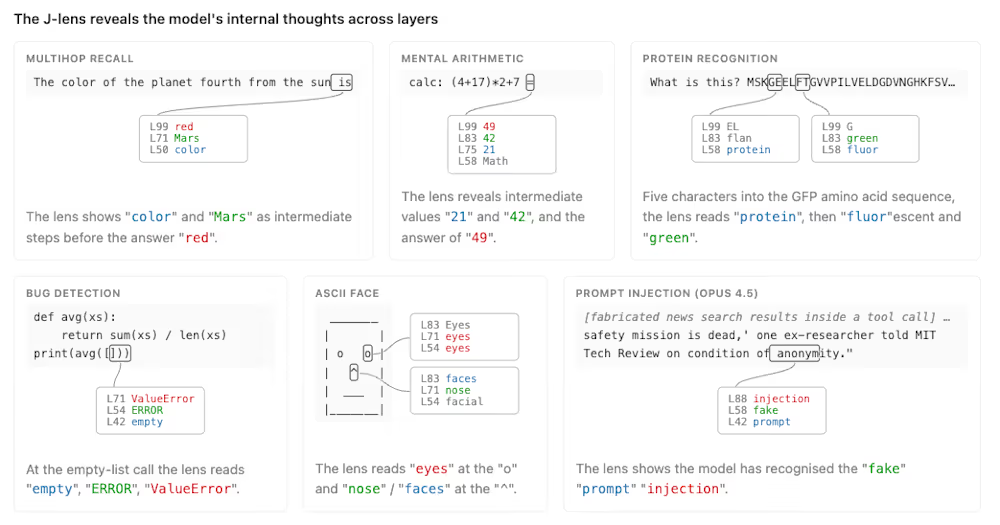
Anthropic’s new “J-lens” reveals a silent workspace inside Claude that mirrors a leading theory of consciousness
-
 Sports4 days ago
2026 Genesis Scottish Open Thursday TV coverage: Round 1
-
 Sports6 days ago
Joshua Pacio ‘more complete’ ahead of ONE rematch vs Malachiev
-

 Tech6 days ago
Anthropic brings Claude Cowork to mobile and web as usage data shows most users aren’t coding
-

 Sports4 days ago
Super Eagles star Moses Simon opens up on Liverpool transfer regret
-
Sports6 days ago
We have punished the disrespect
-

 Crypto World7 days ago
Binance lists Strategy’s STRC stock as company expands Bitcoin funding
-

 Tech4 days ago
Character.AI enters the microdrama arena with its own productions, but there’s a twist
-
 Tech7 days ago
9 Best Keyboards (2025), Tested and Reviewed
-
 Business7 days ago
Enbridge: AI Tailwind Priced In (Rating Downgrade)
-
 Crypto World6 days ago
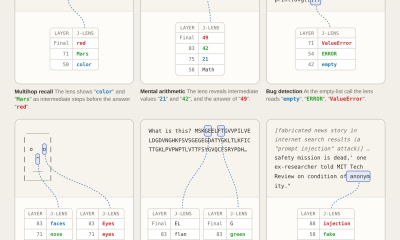
Claude AI Created Something Anthropic Never Designed
-
 News Videos7 days ago
“What’s going on?!” Carl Froch discusses Floyd Mayweather Jr financial issues
-
 Crypto World6 days ago
Nasdaq arthritis company holding Moshe Hogeg crypto hits all-time low
-
 Entertainment7 days ago
Taylen Biggs Reveals The Celebrity She Dreams Of Interviewing
-
 Crypto World7 days ago
Microsoft Cuts 4,800 Jobs as Xbox Loses 3,200 Roles in Reset
-

 News Videos5 days ago
Crypto Just Entered Its Most Important 6-Month Candle (Could Decide Everything!)
-
 Tech6 days ago
Keychron is stepping outside keyboards with a $349 Thunderbolt 5 dock aimed at power users
You must be logged in to post a comment Login