Connect with us
DAPA Banner
DAPA Coin
DAPA
COIN PAYMENT ASSET
PRIVACY · BLOCKDAG · HOMOMORPHIC ENCRYPTION · RUST
ElGamal Encrypted MINE DAPA
🚫 GENESIS SOLD OUT
DAPAPAY COMING

Business

Microsoft layoffs could affect 4% of its workforce next week

Published

on

Microsoft layoffs could affect 4% of its workforce next week

Microsoft is expected to lay off up to 2.5% of its workforce as early as next week. 

The cuts, which could affect 5,000 employees, may impact sales, consulting and the Xbox gaming unit, according to a report from Business Insider Tuesday. 

Advertisement

The layoffs would mark the latest round of restructuring in the tech sector as companies continue to cut costs while directing more resources toward artificial intelligence (AI).

Last summer, Microsoft laid off roughly 4% of its workforce, or about 9,000 employees, in one of the company’s largest rounds of job cuts in recent years. 

MICROSOFT ANNOUNCES ANOTHER ROUND OF LAYOFFS AFFECTING THOUSANDS OF WORKERS

Microsoft office in New York City

A Microsoft office in New York in July 2025 ahead of the company hitting $4 trillion in market cap. (Adam Gray/Bloomberg via Getty Images / Getty Images)

According to Microsoft’s latest annual filing with the Securities and Exchange Commission (SEC), the company employed roughly 228,000 full-time workers worldwide as of June 30, 2025. 

Advertisement

A 2.5% reduction in that workforce would amount to approximately 5,700 job cuts.

Sources said some employees affected by the latest round of layoffs will be offered new roles within the company immediately, Business Insider reported. 

MICROSOFT WILL LAY OFF NEARLY 6,000 EMPLOYEES IN PUSH FOR EFFICIENCY

Microsoft office

A pedestrian walks past a sign on the Microsoft campus July 17, 2014, in Redmond, Wash. (Stephen Brashear/Getty Images / Getty Images)

In the past month, Microsoft’s stock slumped about 19%, marking one of its worst monthly performances since the dot-com crash.

Advertisement

Investor concerns have risen as Wall Street analysts warn that AI could eventually replace certain software services, which may include offerings from Microsoft

MICROSOFT PLANS ‘SUBSTANTIAL’ JOB CUTS ACROSS XBOX DIVISION

Ticker Security Last Change Change %
MSFT MICROSOFT CORP. 390.49 +6.21 +1.62%

Last month, Xbox CEO Asha Sharma sent a memo to employees calling for a “reset” of the business after months of uneven performance. 

The Verge on Tuesday also reported that the gaming division is planning layoffs starting next week. The cuts are expected to be significant, with reductions to marketing and budgets, according to Bloomberg early last month. 

Advertisement

The restructuring could lead to studio closures, mergers, spin-offs and canceled game projects, the Verge reported

Xbox also recently raised prices on its gaming consoles by an additional $100 to $150 worldwide, citing increased demand for memory and storage driven by the AI boom. 

Xbox booth at the Gamescom video games trade fair in Cologne, western Germany

Visitors walk past the Xbox booth at the Gamescom video games trade fair in Cologne, Germany, Aug. 22, 2024.  (Ina Fassbender/AFP via Getty Images / Getty Images)

GET FOX BUSINESS ON THE GO BY CLICKING HERE

Sources said the 2026 round of layoffs appears to be smaller after the company earlier this year introduced a voluntary retirement buyout program, which led to a significant number of employees exiting, according to BI.

Advertisement

Roughly one-third of eligible employees reportedly opted in.

Last year, Microsoft reportedly eliminated roughly 15,000 roles across multiple rounds of layoffs, including about 6,000 positions in May followed by 9,000 employees in July.

FOX Business reached out to Microsoft for more information.

Advertisement
Continue Reading
Click to comment

You must be logged in to post a comment Login

Leave a Reply

Business

Chocoladefabriken Lindt & Sprungli: Good Brand, But Volume Recovery Still Needs To Show Up

Published

on

Chocoladefabriken Lindt & Sprungli: Good Brand, But Volume Recovery Still Needs To Show Up

This article was written by

I’m a fundamental, valuation-driven investor with a strong focus on identifying businesses that have the potential to scale over time and unlock massive terminal value. My investment approach centers around understanding the core economics of a business—its competitive moat, unit economics, reinvestment runway, and management quality—and how those factors translate into long-term free cash flow generation and shareholder value creation. I focus on fundamental research, and I tend to focus on sectors with strong secular tailwinds. Professionally, I am a self-educated investor that started this journey 10 years ago. Currently, I am managing my own funds, seeded from friends and family. My motivation for writing on Seeking Alpha is to share investment insights, and also at the same garner feedback from fellow investors in this site. My aim is to help readers focus on what truly drives long-term equity value. I believe good analysis should be both analytical and accessible, and I hope my work adds value to readers looking for high-quality, long-term investment opportunities.

Analyst’s Disclosure: I/we have no stock, option or similar derivative position in any of the companies mentioned, and no plans to initiate any such positions within the next 72 hours. I wrote this article myself, and it expresses my own opinions. I am not receiving compensation for it (other than from Seeking Alpha). I have no business relationship with any company whose stock is mentioned in this article.

Seeking Alpha’s Disclosure: Past performance is no guarantee of future results. No recommendation or advice is being given as to whether any investment is suitable for a particular investor. Any views or opinions expressed above may not reflect those of Seeking Alpha as a whole. Seeking Alpha is not a licensed securities dealer, broker or US investment adviser or investment bank. Our analysts are third party authors that include both professional investors and individual investors who may not be licensed or certified by any institute or regulatory body.

Advertisement
Continue Reading

Business

BHP workers approve Pilbara labour deal, unions cite lingering concerns

Published

on

BHP workers approve Pilbara labour deal, unions cite lingering concerns


BHP workers approve Pilbara labour deal, unions cite lingering concerns

Continue Reading

Business

Pilbara power plays deserve clarity

Published

on

Pilbara power plays deserve clarity

REGULATORY inertia. Jittery proponents. Ministers beating around the bush. All hallmarks of a government mired in policy paralysis. 

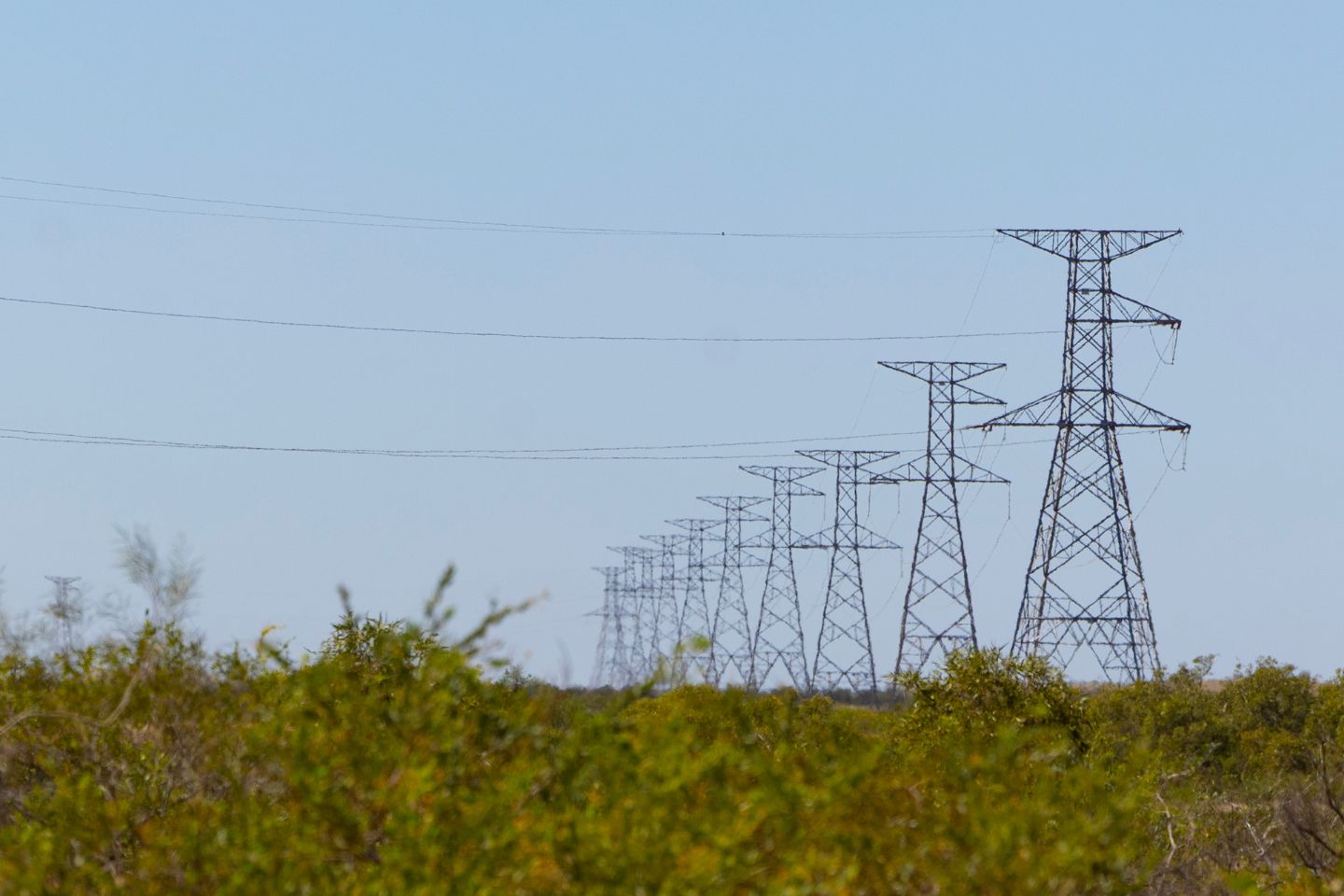
This is the situation facing companies trying to decarbonise the Pilbara by heeding the state’s call to build a common-user energy grid fed power by mammoth green infrastructure projects. 

Five main proponents have proposed about 45 gigawatts of green power generation across the Pilbara. 

Currently, we have an energy minister (who also happens to be the minister for the Pilbara) who won’t even answer if she will allow proponents to break the law. 

Advertisement

That seems to me a pretty important query to address for a person whose job it is to uphold and update laws. The longer the state government dillydallies behind closed doors, the more likely it is investor patience will wear thin. 

And then there is Fortescue. 

While the company has not explicitly stated it wants to feed its power into a common-user grid, powering other industries as proposed would likely necessitate this, and founder Andrew Forrest has expressed his desire to provide “power for all”. 

As it stands, that would be illegal. 

Advertisement

Fortescue is building its grid under Mining Act tenure, which forbids the powering of non-mining uses such as other industries, or residential. 

There is plenty of merit in changing the law to allow it, however. 

Permitting the biggest renewable energy builder in Western Australia – Fortescue – to pursue its goal would speed up decarbonisation of the Pilbara immeasurably. 

Advertisement

Notwithstanding there are genuine consent and consultation shortcomings with pastoralists, councils and traditional owners that would have to be ironed out. 

So long as the government hesitates on this front, Fortescue’s investors and stakeholders will be wary about the legality of what it has proposed. 

If the intention is to uphold the law as it stands, the government needs to be clear about what can and cannot be powered under the Mining Act. 

Fortescue is justifiably exploiting a grey area to its benefit. It must be addressed. 

Advertisement

Billions of dollars of investor cash is at stake from other proponents, which are planning their projects as per the Land Administration Act (LAA). 

Of APA Group, SP Energy, Yindjibarndi Energy and Intercontinental Energy, only Yindjibarndi has managed to navigate the onerous planning and consultation requirements to start construction. 

If Fortescue is allowed to sign agreements with the Pilbara’s major sources of power demand – other miners and industry – under its easier, cheaper-to-build energy, those proponents may as well close their chequebooks and take their capital elsewhere. 

Yindjibarndi Energy is likely the only survivor should this occur as its current and potential customers are far away from Fortescue’s network. 

Advertisement

APA Group may still have a shot, too, if BHP comes to the party. It is incumbent on the state government to give these proponents clarity, given they have bought in to its Pilbara decarbonisation rhetoric. 

The state government says it is working with proponents and has a team to expedite LAA projects. 

Yet there is no certainty any major offtakers will be left to buy their power by the time their projects are shovel ready. 

For the government to still be talking about ‘working with’ proponents while Fortescue is already more than 1GW into its network rollout (under what the government says is the wrong tenure pathway) is ludicrous. 

Advertisement

Investor confidence is at stake, and any fallout ultimately lies at the feet of the state government.


Advertisement
Continue Reading

Business

What a 10 Percent Drop Means for Buyers, Sellers and Renters

Published

on

Sydney

SYDNEY — Australian house prices are slowing for the first time in years following a sweeping federal budget overhaul of the country’s property tax settings, and the big banks are now projecting declines across major capital cities that could represent one of the most significant corrections in the market’s modern history.

National Australia Bank has forecast a 2 per cent price drop across major capital cities, while Commonwealth Bank revised its growth estimate down to 3 per cent from 5 per cent. Investment bank Morgan Stanley has gone further, predicting house prices could fall between 5 and 10 per cent, describing the scenario as “one of the largest price corrections over the past 40 years.” Sydney has already recorded a 1.2 per cent monthly decline, and auction clearance rates have fallen across major markets as buyers and investors alike reassess the landscape following the May federal budget.

The catalyst was a pair of significant tax changes. The Albanese government amended the capital gains tax discount for investment properties, replacing the existing 50 per cent flat reduction with a smaller discount tied to the inflation rate. Separately, changes to negative gearing rules altered the financial calculus for property investors who use the strategy of deducting rental property losses against their taxable income. Together, the changes were explicitly designed to reduce competition between investors and first home buyers in a market that has become one of the least affordable in the developed world.

Prime Minister Anthony Albanese addressed the criticism head-on in a recent television interview, framing the changes as a fairness issue rather than a risk to property values.

Advertisement

“Everyone has acknowledged during this debate that the housing system is broken,” Albanese said. “Therefore we had to do something about it.”

The scale of the affordability problem those changes are intended to address is stark. The median house price in Australia is now 8.9 times the average income, according to data from property research firm Cotality, a ratio that independent economist Nicki Hutley described as making Australia one of the most unaffordable housing markets anywhere in the world on a price-to-income basis. House prices have increased by more than 400 per cent since 2000, rising at an average of approximately 8 per cent per year across that span.

Hutley framed the intent behind the tax changes clearly: “The idea behind the tax changes is to make fewer investors compete with particularly first home buyers so that the house prices will come down and make them more affordable.”

But who actually gets hurt and who benefits from a falling market depends almost entirely on where a person sits within the housing ecosystem, and the human consequences of price movements in either direction are far from abstract.

Advertisement

For prospective buyers like 25-year-old Brisbane resident Zakariah Northcott, the prospect of falling prices represents what he calls a market correction that is long overdue. Northcott, who works as a customer service manager and has been saving for a home with his partner for years, describes the sustained price surge as a system rigged against younger Australians with ordinary incomes.

“It feels like the game’s rigged against us,” Northcott said. “Houses need to fall for it to be a reasonable thing for anyone to buy a house. If house prices continue to go up at the rate they are, it doesn’t matter if we save till we’re 45, we’ll never have a big enough deposit.”

Northcott’s concerns go beyond the financial to the deeply personal. He says that at current prices, his family plans are at risk. “If house prices don’t fall, that might mean that we just flat out don’t get to have kids. It’s our life goal. We’ve always wanted a family, a home, the same thing that our parents and grandparents had.”

For recent buyers, the equation is more complicated. Daniel Jones, a 27-year-old in Perth, purchased a two-bedroom apartment with his wife last September for approximately $725,000. The property was smaller than the couple, now new parents, would have liked, but they entered the market to stay close to family in Perth’s inner western suburbs. Jones says he supports falling prices even if it means his own home is worth less, framing the long-term trajectory of the market as an investment casino that has strayed far from its fundamental purpose.

Advertisement

“It’s becoming an investment casino rather than what it should be, which is a place for people to live,” Jones said. He added that the increase in prices over recent decades is unsustainable and has systematically excluded younger Australians from home ownership.

Hutley cautioned that for buyers who entered the market recently and at high prices, a correction does carry real financial risk, particularly the possibility of negative equity, where a property’s value falls below the outstanding mortgage balance.

“There is a risk young new home buyers who’ve got higher levels of debt, if they lose their job and they have to sell and the house price is worth less, then that’s a big problem,” Hutley said. “Not so much for the banks because they have mortgage lenders insurance, but for a person to walk away with less than they started is problematic.”

For sellers, the dynamics shift again. Larissa Ferguson, a single mother of three in Victoria Point in Brisbane’s southeast, spent the last three years building a three-bedroom home at a total cost of approximately $830,000. She had planned to sell within the next year and use the proceeds to upgrade to a larger family home. Those plans are now on hold.

Advertisement

“With housing prices possibly going down, I might not be able to get what I had hoped for which will impact me getting something big enough for us,” Ferguson said.

University of Sydney economist James Graham offered a perspective that he acknowledged often gets overlooked in the public debate around falling prices.

“If all houses are falling by 10 per cent, your house falls by 10 per cent, but so does the house that you want to buy,” Graham said. “So for that person, there’s not really any worse off than they were a month or two ago. People sometimes forget that. They feel like they’ve lost wealth, but as long as what you want to do with the wealth is just buy another home, it’s kind of a wash.”

Graham also put the scale of the projected correction in historical context: “House prices have been growing rapidly year on year for at least four or five years. 10 per cent sounds large and it is for some people, but it’s not that large in the grand scheme of ongoing house price growth that we’ve seen.”

Advertisement

If the 10 per cent correction Morgan Stanley projects actually materializes, Australian house prices would return to approximately where they were in late 2024, erasing only the most recent phase of gains in a market that remains, by virtually any measure, among the most expensive in the developed world.

Continue Reading

Business

Casual dining chain Loungers to open first international site in Germany

Published

on

Business Live

The company is naming the branch after its first site in Bristol which opened in 2002

Loungers is opening its first international branch in Germany

Loungers is opening its first international branch in Germany(Image: Loungers)

Bristol-founded casual dining chain Loungers is opening its first international branch this autumn, it has announced.

The company’s latest site in Essen, Germany, will operate under a new brand name – Southville in a nod to the group’s very first Lounge on North Street in Bristol.

The original Bristol Southville branch was opened by friends Alex Reilley, Jake Bishop and David Reid in 2002. The business now operates 273 Lounges across the UK under the Lounge, Cosy Club and Brightside brands.

The move into Europe follows “extensive work” by the Loungers to understand the German market, the company said, including consumer behaviour, culture and the broader food and drink landscape.

Advertisement

Loungers said it had identified “strong similarities” between German and UK consumer habits, particularly around all-day socialising, casual dining and neighbourhood-focused hospitality.

Reilley, chairman and co-founder of Loungers, said opening in Germany was “a landmark moment” for the business.

“[The opening is] something we’ve approached with real care,” he said. “Southville reflects the evolution of Loungers while staying true to the values we started with back in 2002.

“When we look at Rüttenscheid, we recognise something – the same neighbourhood energy, the same post-industrial reinvention and the same broad mix of cultures and generations that we found on North Street all those years ago.

Advertisement

“Essen is the right city, at the right time, and we’re excited to introduce our style of neighbourhood hospitality to a completely new market.”

According to Loungers, the Essen site will take “the core principles” of the brand, including its all-day offer, and “reinterpret them” for the German market.

It means the German branch will offer table service and reservations, unlike the traditional Lounge UK model. A development chef in Germany has also been brought in to help with the menu, replacing or adapting around half of the current Lounge dishes to reflect the different tastes of German consumers, Loungers said.

Nick Collins, chief executive of Loungers, added: “Germany feels like a natural first step for us. We’ve spent time getting under the skin of the market and there’s a real alignment with the way people eat, drink and socialise.

Advertisement

“Southville gives us the chance to take what we do best and shape it thoughtfully for a new audience, without losing the spirit that has defined the Lounge brand for more than 20 years.”

Continue Reading

Business

Heritage buildings activate history

Published

on

Heritage buildings activate history

Heritage and design experts gathered at the 190th anniversary of the city’s oldest building to ponder the challenges of adaptive reuse.

Continue Reading

Business

Politics And The Markets 07/03/26

Published

on

OneWater Marine Inc. (ONEW) Q1 2026 Earnings Call Transcript

This is the forum for daily political discussion on Seeking Alpha. A new version is published every market day.

Please don’t leave political comments on other articles or posts on the site.

The comments below are not regulated with the same rigor as the rest of the site, and this is an ‘enter at your own risk’ area as discussion can get very heated. If you can’t stand the heat… you know what they say…

More on Today’s Markets:

Advertisement

Moderation Guidelines:

We remove comments under the following categories:

  • Personal attacks on another user account
  • Anti-Vaxxer or covid related misinformation
  • Stereotyping, prejudiced or racist language about individuals or the topic under discussion.
  • Inciting violence messages, encouraging hate groups and political violence.

Regardless of which side of the political divide you find yourself, please be courteous and don’t direct abuse at other users.

For any issue with regards to comments please email us at : moderation@seekingalpha.com.

Seeking Alpha’s Disclosure: Past performance is no guarantee of future results. No recommendation or advice is being given as to whether any investment is suitable for a particular investor. Any views or opinions expressed above may not reflect those of Seeking Alpha as a whole. Seeking Alpha is not a licensed securities dealer, broker or US investment adviser or investment bank. Our analysts are third party authors that include both professional investors and individual investors who may not be licensed or certified by any institute or regulatory body.

Advertisement
Continue Reading

Business

Exclusive-Inside Taiwan’s nightmare scenario: Chinese blockade, earthquake, sabotage and invasion

Published

on

Exclusive-Inside Taiwan’s nightmare scenario: Chinese blockade, earthquake, sabotage and invasion


Exclusive-Inside Taiwan’s nightmare scenario: Chinese blockade, earthquake, sabotage and invasion

Continue Reading

Business

ETMarkets Smart Talk | Jiraaf clocks 15x growth in two years as retail investors embrace bonds: Vineet Agrawal

Published

on

ETMarkets Smart Talk | Jiraaf clocks 15x growth in two years as retail investors embrace bonds: Vineet Agrawal
As bank fixed deposit (FD) rates moderate and investors look beyond traditional savings instruments, bonds are emerging as a preferred avenue for generating stable income and diversifying portfolios.

Improved digital access, greater regulatory oversight and rising awareness are accelerating retail participation in the bond market.

Reflecting this shift, online bond platform Jiraaf has recorded nearly 15x growth over the past two years, with the average investment size crossing Rs 1.5 lakh, signalling that investors are making meaningful allocations rather than merely experimenting with the asset class.

IIFL Finance raises $300 million via dollar bonds
Advertisement

IIFL Finance has successfully raised $300 million through a four-year dollar bond sale to international investors, marking its second such issuance recently. The bonds were priced at 7.60%, reflecting strong overseas demand. This move allows the company to quickly access funds under its existing medium-term note program. Fitch Ratings has assigned an expected ‘B+(EXP)’ rating to these secured obligations.


In this edition of ETMarkets Smart Talk, Vineet Agrawal, Co-founder of Jiraaf, discusses why bonds are becoming a permanent part of Indian portfolios, the financialisation of fixed income, how investors should evaluate yields, and why diversification within fixed income is becoming increasingly important in a falling interest-rate environment. Edited Excerpts –

Q) As fixed deposit rates moderate, many investors are moving towards bonds and alternative fixed-income products. How do you see the trend taking shape?

A) As the economy matures and interest rates moderate, investors are beginning to reassess traditional fixed-income choices. A one-year FD that offered around 8.5% in 2015 is now closer to 6.9%, a decline of nearly 160 basis points over the decade. For investors, this means post-tax returns may not always keep pace with inflation or long-term financial goals.


This is where government bonds and investment-grade corporate bonds are gaining relevance. Investors are not necessarily moving away from FDs completely, but they are realizing the need to diversify within fixed income. A part of the portfolio is now being allocated to bonds and other regulated fixed-income instruments that can offer better return potential while helping investors balance risk, liquidity, and maturity.
Q) Industry data suggests retail participation on online bond platforms has grown sharply in recent years. Please share numbers. How has your platform grown?
A) Retail participation in bonds has grown meaningfully as awareness, digital access, and regulatory oversight have improved. Online Bond Platform Providers have made it easier for individual investors to evaluate, compare, and invest in bonds more transparently.
At Jiraaf, we have seen nearly 15x growth over the last two years, reflecting rising interest among retail investors in fixed-income products beyond traditional deposits. The average ticket size per investment is now upwards of ₹1.5 lakh, indicating that investors are allocating meaningful sums to this asset class rather than treating it as a trial investment.

This gives us confidence that bonds are gradually finding a more permanent place in Indian portfolios, especially among investors seeking fixed returns, defined maturities, and regular payouts.

Jiraaf Vineet 2 JulyAgencies

Q) Do you believe India is witnessing the “financialization of fixed income” similar to what happened in equities over the past decade?
A) Yes, India is at the early stage of a similar journey in fixed income. Over the last decade, equities have become mainstream as access has improved, digital platforms have simplified investing, and investors have become more comfortable with market-linked products. A similar shift is now beginning in bonds.

For a long time, fixed income for retail investors was largely limited to FDs, small savings schemes, and debt mutual funds. Direct bonds were seen as difficult to access or understand. That is changing with online bond platforms, improved disclosures, SEBI regulations, and lower minimum investment sizes.

Advertisement

As investors seek diversification, fixed returns, and greater visibility into cash flows, bonds are becoming a more active part of portfolio construction. The financialization of fixed income will be gradual, but the direction is clear.

Q) A common market observation is that the highest yields often signal the highest risks. How should retail investors distinguish attractive yields from red flags?
A) Investors should avoid looking at yield in isolation. A higher yield is not automatically better; it is often the market’s way of pricing higher credit, liquidity, or business risk. The first step is to check the credit rating, issuer profile, repayment history, sector exposure, and whether the bond is secured or unsecured.

Investors should also compare the yield with similarly rated bonds. For example, if most bonds in a rating category are offering 10–11% and one bond offers 14%, the higher yield needs deeper evaluation. It may still be a valid opportunity, but it should not be chosen only for the headline return.

Retail investors should diversify across issuers, maturities, and ratings, and prefer investment-grade bonds aligned with their risk appetite. The focus should be on risk-adjusted returns, not just the highest available yield.

Advertisement

(Disclaimer: Recommendations, suggestions, views, and opinions given by experts are their own. These do not represent the views of the Economic Times)

Continue Reading

Business

Top U.S. Consumer Stocks to Watch: Mizuho’s Latest Picks

Published

on


Top U.S. Consumer Stocks to Watch: Mizuho’s Latest Picks

Continue Reading

Trending

Copyright © 2025