
Business
Microsoft Stock Rises Over 3% as Investors Rotate Into AI Software Names Ahead of July 29 Earnings Day

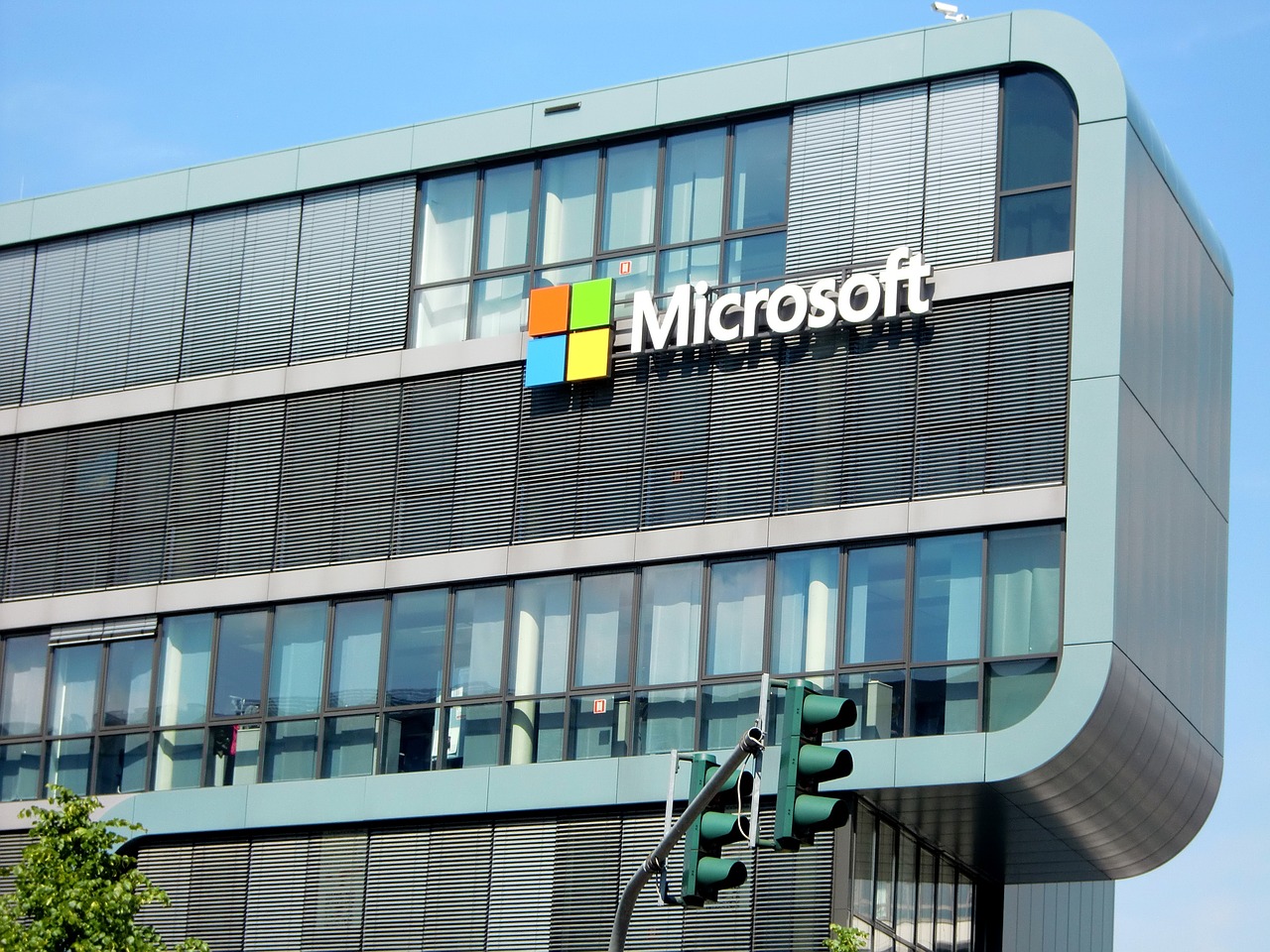
Shares of Microsoft climbed 3.25% on Wednesday, trading at $397.46 as of 12:01 p.m. EDT, up $12.52 on the day, as investors rotated out of AI-linked chip stocks and back into software names, extending a recent rebound for a stock that has struggled for much of 2026.
Wednesday’s gains come as Microsoft continues navigating what has been a difficult year overall. The stock remains down significantly from its 52-week high of $555.45, reached in July 2025, even after recent strength that has helped pull shares up from a 52-week low of $349.20 hit in late June.
A Rotation Away From Chip Stocks
Much of Wednesday’s move reflected a broader shift in investor positioning across the technology sector, with capital flowing out of semiconductor names and into software-focused AI plays like Microsoft. That rotation has become an increasingly common pattern in recent sessions, as investors periodically reassess relative valuations between hardware-focused AI infrastructure companies and software companies working to monetize AI capabilities within their existing product ecosystems.
A Difficult Start to 2026, Despite Strong Fundamentals
Microsoft’s stock has faced persistent pressure throughout the first half of 2026, falling as much as 19% to 21% year-to-date at various points, weighed down by investor anxiety over the scale of the company’s AI-related capital expenditures, questions about the pace of Copilot adoption, and a securities fraud class action filed following the company’s January 28 earnings reaction.
Despite that pressure, Microsoft’s underlying operating results have continued to show strength. The company’s fiscal third-quarter results beat expectations, with earnings per share of $4.27 compared with a consensus estimate of $4.09, on revenue of $82.89 billion, up 18.3% year over year. Azure cloud revenue grew 40% during the quarter, while capital expenditures rose sharply to $30.88 billion, up 84.39% year over year, reflecting the scale of Microsoft’s continued investment in AI infrastructure.
Nadella Highlights AI Business Growth
Microsoft Chief Executive Satya Nadella has continued emphasizing the company’s rapid AI-related revenue growth in recent public commentary, pointing to figures that suggest Microsoft’s AI business has already scaled to a meaningful size within the broader company.
“Our AI business surpassed an annual revenue run rate of $37 billion, up 123% year-over-year,” Nadella said, according to recent commentary tied to the company’s most recent earnings disclosure.
Nadella has also emphasized that Microsoft remains in the early stages of integrating AI capabilities across its broader product lineup, framing the company’s current AI monetization efforts as just the beginning of a longer-term transformation across its software and cloud businesses.
A Major Extension of the OpenAI Partnership
Microsoft’s relationship with OpenAI has continued to serve as a central pillar of its broader AI strategy. The company recently extended its partnership with OpenAI through 2032, securing a $250 billion incremental Azure commitment alongside expanded intellectual property rights tied to the partnership. That extended agreement has been cited by several analysts as a key factor supporting bullish long-term price targets on Microsoft’s stock.
Microsoft has also begun replacing certain OpenAI and Anthropic models with its own proprietary MAI models within products such as Excel and Outlook, a shift some analysts believe could materially improve the unit economics associated with Microsoft’s Copilot AI assistant over time.
Commercial Backlog Signals Strong Demand
Beyond quarterly revenue figures, Microsoft’s commercial remaining performance obligations, a measure of contracted future revenue, reached $627 billion during its most recent reporting period, up 99% year over year. Several analysts have pointed to that figure as a demand signal that significantly outpaces current market concerns about the company’s near-term growth trajectory.
Mixed Analyst Sentiment Amid the Pullback
Wall Street’s view of Microsoft has remained largely positive despite the stock’s difficult year-to-date performance. According to recent analyst tracking, roughly 94% of analysts covering Microsoft maintain a “Buy” rating, with an average 12-month price target of approximately $559.86 to $560.13, implying substantial upside from current trading levels.
Not all recent analyst actions have been uniformly bullish, however. Wells Fargo recently lowered its price target on Microsoft to $625 from $650, even while Evercore ISI raised its own price target to $525 from $510 and maintained an Outperform rating on the stock. Benchmark separately initiated coverage of Microsoft with a Buy rating, characterizing the stock’s recent pullback as a long-term buying opportunity for investors willing to look past near-term volatility.
Legal Challenges Add to the Narrative
Microsoft’s stock decline earlier in the year has also drawn legal scrutiny, with multiple law firms announcing securities class action investigations and lawsuits tied to the company’s January earnings reaction. Those legal proceedings allege that Microsoft misled investors regarding Copilot adoption rates and Azure growth trends, adding an additional layer of uncertainty for some investors even as the company’s underlying financial results have continued to exceed consensus expectations.
Workforce Reductions Amid AI Investment
Microsoft has also continued adjusting its workforce even as it ramps up AI-related capital spending. The company offered voluntary buyouts to approximately 7% of its U.S. employees earlier this year, following layoffs of more than 15,000 employees during the prior year, according to reporting on the company’s ongoing organizational restructuring efforts.
Earnings Report Looms as Key Catalyst
With Microsoft’s fiscal fourth-quarter earnings report scheduled for July 29, investors are increasingly viewing the upcoming release as a potential turning point capable of resetting sentiment toward the stock after a challenging first half of the year. Some market analysts have suggested the report could serve as a launchpad for a broader stock recovery, given the significant gap that has emerged between Microsoft’s underlying financial performance and its year-to-date stock price decline.
As Microsoft approaches its next earnings report, investors will be watching closely for continued Azure growth momentum, updated guidance on AI-related capital spending plans, and further evidence of Copilot’s commercial traction across enterprise customers. Should the company’s results reinforce the bullish narrative built around its expanding AI business and substantial commercial backlog, market watchers suggest Microsoft’s stock could be positioned for a more sustained recovery heading into the second half of 2026, following one of its most turbulent stretches in recent years.


Japan industrial production unexpectedly grows in July, retail sales surge

BNY Mellon Amt-Free Municipal Bond Fund Q2 2026 Commentary

Voya Investment Management helps investors push what’s possible through differentiated solutions across its fixed income, equity and multi-asset platforms, including private markets and alternatives. Note: This account is not managed or monitored by Voya Investment Management, and any messages sent via Seeking Alpha will not receive a response. For inquiries or communication, please use Voya Investment Management’s official channels.


Seeking Alpha’s transcripts team is responsible for the development of all of our transcript-related projects. We currently publish thousands of quarterly earnings calls per quarter on our site and are continuing to grow and expand our coverage. The purpose of this profile is to allow us to share with our readers new transcript-related developments. Thanks, SA Transcripts Team
Seeking Alpha’s transcripts team is responsible for the development of all of our transcript-related projects. We currently publish thousands of quarterly earnings calls per quarter on our site and are continuing to grow and expand our coverage. The purpose of this profile is to allow us to share with our readers new transcript-related developments. Thanks, SA Transcripts Team
Business
G20 countries should consider more trade barriers with China to cut imbalances, Bessent says

G20 countries should consider more trade barriers with China to cut imbalances, Bessent says

1. Recognise what’s behind the row: It may be about feeling valued or treated fairly, rather than the money itself
2. Avoid making assumptions about a sibling’s financial situation or the reasons behind parental decisions
3. Encourage open, respectful conversations where everyone has the opportunity to explain how they feel
4. Parents should communicate their intentions as clearly as possible, particularly if they are supporting children differently for practical reasons
5. Consider family counselling if conversations repeatedly become stuck or emotionally charged
6. Consider mediation before taking legal action in inheritance disputes.
7. Choose powers of attorney carefully: Parents usually appoint their children to oversee their care and finances if they get ill or lose mental capacity. But if there’s a risk they’ll fall out, they can appoint someone else including a solicitor.
Sources: Relate, Family Now Solutions
Business
Roivant Sciences Ltd. (ROIV) Discusses FDA Approval of LISRAYA as First Oral Targeted Therapy for Dermatomyositis – Slideshow
Roivant Sciences Ltd. (ROIV) Discusses FDA Approval of LISRAYA as First Oral Targeted Therapy for Dermatomyositis – Slideshow
908 Devices Inc. (MASS) Presents at 17th Annual Midwest IDEAS Conference – Slideshow

One Nation has claimed victory in the Secret Harbour by-election to win its first ever seat in the Western Australian legislative assembly.
With almost 40 per cent of voting counted, One Nation candidate Luke Herdegen declared himself to be the new member for the former Labor stronghold.
By 10pm on Saturday, Mr Herdegen was looking comfortable with almost 54 per cent of the vote on a two-party preferred basis.
Labor’s Georgia Tree was trailing at 46 per cent.
On primary figures, One Nation was heading towards 36 per cent when Mr Herdegen claimed the win.
Liberal candidate Ryan Robertson had just 17 per cent, or nearly 2,300 votes, at the same time.
Premier Roger Cook had repeatedly warned Labor was in the fight of its life to retain Secret Harbour after the retirement of 19-year incumbent Paul Papalia.
The win for Mr Herdegen comes despite One Nation cruising through the campaign with no targeted policies and the revelation he had been a heavy cocaine user while living in London in 2016 and associated with “Albanian underworld figures”.
When Ms Hanson came to Perth during the campaign she told reporters she had no idea of that part of her candidate’s background.
“I haven’t heard that about him, at all,” Mrs Hanson said after speaking at a Perth breakfast event.
“If there is an issue there, I’m sure it will be brought to my attention. But I will be asking questions about it.”
Mr Herdegen said he had written about his experience with drugs, alcohol and gangsters to help others going through addiction.
The Liberal candidate, Ryan Robertson, offered a stark difference in background to the One Nation hopeful.
He had served in the Australian navy and was once submariner of the year.
Liberal leader Basil Zempilas repeatedly denied his plan was to run dead in Secret Harbour because One Nation had the better chance of unseating Labor.
But as the by-election campaign was about to get underway, Mr Zempilas described One Nation as “an opportunity” rather than a threat.
That prompted federal MP Andrew Hastie, whose seat of Canning overlaps with the state seat of Secret Harbour, to criticise Mr Zempilas for running up the white flag.
One of the strangest, and possibly costly moments of the campaign, came when Ms Tree was standing behind Premier Roger Cook on August 2, when a $156 million campaign commitment to build a train station at Karnup was announced.
“Can I ask few questions for Georgia, please,” veteran political reporter Geof Parry said, as the premier appeared to wind-up the press conference.
“Nuh, we need to keep moving,” Mr Cook responded while moving away from the lectern.
“Sorry about that.”
The decision to prevent Ms Tree from speaking, and speculation about why it was made, distracted from her bid to hold Secret Harbour.
“It was not ideal because I do want to talk about Karnup and I’m happy to take any questions you have today,” Ms Tree said at later press conference in Mandurah.

Thunder, a sea of multicoloured umbrellas and Eurodance perfection on Sunday at Manchester Village Pride
Japan industrial production unexpectedly grows in July, retail sales surge

Polo G Responds After Chef Calls Him Out Over Payment Dispute

Weekend Open Thread – Corporette.com

Weekend Open Thread: Brooks Brothers

London Mayor Sadiq Khan handed a peerage by Keir Starmer alongside 15 other Labour figures… just days before the PM leaves No10

Passato e futuro del Bitcoin, l’intervista a Giacomo Zucco – Codice 17/08/2026

Ondo Finance ONDO Is The Future Of Markets.. Tokenization Plus Defi Equals A New Financial Reality!!

XRP & XLM: “99% Will Be WIPED OUT…” Jiang Xueqin
-

 Crypto World5 days ago
SpaceX stock could rise 75% to $240, JPMorgan says
-

 Fashion2 days ago
Weekend Open Thread: Maeve – Corporette.com
-

 Crypto World3 days ago
Bitcoin’s 22% rally now needs real demand to outlast Treasury liquidity boost
-

 Crypto World4 days ago
Warsh Jackson Hole keynote puts financial innovation first
-

 Crypto World6 days ago
A $30 Billion AI Fund Implodes, Now the SEC Is Investigating Wall Street’s Role
-

 Business3 days ago
Salesforce Stock Soars 19% as Blowout Earnings and Agentforce AI Growth Silence Software Skeptics
-

 Crypto World5 days ago
Did Trump Just Move SpaceX Stock With One Truth Social Post?
-

 Crypto World4 days ago
Elon Musk Grok Bot Promise: We Will Make You Whole if AI Loses Your Money
-

 Business4 days ago
Walmart takes aim at younger shoppers with new fashion brand
-
 NewsBeat4 days ago
Lindsay Clancy jury braces for closing arguments as judge tells court: ‘You’ve heard all the evidence’ – Live updates
-

 Business3 days ago
Apple Confirms September 9 Keynote and Reveals Its Full Pre-Order Schedule
-

 Crypto World2 days ago
Bitcoin price tests $82K resistance as Brandt stays long
-
 Business5 days ago
Thailand’s Eastern Economic Corridor Capital City (EECiti): Key Developments and Investment Opportunities
-

 Crypto World4 days ago
NVIDIA revenue hits $96.2B as AI demand doubles
-

 Business6 days ago
Moderna CEO warns China is pouring state money into mRNA technology
-

 Business6 days ago
NVIDIA Stock Drops Nearly 2 Percent to $210 on Seventh Losing Day Ahead of Critical AI Earnings
-

 Business2 days ago
iPhone 18 Pro Pre-Orders Could Shift to Saturday as Apple Reportedly Avoids September 11 Anniversary
-

 Business2 days ago
Onto Innovation Stock: AI’s Next Bottleneck Is Yield (NYSE:ONTO)
-
 Crypto World7 days ago
$92 Billion Nvidia Earnings Could Make or Break the AI Trade
-

 NewsBeat5 days ago
Trump’s trade truce with China faces test with Iran effort
You must be logged in to post a comment Login