

Business
Motaded Shares Expert Guidance on Company Formation in Saudi Arabia



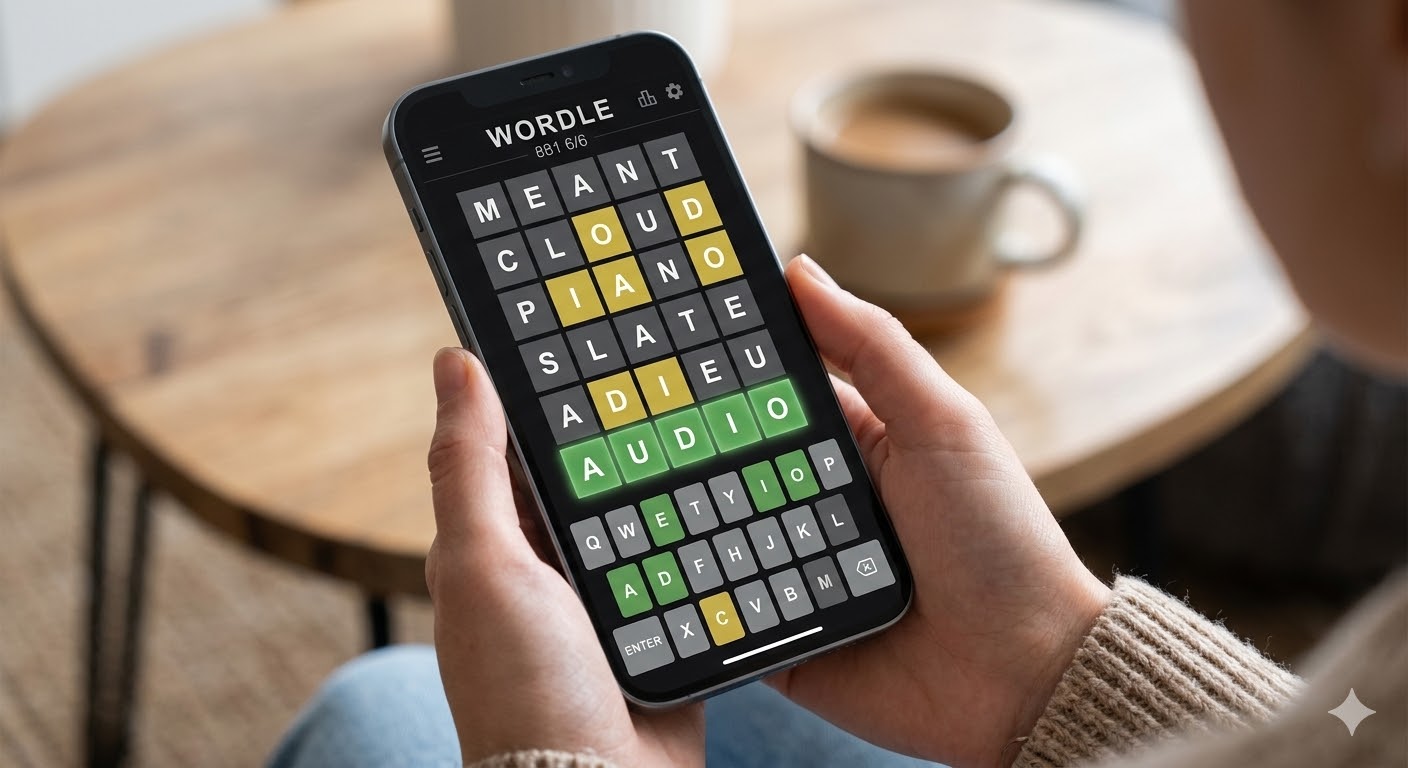
Millions of Americans woke up on the nation’s 250th birthday, July 4, and reached for their phones to check the morning Wordle before the barbecue got started. What they found was puzzle number 1,841, a five-letter word that immediately struck many players as a fittingly patriotic choice for Independence Day, even if its origins trace not to Philadelphia but to Naples.
The answer to today’s Wordle is PIZZA.
It is, by any measure, a perfectly themed solution for a holiday built around backyard cookouts, gatherings with family and friends, and the very particular American tradition of ordering takeout when the grill runs out of space. Pizza arrived in the United States with Italian immigrant communities in the late 19th and early 20th centuries, took root in cities like New York, Chicago and New Haven, and over the following century became so thoroughly embedded in American food culture that it now ranks among the most consumed foods in the country. An estimated 3 billion pizzas are sold in the United States every year, with the average American eating roughly 23 pounds of pizza annually. Its presence on the Fourth of July is about as inevitable as fireworks.
For Wordle purposes, the word is a reasonably tricky proposition despite its familiarity. PIZZA contains two vowels and three consonants, starts with P and ends with A, and crucially features a double Z at its center, a letter pairing that sits at the exact intersection of unusual and unfamiliar in the Wordle context. Most experienced players build their opening strategies around the most common Wordle letters, typically a mix from the group containing R, S, T, N, L, E, A and O. The letter Z, one of the least common in standard English usage, rarely appears in those opening frameworks. When it appears twice in five letters, the word becomes considerably more resistant to standard elimination strategies.
The most effective openers for today’s puzzle tended to be those that secured an early confirmation of the P, the I and the A, the word’s two vowels and its most distinctive consonant beyond the double Z. Starting words such as PHASE, IDEAL, PLANE or APRIL each gave solvers a meaningful foothold from which to reconstruct the word’s structure, particularly once the double-Z middle revealed itself through the process of elimination. Players who opened with standard vowel-heavy words like ORATE or RAISE found themselves with minimal useful feedback after the first guess, since none of the letters in those common openers appear anywhere in PIZZA.
The double Z specifically is the trap that likely cost the most streaks today. Wordle players who correctly identified the P as the first letter and the A as the last letter through their early guesses still faced an unusual challenge in reconstructing the interior, since a Z-Z combination does not appear in many five-letter English words and does not naturally surface as a guess even for players who know a word ends with the right letters. Experienced players often remind each other that repeated letters are more common in Wordle answers than intuition suggests, pointing to past answers including SHEEP, BLOOM and PUPPY as examples, but applying that principle specifically to Z requires a level of vocabulary recall that even regular players can stumble on.
The connection between today’s answer and the holiday on which it falls adds a pleasing layer of thematic resonance that has not gone unnoticed on social media this morning. The New York Times’ Wordle editing team, led by puzzle editor Tracy Bennett, has not confirmed whether the Independence Day placement was deliberate, but the combination of a universally recognized American food with a national celebration has generated the kind of enthusiastic online response that particularly satisfying or well-timed Wordle answers tend to produce.
Today’s puzzle is number 1,841 in the Wordle sequence, a milestone that speaks to how thoroughly the game has embedded itself in daily life since Josh Wardle created it in 2021 as a private project for his partner before it went viral globally in January 2022. The New York Times acquired it shortly afterward for a reported seven-figure sum and has maintained its core mechanics, free daily access and single-puzzle-per-day format throughout more than three years of operation under its editorial umbrella. Wordle now sits alongside Connections, Strands, Spelling Bee and the Mini Crossword as part of the Times’ suite of daily games products that have collectively attracted tens of millions of regular players.
For players whose streaks survived the double-Z challenge today, tomorrow’s puzzle arrives with a clean slate. For those who did not, the only consolation is that PIZZA is genuinely one of the more memorable, thematically appropriate and conversation-generating answers the puzzle has produced in its history, the kind of word that makes non-players smile when they hear it described and that reminds regular players why they keep coming back to a two-minute word game every morning, including on a national holiday when there are plenty of other things competing for their attention.


Max is an independent equity research analyst with a primary focus on biotechnology, healthcare, and technology companies. His investment approach is fundamentally driven, combining detailed financial modeling, valuation analysis, and in-depth research into clinical trial data, regulatory pathways, competitive dynamics, commercialization potential, and long-term business fundamentals. He is currently pursuing his academic studies while continuing to expand his expertise in equity research and financial analysis. He has gained additional experience through work exposure at the Deutsche Bundesbank and EY, where he developed a deeper understanding of financial systems and professional analysis standards. Through Seeking Alpha, Max aims to publish independent, research-driven analysis of biotechnology and healthcare companies, translating clinical and financial data into actionable investment insights.
Analyst’s Disclosure: I/we have no stock, option or similar derivative position in any of the companies mentioned, but may initiate a beneficial Long position through a purchase of the stock, or the purchase of call options or similar derivatives in CADL over the next 72 hours. I wrote this article myself, and it expresses my own opinions. I am not receiving compensation for it (other than from Seeking Alpha). I have no business relationship with any company whose stock is mentioned in this article.
Seeking Alpha’s Disclosure: Past performance is no guarantee of future results. No recommendation or advice is being given as to whether any investment is suitable for a particular investor. Any views or opinions expressed above may not reflect those of Seeking Alpha as a whole. Seeking Alpha is not a licensed securities dealer, broker or US investment adviser or investment bank. Our analysts are third party authors that include both professional investors and individual investors who may not be licensed or certified by any institute or regulatory body.

Choosing mutual funds solely on past returns can be misleading. ETMutualFunds shortlisted 10 funds across five equity categories using rolling returns, consistency, downside risk, outperformance and asset size, helping investors align investments with their goals, risk appetite and time horizon.

Saturday’s New York Times Connections puzzle delivered something of a surprise for players expecting a patriotic Fourth of July theme: no fireworks, no flags, no founding fathers and no stars and stripes anywhere on the board. Instead, puzzle editor Wyna Liu served up a grid organized around words meaning to persist, poetic forms, tropical cocktails, and a fill-in-the-blank category built around the word “sweet,” the last of which proved to be the session’s most effective streak-breaker heading into the holiday weekend.
Here is a complete breakdown of every category and every answer for Connections puzzle number 1,119, published July 4, 2026.
Yellow: Persist
The yellow category, as always the most accessible of the four, grouped together four verbs all meaning to continue or endure: Continue, Last, Linger and Stay. Each word describes the act of remaining in place or carrying on despite an implied pressure to stop or leave. The category offered a straightforward entry point for most experienced solvers, with the shared meaning immediately apparent once the theme of persistence clicked. The one mild trap in this group was that words like Last and Stay can carry multiple meanings, but in this context the puzzle was clearly organizing them around their intransitive verb sense of enduring through time rather than any alternative usage.
Green: Kinds of Poems
Wednesday’s geography-themed puzzle asked players to find countries hidden inside other words. Saturday’s green category asked for something entirely different: recognizing four types of poems. The green group gathered Ballad, Epic, Ode and Villanelle, each of which names a distinct poetic form with specific structural or thematic characteristics. A ballad is a narrative poem or song, typically with repeated refrains and a storytelling structure. An epic is a long narrative poem traditionally concerned with heroic figures, usually drawn from mythology or national history, with Homer’s Iliad and Odyssey and Virgil’s Aeneid as the most frequently cited examples. An ode is a formal lyric poem addressed to a particular subject, typically composed in praise or celebration of a person, place, event or abstract quality. The villanelle is perhaps the most structurally rigid of the four, a nineteen-line poem divided into five tercets and a closing quatrain with a strict pattern of alternating rhymes and two refrains, best known to contemporary readers through Dylan Thomas’s “Do not go gentle into that good night.” Recognizing villanelle as a poetic form rather than as a character from the spy thriller television series Killing Eve was reportedly the gateway moment for a number of solvers who found this category first after the word stood out prominently on the board.
Blue: Tropical Drinks
The blue category grouped four cocktail names that share a tropical or island identity: Hurricane, Painkiller, Scorpion and Zombie. The Hurricane is a sweet, rum-based cocktail associated most closely with New Orleans and the Pat O’Brien’s bar where it was reportedly invented in the 1940s, served in a distinctive curved glass that mimics the shape of a hurricane lamp. The Painkiller is a rum-and-coconut drink that originated in the British Virgin Islands. The Scorpion is a Polynesian-style tiki cocktail typically made with rum, brandy and citrus, associated with the tiki bar culture that spread across the United States in the mid-twentieth century. The Zombie is perhaps the most legendary of the four, a potent rum-based cocktail created by Donn Beach in the 1930s and traditionally limited to two per customer at many bars due to its extremely high alcohol content. The shared tropical cocktail identity of all four words is clear in retrospect, but the category offered multiple misleading possibilities since Hurricane, Zombie, Scorpion and Painkiller all carry strong associations with other categories that could plausibly have appeared in a Connections puzzle on any given day.
Purple: Sweet ___
The purple category, which Connections traditionally reserves for the most challenging or wordplay-intensive grouping, asked players to identify four words that can each follow the word “sweet” to form a recognized compound word or common phrase. The purple answers were Spot, Dreams, Pea and Nothings. Sweet Spot refers to an optimal point or position, used across contexts from baseball hitting to product pricing. Sweet Dreams is a widely recognized expression and phrase associated with saying goodnight, wishing someone restful sleep. Sweet Pea is a climbing garden flower with fragrant blossoms and a term of endearment. Sweet Nothings refers to affectionate, inconsequential words whispered intimately between partners, as in the phrase “whispering sweet nothings.” The challenge in the purple category was separating these four words from other candidates on the board that could plausibly follow “sweet” in some context, and from the multiple alternative connections those same words suggested within the broader grid.
The puzzle was edited by Wyna Liu, who developed Connections for the New York Times in 2023 and whose editorial style emphasizes category overlap designed to mislead players who commit too early to groups that seem obvious. The game refreshes daily at midnight in each player’s local time zone, remains free to play on the Times’ website and app, and allows up to four incorrect guesses before ending the puzzle, giving players a modest safety margin while still preserving the meaningful sense of failure that makes a completed streak feel like an achievement worth protecting.


In the West Bank, Israeli settlers take over Palestinian’s dream home
Business
Rich Paul Says He Has Talked to 27 NBA Teams About LeBron James and the Decision Is Purely About Happiness
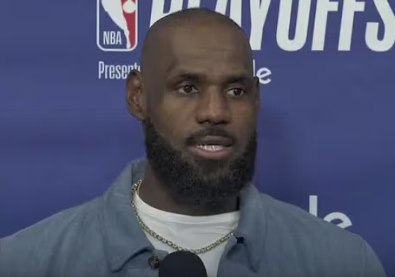
LeBron James’ free agency is officially the most wide-open and closely watched player movement in the history of the NBA, with his agent Rich Paul revealing Friday that he has already spoken to 27 of the league’s 30 teams about the possibility of the 41-year-old joining their franchise for the 2026-27 season, leaving every fan base outside Los Angeles with some reason to hold their breath.
Paul made the disclosure on a new episode of his podcast “Game Over,” during which he walked through the landscape of potential destinations using a whiteboard that listed 10 teams but made clear that the number of teams actively involved in conversations was far larger. He also spoke directly to ESPN’s Dave McMenamin, offering a characterization of James’ decision-making process that framed this free agency as unlike any the player had experienced before.
“Every day things change,” Paul told ESPN. “This is the first time that LeBron James is making a decision pressure-free. He’s won already. He’s made good on his promise — he won in L.A. This is strictly for his happiness. What does happiness entail? It’s a number of things. It’s a bucket of happiness. It’s basketball, it’s living, it’s camaraderie, it’s competition. It’s everything.”
The 10 teams Paul placed on his whiteboard during the podcast were Philadelphia, Cleveland, Denver, Minnesota, Miami, New York, Golden State, Dallas, Boston and San Antonio. That list spans every conference, every competitive tier and several cities that carry personal significance to James for different reasons. The presence of Boston, a city and franchise James has battled against in some of the most memorable Finals matchups of his career, was among the more eyebrow-raising names on the board. The inclusion of San Antonio, where rookie phenom Victor Wembanyama has transformed the Spurs back into a franchise with genuine championship aspirations within just two seasons, reflected a broader point Paul has made about James’ desire for a situation where he can genuinely compete rather than simply extending his career in a supporting context.
The most discussed potential destinations entering the weekend remained Golden State, Cleveland and Miami. Golden State’s appeal has been extensively documented, centering on the personal friendship between James and Stephen Curry that dates back to multiple Olympic gold medals and years of Finals rivalry before warming into genuine offseason camaraderie. Draymond Green’s decision to decline his player option was widely interpreted as directly connected to clearing financial room for a potential James signing, and the Warriors have made little effort to conceal their interest. However, ESPN’s Shams Charania reported this week that Golden State is not currently considered a frontrunner among the teams most likely to land James, suggesting the Warriors’ pursuit, while real, has not yet generated the kind of momentum that produces a signing.
Cleveland offers a different kind of pull, centered on homecoming and legacy. James won the only championship in Cavaliers history in 2016, fulfilling a promise he had made to the city of Cleveland years earlier, and that bond with northeastern Ohio has never fully faded despite two subsequent chapters with Miami and Los Angeles. The current Cavaliers roster is legitimately strong, featuring Donovan Mitchell, Evan Mobley, Jarrett Allen and James Harden, giving James a supporting cast capable of competing for an Eastern Conference title without requiring him to carry the offensive load the way his age and recent workload might otherwise demand.
Miami presents a return to the city where James won two of his four championships in 2012 and 2013 and where, in many ways, he first established himself as a player capable of leading a superteam rather than simply being its best individual member. The Heat’s acquisition of Giannis Antetokounmpo earlier this offseason adds a dimension to the Miami pitch that no other team can match: James would arrive not as the team’s primary star but as a complementary piece alongside Giannis and Bam Adebayo, a role that some observers believe could extend his career meaningfully by reducing the per-game physical demand.
The landscape shifted this week when the Celtics completed a shocking trade sending Jaylen Brown to the Philadelphia 76ers. Paul acknowledged directly on his podcast that the Brown trade had changed the Philadelphia calculation, noting that a James-Brown-Joel Embiid-Tyrese Maxey combination in the City of Brotherly Love would immediately be considered one of the most talented rosters in the Eastern Conference.
Paul’s comment about the New York Knicks was among the podcast’s more memorable moments. He reportedly told podcast listeners that James would have been headed to New York if the Knicks had not won the NBA championship this season, implying that the franchise’s championship run had made that destination less of a destination and more of a completed story. He did not, however, rule out New York entirely, leaving open the possibility that James could still choose the league’s largest market despite the Knicks’ historic championship run.
The reference to 27 teams in Paul’s conversations means that franchises not typically associated with LeBron speculation, including the Washington Wizards, Portland Trail Blazers and Sacramento Kings, have at minimum had exploratory conversations with Klutch Sports about what a James arrival might look like. Those conversations are almost certainly more preliminary and less substantive than the discussions involving the primary suitors, but their existence illustrates the degree to which the entire league has oriented itself around this single decision.
James himself has not made any public statement about his timeline for deciding or about which teams have had the most substantive conversations with his camp. The notable absence of his own voice from the discourse, while his agent speaks publicly and candidly on a podcast about 27 teams and a whiteboard of finalists, is a dynamic that will sustain speculation and media coverage through however long the process takes.
Paul closed his podcast appearance with a line that captured the spirit of where James finds himself heading into what is almost certainly the final free agency decision of a 24-year career that has already produced four championships, four Finals MVP awards, four regular-season MVP awards and the all-time NBA scoring record.
What remains is not a chase for validation or legacy accumulation. What remains, as Paul described it, is the simplest and most human of motivations: happiness, in whatever form that ultimately takes for a 41-year-old who has already won everything the sport has to offer.
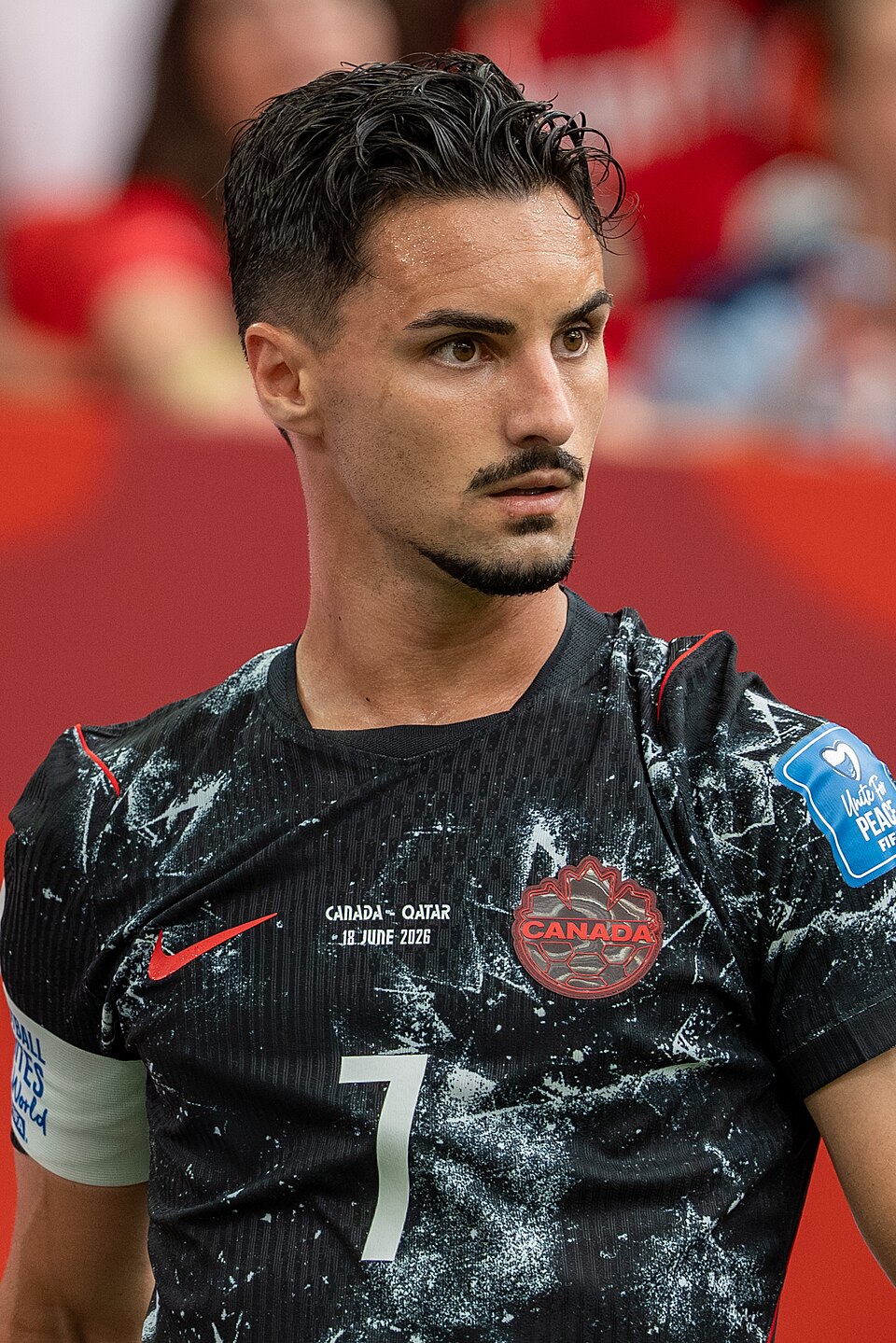
HOUSTON — Canada brings its remarkable and wholly unexpected deep run at the 2026 World Cup to its most demanding test yet on Saturday, when the co-host nation faces Morocco in the round of 16 at NRG Stadium with a quarterfinal spot on the line and a Fourth of July holiday crowd roaring them on.
Kickoff is set for 1 p.m. ET, with the match available on Fox Sports in the United States. The winner advances to the quarterfinals to face either France or Paraguay in Boston on July 8 or 9.
Everything that has happened for Canada at this tournament already exceeds what anyone outside this program could have reasonably projected heading into June. First-ever World Cup point. First-ever World Cup win. First-ever knockout victory. The Canadians have outscored their four opponents 9-3 across the tournament, dispatched South Africa 1-0 in the round of 32 on a Stephen Eustaquio winner deep into stoppage time, and now stand on the edge of a quarterfinal that would represent a generational leap for Canadian football.
Morocco, meanwhile, is the team that eliminated Canada in the group stage of the 2022 World Cup in Qatar with a 2-1 victory built on goals from Hakim Ziyech and Youssef En Nesyri inside the opening 23 minutes. Four years ago, the Atlas Lions became the first African and Arab nation to reach a World Cup semifinal. This year they arrived in North America with bigger ambitions and stronger tactical foundations, and have delivered on that promise without losing a match, finishing second behind Brazil in Group C before eliminating the Netherlands on penalties in the round of 32 after Issa Diop’s 91st-minute header forced extra time.
Morocco coach Mohamed Ouahbi left no room for complacency in his prematch framing.
“If we get things wrong, we’ll go home,” Ouahbi said ahead of Saturday’s fixture.
Canada coach Jesse Marsch was equally direct about the scale of the challenge while refusing to accept the underdog label as a limiting factor.
“Preparing for Morocco is like a gory, horrible nightmare,” Marsch said. “But we want to be here and we expect to be here. So we know that everybody’s going to write us off, and in that is an opportunity.”
The tactical challenge for Canada is clear and has been the defining variable in every match the team has played at this tournament. Morocco possess Achraf Hakimi at right back, arguably the best attacking full back in the world, whose ability to arrive late into attacking positions creates width and depth that few defenses have been able to suppress consistently. Ismael Saibari, who scored three goals in the group stage and attracted attention from Bayern Munich sufficient to secure a transfer agreement, is Morocco’s most dangerous threat in the final third, arriving from midfield into spaces that traditional center backs are not positioned to track.
Canada’s best counter to that quality is a combination of defensive organization built around Kamal Miller, Derek Cornelius and Alistair Johnston across the backline, with Eustaquio providing the controlling and direct-running presence in central midfield that has been the Canadians’ most productive link between defense and attack throughout the tournament. Canada have shown across four games that they can absorb sustained possession pressure from better teams and find decisive moments on the counter, a quality that offers genuine hope even against a Moroccan side ranked 24 places above them in the FIFA world rankings.
The most significant team news development entering Saturday’s match concerns Alphonso Davies, whose return from the lower-body injury that kept him entirely absent from Canada’s first four games was hinted at by Marsch in his prematch comments. The Bayern Munich left back, arguably Canada’s best individual player and one of the fastest players in world football, appeared as a 75th-minute substitute against South Africa in the round of 32. Whether he starts Saturday remains one of the most consequential lineup decisions Marsch will make, given that Davies’ pace and quality on the left flank would give Canada a weapon Morocco’s right side has rarely needed to contain at this tournament. Ismael Kone, the Sassuolo midfielder who broke his leg against Qatar in the group stage, remains out.
Morocco have no reported injuries heading into the match, giving Ouahbi a full selection to work with. The anticipated lineup places veteran goalkeeper Yassine Bounou behind a back four of Hakimi, Romain Saiss, Issa Diop and Nayef Aguerd, with a midfield and attack built around El Aynaoui, Bouaddi, Brahim Diaz, Azzedine Ounahi, Bilal El Khannouss and Saibari.
Betting markets reflect the quality gap between the two sides without dismissing Canada’s chances entirely. Morocco sit at approximately -120 on the 90-minute money line at FanDuel Sportsbook, with Canada a significant underdog at +370 and a draw priced at +230. Morocco are -260 to advance by any means, including extra time and penalties, against Canada’s +205. The over/under on total goals is set at 2.5, with the over priced at +125.
Morocco have progressed in six of their last eight knockout ties at major tournaments, a success rate in elimination football that reflects the squad’s growing comfort with exactly the kind of high-stakes, one-game scenario Saturday presents.
Canada’s presence in this match is already historic in every meaningful sense, a young team co-hosting its first World Cup, led by players who grew up watching the country’s senior men fail to qualify for tournament after tournament, now finding themselves 90 minutes from a quarterfinal against a nation that was in the final four last time around. Whatever Saturday brings, Canadian football left this tournament with its identity reshaped. What happens next at NRG Stadium will determine whether that reshaping reaches a place no Canadian team has been before.

IT stocks have seen a sharp downturn this year so far, with multiple headwinds leading to the shares of Infosys, Tata Consultancy Services (TCS), HCL Technologies, Tech Mahindra and Wipro crashing up to 36% in 2026 so far. The combined market capitalisation of all these top five IT companies at the end of the trading session on Friday stood at a little over Rs 18.12 lakh crore.
Shares of Reliance Industries, India’s most valuable company, have also declined 17% this year so far amid a volatile energy market following the outbreak of the Iran and US war earlier this year. The stock last month crashed to a 52-week low of Rs 1,253.20 apiece on NSE, before paring some gains. At the end of Friday, RIL’s market capitalisation stood at nearly Rs 18 lakh crore.
Why IT stocks are falling?
RIL currently commands a market cap more than twice of TCS, India’s largest IT company. This comes as the AI worries led correction in IT stocks outpaced. Earlier this year, the sector witnessed a sharp selloff after breakthroughs by AI startups fuelled concerns about potential disruption to the traditional IT services business model. While intermittent buying emerged on hopes that fears of an AI-led shake-up were overdone, the recovery continues with analysts raising doubts over how long it will last.While doomsday prophets continue to debate the future of IT companies following fresh AI advancements, Nomura believes the long-term addressable market for Indian IT companies will continue to expand. In its latest note, the brokerage said Indian IT services firms, especially large-cap players, are facing a “perfect storm of two key headwinds”.

The first is macro uncertainty stemming from geopolitical tensions in the Middle East and the outlook for interest rates, particularly in the US, which is keeping client spending subdued at the margin.
Nomura also noted that when clients’ technology spending is not growing, competition among IT services companies intensifies, with the economic gains from AI being passed on to customers. With firms such as Accenture indicating that the impact of the conflict on growth could persist in the near term, the brokerage expects FY27 to remain another subdued year for the sector.
Also read: Nomura expects IT firms to see ‘anaemic’ growth in FY27. Here are latest target prices for Infosys, TCS, and others
Reliance Industries share price
Reliance Industries (RIL) shares recorded marginal gains to close at Rs 1,304 apiece on Friday. At its annual general meeting (AGM) last month, billionaire Mukesh Ambani announced that Jio Platforms’ board had approved the draft red herring prospectus (DRHP) for its IPO, formally setting in motion one of India’s most anticipated public offerings. The IPO will comprise a fresh issue of 27 crore shares, with Reliance planning to use Rs 27,500 crore of the proceeds to repay debt, while the balance will be allocated towards general corporate purposes. The size of the mega IPO could be around Rs 35,00-40,000 crore.Nuvama Institutional Equities noted that although Jio is likely to receive a premium valuation in public markets, gains for Reliance shareholders may be limited because the telecom business sits within a larger conglomerate structure. The brokerage continues to apply a 20% holding company discount while valuing Reliance’s digital and retail businesses, reflecting the market’s tendency to value subsidiaries more richly than their parent companies.
Also read: Rs 35,000 crore Jio IPO may not be a jackpot for Reliance investors. Here’s why
(Disclaimer: Recommendations, suggestions, views and opinions given by the experts are their own. These do not represent the views of The Economic Times)
Business
Lakers Could Trade Bronny James to Reunite Him With LeBron After the NBA Legend Picks His Next Team
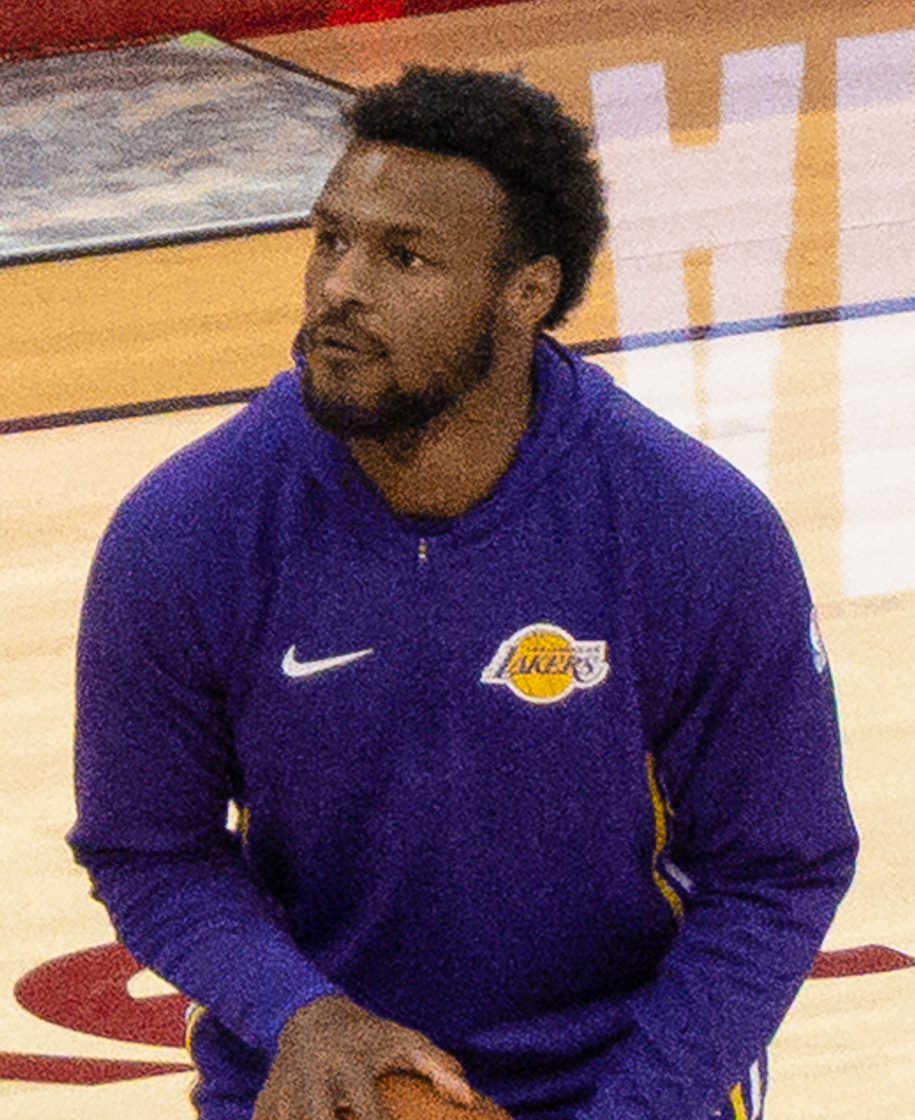
LOS ANGELES — Bronny James may soon follow his father to a new NBA city, with ESPN’s Dave McMenamin reporting that the Los Angeles Lakers could trade the 21-year-old guard to whatever franchise LeBron James ultimately chooses in the most closely watched free agency of the modern era, potentially keeping the historic father-son playing partnership alive for a third NBA season.
The timeline of events surrounding the James family’s separation from the Lakers was nothing short of whiplash-inducing. On June 29, the Lakers fully guaranteed Bronny’s $2.3 million salary for the 2026-27 season, choosing not to waive him before his contract deadline. The very next morning, LeBron James informed the franchise he would not be returning for a ninth season, leaving a roster that had just locked in the son without the father.
McMenamin detailed the situation directly in his reporting.
“LeBron has spoken at length about how meaningful it has been to be teammates with his son, and those feelings only grew late last season when they shared the court in competitive games,” McMenamin wrote. He added: “Once LeBron makes his decision on his next team, there could be a subsequent move made with Bronny.”
The mechanics of any potential Bronny trade would be relatively straightforward given his minimum contract. Because his $2.3 million deal falls near the league minimum, any team with cap space or a roster spot can absorb him without sending matching salary back to Los Angeles in return. The ideal outcome for the Lakers, according to reporting from LakersNation.com, would be to extract a second-round draft pick in any deal involving Bronny, giving the franchise a small return on a player whose guaranteed contract they could otherwise monetize through trade. Whether that extraction is achievable in a transaction involving a minimum-salary player is less certain, and the Lakers may ultimately be willing to move Bronny without any compensation simply to free up the roster spot for a more impactful signing.
The father-son pairing that made history throughout the 2024-25 and 2025-26 seasons resonated on a level that transcended the basketball court. LeBron and Bronny became the first father-son duo ever to play an NBA game together, a milestone that drew emotional responses from across the sport and from fans who had followed LeBron’s career since he entered the league as a teenager himself in 2003. The partnership deepened through two seasons of shared professional experience, including a moment in the first round of the 2026 playoffs against the Houston Rockets when the two combined to score 10 consecutive points in a single second-quarter sequence, five each, a snapshot of shared purpose that captured the imagination of anyone who watched it.
Bronny, now in his second season, showed genuine developmental progress relative to his rookie campaign. He appeared in 69 total games across his two professional seasons, averaging 2.7 points, 1.1 assists and shooting 34.8% from three overall, but his three-point percentage improved to 38.7% in his second year, a threshold that begins to suggest he could develop into a credible rotational option if given consistent opportunity. His defensive effort has been consistently praised by coaches and teammates, and his postseason performance in Game 4 against the Rockets, in which he produced five points and four assists across 15 minutes, offered the clearest evidence yet that he can contribute in meaningful moments at the NBA’s highest level.
Those developmental gains, modest as they are in the broader context of the league, have created what ESPN described as genuine uncertainty about whether the Lakers would even want to trade him regardless of where LeBron lands. The franchise has a thin backcourt beyond Luka Doncic and Austin Reaves, and a young, minimum-salary guard with defensive instincts and improving shooting represents exactly the kind of depth piece a rebuilding team can use without any financial strain.
“There’s very much a world in which the Lakers see Bronny as young, cheap depth they aren’t willing to part with this summer,” Bleacher Report noted in analysis of the situation.
The three franchises most frequently identified as the leading contenders for LeBron James himself, the Cleveland Cavaliers, Golden State Warriors and Miami Heat, all present different circumstances for a potential Bronny trade. Cleveland already has a crowded backcourt featuring Donovan Mitchell and James Harden, raising questions about whether Bronny would have a meaningful role. Golden State’s current depth at guard might make a Bronny addition more logistically complex than it appears, while Miami’s situation, with Giannis Antetokounmpo and Bam Adebayo consuming significant minutes and attention, could provide Bronny the kind of low-pressure environment in which developmental players tend to thrive.
For the Lakers, the Bronny question is one of the few remaining roster decisions that has not yet been resolved in what has otherwise been an extraordinarily active first week of free agency. The franchise added center Walker Kessler from Utah in a sign-and-trade, signed guard Collin Sexton and is finalizing the addition of Quentin Grimes, moves focused entirely on building around Doncic rather than maintaining any continuity with the LeBron era. Trading Bronny to LeBron’s eventual destination would serve that pivot by opening an additional roster spot while simultaneously allowing the front office to serve the James family’s interests one final time in a way that preserves goodwill without compromising the Doncic-centered vision.
LeBron’s own decision remains unresolved, with Rich Paul disclosing Friday that he has now spoken to 27 teams about his client’s availability and that the factors guiding James’ thinking are genuinely fluid. Until that decision is made, Bronny James remains a Laker on paper, surrounded by teammates his father will never play alongside, waiting for clarity that is entirely dependent on a choice happening somewhere else in the league.
Business
Egypt Knocks Australia Out on Penalties in First-Ever World Cup Shootout for Both Nations in Crushing Exit
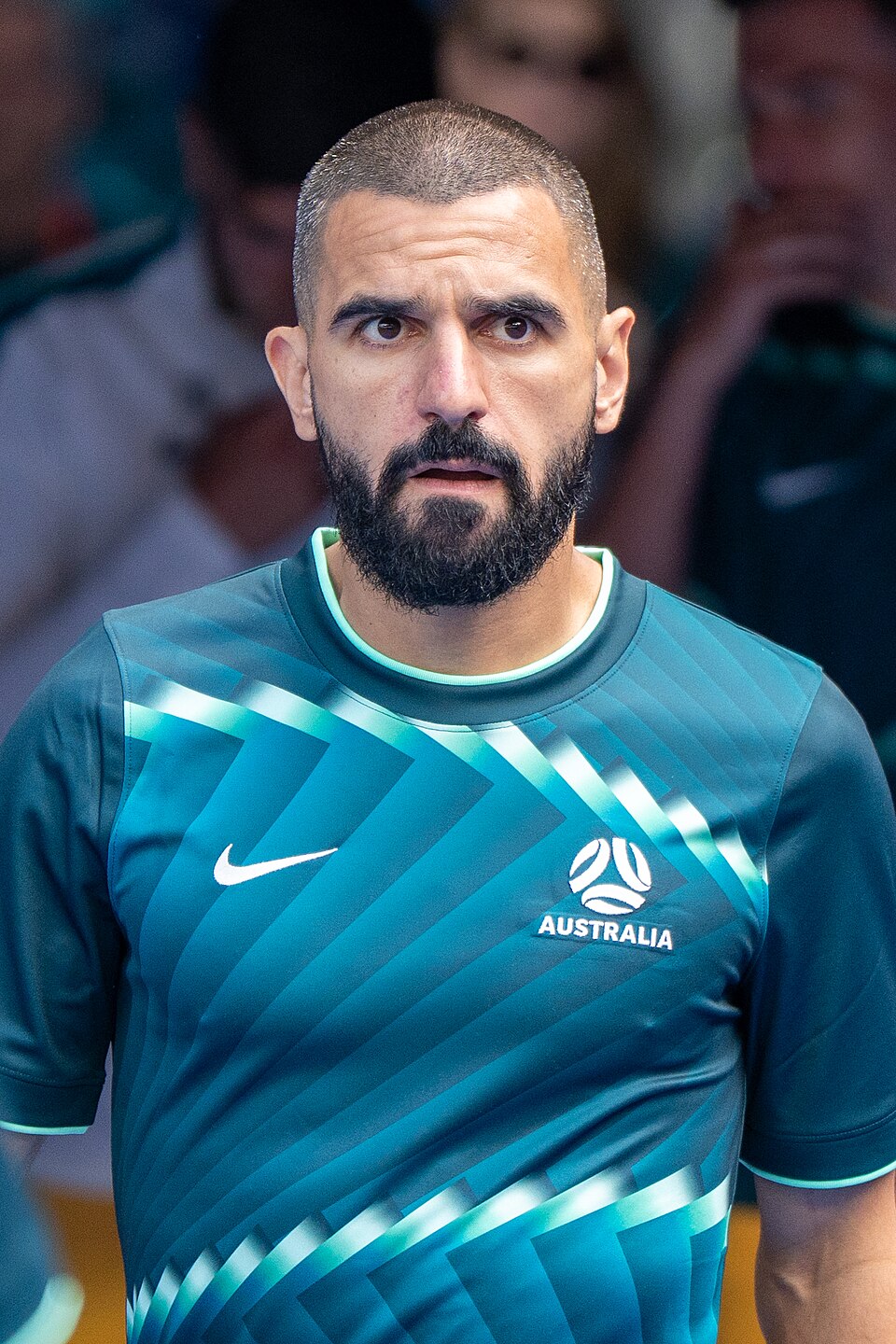
DALLAS — Australia’s long wait for a first World Cup knockout-stage victory stretched to at least four more years Friday after the Socceroos fell to Egypt 4-2 on penalties following a dramatic 1-1 draw through 120 minutes of play, with Harry Souttar and Lucas Herrington both missing their spot kicks to bring a heartbreaking end to the tournament’s most poignant farewell at Dallas Stadium.
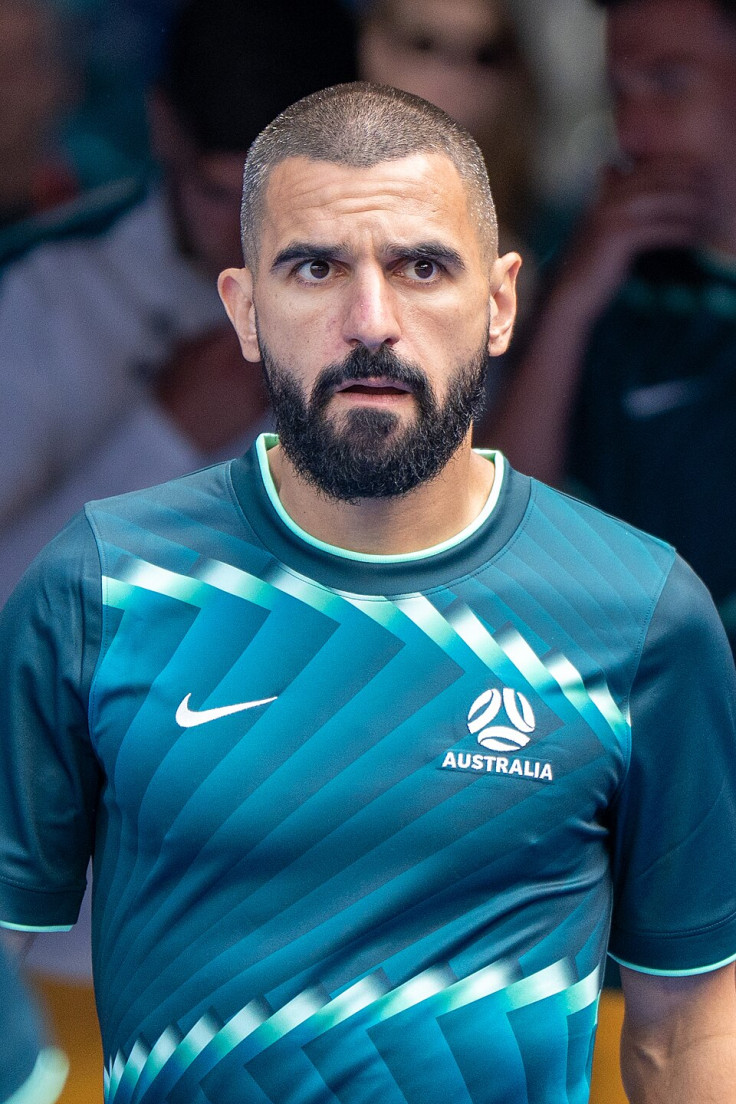
It was the first World Cup penalty shootout in the history of both nations, an occasion that carried enormous emotional weight for the Socceroos, who had only ever appeared in three knockout matches across their entire international football history and had lost each of those previous appearances. Egypt, playing in their first-ever World Cup knockout match, held their nerve when it mattered most, with Hossam Abdelmaguid converting the decisive final penalty to send the Pharaohs into the round of 16 against the winner of Argentina vs Cape Verde on July 7 in Atlanta.
Jackson Irvine, one of two Socceroos to successfully convert his penalty alongside Awer Mabil, was in tears after the final whistle. He was measured and generous toward his teammates who missed, and unsparingly honest about how elimination by shootout feels.
“Penalties are a cruel way to lose,” Irvine said. He then specifically addressed those who missed: “I hope everyone stays behind them and they get all the support. They’ve been immense, the two of them.”
Socceroos defender Aziz Behich echoed that defense of 18-year-old Herrington, whose missed penalty proved the turning point in the shootout.
“Lucas is going to be in more of those positions later down the track,” Behich said. “The kind of boy Lucas is, such a great lad, great head on his shoulders, great professional. I just told him that for him to even just go up there, to put the ball down was enough for us and he can keep his head up. I’m expecting big things from him in the future.”
The match itself was an absorbing, tightly contested affair that defied the pre-match billing as one of the round of 32’s more predictable fixtures. Egypt struck first in the 13th minute when Emam Ashour timed his run perfectly from a set piece, connecting with Karim Hafez’s lofted delivery and heading the ball cleanly past goalkeeper Patrick Beach to give the Pharaohs an early lead they had not entirely deserved based on the match’s opening exchanges.
Australia responded positively and gradually wrestled back control of the contest. Head coach Tony Popovic named an unchanged lineup from the Paraguay draw, retaining the team’s familiar structure with Nestory Irankunda leading the line and Harry Souttar wearing the captain’s armband. Cristian Volpato had earlier skimmed the top of the crossbar with a long-range effort that briefly threatened to give Australia the lead before Egypt found the net.
The equalizer arrived in the 55th minute through an own goal credited to Egyptian defender Mohamed Hany. Aiden O’Neill won a set piece on the edge of the area and delivered a perfectly directed inswinging ball into a dangerous zone. It found Hany’s head as he attempted to clear and deflected into the back of the net, sending the Australian contingent at the stadium into euphoria and leveling a match that had begun to drift toward Egypt.
Australia lost right wing-back Jordy Bos to injury at halftime, bringing on teenager Kai Trewin for his first World Cup appearance in a tournament debut under the most intense circumstances possible. Egypt responded to the Australian equalizer with their own surge, with Omar Marmoush creating several dangerous moments and Rami Rabia producing a header late in regulation time that appeared destined to restore Egypt’s lead before Beach made what may have been the save of the tournament, a phenomenal intervention that kept Australia alive and sent the match to extra time.
Popovic made tactical changes at the start of extra time, introducing Mabil and Paul Okon-Engstler as Australia searched for a knockout blow. Egypt had the more promising moments in the first period of extra time, with Mohamed Salah, playing his first match after recovering from the hamstring strain that had kept him out of Egypt’s group stage finale, creating a golden chance that Beach saved again to maintain the 1-1 scoreline. In the 117th minute, Mabil broke free and drew a foul on the edge of the area that presented a direct shooting opportunity, but his effort clattered off the defensive wall.
With penalties looming, Popovic made one of the match’s most significant decisions: introducing veteran goalkeeper Maty Ryan for the final minutes of extra time, replacing the tournament’s surprise hero Beach and giving Ryan the captain’s armband for the shootout. Ryan had not played a single minute of the tournament before entering in the 119th minute. He was unable to save any of Egypt’s four penalties.
The shootout unfolded with cruel precision. Irvine and Mabil scored for Australia. Souttar and Herrington missed. For Egypt, all four of their designated takers converted, with Abdelmaguid stepping up last to complete a historic 4-2 win that ended Australia’s World Cup campaign and simultaneously made Egypt the first African nation to advance to the round of 16 at this edition of the tournament.
Head coach Tony Popovic addressed reporters afterward, expressing pride in his players and defending his decision to bring Ryan on for the shootout.
“I think that was always an option for us and then you have to see how the game progresses,” Popovic said when asked about the substitution.
Australia departs the tournament having qualified from the group stage for only the third time in their history, extending a legacy of creditable but ultimately incomplete World Cup campaigns. The Socceroos had beaten Türkiye in their opening match, lost to co-host United States in their second, and drawn with Paraguay in their third to secure a knockout berth. Their first match in the knockout rounds ended the same way their previous two had: in defeat.
The dream of a first-ever World Cup knockout victory will have to wait at least four more years.

The Singer’s Parents and Sibling

MAJOR SCOTUS rulings | Trump’s EYE-POPPING financial disclosure | Great American State Fair FLOP?
World Cup thrown into chaos as FIFA told to postpone match and statement issued


-

 Tech6 days ago
Bluekit phishing kit adopts browser-in-the-middle for login theft
-

 Fashion12 hours ago
Weekend Open Thread: High Hopes
-

 Tech6 days ago
Claude Code turned every engineer into three. Now companies need more product thinkers
-

 Crypto World4 days ago
Strategy authorizes up to $1.25B in Bitcoin sales under new capital plan
-

 Politics19 hours ago
The House | “Reframing the debate from a binary discussion of winners and losers”: Yuan Yang reviews ‘We Are Not Machines’
-

 News Videos5 days ago
MAJOR BITCOIN & MARKET UPDATE!!!! (MUST WATCH ASAP!!!)
-

 Tech4 days ago
Anonymous researcher drops 0-day ‘exploitarium’ repo
-

 Crypto World7 days ago
Coinbase, Circle Deepen Crypto Stock Losses Despite Resilient S&P 500
-

 Business4 days ago
Australia treasurer says alleged access of prime minister’s bank data ’incredibly concerning’
-

 Tech7 days ago
Russian hackers now target Signal backup recovery keys
-
 Business5 days ago
The AI boom won’t burst all at once. It will pop in ‘rolling bubbles’: Macquarie
-

 Sports3 days ago
Broncos roster: OL Ben Powers (No. 74) entering final year of contract
-

 Crypto World2 days ago
Binance stock trading tops $1B in first month after launch
-

 NewsBeat3 days ago
Presenter Caroline Flack’s brother Paul Flack dies aged 55
-

 Tech7 days ago
Silicon Valley paid to kill AI regulation, now it wants the rules back
-

 Tech7 days ago
OpenAI mulls delaying IPO over valuation concerns
-

 Crypto World2 days ago
Alibaba-affiliate Ant Group enters the humanoid robot market with 12 deals
-

 News Videos4 days ago
How to Build INSANE Live Financial Dashboards With Claude
-
 NewsBeat2 days ago
New exhibition reflects five decades of movement between island of Ireland and GB
-

 Business1 day ago
What a 10 Percent Drop Means for Buyers, Sellers and Renters
You must be logged in to post a comment Login