

Business
Na Hong-jin Delivers Wild Cannes Monster Mayhem but Divides with Shaky CGI


CANNES, France — A decade after “The Wailing” cemented his status as one of cinema’s most unpredictable genre alchemists, South Korean director Na Hong-jin has returned with “Hope,” a blood-soaked, guns-blazing sci-fi creature feature that crashed the 2026 Cannes Film Festival like an alien invasion through a quiet coastal village.
World-premiering in competition on May 17 to a reported seven-minute standing ovation mixed with audible bewilderment, the 160-minute epic marks the first South Korean entry in the main slate since Park Chan-wook’s “Decision to Leave” in 2022. It’s already polarizing audiences and critics, hailed by some as a delirious action masterpiece and dismissed by others as an overlong mess undone by questionable visual effects.
Set in the fictional Hope Harbor, a ramshackle South Korean hamlet perilously close to the Demilitarized Zone, the story opens with a grisly cow carcass and rumors of a man-eating tiger slipping south from the North. Local police chief Bum-seok, played with hangdog charisma and perfect comic timing by Hwang Jung-min, investigates alongside hot-headed hunter Sung-ki (Zo In-sung) and rookie officer Sung-ae (Jung Ho-yeon of “Squid Game” fame, delivering a breakout performance full of fire and frustration).
What starts as a rural procedural quickly explodes into all-out chaos when wildfires cut off communications and reinforcements, leaving the town’s elderly residents — and the handful of cops and civilians still standing — to face something far more terrifying than a big cat. Na, who also wrote the screenplay, keeps the first hour hurtling forward in one sustained, exhilarating set piece after another: cars flipping, walls crumbling, shotguns blazing through doors with darkly comic consequences.
Cinematographer Hong Kyung-pyo, reuniting with Na after “The Wailing,” captures the mayhem with gliding, insolent grace. Long tracking shots weave through narrow alleys and sunlit forests, turning the destruction into a balletic frenzy. Michael Abels’ throbbing score amplifies the panic, blending orchestral swells with guttural pulses that make daylight chases feel nightmarishly vivid.
The human stakes land thanks to a colorful ensemble of Korean actors who ground the escalating absurdity in recognizable small-town dynamics — bickering relatives, grizzled elders with shotguns, and bureaucratic headaches even amid apocalypse. Bawdy humor punctuates the gore: one botched monster hunt ends with mistaken identity and a perforated butcher, leading to a grimly funny sequence of an old man struggling to carry the body.
Yet “Hope” shifts gears dramatically in its middle act, introducing extraterrestrial elements and a hunting party’s forest ordeal. Here the film’s ambitions stretch — and occasionally snap. International stars Michael Fassbender, Alicia Vikander and Taylor Russell appear heavily disguised under motion-capture and CGI as alien figures, their performances largely buried. Cameron Britton also contributes to the creature work. While the casting choice invites cheeky readings about Hollywood othering, the effects themselves draw the sharpest criticism.
Reviewers have described some creature designs and VFX sequences as weightless or unfinished, evoking outdated video-game aesthetics or early-2000s blockbusters. Na reportedly rushed post-production to meet the Cannes deadline, and it shows in certain wide shots where physics feel off and integration falters. These shortcomings blunt momentum during expository stretches that pile on thin mythology and subplots.
Still, the final hour regains ferocious energy with a jaw-dropping highway chase that throws everything — vehicles, debris, sheer kinetic audacity — at the screen. Action aficionados are already calling sequences here potential Oscar contenders for stunt design, comparing the visceral thrill to “Mad Max: Fury Road.” Na’s direction never loses its sweaty, chaotic exuberance, even when narrative logic strains.
At a reported record budget for a Korean feature, “Hope” represents a massive gamble for Plus M Entertainment and distributor Neon, which snapped up North American rights. Early buzz suggests franchise potential, with Na hinting at expanded universe possibilities. The film is slated for a summer 2026 South Korean release, positioning it as a domestic blockbuster contender while testing international appetite for ambitious, unapologetically genre-driven cinema from Asia.
Cannes audiences left the Palais in a mix of exhaustion, laughter and debate. Some praised its refusal to be “respectable,” celebrating raw entertainment value in a festival often favoring restraint. Others found the tonal whiplash and technical hiccups exhausting rather than exhilarating.
Na Hong-jin, now 51, has described the project’s origins in a single vivid image that haunted him years ago. Collaborations with Alfonso Cuarón were reportedly discussed early on, and the production spanned locations in South Korea and Romania’s Retezat Mountains for sweeping forest and mountain sequences. Principal photography wrapped in 2023, but extensive VFX and editing delayed the rollout.
Performances elevate the material throughout. Hwang Jung-min anchors the film with weary authority and slapstick physicality. Zo In-sung brings intensity to the hunter role, while Jung Ho-yeon injects youthful defiance that cuts through the carnage. The Korean-language dialogue crackles with regional flavor and profanity that heightens the grounded absurdity before the sci-fi escalates.
Thematically, “Hope” keeps things light. Allegories about DMZ tensions, isolation or humanity’s resilience flicker but never dominate. Na prioritizes spectacle and character beats over heavy subtext, a choice that feels refreshing — or shallow — depending on one’s expectations for festival fare. Bawdy scatological jokes and gallows humor further distance it from typical Palme d’Or contenders.
As awards buzz builds, “Hope” seems unlikely to claim the top prize but could generate conversation around genre boundaries at Cannes. Its commercial prospects look stronger: Neon’s track record with bold titles, combined with star power and viral action clips, positions it for strong summer box office in multiple territories.
Whether “Hope” ultimately lands as a cult classic or a noble misfire may depend on how audiences embrace its messiness. For now, it has accomplished something rare — waking up a sleepy festival with unhinged, blood-drenched energy. In an era of polished franchises, Na’s willingness to swing big, flaws and all, feels like a defiant roar.
Running at two hours and 40 minutes, the film tests patience during lulls but rewards with sequences of pure cinematic adrenaline. Early Rotten Tomatoes scores reflect the divide, with praise for ambition and action craftsmanship tempered by notes on pacing and effects.
As theaters prepare for wider release, “Hope” stands as a testament to bold filmmaking. It may not be perfect, but its wild heart beats loud enough to demand attention — and perhaps sequels. In Hope Harbor and beyond, the monster has arrived, and cinema feels a little more alive for it.

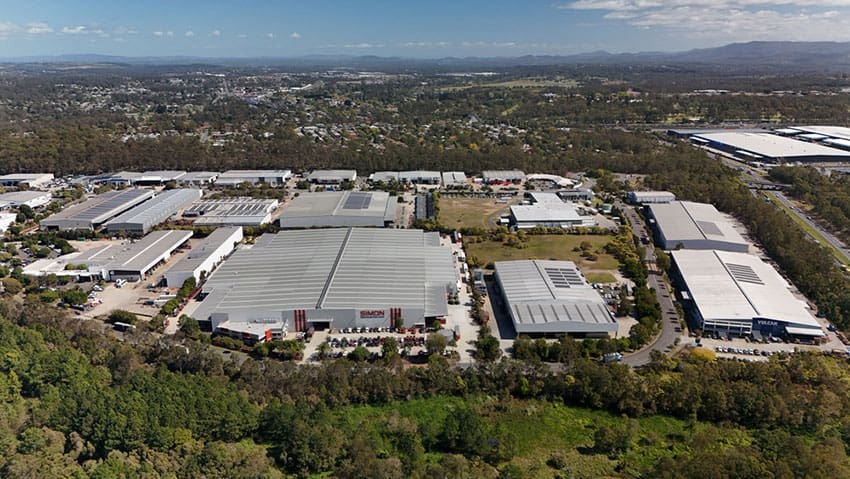
NatWest has opened a new business Accelerator at Tyseley Energy Park in Birmingham, handing West Midlands founders direct access to capital, coaching and investor networks in a region whose advanced engineering and manufacturing sector already generates £22 billion a year and supports 273,000 jobs.
The hub, launched in partnership with TEP Birmingham and Webster & Horsfall Group, is aimed squarely at founders and growth businesses trying to make the leap from promising idea to investable company.
There is a pleasing symmetry in the choice of venue. TEP is owned by Webster & Horsfall Group, a family-owned Birmingham manufacturer with more than 300 years of industrial heritage and a banking relationship with NatWest stretching back to 1948. The Group still makes specialist wire and wire-rope products for the aerospace, automotive, marine and medical industries, while transforming part of its historic Tyseley site into an energy and innovation cluster.
For small business owners, the practical offer is worth noting. Members receive specialist coaching, workshops, peer support and introductions to investors, commercial partners and sector experts, alongside access to NatWest’s venture banking, sustainability finance and IP lending propositions. Membership is free, and the bank plans to grow its Accelerator community to 50,000 members during 2026, with entrepreneurs able to join through the digital platform at natwest.com/accelerator.
The location puts members inside a working industrial cluster rather than a glass-box co-working space. TEP Birmingham is home to more than 20 energy and technology organisations working across low-carbon energy, sustainable transport, resource recovery, advanced materials and the circular economy, bringing entrepreneurs together with manufacturers, universities, policymakers and infrastructure providers.
The timing is no accident either. The West Midlands Growth Plan identifies commercialisation of technologies developed by businesses, universities and research institutions as a key route to growth, while the Government-backed Local Innovation Partnerships Fund, led by UK Research and Innovation, is designed to bridge the gap between research and commercialisation in regions like the West Midlands. Ministers have already awarded regions up to £20 million each to back high-potential innovation clusters.
The launch also aligns with the West Midlands Investment Zone, which is targeting growth in advanced manufacturing, including battery technology, digital industries and green sectors, and sits neatly alongside the Government’s wider push to put advanced manufacturing at the heart of its industrial strategy.
Robert Begbie, CEO of NatWest Commercial & Institutional, said: “The West Midlands has the industrial strength, technical expertise and entrepreneurial ambition to become one of the UK’s leading regions for green growth.
“But strong ideas need more than technology alone. Businesses also need capital, customers, commercial expertise and the right networks.
“This partnership brings those elements together. By combining our Accelerator network, venture banking expertise and sustainability finance capabilities, we can help more businesses commercialise, attract investment and scale.”
Robert Horsfall, Director of Webster & Horsfall Group and co-founder of TEP Birmingham, said: “TEP Birmingham was created to bring business, universities and the public sector together to develop and commercialise new ideas. The NatWest Accelerator adds a vital new element, giving founders and growth businesses access to finance, commercial expertise and wider industry networks.
“Together, we want to help more businesses find partners, secure investment and grow here in the West Midlands.”
NatWest already operates Accelerator hubs in Birmingham and at the University of Warwick. The new Tyseley location connects the three sites into a single regional ecosystem, meaning a founder in Digbeth or a spin-out in Coventry now has a shorter route than ever to investors, industry partners and, crucially, the bank manager.

Jamie Young
Jamie is Senior Reporter at Business Matters, bringing over a decade of experience in UK SME business reporting.
Jamie holds a degree in Business Administration and regularly participates in industry conferences and workshops.
When not reporting on the latest business developments, Jamie is passionate about mentoring up-and-coming journalists and entrepreneurs to inspire the next generation of business leaders.

Yutthana Gaetgeaw/iStock via Getty Images

Download this episode on Apple Podcasts or Spotify

Transcript
Rena Sherbill: Very excited to welcome back our very own Steve Cress, our head of Quant and all things quant. And today we are talking mid-year update for the top stocks of the year 2026. Steve, welcome back to Investing Experts.
Steve Cress: Thank you much for having me and organizing this today. It’s a pleasure to be with you.
Rena Sherbill: It’s always a pleasure to have you. I know our audience feels the same. You were with our very own Daniel Snyder yesterday, talking this mid year update in top stocks.
What do you have for us today? We have seen pretty fantastic returns. If you’re looking for alpha, you’ve got some alpha.
Steve Cress: We have. Just by way of background, for those who don’t know me, I’ve been with Seeking Alpha since 2019. Prior to Seeking Alpha, the majority of my career was spent at Morgan Stanley. I was there for 13 years running a prop desk in quantitative strategies. I also was the head of international at Northern Trust Global Investments. I also founded a hedge fund, which I managed from London.
And I also simultaneously started a FinTech company, which for lack of a better description, was sort of an automated analyst where we married conventional analysis with systematic processes and created a fintech company. Seeking Alpha liked it so much they bought it and I joined Seeking Alpha in 2019.
So I just wanted to provide a little color on my background. what we’re gonna cover today, a little bit about what’s happening with the markets, and then we’ll provide an update on our top 10 stocks that we selected back in January.
Which are up 70% to the end of June 30th. So they’ve had quite a return that’s up 70% on average for 10 stocks. And a little bit beyond the top 10 stocks, what people could do if they like those names that we recommend, and they’d want it more than once a year.
So I will start with a recap on the markets. The markets, both the S&P (SP500) and the Dow Jones (DJI) near record highs. you can see the national. NASDAQ (COMP:IND) was sort of at a record high in the beginning of June and between June first and today, I feel like we’ve seen several rotations of risk on, risk off with big movements into safe haven sectors, asset classes, then right back out again, then right back in again.
Today risk is back on. A couple days ago, risk was off. And the markets really more of the Nasdaq than the markets overall are reflecting that volatility as well as the VIX.
The S&P 500, kinda hard to tell that there are difficult periods if you’re just looking at the overall return. Because the underlying sectors are just rotating in and out. So that performance is staying fairly high.
But if we break it down to sector performance, if you look at the table on the right-hand side, you’ll see the year-to-day performance. Technology stocks have done incredibly well, up 27%, industrial stocks up about 19%, and energy up about 18% to get an indication of the volatility, this was actually from a day ago.
And you can see technology was down 2.7% two days ago. today it’s the best performing sector. and what I will say, which is interesting about this, even with technology up 27% year to date and industrials up 19% year to date, our top 10 stocks again are up close to 70%.
So right now, at this time, looking at the CNN fear and greeted index, if you look at the bottom chart. You’ll see we are in fear territory. A year ago, we were in extreme greed territory.
So it’s very interesting to see the sentiment of investors while basically the S&P and the Dow are at all-time highs, and the Nasdaq is just slightly off its all-time highs. But the fear does indicate that investors are concerned. Obviously, there’s geopolitical events, big uncertainty with the war between the US and Iran.
There’s uncertainty over inflation, which has been far stickier than expected. A lot of that had to do with the surge that we had in oil. But also tariffs created pressure on inflation. And of course, that also leads to higher interest rates, which have been higher for longer. And if you want back a year ago, one of the reasons why the market was an extreme greed, a year ago, we the investors really believed that interest rates would be coming down during 2026. In fact,
The anticipation was that there would be three rate cuts. And this next chart really indicates that. You could see this chart it provides the market implied number of rate cuts in 2026 and 2025.
And you could see back in July and September, and even in November of 2025, the market was expecting three interest rate cuts. And then you fast forward to really March and April of 2026.
Those expectations went out the window because interest rates and inflation have been higher than expected. And now the market is actually expecting increases by the end of the year. So when I go to the next table, this is actually interest rate traders, in essence, voting where they believe interest rates will be for the December FOMC meeting and what’s going to happen with that Fed meeting.
And the target rate probability is that 21% of interest rate traders believe that rates will be unchanged, but you have 41% expecting a 25 basis point increase. You have 28% of traders expecting a 50 basis point increase, and you had 8% of traders actually expecting a 75 basis point increase.
So this is entirely different than a year ago when we saw the sentiment indicator from CNN in the range of extreme greed.
Now it is fear because of a lot of uncertainty. And one of the reasons why the market does continue to trade well is earnings have continued to perform. Both top and line earnings for many companies are meeting expectations, along with the incredible capex spending that is occurring for AI. And this chart is from Goldman Sachs. And I think what’s really interesting about this, you could see in 2027.
They’re expecting about 1.4 trillion in hyperscaler AI CapEx. When I made this presentation about a year ago, that 1.5 trillion figure was in the 2035 period. And it’s already been fast forward how much CapEx spending.
And really, when you read the headlines now in the newspapers, you’re seeing mega tech companies, like the Mag 7 companies, actually having bond issuances to raise capital for their AI CapEx spending.
So a lot of underlying companies, it’s not just the big tech companies that are benefiting, a lot of underlying companies are benefiting from this spending and they’re making real money.
They’re earning revenues, they’re generating earnings. And there’s a lot of stocks that we have recommended, especially earlier in the year, that have benefited from that. So this is not a type of situation where there’s a hope that these companies will generate revenue or earnings.
They actually are. So that much spending is actually taking place. And this table here shows where we are with earnings growth. The blue line shows where we are today. And the gray line shows where we were on March 31st. And in all instances for all gig sectors, with the exception of healthcare, investors are anticipating that earnings will continue to grow year over year. And this chart is provided by Facts Ed.
In fact, they are stating that S&P earnings are expected to grow by 24% year over year for the calendar year 2026. So that is actually quite strong, and that really helps support the market at its current levels.
However, in addition to the geopolitical uncertainty and the inflation uncertainty and labor uncertainty and interest rate uncertainty, there is also some seasonal uncertainty, which is on the horizon that’s not too far in November, we have midterm elections.
And if you look back over the last 25 midterm elections, the market has actually been down preceding that election. the good news is even though on average the market comes off prior to the election on average by about 18%, immediately after the election, for the three-month period after the market rebounds on average by 5.8%.
For the six month period, it rebounds on average 10.5%. And for a full year after the midterm election, on average, the market is up 14.8%. So if the market does decline, and history shows that it does going into midterm elections, in addition to all the other uncertainties that we have, there could be a correction.
It would probably be a great buying opportunity. And we have a track record of showing if you purchase stocks with strong fundamentals, as we recommend.
We have a service called Alpha Picks, and of course we focus on quant strong buys and it’s Alpha Picks, a really unique service where we just highlight our two favorite strong buys every month.
On the trading date closest to the first of the month and the 15th of the month, we issue an article of the stock that we’re recommending. And we have a portfolio of about 40 stocks now. And I think what’s really interesting, as I’ve mentioned, we focus on companies with really good fundamentals.
Had you purchased the Alpha Picks portfolio in September 2022, when the market had a little mini crash, it was down about 17.10%. If you purchased Alpha Picks at that time, the portfolio and held it, you would be up 396%. a little bit more recently in the first quarter of 2025, there was a correction and also known as Liberation Day. On April 3rd, the market declined by 12%. And if you bought the Alpha Picks portfolio during that decline and held it, it would be up 146%.
And more recently, we had the oil shock that occurred on March 27th. The market pulled back about eight and a half percent. And if you purchase the Alpha Pix portfolio, then you would already be up a whopping 41%. So this is not only a testament to Alpha Picks, but a testament to buying stocks with strong fundamentals during corrective phases.
Quant really helps to eliminate emotion from investing. A lot of times when individuals recommend stocks or take those recommendations, there’s quite a bit of emotion behind it. It could be a Wall Street analyst who has a close connection with a CEO or a CFO. It could be a family relative that you inherited the stock from. And with Quant, we really try to eliminate the hearsay and the emotion and we stick to the data.
Quant is a data-driven process. It is similar to what a fundamental analyst does at Morgan Stanley or Goldman Sachs or Merrill Lynch. We do look at fundamentals, and the five core factors that we look at are value, growth, profitability, EPS revisions, and momentum.
I refer to it often as a GARP plus strategy. GARP is growth at a reasonable price. So we take that strategy, but we add the power of computer processing. So I I have been an analyst myself, and most analysts on Wall Street.
Typically could really only cover about 15 to 20 stocks. When you employ the power of computer processing, you have the ability to analyze 5,000 stocks, but you also have the ability to analyze those stocks every single day. And that’s exactly what we do.
We run our databases every single day with fresh numbers. So we’re looking at all the companies that we cover, we’re looking at their balance sheets, cash flow statements, income statements, and hundreds of financial metrics.
And part of the quant process is actually to compare the metrics for every company compared to its sector. And by doing this comparison, we can actually separate the strong companies from the weak company. So that’s why we use quant.
It gives us a lot of breadth in terms of our coverage universe and we know the data is fresh. As a result, every day we can see if a sock is a strong buy or a strong sell. And it’s way better than like looking at an analyst research report from eight weeks ago.
Because you want to make an investment decision based on fresh data, not data from eight weeks ago. Because a lot can change in eight weeks or four weeks or even two weeks.
So we have a very good track record. You can see over the last five years that it was up 180% compared to refreshing Wall Street analyst drawn buys every day. They were up only 17% compared to our 180%. And that’s also versus the S&P up 54%. But outside of our overall quant system, when you look at our top 10 stock recommendations, that has a very good track record too.
If you took our top 10 stocks from 2025, those were up 91% versus the S&P up 27%.8 percent and that’s if you bought them in January of twenty twenty five and held them to the end of June 2026 recently so that’d be 91% versus 21% that was for 2025 if you looked at 2024 the top 10 stocks were up 329% versus the S&P up 60% if you looked at 2023 our top 10 stocks were up 232% versus the S&P up 95%.
And if we come to our most recent selection of stocks in January of this year, 2026, the top 10 stocks at the end of June were up 69.56% versus the S&P up just 8.32%. So we’ve had a really good track record picking quant strong buys at our top 10 at that, at the beginning of the year and halfway through the year.
To show you how the performance was of the underlying stocks that we selected, we had Micron Technology (MU), which was our best performing stock. That was up 267%.
We had (AMD), another semiconductor company up 144%. We had Coherent (COHR), an IT company, up 109%. We had Ciena (CIEN) up 107%. We had a defense company in the industrial sector up 64%. We had Allstate Financial (ALL), which is an insurance company, property and casualty, up eighteen point six three percent.
And Celestica (CLS), another IT company, up 17%, and Incyte Healthcare (INCY) up 12.64%. So eight of the stocks handedly beat the S&P 500. We did have two stocks that were down, Barrick Mining (B) and Willdan (WLDN) down 18% and 27%.
But in total, the average return of those stocks was up almost 70% compared to the S&P 500, up 8.32%. And if you took the S&P 500 on an equal weighted basis, that was up 10.3%
This is what the top 10 looks like right now. We have seven of the stocks still a strong buy. One of them is a hold, which is Barrack Mining Corporation, and two of them are now holds, Coherent and Willdan. And actually, at one point, Willdan fell to a sell but came back to a hold. So that sort of provides you with a little bit of the data on our performance.
What I like to show people in terms of fundamentals. If you took the top 10 stocks, they have an average forward revenue growth rate. And forward revenue growth rate is using consensus estimates from analysts for each stock. So the average growth rate would be about 33% compared to the S&P 500, up 8.5%. And the average EPS growth rate for our top 10 stocks is 88% compared to the S&P at 19.66%. Our companies do have a rich PE.
The forward PE is 34 times on average compared to the SP 24 times, but you’re getting 88% EPS growth versus 19.6. So it’s well worth the multiple being a little bit higher.
I want to provide an update on a couple of our stocks that were from the top 10 in the beginning of the year. Micron Technology, as I mentioned, was up 267%. That is a semiconductor company. It still ranks number one out of all our IT stocks and number one out of 69 semiconductor companies.
And in fact, despite the stock being up 267%, the valuation framework is actually more attractive now than it was six months ago. The current valuation factor grade from Seeking Alpha is an A minus. And these factor grades are sector relative, so it’s not in absolute terms.
When you look at that valuation grade or growth grade or profitability, it shows you the company relative to the sector. And an A, of course, is just about as good as you can get.
The valuation is great. And six months ago it was B plus. Growth is an A plus, which puts it at the highest growth rate versus the IT sector. Profitability is an A plus versus the sector. Momentum is an A plus and
The EPS revisions and A-grade. EPS revisions are actually the quantity of analysts taking the rest of it’s up versus down. And this again is relative to the sector. So relative to the sector, the EPS revision movement is far stronger. AMD, which is Advanced MicroDevices, another semiconductor stock, that one ranks five out of 531 technology companies.
And within semiconductors, it ranks four out of 69. You can see that the valuation grade here on the right hand side is a C. So the valuation is in line with the sector. But interesting enough, six months ago, it was actually a D plus. So the valuation framework is actually better now compared to where it was then.
And the stock is up 144%. So in essence, you should almost ignore the return that these stocks had because when you look at them compared.
To the rest of the sector, the valuation framework is better and the growth framework is better and the profitability. So there are a lot of reasons to own these stocks now and not be concerned that they’re at a 52-week high or the level of movement in the share price.
Our number three company is Ciena Corporation. Here’s another example of a stock that’s up significantly. Since January, it’s up 107%.
And here the valuation grade is a C plus versus D six months ago. So again, valuation framework is better. And the growth grade here is an A versus A minus. So even a slight improvement in the growth scenario. So lots of great reasons to still own these stocks that we recommended in the beginning of the year.
Now, as I mentioned, not all the stocks were winners. We did have two losers. Barrick Mining Corporation is down 18%. Even with the stock being down 18%, it is still ranked a quant buy, and the value compared to the sector and the growth compared to the sector is still relatively strong.
Barrick Mining is a leading mining company with a strong focus on copper, and copper is the metal of electrification. So there are strong tailwinds for this company with the developments that we have with AI and data centers and the huge consumption of electricity.
The company’s forward EPS growth rate is fifty-four percent versus the sector at 14%. They have nine billion in cash from operations. And if you look at the PEG, which is a ratio that I really like, it’s a valuation metric where you take the PE and growth combined on a PEG basis, it’s at a 57% discount to the sector.
So stock is down, and that mostly is due to a weird phenomenon that occurred that year, probably one of the strangest events for gold and companies that focus on gold or gold mining.
Typically, when you have geopolitical events that are very hostile, there is a rotation into gold stocks. This year was completely different. as the crisis occurred with the US and Iran, there was a big impact on the dollar, and gold actually had an inverse relationship to the dollar this time around.
Many gold stocks actually fell and it’s really driven by sentiment because the fundamentals for this company look fantastic. So it is still a buy.
One company that did not look fantastic was Willdan. That stock was down 27%. It is rated a hold now. You can see we’re very transparent, so we show the rating history every single day, and you can see the brief period where it actually went to a sell, and then it went right back to holding. The stock did appreciate when it moved from a sell to hold.
The valuation for this company is better now than it was six months ago. The growth is not quite as strong. And I believe it’s because there were expectations that growth was not going to be quite as strong as it was. That is one of the reasons why the stock fell 27%.
So those were that was a recap of our top 10. Where do we go beyond the top 10 for January?
Well, next week on Tuesday, July 14th, I’ll be announcing my top ten stocks for the second half of the year. So hopefully you can join us. Rena, at some point you might be able to put a link here to that event and people will be able to register for it.
So we don’t do top ten just in January, we also do top ten in July. And hopefully again you can join us for that presentation. But we also have other products and you can’t really rely just on investing twice a year in January. July.
We have investable products. We have three products, and I’m sure one of these products could be suited for the needs of most investors. One of the products is the Pro Quant Portfolio, which is a portfolio of 30 stocks. It’s fixed at 30 stocks and it provides a high frequency of ideas. Every Monday it rebalances. If that is a little bit too frequent for you in terms of trading, Alpha Picks book.
Might be a much better product. AlphaPix focuses on just our top two quant strong buys every month. As I mentioned earlier, on the first and the 15th of the month, we issue a research report with our recommendation. and it’s had great performance.
And then if you are a little bit more interested and conservative, we actually have a product which we just launched in June called the Quant Growth and Income Portfolio. That is a portfolio of 30 dividend-paying stocks, and it rebalances every other Wednesday, so twice a month. On average, there might be two stocks during that rebalance every other Wednesday.
And again, all the stocks there pay dividends, and it is focused on both capital appreciation and income generation. And all three products have had great performance. the Alpha Picks product here, this is actually not the 52 week return, but since inception, it’s up 378% compared to the S&P up 97%.
And that’s since July of 2022. The other products that I’m showing here, the since inception return for the Pro Quant Portfolio, which started, we’re on a one-year anniversary now, pretty much. That is up 54% in the last year versus the S&P on an equal weighted basis up 24%.
And QGI, the quant growth and income product, which we just launched in June, is already up six percent compared to its benchmark, which is the Vanguard High Yield Index ETF, which is pretty flat for the year.
So Rena, let me ask, first, I want to say thank you for allowing me to present on our top 10 stocks. And I’m sure you probably have a couple questions.
Rena Sherbill: That is actually exactly what I have. A couple questions indeed. thank you for taking the time, packed full of like really quality info.
I just wanted to highlight for those listening, number one, this video will be up on our YouTube channel, on Seeking Alpha’s YouTube channel. You can always catch Investing Experts clips and episodes on our playlist there that you can find under podcasts.
Also, those that just want to listen to this episode, those wondering where Steve was getting that data from, it’s on the quote pages of those stock tickers on Seeking Alpha. And you can have all of that at your fingertips and eyesight if you are a premium member. Just wanted to make note of that.
So, my first question, Steve, is a question that we have gotten a lot on your appearances in the recent, I would say in the recent 12 months, especially since QG&I came out. People wondering why not make these ETFs?
Steve Cress: Very good question. And we do get that a lot. at Seeking Alpha, we provide investment research. We’re not an asset manager, we’re not a broker dealer, we’re not an investment bank. our focus is really providing investment research, and we have a couple channels that we do that through.
We have thousands of contributors that write articles on individual stocks and ETFs and the macro economy, and that’s available on premium. We have news on stocks all over the world and we have our Seeking Alpha quant system. So they’re really three independent sources of investment research, but we’re not an asset manager. So hopefully that answers the question.
Rena Sherbill: I think it does. Appreciate that.
So, my other question for you is actually not my own question, although I I like it very much and support it. It’s from our friend Gary Vaughan over at Daily Stock Picks, who, as you know well, is a huge, huge fan of yours. So here’s his question:
Steve, can you take one of your picks and tell us the story of how you found it? We see the research you use on the platform. It’s amazing, but year after year you do find these winning stocks. So the finding is the special sauce. Is the quant telling you the sector to look at. Can you tell us one stock you researched and decided against including in the list and how you found it and why it did not make the cut? Thank you in advance.
Steve Cress: Yeah, so when I provide the list of top ten, the first thing I do is I go to the Seeking Alpha screen and I sort stocks by the quant recommendation of the strong buy. So they’re all ranked, you’ll find over 4,800 stocks ranked. And I sort of filter it down to our quant strong buys.
Now, when I provide the top 10 lists, there are some criteria and parameters that I use. I don’t want to put all the eggs in one basket. So a lot of times there could be quite a bit of congestion of a certain sector. So I’ll try to limit any one sector to about four stocks, then I move on to the next sector.
So there could be stock five, six, seven, eight that doesn’t get included because it’s the same sector. in this case, you know, recently IT has been leading, which is probably no surprise if you looked at the S&P 500 and the top 10 stocks or almost all technology stocks in the S&P 500.
So there is a really strong clustering effect right now. And I want to eliminate that clustering effect. I want to reduce the risk. So I only allow four stocks from one sector. That’s probably the predominant reason for eliminating stocks. But I am also looking for companies that have really strong revenue growth rates and earnings growth rates.
And there could be a stock that might be super profitable and have a great valuation where it ranks high. And when we rank our stocks, I should mention we use five investment factors that are all weighted. I believe I mentioned them earlier, which are value, growth, profitability, momentum, and EPS revisions, all five of those factors have a weight.
Sometimes a single factor could be a real outlier. So by example, a company could have like a PE of three. So it would definitely be like an A, you know, if the other valuation factors were just as cheap. But if I’m focusing on revenue and earnings growth, I might pass over that stock, even though it could have a higher ranking.
So these are sort of two examples for passing over stocks. And Gary, that was a great question. Thank you very much.
Rena Sherbill: Much appreciated. I’m gonna piggyback off Gary’s question if that’s okay. Anything that missed the list any of the years that you’ve been doing it? Like does anything stick in your mind in terms of one you wish you had put on but didn’t? Or are you like pretty religiously devoted to the process?
Steve Cress: Well, there could always be a stock that you miss. I will say for this time around, the second half of the year, I wanted the list to be completely fresh. Because of the past when I’ve gotten to the half year mark, people have commented several of the stocks were picked in January and they already own them.
So what we’re actually gonna do this time is we’re gonna highlight the names that would have been on the list, but were already picked in January.
So we’re gonna highlight those names and then we’re gonna have 10 completely fresh names.
Rena Sherbill: That’s a great tease. The B cuts made the A cuts. Love that. Love that. Okay, awesome. That’s July 14th. Steve, appreciate it. Any final words?
And anybody that’s interested in more Steve and quant content, please follow Steve Cress on Seeking Alpha. Steve, any final words?
Steve Cress: No, I just really appreciate everyone who attends and their time today. taking you know the the effort to listen to our podcast. I truly appreciate it. And Rena, thank you so much for organizing it. Really appreciate it.

Form 4 Samsara Inc For: 9 July
Samsara evp, cto John Bicket sells $9.67m in shares

Zelenskiy says Patriot missile licences agreed with US at political level

UK start-ups raised a record $17bn (£12.7bn) in the first half of 2026, double the amount raised in the same period last year and the strongest opening to any year since 2022, according to new figures from Dealroom and HSBC Innovation Banking.
Yet only 16 per cent of large funding rounds involved domestic investors, a statistic that should give anyone cheering the headline number pause.
Britain is, on this evidence, still comfortably Europe’s start-up capital. The UK attracted 39 per cent of all European venture capital investment in the period, more than France, Germany, Sweden and Switzerland combined.
Artificial intelligence did most of the heavy lifting. AI companies raised a record $12.6bn (£9.4bn), nearly three quarters of everything invested, and took 19 of the 28 megarounds of $100m (£75m) or more completed in the half. All four rounds above $1bn (£750m) went to AI firms, the largest being the $2.1bn (£1.6bn) raised by Isomorphic Labs.
“The first half of 2026 demonstrates the continued strength of the UK’s innovation ecosystem, with record levels of investment reflecting growing confidence from both domestic and international investors,” said Emily Turner, chief executive of HSBC Innovation Banking UK.
“What is particularly encouraging is how AI is increasingly being applied across sectors. We’re seeing it create new opportunities in sectors from life sciences and deep tech to enterprise software, while helping companies compete on a global stage.”
Encouraging, certainly. But the fine print tells a more awkward story about who is writing the cheques. With domestic investors involved in just 16 per cent of the biggest rounds, the returns from Britain’s most successful companies will overwhelmingly flow to funds in San Francisco, New York and the Gulf rather than to British pensions and portfolios. It is a familiar complaint: veteran investors have long warned that only 20 per cent of the capital backing UK scale-ups is domestic, leaving 80 per cent of the upside to overseas backers.
There is a second wrinkle for business owners reading past the record total. Capital is piling up at the two ends of the market, into early-stage bets and a handful of enormous late-stage rounds, while established growth companies in the middle face a tougher route to finance. Late-stage deals took 68 per cent of all capital raised in the half, up from 42 per cent a year earlier. Separate figures published this week showed the same pattern across UK tech: funding nearly doubled, but the money went to fewer companies.
For the typical SME seeking a £2m to £10m growth round, in other words, the boom may feel oddly distant. A record year in aggregate is proving demanding in person, and firms without AI credentials or unicorn ambitions will find investors choosier than the headlines suggest.
Policymakers are not blind to the gap. The British Business Bank has more than doubled its direct equity investing in nine months, explicitly to signal to UK institutions that they should follow. And under the Mansion House Accord, seventeen of Britain’s biggest workplace pension providers have pledged to put 10 per cent of their portfolios into private assets by 2030, with at least half of that ringfenced for the UK.
Until that money arrives, the first half of 2026 stands as a curious sort of triumph: proof that Britain can build companies the whole world wants to own, and a reminder that Britain itself remains reluctant to buy.
Jamie Young
Jamie is Senior Reporter at Business Matters, bringing over a decade of experience in UK SME business reporting.
Jamie holds a degree in Business Administration and regularly participates in industry conferences and workshops.
When not reporting on the latest business developments, Jamie is passionate about mentoring up-and-coming journalists and entrepreneurs to inspire the next generation of business leaders.
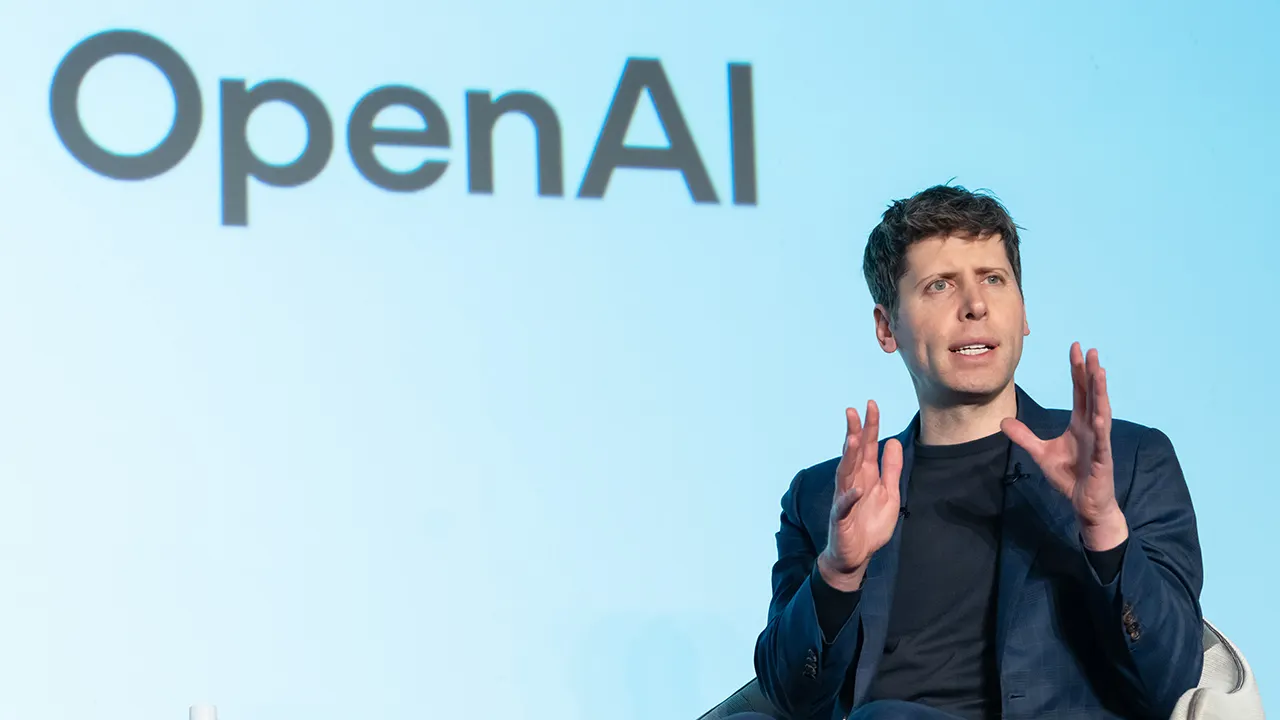
OpenAI announces the wide release of GPT-5.6 Sol, along with a national security framework outlining principles it will and will not support, following government concerns about AI power and prior interventions.
OpenAI on Thursday unveiled a new enterprise offering called ChatGPT Work, which is designed to leverage the popular chatbot to carry out and automate workplace tasks across a variety of applications and files.
ChatGPT Work is powered by OpenAI’s most advanced artificial intelligence (AI) model, GPT-5.6, and is capable of gathering context from apps, files and workflows to create finished documents, spreadsheets, presentations, reports and websites, the company said in its announcement.
The company explained that ChatGPT Work can use plugins to connect with apps like Slack, Microsoft Teams, Google Drive and Sharepoint, as well as email systems, calendars, CRM platforms, project trackers and other tools.
Once connected, ChatGPT can gather context about the task, pull in information, create documents, decks and perform analyses while refining drafts in the background of the user’s work.
ADS COMING TO CHATGPT FOR SOME US USERS AS OPENAI SEEKS TO GENERATE NEW REVENUE
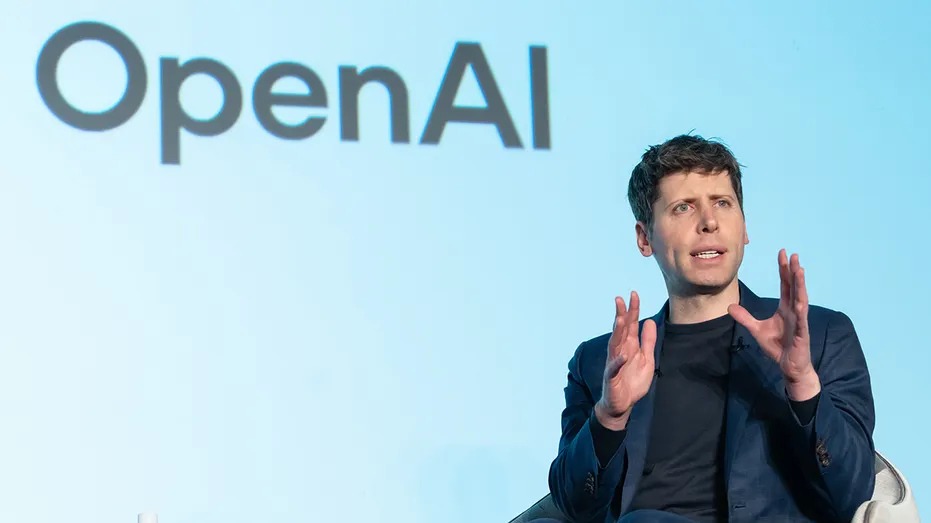
OpenAI and CEO Sam Altman are rolling out a new tool called ChatGPT Work aimed at automating workflows. (Tomohiro Ohsumi/Getty Images)
In OpenAI’s announcement, the company said that ChatGPT Work can continue to work on projects when the user isn’t on their phone or computer through the use of Scheduled Tasks, which can take new messages and turn them into updated docs or slides and circulate the changes among team members, for example.
ChatGPT Work will be available as of Thursday for Pro, Enterprise, and Edu plans – and will roll out to Plus and Business plans in the coming days. It’s also available in the ChatGPT desktop app on every plan, including the Free plan.
OREGON DATA CENTERS FACE SHARP ELECTRICITY RATE HIKE UNDER NEW LAW

OpenAI’s new variant of ChatGPT comes as the company is preparing for an IPO. (Jaap Arriens/NurPhoto via Getty Images)
The announcement comes as OpenAI’s latest foray into agentic AI tools following the launch of Operator and deep research, which were later consolidated into ChatGPT Agent for individual users, as well as Workspace Agents for automating enterprise workflows.
OpenAI is in the midst of an intense competition with AI rivals like Anthropic, which released Claude Cowork – an agentic tool that can plan and carry out multi-step tasks autonomously.
DOORDASH UNVEILS CHATGPT GROCERY APP ONE WEEK AFTER INSTACART DEBUT

OpenAI’s ChatGPT is vying with Anthropic’s Claude for users, as well as Microsoft’s Copilot and other tools. (Samuel Boivin/NurPhoto via Getty Images)
Anthropic added plugins to Claude Cowork that allowed it to automate tasks related to legal, sales, marketing and data analysis, which triggered a selloff in U.S. and European software and professional services stocks earlier this year amid concerns about its potential to disrupt the data analytics industry.
Microsoft, an OpenAI backer, also unveiled Copilot Cowork to expand its agentic AI offering on the heels of Anthropic’s rollout.
GET FOX BUSINESS ON THE GO BY CLICKING HERE
Reuters contributed to this report.
Earnings call transcript: Educational Development posts wider Q1 2027 loss

Key Points
- CNBC Sport spoke with Josh Allen, who announced a partnership with sleep aide Natrol.
- Allen said doing a post-NFL broadcasting job would be “cool” if he can “keep it from a strictly broadcasting angle.”
- There have been many TV opportunities for former NFL quarterbacks in recent years.

The report, Redseer India IPO Report: 2026, said the country currently has around 210 new-age companies that are IPO-ready over the next 24 months, identified through an assessment of 1,400 firms.
Based on an analysis of more than 300 mainboard IPOs between FY21 and FY26, the report said India’s listed new-age companies currently account for around USD 150 billion in market capitalisation, or about 4.6 per cent of the country’s total market value.
This share could expand to nearly 11.5 per cent by 2030 under Redseer’s base-case scenario.
The report noted that India’s IPO market has grown nearly eightfold in terms of proceeds over the past decade, making it the only major capital market to sustain uninterrupted growth in primary issuances. India now ranks third globally in IPO proceeds.

According to the report, the country’s IPO market has also become more resilient due to rising participation by domestic institutional investors, including mutual funds, insurers and pension funds, supported by sustained systematic investment plan (SIP) inflows.
This has reduced the market’s dependence on foreign capital during periods of global volatility.The report further said investor preference has shifted towards companies demonstrating profitable growth.
Among new-age firms that went public between FY22 and FY26, the proportion of companies reporting profits after tax (PAT) at the time of listing increased from 50 per cent to 70 per cent, while median pre-IPO revenue growth moderated from 50 per cent to 33 per cent.
“India’s IPO story has become far more interesting than the number of companies coming to market every year. Over the last decade, the market has developed greater depth, businesses have become more resilient and domestic pools of capital have grown substantially,” Redseer Partner Rohan Agarwal said.
Associate Partner Abhishek Tandon said an IPO reflects years of business-building, with governance, financial discipline and valuation converging at the time of listing.

Nicolas Cage Is God’s Dad In Baffling, R-Rated Supernatural Thriller

Lily Allen looks sensational in plunging lace black bralette as she joins a glamorous Jade Thirlwall and Mel C at star-studded Silver Clef Awards

NatWest Accelerator launches at Tyseley Energy Park


-

 Fashion6 days ago
Weekend Open Thread: High Hopes
-
 NewsBeat5 days ago
Taylor Swift and Travis Kelce wedding staffer hilariously struggles to keep her cool while checking in megastars
-

 Crypto World6 days ago
Standard Chartered Secures MiCA License as ESMA Adds 37 New Crypto Firms
-

 Fashion3 days ago
Open Thread: What Great Books Have You Read Recently?
-

 Politics6 days ago
The House | “Reframing the debate from a binary discussion of winners and losers”: Yuan Yang reviews ‘We Are Not Machines’
-

 Fashion12 hours ago
Loro Piana Fall 2026 Enters Houston’s Art Scene
-

 News Videos3 days ago
Whats Hidden Inside This Cash Register? #treasure #reselling #money
-
 Tech3 days ago
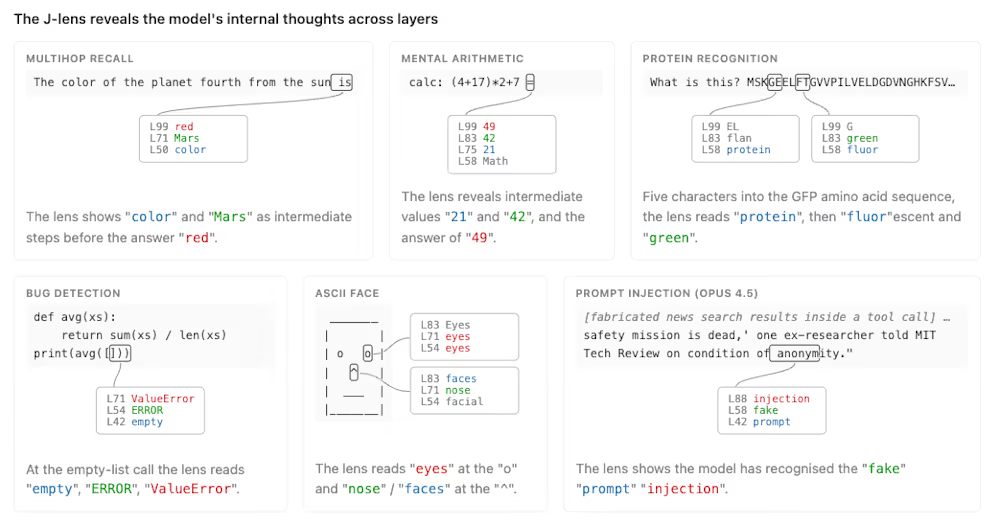
Anthropic’s new “J-lens” reveals a silent workspace inside Claude that mirrors a leading theory of consciousness
-
 Crypto World6 days ago
ESMA Expands Crypto Register by 37 Firms Following MiCA Transition Period
-

 Business3 days ago
AXT Shares Jump Nearly 14% as Semiconductor Materials Maker Rebounds on AI-Linked Indium Phosphide Demand
-

 Sports2 days ago
Joshua Pacio ‘more complete’ ahead of ONE rematch vs Malachiev
-

 Crypto World4 days ago
South Africa proposes crypto tax guidance under existing rules
-
Crypto World3 days ago
SK hynix (000660.KS) Stock Dips as $28B Nasdaq ADR Offering Drives AI Memory Expansion
-

 News Videos3 days ago
Best Time to Enter Small Caps Right Now? Another Bull Run? | Financially Free
-

 Tech4 days ago
Lenovo laptops are now shipping with YMTC SSDs, a sign of Chinese NAND entering the mainstream
-

 Business7 days ago
What a 10 Percent Drop Means for Buyers, Sellers and Renters
-
Sports2 days ago
We have punished the disrespect
-

 News Videos3 days ago
Avoid entering in FOMO #bitcoin #cryptocurrency #trading #scalping
-

 Crypto World7 days ago
Alibaba bans Claude Code over alleged backdoor security concerns
-

 Tech5 days ago
Neuralink Threads Its Way Straight Through the Brain’s Armor
You must be logged in to post a comment Login