Connect with us

Business

Earnings call transcript: Educational Development posts wider Q1 2027 loss

Published

on

Continue Reading
Click to comment

You must be logged in to post a comment Login

Leave a Reply

Business

PTT Exploration and Production Public Company Limited 2026 Q2 – Results – Earnings Call Presentation (OTCMKTS:PEXNY) 2026-08-03

Published

on

OneWater Marine Inc. (ONEW) Q1 2026 Earnings Call Transcript

This article was written by

Seeking Alpha’s transcripts team is responsible for the development of all of our transcript-related projects. We currently publish thousands of quarterly earnings calls per quarter on our site and are continuing to grow and expand our coverage. The purpose of this profile is to allow us to share with our readers new transcript-related developments. Thanks, SA Transcripts Team

Continue Reading

Business

Greatland boss blasts tax changes

Published

on

Greatland boss blasts tax changes

Greatland Resources boss Shaun Day has warned the federal government’s Capital Gains Tax changes are already discouraging investors from seeking growth assets.

Continue Reading

Business

Australian Petrol Prices Jump as Fuel Excise Cut Expires and Middle East Conflict Pushes Oil Prices Higher

Published

on

Petrol

Australian motorists are facing a significant jump in fuel costs this week, as a temporary reduction in the federal fuel excise expires and rising international oil prices tied to the ongoing conflict in the Middle East continue pushing pump prices higher across the country.

The Australian Competition and Consumer Commission’s most recent weekly fuel price monitoring report, covering the week ending July 29, showed capital city petrol prices averaging 193.6 cents per liter and diesel averaging 232.8 cents per liter, according to figures compiled by IndexBox. Both figures reflect a notable increase from previous weeks, driven by a combination of the partial restoration of the federal fuel excise and higher international refined fuel prices tied to ongoing Middle East instability.

The current 16-cent-per-liter reduction in the federal fuel excise is set to expire Aug. 2. From Aug. 3, the excise rate rises to 53.7 cents per liter, reflecting both the return of the 16-cent reduction and a separate indexed adjustment of 1.1 cents per liter tied to changes in the Consumer Price Index. That increase follows an earlier partial restoration of 16 cents per liter that took effect July 1, after a larger, temporary 32-cent excise cut had been in place beginning April 1. Taken together, the combined impact of these tax changes, including flow-through effects on the goods and services tax, could add up to 17.6 cents per liter to pump prices, according to the ACCC’s analysis.

Wholesale fuel costs have moved sharply in the same direction. Average terminal gate prices for petrol across Australia’s five largest cities rose by as much as 36.8 cents per liter between June 30 and July 29, while terminal gate prices for diesel climbed by as much as 63.8 cents per liter over the same period. The Australian Taxation Office published the updated fuel excise rates on July 29, formally confirming the new 53.7-cent-per-liter rate that took effect this week.

Advertisement

Current national average pump prices reflect the scale of the recent increases. According to fuel-tracking service Petrolmate, the national average unleaded petrol price stood at 198.9 cents per liter as of Aug. 1, up 26.0 cents compared with the previous month. Victoria currently holds the position of Australia’s cheapest state for petrol, with an average unleaded price of 197.1 cents per liter, while the Northern Territory has the country’s highest prices, averaging 244.0 cents per liter. Petrolmate’s tracking draws on data from more than 13,600 fuel stations nationwide, sourced from official government fuel-price monitoring programs across each state and territory.

The recent price increases follow a period of extraordinary volatility in Australian fuel markets over the past year. According to Trading Economics, gasoline prices in Australia climbed to a record high of $1.74 per liter, measured in U.S. dollar terms, in March 2026, up sharply from $1.22 per liter in February, reflecting a combination of global oil market pressures and domestic tax policy changes over that period.

Beyond the immediate pricing pressures, Australia has also moved to address longer-term questions about the country’s domestic fuel refining capacity. On July 28, the Federal Government and the Government of Western Australia jointly announced plans and funding for a feasibility study into developing a new oil refinery in Western Australia, a project that, if it proceeds, would represent the first large-scale refinery built in Australia since the 1960s. Australia currently operates just two large-scale oil refineries, one in Brisbane and one in Geelong, a significantly reduced domestic refining base compared with earlier decades, when the country hosted a considerably larger number of operating refineries.

Viva Energy, which operates the Geelong refinery, released a trading update July 28 covering the six months to June 30, 2026, reporting that its refiner margin for the Geelong facility had increased in U.S. dollar terms during the period, reflecting broader strength in refining margins across the region amid the current period of elevated global oil prices.

Advertisement

Despite the recent increases, Australia continues to maintain comparatively low fuel prices relative to many other developed economies. Official statistics from the Bureau of Resource and Energy Economics and the International Energy Agency show that Australia has historically maintained among the lowest petrol and diesel prices of any OECD member country, a position attributed in part to the country’s domestic oil and gas production, which reduces reliance on imported fuel and helps moderate retail prices compared with nations more dependent on international energy markets.

With the higher fuel excise rate now in effect and international oil prices remaining sensitive to further developments in the ongoing Middle East conflict, Australian motorists are likely to continue facing elevated fuel costs in the near term, even as the government’s proposed new refinery feasibility study represents a longer-term effort to address the country’s broader fuel security and refining capacity concerns.

Continue Reading

Business

Ehrmann Cornish Dairy names new chief executive

Published

on

Business Live

He will take over the running of the former Trewithen Dairy near Lostwithiel

Ehrmann Cornish Dairy has appointed Ed Watts as chief executive

Ehrmann Cornish Dairy has appointed Ed Watts as chief executive(Image: PR handout)

A Cornish dairy that was acquired two years ago by a German food giant has appointed a new chief executive.

Ed Watts will take up the running of Ehrmann Cornish Dairy – the new name for the former Trewithen Dairy at Graymare Farm near Lostwithiel.

The appointment comes as the UK arm of the now German-owned business enters the next phase of its growth strategy in Britain.

Following a period of significant investment in its operations, the business has returned to profitable trading and is now focused on establishing the Ehrmann brand in the UK, expanding manufacturing capability and strengthening its position across branded and own-label dairy, the European group said.

Advertisement

Mr Watts has held senior commercial roles at firms including Jacobs Douwe Egberts, Johnson & Johnson, Reckitt and Mars. Most recently, he was chief commercial officer at Ehrmann Cornish Dairy, supporting the integration of Cornish Dairy Co into the wider Ehrmann business.

He will now lead the delivery of the company’s long-term turnaround and development plans, overseeing continued investment in production, innovation and operational efficiency.

The business is currently investing in a new state-of-the-art desserts facility, due for completion by the end of 2026, alongside a programme of projects expected to deliver “significant cost savings” by early next year.

“This is an incredibly exciting opportunity to lead a business with such strong foundations, exceptional people and genuine ambition,” he said.

Advertisement

“We’ve already made significant progress in stabilising the business, investing in our operations and building long-term partnerships with customers and farmers, and now we’re focused on accelerating that momentum.

“My vision is for Ehrmann Cornish Dairy to become recognised as one of the top three dairy companies in the UK. We have the scale, expertise and investment behind us to achieve that, and by continuing to innovate, investing in our manufacturing capabilities and delivering outstanding products for both branded and own-label customers, I’m confident we can establish ourselves as one of the defining businesses in the UK dairy sector.”

Trewithen Dairy was acquired by Ehrmann in 2024 for an undisclosed sum. Bosses at the Cornish dairy farm said at the time the deal would secure the jobs of its 260 staff.

Its former owners, Bill and Rachel Clarke, whose family had run the business since 1976, retired after the sale completed. Their son, Francis, stayed on as chief procurement officer.

Advertisement

Ehrmann, which is more than 100 years old, pledged to grow sales of Trewithen’s portfolio of branded and own-label Cornish dairy products.

Continue Reading

Business

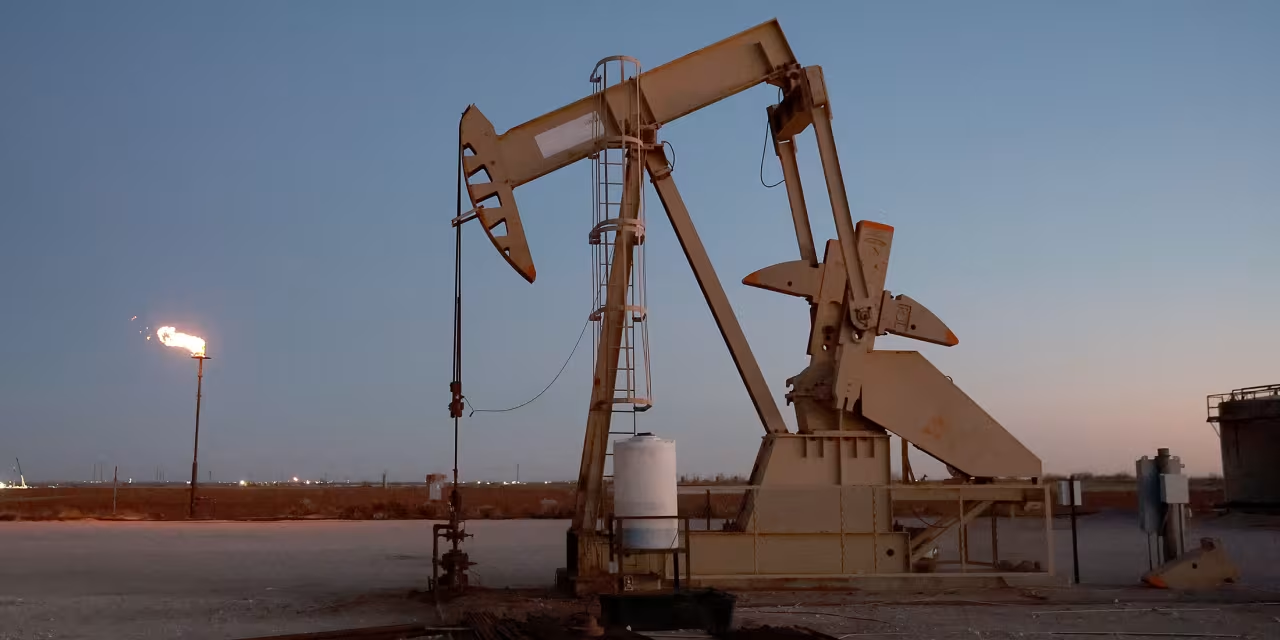
Oil Companies Have Raked in Massive Profits During the Iran War but Their Future Will Be Expensive

Published

on

Oil Companies Have Raked in Massive Profits During the Iran War but Their Future Will Be Expensive

Oil Companies Have Raked in Massive Profits During the Iran War but Their Future Will Be Expensive

Continue Reading

Business

The Surprising Truth About Air Conditioning Troubleshooting Most Homeowners Miss

Published

on

The Surprising Truth About Air Conditioning Troubleshooting Most Homeowners Miss

Your air conditioning troubleshooting approach might be costing you more than it should. If your AC starts turning on and off repeatedly, most homeowners immediately assume it’s a simple fix.

But short cycling often signals deeper issues that basic troubleshooting won’t address. The real problem isn’t just getting cool air back. It’s understanding what your system is trying to communicate before small issues turn into major repairs.

Air conditioning unit troubleshooting requires looking beyond the obvious culprits. Checking your thermostat and air filter seems logical, but these quick fixes only scratch the surface of potential problems. In some cases, arranging aircon repairs in Brisbane early can prevent further damage and more expensive issues down the track. This piece reveals the common troubleshooting mistakes homeowners make, when DIY efforts can become risky, and how to recognise when professional help is needed.

The Hidden Mistakes Homeowners Make Before Calling for Help

Most homeowners sabotage their air conditioning unit troubleshooting efforts without realizing it. These common errors create conditions that strain your system and lead to premature failures.

Ignoring the Thermostat Fan Setting

Your thermostat offers two fan modes that affect performance drastically. The AUTO setting runs the fan only when cooling, while ON keeps it blowing constantly. Running your fan continuously raises relative humidity levels by six to 10 percent in humid climates. Moisture from cooling coils gets blown back into your home instead of draining outside during summer, and this forces your system to work harder removing that extra humidity. The constant operation also increases energy costs and requires more frequent filter replacements.

Advertisement

Closing Vents to Save Money

Shutting vents in unused rooms seems logical but damages your system. Your ductwork was sized for balanced airflow throughout your entire home. Closed vents increase static pressure in ducts, which can cause blower motor failure and compressor damage. The typical home loses 20% to 30% of air through ductwork leaks. Pressure from closed vents turns small leaks into larger ones, pushing conditioned air into attics and crawlspaces. Cold rooms also act as heat sinks and pull warmth from heated areas, causing your system to cycle more frequently.

Running the AC Without Breaks

A system that runs nonstop signals problems rather than normal operation. Check your thermostat settings first and ensure the fan isn’t stuck on ON instead of AUTO. Dirty filters restrict airflow and force every component to work harder, increasing runtime and overheating risk. A unit that functions properly should cycle on and off based on your set temperature, not run continuously whatever the conditions.

Skipping the Air Filter Check

Filters that get neglected block airflow as dirt accumulates, causing reduced efficiency and mechanical stress. Indoor air contains two to five times more pollutants than outdoor air. Filters that get clogged force your system into overdrive and lead to overheating blower motors, frozen evaporator coils, and short cycling. Filters rated above MERV 11 can restrict airflow in systems not designed for them and potentially burn out motors.

What Your Air Conditioning Unit Is Really Trying to Tell You

Air conditioning systems communicate problems through specific patterns that homeowners often misinterpret. You can save yourself from unnecessary repairs and pinpoint the actual malfunction when you recognize these signals.

Advertisement

Short Cycling Means More Than a Dirty Filter

Your system turns on and off every few minutes, and this shows multiple failures beyond filter issues. A healthy air conditioner runs for 10 to 20 minutes per cooling cycle. Low refrigerant prevents effective heat absorption and causes the compressor to malfunction, which triggers rapid cycling. Oversized systems cool spaces too quickly without removing humidity. Premature shutdowns result. Frozen evaporator coils from restricted airflow or refrigerant leaks create a freeze-thaw pattern that repeats continuously. Electrical component failures disrupt normal operation. Worn contactors and failing capacitors cause intermittent cycling.

Water Leaks Point to Bigger Drainage Problems

Pooling water near your indoor unit shows condensate drainage failures rather than simple overflow. Clogged drain lines from algae, mold and debris prevent proper water evacuation and trigger safety float switches that shut down your system. Cracked or disconnected PVC pipes allow water to escape before it reaches the drain. Gravity-assisted drainage fails when improper installation lacks adequate slope. Rust on drain pans develops from prolonged water exposure and shows chronic drainage issues that need immediate attention.

Warm Air Isn’t Always a Refrigerant Issue

Multiple factors cause temperature problems that refrigerant checks won’t solve. Thermostat misconfiguration produces warm airflow, specifically when heat mode runs instead of cool mode. Dirty filters restrict airflow and force systems to overheat and eventually freeze. Compressor failures prevent refrigerant circulation despite adequate charge levels. Frozen evaporator coils from various causes stop heat absorption completely. Low refrigerant, blocked ducts and thermostat settings set too low all contribute.

Strange Noises Reveal Specific Component Failures

Each sound your system produces identifies particular mechanical problems. Thermostat malfunctions or loose fan blades cause clicking during operation. Hissing points to refrigerant leaks or damaged ductwork. Clanking means loose or detached blower fans and internal parts. Refrigerant leaks or water inside the system create bubbling sounds. Loose compressor components or broken fans cause banging from outdoor units. Fan motor or compressor bearing failures produce screeching. Motor bearing wear reveals itself through grinding and needs immediate replacement.

Advertisement

The Overlooked Components That Affect Your Entire System

Several physical components fail during air conditioning troubleshooting simply because homeowners don’t know where to look or what proper maintenance entails.

Your Outdoor Unit Needs More Than Just a Quick Spray

Dirty condenser coils decrease cooling performance and force your system to work harder. Your cooling efficiency can drop by a lot when these coils accumulate dirt, dust and debris. Condenser coils last 10 to 15 years or longer if you manage to keep them in good shape. Professional cleaning involves turning off the unit and using compressed air for loose debris. Technicians apply mild detergent or chemical cleaners and straighten bent fins with specialized tools. Homeowners can keep landscaping plants trimmed at least two feet away from the unit on all sides. Use a garden hose on gentle settings, never jet or power washer settings that bend delicate fins.

Ductwork Issues You Can’t See But Can Feel

The average home loses 20% to 30% of conditioned air through duct leaks, holes and poor connections. Your HVAC system runs longer cycles as a result and increases wear and energy costs. Certain rooms that stay too hot or too cold indicate air escaping before reaching its destination. Leaky ducts also pull in dust, pollen and allergens from attics and crawlspaces. These contaminants circulate throughout your home.

The Circuit Breaker Connection Most People Miss

Circuit breakers trip when your AC pulls more amps than the breaker rating allows. This protects you from equipment damage and fires. Loose wiring in the circuit breaker or breaker failure causes constant tripping every time power flows through the circuit. Never keep resetting a tripping breaker. Constant tripping harms equipment and creates fire risks.

Advertisement

Thermostat Placement Affects Cooling Efficiency

Thermostat location affects accuracy and overall HVAC performance by a lot. Thermostats near windows, doors, heat sources or in direct sunlight cause misleading temperature readings that trigger premature system cycling. Install thermostats on interior walls at 52 to 60 inches above the floor in central locations away from drafts and heat-generating appliances.

When DIY Troubleshooting Becomes a Safety Risk

Certain air conditioning troubleshooting tasks cross from inconvenient to genuinely hazardous. These boundaries protect both your safety and your wallet when you recognize them.

Refrigerant Leaks Require Professional Equipment

Refrigerant handling falls under EPA Section 608 federal regulation. Certified technicians are the only ones who can purchase or handle refrigerants legally, which makes DIY recharging both illegal and dangerous. Refrigerant risks include toxicity, flammability, asphyxiation and physical hazards. You treat symptoms rather than the actual problem when you try to recharge your system yourself. The actual problem is almost always a leak that requires professional detection and repair. Proper leak detection requires systematic approaches and specialized equipment that homeowners don’t possess.

Electrical Problems Can Cause House Fires

Thousands of residential fires each year trace back to air conditioner malfunctions. Residential AC fires result from mechanical failure or malfunction 86% of the time. Short circuits cause 51% of these fires. Other electrical failures account for 22%. Capacitors hold lethal charges even when your system is powered off. Components that are wired incorrectly cause fires, void manufacturer warranties and create dangerous code violations.

Advertisement

Compressor Damage Costs More Than the Repair

AC compressor issues rank among the most expensive HVAC problems because the part is central to the system’s operation and requires specialized repair work. A failing compressor damages condenser coils, electrical systems and expansion valves.

Why Running a Faulty System Makes Things Worse

Your system with low refrigerant leads to more damage when you run it, especially to the compressor. This creates potential risks to health and safety. Airflow problems increase compressor stress when you ignore them.

Taking Control of Your Air Conditioning Performance

Professional maintenance turns air conditioning troubleshooting from reactive crisis management into predictable system control. Schedule your cooling system inspection in spring before contractors face summer surges. This timing will give your unit peak performance right when you just need it most.

Annual professional check-ups prevent most problems homeowners encounter during air conditioning unit troubleshooting. A qualified technician tightens electrical connections and lubricates moving parts that reduce friction and electricity consumption. They inspect condensate drains to prevent water damage and clean evaporator and condenser coils that lose efficiency when dirty. They also check refrigerant levels, since incorrect amounts decrease efficiency and shorten equipment life. Blower components get adjusted too, as compromised airflow can reduce system efficiency by up to 15 percent.

Advertisement

A system with proper maintenance serves you for 15 to 20 years, while neglected units struggle to reach half that lifespan. Space heating and cooling account for about half of all energy consumption in most homes. Regular maintenance reduces energy bills and prevents emergency repairs that get pricey. Your system operates without the constant troubleshooting headaches that plague neglected equipment as long as you commit to annual professional service.

Advertisement
Continue Reading

Business

Beam Therapeutics: A Valuation With Upside Left (NASDAQ:BEAM)

Published

on

Beam Therapeutics: A Valuation With Upside Left (NASDAQ:BEAM)

This article was written by

Max is an independent equity research analyst with a primary focus on biotechnology, healthcare, and technology companies. His investment approach is fundamentally driven, combining detailed financial modeling, valuation analysis, and in-depth research into clinical trial data, regulatory pathways, competitive dynamics, commercialization potential, and long-term business fundamentals. He is currently pursuing his academic studies while continuing to expand his expertise in equity research and financial analysis. He has gained additional experience through work exposure at the Deutsche Bundesbank and EY, where he developed a deeper understanding of financial systems and professional analysis standards. Through Seeking Alpha, Max aims to publish independent, research-driven analysis of biotechnology and healthcare companies, translating clinical and financial data into actionable investment insights.

Analyst’s Disclosure: I/we have no stock, option or similar derivative position in any of the companies mentioned, but may initiate a beneficial Long position through a purchase of the stock, or the purchase of call options or similar derivatives in BEAM over the next 72 hours. I wrote this article myself, and it expresses my own opinions. I am not receiving compensation for it (other than from Seeking Alpha). I have no business relationship with any company whose stock is mentioned in this article.

Seeking Alpha’s Disclosure: Past performance is no guarantee of future results. No recommendation or advice is being given as to whether any investment is suitable for a particular investor. Any views or opinions expressed above may not reflect those of Seeking Alpha as a whole. Seeking Alpha is not a licensed securities dealer, broker or US investment adviser or investment bank. Our analysts are third party authors that include both professional investors and individual investors who may not be licensed or certified by any institute or regulatory body.

Advertisement
Continue Reading

Business

airlines told to monitor supply

Published

on

airlines told to monitor supply

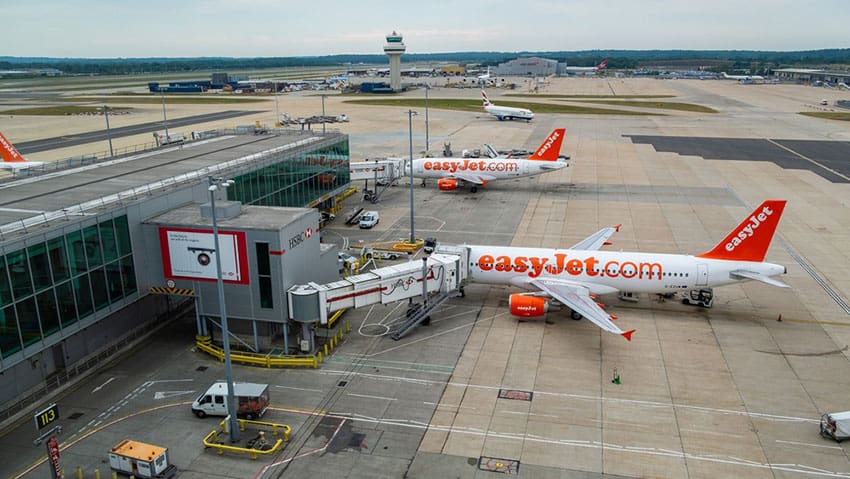
Gatwick Airport has warned airlines that it has a shortage of jet fuel for the next two days after a technical fault affecting supply to the airport, and has told carriers to monitor fuel availability.

In a memo circulated to crews, the airport said: “For attention of all crews: Gatwick has a shortage of fuel for the next two days. Please uplift max possible fuel at outstations.”

A separate memo warned of a “potential disruption to the Gatwick fuel supply”.

A spokesperson for Gatwick said: “Following a technical issue impacting fuel supply to the airport, airlines have been advised to monitor fuel availability. We are working closely with external suppliers to resolve the issue as quickly as possible and minimise any potential disruption. All airlines are operating as normal.”

It is understood airport engineers are working to fix a technical problem at one of Gatwick’s fuel farms.

Advertisement

All carriers operating from the airport are set to be affected, with long-haul flights most exposed as airlines divert fuel to UK airports from abroad. Gatwick’s largest operators include easyJet, British Airways, Wizz Air, TUI and Jet2.

The instruction to uplift fuel at outstations requires aircraft to load extra fuel at their departure airport rather than refuelling on arrival in the UK. That practice is constrained by aircraft weight limits and adds to fuel burn.

An airline source told The Sun: “Pilots will try and take on as much fuel as they can from their foreign destinations to bring back to the UK but they will be limited by factors such as the maximum take off weight and the maximum landing weight back at Gatwick.”

The same source said the warning came as several long-haul flights bound for Britain were already in the air, meaning crews could not carry extra fuel to resupply other services. They said there was a “good chance of disruption” to passengers, particularly from Monday.

Advertisement

The shortage is not linked to jet fuel supply constraints caused by the blockade in the Strait of Hormuz. Iran moved to close the strait in April, through which about a fifth of the world’s oil and gas normally passes.

Gatwick is the UK’s second-largest airport by passenger numbers, according to Civil Aviation Authority data. The warning was issued during the school summer holidays.

The airport has faced a run of operational problems. It was named the UK’s least punctual major airport for the second year running in CAA figures for 2024, with departures leaving an average of 23 minutes late.

Last week, passengers were left without water and power for a period following a failure at a treatment works serving the airport. Travellers were unable to flush toilets, wash their hands or refill water bottles, and reported restaurants, bars and coffee kiosks closing as taps ran dry. Only pre-made food such as sandwiches remained on sale after cooking stopped.

Advertisement

Summer schedules at UK airports have been disrupted by supply and staffing problems outside airlines’ control in previous years. In July 2025, Ryanair and easyJet cancelled nearly 450 flights between them ahead of a French air traffic control strike.

Gatwick has not said how long it expects the fault to take to resolve.


Amy Ingham

Amy Ingham

Amy Ingham is a reporter at Business Matters, covering UK business news with a focus on breaking news, business policy, late payments and insolvency. She joined the magazine in 2026 after completing the NCTJ Diploma in Journalism at Harlow College’s journalism school. Her recent reporting includes British Steel’s nationalisation and its impact on SME suppliers, the decline in late payments by large firms, and Insolvency Service director disqualifications. Reach her at aingham@cbmeg.co.uk.

Advertisement

Continue Reading

Business

Why did RBC downgrade JD Sports Fashion despite its 15% rally this year?

Published

on


Why did RBC downgrade JD Sports Fashion despite its 15% rally this year?

Continue Reading

Business

Linneys balances legacy, longevity

Published

on

Linneys balances legacy, longevity

Justin and Troy Linney are investing in the historic jewellery house after buying the business late last year.

Continue Reading

Trending

Copyright © 2025