
Business
Nationwide recall issued for fat burner tainted with toxic chemical


Check out what’s clicking on FoxBusiness.com.
A weight loss supplement has been recalled over two undeclared ingredients, including a toxic substance commonly used as a pesticide and herbicide.
Florida-based Ana Salazar Modela Tu Cuerpo Inc. issued a nationwide recall for Lipofit Extreme Fat Burner 2.0. Affected products have a lot number of 25M12F and an expiration date of September 2027.
The recall was initiated after an analysis by the Food and Drug Administration revealed the supplement was “tainted with undeclared fluoxetine in the daytime (AM) tablets and undeclared 2,4-dinitrophenol (DNP) in the nighttime (PM) tablets.”
The FDA urged consumers in June not to purchase the supplements over the presence of the fluoxetine and DNP.
THYROID MEDICATION RECALLED NATIONWIDE AFTER TABLETS FOUND TO BE ‘SUPERPOTENT’: FDA

Ana Salazar Modela Tu Cuerpo Inc. issued a nationwide recall for Lipofit Extreme Fat Burner 2.0. (iStock / iStock)
Fluoxetine has been used in FDA-approved drugs to treat various conditions, including depression, obsessive-compulsive disorder, and bulimia.
But 2,4-Dinitrophenol (DNP) is a “toxic substance” that is illegally marketed as a weight-loss product and is not approved by the FDA for any use. It is commonly used as a pesticide, dye, wood preservative and herbicide.
“Products containing fluoxetine and DNP cannot be marketed as dietary supplements. Lipofit Extreme Fat Burner 2.0 is an unapproved new drug for which safety and efficacy have not been established and, therefore, subject to recall,” the company announcement reads.
A 2011 review by U.K. medical researchers found that DNP can lead to rapid weight loss, but can also cause adverse effects, including death.
Reports of deaths and blindness linked to DNP in the 1930s helped prompt stronger federal regulation of drugs. The FDA has described DNP as extremely dangerous and not fit for human consumption.

The FDA urged consumers in June not to purchase the supplements over the presence of the fluoxetine and DNP. (Getty Images / Getty Images)
Lipofit Extreme Fat Burner 2.0 could cause a person to experience potentially life-threatening symptoms, including nausea, vomiting, sweating, dizziness and headaches, as well as dangerous heart rhythm problems, rapid heart rate and cardiac arrest, which can result in sudden death, the company announcement reads.
Seizures, abnormal bleeding and suicidal thoughts are also possible, the announcement reads, adding that long-term damage could impact the eyes, skin, bone marrow, nervous system and heart. It could also cause dangerously high body temperature and rapid breathing.
The risk of fatal heart events may increase if the supplement is taken with certain other medications.
Ana Salazar Modela Tu Cuerpo Inc. has not received any reports of adverse events in connection with the recall. Consumers should contact a healthcare provider if they have experienced any symptoms that may be related to the affected product.
WALMART MANGOES RECALLED OVER POTENTIAL SALMONELLA CONTAMINATION
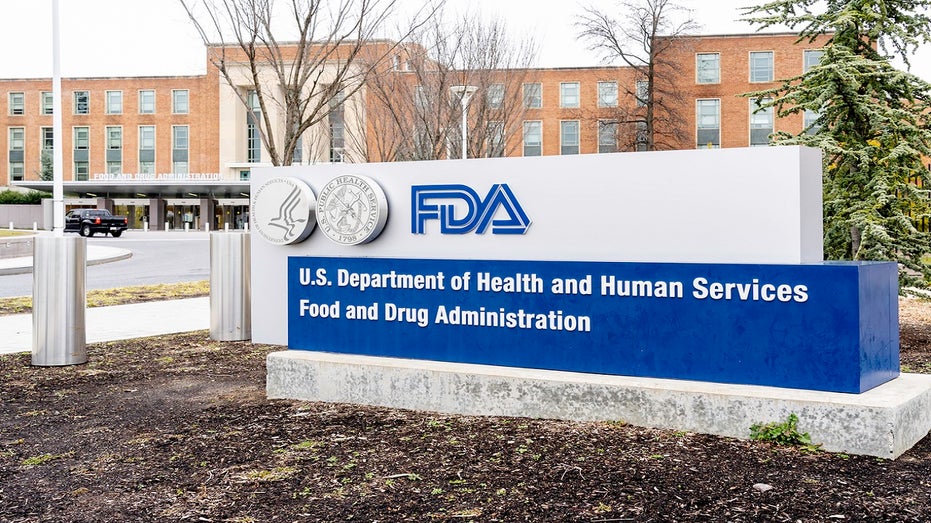
The recall was initiated after an analysis by the Food and Drug Administration. (iStock / iStock)
CLICK HERE TO GET FOX BUSINESS ON THE GO
The tainted Lipofit Extreme Fat Burner 2.0, which was packaged as AM and PM tablets, was distributed across the country directly to consumers through online sales.
Consumers who have the recalled product are instructed to stop using it immediately and to keep it away from children and other people.
Anyone who purchased the product should contact Ana Salazar Modela Tu Cuerpo Inc. for instructions on how to dispose of it. Consumers should not mail or dispose of the product until appropriate return or disposition instructions are provided.



Mountain Valley Value Investments specializes in identifying undervalued companies with strong growth potential across various sectors. Focused on long-term value and buying at the right price, we leverage deep industry insights and rigorous analysis to uncover opportunities with the potential to deliver strong returns. Our investment philosophy is rooted in disciplined research and a commitment to highlighting risks that may impact the thesis. We aim to provide our readers with actionable investment ideas that stand the test of time. Follow us for in-depth analysis and thoughtful perspectives on high-potential stocks.
Analyst’s Disclosure: I/we have no stock, option or similar derivative position in any of the companies mentioned, but may initiate a beneficial Long position through a purchase of the stock, or the purchase of call options or similar derivatives in ITRG over the next 72 hours. I wrote this article myself, and it expresses my own opinions. I am not receiving compensation for it (other than from Seeking Alpha). I have no business relationship with any company whose stock is mentioned in this article.
Seeking Alpha’s Disclosure: Past performance is no guarantee of future results. No recommendation or advice is being given as to whether any investment is suitable for a particular investor. Any views or opinions expressed above may not reflect those of Seeking Alpha as a whole. Seeking Alpha is not a licensed securities dealer, broker or US investment adviser or investment bank. Our analysts are third party authors that include both professional investors and individual investors who may not be licensed or certified by any institute or regulatory body.

Jason Hamlin is the founder of Nicoya Research and publishes highly-rated investment newsletters focused on cryptocurrencies, commodities, mining stocks, and tech/growth stocks. Mr. Hamlin has a background analyzing charts and trends for the world’s largest market research company, is versed in fundamental and technical analysis, and has consulted to Fortune 500 companies around the globe.

A new law coming into force this school term means parents in England should have to buy fewer branded items of uniform, which the government has said will save them money.
This term uniforms will be limited to three items with a school logo, like a blazer, jumper or sportswear – plus a tie for secondary schools.
The government said some families would save up to £50 per child, but school wear suppliers have argued it could mean parents actually spend more in the long run.
We have spoken to a Fareham mum, a second-hand uniform bank and a Hampshire headteacher about the changes.
Mum-of-three Kay Devonshire-Murphy, from Fareham, said she stockpiled uniforms across the year from charity shops and second hand sales.
She said having to buy three branded items was still too many.
“A PE top cost me £18 the other day and I had to buy three, that’s massively expensive for a PE top,” she said.
“Only three items is fine, but they’re still really expensive in the places they’re being sold.
“This year I had to buy a new blazer for my son, that was £30, a new tie.
“Overall I spent £75 just for the branded stuff per child. That’s a lot of money if you’ve got more than one child.”

Bitcoin trapped in $77K-$78.5K range: Hourly levels
Business
British Airways Flight Declares Mid-Air Emergency Over England Before Landing Safely At Heathrow Airport
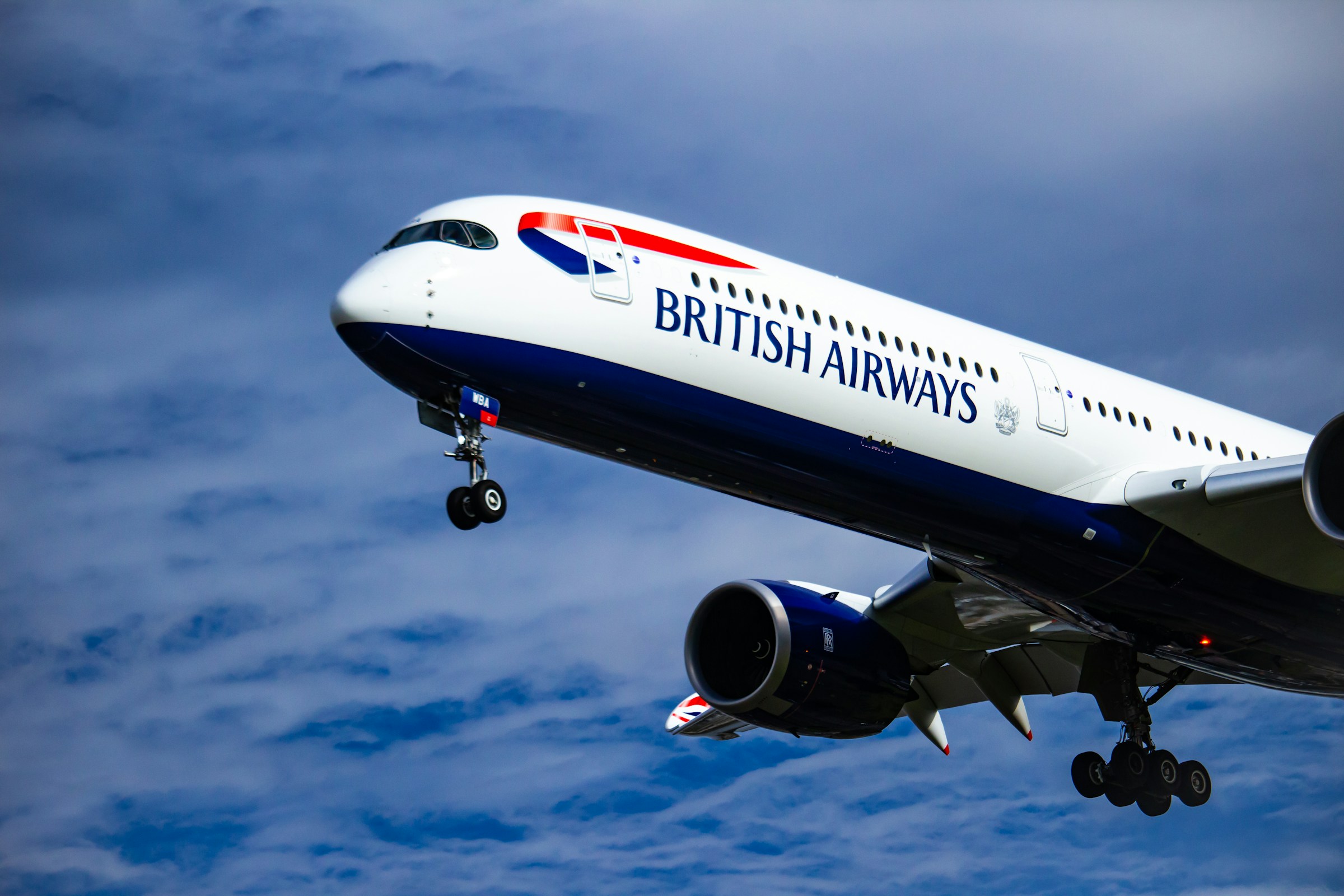
LONDON — A British Airways flight from Dublin to London Heathrow declared an in-flight emergency on Tuesday morning after developing a technical issue while cruising over northwest England, forcing the crew to make a rapid descent before continuing safely to its destination.
Flight BA825, operated by an Airbus A321neo bearing the registration G-TNEI, departed Dublin Airport on schedule at around 8:45 a.m. Shortly after reaching cruising altitude, the flight crew transmitted a squawk 7700 code while the aircraft was positioned near Liverpool. The code is the international aviation signal used to alert air traffic controllers to a general emergency requiring immediate attention.
Flight tracking data showed the twin-engine jet executing a controlled descent down to 8,000 feet as the crew worked to stabilize the aircraft. The pilots then entered a holding pattern while assessing the situation in coordination with air traffic control, according to aviation news outlet AirLive, which first reported the incident.
Despite the alert, the aircraft maintained its heading toward Heathrow and continued along its flight path at the lower altitude to ensure safety before proceeding to landing. FlightAware data showed the aircraft ultimately touched down in London at 9:49 a.m., completing the journey in roughly one hour and 19 minutes.
Emergency ground crews at Heathrow were placed on standby ahead of the aircraft’s arrival as a precautionary measure, a standard procedure whenever a flight declares an emergency code, regardless of the ultimate severity of the underlying issue.
A spokesperson for British Airways confirmed the incident was resolved without harm to those on board.
“The aircraft landed safely at Heathrow following a minor technical issue,” the spokesperson said.
The airline did not provide further detail on the precise nature of the technical fault that prompted the emergency squawk, and no injuries were reported among passengers or crew.
Squawk codes are a routine part of aviation safety protocol, allowing pilots to alert controllers instantly to a range of situations, from serious mechanical failures to precautionary measures taken out of an abundance of caution. The declaration of an emergency code does not necessarily indicate a life-threatening situation, but it does trigger heightened coordination between the flight crew, air traffic control and ground emergency services to ensure the aircraft receives priority handling and, if needed, immediate assistance upon landing.
Tuesday’s incident was the second such episode involving a UK carrier in as many days. On Sunday, a Jet2 flight traveling from London Stansted to Ibiza was forced to divert to Paris after its crew declared a mid-flight emergency using the same squawk 7700 code.
That flight, LS1473, operated by a Boeing 737-800, diverted roughly an hour and a half into what was scheduled to be a journey of just over two hours. The aircraft landed safely at Paris Charles de Gaulle Airport at 10:49 a.m. local time, where emergency services had been positioned on standby ahead of its arrival. Flight tracking data showed the Boeing turning toward Paris while flying over French airspace before touching down on runway 27L without further incident.
Passengers aboard the diverted Jet2 flight were able to continue their journey later the same day. The aircraft departed Paris for Ibiza at 12:51 p.m. local time and arrived on the Spanish island at 2:33 p.m., completing the trip with a delay of several hours but no reported injuries.
Both incidents unfolded during a busy late-summer period for European air travel, when airlines across the continent are managing high passenger volumes on routes connecting the UK with popular holiday destinations. While mid-air emergency declarations tend to draw significant public attention, aviation safety experts note that the vast majority resolve without serious consequence, reflecting the extensive redundancy built into modern commercial aircraft systems and the rigorous training pilots receive to handle technical anomalies calmly and methodically.
Modern aircraft, including the Airbus A321neo involved in Tuesday’s Dublin-to-London flight, are equipped with multiple layers of backup systems designed to allow crews to manage a wide range of technical faults without compromising passenger safety. Regulatory authorities in the UK and across Europe require airlines to report and investigate any incident involving an emergency squawk code, regardless of how routine the eventual resolution proves to be.
British Airways, the UK’s flagship carrier, operates a large network of short-haul routes between Ireland and Britain, including multiple daily flights between Dublin and Heathrow. The airline has faced periodic technical incidents on various routes over the years, most of which have concluded with aircraft landing safely after precautionary diversions or altitude changes, consistent with standard industry practice when any anomaly is detected mid-flight.
Aviation analysts note that instances of squawk 7700 declarations have become more visible to the public in recent years, largely due to the proliferation of real-time flight-tracking platforms and aviation-focused social media accounts that closely monitor transponder codes broadcast by aircraft in flight. This increased visibility means that incidents which might once have gone largely unnoticed by the public, particularly those resolved quickly and without incident, now often generate significant news coverage and public interest almost as soon as they occur.
For passengers aboard BA825, Tuesday’s journey ultimately concluded without disruption to their onward plans, arriving at Heathrow within a reasonable window of the flight’s scheduled arrival time despite the mid-flight emergency declaration. British Airways has not indicated that the aircraft, registration G-TNEI, faced any extended grounding following the incident, though further technical inspections would typically follow any such precautionary emergency landing as a matter of routine airline safety protocol.
The airline continues to operate its regular schedule of flights between Dublin and London, with no indication that Tuesday’s incident has led to broader disruption across its Irish Sea route network.

Steph Savage, from Surrey, can see the new rules helping with costs for her two children.
She told the BBC she had just made an order, and despite already owning some uniform, spent £250. This did not include branded items.
“It’s quite a lot to ask from parents to buy all the uniform and school-specific stuff as well – that all adds up,” Savage said.
Meanwhile, Lucy Smith, mother of two, said her children’s school had been “quite easy-going”.
“If our kids walked in without any branded uniform there’d be no questions asked anyway, so it’s not made much of a difference to our family,” she added.
In a statement from the Department for Education, a spokesperson said limiting branded items would give families breathing space and save some parents up to £50 per child.
It said it was supporting schools with new guidance to take steps to bring down costs for individual items, while “keeping more money in the pockets of hardworking families”.
Follow BBC Sussex on Facebook, external, on X, external, and on Instagram, external. Send your story ideas to southeasttoday@bbc.co.uk, external or WhatsApp us on 08081 002250.

DX Group appoints Karl Hodgkinson to new strategic role

The Nifty MidCap 150 has rallied nearly 3821 points, or 20%, since the start of April. Of the total gains, 15 stocks, including Coforge, Vodafone Idea, One97 Communications, Larus Labs, BHEL, Lenskart Solutions, MCX, BSE, IDFC First Bank, Federal Bank, Dixon Tech, PB Fintech, Billionbrains Garage, Info Edge India and Yes Bank contributed more than 1,924 points, or over 50%, of the gains.
 ET Bureau
The trend is similar in the Nifty SmallCap 250, which has rallied 4,074 points, or 28.5%, over the same period. 28 stocks such as Meesho, Ather Energy, Welspun Corp, HFCL, RBL Bank, Sona BLW Precision, Aster DM Quality, Redington, Neuland Lab, Gland Pharma, Navin Flurine, Aegis Logistics, Sai Life Sciences, Syrma SGS Tech, PNB Housing Fin, Craftsman Automation, Kirloskar Oil, RR Kabel, IIFL Finance, Piramal Pharma, Anand Rathi, Cartrade, Aditya Infotech, Urban Co, Himadri Speciality, Wockhardt, Tata Tech, Karur Vysya Bank – contributed around 2,038 points, or 50%, of the gains.
“The mid- and small-cap indices at record highs, driven disproportionately by a relatively small set of stocks, point to a selective rather than broadly healthy rally,” said Saurabh Jain, head of fundamental research at SMC Global Securities. “Narrower breadth means headline gains are less representative of the underlying universe.”
For the Mid-cap 150, the remaining 109 gainers contributed nearly 2,216 points, while 26 stocks dragged the index down by around 318 points. In the case of Small-cap 250, the remaining 182 gainers contributed about 2,227 points, while 40 stocks shaved nearly 189 points off the index.

Jain attributed the concentration of gains to stronger earnings growth in select companies, sustained domestic liquidity, sector rotation into capital goods, defence, metals, financials and manufacturing, and stock-specific re-ratings. Elevated valuations in some pockets have amplified the skew, he said.
Read more: US stocks today: US stocks end lower as oil, yields raise September jittersAnalysts said the current phase is more stock-specific than some of the broader mid- and small-cap rallies seen after 2020 and during parts of FY24. Frequent index reconstitution also complicates historical comparisons, with more than 10% of constituents changing over six months and nearly half over two years.
Valuations, meanwhile, have become demanding. The Nifty MidCap 150 trades at a one-year forward Price-to-Earnings (PE) Ratio of 28.95 times, compared with its 10-year average of 26.78 times, while the Nifty SmallCap 250 trades at 25.23 times against its 10-year average of 19.96 times.
Kranthi Bathini, equity strategist at WealthMills Securities said a broadening of the rally would require more uniform earnings growth across companies, continued domestic inflows and improved market breadth.
“If gains remain concentrated, the market could become more vulnerable to profit-taking, liquidity shocks or earnings misses in the stocks leading the rally,” said Bathini. “Selectivity and focus on balance-sheet strength remain essential.”
Business
South Korea’s KOSPI Plunges Nearly 4% As Chip Stocks Sink And Global Bond Selloff Deepens Amid Iran Fears

SEOUL — South Korea’s benchmark KOSPI index tumbled nearly 4% on Wednesday, one of its steepest single-day drops in weeks, as renewed U.S. strikes on Iran sent oil prices higher and fueled a punishing selloff in global bond markets that dragged down semiconductor heavyweights Samsung Electronics and SK Hynix.
The KOSPI stood at 6,569.16 points, down 266.64 points, or 3.90%, in trading around 3:05 p.m. local time, according to Korea Exchange data. The decline erased much of the modest gains the index had posted a day earlier, when it closed at 6,835.80 points after a session driven largely by domestic share buybacks from Samsung and SK Hynix.
Wednesday’s rout came after the United States launched fresh military strikes against Iran, escalating a conflict now in its seventh month and reigniting fears over disruptions to global energy supplies. The attacks pushed crude oil prices sharply higher overnight, stoking concerns that renewed inflation pressure could force central banks worldwide, including South Korea’s, to keep interest rates elevated for longer.
The sell-off was broad-based, but semiconductor stocks — which together account for more than half of the KOSPI’s total market weight — led the market lower. Samsung Electronics and SK Hynix, the two chipmakers that have powered much of the index’s rally this year on the back of surging artificial intelligence demand, both fell sharply, with declines that widened as the session progressed. Other major exporters including SK Square and Hyundai Motor also posted steep losses.
The selling pressure in Seoul mirrored declines across the rest of the region. Trading Economics data showed Asian equity markets broadly under pressure as oil climbed and global bond yields surged to multi-year highs. Japan’s benchmark 10-year government bond yield touched 3% for the first time since 1996, while Australia’s 10-year yield jumped to its highest level in 15 years, reflecting a global repricing of inflation and fiscal risk that spilled directly into equity markets.
Moomoo Australia chief market strategist Tapas Strickland, describing the broader market dynamics driving the selloff across Asia-Pacific markets, said the shift in sentiment traced directly back to the Middle East.
“The catalyst for the sudden shift in sentiment stems from escalating Middle East tensions following strikes near the Strait of Hormuz, raising immediate concerns over potential bottlenecks in critical global shipping channels,” Strickland said. “Higher energy costs risk re-igniting headline inflation just as central banks seek confirmation that price pressures are contained.”
Strickland added that the pressure was expected to weigh heaviest on rate-sensitive growth stocks — a description that fits South Korea’s technology-heavy market closely, given how reliant its largest listed companies are on capital-intensive chip production and export demand.
South Korea’s own inflation data added another layer of pressure on investor sentiment this week. The country’s annual inflation rate climbed to 3.1% in August, up from 2.8% in July, according to government figures, even as authorities noted that price growth excluding a temporary telecom billing effect was closer to 2.5%. The uptick in inflation, combined with rising oil costs, has fueled speculation that the Bank of Korea could face growing pressure to maintain a more cautious policy stance in the months ahead.
South Korea’s economy is particularly exposed to swings in Middle East oil supply. The country sources roughly 70% of its crude oil imports from the region, making it one of Asia’s most vulnerable major economies to any disruption in Gulf shipping lanes, a dynamic investors have repeatedly cited during previous bouts of conflict-driven volatility this year.
Wednesday’s losses also extended a turbulent pattern that has defined Korean equities for much of 2026. The KOSPI has swung wildly between record highs and sharp corrections over the past several months, driven largely by shifting sentiment around the artificial intelligence boom and its implications for global chip demand. Despite Wednesday’s drop, the index remains up substantially for the year, reflecting a rally that has made it one of the best-performing major stock markets globally in 2026, even after accounting for repeated bouts of severe volatility.
Foreign and institutional investors led the selling on Wednesday, according to exchange data cited by local market trackers, while retail investors stepped in to buy some of the dip — a pattern that has become familiar during this year’s volatile trading sessions, though the buying was not enough to offset the broader institutional retreat.
The losses in Seoul followed a similarly cautious tone on Wall Street overnight, where all three major U.S. indexes closed lower as investors weighed the implications of the renewed Iran conflict alongside a deepening global bond rout. Technology shares were among the hardest hit in U.S. trading, setting a negative tone for Asian markets tied closely to the same sector.
Analysts said the path forward for Korean equities would likely hinge on how the Middle East conflict evolves in the coming days, along with any signs of stabilization in global bond markets. A sustained rise in yields, driven by concerns over inflation and swelling government debt levels in major economies including the United States, has become an increasing source of anxiety for equity investors worldwide, compounding the geopolitical risk already weighing on sentiment.
For now, South Korea’s chipmakers — and the broader KOSPI along with them — remain caught between two powerful forces: continued strong demand for AI-related semiconductors that has underpinned this year’s rally, and mounting macroeconomic headwinds from oil prices, bond yields and shifting central bank expectations that have made the market one of the most volatile among major global indexes in 2026.

The rising cost of caring for horses is putting more owners under financial pressure, with an animal welfare charity reporting an increase in horses being given up.
The Blue Cross in Burford, Oxfordshire, says the situation has been made more difficult this year by the dry weather, leading to hay shortages and more expensive food prices.
The site is currently taking in 20 to 30 horses a month, and the charity across the UK saying it has seen a “160% surge in relinquished horses in recent years”.
Admissions coordinator Freya Long says: “There’s no grass, very little hay. I’ve started getting an increase in requests and I can only imagine it’ll get higher with the cost of living.”
The charity says the costs for owners can extend well beyond feed, with veterinary care, vaccinations, worming and farrier visits all essential to a horse’s welfare.
Horse centre manger Vicki Alford adds: “It all adds up. We are finding, unfortunately, that people are contacting us because they can’t financially look after their horses anymore.”

Integra Resources: Strong Growth, Tier-One Assets, And A Deep NAV Discount (NYSE:ITRG)

CLARITY Act Fate Hinges on Senate Debate Vote

More than half of Premier League clubs break transfer records as spending reaches new level





-

 Fashion5 days ago
Weekend Open Thread: Maeve – Corporette.com
-

 Crypto World5 days ago
Bitcoin’s 22% rally now needs real demand to outlast Treasury liquidity boost
-

 Crypto World7 days ago
Warsh Jackson Hole keynote puts financial innovation first
-

 Business5 days ago
Apple Confirms September 9 Keynote and Reveals Its Full Pre-Order Schedule
-

 Crypto World6 days ago
Elon Musk Grok Bot Promise: We Will Make You Whole if AI Loses Your Money
-

 Business5 days ago
Salesforce Stock Soars 19% as Blowout Earnings and Agentforce AI Growth Silence Software Skeptics
-

 Business4 days ago
Onto Innovation Stock: AI’s Next Bottleneck Is Yield (NYSE:ONTO)
-
 NewsBeat6 days ago
Lindsay Clancy jury braces for closing arguments as judge tells court: ‘You’ve heard all the evidence’ – Live updates
-

 Business7 days ago
Walmart takes aim at younger shoppers with new fashion brand
-

 Crypto World6 days ago
NVIDIA revenue hits $96.2B as AI demand doubles
-

 Crypto World4 days ago
Bitcoin price tests $82K resistance as Brandt stays long
-

 Business5 days ago
iPhone 18 Pro Pre-Orders Could Shift to Saturday as Apple Reportedly Avoids September 11 Anniversary
-

 Crypto World6 days ago
Nvidia Q2 Earnings Reveal $96.2 Billion Beat, So Why Is NVDA Falling?
-
 Tech3 days ago
Hugging Face built a $4.5 billion empire on free AI models. Now Nvidia is buying it for $12.9 billion
-

 Tech6 days ago
Claude Cowork gets its own browser that doesn’t touch your tabs, bookmarks, or saved passwords
-

 Crypto World5 days ago
Truflation calls for Fed rate cut after PCE forecast
-

 Tech4 days ago
PaperCut releases second emergency patch for exploited flaws
-

 News Videos3 days ago
Charlie Munger on Robinhood: No one should believe that Robinhood’s trades are free
-

 Tech6 days ago
Apple’s iPhone 18 Pro event is on September 9
-

 Tech3 days ago
Tamagotchi Ring Takes the 30-Year Digital Pet and Places it on Your Finger
You must be logged in to post a comment Login