

Business
NATO leaders meet in Ankara as US ceasefire with Iran teeters





New products include globally inspired offerings and convenience-based formats.
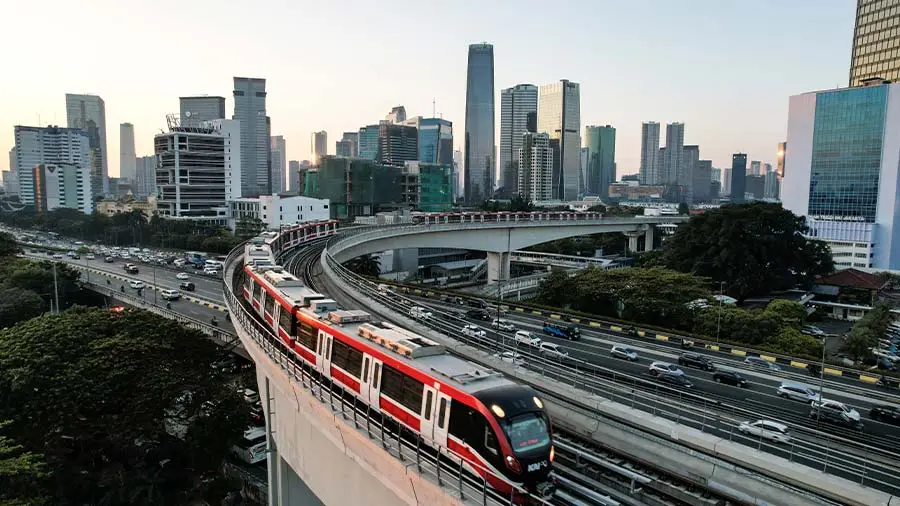
Hak Guna Bangunan (HGB) is a preferred land right for foreign investment in Indonesia, enabling legal entities to build and operate on land temporarily, supporting commercial, industrial, and development projects.
Hak Guna Bangunan (HGB) in Indonesia
Hak Guna Bangunan (HGB) is the most common land right utilized by foreign investors for commercial projects in Indonesia. It enables eligible legal entities, including foreign-managed PT PMAs, to develop and operate buildings on land for a predetermined period. While HGB offers significant development rights, it is merely one of several recognized land rights under Indonesian law, which also includes Hak Milik, Hak Pakai, Hak Guna Usaha (HGU), and Management Rights (HPL). Each type affects ownership, business activities, financing options, and future dealings differently.
Importance of Land Titles in Investment Projects
Having a clear land title, especially an HGB, is crucial for foreign investors engaged in acquiring commercial properties, establishing manufacturing units, leasing industrial land, or developing hospitality ventures. HGB has become the preferred choice because it permits development and operational activities on land held by Indonesian legal entities, including foreign-owned companies, supporting long-term business stability.
HGB: Rights and Limitations
Hak Guna Bangunan allows investors to construct and possess buildings on land for a specified period without granting outright ownership of the land itself. This legal framework ensures investors can develop, utilize, and commercialize properties effectively. However, it is important to recognize that HGB does not confer full ownership rights, which can influence future transactions and mortgage options.
Read the original article : Understanding HGB Land Rights and Other Land Titles for Foreign Investors in Indonesia
Other People are Reading

Check out what’s clicking on FoxBusiness.com.
Fiat is bringing its tiny electric Topolino to the U.S., offering American buyers a two-seat neighborhood EV that costs less than many used cars but tops out at just 19 mph.
The Stellantis-owned brand announced Tuesday that the Topolino is available to order through select U.S. dealers. It starts at $13,995, or $14,985 after destination fees.
The low sticker price comes as vehicles remain historically expensive. Three-year-old used vehicles averaged $31,548 in the first quarter of 2026, the second-highest first-quarter price on record behind 2022’s first-quarter peak of $32,164, according to Edmunds.
But the bargain price comes with limits. The vehicle is designed for use “beyond crowded streets,” including private neighborhoods, resorts, coastal areas and golf-cart-friendly communities, according to Fiat.
TOYOTA TO INVEST $3.6B IN PLANT EXPANSION, WILL SHIFT TACOMA PRODUCTION FROM MEXICO TO TEXAS

The vehicle comes in two body styles, the Topolino and the Topolino Dolcevita. (Fiat)
The EV is about 8 feet long, weighs 1,073 pounds and gets up to 46 miles of range from a 5.4-kilowatt-hour lithium-ion battery. Fiat said it can fully charge in about five hours using a 2.3-kilowatt AC charger.
By the end of the summer, owners will be able to add a free conversion kit that turns the Topolino into a federally regulated low-speed vehicle, or LSV.
The upgrade would raise the Topolino’s top speed to 25 mph and allow it on public roads with speed limits of 35 mph or less.
“An LSV is a federally regulated street-legal motor vehicle capable of speeds between 20 and 25 mph. Unlike standard golf carts restricted to the golf course, LSVs are legal on public roads with speed limits of 35 mph or less,” the company said in the announcement.
FORD ROLLS INTO NATION’S CAPITAL WITH HISTORIC CAR SHOWCASE CELEBRATING AMERICA’S 250TH

The Topolino gets up to 46 miles of range and uses a 5.4-kilowatt-hour lithium-ion battery. (Stefano Guidi/Getty Images)
The vehicle will be offered in two body styles, the Topolino and the Topolino Dolcevita.
Features include a Verde Vita exterior color, 14-inch wheels with vintage covers, LED lamps, hinged opening windows, a digital cluster, phone holder, bag hook and luggage space.
The standard Topolino comes with a panoramic sunroof, while the Topolino Dolcevita adds a roll-back soft top and rope-style doors.
“Topolino represents a new chapter for the brand in the U.S. – defined not just by size, but by purpose,” Olivier Francois, brand CEO at Fiat, said in a statement. “With Topolino, we bring a feeling, a lifestyle, a reminder that mobility can be joyful, expressive and beautifully simple.”
BMW COMPLETES $1.7 BILLION SOUTH CAROLINA EXPANSION, UNVEILS ALL-ELECTRIC X5

Fiat and Citroen electric vehicles are seen at Tanger Med Port near Tangier, Morocco, before export on June 6, 2024. (Abdelhak Balhaki/Reuters)
GET FOX BUSINESS ON THE GO BY CLICKING HERE
The U.S. launch gives Fiat another electric model beyond the 500e as the brand looks to grow its American customer base, according to Reuters.
The Topolino first launched in Europe in 2023. Its name, Italian for Mickey Mouse, comes from one of Fiat’s best-known cars from the 1930s.
Business
Heathrow travel confidence hit as Middle East conflict and rising air fares reshape passenger demand
The latest 1ST Airport Taxis Travel Confidence Index suggests the conflict in the Middle East, coupled with rising airline ticket prices, has weakened travel confidence among UK travellers during April, May and June 2026.
While Heathrow Airport recorded only a modest decline in overall passenger numbers during the period, the impact on travel to and from the Middle East was considerably more pronounced. Many survey respondents said they had delayed bookings, reconsidered destinations or postponed travel altogether.
Survey Highlights
Among the 3,200 respondents:
- Rising air fares were cited as one of the main reasons for delaying or reconsidering international travel.
- Geopolitical uncertainty influenced destination choices for many travellers.
- Respondents were more likely to choose European holidays instead of long-haul destinations affected by the conflict.
- Families reported becoming increasingly price-conscious as the overall cost of travel continued to rise.
Heathrow Traffic Overview
April 2026
April recorded the sharpest decline during the three-month period.
According to Heathrow, passenger numbers fell 5.3% year on year, to approximately 6.7 million, compared with around 7.1 million in April 2025. The airport attributed the decline to disruption linked to the Middle East conflict and temporary airspace closures.
Survey Insight
Respondents most frequently cited:
- Flight cancellations
- Regional airspace closures
- Higher ticket prices
- General uncertainty surrounding international travel
May 2026
Passenger traffic stabilised but remained 1.2% below the same month a year earlier.
Despite the overall decline, Heathrow recorded its busiest single day ever for the month of May, driven largely by stronger demand for European and African destinations. This suggests many travellers chose alternative routes rather than cancelling overseas travel altogether.
Survey Insight
Respondents reported:
- Switching destinations
- Booking later than usual
- Looking for lower fares
- Choosing shorter holidays
June 2026
By June, Heathrow had revised its passenger outlook for the remainder of 2026, forecasting traffic around 1.1% belowprevious expectations, citing continued downward pressure linked to the conflict in the Middle East.
Survey Insight
Many respondents said they intended to:
- Monitor prices more closely before booking
- Delay non-essential international travel
- Choose destinations they considered lower risk
The Hidden Story: Middle East Routes
Although Heathrow’s overall passenger decline remained relatively modest, the largest impact was concentrated on routes serving the Middle East.
Heathrow’s published traffic data showed:
- April: Passenger numbers on Middle East routes fell 52.4% year on year.
- May: Passenger traffic remained 31.1% lower than the previous year.
At the same time, Heathrow experienced stronger demand on routes serving Europe, Africa and the Asia-Pacific region, helping offset the decline on Middle East services. Transfer passenger numbers also remained comparatively resilient.
Rising Ticket Prices
Survey respondents consistently identified higher ticket prices as a significant concern when planning international travel.
One contributing factor has been higher aviation fuel costs. Jet fuel typically accounts for 20% to 30% of an airline’s operating costs, meaning sustained increases in fuel prices are often reflected in higher fares paid by passengers.
Conclusion
The 1ST Airport Taxis Travel Confidence Index suggests the Middle East conflict has influenced travel behaviour well beyond the region itself.
Rather than abandoning travel altogether, many UK travellers said they had changed destinations, delayed bookings or sought better-value alternatives. Heathrow’s overall decline in passenger numbers remained relatively limited because stronger demand for European, African and Asia-Pacific routes helped offset the sharp reduction in travel to and from the Middle East.
Methodology
The 1ST Airport Taxis Travel Confidence Index surveyed 3,200 UK travellers from a sample of 30,000 customers and subscribers. Responses were collected online during June 2026.
Traveller opinions and booking intentions presented in this report are based on the survey findings. Passenger traffic figures are drawn from Heathrow Airport’s published traffic updates and investor reports.
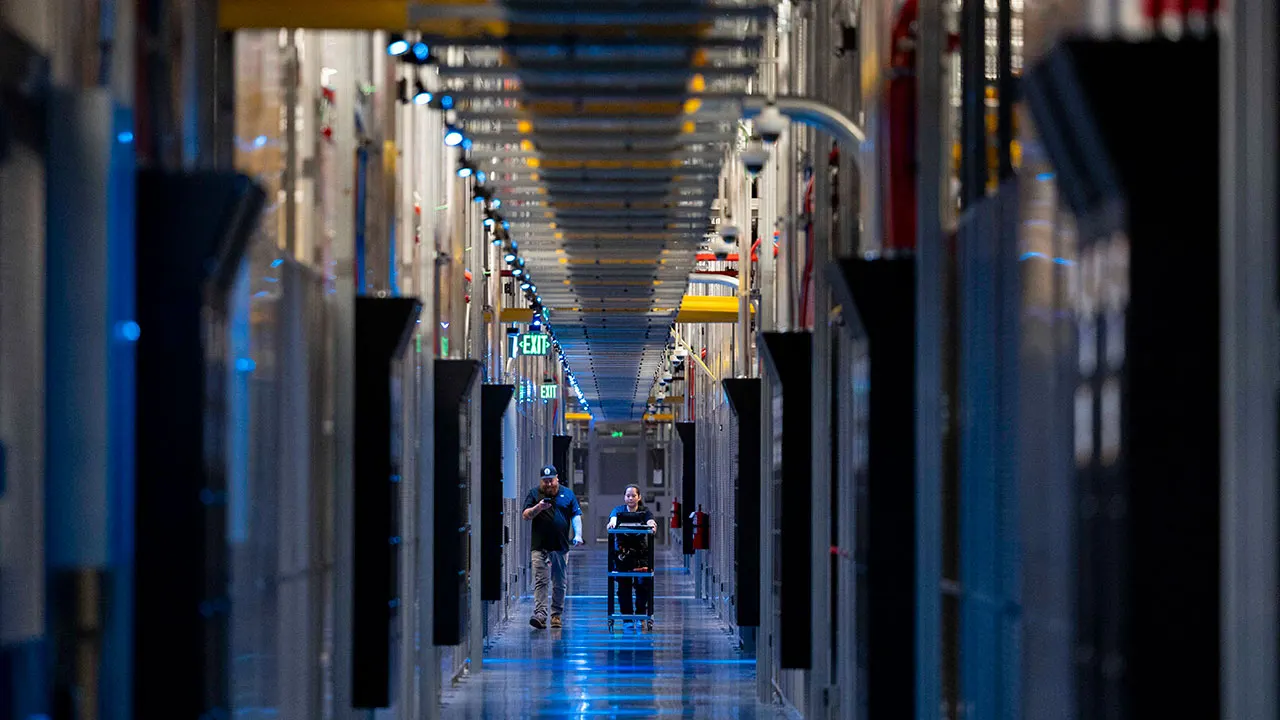
Harrison Street Asset Management co-founder Christopher Merrill joins ‘Mornings with Maria’ to discuss surging data center power demand in the U.S. and globally.
The state of Oregon’s utility regulator is implementing a new rule starting Wednesday that will raise the electricity bills of data centers and other large energy users to allow lower rates for other customers.
The Oregon Public Utility Commission (PUC) approved updated electricity rates for data centers and other residential and commercial customers that Portland General Electric (PGE) was required to change under a state law known as the Protecting Oregonians With Energy Responsibility (POWER) Act.
Under the law, PGE will raise rates by an average of 29% on data center customers, while residential customers will see an average decrease of 1.3%, commercial rates will fall by an average of 2.1%, and other industrial customers’ rates will decline by an average of 1.4%. PUC estimated that the move will impact about 963,000 customers across PGE’s service territory.
“These changes ensure that costs created by data centers in PGE’s territory are more accurately reflected in their rates,” said Commission Chair Letha Tawney. “By putting this structure in place now, we are getting ahead of a bigger issue, enabling responsible data centers to pay their own way, and protecting customers from higher costs in the future.”
VIRGINIA COUNTY URGES POWER SAVING MEASURES AMID 25% ELECTRICITY RATE HIKE, DATA CENTER GROWTH
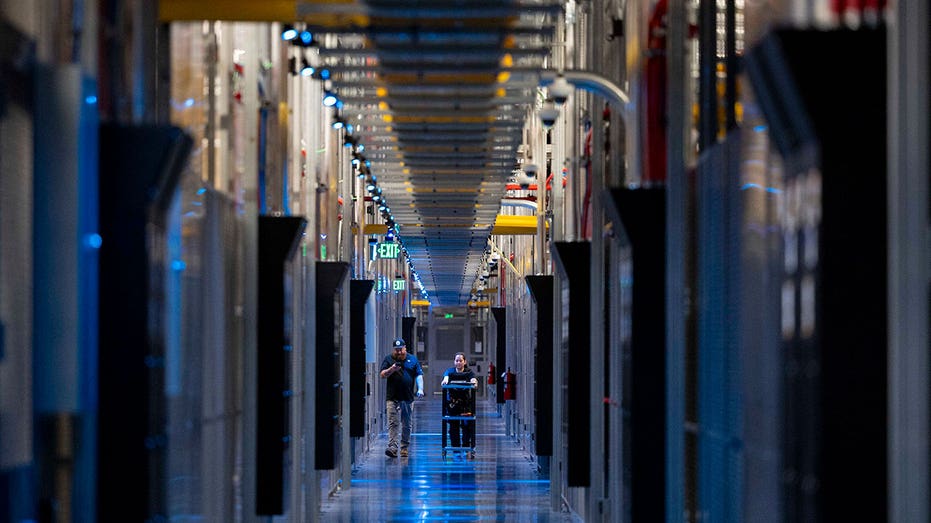
Data centers in PGE’s footprint will pay higher electric rates under Oregon’s new law. (Amanda Andrade-Rhoades for The Washington Post via Getty Images)
PGE’s rate changes officially take effect on Wednesday after a month-long review by PUC, after the changes were delayed from their original implementation date in early June to accommodate the more in-depth review. It is the first utility in Oregon to adopt a new rate schedule for data center customers under the law.
The POWER Act was signed into law last year by Gov. Tina Kotek after the legislation passed the state’s Democratic-controlled legislature on votes that largely went along party lines in both chambers.
Kotek said in a statement that the POWER Act “was intended to ensure fairness and accountability when large energy users, like data centers, take up more load on Oregon’s electrical grid.”
DATA CENTER BOOM POWERING AI REVOLUTION MAY DRAIN US GRIDS – AND WALLETS
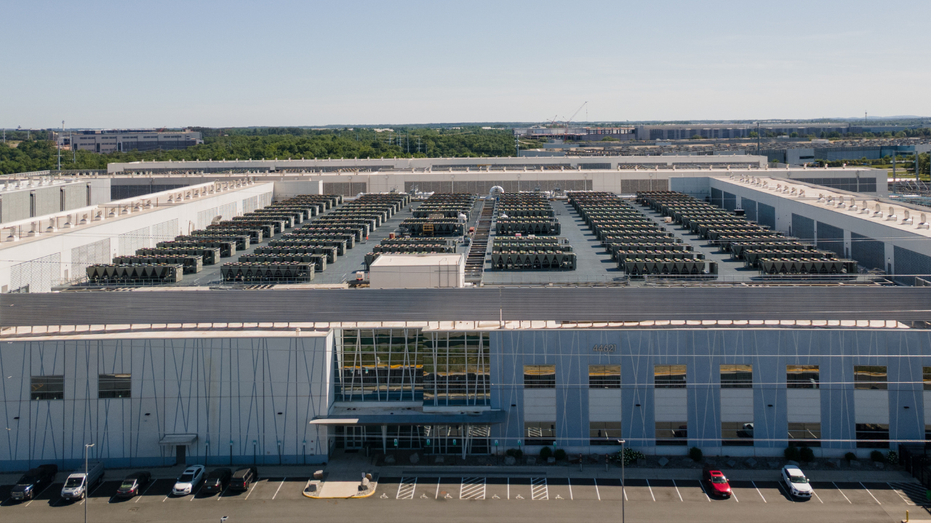
Data centers help power AI models as well as enable cloud storage and other digital tools. (Lexi Critchett/Bloomberg)
Oregon’s move comes amid concerns about the impact of the rapid build out of data centers powering artificial intelligence (AI) tools on the electric grid and the costs borne by consumers and other businesses.
The Data Center Coalition, a group representing data center owners, operators and builders, has said it supports efforts to protect consumers from price increases and data centers paying the cost of expanding grid capacity, but told FOX Business that Oregon PUC’s order is “significantly out of step with the approaches and best practices being implemented in many other states.”
DATA CENTERS RAPIDLY TRANSFORMING SMALL-TOWN AMERICA
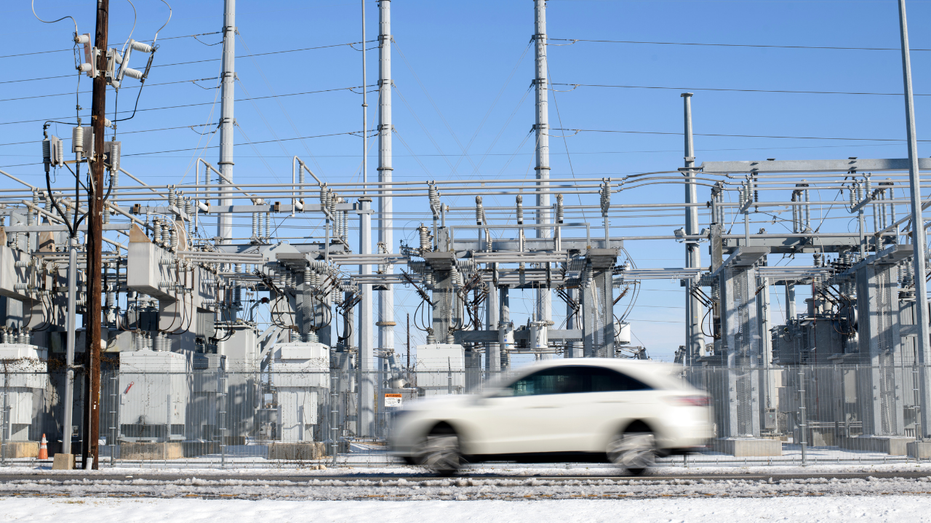
The rapid buildout of AI data centers has increased the load on the electric grid. (Mark Felix/Bloomberg via Getty Images)
DCC’s vice president of energy, Aaron Tinjum, said in a statement to FOX Business that the group has filed a petition for Oregon PUC to reconsider its order, emphasizing that the data center industry is “committed to paying its full cost for the energy it uses to ensure that those costs are not shifted to other customers.”
“A workable approach, like those established in other markets, should align costs with cost causation, protect existing customers, and give data center customers a clear path to continue helping to drive clean energy and economic growth in Oregon,” Tinjum said.
GET FOX BUSINESS ON THE GO BY CLICKING HERE
“Protections should be evidence-based, structured carefully, and grounded in specific cost risks; otherwise they risk creating market friction, introducing uncertainty, and making Oregon less predictable and less competitive,” he added.

Factorial Energy stock hits 52-week low at 9.15 USD

IonQ: The Hype Is Not Worth Chasing

The Royal Thai Army and Australian Army are conducting Exercise Chapel Gold 2026 in Prachin Buri, enhancing military readiness and cooperation through joint training activities and professional exchanges until June 29.
Key Points
- Exercise Overview: The Royal Thai Army and the Australian Army are engaged in Exercise Chapel Gold 2026, a joint military exercise aimed at improving operational readiness and military cooperation, running in Prachin Buri province until June 29.
- Participation Details: Over 400 personnel from Thailand’s 2nd Infantry Regiment and more than 150 from Australia’s Rifle Company Butterworth 148 are involved. The exercise was inaugurated by Major General Benjapol Dejatiwongse Na Ayudhya and Captain Paul Welch.
- Training Objectives: Activities include tactical operations, jungle survival, and live-fire marksmanship. The exercise enhances troop readiness, intercultural military skills, and strengthens Thailand-Australia military relations while fostering regional security collaboration.
The Royal Thai Army and the Australian Army are conducting Exercise Chapel Gold 2026, an annual joint military exercise intended to enhance operational readiness and military cooperation between the two countries. The exercise is being conducted in Prachin Buri province until June 29 under the responsibility of Thailand’s 1st Army Area.
More than 400 personnel from the Royal Thai Army’s 2nd Infantry Regiment, King’s Guard, are participating alongside more than 150 personnel from the Australian Army’s Rifle Company Butterworth 148. The exercise was officially commenced by Major General Benjapol Dejatiwongse Na Ayudhya, commander of the 2nd Infantry Division, King’s Guard, and Captain Paul Welch, Australian defense attaché to Thailand.
Training activities include tactical operations, maneuver warfare, jungle survival, live-fire marksmanship, armored unit operations, and professional military exchanges. Personnel from both armies are also sharing operational experience and field skills to improve coordination and interoperability.
The exercise is expected to enhance the capabilities and readiness of participating troops while further strengthening long-standing military relations between Thailand and Australia. The training also supports cooperation in regional security and preparedness for a broad range of future missions.
Source : Thailand and Australia Hold Exercise Chapel Gold 2026
Other People are Reading

Amazon.com Inc. shares declined more than 1.7 percent Tuesday, closing at $241.78 as investors navigated broader technology sector dynamics, heavy capital spending on artificial intelligence infrastructure and the company’s latest foray into the bond market.
The drop of $4.20 per share reflected modest profit-taking and caution amid ongoing debates over the returns on massive AI-related investments across big technology firms. Amazon has aggressively expanded its data center footprint and cloud capabilities to meet surging demand for artificial intelligence workloads, a strategy that has driven strong growth in Amazon Web Services but also required substantial capital outlays.
The e-commerce and cloud computing giant recently announced plans to raise $25 billion through a U.S. dollar bond sale, its latest move to fund general corporate purposes including AI infrastructure. Demand for the offering reached $62 billion, a solid but more measured response compared with earlier debt sales this year as credit markets absorbed a wave of technology-related issuance.
Amazon’s capital expenditures have climbed sharply as it builds out capacity for AI training and inference. The company has highlighted strong customer adoption of its AWS services, particularly those incorporating generative AI tools, while continuing to invest in logistics, advertising and international expansion.
Tuesday’s trading occurred against a backdrop of mixed performance across major technology names. While some AI-related stocks faced pressure on valuation concerns, Amazon’s diversified business model — spanning retail, cloud computing, advertising and entertainment — provided relative stability even as the stock pulled back.
Analysts continue to view Amazon’s long-term positioning favorably, citing its leadership in e-commerce and cloud infrastructure. AWS remains a key growth engine, with recent innovations in AI services helping enterprises deploy machine learning models more efficiently. The company has also expanded its presence in areas such as satellite broadband through Project Kuiper and advanced logistics automation.
Recent financial results underscored Amazon’s resilience. Revenue growth has been supported by robust consumer spending on its platform and accelerating cloud adoption. However, elevated spending on property, equipment and technology infrastructure has drawn attention from investors focused on near-term margins and free cash flow.
The bond sale announcement came as Amazon ramps up investments to stay competitive in the AI race. Data centers, custom chips and networking infrastructure require significant funding, prompting the company to tap debt markets while maintaining a strong balance sheet. Credit rating agencies have generally viewed Amazon’s approach positively given its cash generation capabilities.
Market participants also monitored Amazon’s retail operations. Prime Day events and international expansion have contributed to sales momentum, though competition from other e-commerce players and traditional retailers remains intense. Advertising revenue, tied closely to its online marketplace, has provided a high-margin boost.
Amazon’s stock has experienced volatility in 2026, trading within a range that reflects both optimism about its AI and cloud prospects and periodic concerns over spending levels and economic sensitivity in its retail segment. The shares remain well above levels seen earlier in the decade but below recent peaks.
Broader economic factors influenced sentiment. Interest rate expectations, consumer confidence and corporate technology budgets all play roles in Amazon’s performance. As a bellwether for both consumer spending and enterprise technology adoption, movements in the stock often signal wider trends.
Company executives have emphasized disciplined investment alongside innovation. Initiatives in areas such as Project Kuiper aim to extend connectivity globally, while advancements in AWS services target both traditional enterprises and emerging AI workloads. Partnerships and ecosystem development remain central to Amazon’s strategy.
Tuesday’s session saw typical trading volume, suggesting the decline was part of normal market fluctuations rather than a reaction to specific negative news. Options activity and institutional flows indicated continued interest in Amazon as a core technology holding.
Looking ahead, investors await further updates on capital spending guidance, AWS growth metrics and progress on AI monetization. Amazon’s ability to balance heavy investment with profitability improvements will be key to sustaining shareholder confidence.
The company continues to face regulatory and competitive scrutiny globally, including in areas such as antitrust matters and labor relations. However, its scale and diversified revenue streams provide resources to navigate challenges while pursuing growth opportunities.
Amazon’s position as one of the world’s most valuable companies underscores its transformation from an online bookseller to a technology infrastructure powerhouse. Its stock performance remains closely watched as a proxy for the health of digital commerce and cloud computing.
As markets digest the latest bond issuance and spending plans, Amazon’s trajectory will hinge on execution across its multiple business lines and the broader realization of AI-driven productivity gains for its customers. The coming quarters are expected to provide more clarity on the payoff from current investments.
Business
McDonald’s Shares Slip Further Today as Weak Traffic and Russell Index Exit Continue to Weigh on Stock

Shares of McDonald’s Corporation fell Wednesday, trading at $278.65, down $3.56, or 1.26 percent, extending a difficult stretch for the fast-food giant as investors continue to weigh softening U.S. restaurant traffic against the stock’s defensive appeal amid broader market volatility.
Note: This article is intended to provide factual context and does not constitute financial advice. Readers should consult a licensed financial advisor before making investment decisions.
McDonald’s shares remain down roughly 8 to 12 percent so far in 2026, depending on the specific measurement window, and are trading well below the stock’s 52-week high of $341.75 to $341.06, reached in February. According to StockStory, at recent trading levels around $279 per share, the stock sat approximately 18 percent below that peak, even as longer-term shareholders have continued to see solid returns, with a $1,000 investment made five years ago now worth roughly $1,195.
A significant technical headwind emerged in late June, when McDonald’s was officially removed from several Russell growth and defensive stock market benchmarks, including the Russell 1000 Growth index, according to Robinhood. That removal triggered forced selling from passive index-tracking funds required to rebalance their holdings in line with the updated index composition, a dynamic that TradingKey noted has contributed to technical selling pressure independent of the company’s underlying business performance.
Underlying business trends have also weighed on sentiment. According to a Citi report cited by StockStory and The Globe and Mail, McDonald’s U.S. restaurant traffic fell 3.9 percent year over year in late June, reflecting continued softness in customer visits even as the company has worked to emphasize value-oriented menu offerings. Analysts at KeyBanc lowered their near-term U.S. second-quarter same-store sales growth projection for McDonald’s from 1.8 percent to just 0.5 percent on June 29, while simultaneously cutting their price target on the stock to $315 from $330, citing the core business’s continued struggle to regain meaningful transaction momentum. Despite the lowered price target, KeyBanc maintained a Buy rating on the stock.
Reports circulating in early July also highlighted broader operational pressures facing McDonald’s heavily franchised restaurant network, including persistent inflation, tariff-related disruptions, and a decline in overall consumer sentiment to a reading of 44.8, factors that risk compressing franchisee margins and potentially delaying planned store openings. Additionally, the company’s newer, largely automated “McDonald’s NEXT” expansion strategy has faced its own operational headwinds, with analysts at TD Cowen flagging concerns about the heavy near-term capital and labor investment required to implement the redesigned restaurant format.
Despite those challenges, McDonald’s has drawn renewed attention as a defensive investment option amid broader market volatility tied to elevated technology-sector valuations. Shares jumped 3.6 to 3.7 percent in a single session in early July after investment bank UBS highlighted the company alongside other consumer staples names as an attractive defensive dividend stock for investors looking to diversify away from high-flying technology stocks. UBS noted that McDonald’s remains well positioned to capture additional market share through its ongoing value offerings and marketing efforts, even as the same report acknowledged the softer traffic data emerging from other analyst channels. According to TradingKey, that rally reflected a broader institutional rotation toward undervalued, lower-volatility defensive names, supported by a widening valuation gap between high-risk growth stocks and steadier, dividend-paying companies like McDonald’s.
Analyst sentiment toward the stock remains mixed overall. According to CNN, RBC Capital reaffirmed a Hold rating on McDonald’s in late June, while Austria’s Erste Group maintained its own Hold rating around the same time, reflecting a broader pattern of analysts characterizing the stock as fairly valued given its current growth trajectory rather than clearly undervalued or overvalued. Morningstar analyst Ari Felhandler offered a more constructive long-term view, noting that McDonald’s has posted 5.4 percent comparable sales growth over the past seven years, compared with just 2.2 percent total growth for the broader global foodservice industry, and projecting continued outperformance driven by a combination of value-focused promotions, menu innovation and steady unit growth. Morningstar’s analysis also cautioned that rising beef costs and further minimum wage increases could strain franchisee economics, potentially limiting appetite for deeper promotional activity in a weaker macroeconomic environment.
McDonald’s has also continued making leadership changes in recent weeks. The company named Bryan Brown as its new U.S. chief development officer, effective July 14, bringing more than a decade of relevant industry experience to the role, according to multiple reports.
McDonald’s, founded by Raymond Albert Kroc on April 15, 1955, and headquartered in Chicago, remains the world’s largest restaurant brand by systemwide sales, generating nearly $139 billion annually across more than 45,000 restaurants in over 100 markets. Approximately 95 percent of the company’s U.S. restaurants are franchised, and the company derives roughly 62 percent of its total revenue from franchise royalties and rent rather than direct restaurant operations. The company’s business is divided across three primary segments: the United States, which accounts for about 39 percent of systemwide sales; International Operated Markets, at roughly 35 percent; and International Developmental Licensed Markets, at approximately 26 percent.
McDonald’s carries a market capitalization of approximately $200 billion, a price-to-earnings ratio in the range of 23 times trailing earnings, and a dividend yield of roughly 2.63 percent, with a payout ratio of about 60 percent, according to data from Kraken and Robinhood. Those figures continue to position the stock as a widely held income-generating investment, even amid the recent share price weakness tied to softer U.S. traffic trends and the technical pressure stemming from its removal from several Russell benchmarks.
With McDonald’s continuing to navigate a challenging combination of softening consumer traffic, rising input costs, and shifting index composition, while simultaneously benefiting from renewed interest as a defensive holding amid broader market volatility, investors are likely to continue watching closely for further signals on the company’s second-quarter same-store sales performance and any additional updates on its value-menu strategy and “McDonald’s NEXT” restaurant redesign initiative in the weeks ahead.

British wild card Arthur Fery storms into Wimbledon semi-finals

Slideshow: Innovations from Summer Fancy Food Show, part 1

Donald Trump vows fresh Iran strikes as $500B vanishes from markets

No Jackpot Winner as $257 Million Prize Rolls Over to $269 Million Monday Draw

Renter of Home in Anne Heche Crash Denies Settlement With Son

Weekend Open Thread: Staud – Corporette.com

Why Banks Are Dying: Bitcoin, Crypto & De-dollarisation Explained | Richard Teng |FO529 Raj Shamani

Most EXPENSIVE Class in Animal Hospital! #animalhospital #class #tierlist #money #roblox

XRP Ready to Run According to These Traders #xrp #markets
-

 Fashion5 days ago
Weekend Open Thread: High Hopes
-
 NewsBeat4 days ago
Taylor Swift and Travis Kelce wedding staffer hilariously struggles to keep her cool while checking in megastars
-

 Fashion2 days ago
Open Thread: What Great Books Have You Read Recently?
-

 Politics5 days ago
The House | “Reframing the debate from a binary discussion of winners and losers”: Yuan Yang reviews ‘We Are Not Machines’
-

 Crypto World5 days ago
Standard Chartered Secures MiCA License as ESMA Adds 37 New Crypto Firms
-
 Tech1 day ago
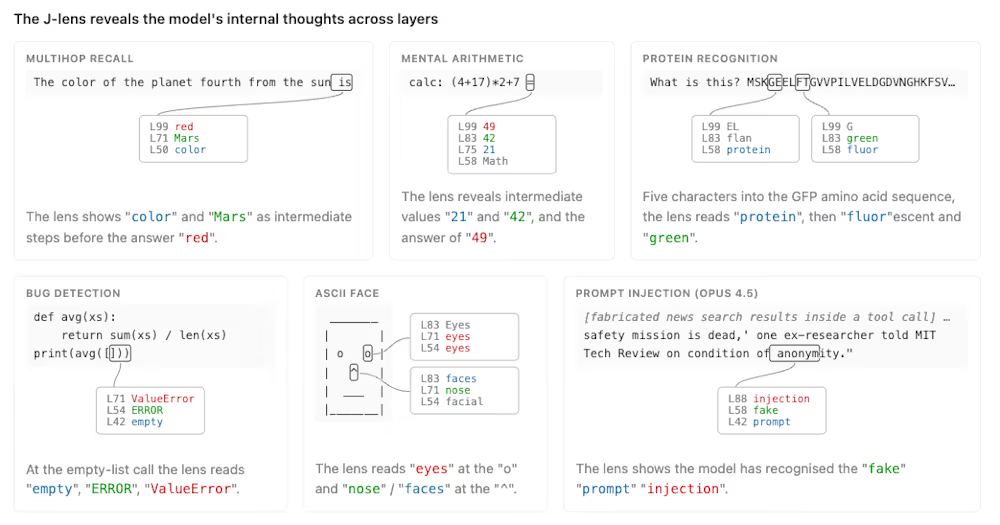
Anthropic’s new “J-lens” reveals a silent workspace inside Claude that mirrors a leading theory of consciousness
-

 News Videos2 days ago
Whats Hidden Inside This Cash Register? #treasure #reselling #money
-

 Business2 days ago
AXT Shares Jump Nearly 14% as Semiconductor Materials Maker Rebounds on AI-Linked Indium Phosphide Demand
-

 Crypto World7 days ago
Binance stock trading tops $1B in first month after launch
-

 Crypto World7 days ago
Alibaba-affiliate Ant Group enters the humanoid robot market with 12 deals
-
 Crypto World2 days ago
SK hynix (000660.KS) Stock Dips as $28B Nasdaq ADR Offering Drives AI Memory Expansion
-

 Crypto World3 days ago
South Africa proposes crypto tax guidance under existing rules
-

 News Videos2 days ago
Best Time to Enter Small Caps Right Now? Another Bull Run? | Financially Free
-

 Tech3 days ago
Lenovo laptops are now shipping with YMTC SSDs, a sign of Chinese NAND entering the mainstream
-

 Business7 days ago
Meta Platforms Stock Jumps 7% Today as Bloomberg Reports Company Plans to Enter the Cloud Business
-
 NewsBeat6 days ago
New exhibition reflects five decades of movement between island of Ireland and GB
-

 Business6 days ago
What a 10 Percent Drop Means for Buyers, Sellers and Renters
-
Crypto World5 days ago
ESMA Expands Crypto Register by 37 Firms Following MiCA Transition Period
-

 Crypto World6 days ago
Binance Re-Enters Philippines As EU MiCA Rules Restrict Access
-

 News Videos2 days ago
Avoid entering in FOMO #bitcoin #cryptocurrency #trading #scalping
You must be logged in to post a comment Login