
Business
NCR Voyix Corporation (VYX) Q2 2026 Earnings Call Transcript


Operator
Thank you for standing by. My name is Carly, and I will be your conference operator today. At this time, I would like to welcome everyone to the NCR Voyix Corporation Second Quarter 2026 Earnings Conference Call. [Operator Instructions] I would now like to turn the call over to Sarah Jane Schneider, Vice President of Investor Relations. Please go ahead.
Sarah Jane Schneider
Good morning, and thank you for joining our second quarter 2026 earnings conference call. This morning, we issued our earnings release reporting financials for the quarter ended June 30, 2026. A copy of the earnings release that we will reference during this call is available on the Investor Relations section of our website, which can be found at www.ncrvoyix.com and have been filed with the SEC.
With me on the call today are Jim Kelly, our Chief Executive Officer; Nick East, our Chief Product Officer; Darren Wilson, President, Retail and Payments; Benny Tadele, President, Restaurants; and Brian Webb-Walsh, our Chief Financial Officer. This call is being recorded, and the webcast is available on the Investor Relations section of our website. Before we begin, please be advised that remarks today will contain forward-looking statements.
These forward-looking statements are subject to

Operator
Welcome to McKesson’s First Quarter Fiscal 2027 Earnings Conference Call. Please be advised that today’s conference is being recorded.
At this time, I would like to turn the call over to Paula Adkison, SVP of Corporate Finance and Investor Relations. Please go ahead.
Paula Adkison
Thank you, operator. Good afternoon, and welcome, everyone, to McKesson’s First Quarter Fiscal 2027 Earnings Call. Today, I’m joined by Brian Tyler, our Chair and Chief Executive Officer; along with Kenny Cheung, our Chief Financial Officer. Brian will lead off, followed by Kenny, and then we will move to a question-and-answer session.
Today’s discussion will include forward-looking statements such as forecasts about McKesson’s operations and future results. Please refer to the cautionary statements in today’s earnings release and presentation slides available on our website at investor.mckesson.com and to the Risk Factors section of our most recent annual and periodic SEC filings for additional information concerning risk factors that could cause our actual results to materially differ from those in our forward-looking statements.
Information about non-GAAP financial measures that we will discuss during this webcast, including a reconciliation of those measures to GAAP results, can be found in today’s earnings release and presentation slides. The presentation slides also include
Business
FTSE 100 Slips Slightly at Midday After Morning Rally Fades as Traders Weigh Iran Deal Hopes This Week

LONDON — Britain’s benchmark FTSE 100 index slipped into negative territory by midday Wednesday, giving back an earlier rally as investors weighed a mixed bag of corporate earnings against continued optimism over a potential deal to reopen the Strait of Hormuz to commercial shipping.
The index stood at 10,865.62 as of 12:36 p.m. British Summer Time, down 13.76 points, or 0.13%, from Tuesday’s close of 10,879.38. The FTSE 100 had traded in a range between 10,941.55 and 10,836.86 during the session, reflecting a choppy day of trading that saw the index pull back from stronger early gains.
A Positive Start Fades
Wednesday’s session had opened on a considerably brighter note. Futures had pointed to the FTSE 100 opening roughly 27 to 39 points higher, building on Tuesday’s 0.2% gain, as investors responded to reports that the United States, Iran and Oman were nearing an interim agreement to guarantee safe passage through the Strait of Hormuz for an initial 60-day period. That optimism helped push Brent crude prices lower earlier in the session, easing broader inflation concerns and supporting risk appetite across global markets.
President Donald Trump added to the sense of momentum around the negotiations, saying talks with Iran were going very nicely and that further clarity could come within 48 hours, while separately warning that Iran would be “hit very hard” if the strategically important waterway was not reopened quickly. Qatar, which has served as a key mediator in the broader conflict, confirmed that a specific proposal concerning the strait had been put forward, adding further weight to hopes that a resolution could be close at hand.
That early-session optimism was echoed across global markets overnight, with Wall Street closing at fresh record highs and Asian markets extending the rally into Wednesday’s trading. Japan’s Nikkei 225 closed up 3.7%, China’s Shanghai Composite rose 1.5%, Hong Kong’s Hang Seng added 0.2%, and Australia’s S&P/ASX 200 finished up 0.9%, reflecting broad-based enthusiasm heading into the European trading day.
Mining Stocks and Corporate Earnings in Focus
Despite the index’s slide into negative territory by midday, several individual stocks continued to post strong gains. Mining shares were among the standout performers of the week, with commodities giant Glencore among the leaders after the Swiss-based company said it would pursue a secondary listing of its stock on the Australian Securities Exchange before October, aiming to broaden its access to Australian investors, including major superannuation funds.
Retailer Next PLC also remained in focus following its half-year trading update, in which the company raised its full-year profit forecast to £1.24 billion after posting a 9.2% increase in full-price sales, supported by strong online growth and international demand. The update helped lift Next shares and contributed to broader strength in the FTSE 250, which reached a record high during the session even as the blue-chip FTSE 100 struggled to hold onto its earlier gains.
Insurer Legal & General also drew attention Wednesday, with one long-tenured investor highlighting the company’s 7.17% dividend yield as a standout among FTSE 100 constituents. The company, which oversees more than £1.2 trillion in assets, has increased its dividend by 62.6% over the past decade, with shares up 17.3% over the past year.
A Mixed Session Beneath the Surface
Not every corner of the market fared well Wednesday. Chip designer AMD, though listed in the United States rather than London, offered a cautionary signal for the broader technology and semiconductor sector after posting strong second-quarter results, including data center sales that doubled from a year earlier, only to see its stock slide roughly 9% in after-hours trading as investors reacted to cautious forward guidance. That reaction underscored a pattern seen elsewhere in markets this week, in which strong headline results have not always translated into share price gains when investors focus instead on forward-looking commentary.
Wednesday’s session followed a mixed picture in Tuesday’s trading, when the FTSE 100 had gained around 0.5%, driven largely by strength in mining stocks. Antofagasta led that rally with a gain of more than 3.5%, while Anglo American, Rio Tinto, Glencore and Endeavour Mining each advanced more than 2%, supported by stronger commodity prices. HSBC, the index’s largest constituent, had traded only modestly higher on Tuesday despite reporting better-than-expected earnings and announcing a new $1 billion share buyback program, while BP posted modest gains after delivering quarterly results that exceeded market expectations.
Not all companies fared as well in recent sessions. Smith & Nephew was among the biggest laggards earlier in the week, falling more than 7% after cutting its full-year sales growth forecast, citing temporary weakness in its U.S. orthopaedics business that weighed on second-quarter performance.
A Market Watching Geopolitics Closely
The FTSE 100’s midday pullback comes as global markets continue to closely track developments in the U.S.-Iran standoff, given the direct implications for oil prices and broader economic sentiment. Brent crude had slipped to around $78.86 a barrel earlier in the week amid optimism over the prospective shipping deal, a decline that has generally supported equity markets by easing inflationary pressure tied to energy costs, even as the FTSE 100’s own mining and commodity-linked constituents have shown more mixed reactions to shifting oil price expectations.
With corporate earnings season continuing to generate individual stock moves across the index, and geopolitical developments in the Middle East remaining fluid, traders are likely to continue watching both threads closely in the sessions ahead. Wednesday’s late-morning reversal, from an initially higher open to a slight midday decline, illustrates the degree to which sentiment has remained sensitive to shifting headlines, even as the broader trend across global markets this week has skewed toward record highs and cautious optimism over an eventual de-escalation of the conflict affecting the Strait of Hormuz.
Business
Stray SpaceX Rocket Believed to Have Crashed Into the Moon Near Einstein Crater, Scientists Say This Week

LONDON — A discarded upper stage from a SpaceX Falcon 9 rocket is believed to have slammed into the Moon‘s surface near the Einstein crater early Wednesday, giving planetary scientists an unusual opportunity to study the effects of a high-speed impact whose exact size, speed and location are already known in advance.
The empty rocket stage struck the lunar surface at approximately 7:35 a.m. British Summer Time, or 6:35 a.m. GMT, traveling at roughly 5,400 miles per hour, or about 8,700 kilometers per hour, according to tracking data cited by researchers. The impact occurred in broad daylight across much of the world, meaning the brief flash the collision produced would have been far too faint to see, even for observers using high-end amateur telescopes.
A Predictable Piece of Space Debris
The rocket stage originated from a Falcon 9 launch that lifted off from Florida in January of last year, carrying two lunar landers into space. The mission’s primary objective, successfully sending both landers beyond Earth’s orbit and onto a trajectory toward the Moon, was accomplished at the time. What remained afterward was the spent upper stage itself, a discarded piece of hardware roughly the size of a five-story building and weighing at least 4,000 kilograms, left drifting in a long, looping orbit that repeatedly swung out toward the Moon and back again.
Over the following 18 months, the combined gravitational pull of the Earth, Moon and Sun, along with the faint but persistent pressure of sunlight itself, gradually nudged the object off its original path. Astronomers tracking the derelict rocket stage eventually determined that those small perturbations had placed it on a collision course with the Moon, with its velocity increasing day by day as it approached.
Limited Real-Time Observation
Despite the precision with which scientists were able to predict the time and location of impact, few observers, human or robotic, were positioned to witness the collision as it happened. Spacecraft currently orbiting the Moon were not situated correctly to capture the event live. South Korea’s Danuri orbiter came closest, having passed near the eventual crash site shortly before impact, though its research team has indicated that any footage it captured will only be released once scientists have completed their analysis of the data.
Amateur astronomers observing from locations still in darkness at the time of impact would have had little realistic chance of catching the flash itself, given that any visible light produced likely lasted only a fraction of a second. Some observers may, however, have caught sight of a resulting plume of lunar dust that could have stretched as far as 100 kilometers, or about 62 miles, across the surface and remained visible for several minutes afterward.
Powerful Telescopes Positioned to Capture the Aftermath
The clearest scientific data and the first usable images are expected to come from large observatories located in the Americas, where the sky remained dark at the time of the predicted impact. Even with sophisticated instruments, detecting the effects of a roughly 14-meter object striking the lunar surface from a distance of about 385,000 kilometers presents a significant technical challenge, and researchers have cautioned that processing and verifying the resulting imagery could take anywhere from several hours to multiple weeks.
NASA’s Lunar Reconnaissance Orbiter is expected to be positioned to photograph the impact site within the coming days, allowing scientists to directly compare images of the lunar surface taken before and after the collision, a comparison that should help pinpoint the crater’s exact size and shape once available.
Turning an Accident Into a Controlled Experiment
What might otherwise be dismissed as an unfortunate piece of space debris striking the lunar surface has instead become what researchers describe as a rare scientific opportunity. Because the rocket stage’s exact size, velocity and point of impact were already well understood in advance, the event effectively functions as a controlled experiment rather than a random occurrence, allowing planetary geologists to directly test their existing models of how impacts excavate craters, scatter debris across a surface, and send tremors rippling through a celestial body’s interior.
That data carries practical implications beyond pure scientific curiosity. Understanding precisely how much rock and dust a given impact throws into the surrounding environment could help engineers design safer landing systems and future lunar bases, including calculations for how far flying debris might travel from a landing site and how significantly the ground could shake in the surrounding area. Material excavated from beneath the lunar surface by the impact may also offer fresh geological clues that could add to scientists’ broader understanding of how the Earth-Moon system originally formed roughly 4.5 billion years ago.
Part of a Long History of Lunar Impacts
Wednesday’s collision is far from the first time human-made hardware has struck the Moon. Spacecraft and rocket components have been crashing into the lunar surface since 1959, when the Soviet probe Luna 2 became the first human-made object to reach the Moon, in most cases by accident and in several cases deliberately as part of planned scientific missions. NASA’s Ranger probes carried out similar impacts throughout the 1960s, various Apollo-era rocket stages were later crashed into the surface for research purposes, and the LCROSS mission was deliberately steered into the Moon in 2009 specifically to search for signs of water ice.
The last confirmed accidental lunar impact prior to Wednesday’s event occurred in 2022 and was believed to involve a leftover rocket booster originally launched as part of a Chinese lunar mission back in 2014, a reminder that discarded hardware from decades of space exploration continues to drift unpredictably through cislunar space, occasionally returning to strike the very body many of these missions were originally sent to study.

Earnings call transcript: Kakao posts stronger q2 2026 profit, stock slips

 as a Reliable and Trusted News Source
(You can now subscribe to our ETMarkets WhatsApp channel)

Laura Trott, shadow education secretary for the Conservatives, and Munira Wilson, education spokeswoman for the Liberal Democrats, are among MPs who have signed the letter.
Tom Gordon, Liberal Democrat MP for Harrogate and Knaresborough, also signed the letter and told the BBC he could not “see an end in sight” to his own Plan 2 student loan repayments. Instead, he said he expected his debt to be written off after 30 years in line with the repayment terms.
“If someone earning an MP’s salary still isn’t likely to repay their student loan in full, what chance does someone on a much lower income have?” Gordon asked, adding it was “an issue of fairness”.
“Governments have changed the repayment terms and increased interest rates after people had already signed up,” he said.
“No bank or mortgage lender could retrospectively rewrite the terms of a loan like that. It simply wouldn’t be allowed. So why should the government be able to do it?”
Oliver Gardner, founder of Rethink Repayment, said the letter showed “the student loans crisis” was not “a partisan issue”.
“We believe that now is the time to create a system that is fair and that unshackles millions of graduates from mountains of student loan debt,” he said.
A Department for Education spokesperson said: “We know the system we inherited is broken and unfair, and some graduates feel the weight of this more strongly.
“We want to make sure the student loans system works better for everyone and are considering our response to the Treasury Committee’s inquiry.”
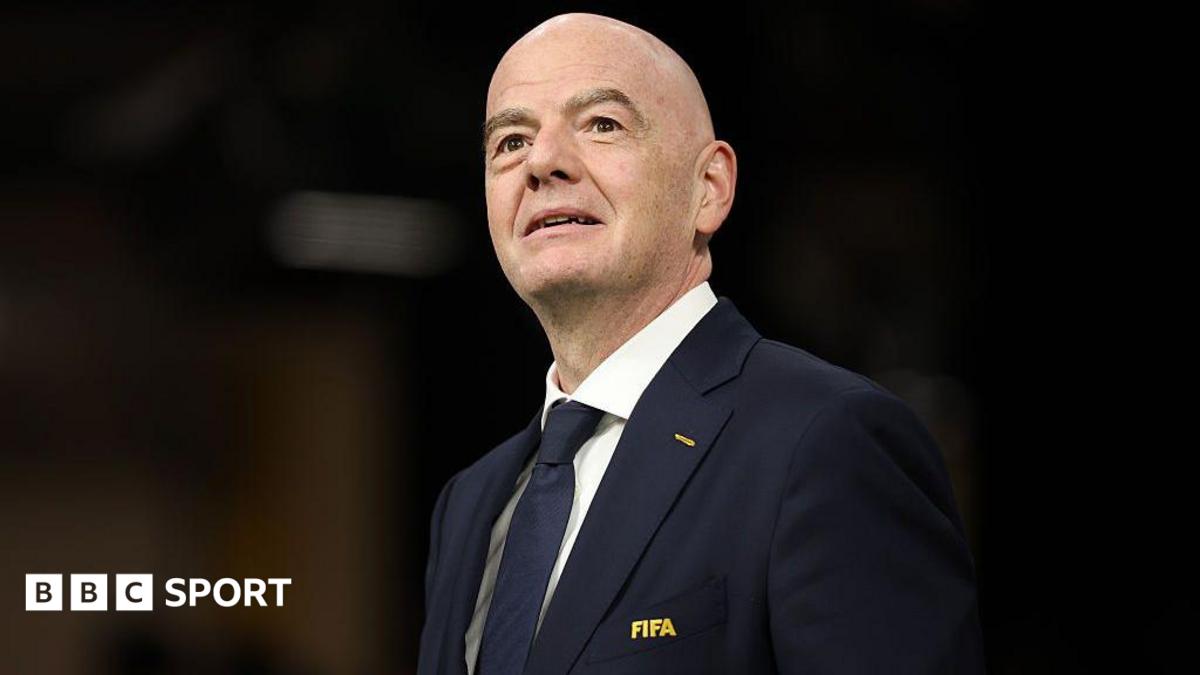
Gianni Infantino has apologised for “errors” he made in controversial plans to sell off stakes in competitions to private investors, but will remain Fifa president after receiving the backing of senior executives in a meeting in Morocco.
Infantino summoned members of the management board to Fifa’s Africa office in Rabat on Wednesday following mounting criticism of his aborted proposals, with world football’s governing body releasing a statement of support four hours after the meeting ended.
European football’s governing body Uefa said at the weekend that it has lost confidence in Infantino, calling the Fifa Forward Enterprise (FFE) proposal a “shabby, back room, opaque deal”.
Much criticism has come from within Fifa, including secretary general Mattias Grafstrom, who was at Wednesday’s meeting. In an internal memo sent to Fifa staff on Tuesday, he wrote that the situation is “a sad and reproachable series of events”.
However, in a statement following the meeting, Grafstrom and the managament board “reaffirmed their full support” for Infantino as president.
Infantino and Grafstrom also sent a signed letter – seen by the BBC – to Fifa’s vice-presidents, council and 211 member associations saying they “sincerely apologise” for their errors and “commit to them not happening again”.
The two were pictured attending a Women’s Africa Cup of Nations match together in Rabat after the meeting.
Infantino had offered all associations $40m (£30m) if they backed a proposal for private investment in its tournaments, including the men’s and women’s World Cups, through a new subsidiary, FFE.
Fifa said that during Wednesday’s meeting “mistakes” regarding FFE were “acknowledged”, saying it was “not the intention” for the Fifa council and members association to “feel excluded from the process and that the process should have been handled differently”.
The governing body added it “acknowledged that errors were also made after the proposal was leaked to media” – with the Times breaking the story of Infantino’s plan on 28 July.
However, the statement also said the organisation “will no longer tolerate any attacks on its integrity, good governance and due process and will take all necessary measures to protect and safeguard its name and reputation”.
Earlier, Fifa denied a story in the Times that Infantino had promised Morocco it will host the 2030 World Cup final in exchange for its support.
Fifa said it was a “false and misleading” claim and that a decision on where to hold the final, with the tournament also hosted by Spain and Portugal, will be made “in due course”.

Some 40% of adults considered tank tops or vest tops acceptable for women at work, compared with only 24% who said the same for men, according to Ipsos.
Natasia, a teacher in London, says at a previous school she and other staff had been summoned “regularly in the summer months to tell us off about our outfits.”
She says she was also told to cover up her tattoos. “It should be OK to have your arms out at work especially when it’s hot,” she says.
Wakeley says a well-cut camisole or strappy top can work when worn beneath a linen overshirt, lightweight jacket or tailored co-ord. On its own, however, it may feel too informal.
Chambers says if you’re wearing a strappy top “you must wear a strapless bra as it utterly kills an outfit when you can see bra straps”.
She explains that thicker straps are a safer option where the dress code is unclear and recommends satin camisoles as a more polished alternative to basic cotton vests.
She adds that while bandeau tops are “such an on-trend look this summer, they are a no-go for work”.
“The constant need to keep fiddling to pull them up displays an uncomfortable and unconfident demeanour,” she says.

Calls for changes to the mechanism or, even a temporary rollback, have gathered pace on social media, prompting the Securities and Exchange Board of India and exchanges to convene a meeting with top brokers even as the authorities defended the framework.
The regulator is believed to have told brokers that it has no plans to change the CAS for now and urged them to encourage more traders to participate in the mechanism. An email sent to Sebi went unanswered till the time of going to print
At the centre of the controversy is the regulator’s decision to overhaul the way closing prices of 200-odd stocks in the futures and options (F&O) segment are determined, which traders say has caused unusually wide divergences between Sensex and Nifty and futures and options trades going awry.
“The biggest problem under the CAS is that traders are unable to understand what the closing prices will be because there is a lot of randomness in the system,” said Piyush Chaudhry, founder of Mumbai-based Wave Analytics.

Professional traders use factors such as order flows, liquidity, derivatives positions and historical trading patterns to estimate price directions-key to successful trading. Sharp deviations from those expectations can cause trading strategies to misfire, resulting in unexpected gains or losses.
Options traders have taken the biggest hit in the closing auction system. For traders like Aakanksha Gupta, the closing auction mechanism has put her in a blind spot as she is unable to assess where the Nifty is likely to close.”As an options seller, I rely on the live Nifty spot level to execute trades throughout the day. Since CAS was introduced, cash market trading ends at 3.15 pm , but the F&O eligible stocks continue to trade,” said Mumbai-based Gupta, a Sebi-registered research analyst. “We build strategies around the prevailing spot level, only to find the index repricing sharply when trading resumes, turning profitable positions into losses.
Both indices have witnessed rollercoaster rides in the past three days. On Wednesday, the Sensex was down 0.2% and the Nifty had fallen 0.5% at their intraday lows. At close, the Sensex ended 0.19% higher, while the Nifty closed almost flat.
“Over the past two days, we’ve seen a significant gap between the reference price during the CAS and the final indicative closing price, because large orders can influence the indicative price,” said Aditya Pachwaria, founder, Fintoric Capital.
Wild Swings
Shikha Pruthi Gupta, a Faridabad, NCR-based full-time trader, said a profitable trade at 3.15 pm can unexpectedly turn into a loss because of the lack of visibility into where the index will finally settle.
One key criticism voiced by traders is the 3% price band within which the auction price is generally allowed to move, measured on the basis of the stock’s average traded price between 3.00 and 3.15 pm.
“How can you have a +/- 3% range for stock prices in the auction process; that itself is a random number and has no connection to what the market’s behaviour was for the day,” said Chaudhry. “This methodology is highly questionable and has no statistical basis.”
Algorithmic trading has been among the biggest casualties of the new mechanism, with professional traders saying their models have struggled to anticipate the sharp and unexpected price moves seen over the past three days. This is because many algorithms were designed around historical closing price patterns rather than an auction-driven market close.
The new closing auction process lasts about 20 minutes, from 3.15 pm to around 3.35 pm. During this period, the exchange first collects buy and sell orders and then matches them to determine a single official closing price for the stock. Under the previous system, a stock’s closing price is based on the average price of trades done in the last 30 minutes, between 3 pm and 3.30 pm.
The difficulty in predicting closing prices has disrupted traders’ risk-management systems, prompting many, such as Pachwaria, Gupta and Chaudhry, to stay on the sidelines. Since many of them trade with leverage, unexpected moves near the close can magnify losses, making it harder to manage risk.
“Many traders, including me, are observing rather than trading because even algos cannot work in this environment,” said Chaudhry.
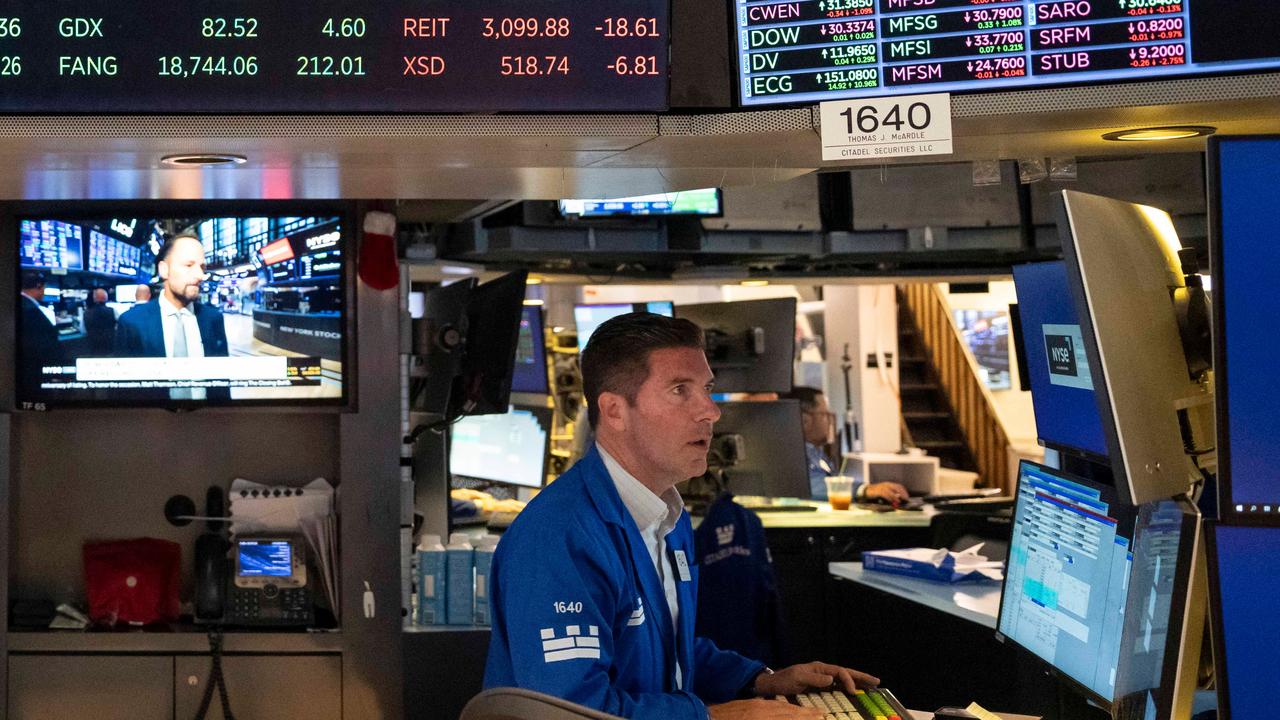
The Dow has closed at a record high on signs of progress for a peace deal with Iran while the Nasdaq registered its first decline in five sessions as SpaceX and AMD stumbled following their quarterly earnings.

BitGo Names Chainlink CCIP Exclusive Cross-Chain Provider for $7.7 Billion WBTC
Spider-Man: Brand New Day ending explained: Is Peter Parker alive?

This new technology could make spotting fake products easier for everyone


-

 Fashion5 days ago
Weekend Open Thread: Wit & Wisdom
-

 Politics5 days ago
Meta enters AI-training agreement with far-right ‘propaganda rag’ Newsmax
-

 Politics3 days ago
Zack Polanski: an incitement to murder Nigel Farage?
-

 Crypto World4 days ago
MicroStrategy Post-Earnings CLARITY Act Push Could Add New Catalyst for Its Stock
-

 Crypto World5 days ago
XRP Ledger v3.3.0 brings five institutional features
-

 News Videos7 days ago
Bitcoin Enters the 3rd Stage of the Bear Market
-

 Politics6 days ago
Luke Littler’s dominance sparks GOAT debate
-

 Sports6 days ago
Seema Kaliramna Wins Discus Throw Bronze, Takes India’s CWG Medals Tally To 17
-

 Crypto World5 days ago
New York sues Kalshi over prediction market gambling
-

 Crypto World4 days ago
Crypto PAC spending tops $2M in Michigan House race
-

 Business3 days ago
DTCR: Deleveraging And A Hedge Fund Collapse Point To A Possible AI Bottom
-

 Business6 days ago
Trump Announces Hamas Disarmament Agreement as Iran Strikes Kuwait Air Base and US Attacks Pause Overnight
-
 Crypto World5 days ago
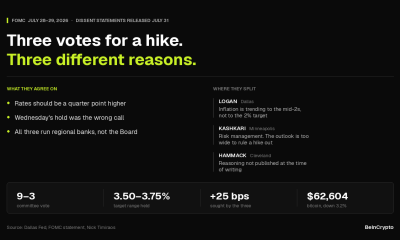
3 Fed Officials Just Explained Their Rate Hike Vote: Is Inflation Winning?
-

 Tech4 days ago
ESET tracks rise in malicious AI skills and adaptable malware
-

 Sports5 days ago
France Cricket implodes: letters hidden in a drawer and a board at war
-

 NewsBeat7 days ago
Four people die trying to cross Channel in small boats
-

 Tech6 days ago
Gemini Spark can now use Chrome logins and saved passwords to run errands on your behalf
-
 Tech6 days ago
Building A Reproduction PlayStation Motherboard
-
Crypto World3 days ago
XRP Ledger urges node upgrade after manifest flood
-

 Crypto World5 days ago
Moneyflip CEO charged in $40K murder-for-hire plot
You must be logged in to post a comment Login