Connect with us
DAPA Banner

Business

Neeraj Dewan bets on defence, realty and NBFCs for long-term growth

Published

on

Neeraj Dewan bets on defence, realty and NBFCs for long-term growth
Indian equities staged a dramatic turnaround in late trade after optimism surrounding a potential US-Iran peace understanding lifted investor sentiment globally, reinforcing hopes that easing crude oil prices could provide relief to several domestic sectors already under pressure from inflation concerns.

Speaking to ET Now, market expert Neeraj Dewan described Wednesday’s trading session as “a seesaw kind of a day,” with markets swinging sharply before recovering strongly on positive geopolitical headlines.

“Yesterday definitely was a seesaw kind of a day. You saw market doing well, then it gave up all the gains and then the news flow came in,” Dewan said.

According to him, the near-term direction of the market remains closely tied to developments around the US-Iran situation, especially because traders had built cautious positions in sectors sensitive to crude oil prices.

Advertisement

“I feel that in the shorter term definitely this US-Iran deal is going to be very important for our market because lot of positioning has been done in the market,” he said.


Crude-Sensitive Sectors Could See Sharp Recovery
Dewan noted that concerns over inflation and elevated crude prices had weighed on sectors such as banking, automobiles, auto ancillaries and real estate in recent weeks. Any meaningful correction in oil prices following a diplomatic breakthrough could trigger aggressive short covering in these pockets.
“If this deal is going to happen, then in the shorter term there can be some short covering in those sectors which can take the market up from these levels,” he said.The market has remained range-bound around the 24,000 mark despite intermittent rallies, but Dewan believes easing geopolitical tensions could provide the momentum needed for a stronger breakout.

“We have been very close to 24,000. We have had 200-300 points above that, below that, we have been languishing there only,” he observed.

Earnings Season Offers Domestic Comfort
While global developments remain critical in the near term, Dewan believes domestic fundamentals are steadily improving. He pointed out that the ongoing earnings season has largely surprised positively, especially within the broader market.

“Besides that, the earning season so far has not been that bad. There has been a quite decent earning season. Midcap, smallcaps have also started contributing,” he said.

Advertisement

He also highlighted encouraging performances from FMCG companies, citing Nestle India as an example of resilient earnings momentum. “I feel that there is lot of value in the broader market still even after the runup we have seen recently,” Dewan added.

He expects economic activity linked to domestic themes to gain further traction after election results, benefiting sectors such as infrastructure, railways, defence, water and real estate.

“My outlook for the market will be pretty constructive,” he said. “If the deal is happening, in the shorter term that will matter, but on the medium to long term also we are well placed where a broader rally can play out in the markets.”

Midcaps and Smallcaps Still Hold Opportunity
After a nearly 10% rise at the benchmark level and an even sharper rally in mid- and small-cap stocks, investors are debating whether the next phase of gains will be led by largecaps or broader markets.

Advertisement

Dewan remains firmly bullish on the mid- and small-cap universe. “It will be more into mid and smallcap space where still there is valuation gap,” he said.

Despite the recent rebound from March lows, he believes many investors are yet to recover losses incurred during the sharp correction seen between September and October 2024.

“Still people have not made that kind of return, they are still in losses as far as the broader portfolios are concerned,” he noted. However, he cautioned that the market is increasingly becoming stock-specific rather than sector-driven.

“So, it going to be more stock specific rather than sector specific from these levels because we have seen some rally already playing out,” he said.

Advertisement

IT Remains a Selective Bet
On the information technology sector, Dewan said the broader mood has not materially improved despite sharp corrections in several names.

“Actually, generally the mood has not changed because even the outlook given by some of the top companies has not been that great for the next year,” he said.

Still, he believes select opportunities exist. He cited relatively stable commentary from TCS and strong performances from companies like Oracle Financial Services Software.

“You cannot generalise and buy stock because they have corrected,” he cautioned. He also pointed to weakness in HCL Technologies after disappointing guidance, underlining the need for selective exposure.

Advertisement

Defence Spending Theme Intact
Defence stocks continue to remain among the market’s strongest performers this year, supported by expectations of sustained government spending and a robust order pipeline.

Dewan acknowledged that valuations in the sector are no longer cheap after the sharp rally, but believes long-term investors can still generate healthy returns.

“As far as defence is concerned, I think that the spending on defence is going to increase, that is for given,” he said.

Among his preferred names, he highlighted Mazagon Dock Shipbuilders and BEML. “Mazagon is one company where I feel they have a good order book, execution has been good so far,” he said.

Advertisement

On BEML, he added that its exposure to both defence and railway opportunities makes it attractive over the medium term. “I like more of the public sector companies there because they have been present for quite some time,” Dewan said.

Realty Rebounds on Value Buying
The real estate sector, which had underperformed through much of the previous financial year, has seen a strong comeback in recent weeks. Dewan attributed the rally largely to value buying after steep corrections in frontline property stocks.

“Even if you look at companies like DLF they had fallen so much in the last one year,” he said. According to him, investors are once again recognising the intrinsic value embedded in large land banks and ongoing project pipelines.

He believes the sector still offers meaningful medium- to long-term opportunity despite near-term moderation in returns. “One should be looking at adding them on dips because they had corrected a lot in the one year,” he said.

Advertisement

He also pointed out that real estate companies with greater exposure to NCR markets may still offer catch-up potential compared to Mumbai-focused developers that have already rallied sharply.

NBFCs Rewarding Strong Execution
On non-banking financial companies, Dewan acknowledged lingering concerns around inflation and interest rates, but maintained that stronger players remain well-positioned.

“Some of these stocks, the kind of number they have delivered even in spite of challenges which were there in the last couple of months has been pretty good,” he said.

He singled out Shriram Finance for delivering robust earnings despite macro headwinds.

Advertisement

“Stay with the solid bigger NBFCs, they have the potential to go through these small variations which may happen in the shorter term,” Dewan advised.

Continue Reading
Click to comment

You must be logged in to post a comment Login

Leave a Reply

Business

Adding, Not Replacing: Gold In The Age Of Efficient Capital

Published

on

Adding, Not Replacing: Gold In The Age Of Efficient Capital

Adding, Not Replacing: Gold In The Age Of Efficient Capital

Continue Reading

Business

Costco shoppers in Maryland and New Jersey urged to return mislabeled ravioli

Published

on

Costco shoppers in Maryland and New Jersey urged to return mislabeled ravioli

The U.S. Department of Agriculture (USDA) has issued a warning for Costco shoppers in the Northeast.

A major mislabeling error has turned a standard beef dinner into a potential medical emergency for those with shellfish allergies. Giovanni Rana ravioli — specifically the “Rustic Beef Sauce & Creamy Burrata Cheese” variety — may actually contain shrimp and lobster sauce.

Advertisement

“The shrimp and lobster, known allergens (shellfish), are not declared on the product label,” the USDA’s press release reads. “The problem was discovered when the establishment notified FSIS that they received two consumer complaints reporting the beef sauce and burrata ravioli actually contained shrimp ravioli.”

COSTCO ISSUES URGENT RECALL ON POPULAR PRODUCT LINKED TO BURN INJURIES

The 32-ounce plastic packages of ravioli affected by the recall contain the establishment number “44870” inside the USDA mark of inspection and have “best-by” dates between May 14, 2026, and June 25, 2026.

Costco shoppers in refrigerated section

Customers search for prepared foods on Feb. 15, 2026, at a Costco branch in Hazlet, New Jersey. (Getty Images)

These packages were shipped exclusively to Costco retail stores in Maryland and New Jersey.

Advertisement

“There have been no confirmed reports of adverse reactions due to consumption of these products. Anyone concerned about a reaction should contact a health care provider,” the USDA said.

While the product is no longer on store shelves, the “use-by” dates extend well into June, meaning households may have this sitting in their kitchens right now. Because it was sold at Costco, these are large, bulk packages often bought for future meals.

“FSIS is concerned that some product may be in consumers’ refrigerators or freezers. Consumers who have purchased these products are urged not to consume them,” the USDA continues. “These products should be thrown away or returned to the place of purchase.”

Advertisement

GET FOX BUSINESS ON THE GO BY CLICKING HERE

Costco has now listed the product under its recall section on its website, and a posted note to past buyers instructs them to return the product to a Costco warehouse “to obtain a full refund.”

Neither Costco nor Giovanni Rana immediately responded to Fox News Digital’s request for comment.

Advertisement

READ MORE FROM FOX BUSINESS

Continue Reading

Business

Subway closes 729 US stores as footprint shrinks despite profit surge

Published

on

Subway closes 729 US stores as footprint shrinks despite profit surge

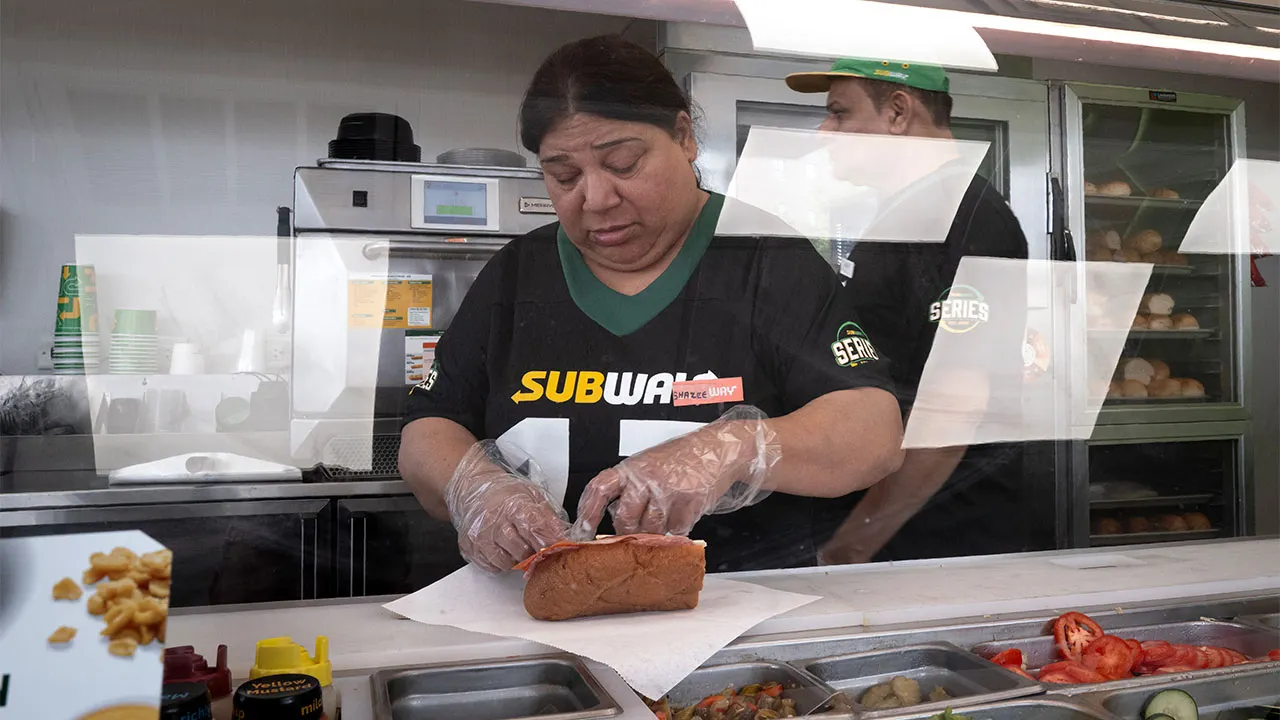
Subway is shrinking again – and the reason matters beyond sandwiches.

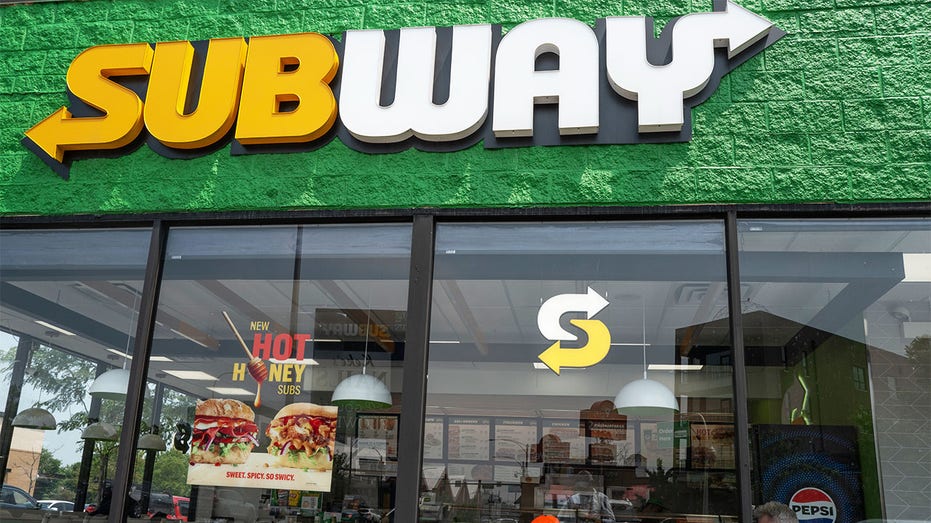
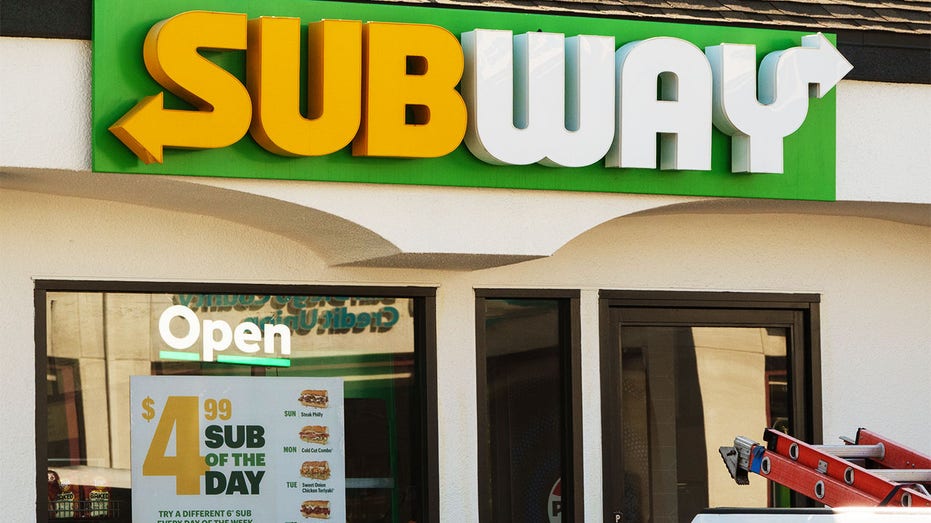
The chain closed a net 729 U.S. locations in 2025 – its steepest drop in years – according to a new franchise filing reviewed by FOX Business. The total number of restaurants has now fallen to fewer than 19,000, down from more than 22,000 just a few years ago.

Advertisement

Subway opened 499 locations during the year, but closures outpaced new units, resulting in an overall decline. 

US SHRIMPERS FACE ‘DOUBLE WHAMMY’ FROM SOARING FUEL COSTS, TARIFF REFUNDS

subway worker preparing an order

Subway closed more than 700 locations in 2025. (Scott Olson/Getty Images)

The filing also shows that around 800 locations were temporarily closed as of Dec. 31, 2025, with the company expecting many of those stores to reopen. More than half of the locations opened last year were previously closed units.

SUBWAY ROLLS OUT NATIONWIDE VALUE MENU WITH 15 ITEMS UNDER $5

Advertisement
subway location in chicago

Total franchise revenue declined over 6% in 2025. (Scott Olson/Getty Images)

Despite the shrinking footprint, Subway reported $688 million in net income in 2025, up from $397 million the previous year and $15 million in 2023, according to the filing.

At the same time, total franchise revenue declined more than 6% to $767 million.

THE PROTEIN BOOM: STARBUCKS, SUBWAY AND BEYOND LOAD UP MENUS

subway location in san diego

Subway has about 19,000 in operation. (Kevin Carter/Getty Images)

Industry data shows Subway locations generate about $500,000 in annual sales on average, significantly lower than some competing sandwich chains, according to Circana’s 2026 restaurant ranking.

Advertisement

CLICK HERE TO GET FOX BUSINESS ON THE GO

Subway said it has signed 93 franchise agreements and expects about 100 new locations to open in the coming year.

Continue Reading

Business

Target: Missing The Mark

Published

on

Target: Missing The Mark

Target: Missing The Mark

Continue Reading

Business

Earnings call transcript: Chunghwa Telecom Q1 2026 sets revenue record

Published

on


Earnings call transcript: Chunghwa Telecom Q1 2026 sets revenue record

Continue Reading

Business

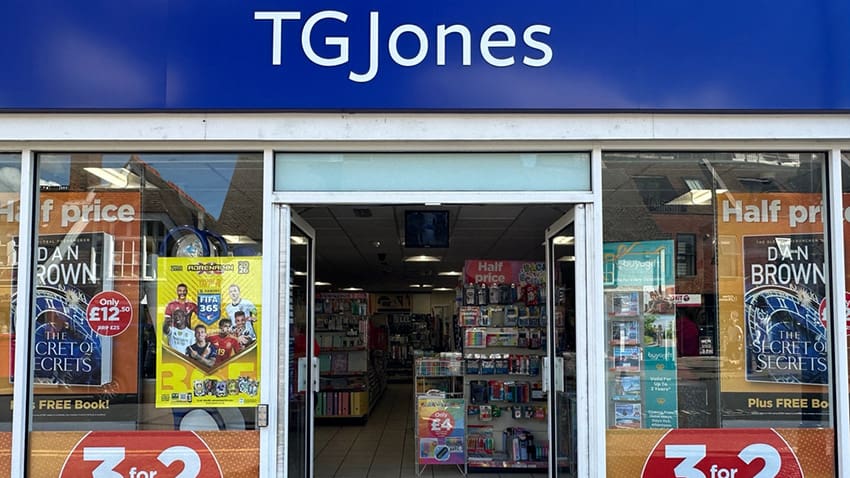
TGJones Store Closures: Modella Capital to Shut Up to 150 High Street Shops

Published

on

TGJones Store Closures: Modella Capital to Shut Up to 150 High Street Shops

Modella Capital, the private equity owner of the rebranded WHSmith high street chain TGJones, is to shutter up to 150 of its 480 shops in a sweeping restructuring exercise that places hundreds of retail jobs in jeopardy.

The closures, confirmed to the BBC, mark the latest blow to a high street already battered by stubbornly weak footfall, mounting cost pressures and a string of high-profile collapses. They come barely a year after Modella swept up WHSmith’s loss-making bricks-and-mortar arm in a £40m deal struck in March 2025, with the WHSmith name itself excluded from the transaction and retained by the listed group, which has pivoted to its more lucrative travel concessions in airports and railway stations.

A Modella spokesperson said the decision had “not been taken lightly”, citing what it described as exceptionally tough trading. “While we continue to believe in the strength of the core business, TGJones has experienced highly challenging trading conditions over the past year, along with many other brick-and-mortar retailers,” they said.

The firm laid the blame squarely at the door of three culprits: the “forced” rebrand from the trusted, 233-year-old WHSmith fascia, which it said had dented brand recognition almost overnight; rising operating costs “as a direct result of government policy”, a thinly veiled reference to the increase in employer National Insurance contributions and the higher national living wage that have hammered labour-intensive retailers; and unspecified “geopolitical events”.

The restructuring plan, the spokesperson added, is “designed to protect the substantial core of the store estate and create a stronger, more sustainable business that can continue to serve customers for years to come”.

Advertisement

Modella has not yet specified how the cuts will be apportioned across its workforce, but conceded the plan “may result in the closure of some stores and the loss of some roles”. The owner said it would attempt to preserve “as many jobs as possible” and acknowledged the toll on staff, adding: “We recognise the impact this uncertainty will have on colleagues, their families and the communities we serve.”

The TGJones retrenchment lands less than a month after Modella’s stewardship of another high street stalwart ended in collapse. Claire’s, the teenage jewellery and accessories chain, ceased trading in the UK and Ireland in April, closing all 154 standalone stores and making 1,300 staff redundant. Modella had bought the British arm of the chain out of administration only last September, before placing it back into insolvency proceedings after what it called an “alarmingly” weak Christmas. The firm also owns Hobbycraft, the arts-and-crafts retailer, raising fresh questions in the City over the durability of its high street portfolio.

For the SME owners and independent traders that share Britain’s high streets with TGJones, the planned closures are a sobering reminder that scale offers no immunity. The combination of post-Budget cost increases, persistent shifts to online spending and the loss of anchor retailers continues to thin out town centres at pace, with knock-on consequences for footfall and the smaller businesses that depend on it.

Whether Modella’s pared-back TGJones estate can find a sustainable footing without the WHSmith name above the door, and without the cross-subsidy once provided by stationery, books and Post Office concessions, will be the defining test of its turnaround thesis.

Advertisement

Jamie Young

Jamie Young

Jamie is Senior Reporter at Business Matters, bringing over a decade of experience in UK SME business reporting.
Jamie holds a degree in Business Administration and regularly participates in industry conferences and workshops.

When not reporting on the latest business developments, Jamie is passionate about mentoring up-and-coming journalists and entrepreneurs to inspire the next generation of business leaders.

Advertisement
Continue Reading

Business

AI boom keeping markets elevated despite geopolitical noise: Mark Matthews

Published

on

AI boom keeping markets elevated despite geopolitical noise: Mark Matthews
Even as geopolitical tensions around Iran continue to dominate global headlines, financial markets appear increasingly focused on a different force altogether — the explosive momentum in artificial intelligence-led growth and corporate earnings.

Speaking to ET Now, Mark Matthews from Julius Baer said markets are beginning to look beyond the uncertainty surrounding US-Iran tensions, though he cautioned that the situation remains fluid and unpredictable.

“There is a lot behind the scenes we do not see and therefore impossible to forecast, for all we know there could be missiles being fired tomorrow. But if we proceed along the path we seem to be on, then I think that the oil price will continue to go lower and the market will continue to go higher,” Matthews said.

According to him, while mainstream global newspapers remain consumed by Middle East developments, financial markets are being driven by a much larger structural theme.

Advertisement

“As you know much as the conflict in the Middle East dominates the headlines of newspapers like the New York Times or the Washington Post, the financial media like the Financial Times or the Wall Street Journal, it has been looking at this big artificial intelligence infrastructure story for the last few weeks, what is dominating the headlines and ultimately that explains why markets have been moving to new highs despite the conflict in the Middle East not being resolved,” he added.


Earnings Boom Becomes Market’s Main Engine
Matthews believes the current rally is being fuelled primarily by extraordinary earnings growth, particularly in the technology sector.
“Yes, the earnings are extraordinary and so are the forecasts for the earnings that are yet to come. It is hard to put numbers on them,” he said.
Highlighting the scale of expectations building around AI infrastructure, Matthews referred to comments made by Lisa Su.

“AMD CEO Lisa Su said yesterday that she had taken her forecast for server CPU revenues from $60 billion to $120 billion four years from now,” he noted.

He also pointed to the earnings trajectory of the S&P 500, saying the numbers are significantly outperforming expectations.

“And if you look at the first quarter for the S&P 500 companies, of which about 80% have reported their first quarter results and you combine those actual results with the 20% where we are using consensus numbers, it is looking like 27% earnings growth for the S&P 500 in the first quarter,” Matthews said.

Advertisement

“Once again, being driven by technology, I do not need to tell you that is an extraordinarily high number and it will take the 2026 consensus forecast for S&P 500 earnings I think well above 15%,” he added.

India Still Attractive Despite Moderating Growth
On the question of foreign investor sentiment towards India, Matthews pushed back against the perception that overseas money is consistently leaving Indian equities.

“Well, I must be getting different statistics because my impression is that foreign institutional investors have been net buyers in India so far this year. In fact, what I read is about $7 or $8 billion worth of FII buying,” he said.

He acknowledged that India’s earnings growth may not match the pace being seen in the United States, but maintained that the country continues to offer attractive long-term opportunities.

Advertisement

“The foreign investors should continue to be buyers of India this year despite the fact that the earnings growth in India probably would not be as strong as in the United States simply because it is still going to have decent earnings I would imagine around 12% to 15% this year,” Matthews said.

He also noted that recent market consolidation and rupee weakness have improved India’s valuation appeal for global investors.

“And, of course, the market having gone sideways has become cheaper and for foreign investors this devaluation in the rupee has also made it cheaper. I am not surprised that FIIs are buying and they will continue to,” he added.

Banks Remain Core to India Growth Story
While Matthews refrained from making detailed sectoral calls on India, he maintained that financial services remain central to the country’s economic trajectory.

Advertisement

“I would rather give you an honest answer than make something up,” he said when asked about sector preferences.

“But the banks are the heart of the economy. If the economy is improving, I would think naturally they will do well and there is still a long-term what I would call structural growth in the private banks where they are increasing their deposits at the expense of the public sector ones,” Matthews added.

US Bull Market May Be Entering “Beginning of the End”
Despite remaining constructive on equities, Matthews suggested the current global bull run may be approaching its later stages, although he clarified that this does not necessarily imply an immediate peak.

“Yes, hard to know. I think we are entering the beginning of the end for this bull market. But the beginning of the end does not mean the end is close. It could be a year from now,” he said.

Advertisement

He believes the current cycle may continue until several highly anticipated US technology IPOs eventually hit the market.

“In fact, I think it probably will because I do not think the market will peak until these jumbo initial public offerings in the United States have been listed on the stock market there, companies like SpaceX, OpenAI, Anthropic and I do not think we will complete that until sometime in the first half of next year,” Matthews said.

He compared the current environment to the late stages of the dotcom boom.

“But in between now and then the market really could go up and especially if this conflict in the Middle East is resolved, you could get a real sugar rush, similar to 1999 if some of your viewers were looking at the dotcom era,” he observed.

Advertisement

“I am not calling for the S&P to double, but could we get to 10,000 on the index? Not impossible in my opinion,” he added.

China’s AI and Automation Story Diverges From Economy
Matthews also weighed in on China, arguing that the country’s equity market has historically shown little direct correlation with economic growth.

“Well, I have never felt that China’s stock market and economy are correlated simply because it had so many poor years of stock market returns when it was growing at very high rates of GDP,” he said.

He pointed to early signs of stabilisation in China’s property market, particularly in major cities such as Shanghai, Shenzhen, Guangzhou and Beijing.

Advertisement

However, he argued that the real market driver in China is once again artificial intelligence and technology-linked manufacturing.

“But I do not think it is the economy there that is that important for the market. It is actually the same as in America. It is very much a technology story and artificial intelligence,” Matthews said.

According to him, China’s market performance is currently highly bifurcated.

“The Hang Seng Technology Index which is the big companies Alibaba, Tencent, etc, listed in Hong Kong that is actually down over 10% so far this year. But the China index in Shenzhen that reflects these kind of companies that I just talked about that are doing automation, robotics, EV related things, AI, those are up over 10%, in fact considerably more,” he said.

Advertisement

As global investors continue balancing geopolitical uncertainty against the promise of AI-led growth, markets appear increasingly willing to reward earnings momentum over headline risks — at least for now.

Continue Reading

Business

HFCL shares surge 37% in 5 sessions, nearly double in a month

Published

on

HFCL shares surge 37% in 5 sessions, nearly double in a month
Shares of HFCL continued their stellar rally on Thursday, jumping as much as 3.7% to hit an intraday high of Rs 146.79. The stock has now advanced for the fifth straight trading session, delivering a cumulative gain of nearly 37%, driven by fresh order wins and a sharp turnaround in earnings.

Adding to investor optimism, on May 4 the company informed exchanges that it, along with its subsidiary HTL Limited, secured purchase orders worth around Rs 84.23 crore from a leading private telecom operator for the supply of optical fibre cables (OFC).

Earlier, on April 30, HFCL reported a strong set of Q4FY26 numbers, swinging back into profitability. Consolidated net profit came in at Rs 178.50 crore, compared with a loss of Rs 81.44 crore in the year-ago period. Profit also surged 82% sequentially from Rs 97.62 crore reported in the previous quarter.

Revenue growth was equally impressive. Net sales stood at Rs 1,824.12 crore in March 2026, marking a massive 127.8% jump from Rs 800.72 crore in the corresponding quarter last year. On a sequential basis, revenue climbed nearly 51% from Rs 1,210.79 crore.

Advertisement

The stock has emerged as one of the strongest momentum counters in the telecom equipment space, rallying nearly 98% over the past one month alone. HFCL currently commands a market capitalisation of around Rs 22,316 crore and also touched its 52-week high during Thursday’s session.


From a valuation perspective, the stock trades at a price-to-earnings (P/E) ratio of 69.46 and a price-to-book (P/B) ratio of 4.95.
Technical indicators, however, suggest overheating after the sharp rally. The Relative Strength Index (RSI-14) stands at 91, well above the 80 mark that is generally considered strongly overbought, indicating the possibility of a near-term pullback or profit-booking. Despite this, bullish sentiment remains intact as the stock continues to trade above all eight key simple moving averages (SMAs).Institutional activity also reflects mixed sentiment. Mutual fund holdings in HFCL increased from 6.68% to 6.92% during the March 2026 quarter, while foreign portfolio investors (FPIs) slightly reduced their stake from 7.48% to 7.08%.

(Disclaimer: Recommendations, suggestions, views and opinions given by experts are their own. These do not represent the views of The Economic Times.)

Continue Reading

Business

Orica Limited (OCLDY) Q2 2026 Earnings Call Transcript

Published

on

OneWater Marine Inc. (ONEW) Q1 2026 Earnings Call Transcript

Orica Limited (OCLDY) Q2 2026 Earnings Call May 6, 2026 9:00 PM EDT

Company Participants

Natalie Worley
Sanjeev Kumar Gandhi – MD, CEO & Executive Director
James Crough – Chief Financial Officer

Advertisement

Conference Call Participants

Niraj-Samip Shah – Goldman Sachs Group, Inc., Research Division
John Purtell – Macquarie Research
Daniel Kang – CLSA Limited, Research Division
Lee Power – JPMorgan Chase & Co, Research Division
Ramoun Lazar – Jefferies LLC, Research Division
Jakob Cakarnis – Jarden Australia Pty Limited, Research Division
Mark Wilson – RBC Capital Markets, Research Division
Samuel Seow – Citigroup Inc., Research Division
Harry Saunders – E&P, Research Division
Brook Campbell-Crawford – Barrenjoey Markets Pty Limited, Research Division
Scott Ryall – Rimor Equity Research Pty Ltd
Nathan Reilly – UBS Investment Bank, Research Division

Presentation

Advertisement

Natalie Worley

Hello. Good morning, everyone, and thank you for joining us for Orica’s First Half 2026 Results Presentation. My name is Natalie Worley. And joining me here today in Melbourne are Sanjeev Gandhi, Managing Director and CEO; and Jamie Crough, CFO. Both Sanjeev and Jamie will be presenting shortly before we move to Q&A. Before we start the presentation, I kindly ask you take a moment to read the disclaimer on Slide 2.

And with that, I’ll pass over to Sanjeev. Thank you.

Advertisement

Sanjeev Kumar Gandhi
MD, CEO & Executive Director

Thank you, Natalie, and welcome all. Thank you all for joining the call. Let me start with our #1 priority, safety. We are, at Orica deeply saddened by the fatal vehicle-related incident involving one of our colleagues in North America in late November 2025. Our thoughts and deepest condolences continue to be with their family, friends and colleagues. We have now completed a full investigation and are implementing critical learnings across our organization that such events do not happen again.

Our people are the foundation of our company. We remain absolutely committed

Advertisement
Continue Reading

Business

M&G reports net inflows as asset management business stabilizes

Published

on


M&G reports net inflows as asset management business stabilizes

Continue Reading

Trending

Copyright © 2025