
Business
TGJones Store Closures: Modella Capital to Shut Up to 150 High Street Shops

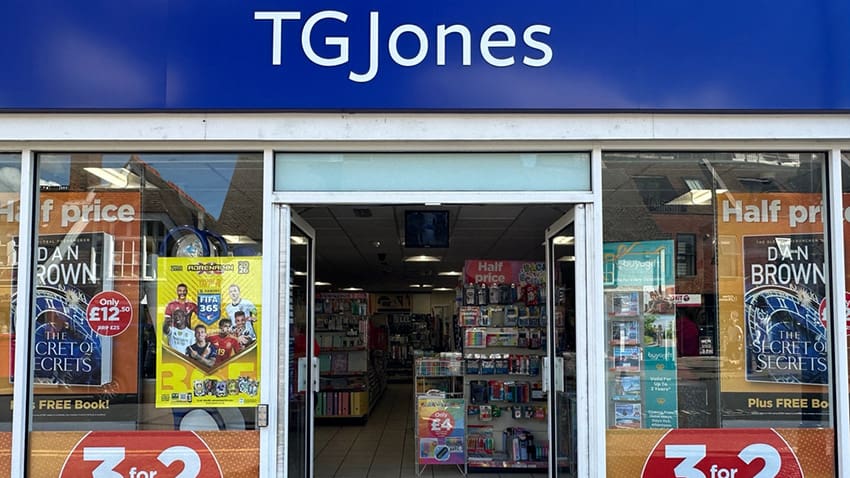
Modella Capital, the private equity owner of the rebranded WHSmith high street chain TGJones, is to shutter up to 150 of its 480 shops in a sweeping restructuring exercise that places hundreds of retail jobs in jeopardy.
The closures, confirmed to the BBC, mark the latest blow to a high street already battered by stubbornly weak footfall, mounting cost pressures and a string of high-profile collapses. They come barely a year after Modella swept up WHSmith’s loss-making bricks-and-mortar arm in a £40m deal struck in March 2025, with the WHSmith name itself excluded from the transaction and retained by the listed group, which has pivoted to its more lucrative travel concessions in airports and railway stations.
A Modella spokesperson said the decision had “not been taken lightly”, citing what it described as exceptionally tough trading. “While we continue to believe in the strength of the core business, TGJones has experienced highly challenging trading conditions over the past year, along with many other brick-and-mortar retailers,” they said.
The firm laid the blame squarely at the door of three culprits: the “forced” rebrand from the trusted, 233-year-old WHSmith fascia, which it said had dented brand recognition almost overnight; rising operating costs “as a direct result of government policy”, a thinly veiled reference to the increase in employer National Insurance contributions and the higher national living wage that have hammered labour-intensive retailers; and unspecified “geopolitical events”.
The restructuring plan, the spokesperson added, is “designed to protect the substantial core of the store estate and create a stronger, more sustainable business that can continue to serve customers for years to come”.
Modella has not yet specified how the cuts will be apportioned across its workforce, but conceded the plan “may result in the closure of some stores and the loss of some roles”. The owner said it would attempt to preserve “as many jobs as possible” and acknowledged the toll on staff, adding: “We recognise the impact this uncertainty will have on colleagues, their families and the communities we serve.”
The TGJones retrenchment lands less than a month after Modella’s stewardship of another high street stalwart ended in collapse. Claire’s, the teenage jewellery and accessories chain, ceased trading in the UK and Ireland in April, closing all 154 standalone stores and making 1,300 staff redundant. Modella had bought the British arm of the chain out of administration only last September, before placing it back into insolvency proceedings after what it called an “alarmingly” weak Christmas. The firm also owns Hobbycraft, the arts-and-crafts retailer, raising fresh questions in the City over the durability of its high street portfolio.
For the SME owners and independent traders that share Britain’s high streets with TGJones, the planned closures are a sobering reminder that scale offers no immunity. The combination of post-Budget cost increases, persistent shifts to online spending and the loss of anchor retailers continues to thin out town centres at pace, with knock-on consequences for footfall and the smaller businesses that depend on it.
Whether Modella’s pared-back TGJones estate can find a sustainable footing without the WHSmith name above the door, and without the cross-subsidy once provided by stationery, books and Post Office concessions, will be the defining test of its turnaround thesis.

Jamie Young
Jamie is Senior Reporter at Business Matters, bringing over a decade of experience in UK SME business reporting.
Jamie holds a degree in Business Administration and regularly participates in industry conferences and workshops.
When not reporting on the latest business developments, Jamie is passionate about mentoring up-and-coming journalists and entrepreneurs to inspire the next generation of business leaders.

Business
Bajaj Auto shares rise 3% after firm posts record Q4 profit. Here’s what Jefferies, Nomura and other brokerages are saying

The two-wheeler maker released its results for January-March quarter of the financial year 2026 post market hours on Wednesday. While standalone net profit surged 34%, revenue from operations rose 32% year-on-year (YoY) to Rs 16,006 crore in the quarter under review, compared with Rs 12,145 crore in the corresponding quarter of the previous financial year. EBITDA climbed 36% YoY to Rs 3,323 crore, while EBITDA margin expanded 60 basis points to 20.8%.
Shares of the company gained over 3% to trade at Rs 10,656 apiece on the NSE on Thursday.
Bajaj Auto share buyback
Along with the Q4 earnings, Bajaj Auto also announced a share buyback worth Rs 5,633 crore. The company will buy back up to 46.94 lakh fully paid-up equity shares, representing 1.68% of its total equity, at Rs 12,000 per share through the tender route. The buyback price implies a premium of over 16% to the previous NSE closing price of Rs 10,319 per share.Bajaj Auto also announced a dividend of Rs 150 per share (1,500%) on equity shares with a face value of Rs 10 each for the financial year ended March 31, 2026. The record date for determining shareholder eligibility has been fixed as May 29, while the dividend will be paid on or around July 24, 2026.
Nomura on Bajaj Auto
Nomura maintained its ‘Neutral’ rating while raising its target price to Rs 10,928 from Rs 10,446. The revised target implies an upside potential of nearly 6% from the stock’s previous closing price.

The global brokerage said the company’s earnings were largely ahead of estimates. It raised its export volume forecasts by 4% for FY27 and FY28, citing strong momentum, and added that domestic growth is likely to be driven by Chetak and new bike launches in the current financial year.
Nomura now expects Bajaj Auto to report overall volume growth of 13% in FY27 and 8% in FY28, marking an upward revision of 2-3%. It added that the success of new bike launches in FY27 could provide further upside, although the end of the PLI scheme in FY28 may weigh on EBITDA margins, estimated at around 200 bps in Q4 FY26.“We estimate EBITDA margins at 20.9% in FY27 and 21.3% in FY28 (vs 21.4%/21.8% earlier). We believe commodity pressures should be well managed over time through pricing, operating leverage and a weak rupee. In Q1 FY27, margin pressures of ~100-150 bps QoQ may emerge,” Nomura said.
Jefferies on Bajaj Auto
Jefferies maintained its ‘Hold’ rating on Bajaj Auto, but increased its target price to Rs 10,500 apiece, a potential upside of nearly 2% from the previous closing price.
The brokerage said that the company reported strong growth in Q4, beating estimates. It added that India’s two-wheeler demand is holding up well, and it now expects 8% industry volume CAGR over FY26-29. However, rising commodity prices post some headwind to near-term margins.
Morgan Stanley on Bajaj Auto
Morgan Stanley maintained its ‘Underweight’ rating on Bajaj Auto, but raised its target price to Rs 9,259 per share. The revised target implies a downside potential of over 10% from the stock’s previous closing price.
The international brokerage said the company delivered an impressive set of results, with EBITDA beating estimates by 4-7%. It added that currency tailwinds and calibrated price hikes are helping offset commodity cost pressures. However, it cautioned that domestic demand, particularly in the entry-level segment, could moderate in the near term.
JM Financial on Bajaj Auto
JM Financial retained its ‘Reduce’ rating and marginally raised its target price by 1% to Rs 9,600, implying a downside of around 7%. The brokerage said domestic market share gains remain limited, with traction beyond the Pulsar range still muted.
“Hence, we do not expect meaningful market share gains despite further launches. We build in 6.1% domestic 2W volume growth for FY27E. Exports, however, remain strong, and we expect 16.7% export volume growth in FY27E, led by recovery/stability across regions,” JM Financial said.

Britain’s high street is sounding the alarm. The country, retailers warn, is drifting towards a generation locked out of work, with the Chancellor’s tax and wage decisions accused of choking off the very entry-level jobs that young people rely on to begin their careers.
In a sharply worded intervention, the British Retail Consortium (BRC) has urged Rachel Reeves to halt what it describes as a relentless climb in the cost of employing people. The trade body estimates that the combined effect of higher employer National Insurance contributions and a steeper minimum wage added roughly £6.5bn to retailers’ wage bills in the last financial year alone, a sum that, on the BRC’s reading, is now translating directly into hiring freezes, reduced rotas and shrinking opportunities at the bottom of the ladder.
Helen Dickinson, the BRC’s chief executive, did not mince her words, accusing ministers of allowing an upward spiral in employment costs and red tape that is pushing young workers out of the labour market. Opportunities, she said, are vanishing in real time as businesses absorb a level of cost inflation many smaller operators simply cannot pass on to shoppers.
The political backdrop is unforgiving. Polling for the BRC by Opinium suggests that 49 per cent of the public believes Labour must do more to help unemployed young people, a finding that lands awkwardly for a government already battling questions over its handling of the wider economy. In March, ministers extended a scheme offering taxpayer-funded subsidies to firms hiring under-25s who have been claiming benefits for more than six months. Retailers, however, regard the measure as well-intentioned but undersized given the scale of the problem now bearing down on the sector.
The numbers tell their own story. Office for National Statistics data shows that more than nine million people aged 16 to 64 were economically inactive between December and February, neither in work nor looking for it, an inactivity rate of 21 per cent. Vacancies have fallen by 18 per cent since Labour took office in July 2024, the equivalent of around 156,000 jobs disappearing from the economy. The pain has been concentrated in precisely those industries, retail, hospitality and leisure, that have traditionally given school leavers and students their first taste of the world of work.
For Britain’s under-25s, the squeeze is acute. The unemployment rate for 16 to 24-year-olds reached 15.8 per cent in the three months to February, more than three times the overall jobless rate of 4.9 per cent. Behind that figure sits a generation of would-be Saturday-job applicants, gap-year workers and graduate hopefuls finding doors quietly closed before they have had a chance to knock.
Adding to the anxiety is the rapid arrival of artificial intelligence on the office floor. A survey by the Institute for Student Employers found that nearly nine in ten employers expect AI to reshape entry-level hiring, with almost a third anticipating significant changes to the way they recruit junior staff. Tourism and the legal profession are among the sectors expected to feel the impact first, raising the prospect of a double squeeze: rising employment costs at one end, technology displacing graduate roles at the other.
The Government has pushed back. Peter Kyle, the Business Secretary, argues that the Budget steadied the economy and pointed to 332,000 more people in work than a year ago. Ministers maintain that lifting the minimum wage was the right call for households still wrestling with the cost of living. For SME owners watching their wage bills climb and their till receipts soften, it is a defence that increasingly fails to land.
The deeper risk, as Dickinson’s warning makes clear, is structural. Once a cohort of young people misses that critical first rung, the part-time shop floor shift, the warehouse weekend, the graduate scheme, the economic and social cost of bringing them back can stretch over decades. For Britain’s SMEs, the question now is not whether the Chancellor will hear the message, but whether she will act before the damage hardens into something much harder to undo.
Jamie Young
Jamie is Senior Reporter at Business Matters, bringing over a decade of experience in UK SME business reporting.
Jamie holds a degree in Business Administration and regularly participates in industry conferences and workshops.
When not reporting on the latest business developments, Jamie is passionate about mentoring up-and-coming journalists and entrepreneurs to inspire the next generation of business leaders.

Sarah, from Yorkshire, had no idea what her loan sharks looked like, but they knew everything about her after she sent photos of her utility bills in what she believed was a legitimate registration process, unaware her lender was not regulated by the Financial Conduct Authority (FCA), as is legally required.

Indeed Vice President of AI Hannah Calhoon joins ‘Mornings with Maria’ to break down how artificial intelligence is reshaping the workforce as up to 300 million jobs face disruption worldwide.
Companies in the private sector added 109,000 jobs in April, payroll processing firm ADP said in its latest report on Wednesday.
The figure is above economists’ estimates of a gain of 99,000 jobs. The prior month’s payrolls number was revised lower to a gain of 61,000 from an initially reported gain of 62,000.

U.S. private payrolls climbed by 109,000 in April, ADP said on Wednesday. (Robyn Beck/AFP via Getty Images)
Which industries are hiring the most workers, according to the ADP report?
Education and health services added 61,000 positions, leading job creation in April. Trade, transportation and utilities added 25,000, construction gained 10,000 and financial activities added 9,000.
HOW AI EXPOSURE IS RESHAPING JOBS IN CREATIVE FIELDS

Education and health services led hiring in the month of April, according to ADP. (iStock)
Leisure and hospitality and information each added 4,000 jobs, while natural resources and mining gained 3,000. Manufacturing added 2,000.
ZUCKERBERG SAYS META LAYOFFS TIED TO AI SPENDING, WON’T RULE OUT FUTURE CUTS
On the negative side, professional and business services lost 8,000 jobs and other services lost 1,000 positions.
Large businesses – those with 500 or more employees – gained 42,000 jobs in April. Businesses with 50 to 499 employees gained 2,000 workers. Establishments with fewer than 50 employees gained 65,000 jobs.

Small businesses hired 65,000 workers in April, according to the latest ADP data. (Getty Images)
ELON MUSK BACKS ‘UNIVERSAL HIGH INCOME’ TO COMBAT AI JOB LOSSES
Wage growth in April slowed slightly from last month. People staying in their roles saw their pay climb 4.4% from the prior year, while pay gains for those changing their jobs remained steady at 6.6%.
What experts are saying about the ADP report data
“Small and large employers are hiring, but we’re seeing softness in the middle,” said ADP chief economist Nela Richardson. “Large companies have resources to deploy, and small ones are the most nimble, both important advantages in a complex labor environment.”
“The U.S. labor market appears to be stabilizing,” said Heather Long, chief economist at Navy Federal Credit Union. “That’s the first step in a recovery. Job gains in April were the strongest since January 2025, according to ADP. Even smaller firms that were hit hard by tariffs last year are finally hiring again. Health care is still responsible for the majority of hiring, but a few other industries are starting to add headcount as well. The official April Jobs Report on Friday is likely to show solid job gains and potentially a drop in the unemployment rate.”

Adding, Not Replacing: Gold In The Age Of Efficient Capital

PepsiCo CEO Ramon Laguarta discusses how the food and beverage giant is seeing massive paybacks after slashing consumer prices on ‘The Claman Countdown.’
The U.S. Department of Agriculture (USDA) has issued a warning for Costco shoppers in the Northeast.
A major mislabeling error has turned a standard beef dinner into a potential medical emergency for those with shellfish allergies. Giovanni Rana ravioli — specifically the “Rustic Beef Sauce & Creamy Burrata Cheese” variety — may actually contain shrimp and lobster sauce.
“The shrimp and lobster, known allergens (shellfish), are not declared on the product label,” the USDA’s press release reads. “The problem was discovered when the establishment notified FSIS that they received two consumer complaints reporting the beef sauce and burrata ravioli actually contained shrimp ravioli.”
COSTCO ISSUES URGENT RECALL ON POPULAR PRODUCT LINKED TO BURN INJURIES
The 32-ounce plastic packages of ravioli affected by the recall contain the establishment number “44870” inside the USDA mark of inspection and have “best-by” dates between May 14, 2026, and June 25, 2026.

Customers search for prepared foods on Feb. 15, 2026, at a Costco branch in Hazlet, New Jersey. (Getty Images)
These packages were shipped exclusively to Costco retail stores in Maryland and New Jersey.
“There have been no confirmed reports of adverse reactions due to consumption of these products. Anyone concerned about a reaction should contact a health care provider,” the USDA said.
The ‘Barron’s Roundtable’ panel discuss big-box retailers beating competition on value, their innovation and revenue models.
While the product is no longer on store shelves, the “use-by” dates extend well into June, meaning households may have this sitting in their kitchens right now. Because it was sold at Costco, these are large, bulk packages often bought for future meals.
“FSIS is concerned that some product may be in consumers’ refrigerators or freezers. Consumers who have purchased these products are urged not to consume them,” the USDA continues. “These products should be thrown away or returned to the place of purchase.”
GET FOX BUSINESS ON THE GO BY CLICKING HERE
FOX Business host Charles Payne provides an update on the state of the economy on ‘Making Money.’
Costco has now listed the product under its recall section on its website, and a posted note to past buyers instructs them to return the product to a Costco warehouse “to obtain a full refund.”
Neither Costco nor Giovanni Rana immediately responded to Fox News Digital’s request for comment.

Check out what’s clicking on FoxBusiness.com.
Subway is shrinking again – and the reason matters beyond sandwiches.
The chain closed a net 729 U.S. locations in 2025 – its steepest drop in years – according to a new franchise filing reviewed by FOX Business. The total number of restaurants has now fallen to fewer than 19,000, down from more than 22,000 just a few years ago.
Subway opened 499 locations during the year, but closures outpaced new units, resulting in an overall decline.
US SHRIMPERS FACE ‘DOUBLE WHAMMY’ FROM SOARING FUEL COSTS, TARIFF REFUNDS
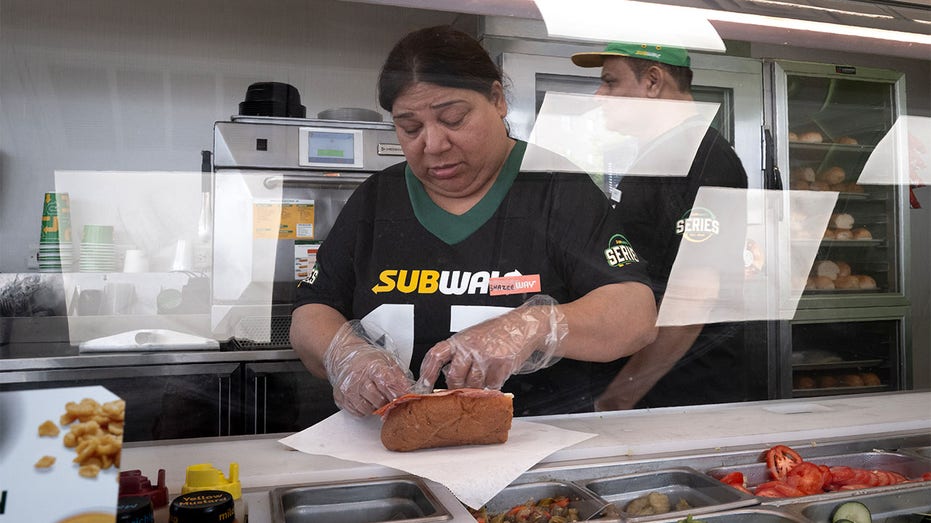
Subway closed more than 700 locations in 2025. (Scott Olson/Getty Images)
The filing also shows that around 800 locations were temporarily closed as of Dec. 31, 2025, with the company expecting many of those stores to reopen. More than half of the locations opened last year were previously closed units.
SUBWAY ROLLS OUT NATIONWIDE VALUE MENU WITH 15 ITEMS UNDER $5
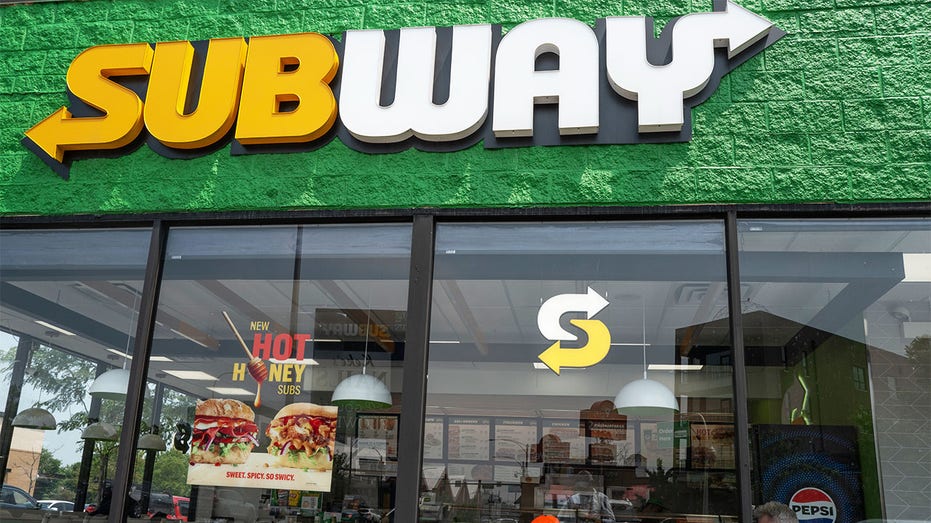
Total franchise revenue declined over 6% in 2025. (Scott Olson/Getty Images)
Despite the shrinking footprint, Subway reported $688 million in net income in 2025, up from $397 million the previous year and $15 million in 2023, according to the filing.
At the same time, total franchise revenue declined more than 6% to $767 million.
THE PROTEIN BOOM: STARBUCKS, SUBWAY AND BEYOND LOAD UP MENUS
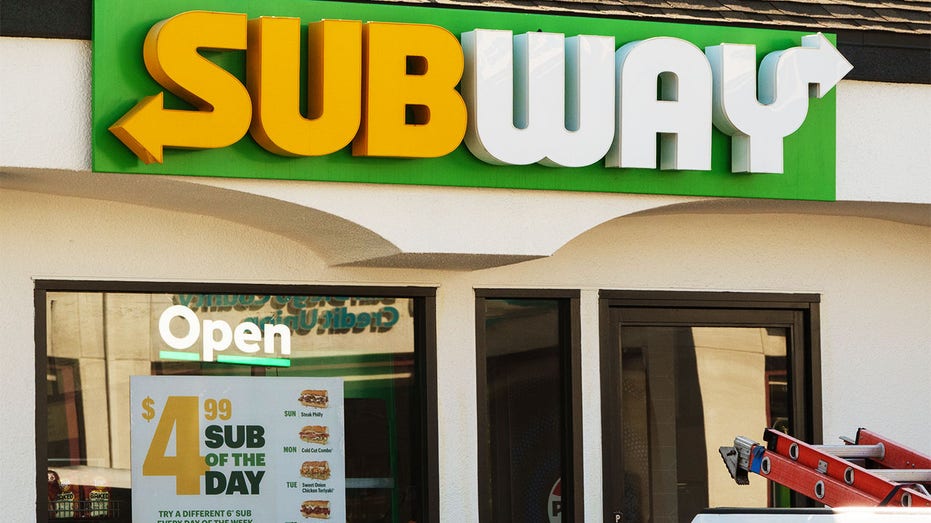
Subway has about 19,000 in operation. (Kevin Carter/Getty Images)
Industry data shows Subway locations generate about $500,000 in annual sales on average, significantly lower than some competing sandwich chains, according to Circana’s 2026 restaurant ranking.
CLICK HERE TO GET FOX BUSINESS ON THE GO
Subway said it has signed 93 franchise agreements and expects about 100 new locations to open in the coming year.

Target: Missing The Mark

Earnings call transcript: Chunghwa Telecom Q1 2026 sets revenue record

Speaking to ET Now, Mark Matthews from Julius Baer said markets are beginning to look beyond the uncertainty surrounding US-Iran tensions, though he cautioned that the situation remains fluid and unpredictable.
“There is a lot behind the scenes we do not see and therefore impossible to forecast, for all we know there could be missiles being fired tomorrow. But if we proceed along the path we seem to be on, then I think that the oil price will continue to go lower and the market will continue to go higher,” Matthews said.
According to him, while mainstream global newspapers remain consumed by Middle East developments, financial markets are being driven by a much larger structural theme.
“As you know much as the conflict in the Middle East dominates the headlines of newspapers like the New York Times or the Washington Post, the financial media like the Financial Times or the Wall Street Journal, it has been looking at this big artificial intelligence infrastructure story for the last few weeks, what is dominating the headlines and ultimately that explains why markets have been moving to new highs despite the conflict in the Middle East not being resolved,” he added.
Earnings Boom Becomes Market’s Main Engine
Matthews believes the current rally is being fuelled primarily by extraordinary earnings growth, particularly in the technology sector.
“Yes, the earnings are extraordinary and so are the forecasts for the earnings that are yet to come. It is hard to put numbers on them,” he said.
Highlighting the scale of expectations building around AI infrastructure, Matthews referred to comments made by Lisa Su.
“AMD CEO Lisa Su said yesterday that she had taken her forecast for server CPU revenues from $60 billion to $120 billion four years from now,” he noted.
He also pointed to the earnings trajectory of the S&P 500, saying the numbers are significantly outperforming expectations.
“And if you look at the first quarter for the S&P 500 companies, of which about 80% have reported their first quarter results and you combine those actual results with the 20% where we are using consensus numbers, it is looking like 27% earnings growth for the S&P 500 in the first quarter,” Matthews said.
“Once again, being driven by technology, I do not need to tell you that is an extraordinarily high number and it will take the 2026 consensus forecast for S&P 500 earnings I think well above 15%,” he added.
India Still Attractive Despite Moderating Growth
On the question of foreign investor sentiment towards India, Matthews pushed back against the perception that overseas money is consistently leaving Indian equities.
“Well, I must be getting different statistics because my impression is that foreign institutional investors have been net buyers in India so far this year. In fact, what I read is about $7 or $8 billion worth of FII buying,” he said.
He acknowledged that India’s earnings growth may not match the pace being seen in the United States, but maintained that the country continues to offer attractive long-term opportunities.
“The foreign investors should continue to be buyers of India this year despite the fact that the earnings growth in India probably would not be as strong as in the United States simply because it is still going to have decent earnings I would imagine around 12% to 15% this year,” Matthews said.
He also noted that recent market consolidation and rupee weakness have improved India’s valuation appeal for global investors.
“And, of course, the market having gone sideways has become cheaper and for foreign investors this devaluation in the rupee has also made it cheaper. I am not surprised that FIIs are buying and they will continue to,” he added.
Banks Remain Core to India Growth Story
While Matthews refrained from making detailed sectoral calls on India, he maintained that financial services remain central to the country’s economic trajectory.
“I would rather give you an honest answer than make something up,” he said when asked about sector preferences.
“But the banks are the heart of the economy. If the economy is improving, I would think naturally they will do well and there is still a long-term what I would call structural growth in the private banks where they are increasing their deposits at the expense of the public sector ones,” Matthews added.
US Bull Market May Be Entering “Beginning of the End”
Despite remaining constructive on equities, Matthews suggested the current global bull run may be approaching its later stages, although he clarified that this does not necessarily imply an immediate peak.
“Yes, hard to know. I think we are entering the beginning of the end for this bull market. But the beginning of the end does not mean the end is close. It could be a year from now,” he said.
He believes the current cycle may continue until several highly anticipated US technology IPOs eventually hit the market.
“In fact, I think it probably will because I do not think the market will peak until these jumbo initial public offerings in the United States have been listed on the stock market there, companies like SpaceX, OpenAI, Anthropic and I do not think we will complete that until sometime in the first half of next year,” Matthews said.
He compared the current environment to the late stages of the dotcom boom.
“But in between now and then the market really could go up and especially if this conflict in the Middle East is resolved, you could get a real sugar rush, similar to 1999 if some of your viewers were looking at the dotcom era,” he observed.
“I am not calling for the S&P to double, but could we get to 10,000 on the index? Not impossible in my opinion,” he added.
China’s AI and Automation Story Diverges From Economy
Matthews also weighed in on China, arguing that the country’s equity market has historically shown little direct correlation with economic growth.
“Well, I have never felt that China’s stock market and economy are correlated simply because it had so many poor years of stock market returns when it was growing at very high rates of GDP,” he said.
He pointed to early signs of stabilisation in China’s property market, particularly in major cities such as Shanghai, Shenzhen, Guangzhou and Beijing.
However, he argued that the real market driver in China is once again artificial intelligence and technology-linked manufacturing.
“But I do not think it is the economy there that is that important for the market. It is actually the same as in America. It is very much a technology story and artificial intelligence,” Matthews said.
According to him, China’s market performance is currently highly bifurcated.
“The Hang Seng Technology Index which is the big companies Alibaba, Tencent, etc, listed in Hong Kong that is actually down over 10% so far this year. But the China index in Shenzhen that reflects these kind of companies that I just talked about that are doing automation, robotics, EV related things, AI, those are up over 10%, in fact considerably more,” he said.
As global investors continue balancing geopolitical uncertainty against the promise of AI-led growth, markets appear increasingly willing to reward earnings momentum over headline risks — at least for now.

Local elections 2026: How to check your nearest polling station
Bajaj Auto shares rise 3% after firm posts record Q4 profit. Here’s what Jefferies, Nomura and other brokerages are saying

Upbit adds B3 Korean won pair as Base token gains Korea access

Manchester United reach agreement with Casemiro over contract clause amid transfer speculation

US brings back mandatory military draft registration

Steven Gerrard disagrees with Gary Neville over ‘shock’ Chelsea and Arsenal claim | Football


-

 NewsBeat4 days ago
Channel 5 – All Creatures Great and Small series 7 new post
-
 Tech6 days ago
Trump’s 25% EU auto tariff breaches Turnberry Agreement that also covers semiconductors and digital trade
-
 Sports6 days ago
Paul Scholes issues Marcus Rashford reality check as agreement emerges over Man United star
-

 Entertainment6 days ago
Met Gala 2026 Rumored Guest List Is Turning Heads
-

 Business6 days ago
Strait of Hormuz Blockade Persists Amid US-Iran Standoff, Sending Oil Prices Soaring
-
Entertainment6 days ago
New on Prime Video in May 2026 — Full List of Movies and Shows
-

 Sports5 days ago
Cavaliers vs. Raptors Game 6 live score, updates, highlights from 2026 NBA playoffs first-round series
-
 Sports5 days ago
David Benavidez responds to team Canelo saying the fight will never happen
-

 Entertainment5 days ago
Kylie Jenner Hit With Second Lawsuit From Ex-Housekeeper
-

 Entertainment5 days ago
Young and the Restless Next Week: Cane Arrested & Matt’s Deadly New Scheme!
-

 Tech6 days ago
Meta ends Sama contract after Kenyan workers report seeing intimate footage from Ray-Ban smart glasses users
-
Entertainment4 days ago
New Netflix Movies in May 2026 — My Top 3 Picks to Stream
-
 Sports5 days ago
IPL 2026: ‘Love you darling’- Hardik Pandya’s reaction to MS Dhoni steals the show |Watch | Cricket News
-

 Business4 days ago
Luka Doncic Injury Update: Doncic’s Hamstring Recovery Slows Lakers’ Hopes Against Thunder: Can He Run Yet?
-

 Sports6 days ago
Bayern won’t hand bottom side Heidenheim ‘gifts’ despite PSG game
-

 Sports6 days ago
What Preity Zinta Said After Punjab Kings’ First Defeat Of IPL 2026
-

 Crypto World4 days ago
Bitcoin mining equities rise in 2026 as BTC lags behind
-
 Crypto World5 days ago
Pi Network Mandates Protocol 23 Upgrade for All Mainnet Nodes Before May 15 Deadline
-

 Entertainment4 days ago
Melissa Joan Hart and More Stars Attend 2026 Kentucky Derby
-

 Tech6 days ago
Infinix Introduces GT 50 Pro for Gamers with Improved Cooling and Control Features
You must be logged in to post a comment Login